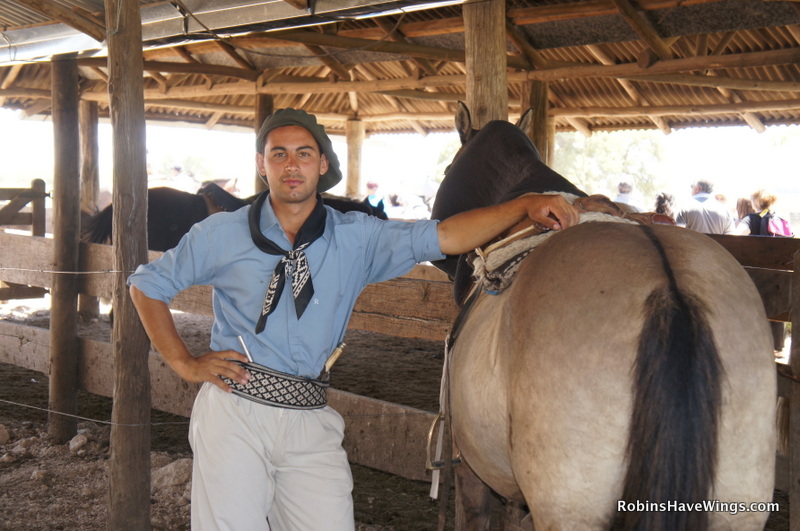
Home on the Estancia Where the Gauchos Play

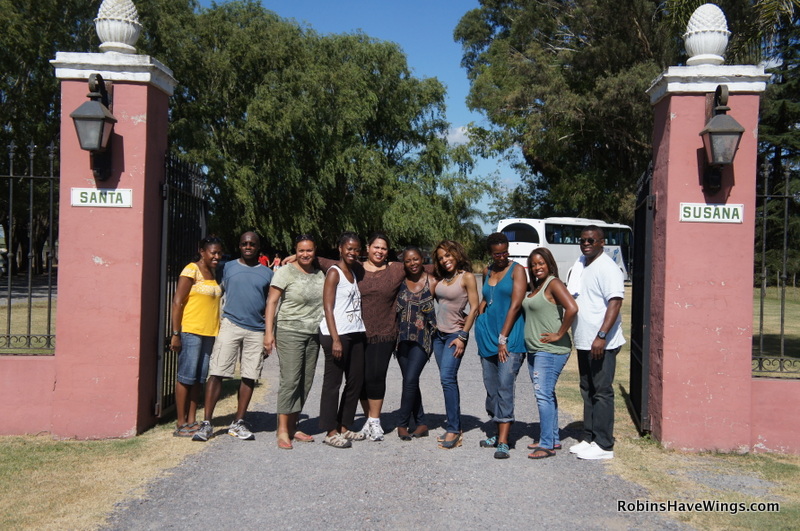
Our guide Luis warned us about Cerillo on the way to Estancia Santa Susana, a farm with Argentinian cowboys called gauchos just outside Buenos Aires. He said Cerillo was a naughty gaucho who loves kissing girls. We weren’t paying much attention and I wasn’t even thinking about this warning when Cerillo caught me alone and walked up to me with open arms, his ruddy, mustachioed face smiling. I thought, “Aww he wants a hug!” He kissed my left cheek, then my right and then, he went straight for the lips. Naughty gaucho. I later learned that he was very affectionate with Presleith on the dance floor after the farm’s traditional Argentinian barbecue and I saw him ride away with Kenitra on the back of his horse after the farm’s gaucho performance disappearing behind the barn. She later reveals that he asked her for a kiss.
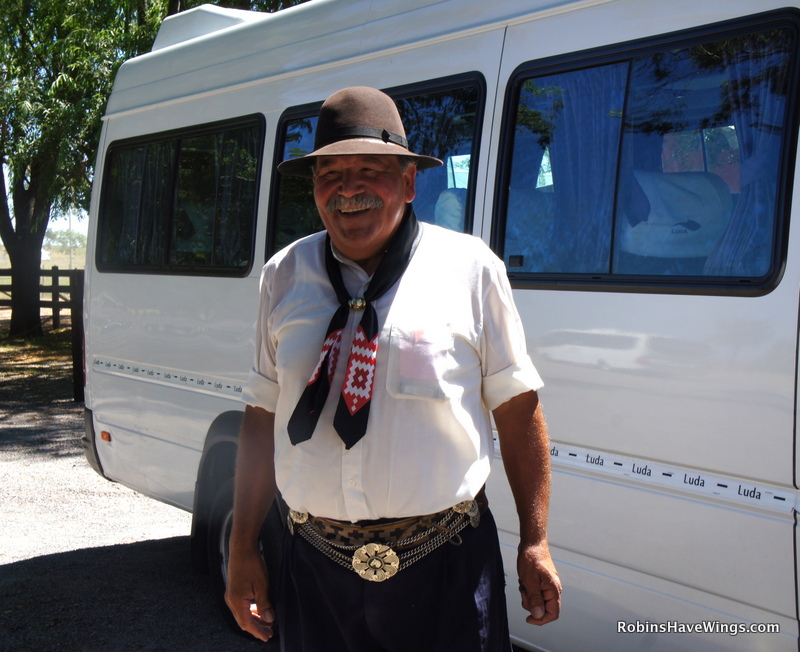
Cerillo the naughty gaucho

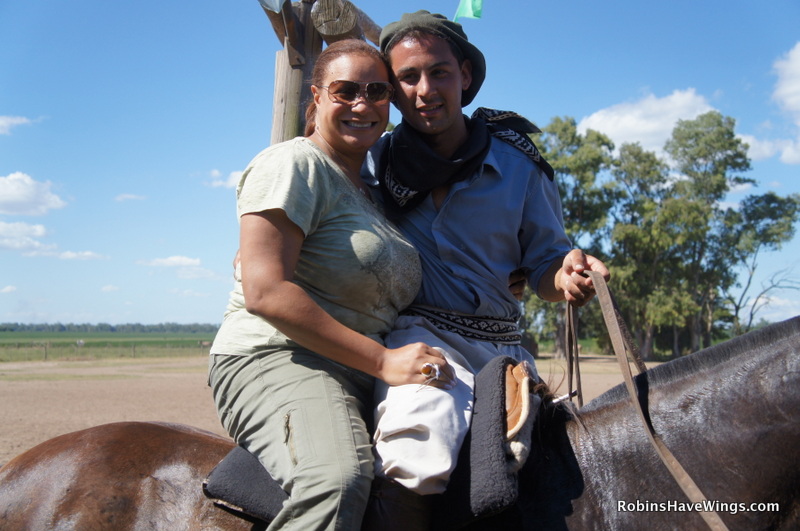
We can’t say we weren’t warned. Gauchos, Argentina’s cowboys who roam its Pampas herding cattle atop well-trained horses, are naughty. They are the descendants of Spanish soldiers and Indian women who found it hard to fit in either culture, turning to a nomadic lifestyle. Gauchos are also cute. One gaucho named Luca had all the ladies swooning and there were women from almost every nation in the world visiting the farm from Australia and China to Bolivia and Japan. This photo pretty much says it all.
Luca, Estancia Santa Susana fan favorite

Our group of 10 got its share of attention, too. When we arrived at the estancia another tour bus had just disembarked and we were suddenly greeted by a line of international paparazzi. I don’t know where these tourist were from, but it was clear that they don’t see a lot of black people where they live and felt compelled to add us to their vacation photos. I expect it in Asian countries, but for some reason, I wasn’t expecting it here. One Japanese woman asked to take a photo with Kenitra and she obliges. Afterward the woman tells Kenitra that she looks like a Barbie doll. She’s not quite sure what to say to that and I think it’s amusing.
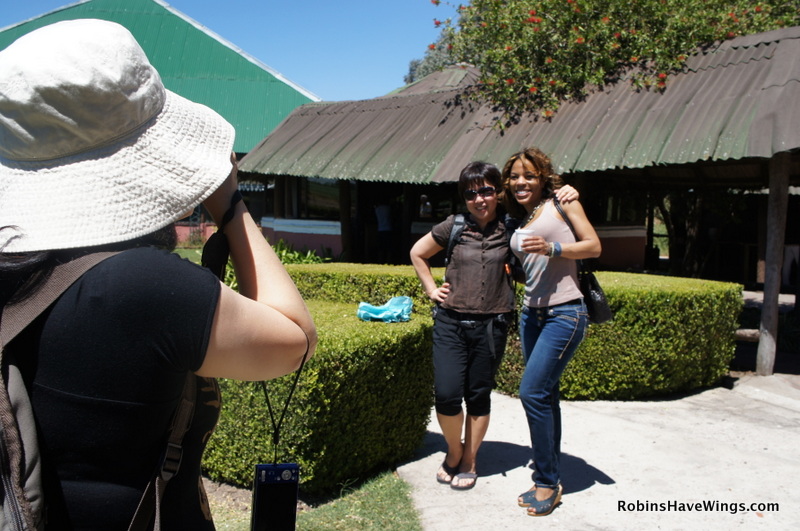
Kenitra and a Japanese fan

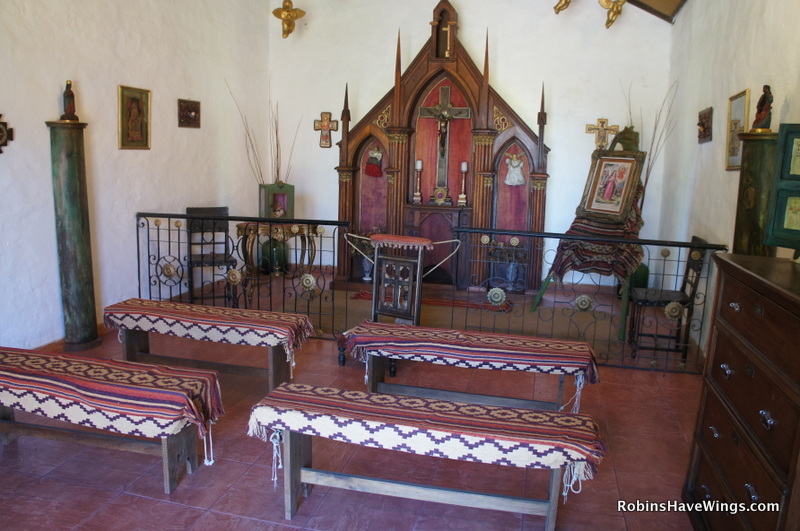
Once we get past our fans, the farm’s staff greet us with a real treat. The juiciest empanadas we’ve had on our trip so far. Luis explained that a good woman makes her empanadas as juicy as possible to attract the gaucho of her choice. I’m no gaucho, but these empanadas certainly have my attention with its flavorful minced meat, olive and egg center dripping from its pastry pocket after one bite. After a couple of these, we turn our attention to the 5,000 acre ranch stretched out before us. The main house has been turned into a museum of life on an estancia. We are mostly attracted to the tiny chapel with is benches decorated with native South American blankets and its simple wooden alter featuring handmade angels. This could be a chapel in the American South West or Mexico. One corner of the room is dedicated to estancia weddings with a yellowing wedding dress and old wedding photos.
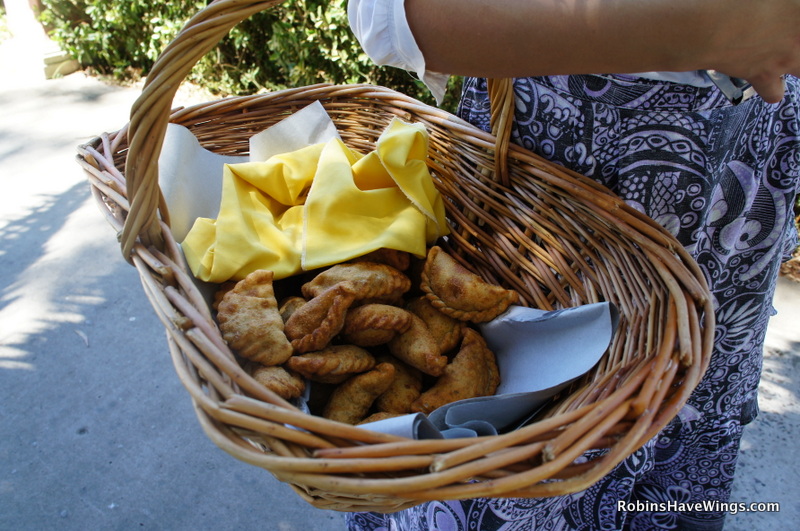
Juicy empanadas in a basket
Estancia chapel

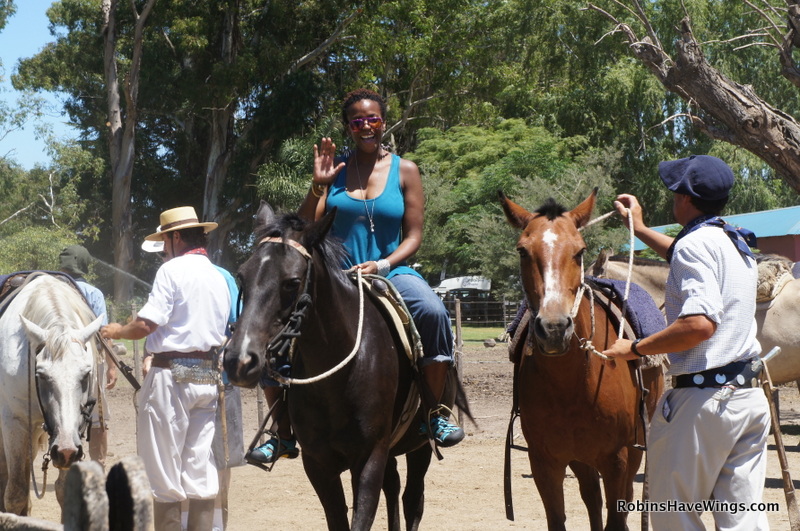
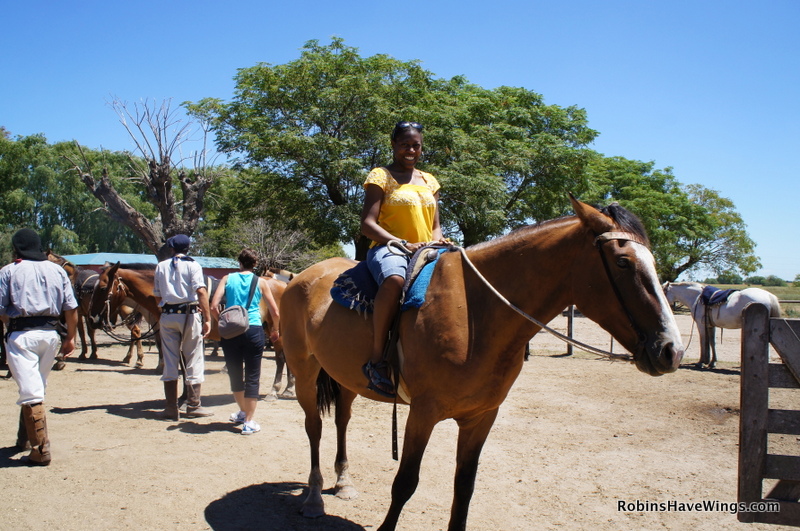
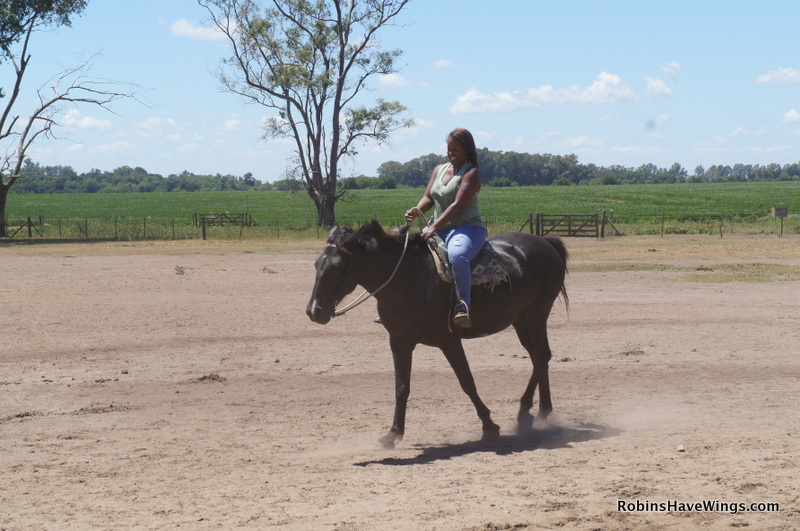
But the stable is where all the action really is. The gauchos are leading horse rides across the estancia on a dusty trail and most of decide to give it a try. Few of us have been on a horse before, but travel has a way of bringing out a sense of adventure and I think its magnified in a group. It’s kind of like peer pressure, but in a good way. When you see others stretching their boundaries you want to do it, too. Take Presleith. She’d never been on a horse and she was pretty terrified when hopped up on her horse and it started to trot off. She screamed, “How do I make it stop?” But she didn’t panic, in fact she seemed to really enjoy the rush. When she came back from her ride she was grinning widely and she said she was scared, but she loved it. I love that. One by one each of us got up on the, literal and proverbial, horse and took a ride, except for the other Robyn on this trip. Robyn attempted to get up on the horse, but got discouraged. We tried to lure her out for a second try, but she declined. Kenitra, Sheneekra and I went out together and each of us seemed to have reluctant horses. Sheneekra helped hers along with positive affirmations, mostly so that her horse wouldn’t drop her. Kenitra’s lolly gagged behind the other horses along with mine, except my horse was slow and had an attitude. He nudged Sheneekra’s horse out of the way before we started on our ride. Later, he decided to drift away from the horse formation, cutting across the field toward the front of the line. But the biggest sign that my horse had a bad attitude was that he kicked an Australian man that I’d been chatting with on the ride. The Australian was riding behind me, which apparently my horse did not like, so he kicked him. I was horrified. The Aussie, not terribly hurt, said, “We can’t talk anymore if your horse is going to kick me.” I said, “Please don’t hold my horse against me!”
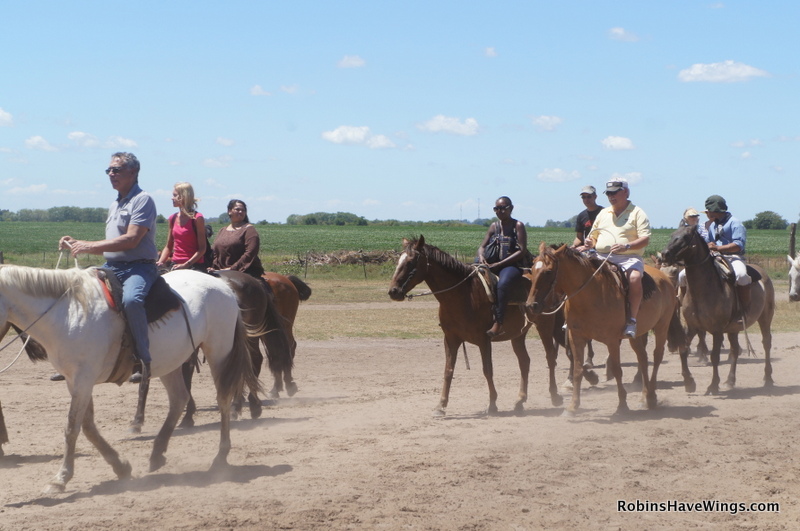
Gia and Presleith on horsback
Gai on horseback
Sheneekra on horseback
How do I look?

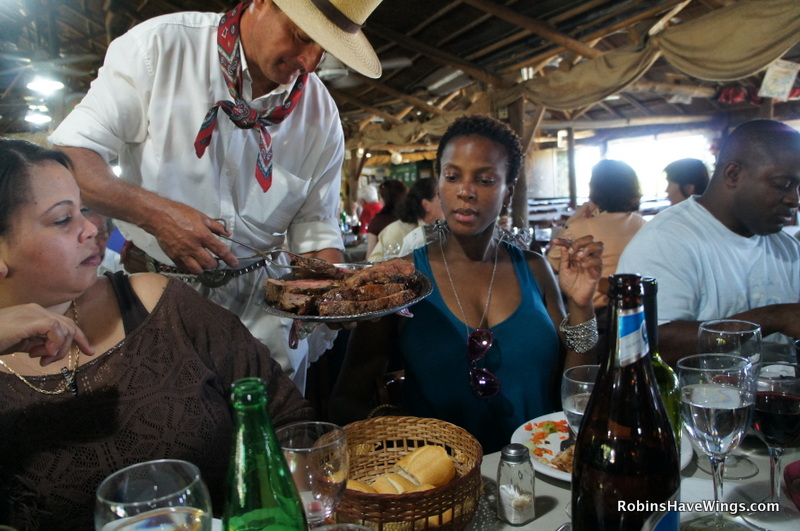
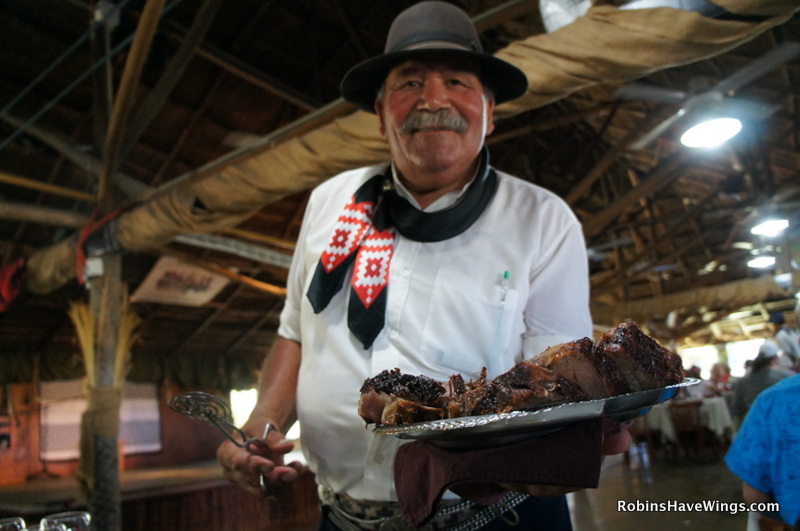
When the horse-riding is done the dinner bell is rung and we all come inside to eat the barbecued meat and sausage that we’ve been smelling all day. The very gauchos that led us on rides became our servers, delivering huge cuts of beef, chicken and sausage. But we probably most enjoyed the chimichurri, a South American condiment made of olive oil, vinegar and spices for eating with bread and topping your steak. We even put it on our salad. It was quite delicious. We got adventurous again when they brought out the black sausage, popular in this region and similar to the Brit’s black pudding, which is essentially cooked blood and other filler. Our knives reveal a mushy center inside its sausage casing and we aren’t sure what to make of the taste on its own, but decide that it’s much better on bread.
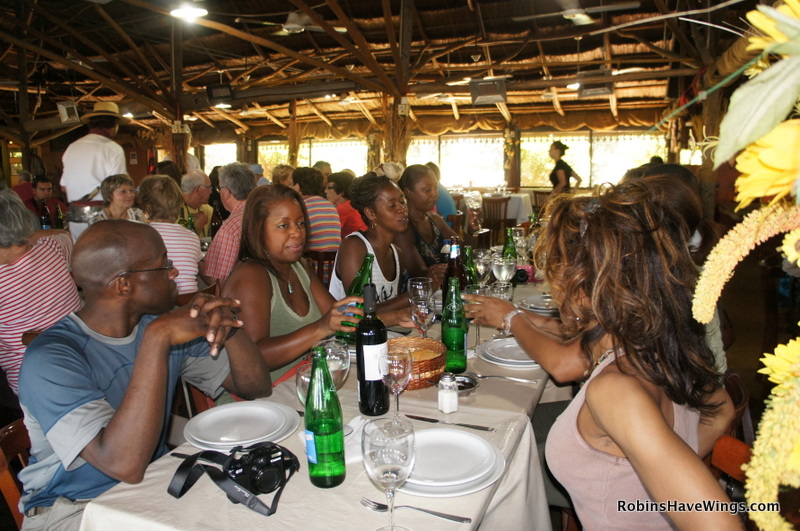
Estancia-style dining
Cerillo serving up a platter full of meat
Choosing the best piece

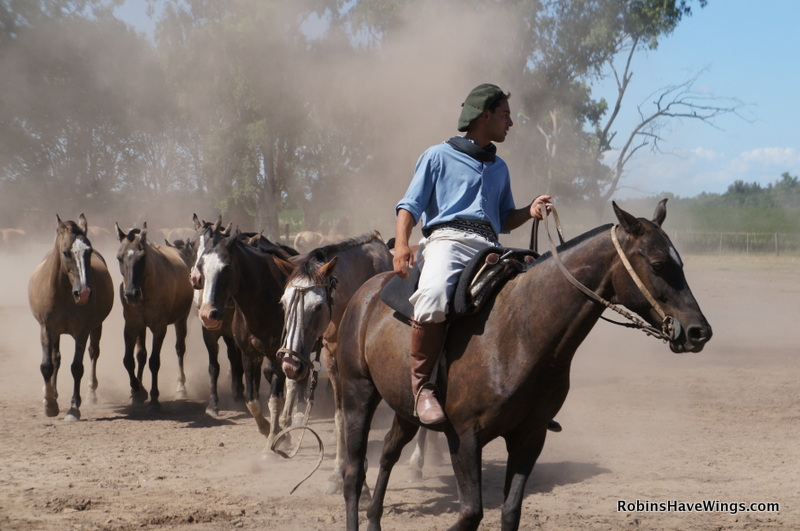
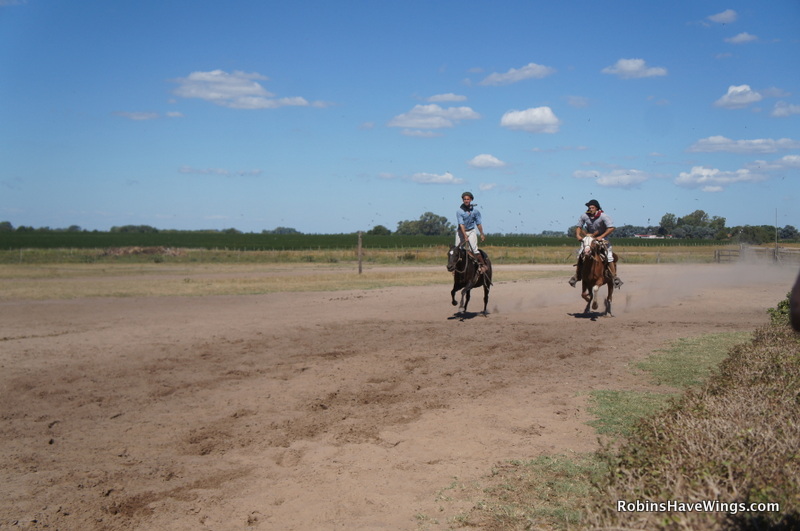
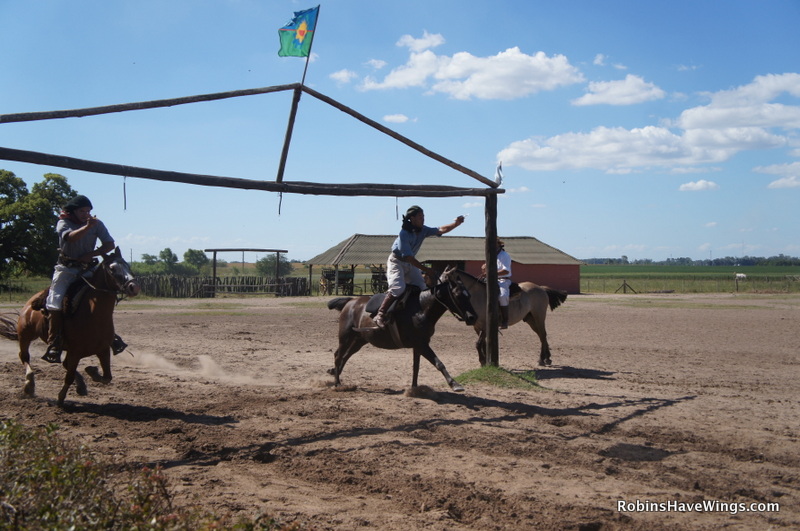
After we eat, we enjoy listening to old estancia songs and watching a great tango show, but what really gets us on our feet is the gaucho show outside. They demonstrate a tradition where the gauchos put a small metal rod through a small ring hanging from wooden posts while racing on horseback. If the gaucho gets the ring on his rod, he must then give the ring to a woman of his choosing. Bringing new meaning to Beyonce’s phrase, “If you liked it, then you should have put a ring on it.” Here’s where Luca and Cerillo come in again. Of course everyone holds their fingers out for Luca, who happens to get the ring every time, by the way. Kenitra gets a ring. I get a ring. Gai gets a ring. Robyn gets a ring. After all the jousting and horse play, the gauchos pick ladies to ride with them and Cerillo makes a beeline for Kenitra leading to the barn kidnapping noted above. But the best ending of our day comes when Robyn wants to get a photo with Luca on the back of his horse. Still a little shaken from her attempt to ride earlier, she thinks she’ll get on, take a picture and get off, but Floyd has other plans and signals for Luca to take off. The look of shock on Robyn’s face is priceless. She comes back giddy and probably a little proud of herself.
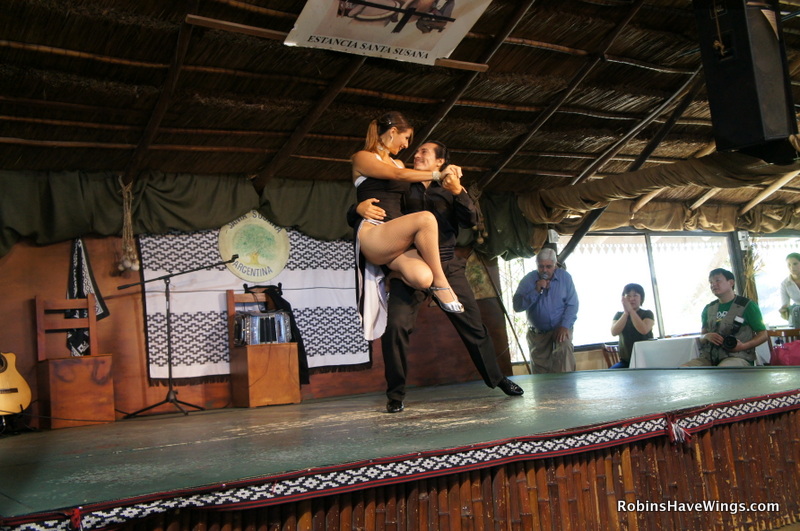
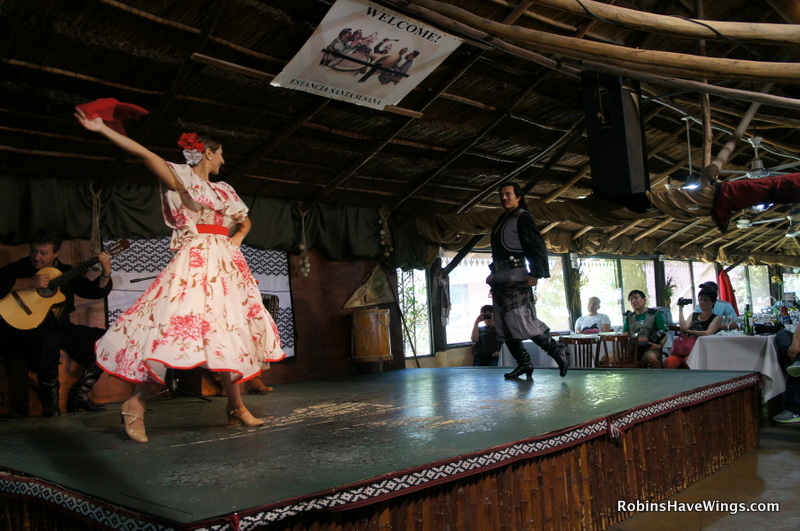
Tango at Estancia Santa Susana
More tango
Luca leads
Racing to the rings
Capturing the ring
Robyn finally gets that ride, and with Luca to boot
STG at Estancia Santa Susana

It was a fun day on the estancia, we all agree. We board our bus back to Buenos Aires taking the route known as the Pan American Highway, the world’s longest road stretching as far south as Patagonia in South America to Alaska in North America. Once back in the city we see how Argentinians spend a Saturday afternoon. They attend flee markets and outdoor concerts or simply sit in the park beneath yellow umbrellas.

Later that night….

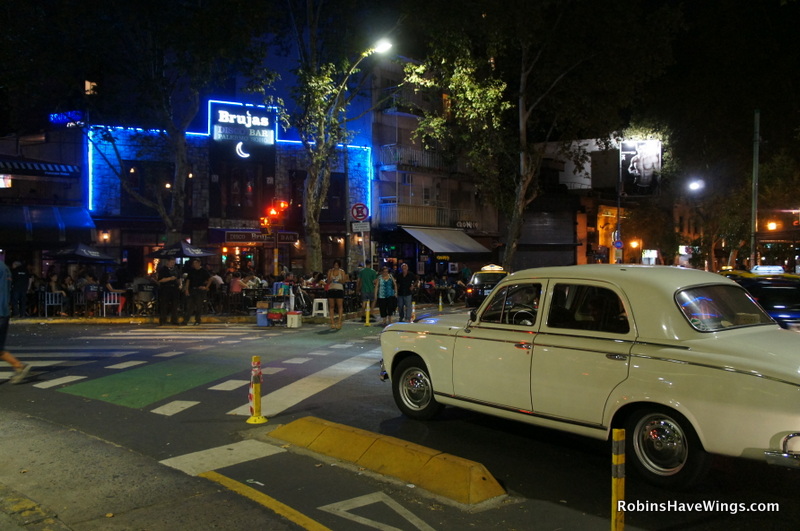
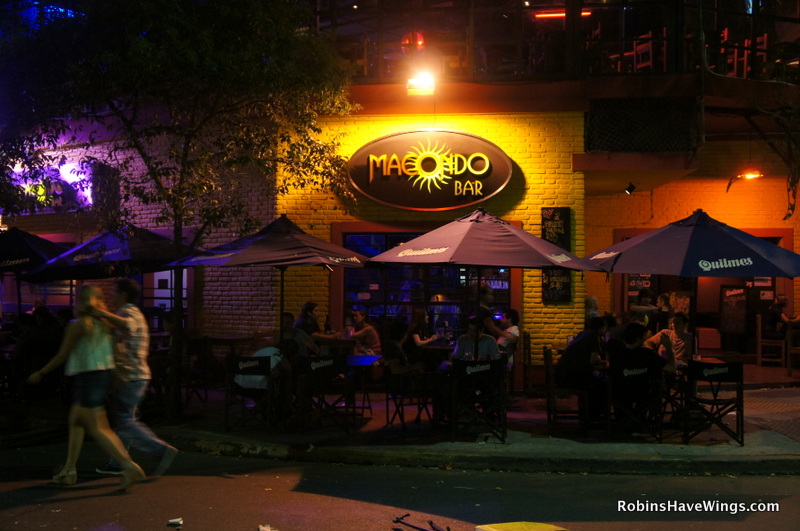
A few of us decide to venture out to explore Argentina’s night life. We decide to go to a Colombian dance performance that Luis recommended at an arts building in La Boca. There were six of us and we split up into two cabs, Carmen, Presleith and Alan in one and Sheneekra, Kenitra and I in another. When Sheenekra, Kenitra and I reach the destination, under a dark underpass next to a dilapidated old port, we’re thinking we are definitely in the wrong place. The taxi driver asks a security guard if he knows about an event at the building and I make out that the place is closed. Some how I manage to pull some Spanish vocabulary from my freshman year of college from the recesses of my brain and tell him that our guide told us about a special performance in the building. He goes to ask another guard behind the clearly closed building gate and he doesn’t seem to know about any event. We don’t see Carmen, Presleith or Alan, so we assume they learned the same information. We then direct our taxi driver to the Palermo Soho area, which we’ve been told is a popular area with the trendy Argentinian crowd. Along the way, while stopped at a traffic light we spot a dredlocked black man inside a store and there are others like him inside. As we pass, we see that it’s a barbershop, just like one you might see in any black neighborhood in the states. Ironically, the barber shop was on a street named Estados Unidos. Translation: United States. When we reach Palermo Soho we think this is more like it. Restaurants with bars and dance floors surround a plaza named for Julio Cortezar, many blasting American music and serving American food like pizza, hamburgers and hot dogs. We opt for a spot serving sausages and meat on wooden tablets along with vegetarian options and empanadas, of course. We review the days events over tasty food and drinks on a warm Argentinian evening.
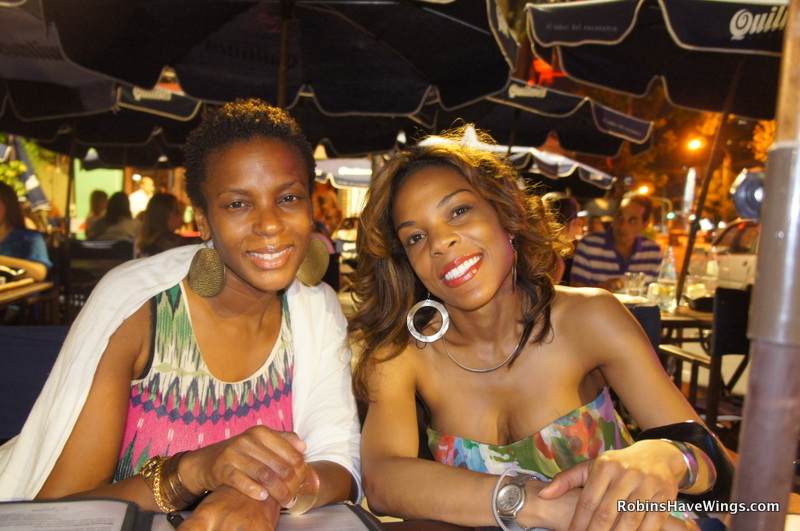
Sheneekra and Kenitra in Palermo Soho
Late night dining
Cruising in Palermo Soho

Montevideo’s Old City and an Old Friend

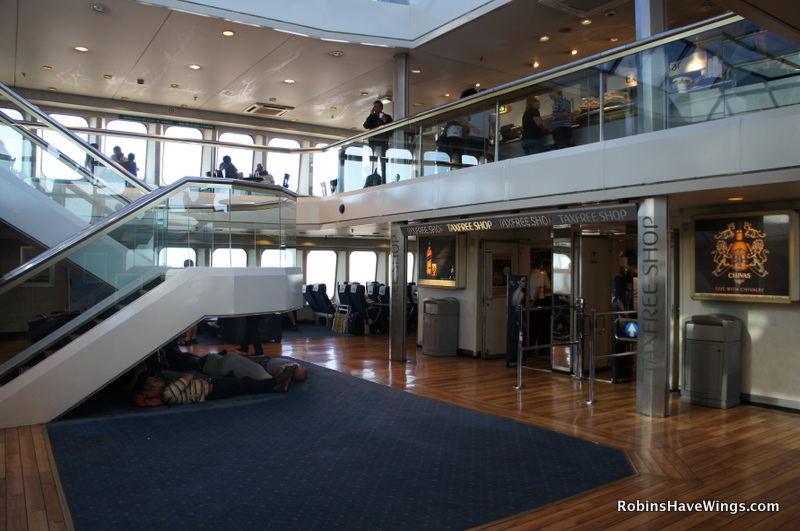
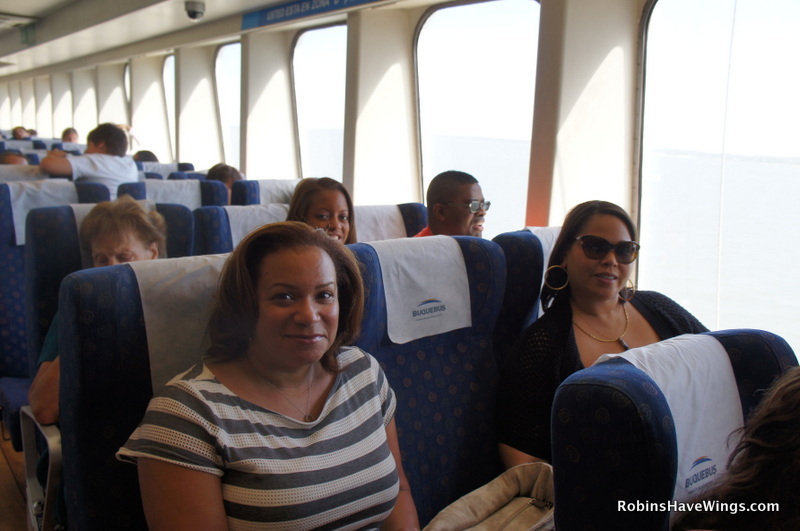
Montevideo, the capital of Uruguay, is lovely. Walking in Ciudad Vieja feels familiar with hints of Havana and the French Quarter wafting out from its windows festooned in wrought iron. But getting to the little gem of a city is a bit of a chore quite frankly, especially by ferry. The ferry ride itself is only 3 hours. I’ve taken longer journeys for a side trip, but the one hour, or more, slog to get through customs made this journey more tiresome than expected. As we shift from foot to foot in line, Gai says “aduana” or customs in Spanish has become a bad word. We stood in a similar line upon entry to Argentina just a day ago. But once we make it through, we are impressed by our mode of transportation. The ferry oddly called Buquebus is probably the nicest commuter ferry we’ve all been aboard. We all had thoughts of the Martha’s Vineyard ferry. But this is more like Acela’s Amtrak train on water and better. It’s got two decks with comfy spacious seats, cafeteria-style food areas serving fresh sandwiches and croissants, and the kicker, two floors of duty-free shopping. Taking a peek in you’d think people took the ferry just to shop for perfume. Gai and Floyd actually went in and reported that these were serious shoppers who weren’t afraid to use a sharp elbow to two to get to their tax-free trinkets.

Boquebus
Inside the Boquebus ferry to Montevideo
Montevideo bound
Montevideo bound

We use our time aboard to nap, stare out at the wide Rio de la Plata and get to know each other. I learn that Alan actually hails from South America, Guyana, specifically, even though he grew up in New York. We end up taking about his native home a bit from the Jonestown tragedy to Guyana’s Caribbean culture and future in forestry. It’s nice to get a little culture from a fellow traveler before we disembark for more in Uruguay. Esteban, our guide, is waiting there for us. He’s got a grandfatherly air about him and he explains that many of the people flowing from our Buquebus and the giant cruise ships around us are Argentinians or Brazilians who have come to Uruguay to vacation at its popular beaches like Punta del Este, known as the St. Tropez of Uruguay. But it’s clear that what excites Estaban the most is history. It’s lucky that he works in a place like Montevideo, a former Spanish fortress, which is oozing with it. The Spaniards chose Montevideo as a spot to protect their agricultural and economic interests in Uruguay from the encroaching Portuguese. But Uruguay shares a similar heritage to its Argentinian neighbor with European immigrants like the Italians and French influencing its architecture and food.

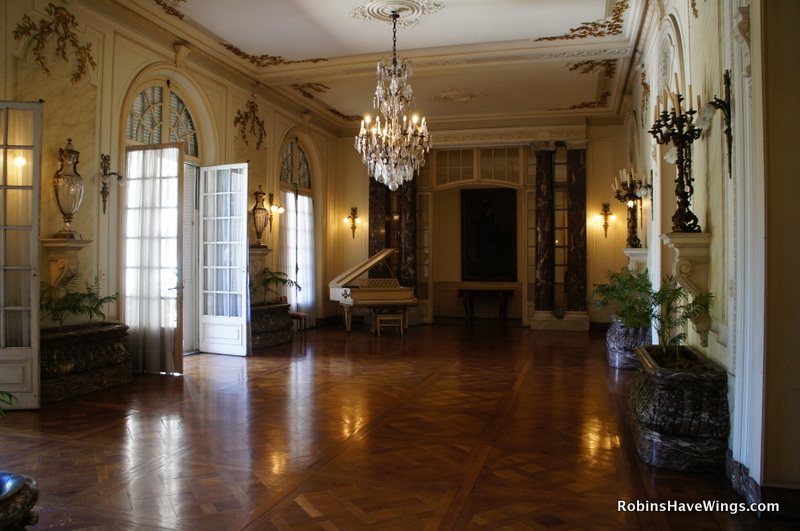
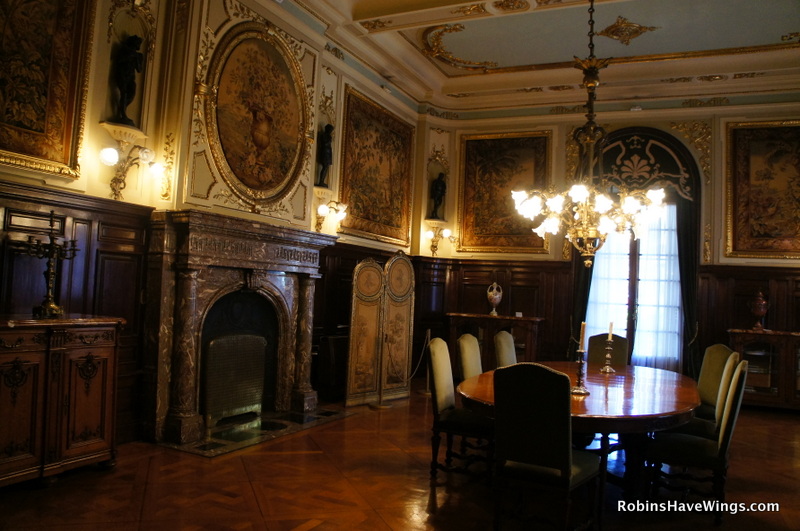
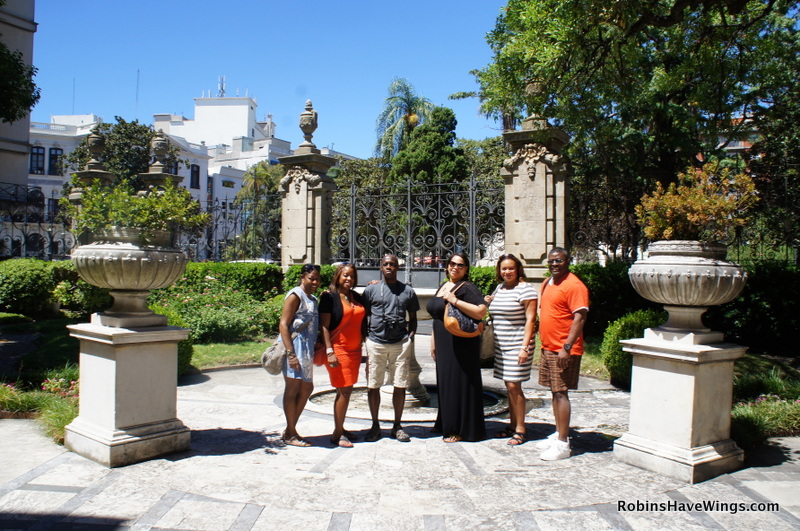
Our first stop at the Museo des Artes Decorativas demonstrates this blend of cultures and the colonial grandeur that once reigned in Montevideo. It’s an architectural stunner for sure. Just stepping into its airy entry foretells the gorgeous detail inside. The former home of sibling industrialists also happens to be the place where John Paul II brokered a treaty between feuding Argentina and Chile. It was also Uruguay’s first theater. You can imagine it standing in a breathtaking ballroom, complete with crystal chandelier and guilder piano. Gai and I immediately think Versailles in a much smaller, less overdone kind of way. The influence of the building’s French architects is unmistakable. Restored furnishings liter some of the rooms, while other lay bare, exhibiting the art of more modern Uruguayans.

Museo des Artes Decorativas
The room where John Paul II brokered a treaty between Argentina and Chile
On our terrace

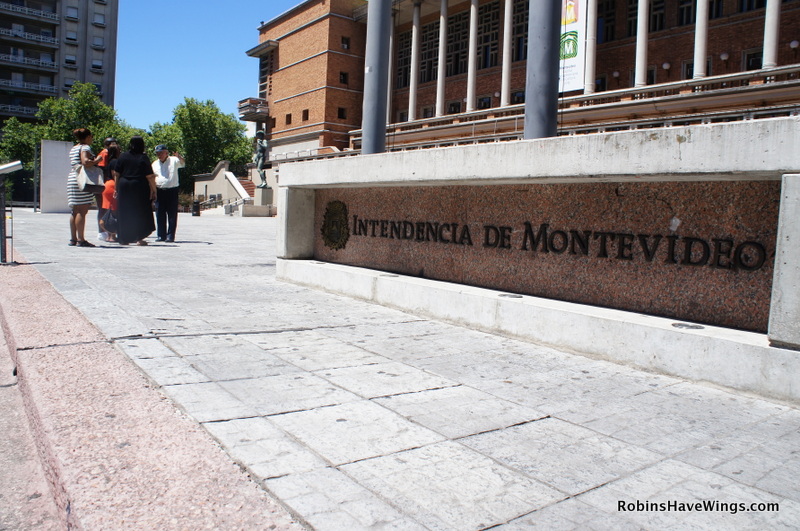
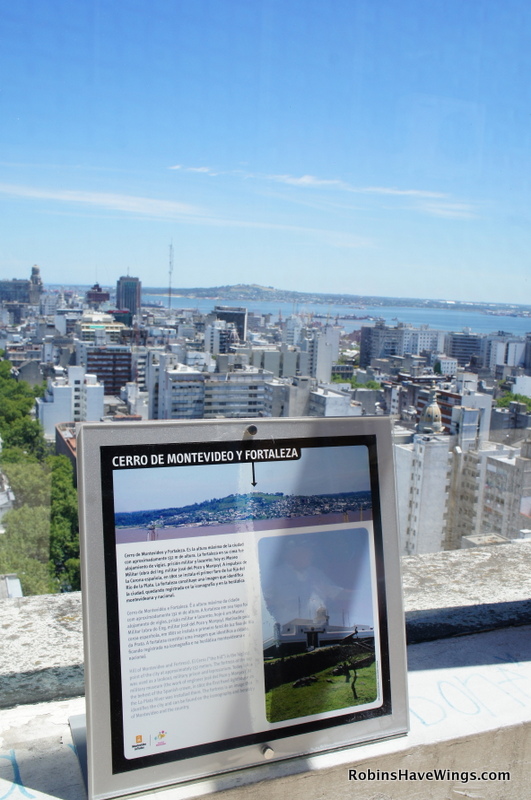
We get a look at present-day Montevideo from the most unlikely of places, in my opinion, the city’s municipal building. After rickety ride to the 22nd floor of Montevideo’s city hall, we are rewarded with a 360 view of city below. Every important site unfolds before us an Esteban tries to tell us about them all. It’s here that we learn how Montevideo got its name. Historians say that when the Spaniards came to scout this place they spotted a hill that would make a good place to settle. “Monte” means hill in Spanish. This also happened to be the 6th hill they spotted and 6 in Roman numerals is VI. The hill happens to run east and west or “de este y oeste” in Spanish, which shortens to “deo” to complete Montevideo. Another story suggests that Portuguese explorers also spotted this place and shouted “I see a hill! I see a hill,” which when spoken in Portuguese sounds a lot like Montevideo.

Montevideo’s City Hall
City View from City Hall

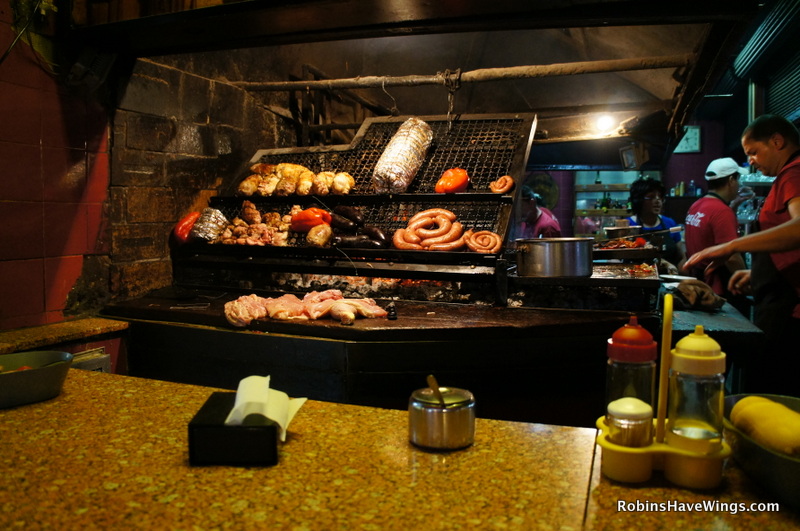
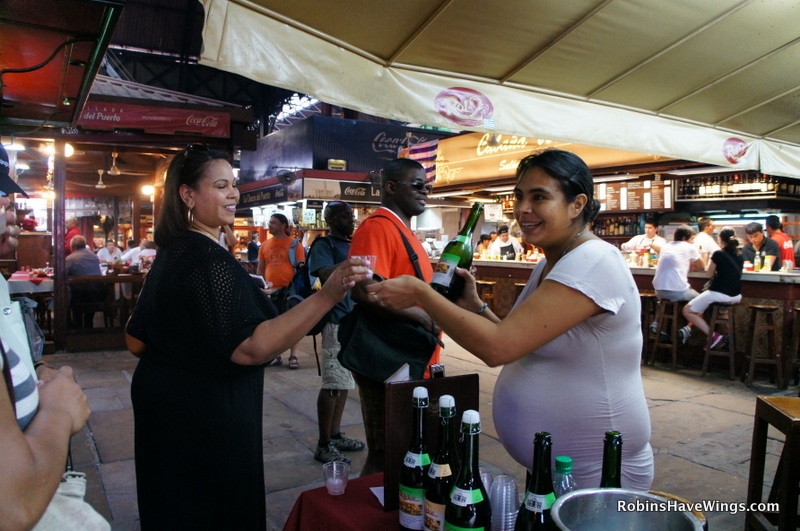
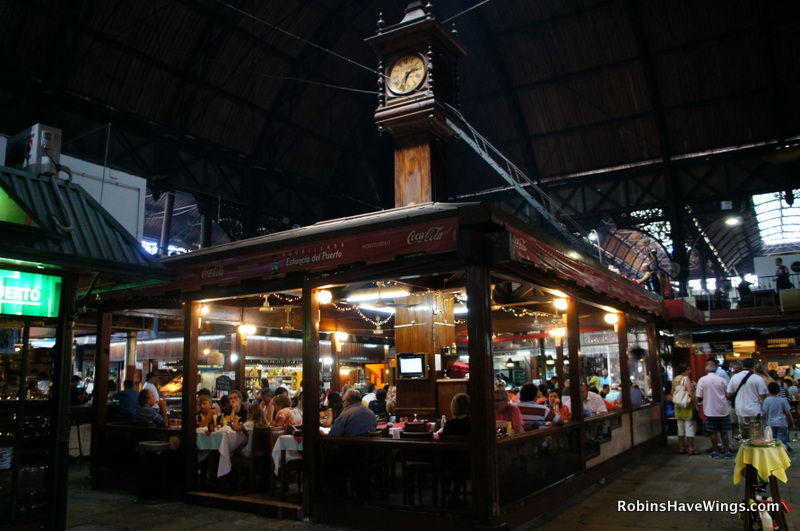
We’d end up seeing much of what we saw from our governmental perch on the ground later in the day, but only after we gorge ourselves with meat at Mercardo del Puerto, Montevideo’s old port marketplace that has been transformed into a foodie destination. We ogle roasting meats from every part of the cow, Uruguay’s claim to fame. There are sweaty plump sausages and plates with steaks hanging over the side. What does a meat-lovers heaven look like? Mercado del Puerto. Before we select one of the parillas or steak restaurants to eat, we sample Uruguay’s drink of choice, “medio y medio,” or half and half. We’re not talking half milk and half cream folks; we’re talking half white wine and half sparkling wine, and it is good. Refreshing and sweet, but not cloyingly so. A bottle appears on our table at Cabana Veronica where we choose to eat. Many of us order the petite filet which looks unremarkable on the plate, but packs a succulent punch on the tastebuds. It’s perfectly cooked at a juicy medium.

Roasting meat at Mercardo del Puerto
Tasting Medio y Medio
Parrillas
At Cabana Veronica before the meat arrives
Petite filet

Along with a good meal, I get some good conversation with Estaban and Ronnie, a Brazilian at the table next to ours. Ronnie mistakes our group for Brazilians at first and is intrigued to learn that we are Americans. In my limited Spanish, I tell him that I have visited Bahia in Brazil and he tells me that he is from Rio Grande do Sol and that he is a gaucho, South America’s cowboy. How fortuitous. We plan to visit Argentinian cowboys the next day. Ronnie smiles and says through Esteban that there is a fraternity between Argentina’s gauchos and Brazil’s. But soon our conversations turns back to why he thought our group was Brazilian, our brown skin similar to the people of Brazil’s Bahia. We some how are able to discuss the complexities of slavery in Brazil, Uruguay and the US across two languages. Ronnie says discrimination doesn’t exist in Brazil for black people as it seems to still linger in the US. But Estaban says there is still some in Brazil, where his son lived, and Uruguay, who’s people of African descent are more visible than in Argentina. In fact, Uruguay celebrates Carnival throughout the month of February with a parade of its African descendants dancing, drumming and singing Candomble songs. There is even a museum dedicated to the history of Carnival in Uruguay. The other day, we learned from Luis, our Argentinian guide, that slavery never took root in Argentina because slavery was abolished long before it was in the US and the industry was not supported by sugar cane, cotton or tobacco, but cattle.

Argentinian and Brazilian brothers, Esteban and Ronnie

This kind of history is always interesting while traveling. You are always looking for similarities and differences. Some people want to see themselves in the places they go. So, we naturally take notice when we see a similarly-hued person and wonder about their story and how they came to be in this place. We see them in the old town having a drink with friends, working construction or playing soccer in the streets. It makes a foreign place feel a little less foreign in a way. And, nothing makes a place feel less foreign than meeting an old friend. My high school classmate Sarah, who some may remember from my travels in Montreal has traded the cold French Canadian winters for a warm South American summer in Montevideo. She’s carving out a new life teaching English to middle schoolers; something I never saw one of the cool kids from high school doing. But life and the places we go have a way of changing us, as we discuss. She and I steal an hour together in the Mercado, catching up while keeping an eye on her gorgeous boy, Duke, balancing on fountain ledges and inspecting rocks near beautifully-carved buildings. She says the people here are just as warm as the climate and laid back. I see her fitting here. She’s got that bohemian vibe like the artisans on Sarandi street and its wall art, leading to Constitutional Square, a gathering place for those laid-back locals, who seem to find any place suitable to relax. We see them sunning on La Rambla, Montevideo’s main thoroughfare hugging the Rio de la Plata where it meets the Atlantic Ocean. We see them laying out in parks and other random open spaces, too. I can see why she chose this place. We get in as much time as we can before she drives me back to meet my fellow travelers and wait, and wait some more, before boarding the Boquebus back to Buenos Aires.

Sarah, Duke and Me

We know for sure that Esteban showed us everything he could fit into a 5 hour tour of his city. If I could go back, I’d go for more than a day to spend more time wandering the old city on my own, eating more meat, catching a spontaneous Candomble performance and drinking more medio y medio! Here’s more of what we saw during our brief visit:

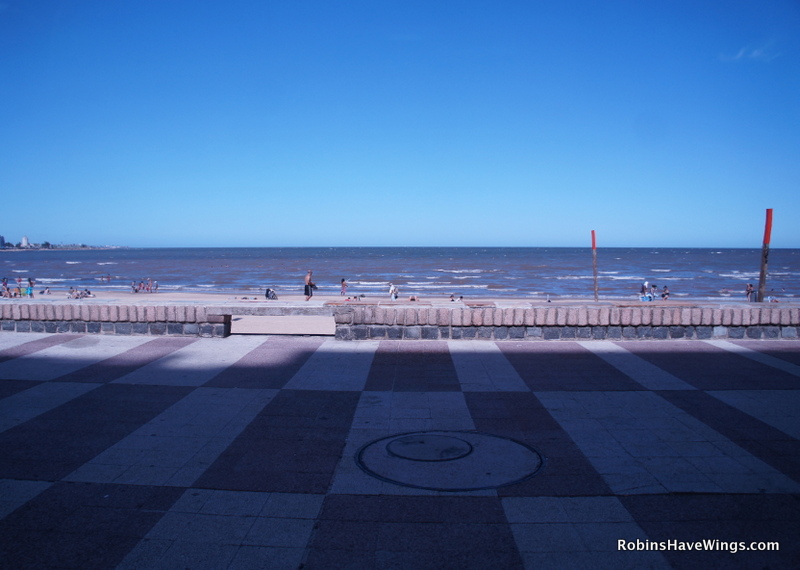
Uruguayans at play on a beach just off La Rambla
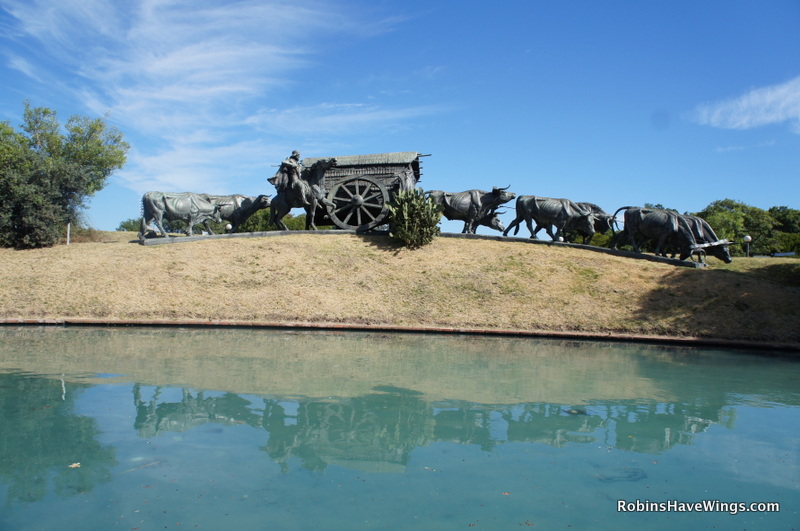
La Carreta or “ox cart” by famed Uruguayan sculptor Jose Belloni pays homage to Montevideo’s early ox-cart drivers and beef industry beginnings
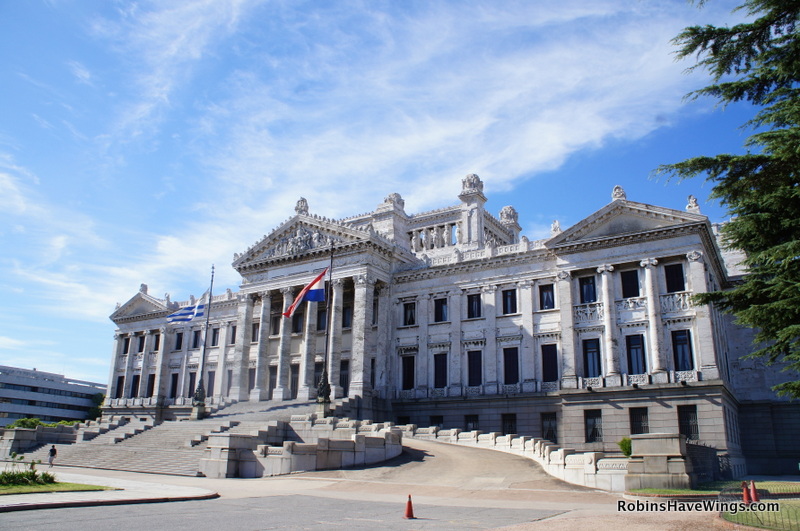
This is Uruguay’s equivalent of the Capitol in Washington, DC. In fact, Uruguay modeled its government after ours, down to the underground tunnels running to nearby legislative offices
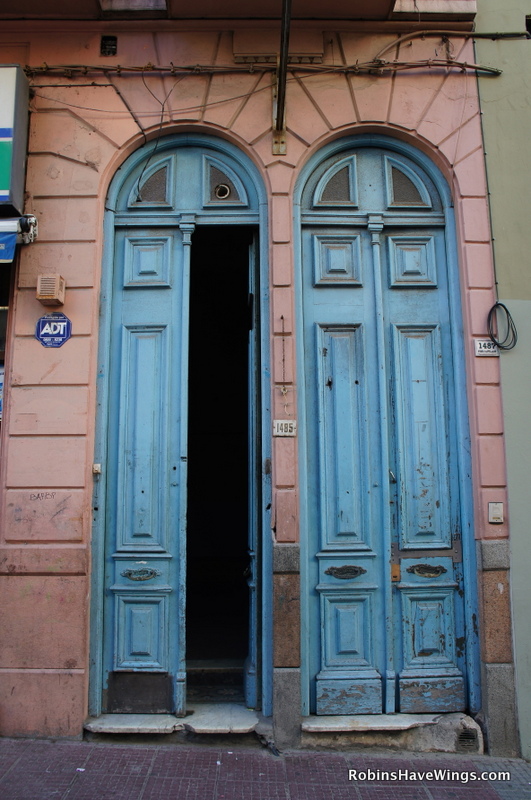
Salvador do Bahia, Old Havana or Ciudad Vieja in Montevideo?
I befriended this trio having an afternoon snack in Ciudad Vieja
How cool are we in Ciudad Vieja?

Argentina’s Legends Past and Present

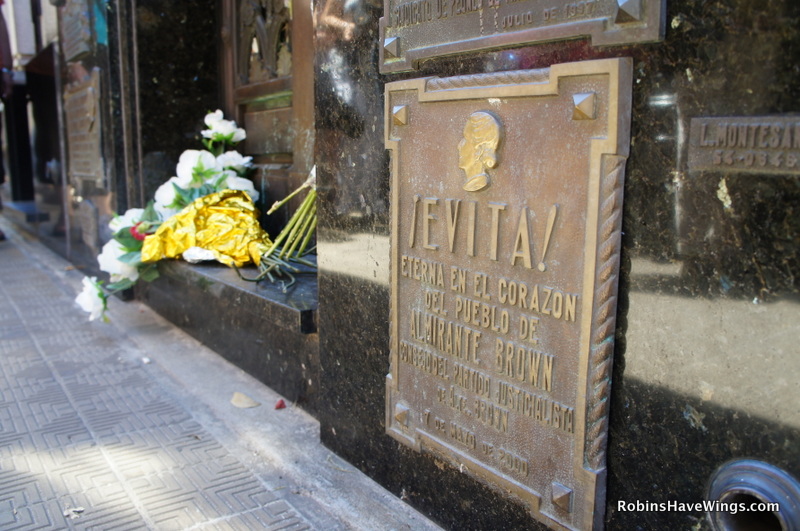
Our hotel, Dazzler Tower Recoleta in Buenos Aires, is a block away from a cemetery. Not just any cemetery. It’s the cemetery where Eva Duarte de Peron, aka Evita “Don’t Cry for Me Argentina” Peron, rests in peace. Well, she probably isn’t resting in peace because there are streams of tourists snapping photos of her tomb, including me and the 9 other tourists that I’m traveling with. But how could you not? She is Argentina. As I think about it, she’d probably be used to all the attention since she was known for drawing a crowd in life.

Evita’s final resting place

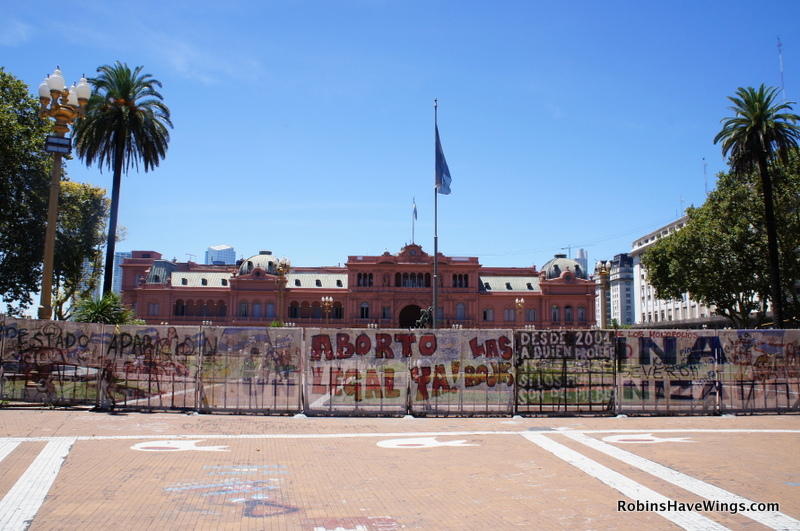
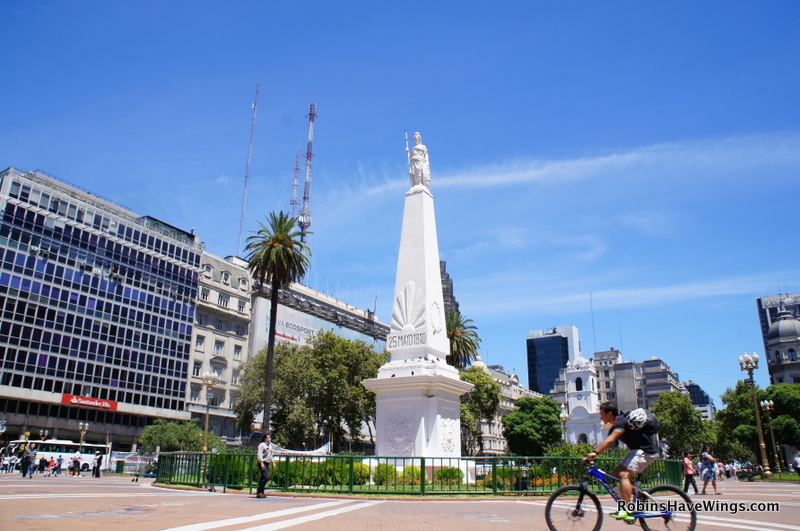
Shortly, after paying tribute to Argentina’s celebrated first lady at Cemetario de la Recoleta, we find ourselves standing in front of the palatial, pink-hued building where Peron delivered a musical-inspiring speech to down-trodden throngs in Plaza de Mayo. The building known as the “Pink House” or “Casa Rosada” is where the current president works and the plaza is still a place for those with something to say to voice their opinions whether through actual demonstrations or painted signs of demonstrations. It definitely feels like their version of the White House’s Lafayette Square in Washington, DC.

Casa Rosada
Plaza de Mayo

I come to to contemplate Evita and Argentina’s civil liberties today, because I’m on another group trip with Spanning the Globe Tours led by the eponymous explorer Gai Spann. Gai was the travel brain behind my big birthday trip to Barcelona a few years back and I’ve since traveled with her to Jamaica, Napa and Barbados. She seems to have a knack for organizing trips to places that I want to go, coupled with the uncanny ability to bring together like-minded travelers. For instance as I walked with fellow travelers Kenitra and Gia through Cemetario de la Recoleta, we agree that we could spend an afternoon snapping photos in this mysteriously beautiful place. Before we even make it to the cemetery, while making our way through customs, Presleith and I discuss our love of ancient historical places. She talks of Greece and I of Angkor Wat. She’s on a mission to see all the UNESCO heritage sites. Alan describes what Gai does as more like building a travel network. We all seem to have a natural curiosity about the world in common, which makes traveling in a group like this pretty easy.

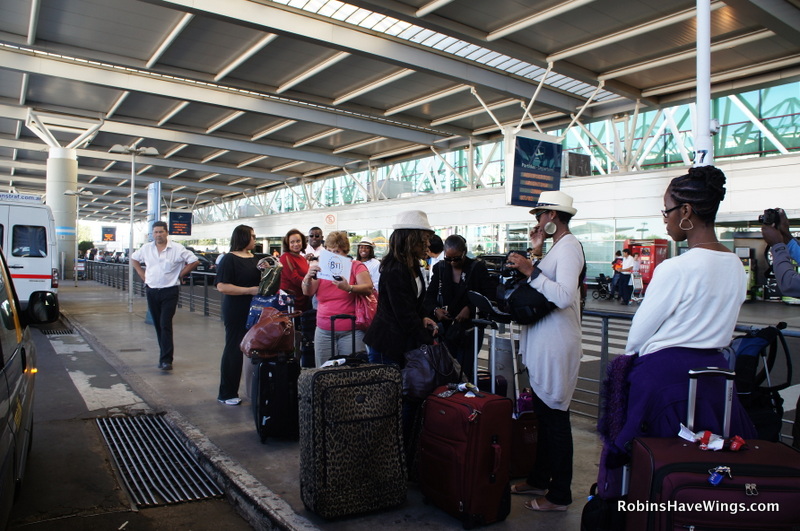
Gai’s travel network has arrived.

It also doesn’t hurt when you’ve got a colorful local guide like Luis Mendias leading the way. He’s kind of the perfect example of Argentina’s European beginnings. He’s of Italian heritage, grew up in England and has lived much of his life in Argentina. The country itself while originally settled by the Spanish saw an influx of Italian and other European immigrants in its early history. He says Argentinians speak Spanish with an Italian accent and a British state of mind. Luis has no problem poking fun of himself and his rotund figure, noting that he’s been mistaken for John Goodman and that his wife finds tango with him a bit challenging because of his tummy. He’s definitely not lacking the passion required for tango. We are delighted by his heart-felt delivery of a tango song on our mini-bus. He’s good. Not just at singing, but touring. You can tell he enjoys telling the stories of Buenos Aires, past and present, like the classic Rodin-esque sculptures holding court over Buenos Aires’ parks now populated by sunbathers and dog walkers.

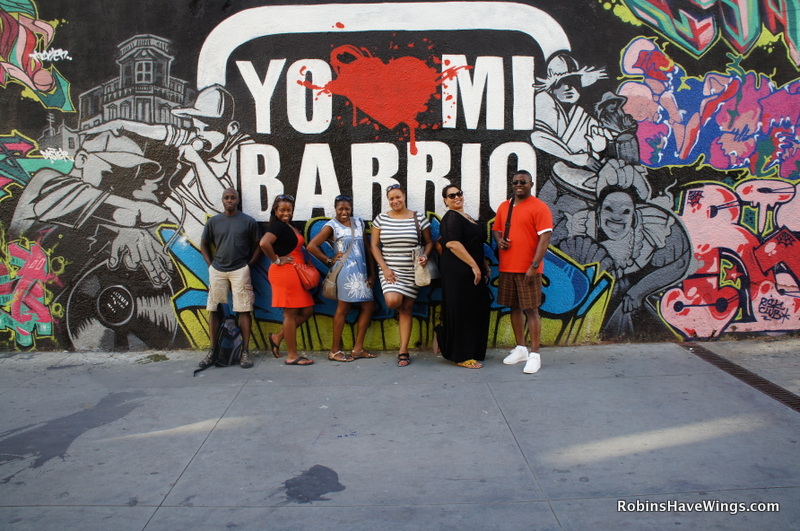
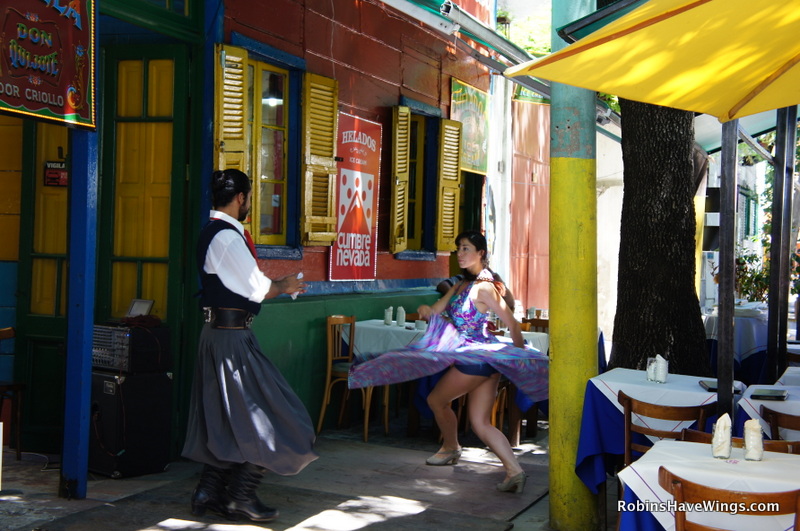
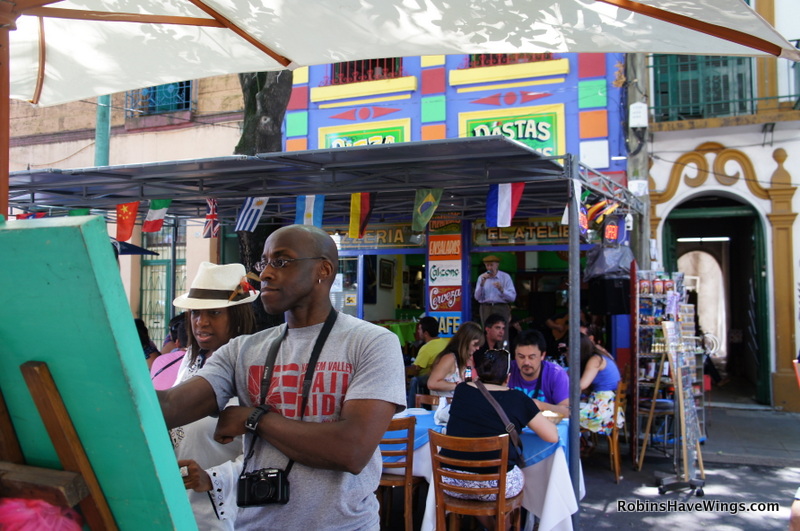
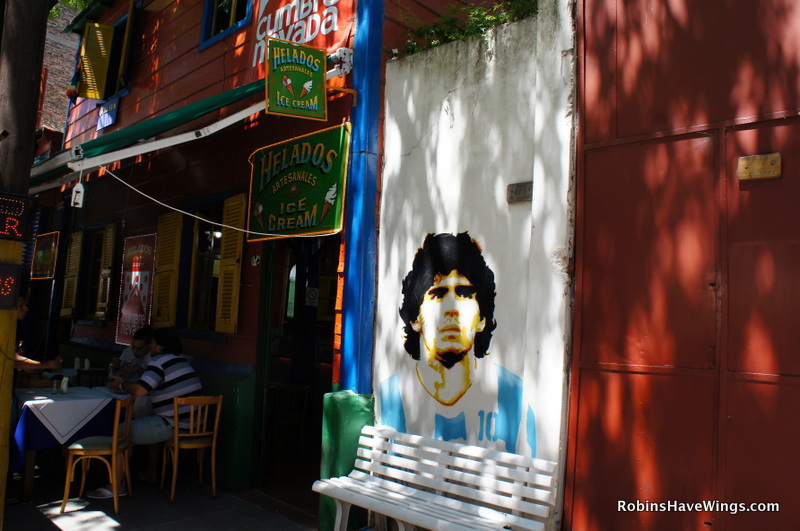
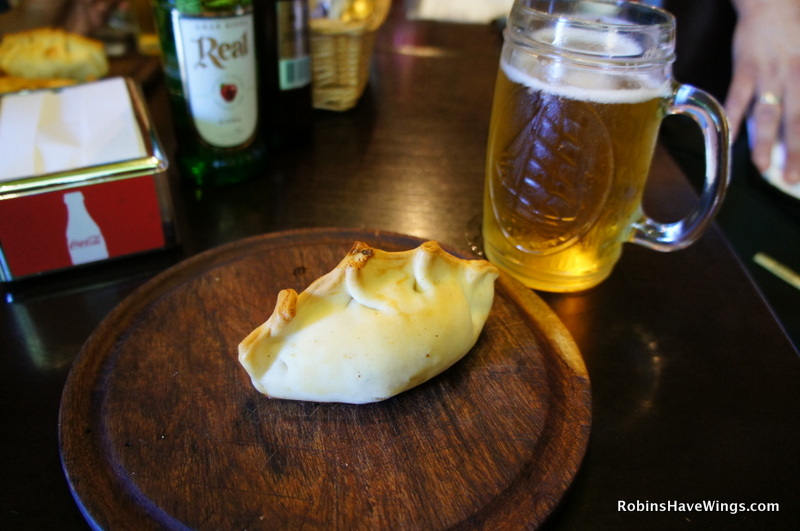
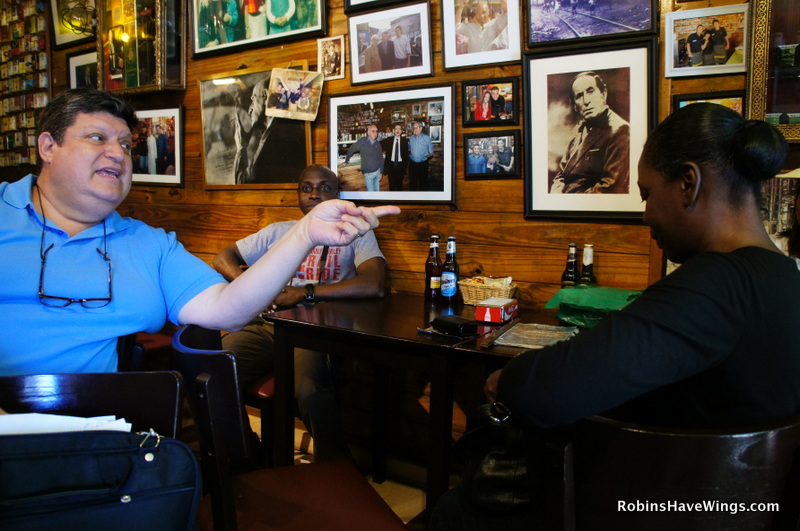
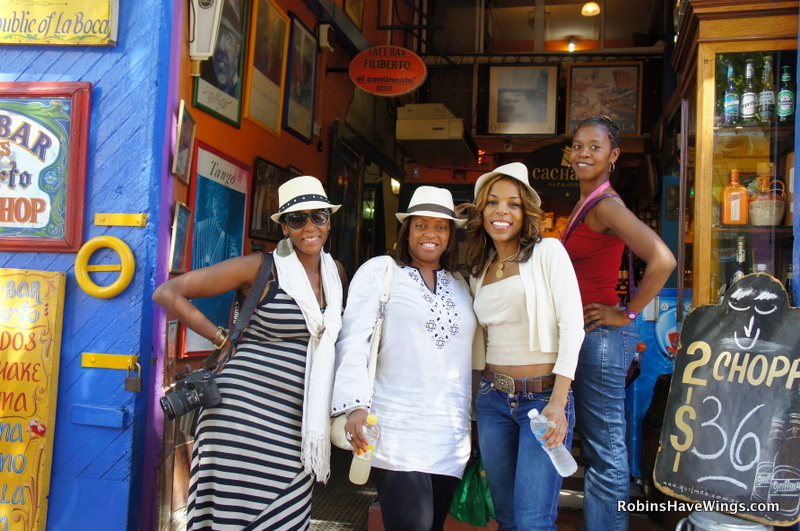
He seems to get more animated when he takes us to La Boca, the barrio where early Spanish and Italian immigrants settled, painting their homes in one color and then another when they ran out of paint, giving the place its vibrant look to match its new vibrant artsy cafe culture. The place brings us to life too, especially since we haven’t stopped since our 8 hour flight from Miami to Buenos Aires. Luis takes us to Filiberto a spot that Bill Clinton visited without Monica, he quips. And sure enough, there is a photo of Bill on the wall next to photos of famous Argentinians. We actually spot a famous Argentinian in the flesh, football royalty Maradona. He’s greeting fans in the middle of La Boca’s main drag the Caminito and charging them for photos. Floyd, a fellow traveler, turns into a 15-year-old soccer fan right before our eyes, darting away to meet an idol. It’s actually pretty cool to see, along with the tango performers and street art. What’s cool to the tastebuds at 2pm on a warm 80-degree day is a Quilmes beer straight from the tap with chicken and beef empanadas at Filbertos.

Tango in La Boca
Gai and Alan checking out the art in La Boca
Maradona wall art. Didn’t get a good shot of the real one, but this version is nice.
Empanada and cerveza.
Luis sharing a bit about Argentina’s past and present
Sheneekra, Gai, Kenitra and Carmen at Filberto’s

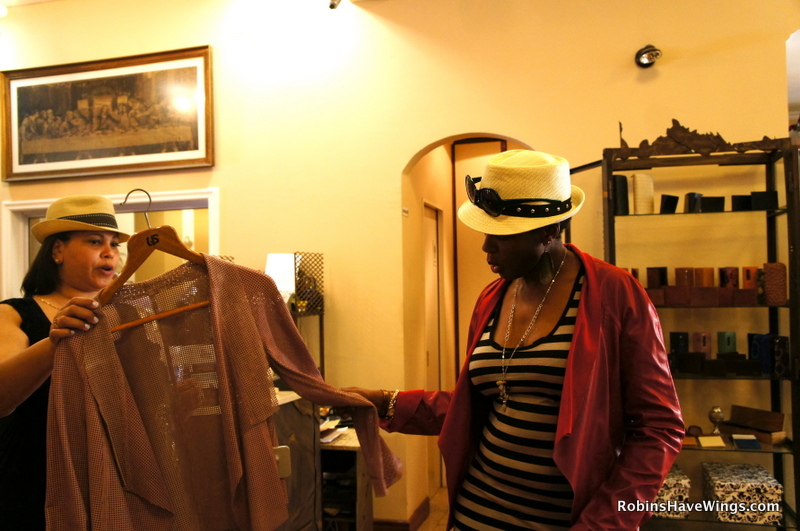
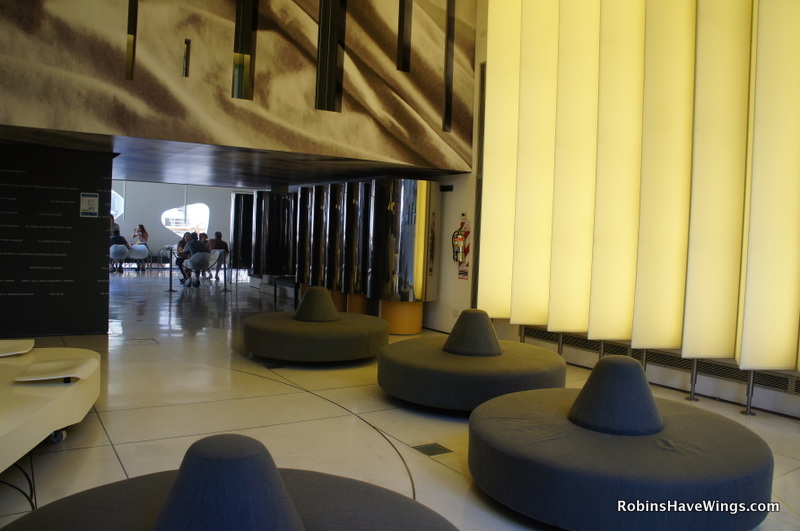
The afternoon snack takes its toll on a few of us at our last stop of the day, Uru, a leather boutique that does custom leather tailoring. We leave the leather shoppers and slowly stroll back to where we started at our modern home away from home, the Dazzler Tower Recoleta.

Gia and Sheneekra Leather shopping
Lobby of the Dazzler, our home away from home

Have you been to any of the places I visited in Buenos Aires, today? What did you think? We have another free day in Buenos Aires this Sunday. How should we spend it?

My Top 12 Travel Moments of 2012

I’m still chronicling my adventures in Thailand and Cambodia, but I wanted to take a moment to reflect on all my travels in 2012. It was a big travel year for me and I clocked more miles than ever, globetrotting from Sri Lanka to Thailand with Hawaii in between. Here are the highlights:

12. Speed Boating in Sri Lanka
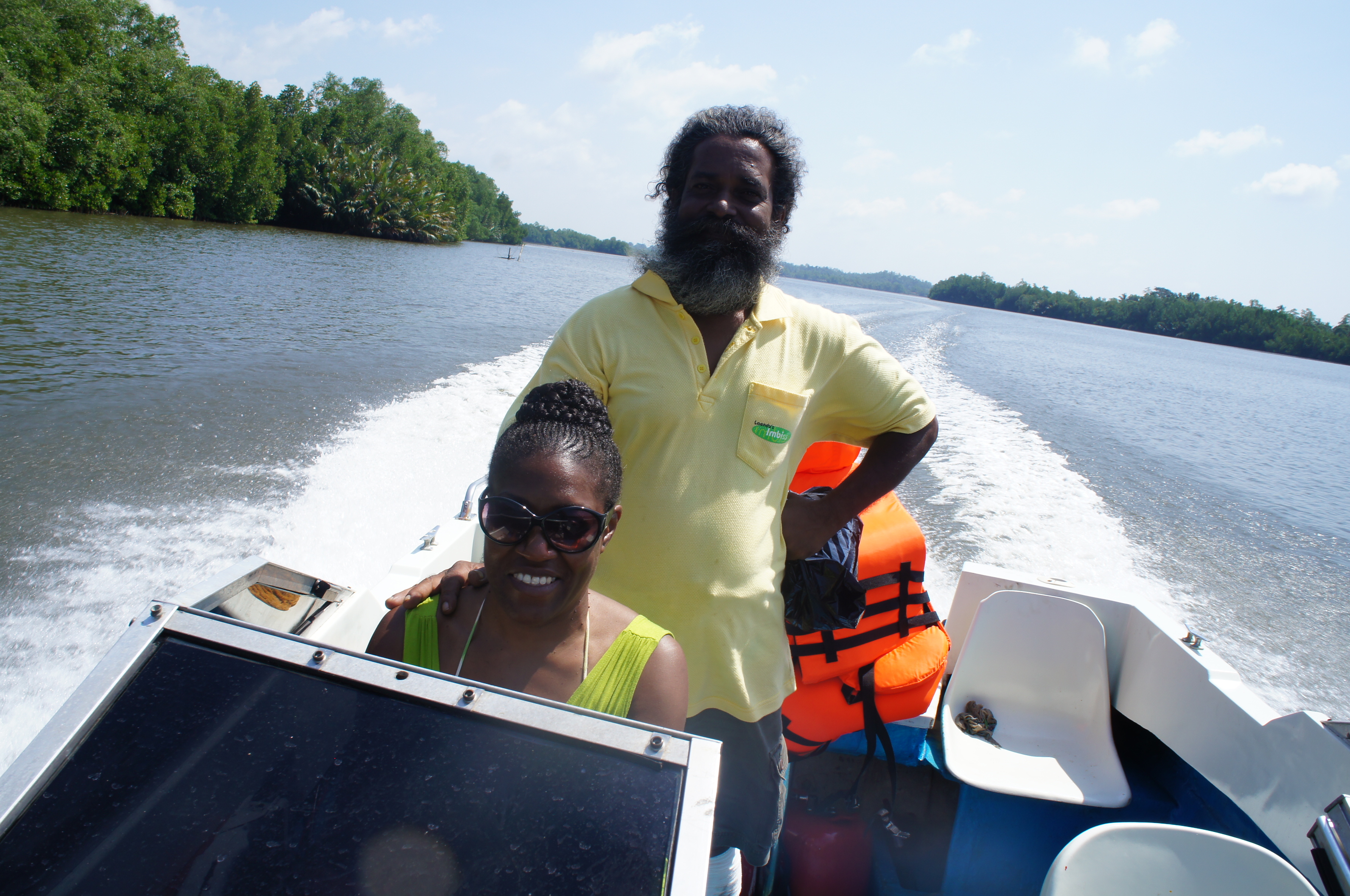
My first trip of 2012 was to Sri Lanka as a guest of my friend Sid. In his hometown on Beruwela in Southern Sri Lanka, I met his Uncle Emil who treated me like royalty, letting me drive his speed boat on the Black River and feeding me sweet coconuts and crab at his laid-back Coconut Bar.

11. Buddha-Spotting in Sri Lanka
This little country is packed with Big Buddhas. One of the most impressive towers at 100 feet over the ancient Dambullah caves which boasts 150 stone Buddha statues dating back to the first century B.C. Check out more of my Sri Lanka road trip pics at TravelChannel.com. I’ve got an Amazing Sights in Sri Lanka slide show there, too.


10. Celebrating in St. Martin/Sint Maarten
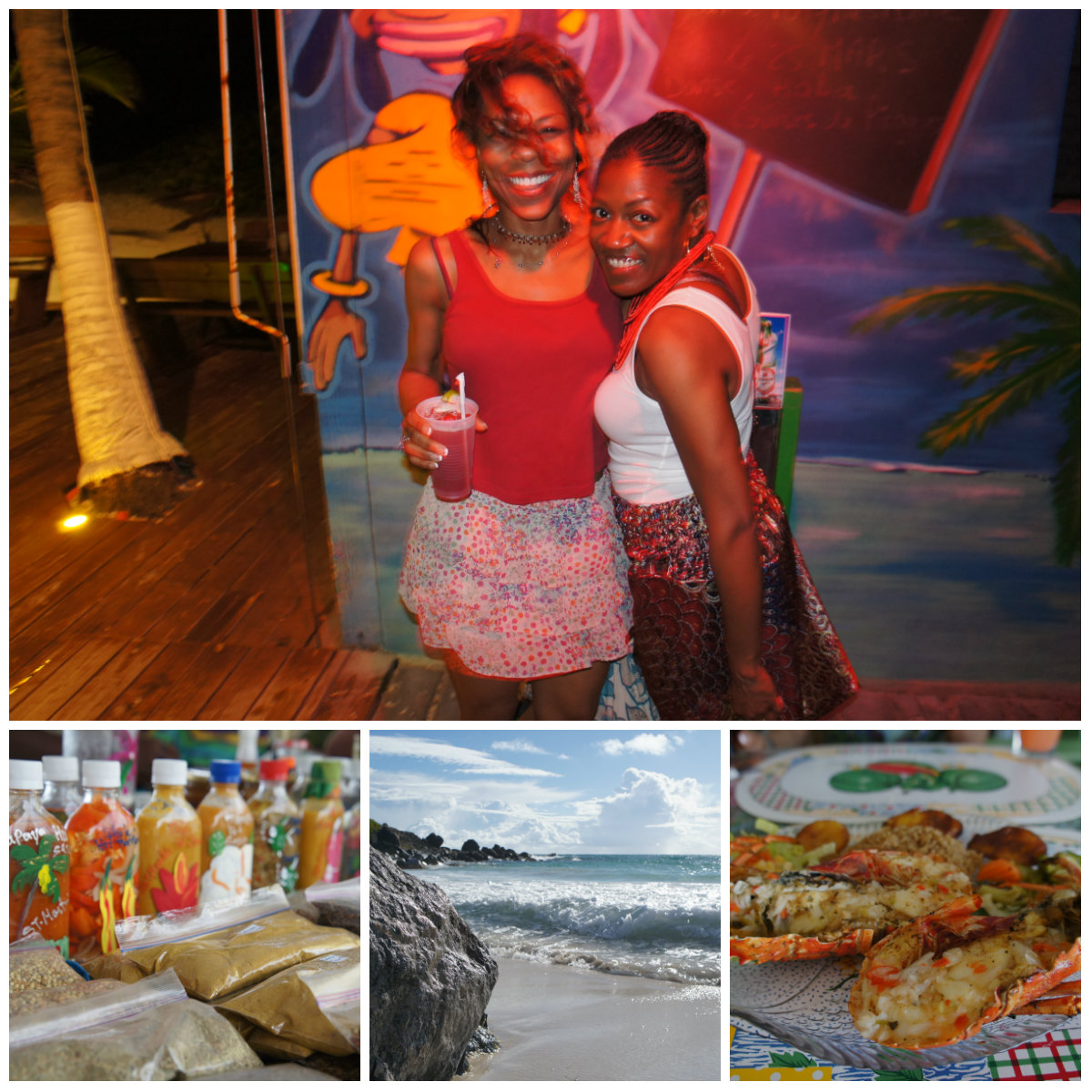
My friend Kenitra asked me to help celebrate her birthday on the exotic former French and Dutch occupied island of Saint Martin/Sint Maarten. We stayed on the French side of the island, steps away from Orient Beach, a haven for nude bathers, with some of the tastiest French food just outside our back door. We jammed with the locals at Boo Boo Jam, shopped for local spirits at the market in Marigot and had the best lobster at a lo-lo (local eatery) in Grand Case called Scooby’s. It was our time doing what the locals do that was the best.


9. Boston Marathon
I got a chance to go to the world’s oldest marathon this year with my friend Inez, who moved to Boston recently. She’d heard the best place to see the race was in Newton near Boston College and Heartbreak Hill. The marathon has a parade like feel with crowds lining the route to cheer for runners rather than floats. Although some runners were dressed as festively as a parade float. There were a couple of runners dressed as hamburgers, lots in tutus and one Elmo. The spectators were pretty creative with their signs, too. My favorites were “Why do all the cute ones run away?” and “Run like you stole something.”


8. Denver’s Black American West Museum
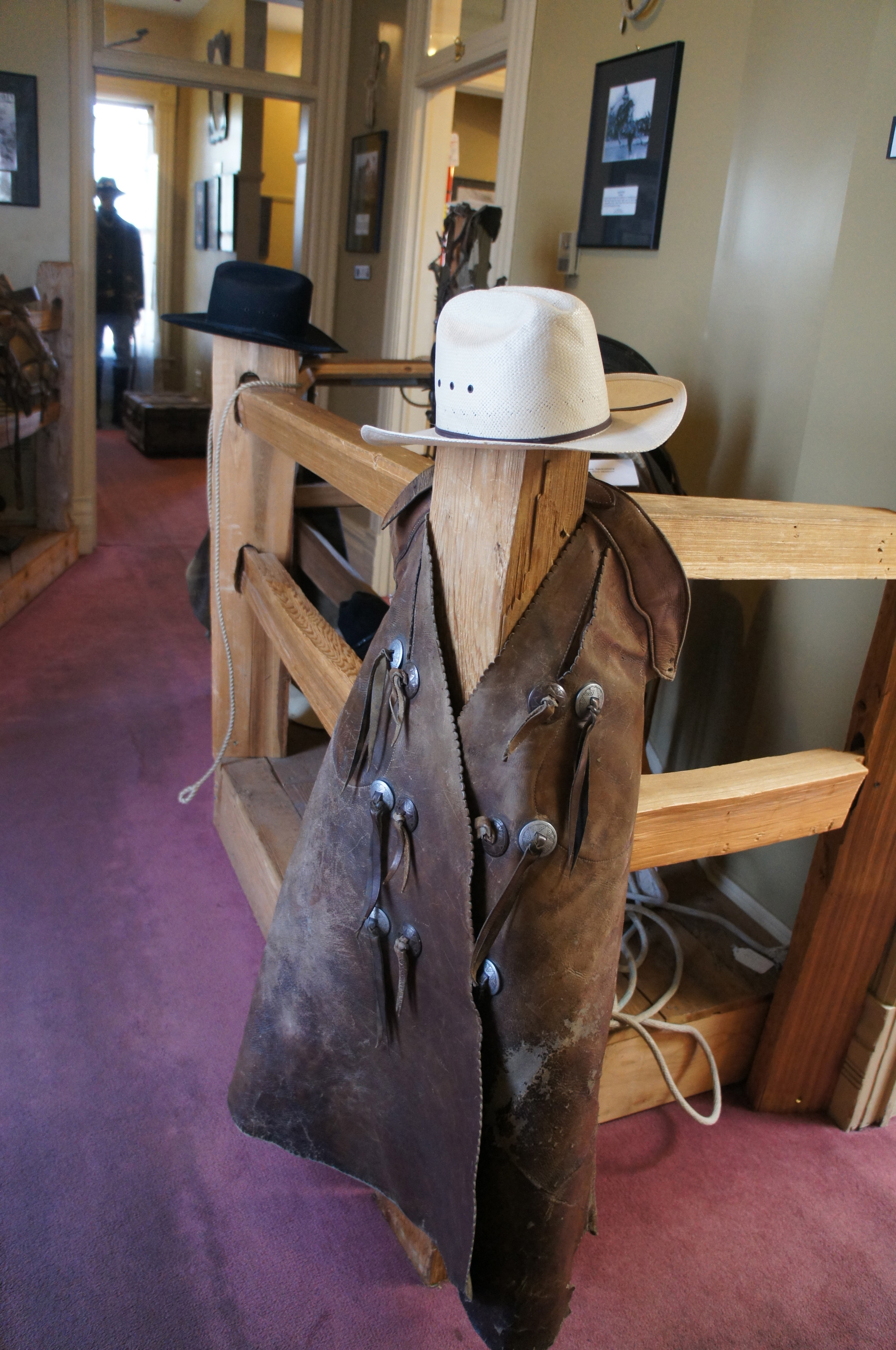
I sought out this little museum in a wooden house when I went to Denver for the Travel Blogger Exchange Conference (TBEX) in June. It’s tucked away in the Five Points neighborhood, once known as the Harlem of the West. When I arrived, Nik Ridley, the museum’s caretaker had dispatched a group of school children to roam through the house on their own saying, “I’m tired of you listening to me. Go look for yourselves.” There’s a lot to see in such a small space like the uniforms of Buffalo Soldiers and the artifacts of black cowboys and the African Americans who ventured west to find their fortune. Did you know that a black cowboy and rodeo rider invented hoolihanding, the move where a rider leaps from his horse onto the back of a steer and wrestles it to the ground by the horns? Me neither. Learned that at the Black American West Museum.


7. Winning an iPhone at TBEX
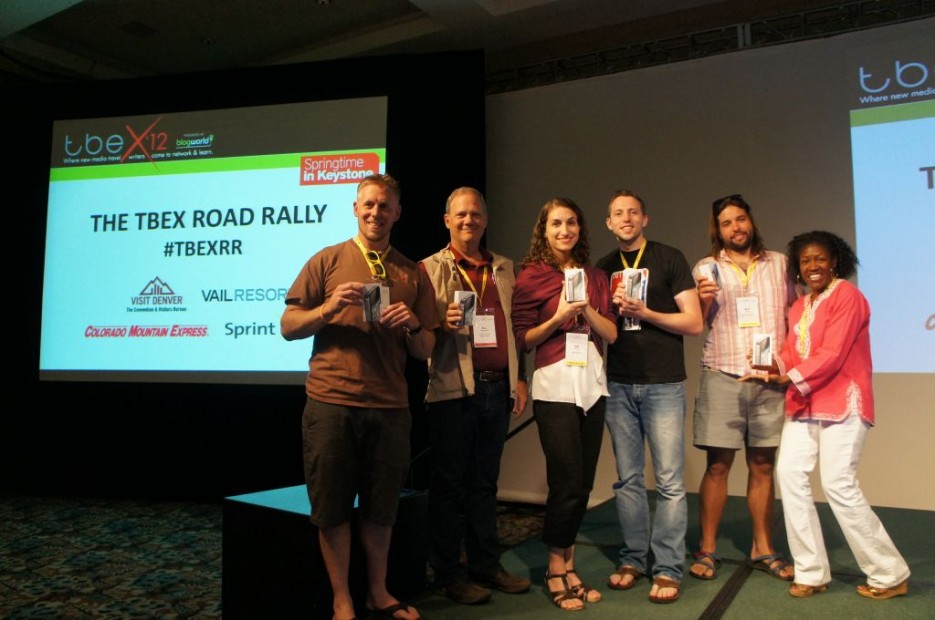
So, the absolute highlight of my trip to Denver was winning an iPhone after participating in the TBEX Road Rally from Denver to the Keystone Mountain Resort, site of the conference. Think Amazing Race in the Rockies. I was a member of Team Yellow, along with 5 other travel bloggers. We turned out to be a creative bunch, churning out the best pics, video and tweets of all the teams on the race, winning iPhones for our efforts. Even better than winning an iPhone, I made lots of new travel blogging friends. Check out the video to see when I was yellow.


6. Hanging at Vaughan’s with Kermit Ruffin in New Orleans
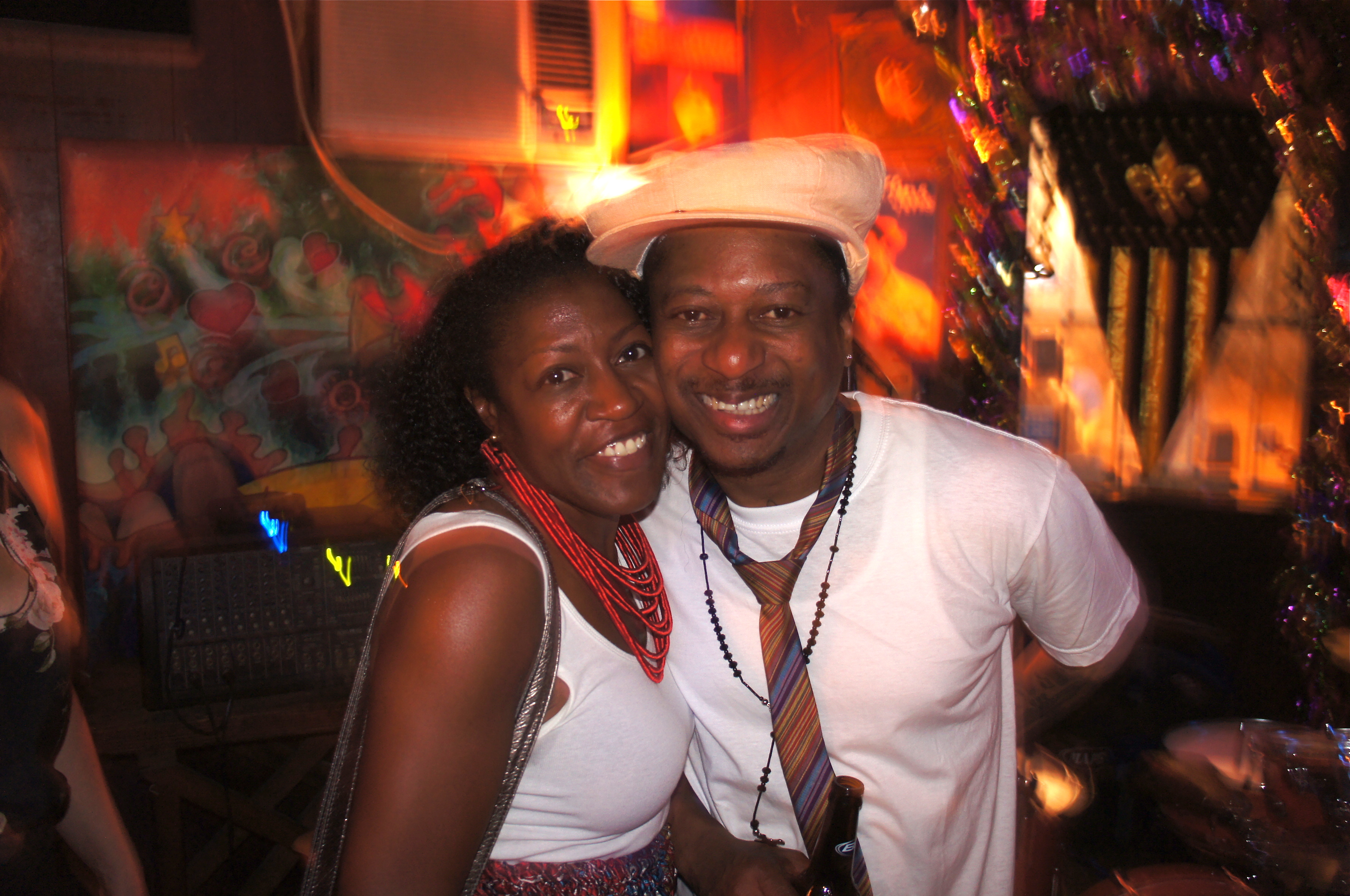
Thursday night is the night to go to Vaughn’s in New Orlean’s Faubourg Marigny/Bywater neighborhood. That’s when local music hero Kermit Ruffins plays. He’s the founder of the popular Rebirth Brass Band and he’s featured on HBO’s Treme. His high-octane, jazz-tinged pop tunes get the crowd jumping and his red beans and rice in the back go perfectly with rum punch. Ruffins won points with me when he played the Godfather of Go-Go, Chuck Brown, during one of his set breaks. It was great way to kick off the Essence Music Festival, which is what bought me to New Orleans. I covered the annual celebration of Black women for TVONE.TV. Check out my coverage.


5. Strolling Through Savannah
Not long after leaving New Orleans, I headed south again to Savannah for my cousin Kali’s wedding. After a belly-busting brunch at J. Christopher’s on Liberty, my folks and I wandered into Chippewa Square where Georgia’s founder Oglethorpe still stands tall and you can sit on the same bench as Forest Gump to contemplate life as a box o chocolates.


4. Ono Hawaiian Food
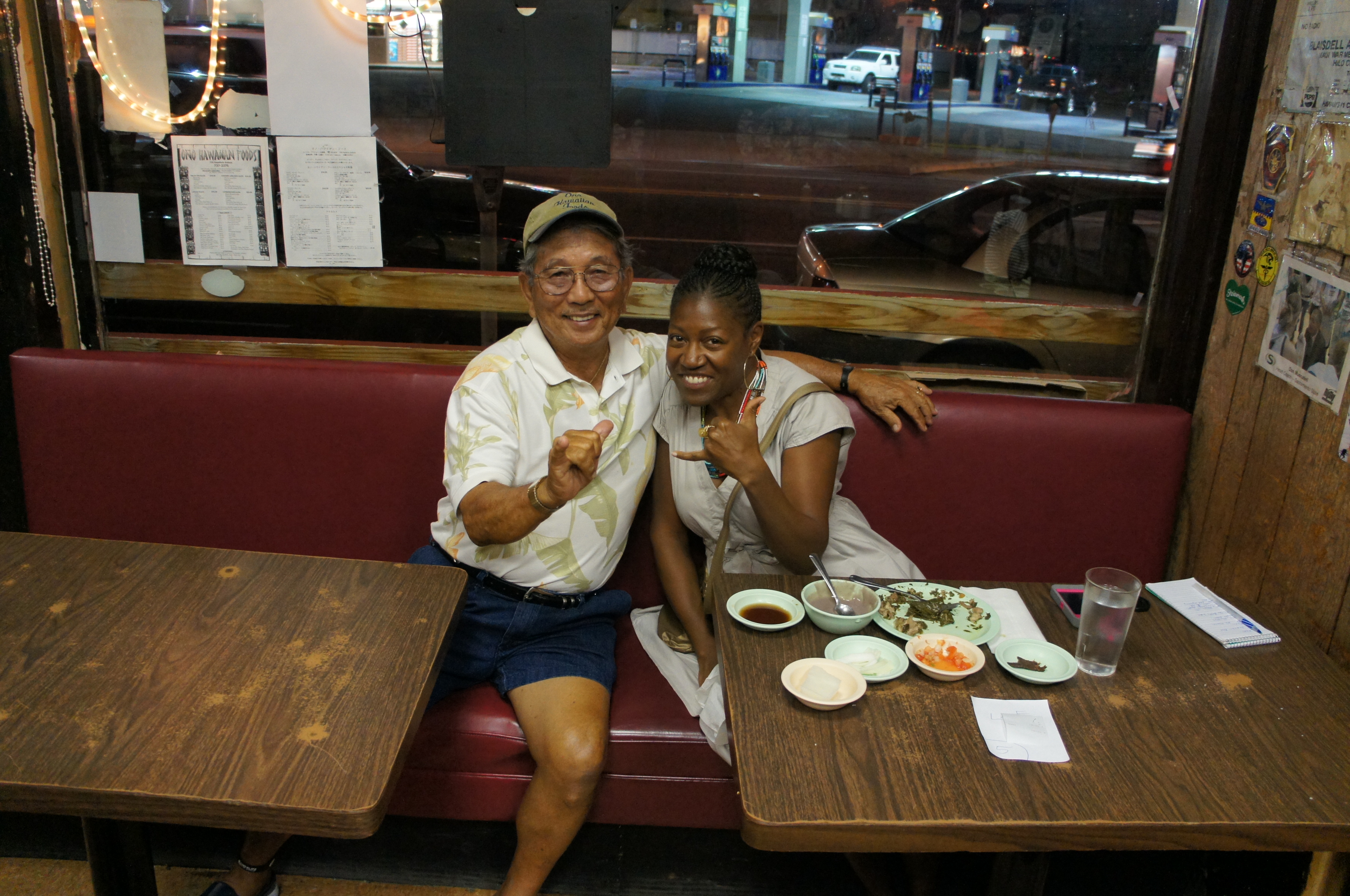
The best part of travel for me is meeting cool people. Toyo, the manager at Ono Hawaiian Food on Kapahulu Ave. in Honolulu, is one cool dude. His mother opened the traditional Hawaiian food favorite over 50 years ago and he does his best to make you feel at home.  I was told by a local to visit the restaurant, but I had no idea what to order. I went with the laulau lunch plate, a hunk of pork wrapped in taro leaves. If you’re a southerner, think ham hocks in collard greens. Mmm good. Toyo took time to explain the health benefits and preparation of each dish and offered his number to me, showing concern for a woman traveling solo. Like I said, cool people.


3. Hawaii Road Trippin’
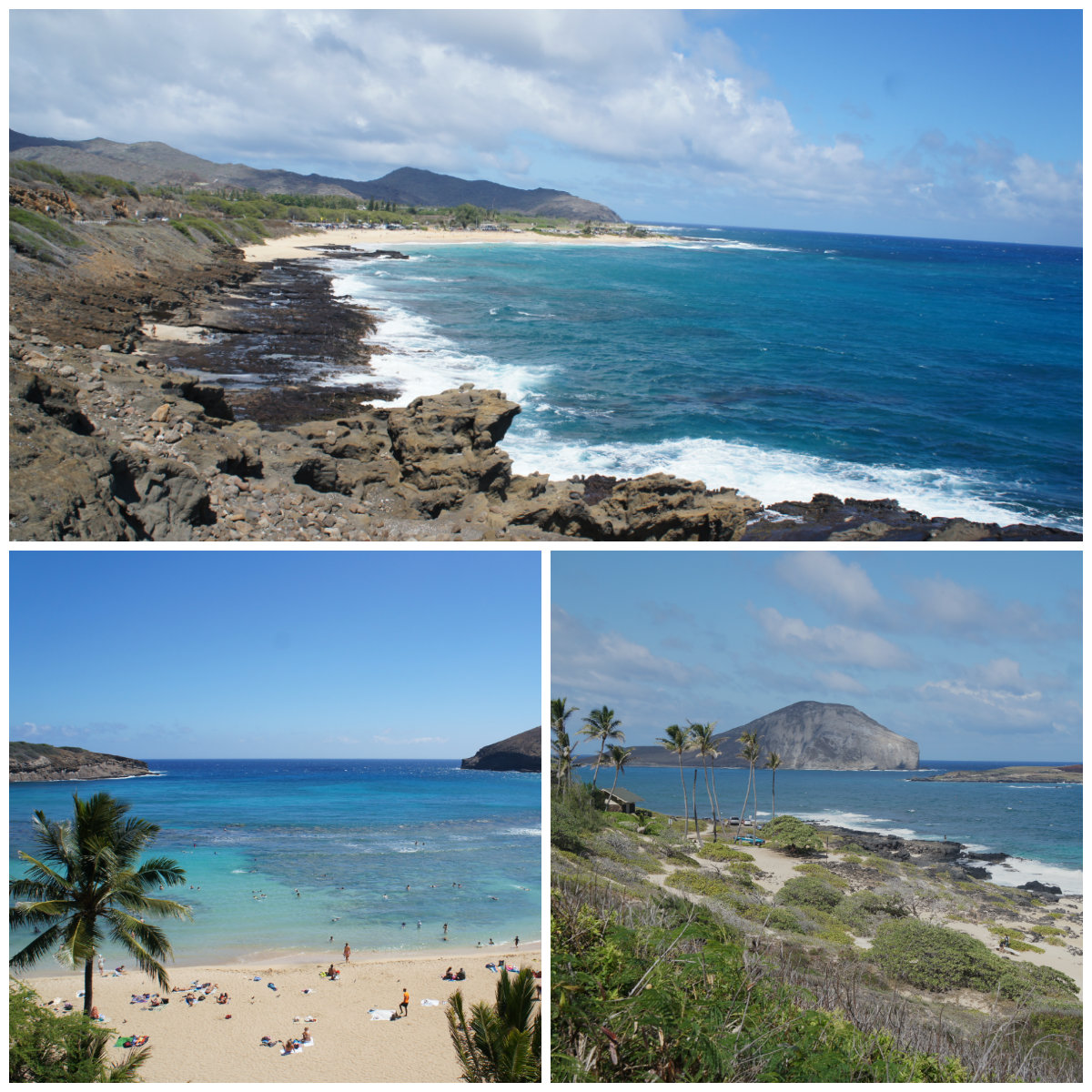
When I asked locals what to do on Oahu, almost everyone said to rent a car and drive to the North Shore. I took their advice and I’m glad I did. I never made it to the North Shore, but I saw where President Obama body surfed as a kid (Sandy Beach) and snorkeled in Hanauma Bay. I also had my first shave ice: ice cream topped with powdery ice and exotic flavors like lychee and passionfruit.


2. Angkor Wat
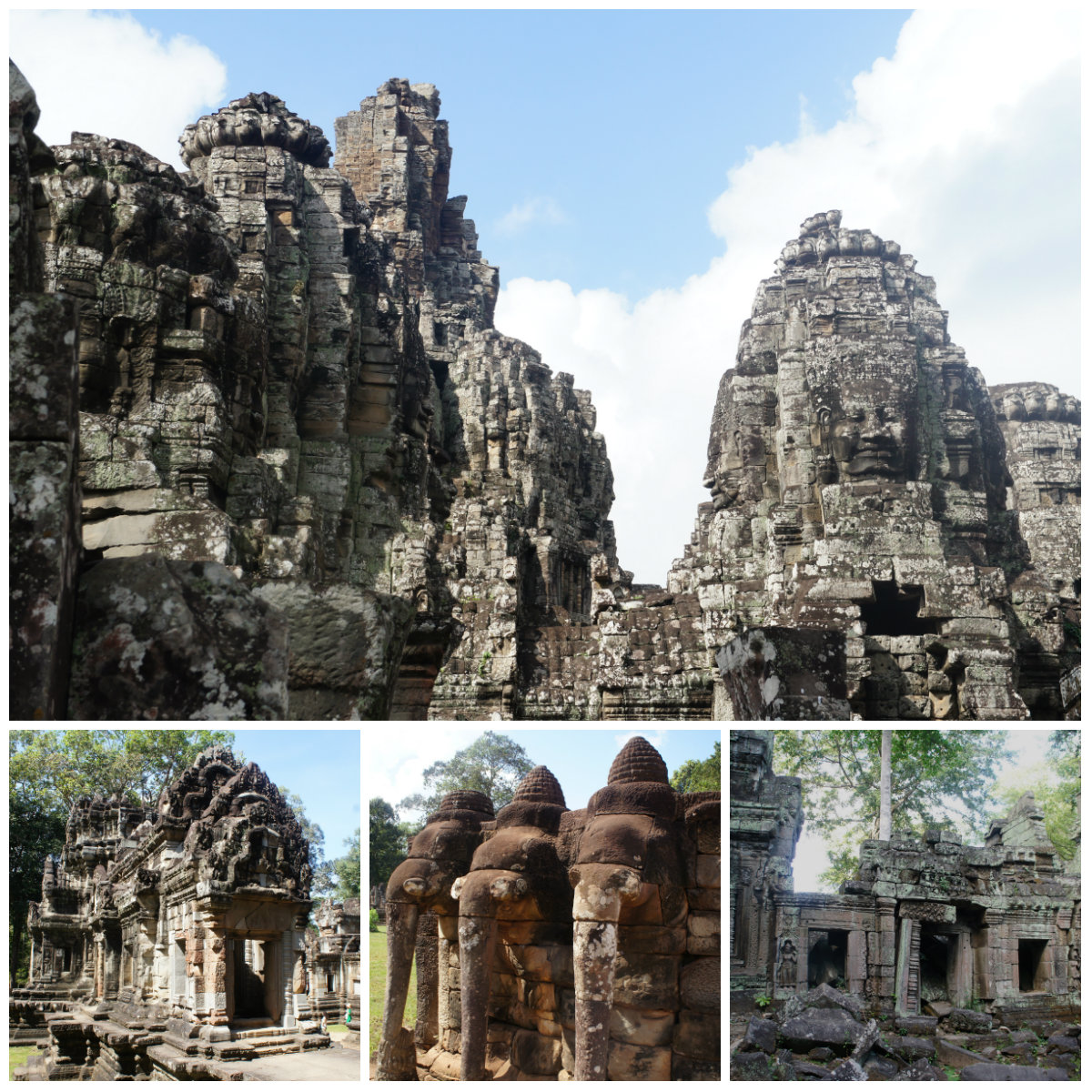
I love old places and so far Angkor Wat is the most amazing old place I’ve been. It rivals the Great Wall of China, in my opinion. I’m always awed by the engineering feats of those that came centuries before us. The temples of Angkor Wat are simply mind-blowing. My favorite was Bayon, engineered around the Thai belief in the lucky number 9. There were supposed to be 54 towers with each featuring 4 massive stone faces for a total of 216. Check this out: 5+4=9 and 2+1+6=9. Like I said, amazing. More to come on this spot.


1. Krabi Bay
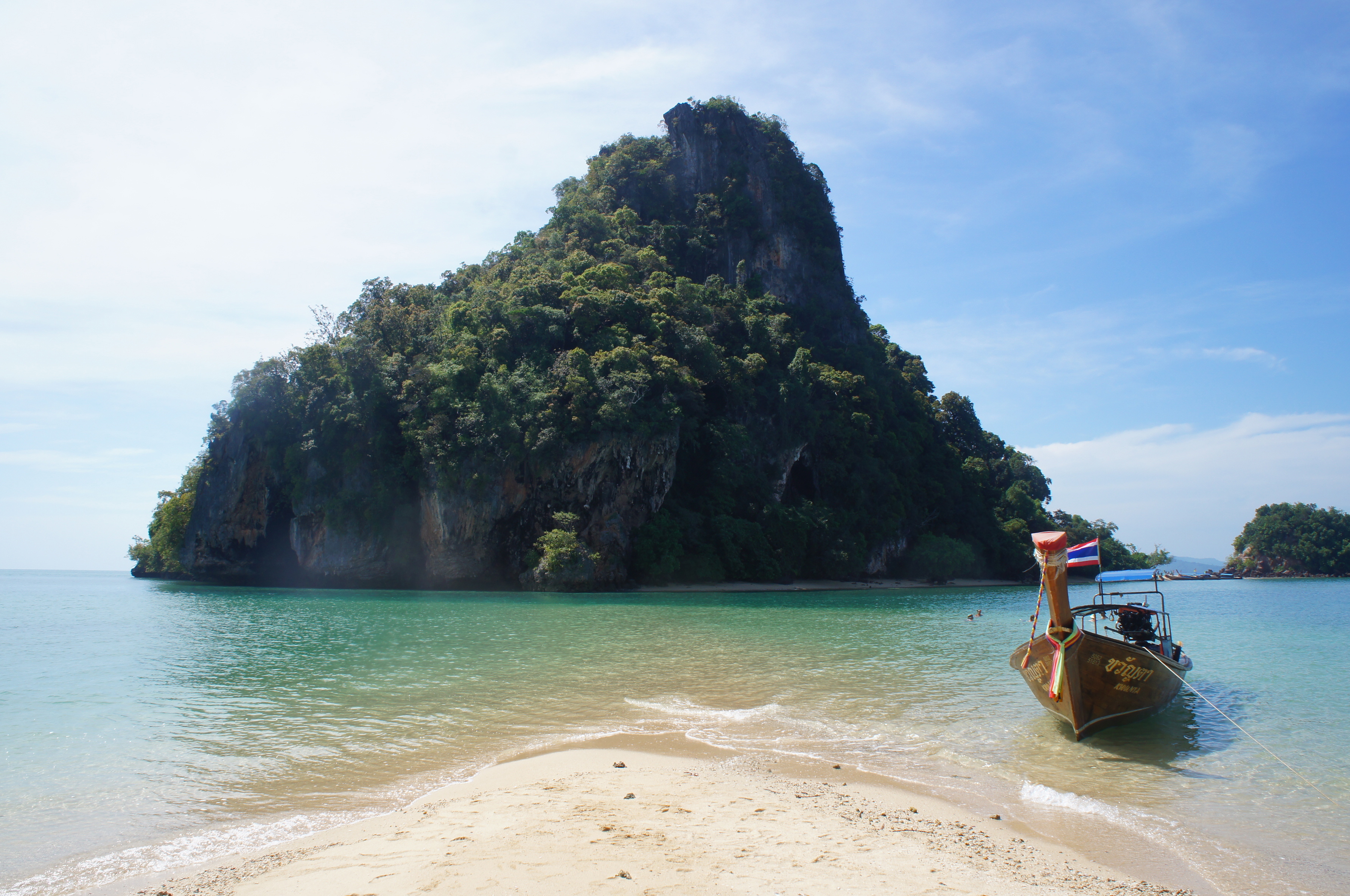
Krabi Bay in southern Thailand wins the top spot on my list because of its sheer beauty. I have never been anywhere more naturally breathtaking. Here, oddly-shaped limestone islands rise mysteriously from the crystalline aquamarine water of the Andaman Sea. These islands harbor secret stretches of sand where it is possible to pretend to be positively stranded. Krabi happens to be the last place that I visited and it is still indelibly burned into my travel memory. More to come on this destination, too.

Not a bad year. We’ll see what 2013 brings. First up: Argentina!

Thailand-Cambodia Postscript 2: The Road to Siem Reap

We realize right away that we like our guide J.J. a lot. Mainly because she is the picture of efficiency. We are about an hour into our 5 hour drive to the Cambodia border on the way to Siem Reap and we’ve stopped at large filling station with restrooms. She checks the bathrooms before giving them a thumbs up, informing us that there is a western style toilet. She hands each of us tissues to use as toilet paper and offers a squirt of antibacterial hand sanitizer as we exit. She seems to have thought of everything.

Wichai our unflappable driver and J.J. our resourceful guide

We are lucky enough to have transport from Bangkok to the Cambodia border via Lyle’s driver Wichai, but since Wichai doesn’t speak much English, I decided to employ a guide to point out interesting sights along the way. Ann Tours, a Vietnam-based tour company offering tours across SE Asia, sent us J.J. who wears her long black tresses pulled back in a loose ponytail topped with a baseball cap. She’s got an agenda featuring 4 temple stops, but we get a late start because of Bangkok’s notorious traffic, so we’ll only have time for 2 in order to rendezvous with another guide who will drive us to Siem Reap.

Wichai is probably the most unflappable defensive driver I’ve ever seen. He zooms right up to the bumper of cars ahead of us then expertly darts laterally into the next lane without so much as a blink of an eye. His tactics are totally necessary on Highway 304 where there seem to be no rules of the road and I feel like I’m in good hands. But when Nancee and Karen take their turn in the middle of the backseat, they see a little more than they’d like of cars, trucks and bikes speeding by Indy 500 style. I think my trip to Sri Lanka earlier this year was a great introduction to hurtling Asian traffic patterns.

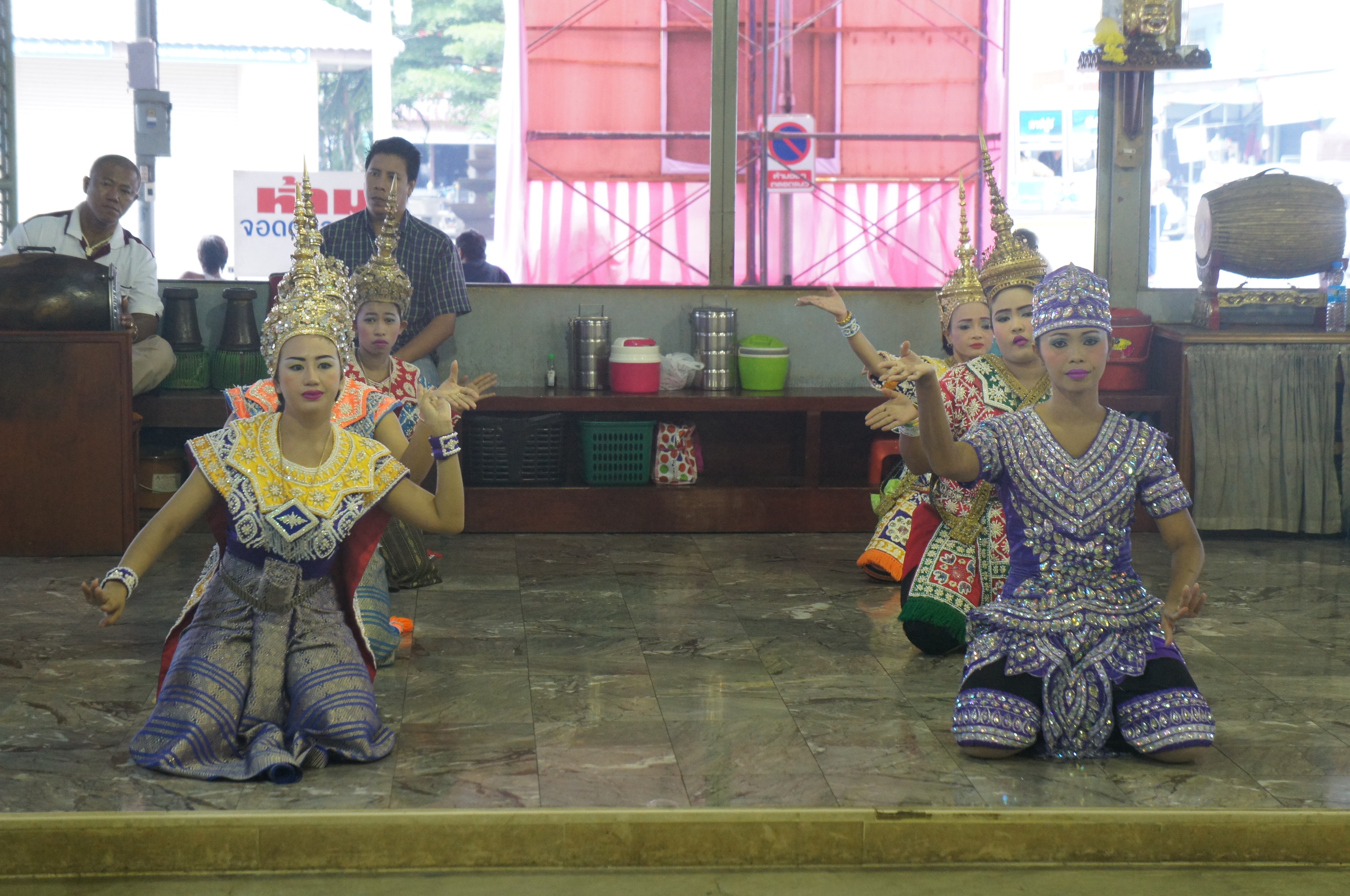
Worshipers pay for a traditional dance performance as a blessing for Buddha
Lighting incense

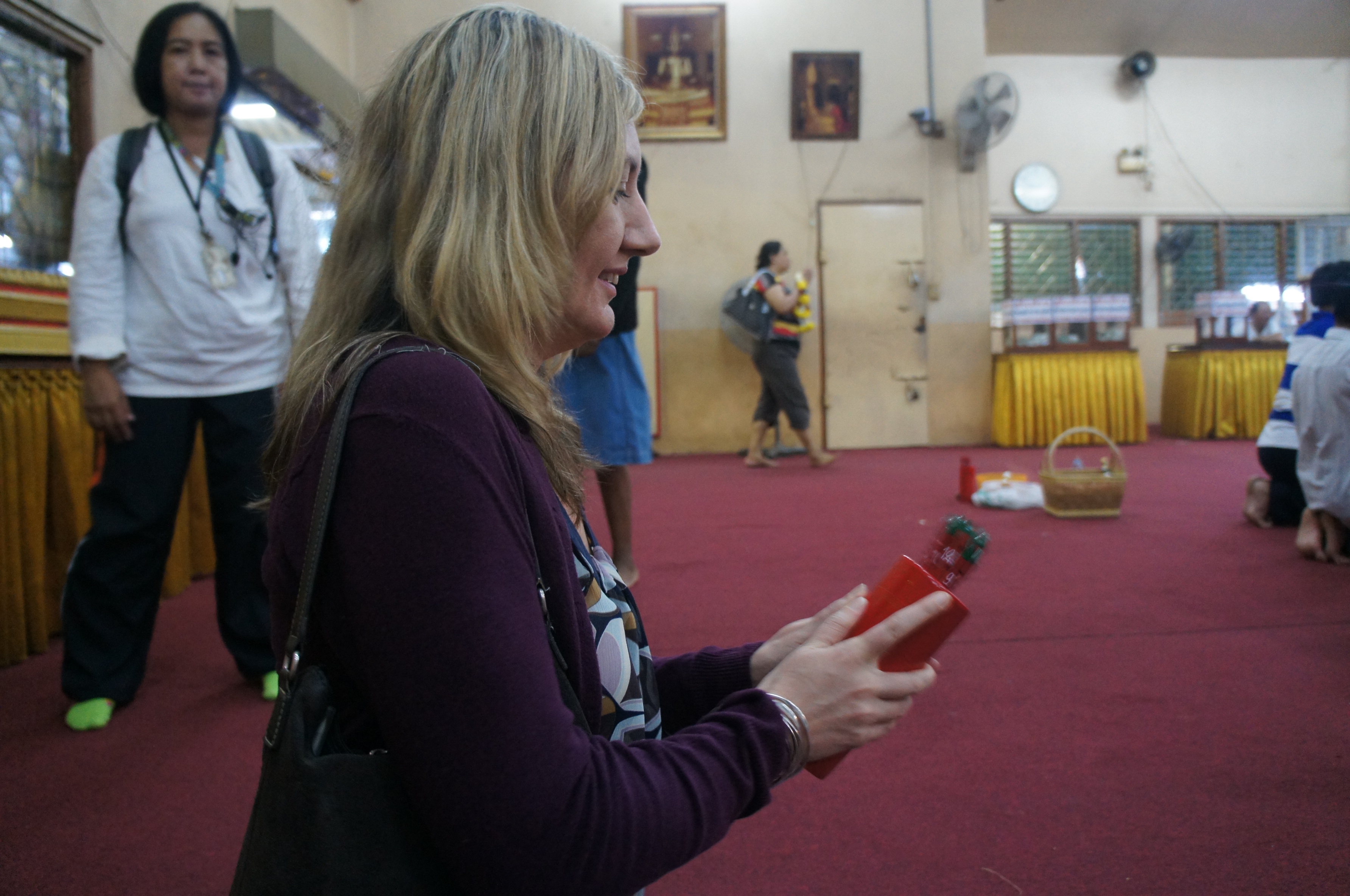
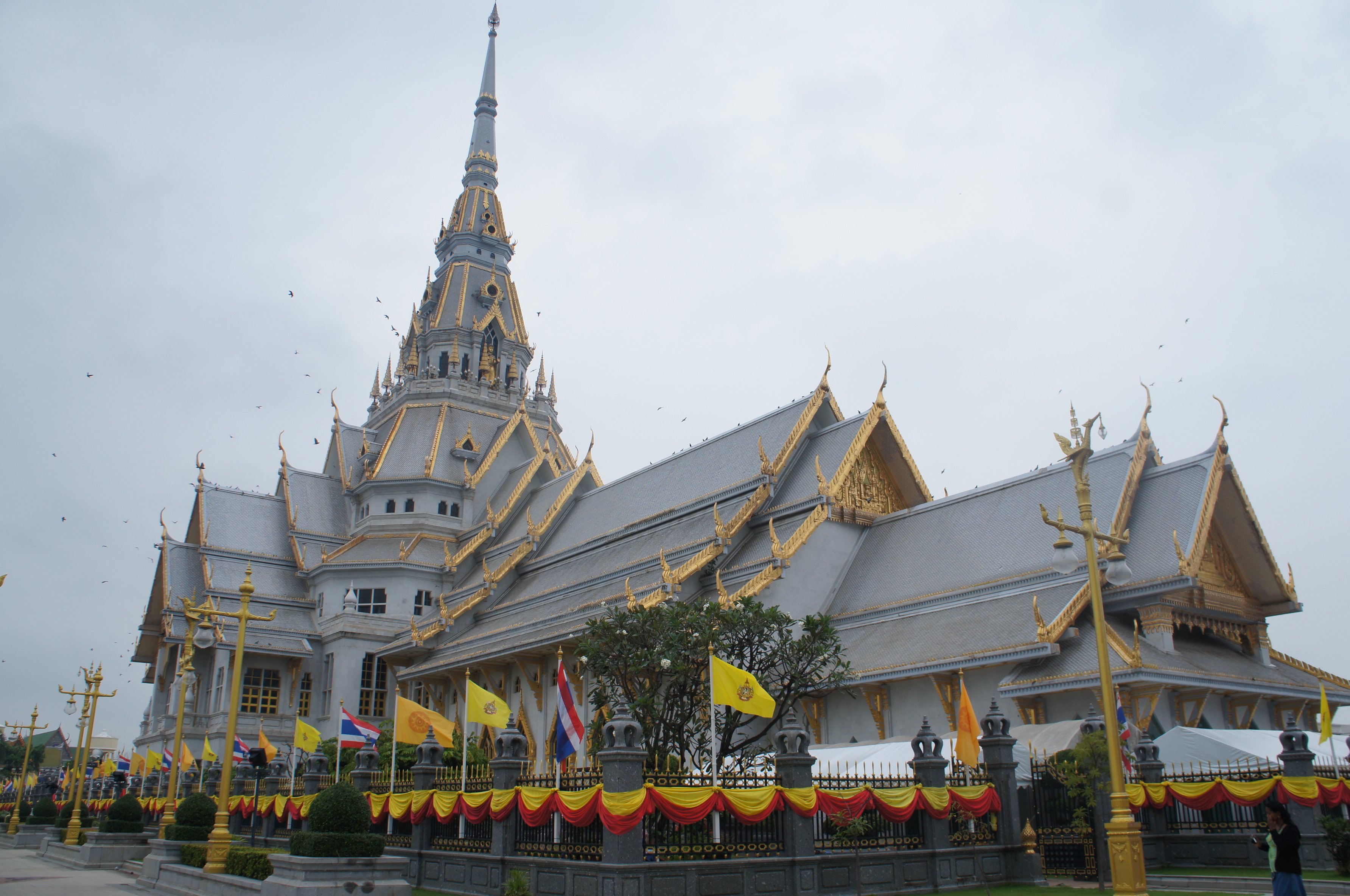
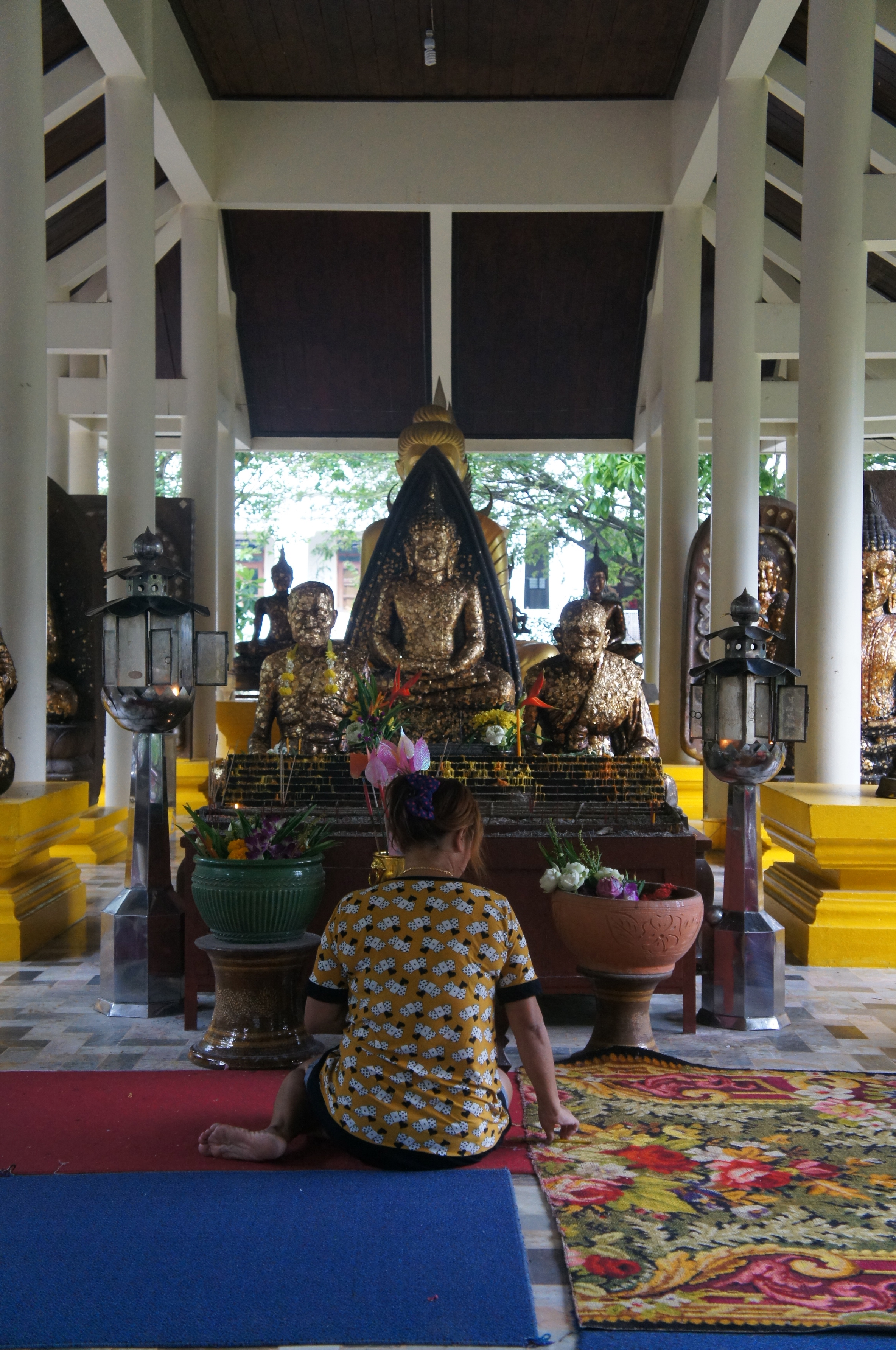
Our first stop is Wat Sothorn in Chachoengchao, Thailand. J.J. tells us that this is one of the most important temples in this province and the richest. There’s no doubt that money is flowing freely into the coffers of this temple and donations are big business here. The gilded trim of Wat Sothorn glints brightly even on this grey day, but the pavilion next door is where parishioners leave money for dancers to perform a traditional dance as a blessing for Buddha, deposit dozens of eggs or a roast pig as an offering or simply light a stick of incense. J.J. informs us that Thailand is 95 percent Buddhist and confirms that the practice incorporates some Hinduism and from what we can tell here a lot of belief in luck and good fortune. Under the pleasing smile of several Buddhas in one room, worshipers shake a red can full of sticks until one fateful numbered stick falls out. They then take this stick to a woman with the corresponding fortune. Karen, Nancee and I try it and J.J. translates our fortunes. Mine isn’t so good, she tells me. She says that I need to concentrate and focus more. Not bad advice. Karen is told that a member of her family will be in better health, which is good news for her since her mother has been experiencing some health issues. But Nancee gets the best news with word that she’ll have good luck in the future.

Karen tries her luck with the lucky sticks
Offering blessings and hoping for good luck
Playing the lotto, Thai style
Inside Wat Sothorn
Wat Sothorn

Beyond this room, there is an open air pavilion full of amulets or charms for purchase to be left for Buddha next to tables full of lottery tickets also for purchase. Old lottery tickets have been turned to hats and other decorative items. Inside the temple, we can see that donations of devotion have gone toward a gorgeous marble floor filled with dancing fish to represent the sea and a celestial painted ceiling representing the sky with a cluster of gold leafed deities sitting cross-legged below. J.J. explains that the knotted or curly tresses of each comes from Greek representations of Buddha that have been carried into Thai images of the man turned god. We also learn that his long earlobes represent long life.

J.J. is full of these kinds of tidbits, but the stuff that we love learning most from her is about Thai culture. While rubbing our hands with more antibacterial sanitizer, she gives us more intel on the sex trade in Thailand, explaining that many of the women involved are from poor villages who come to Bangkok to earn money for their families back home. It’s a short-lived career because only the younger women are coveted and older sex workers can only get old Chinese men as clients. She makes a disapproving face with this last detail. I guess it isn’t much different than prostitution in the states, where poor, uneducated women feel they have few other choices.

Tasty roadside treat of palm fruit and coconut roasted in palm leaf
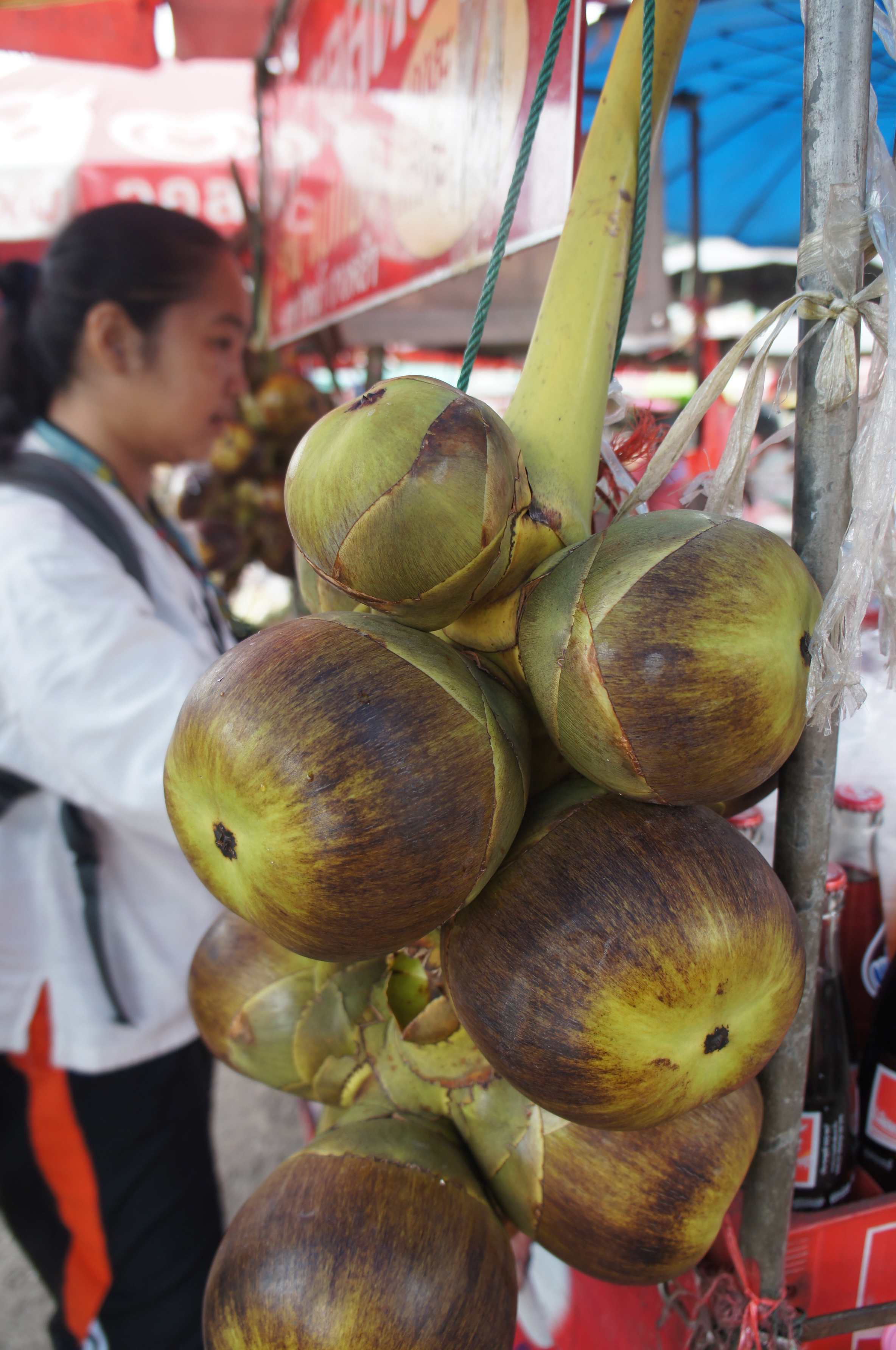
Palmyra fruit
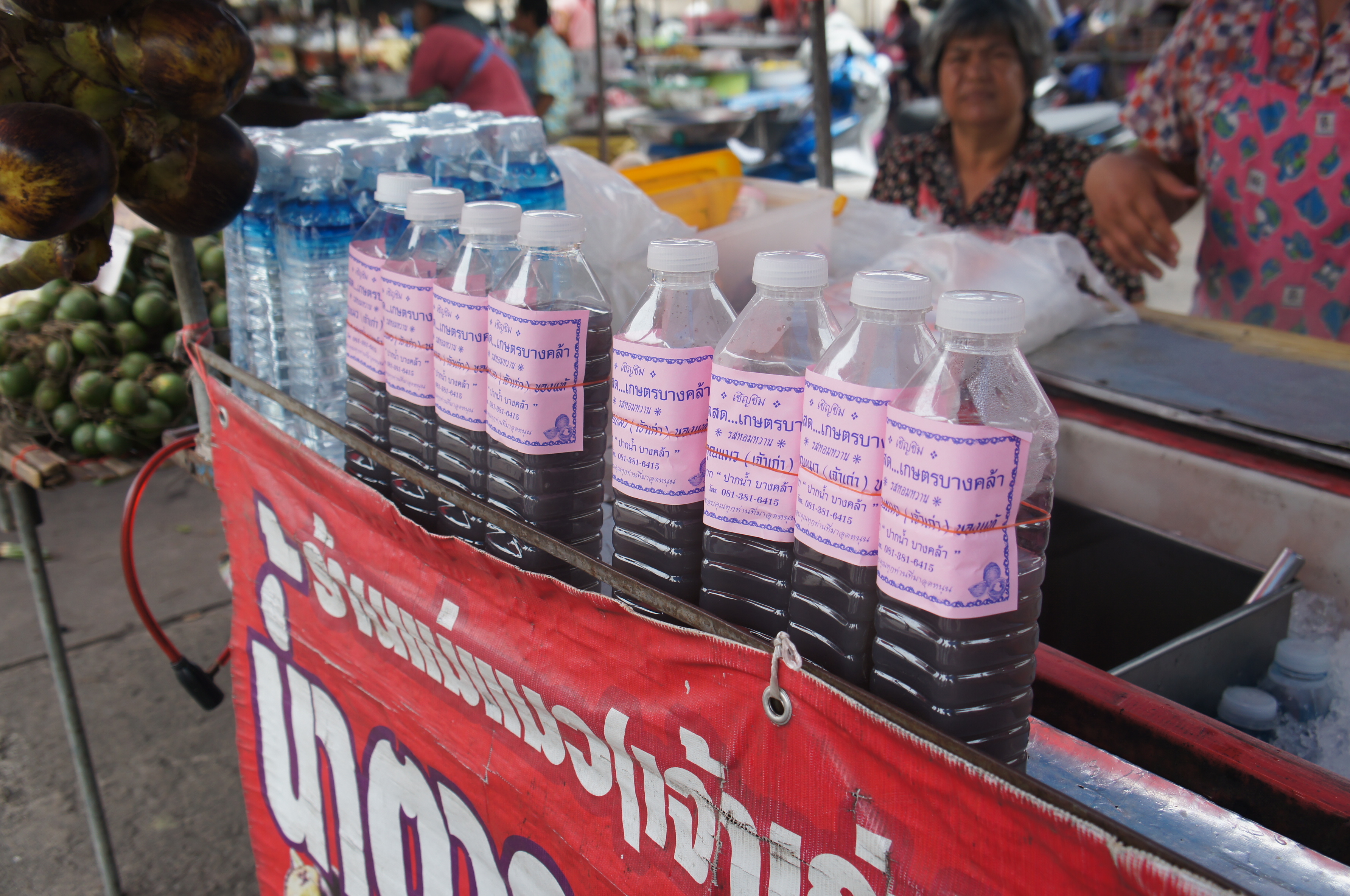
Palmyra juice, which would later be known as “ham juice.”

J.J. is also our guide to street food, taking us to a few food stalls standing across the street from the temple. The first thing we try is a gooey coconut treat roasted in the center of a palm leaf. The sweet warm goo is a combination of palm fruit and coconut. It’s a lot of work to peel back the leaf get to the treat, but well worth it. Nancee is intrigued by a purple-colored beverage that J.J. tells us is the juice of the palmyra fruit. It has a sweet and savory taste that we can’t compare to any fruit we know and we’d later discover that it tastes best cold. After several hours in a car, the juice takes on a smokey pork flavor and we dubb it “ham juice,” from that point forward.

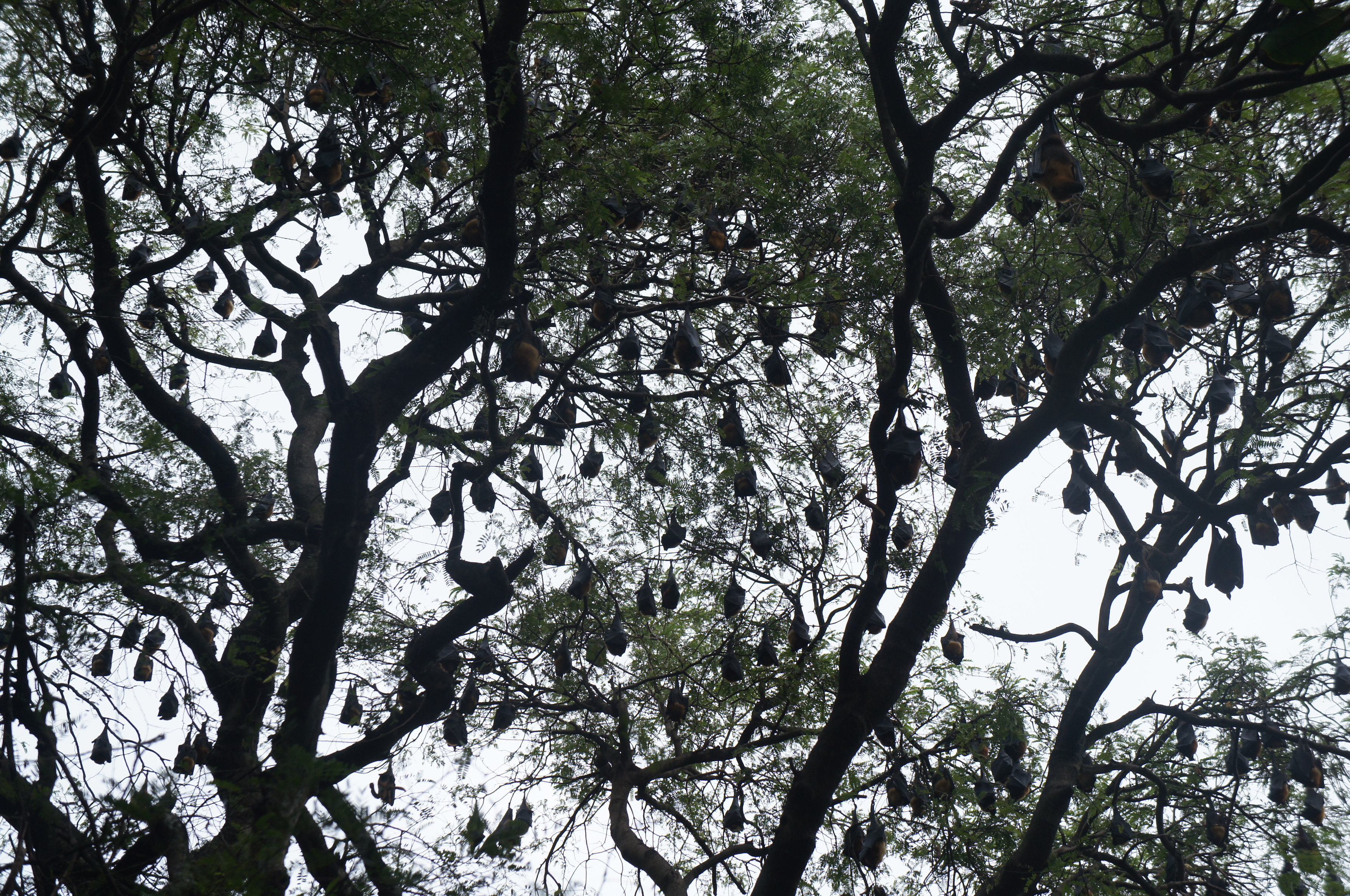
Our next temple stop serves as a juxtaposition between a well-funded temple and one that seems to be forgotten by time. Where Wat Sothorn had bronze and topiary bunnies surrounding it, Wat Pho Bang Khla has a menagerie of real animals roaming its grounds, including a flock of furry flying fox bats hanging from its trees. The bats are the curious attraction here and J.J. says they fly out at night in search of fruit to eat, but never the fruit of the people in the region where they live. Instead of donations of money and food, this temple ekes out its existence by selling fish food. Unlucky animals purchased for good luck like roosters and turtles have found refuge here along with stray dogs, one of which is too adorable for words. The monks seem to fit the place. One wears a hearing aid and another smokes without apparent care. J.J. notes that Buddhist monks have 280 ancient rules that they must follow, but with the advent of the modern age, things like smoking or talking on mobile phones didn’t get added to the list. We’ve seen our share of monks with phones glued to their ears during this trip.

Flying fox bats hang from the trees at Wat Pho Bang Khla
Cutest resident of Wat Pho Bang Khla
Wat Pho Bang Khla
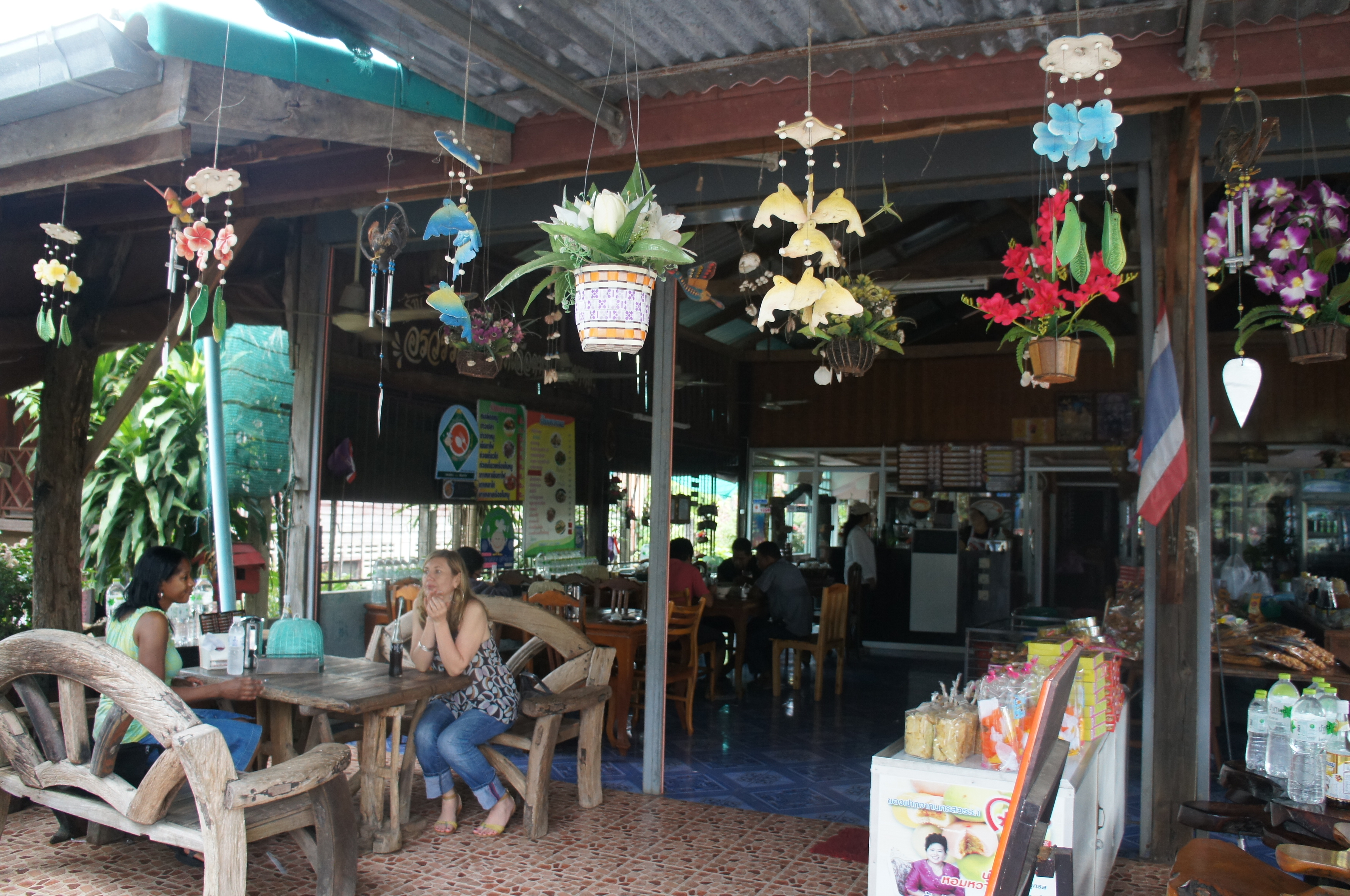
Lunch at a Thai roadside diner

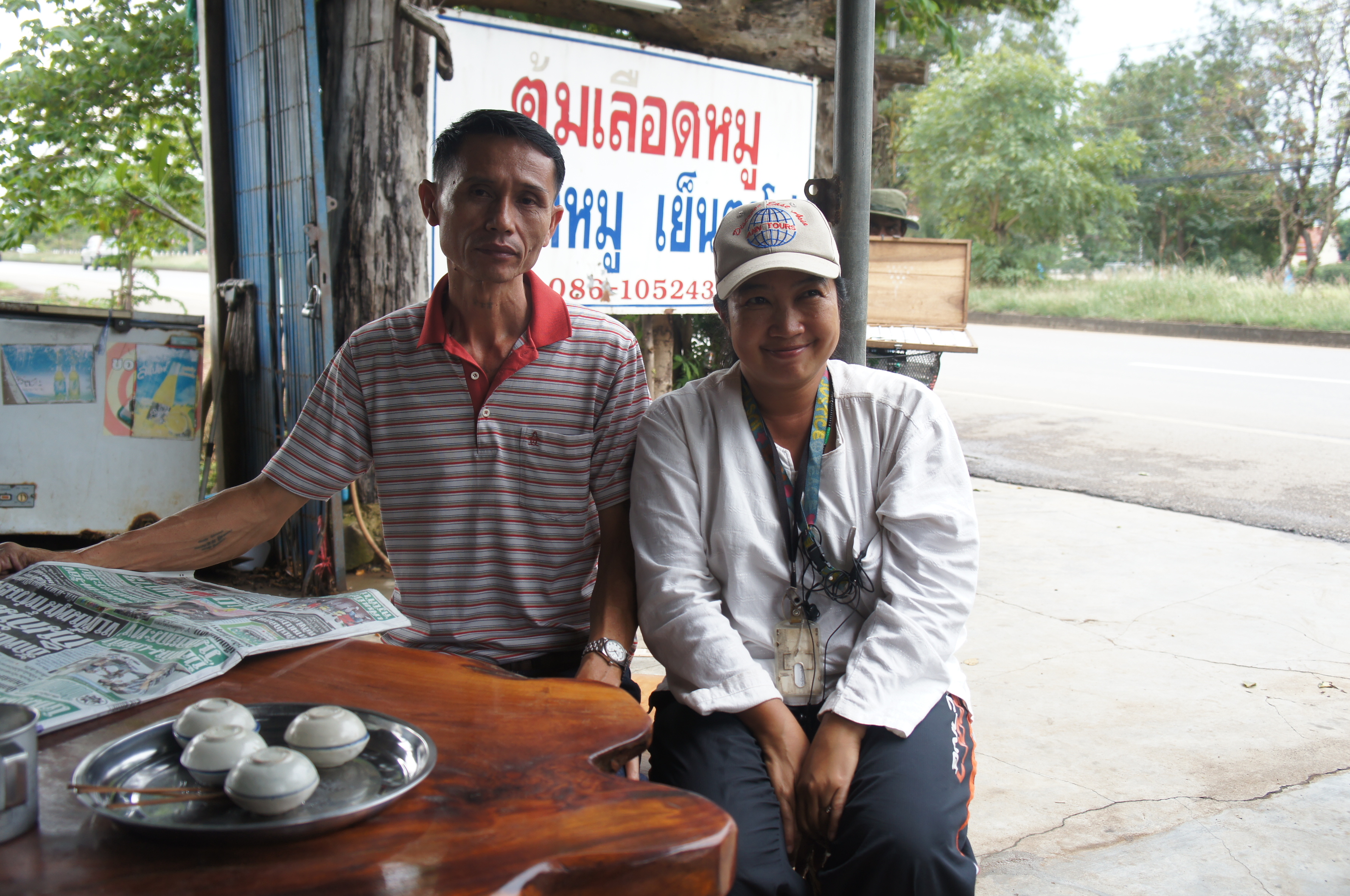
For lunch, J.J. inspects a roadside eatery before giving it her trademark stamp of approval. It’s super cute and quaint with seating made from tree stumps, so we approve, too. It’s our last chance to eat before we reach the border and we enjoy simple stir fried and fried rice dishes before moving on. The roadside stop would later feel like our last stop in civilization before reaching the Thailand-Cambodia border. We enter at Aranya Prathet on the Thai side of the border in a drizzle, which makes the huge, crowded marketplace seem dismal and a tad depressing.

We reluctantly part ways with J.J. and Wichai and head off into a maze of vending stalls with our new guide, Mr. Visoth, who is a young man with a very formal name. We try to keep up with him wanting to stop and look at the gritty commercial chaos around us, but we are afraid to get left behind fearing that we’d get swallowed  up in it, never to be found again. But somehow this scene pales in comparison to the muddiness of Poi Pet, the Cambodia side of the border. Faceless people push huge carts of what we aren’t sure. The people are faceless because they wear wide brimmed or straw hats pulled low on their heads just above their eyes and surgical masks over their mouths and chins. It feels like the Wild West of the East or the template for Mad Max’s Thunderdome, a place where people must constantly hustle to survive. Lonely Planet calls Poi Pet the pit of Cambodia and the description seems to fit. It’s a no mans land of sorts with oddly-placed casinos where the Thai can go to gamble without entering Cambodia.

The rain seems to make Poi Pet steamier and its customs office is a sauna filled with folks of all nationalities. In line, a young Swedish man asks if I have my Visa. I explained that we got ours online and he says that he thinks he may have paid too much for his. He and his friends are on a 3 month tour of Asia and seem to be winging it. After what seems like an hour wait, we make it through customs and board a rickety bus with Cambodian locals to a large bus terminal where we meet yet another guide to take us another 2 hours by air-conditioned bus to Siem Reap. Dee greets us with a warm smile and tells us to take a nap on the bus because there won’t be much to see. We’ve been up since 6 or 7 am, so we take his advice and nod off as we pass the Cambodian countryside punctuated by stilted homes with thatched roofs, rice farming families in conical straw hats behind ox-pulled carts.

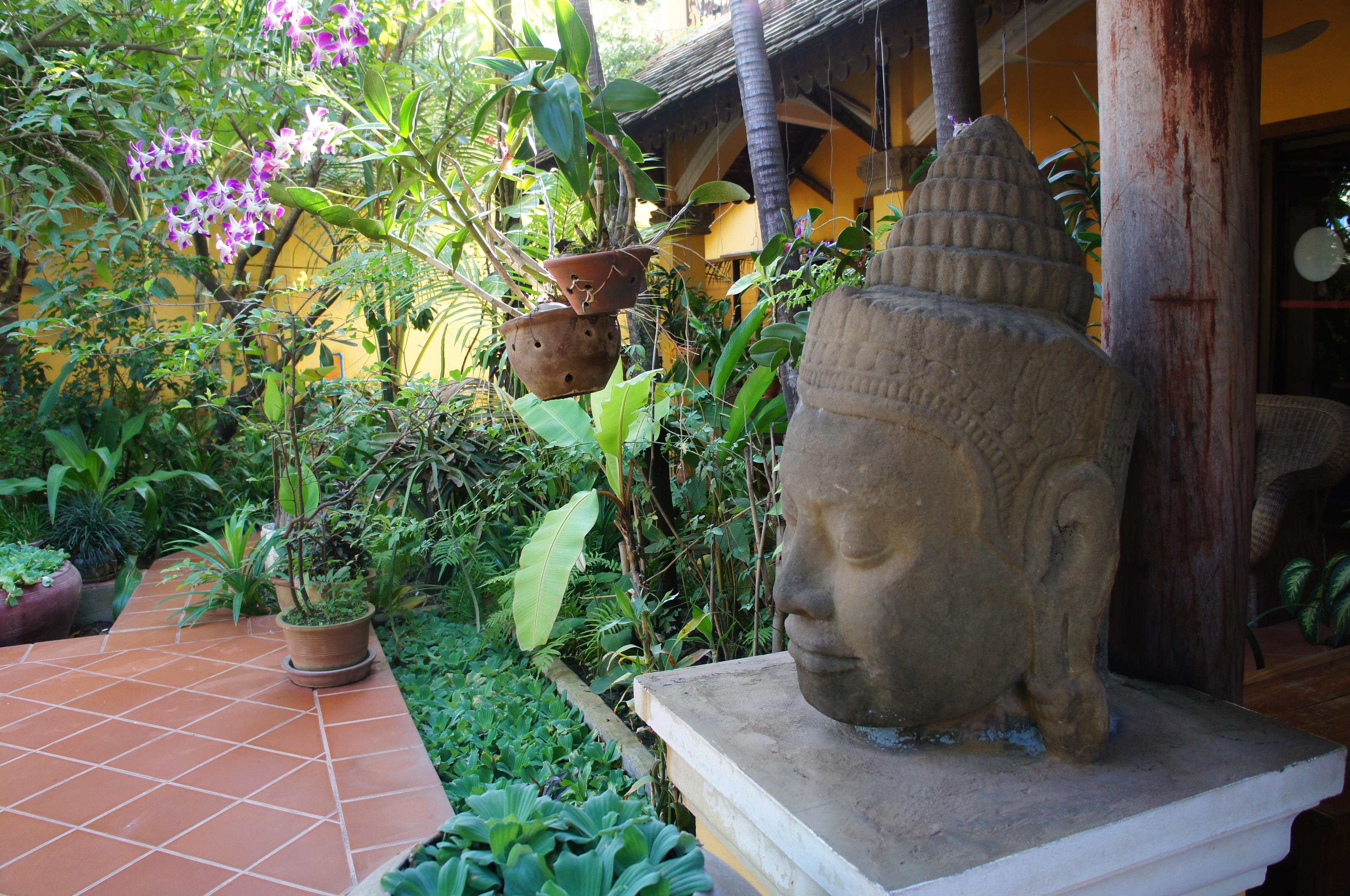
We awake outside our oasis in Siem Reap, the Auberge Mont Royal d’Ankor Hotel and agree to meet Dee at 8 am for our tour of the ancient temples of Angkor Wat the next morning. We love our hotel’s polished wooden stairs and the huge room with three full sized beds that awaits us. It feels comfortable and homey and we steal a few moments to kick off our shoes and rest before we explore Siem Reap.
Our oasis at the Auberge Mont Royal d’Ankor Hotel

Thailand-Cambodia Postscript 1: Ayutthaya by Tuk-Tuk

Author’s note: I’m back from a whirlwind tour of Thailand and Siem Reap in Cambodia and I loved every minute. I’ll be recapping my adventures right here, so follow along…

Our train to Ayutthaya is late. We are sitting on the 8:30 express train that will take us to Thailand’s ancient capital city of Ayutthaya, but it hasn’t left yet and it is after 9 am. Lucky for us that the express train isn’t so express, because we practically ran from the subway, thinking we’d miss this train and have to take a later and slower train. In fact when we board our train, workers are scrubbing down the outside of the train with soapy water and cargo is still being loaded.

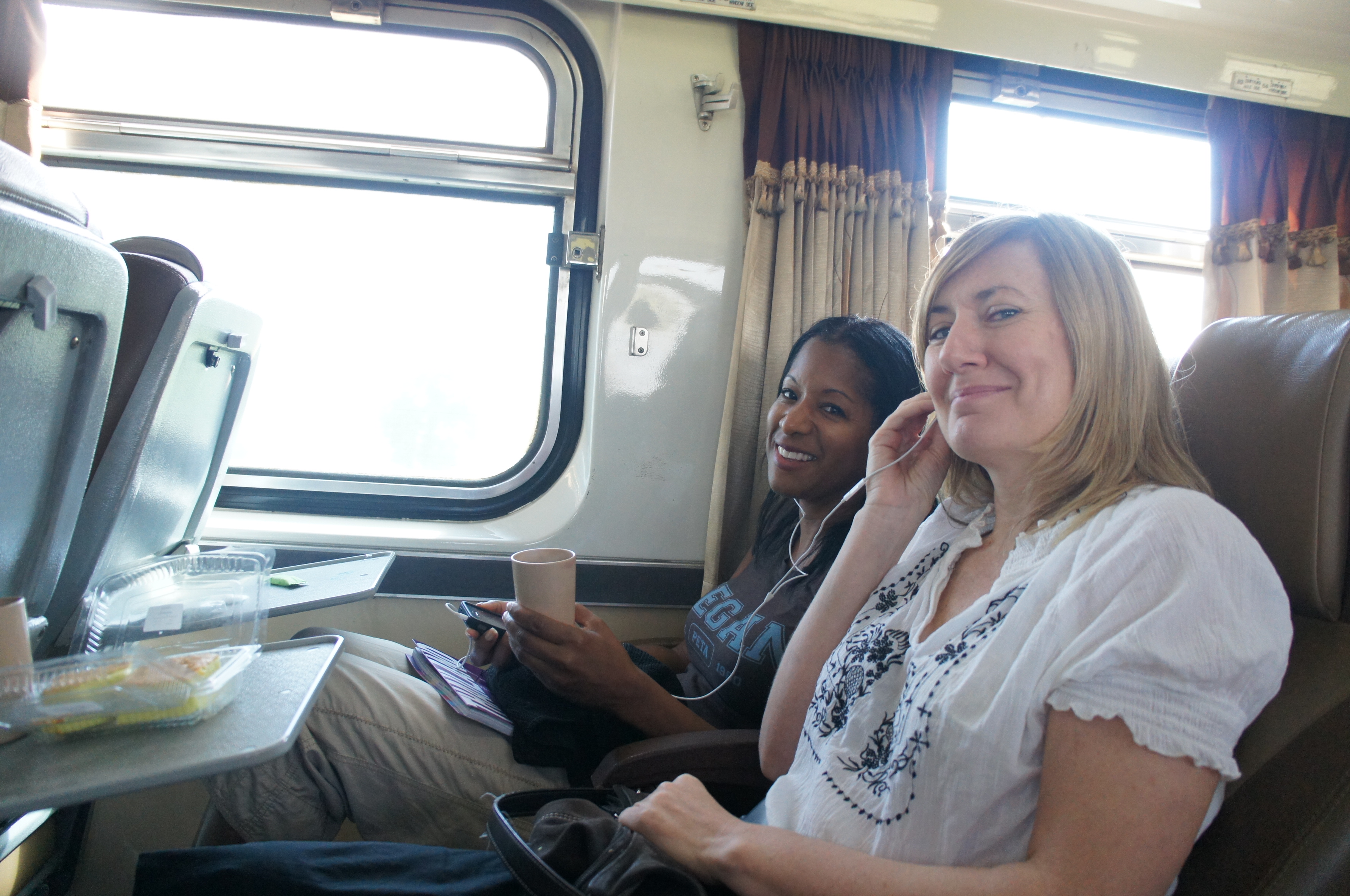
Nancee and Karen listen to tunes on the way to Ayutthaya

We settle into our seats next to curtained windows on what appears to be a first-class train, costing us about $10 per seat. We are pretty certain we are in first class when the train gets started and an attendant wearing a bit too much make up serves us spongy yellow cake, an apple pastry and tea from a heavy metal cart. Nancee and Karen don’t like the yellow spongy cake so much, but I thought it was good early morning train food and I’m as sucker for anything with apple in it. We pick up passengers along the way including a Buddhist monk, backpackers and luggage-toting Thais. The scenery along the way is pretty unremarkable except for a stockpile of broken toilets in the middle of a field. It’s hard to hear the stops along the way and we try to pay attention to town signs, but the backpackers exiting the train were a better sign that we’d reached our stop.

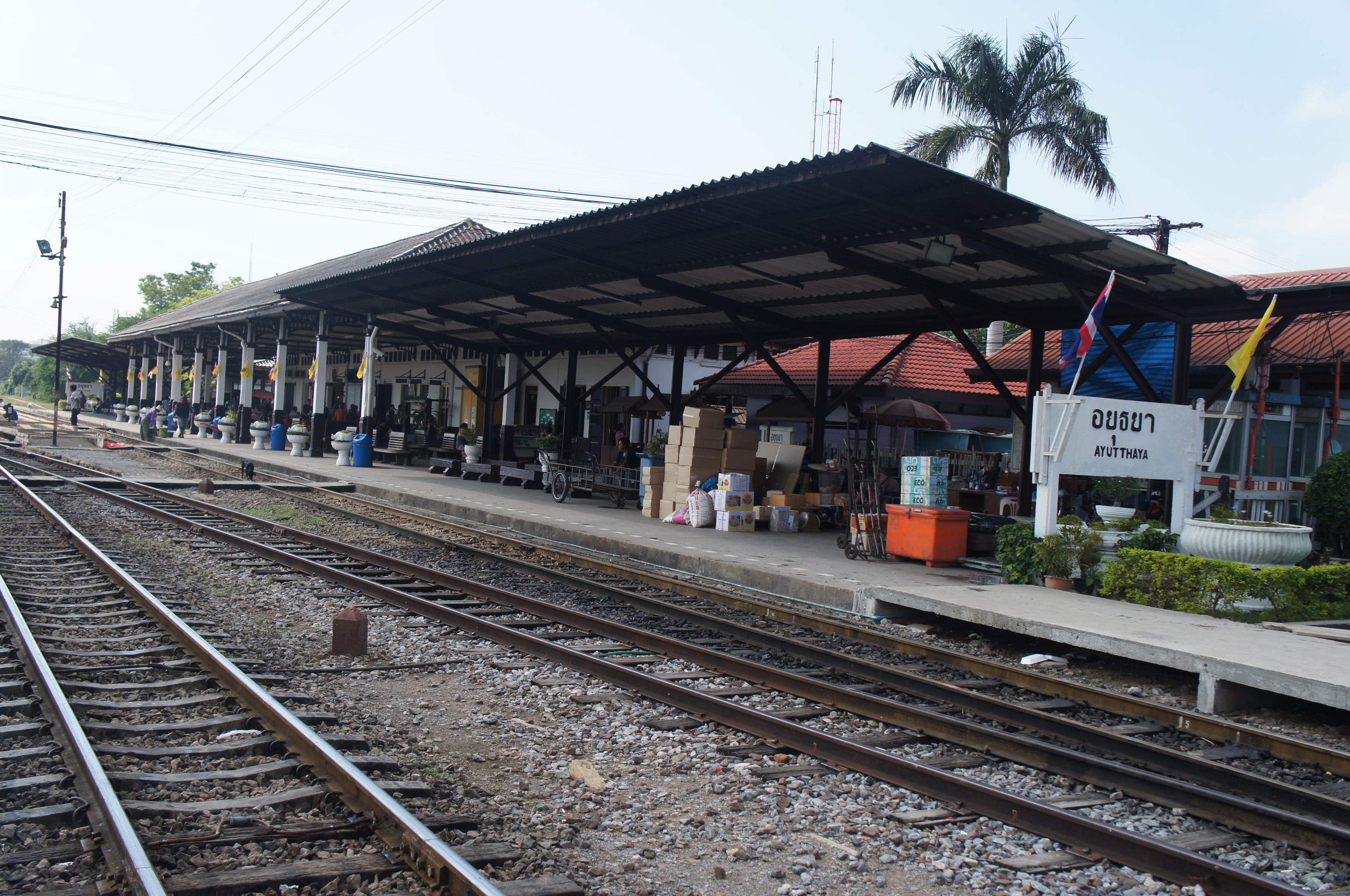
Ayutthaya train station

It would have been easy to miss the Ayutthaya train stop. The sign is small, appropriate for the size of the train station. We have to cross the train tracks to get to the station and walk into town, but first Nancee has to take a bathroom break. We spot a sign that looks related to the train station and she heads in that direction, but quickly comes trotting back with a territorial tan and white dog barking at her heels. No bathroom there, or if there is, this dog is not having any potty breaks anywhere on its turf. Nancee has to sniff elsewhere.

Nancee’s stand-off with a Thai dog

Just outside the train station we realize that Ayutthaya isn’t as small and sleepy as we think. Cars and tuk-tuks jam the street and we immediately eliminate the thought that we’d tour around on bikes as suggested by the Lonely Planet guide. We’d like to keep all our limbs, thank you very much, so we head out on foot. Our destination is a ferry to take us onto the island of Ayutthaya which is surrounded by the Chao Phraya, Lopuburi and Pa Sak Rivers. Ayutthaya was rumored to be one of the largest cities in the world during its hey day as the capital of Siam in the 1700s and merchants from around the globe marveled at the more than 400 temples that once loomed there. What we’ll see today are shadows of this city’s former glory.

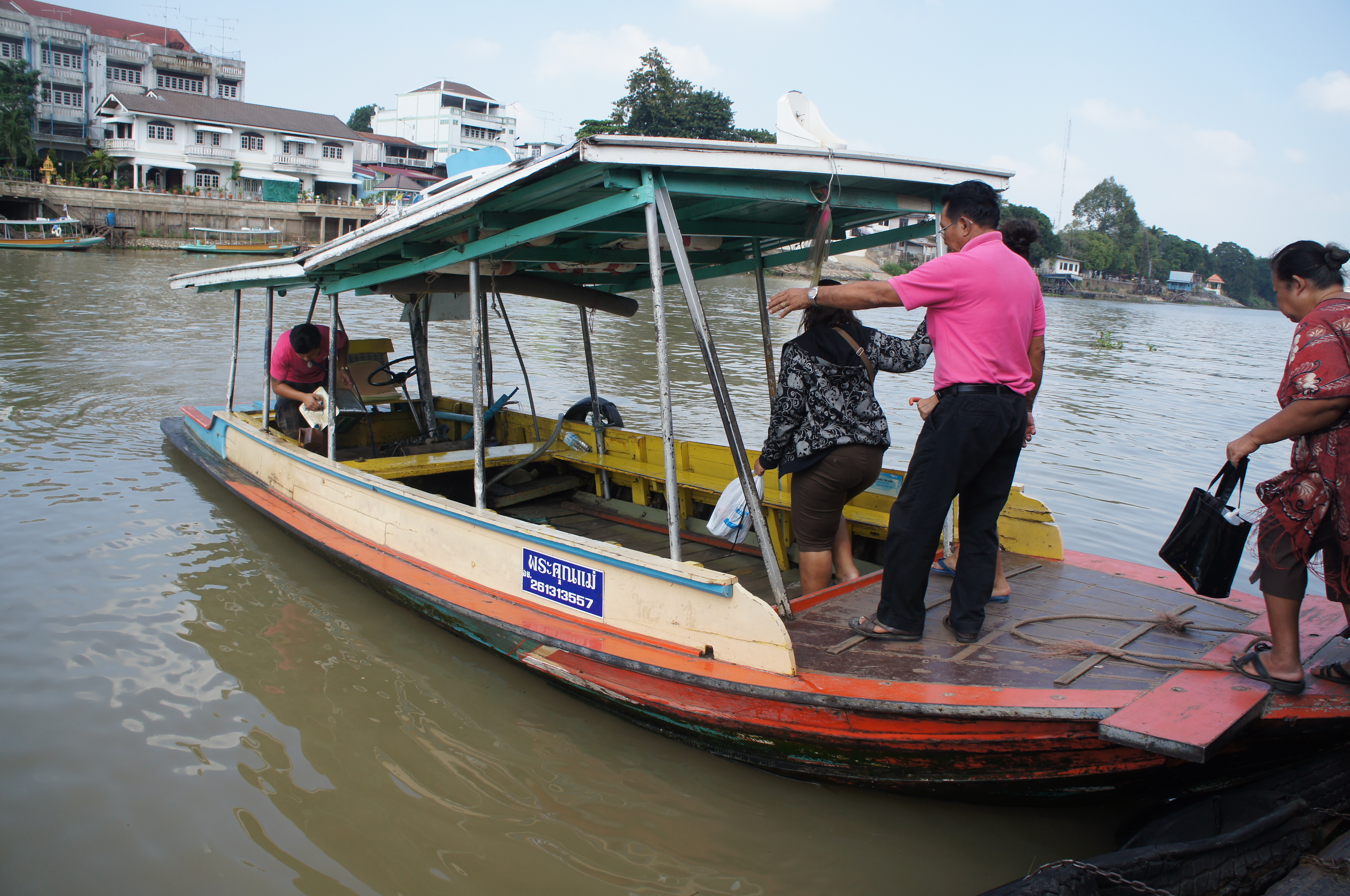
Ayutthaya ferry

We plunk down 5 baht for our ferry ride across the murky Pa Sak and board what is more like a motorized raft with a few other tourists, schoolchildren and other Thais going about their daily routines. Our plan is to make our way to the tourism office to find a guide to tour the old ruins, but we allow ourselves to be distracted by a weekday market with locals shopping for groceries, clothing and anything else you under the sun. The food is what catches our eye mostly, even though we aren’t sure what we are seeing. The variety of fruits and vegetables on this side of the world has always intrigued me. They are so alien and inviting and make apples and oranges seem so mundane. We stop at a red prickly item and wonder if it is fruit or vegetable. We’d later learn that it is dragon fruit and when cut open reveals a white pulpy center with small black seeds not unlike a kiwi. The taste is similar, too.
Dragon fruit

Back on our quest to experience a more ancient Ayutthaya, we cross busy store-lined thoroughfares in search of the tourism office when a man appears on our path smiling broadly and holding up a map. He says he can take us to see the temples. We are hesitant at first and he can sense this, so he crafts his pitch. He points to the places that he will take us by tuk-tuk, his smile never leaving his face. He’ll take us to 6 sites he says and then he pulls out a small book and flips through its worn pages with handwritten testimonials from tourists he’s won over before. There are glowing notes from an American couple and an Italian couple among others. He also insists that there will be “no shopping, no shopping.” We are sold. We decide on a price that we are willing to pay each and think 500 baht or $16 seems fair. So does our new guide named Tony, and we hop into the back of his tuk-tuk that is shaped like a tiny flat-bed truck.

Tony, our tuk-tuk guide

Our first stop is at a spire-shaped temple with its tip seemingly balancing the sun. It’s suddenly grown very hot in Ayutthaya and we pause in the shade as Tony explains that this site and many others were almost submerged by flood water during last year’s monsoon season. He points to a waterline on the pavilion where we are standing and it is well above our heads. He tells us that it was hard at the time to find food. He says he did a lot of fishing, smiling all the while he talks about what sounds horrifying. It’s these kinds of stories while traveling that make you count your blessings. He tells us that we can walk around the temple (Wat Phu Khao Thong) and climb (79 steps, per Lonely Planet) to the top. So, we do. The sun is beating down something fierce but we make it up and pose for a few pics along the way. At the top we find of all things a napping dog along with a small group of tourists that I guess to be French. We take turns bending our heads to navigate a small tunnel into the heart of the temple and find a very small mirrored alter to Buddha that will only fit one person at a time.
Climbing Wat Phu Khao Thong

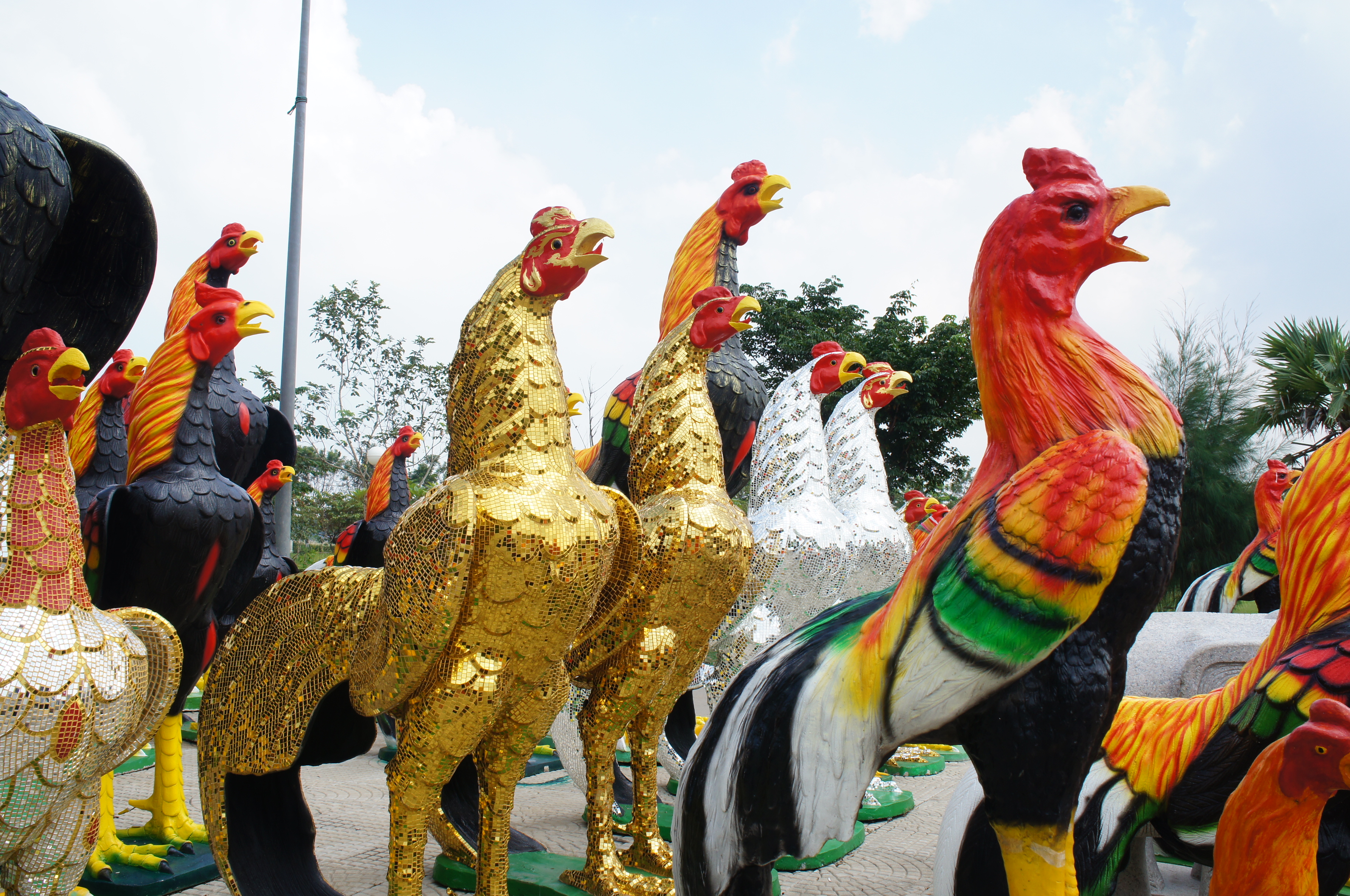
Back on the ground and on the way to another temple, I ask Tony to stop at a cluster of colorful, 4-10 feet tall roosters, seeming to salute a bronze statue of a man on horseback. I’d asked him about the roosters earlier. According to Tony, legend has it that in ancient times the king of Thailand’s rooster beat the king of Burma’s rooster in a huge cock fight and now it is considered good luck to own a rooster, which would explain the roosters roaming about the temple grounds and in town. Upon further investigation, I learn that the man on horseback is King Naresuan also known as “The Black Prince” one of Thailand’s most revered kings for his fight to free Ayutthaya from Burmese occupation in the late 16th century, and that it was his rooster that won the legendary cock fight.

Lucky roosters

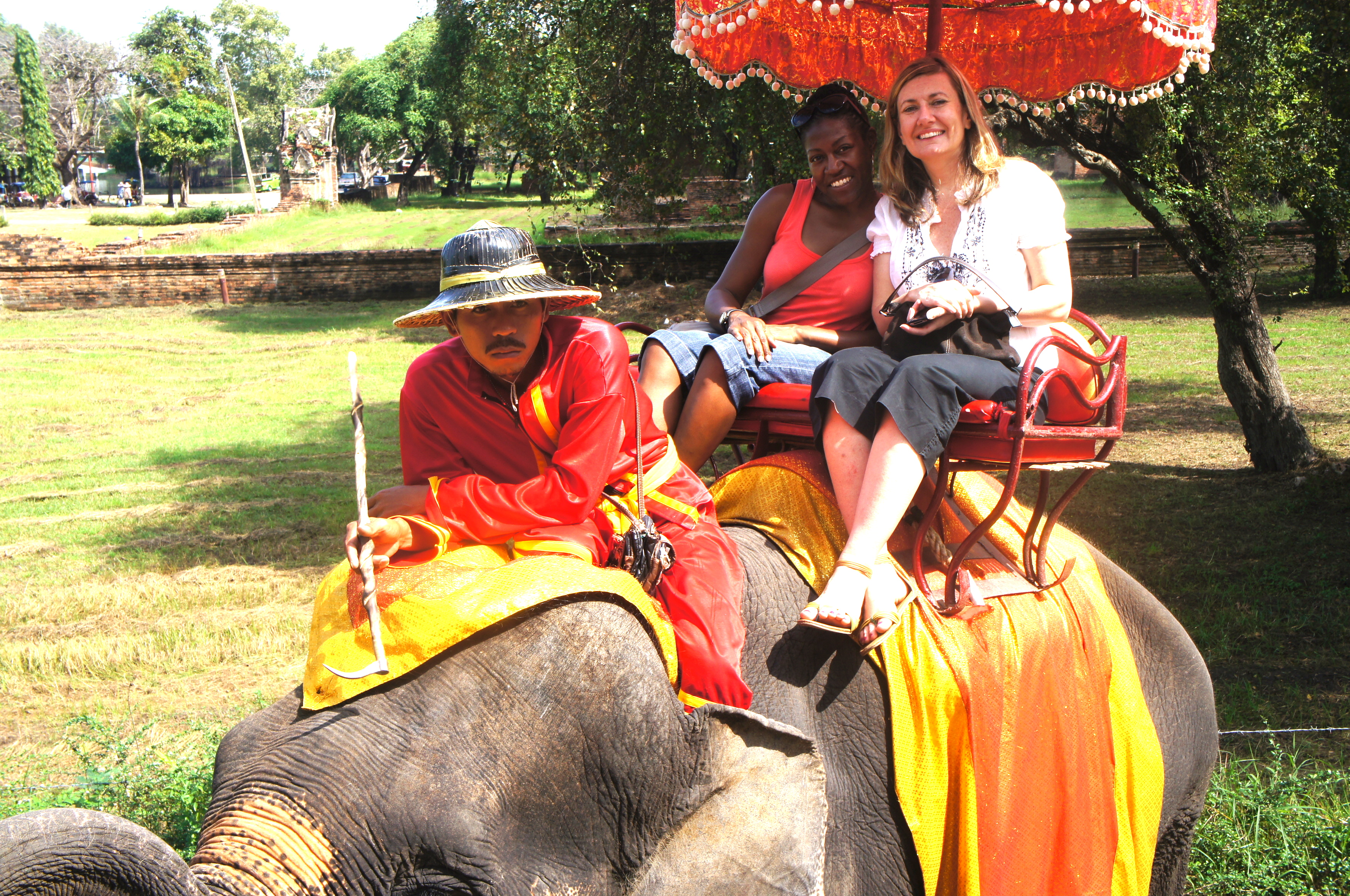
At Wat Chaiwatanaram, we can see the former grandeur that reigned at Ayutthaya with much of it still in tact. But we can’t inspect the ruins closely due to flood damage. We see the tale tell water lines on temple signage nearby. This temple is in the Khmer architectural style that we are going to see much more of in Siem Reap at Angkor Wat and we make vain attempts to photograph it even though the sun has decided to hide behind passing clouds. A huge yellowing stone reclining Buddha in the middle of a field was our next stop, followed by Wat Phra Si Samphet, which is said to be the largest temple in Ayutthaya. But what captures our attention are the elephants decorated with tourists under bright red umbrellas. Tony encourages us to tour the area by elephant and we hesitate for a moment because we wonder about the treatment of the elephants. It’s the same concern I had on my elephant ride in Sri Lanka. Karen has never been on an elephant ride and she’s intrigued but torn. I tell her that I’ll go if she does. Nancee decides that she doesn’t want to take the trip, so Karen and I embark upon a 15 minute elephant lope near the temple guided by a mahout. The journey is pretty unremarkable except for a lovely view of a few of the chedis or stone monuments to Buddha and a well orchestrated photo op with the elephants where we pay them, literally, through the nose. If I were to go back, I’d skip the elephant ride and save myself the stress of wondering if the animals are OK during a 15-minute long tour. It wasn’t worth it, cute as those creatures are. Karen agreed.

Wat Chaiwatthanaram
Stone reclining Buddha
Elephant tour of Wat Phra Si Sanphet

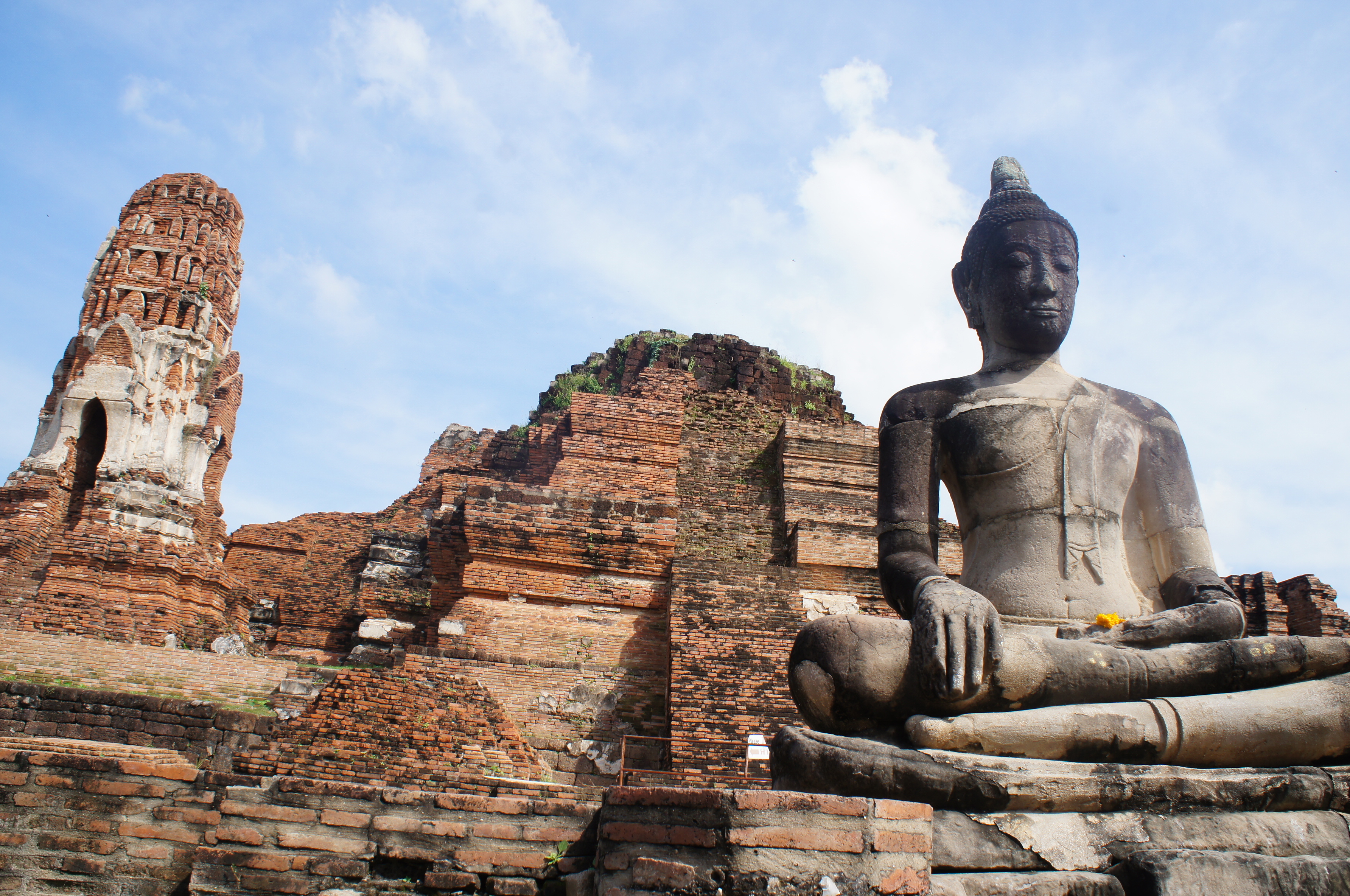
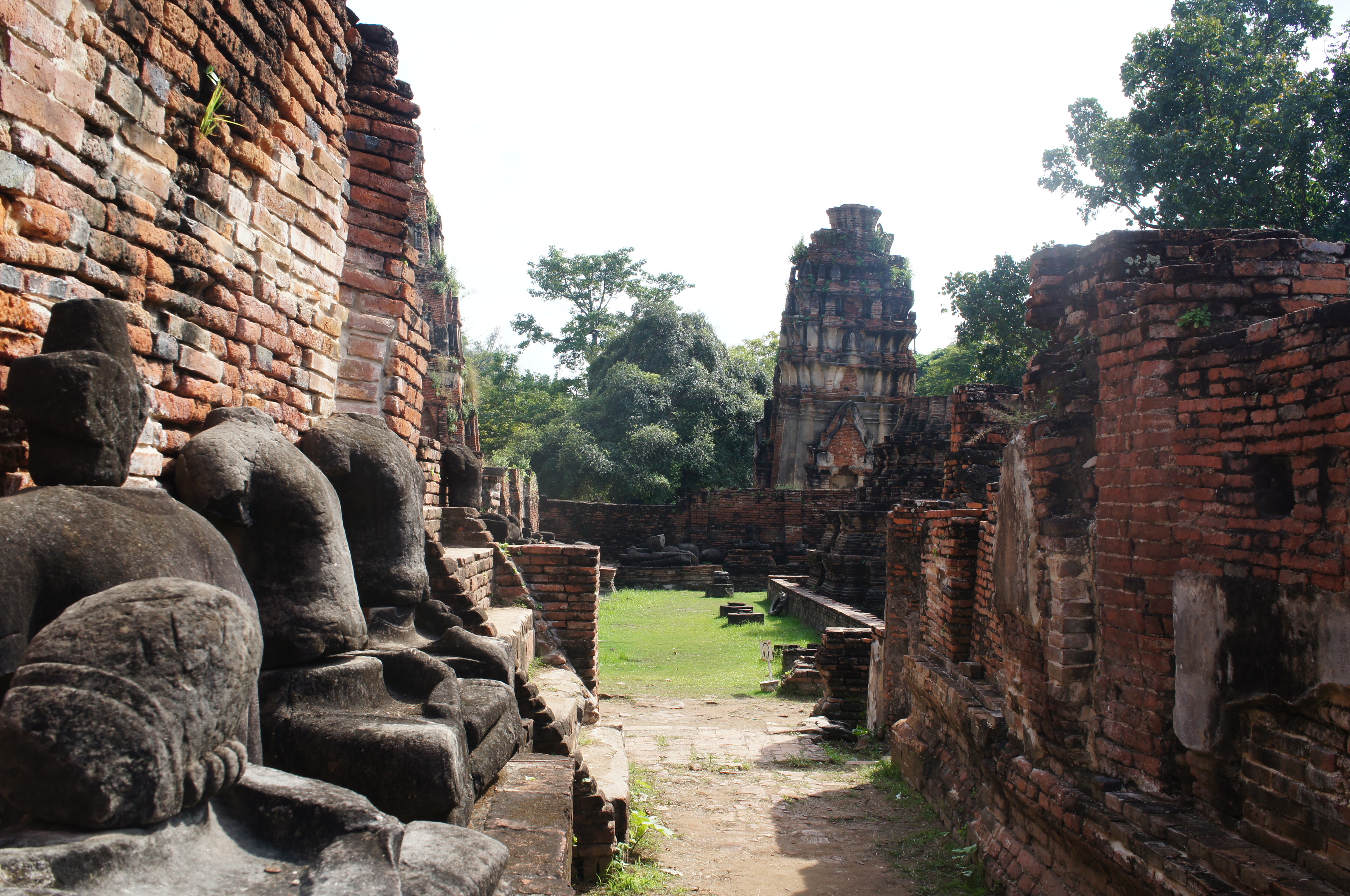
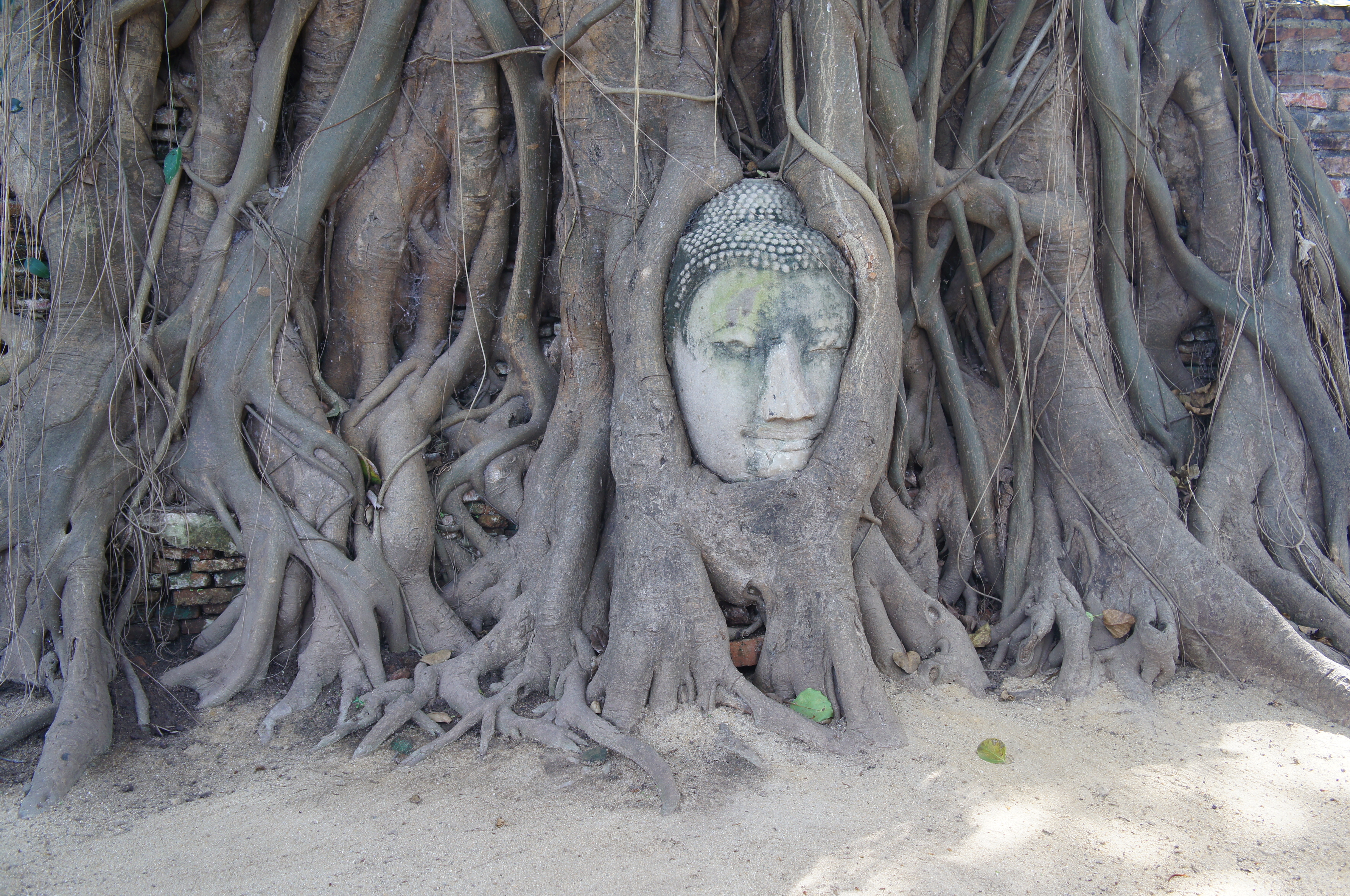
Our next tour stop was our favorite and the favorite of many who come to Ayutthaya with good reason. Wat Phra Mahathat is probably the most photogenic of the temples we’ve seen in my opinion. Ransacked by the Burmese, the temple is littered with headless Buddha figures amidst stone ruins that appear to be melting in the sun. It’s clearly a site of much destruction, yet it is strangely beautiful and serene. We wander apart taking it in independently. The most photographed feature at this temple is a Buddha head mysteriously entwined in the roots of a tree.

Wat Phra Mahathat
Headless Buddhas
The rooted Buddha head

By this time we are ready for lunch and we want to go to a floating riverside restaurant recommended by our guide books, but we aren’t sure that we end up there. The spot that Tony drops us has a riverside view though and serves a nice Pad Thai, that you can season yourself with more sugar for sweetness or dried peppers for more heat. We decide to head back to Bangkok and Tony convinces us that the bus is the way to go. We are sure that Tony is getting a little something from the vendors he directs us to, but we are cool with it because he’s been a great guide and he hasn’t steered us wrong yet. So, we thank him with a few “korp kun hkas” or thank you’s and bows of the head, before we hop on a comfy air-conditioned bus for a mere $2 per person for the hour or so ride back to Thailand’s current capital city of Bangkok.

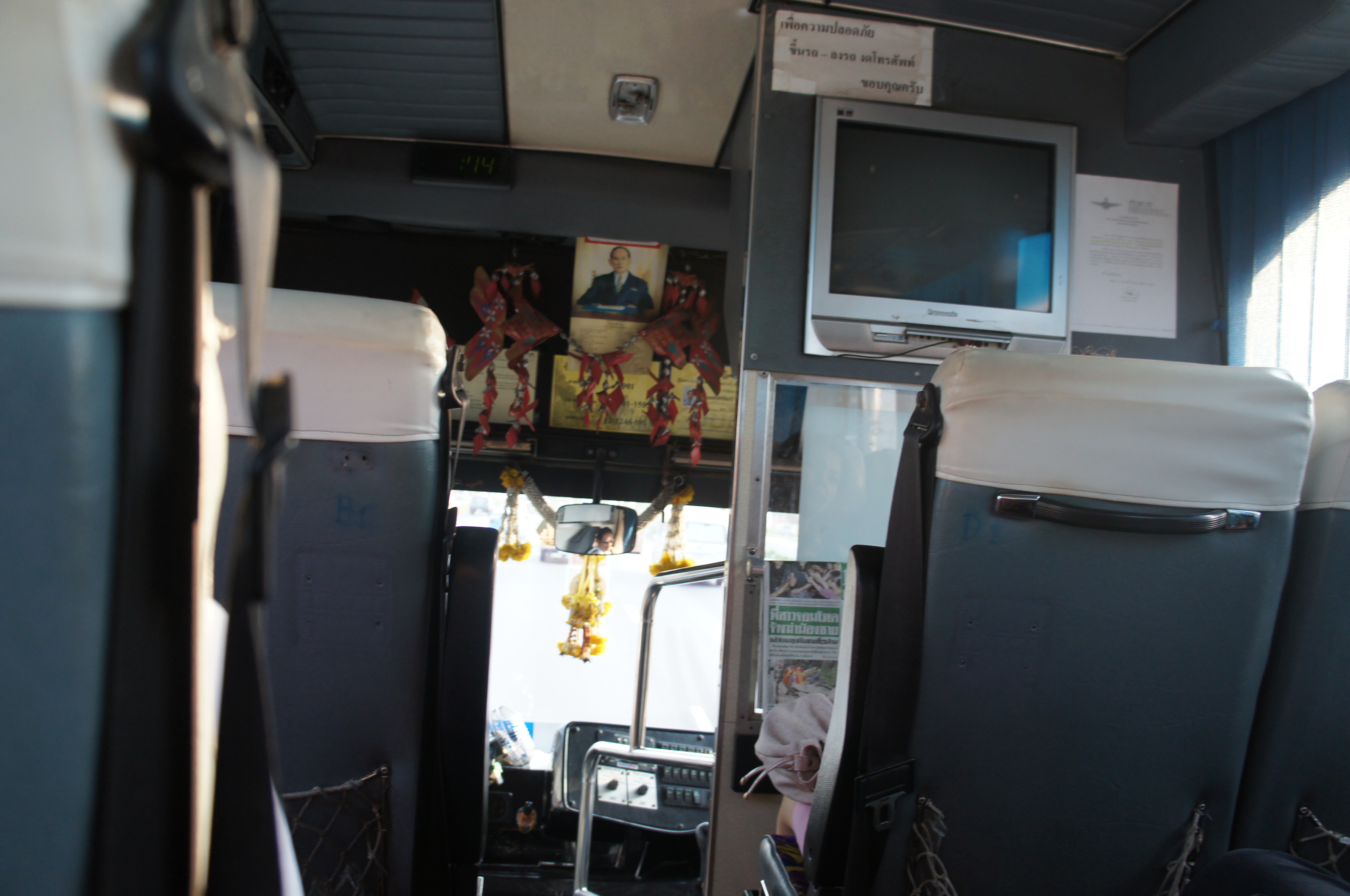
Bus to Bangkok

Water Taxis and Wat Pho

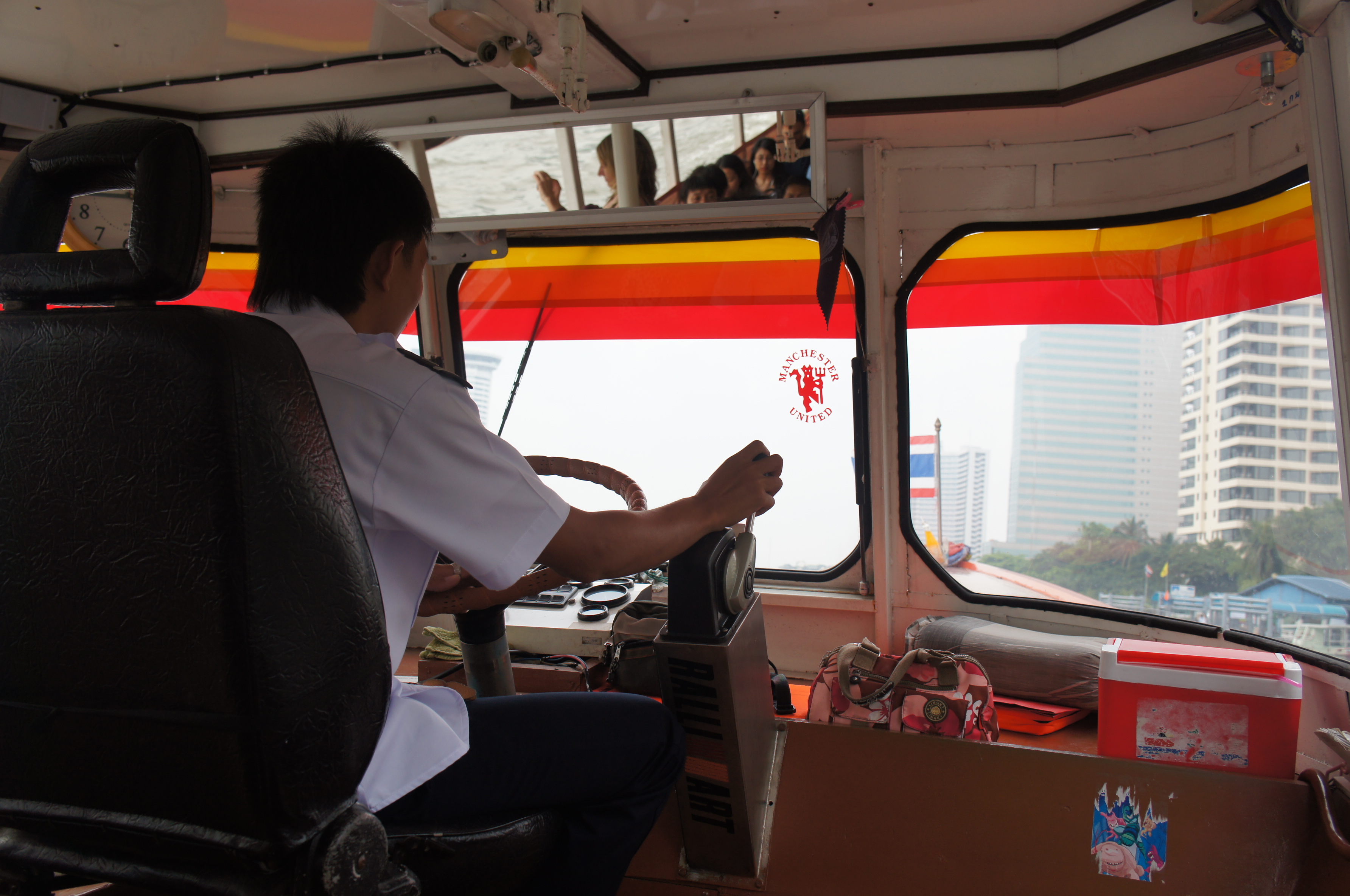
Water Taxi Driver

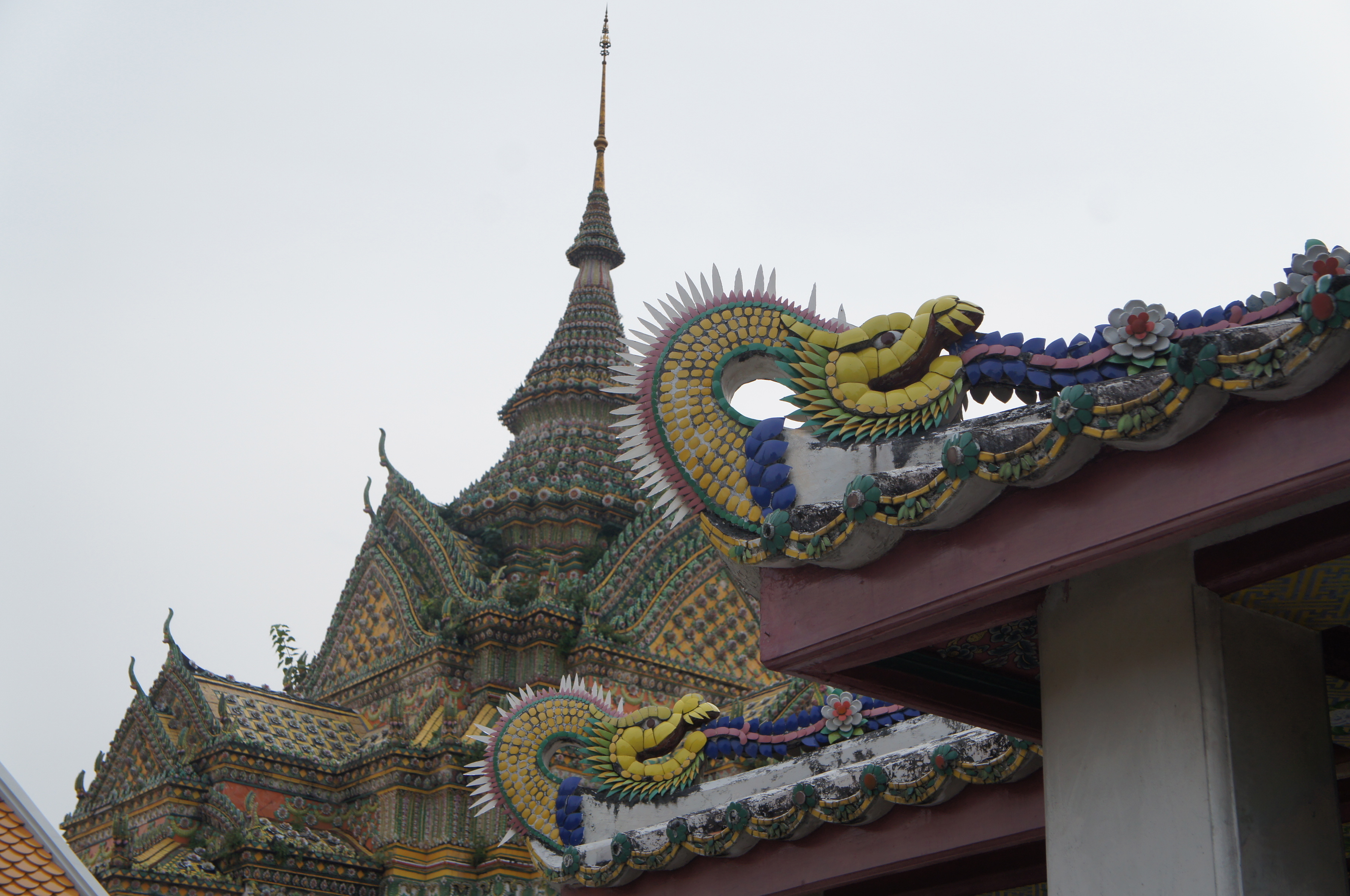
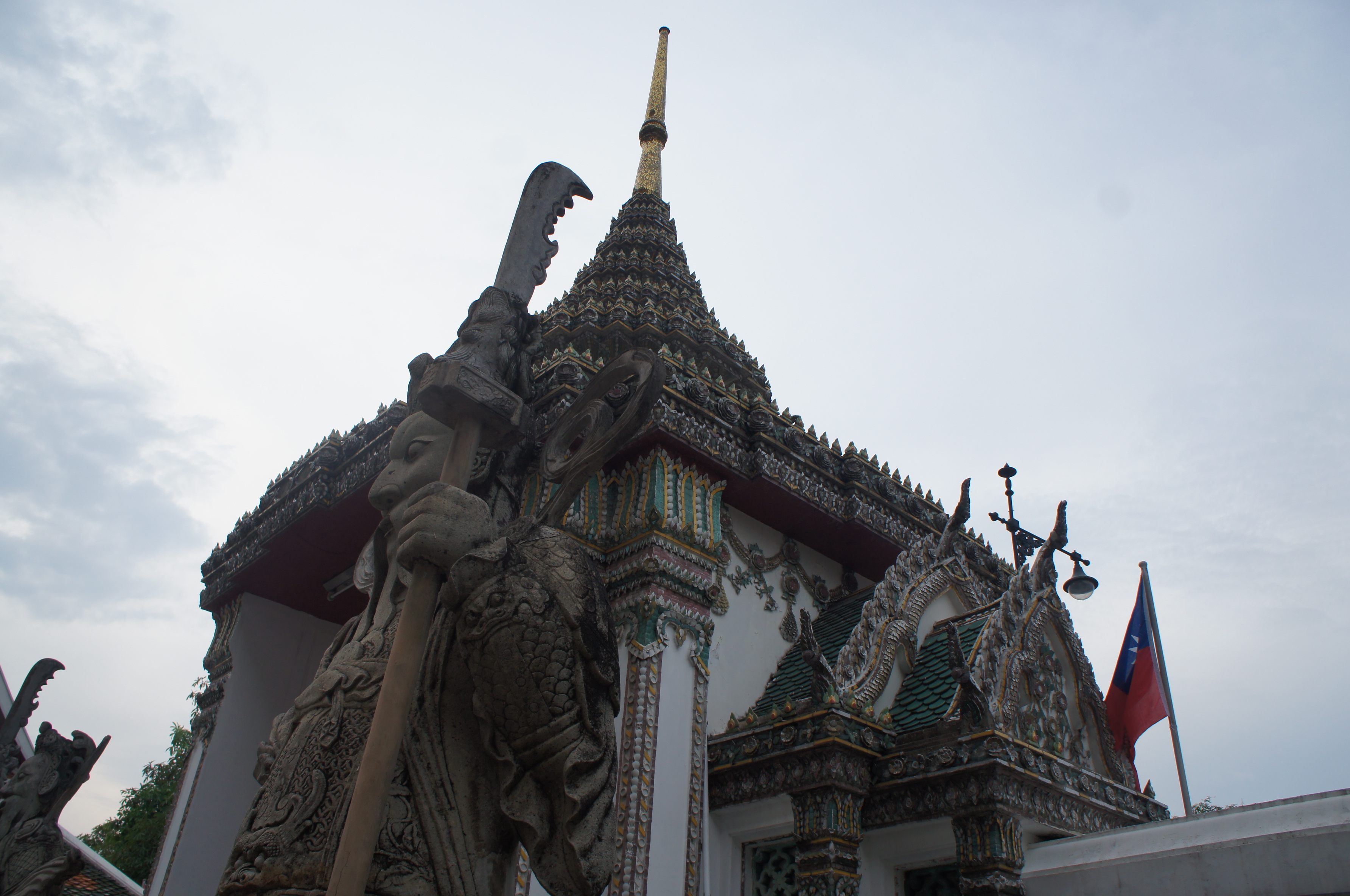
We leave our hidden oasis at the Jim Thompson House for another Thai landmark, Wat Pho, a temple dedicated to traditional Thai massage and a clear sign that the Thai take their massage seriously. But we must, literally, navigate another mode of transportation to get there–water taxi, which is way grittier than the Sky Train. The platform rolls under our feet as we climb aboard at Saphin Taksin. A woman shakes a tin can in the direction of new passengers to pay up in exchange for a small red and white paper ticket. It’s 15 baht, about 50 cents to ride. We spy long-tail boats for the first time on our trip, narrow skiffs with a small motor attached cruising Bangkok’s Chao Phrya River. We know we’ve arrived, about 5 stops later when an ancient conical tower appears amidst the skyscrapers lining the river. We think it is Wat Pho, but it is another temple, Wat Arun. The one we seek is just beyond a row of street vendor stalls, smelling of dried fish. But Wat Pho’s glittery gold roofs are beckoning. Once inside we are stopped by huge stone guards armed with swords. Nancee and Karen have to pose with them mimicking their menacing stances. But gangs of tourists have gotten beyond the guards pointing their cameras at whimsical multicolored spires stretching into the sky. Apparently one Indian tourist has lost their camera because there’s a man yelling through a bull horn for them to come pick up their camera from a tent in the middle of this crowded scene. We know the tourist is Indian because the man has looked at the pictures and is describing the people in them all over the bull horn. It’s a little distracting in what is supposed to be a sacred site.
The roofs at Wat Pho
Wat Pho Guards

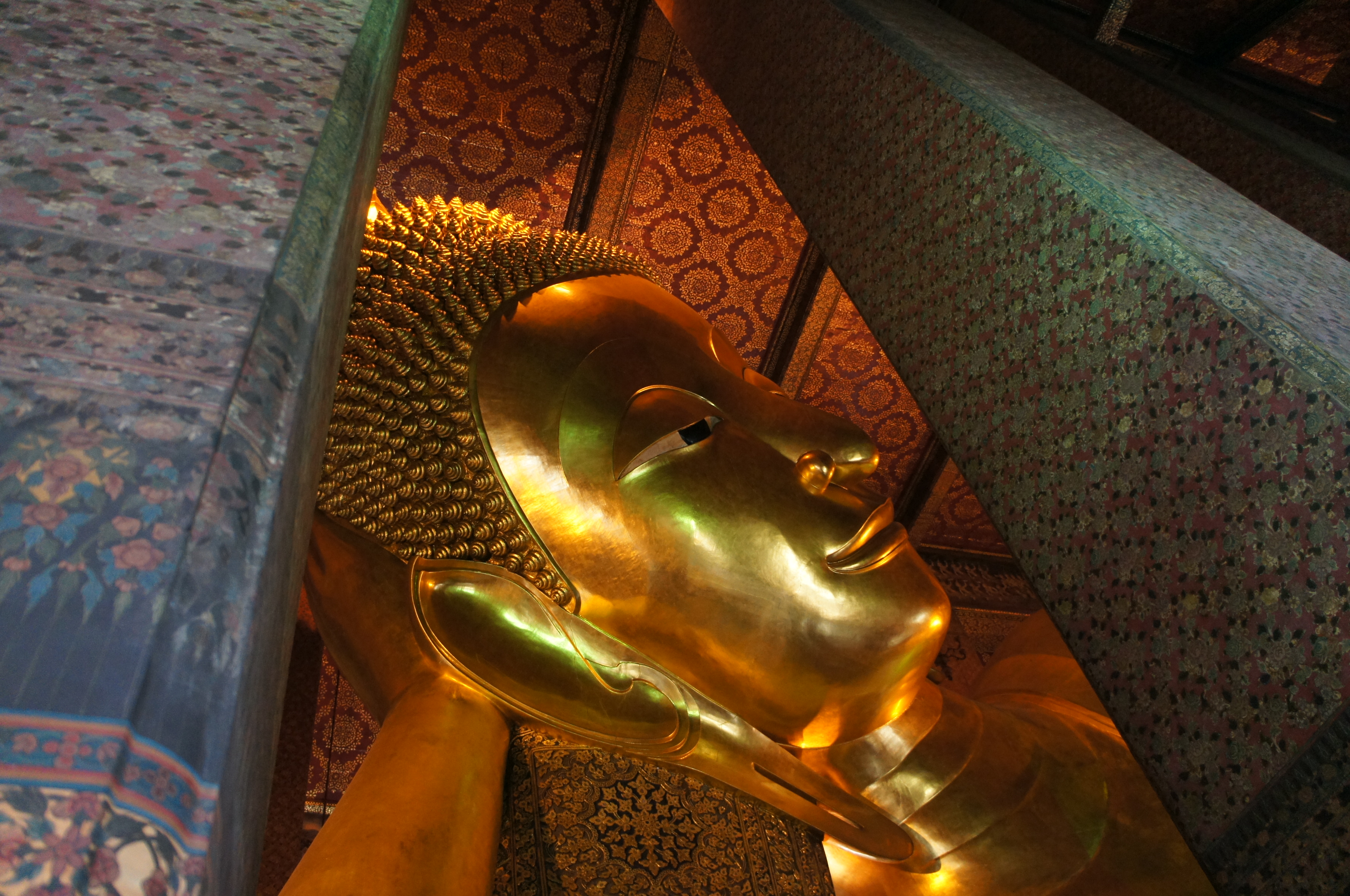
The main attraction drawing the crowds is a giant, neck-craning reclining Buddha, measuring 150-feetlong and 49 feet tall. The gold resplendent figure barely fits into its small temple and streams of people cluster at the entrance to get a photo its serenely happy face. It’s almost impossible to capture the Buddha in its entirety on one photo but everyone tries, while inserting themselves into a few frames themselves. His feet are a whopping 9 feet tall and 16 feet long, decorated with Mother of Pearl. He is to say the very least impressive and worthy of the adoration.

Wat Pho’s Reclining Buddha
Mother of Pearl encrusted Buddha feet

The size of this Buddha matches his surrounding at Wat Pho, which are expansive and just as fancy. The temple complex is huge and we split up to try to take in as much as we can. Spires print up from the ground and nested doorways invite us to explore courtyards lined with rows and rows of seated Buddhas. Chanting emanates from a temple at the center of the complex featuring a Buddha that seems to emanate light, it is so golden. This one is seated atop an ornate pedestal and monks in saffron robes kneel before it chanting without a breath. The chants envelop us and I believe this is what true devotion feels like.

Monks at Wat Pho

The sun is starting to set and we are about to leave when I remember that this temple is also dedicated to Thai medicine and massage and the home of the country’s first government approved school for massage. And, what better way to end of day of sightseeing than with a massage? Karen opts for a foot massage and Nancee and I go for the 30-minute full body Thai massage, costing 260 baht or around 8 bucks. An amazing value for a fully-clothed massage that starts from your calves, goes to your head and seems to force every muscle in between into loose submission. My masseuse, Ann, is small but she’s strong and uses her full weight to press tension out muscles and stretch limbs in ways you never thought possible. I ask Ann how long she has been doing this. She says 10 years. Her hands say it all. Karen seems content with her foot massage and Nancee says her massage was a bit too forceful for her tastes, but we are all pretty relaxed afterwards.

Wat Pho by night

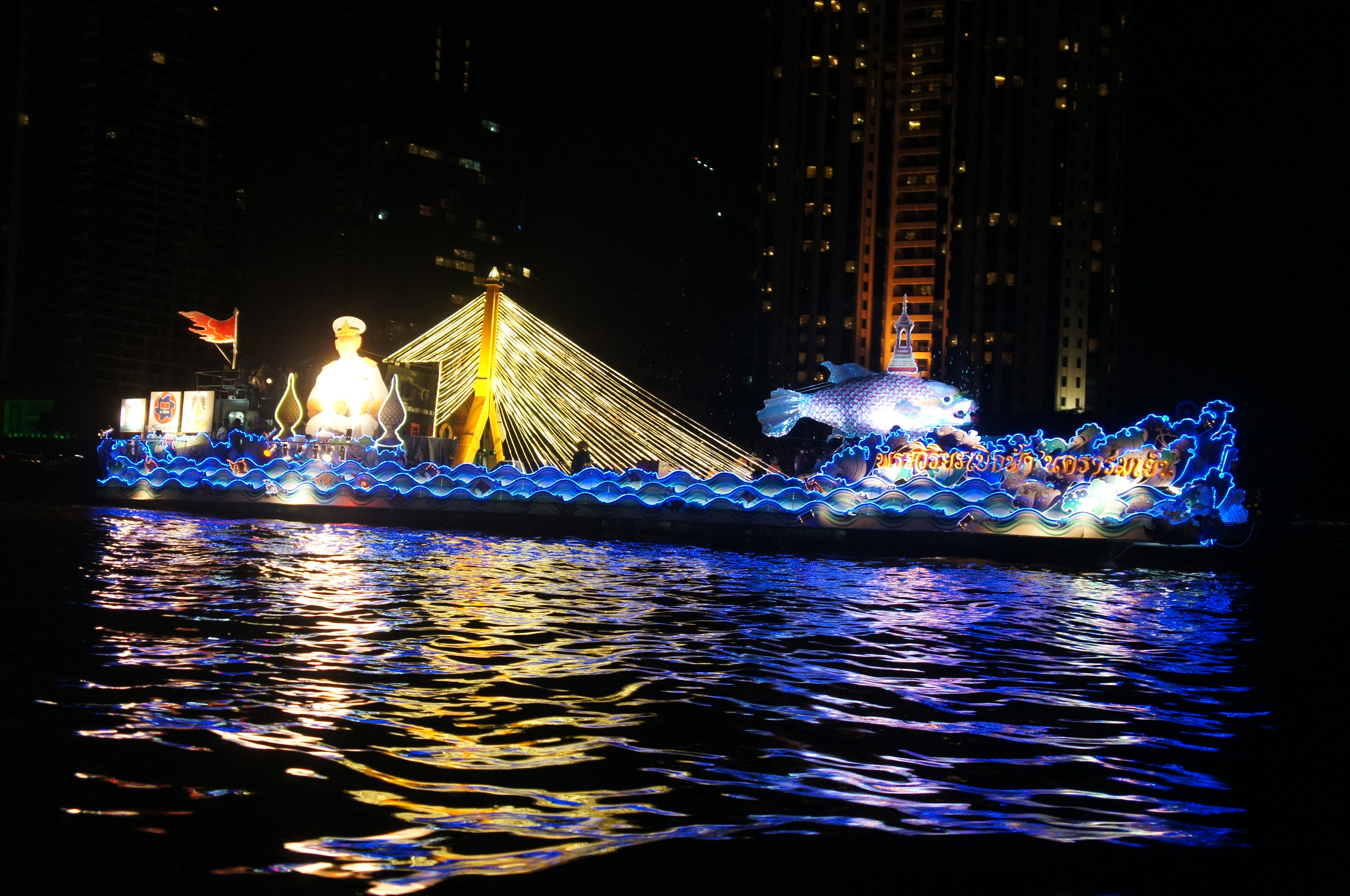
By this time it is nightfall and we make our way back onto the water taxi to head back to Lyle’s. Unfortunately we head in the wrong direction for about 30 minutes before the lady with the tin can asks where we are going and says we should get off and catch a taxi heading in the other direction. But it turns out to be good fortune because we’ve seen Thailand at night, a brilliantly lit bridge and skyline reflected in the river along with a special treat, barges festooned with colorful lights and themes featuring giant images of Thailand’s king and queen. One boat is blowing bubbles from its top and another boasts boldly, “Green Energy.” We learn later from Lyle that this display is probably a precursor to the upcoming Loy Kratong Festival to pay homage to the goddess of the rivers and water ways. Sometimes it’s good to take a wrong turn. You never know what you might miss.

Water Festival Boats on Chao Phrya River

We are famished when we return and Lyle suggests one her her favorite spots in the neighborhood, Puangkaew. Lyle says a friend of her’s travels across town from Chinatown to eat at this place and we can see why. I have the spiciest papaya salad I have ever tasted and a delicious Chee Choo Gong or prawns in red curry sauce. The prawns seem to be fried whole and drenched in a coconut curry cause with kick. I cool the spice with a Singha beer, Thailand’s official brew. We can barely keep our eyes open over dinner as we fight off the effects of jetlag and a really good Thai meal.

Chee Choo Gong

Sky Trains and a Spy Who Loved Silk

Author’s Note: I’ve been lax in posting from Thailand because there has been so much to see and do! So here are two posts from one day of adventures!

The third member of our traveling party arrived on Monday morning, albeit a tad later than expected. We expected Karen in on Sunday, but she miscalculated her arrival, failing to factor in a 7 hour layover in Frankfurt. But, now, all the players in this great Thailand-Cambodia adventure are in place: Karen, the Brooklynite who’s lived in London traveled to Peru, Tanzania, Madagascar and other far flung places and Nancee, my DC writing buddy, who’s studied in Spain and tripped about in the Caribbean. I know these ladies through a mutual friend who couldn’t make the trip. (We’re thinking about you, Kim). I mentioned that I was planning to go to Thailand and they all said they wanted to go, too. So, here we are.

Buying a Sky Train ticket

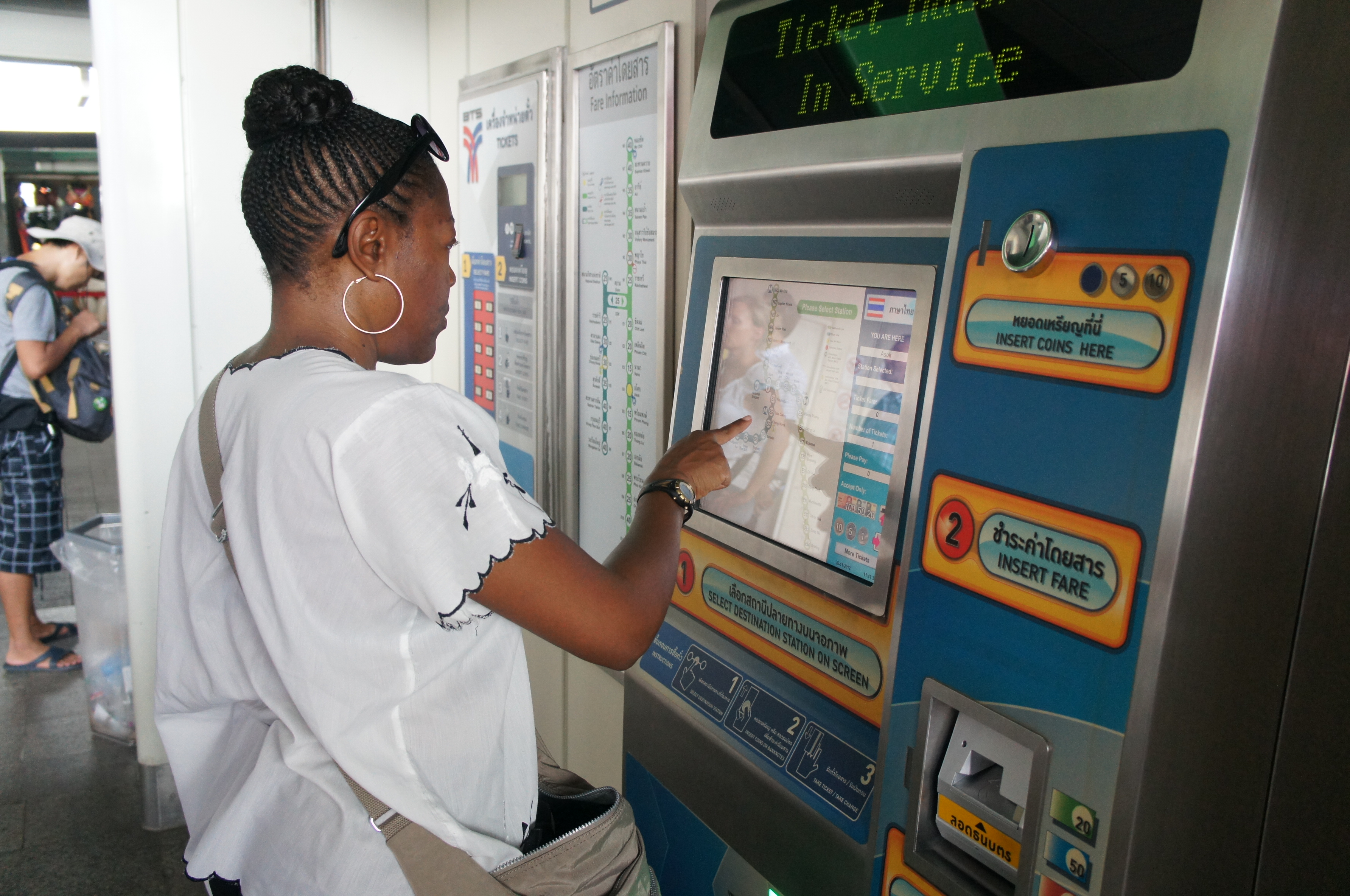
On our first day together we decide to visit a couple of Bangkok’s major sites–The Jim Thompson House and Wat Pho. But not before taking on Bangkok’s Sky Train. At the Asok station near Lyle’s apartment, we weave through a steady and disorienting stream of Thais going about their Monday afternoon business, attempting to figure out one of their main modes of public transportation. And we actually take to it quite well. The ticket machines are brightly-colored and feature the system map along with each destination and the cost to get there from your current location. It’s pretty much idiot proof. Select the fare to your destination (in this case 40 baht or a bit over $1 to reach National Stadium), put in your money and the machine spits out a pretty blue ticket. The only thing is the machines don’t take bills, so you have to go to a booth to get change from a teller. At first we thought we could buy tickets from the uniformed teller in the station and were confused when we only got change back after asking for a ticket. The trains are absolutely immaculate, but they quickly become jammed with passengers depending on the stop. At our Siam transfer point we had to make a mad dash to get on a car that wasn’t overly packed with passengers. If this were NYC or even DC, there would be some unpleasant jostling for space or someone’s arm getting caught in he door. But not here; everyone manages to get on in a very polite and orderly fashion. The passengers are a mix of Thai society from well-dressed ladies with the latest designer handbags to the university students who must wear a uniform of white blouse and belted black skirt, a pairing that is actually quite cute. Lyle’s nanny Ngea was wearing the same outfit earlier today. She explained that younger students much wear longer skirts and older students have their choice between longer and shorter skirts. Ngea is studying eco-tourism and has been preparing for a big economics exam. I wonder what degrees the students on the train are pursuing.


Bangkok’s Sky Train

Before we know it we are at our stop and follow the flow of Thais from the Sky Train onto the busy street below. The Jim Thompson House feels like an oasis in the chaos that is Bangkok. It feels particularly serene after our adventure on the Sky Train. In the courtyard of the The Jim Thompson House (admission 100 baht, $3.25), there is a Thai man spooling a thin tread of silk from and steaming bath of silk worm cocoons. The man appears to be a representation of Jim Thompson’s passion for silk. Thompson, an American, was an officer in the Army’s Office of Strategic Services, a precursor to the CIA, when he lived in Bangkok in the 1940s. He fell for the place as many Americans do. Lyle’s husband, Peter, told me that Thailand has the most American expats after China. Thompson eventually left the Army to become an entrepreneur in Thailand’s silk trade and his home became the center of Thailand’s expat scene, a lovely complex of 6 traditional Thai homes in one.
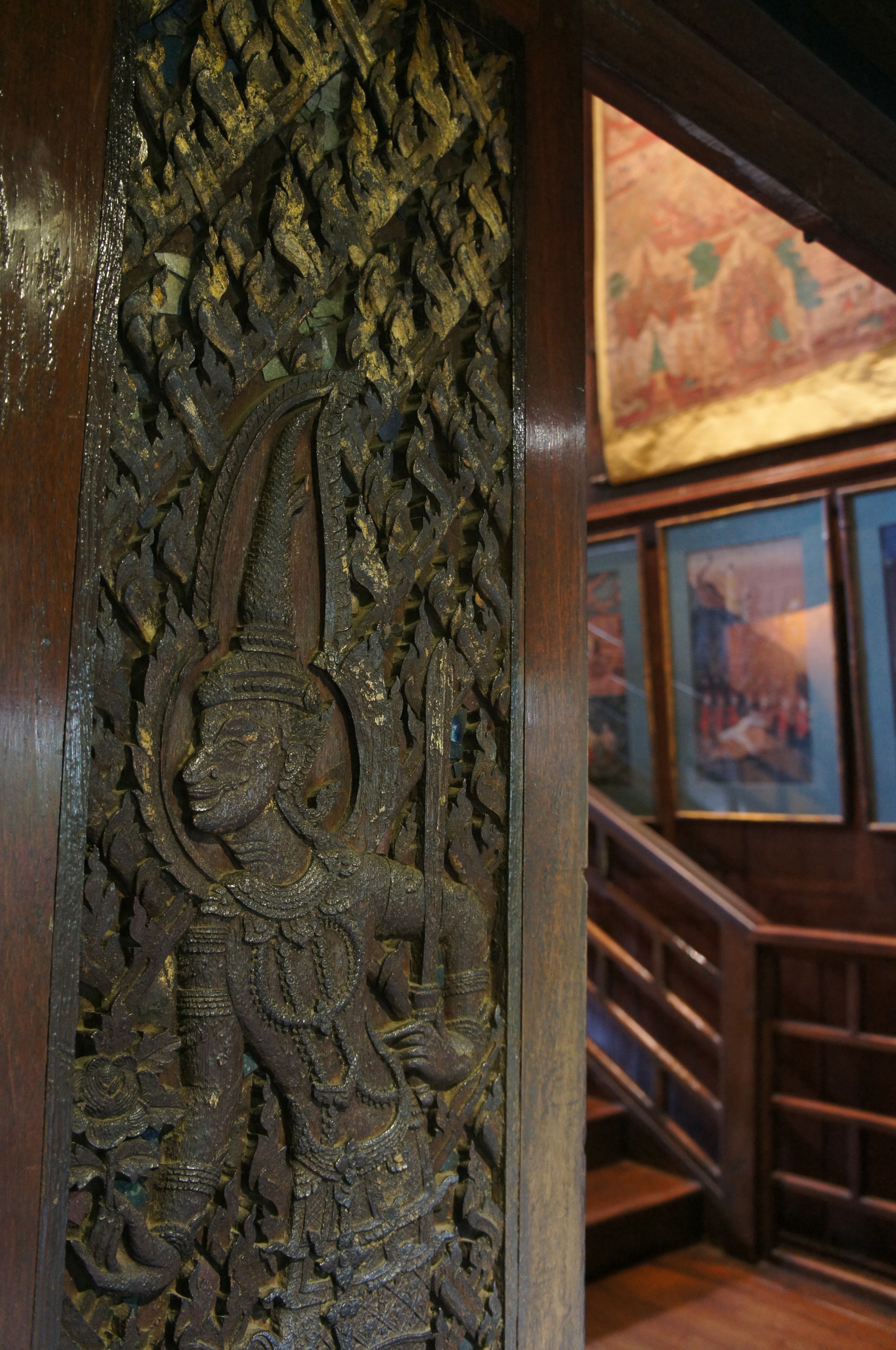
The Jim Thompson House
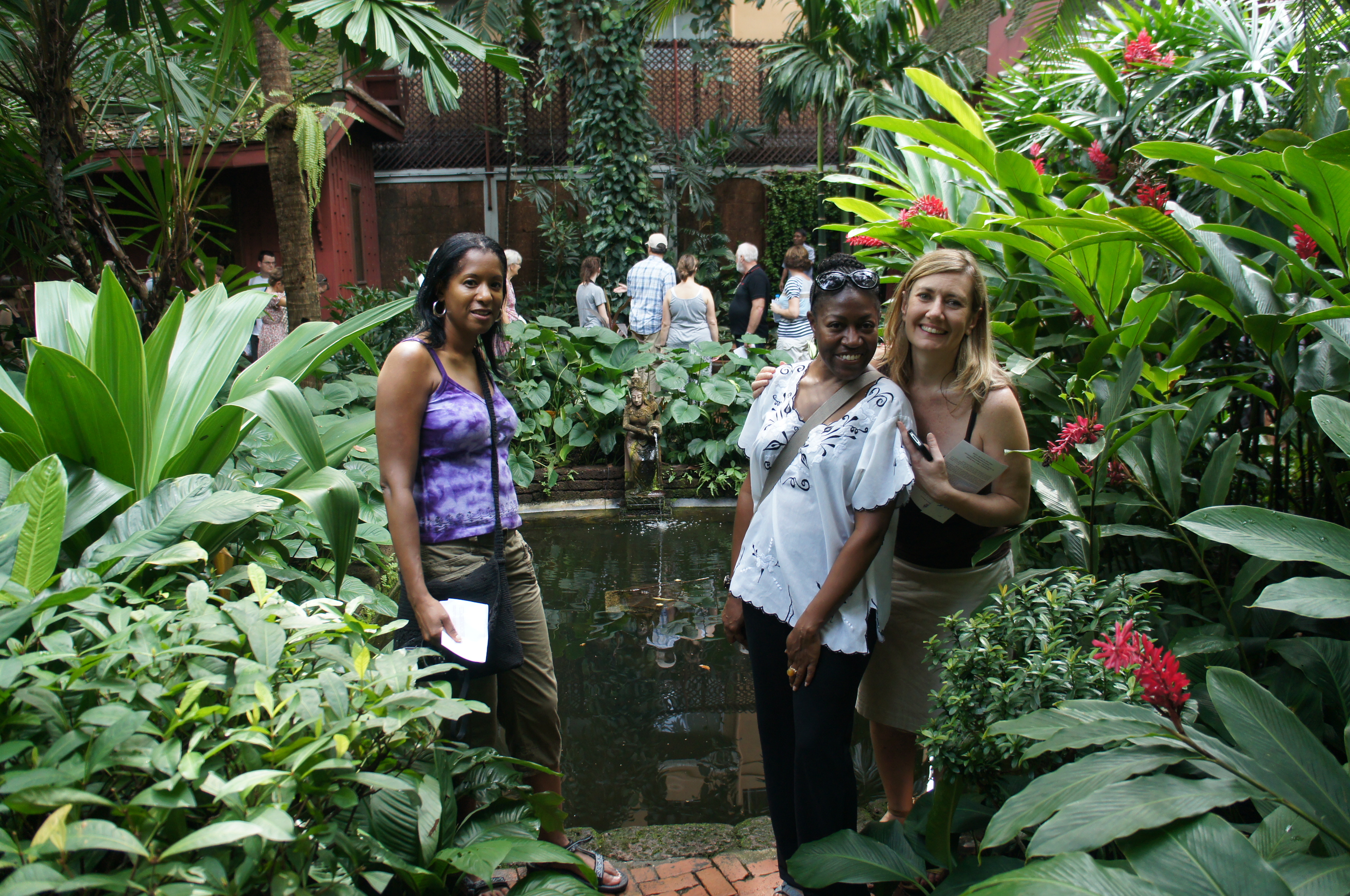
Nancee, water-pouring god, me and Karen

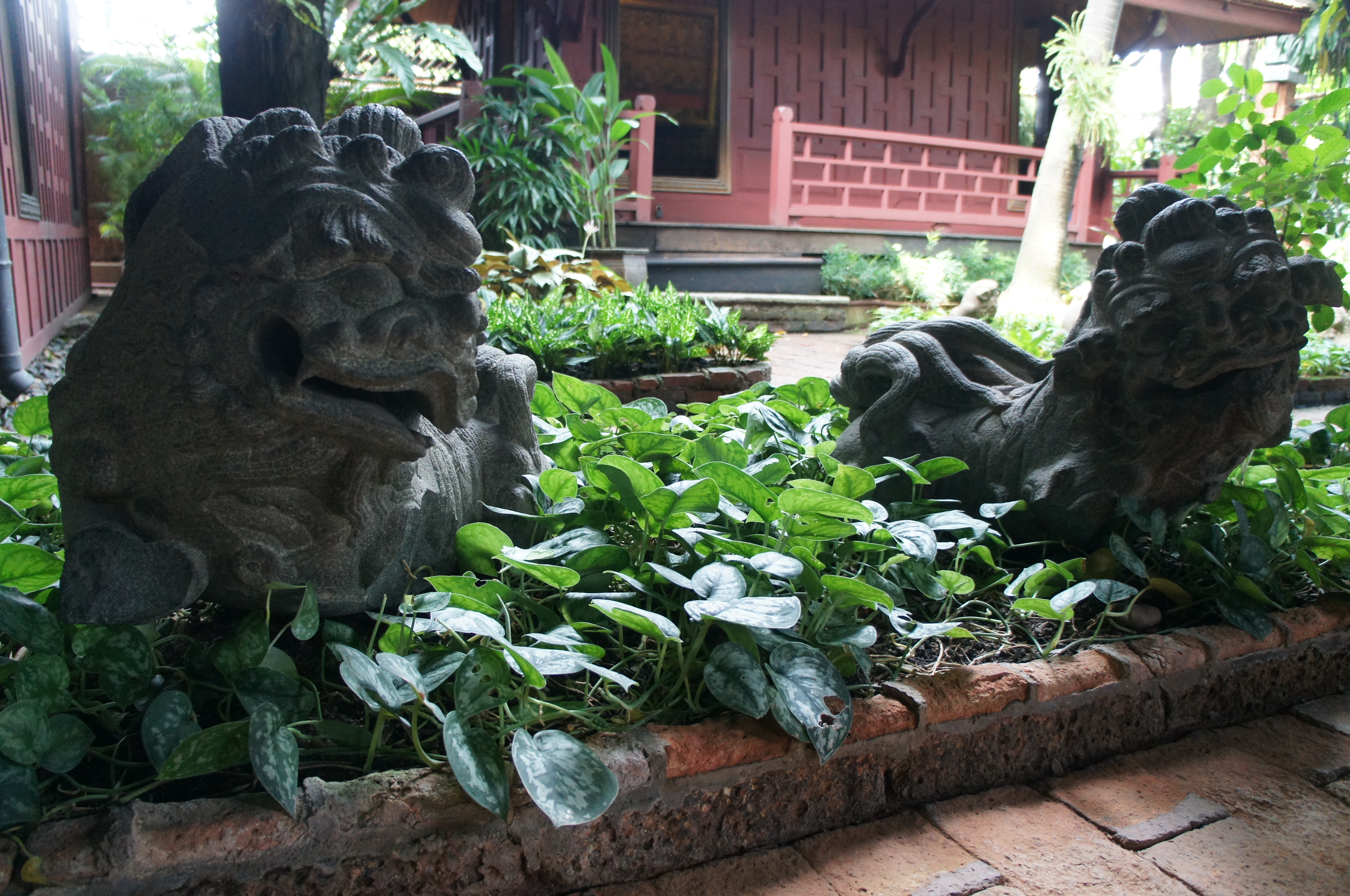
We explore Thompson’s urban tropical jungle, featuring water-pouring gods and other mythical creatures lurking in leafy green foliage, as we wait for our guided tour of the place. We already can tell that Thompson must have had an incredible green thumb and an impeccable sense taste for Thai art and design. Our guide explains that he added some western touches from the Italian marble in the western-style foyer of his home to the addition of a ceiling, where most Thai homes had none. Nancee, Karen and I love the furnishings throughout the house from the mahjong, turned dining table in the dining room to the lamps made from ancient drums. We spot plenty of pieces we’d want in our homes. Our guide tells us that Thompson disappeared mysteriously from a vacation with friends in Malaysia in 1967. To this day, no one knows what happened to him. Some people believe that a wild tiger ate him while he was on a trek alone. Karen asked the guide who got Thompson’s estate. She says that it was his nephew. So, we devise our own theory: The nephew offed his uncle for this amazing house. But the more likely scenario is that he was hit by a truck and the driver hid his remains.

Glimpse of interior of Jim Thompson House

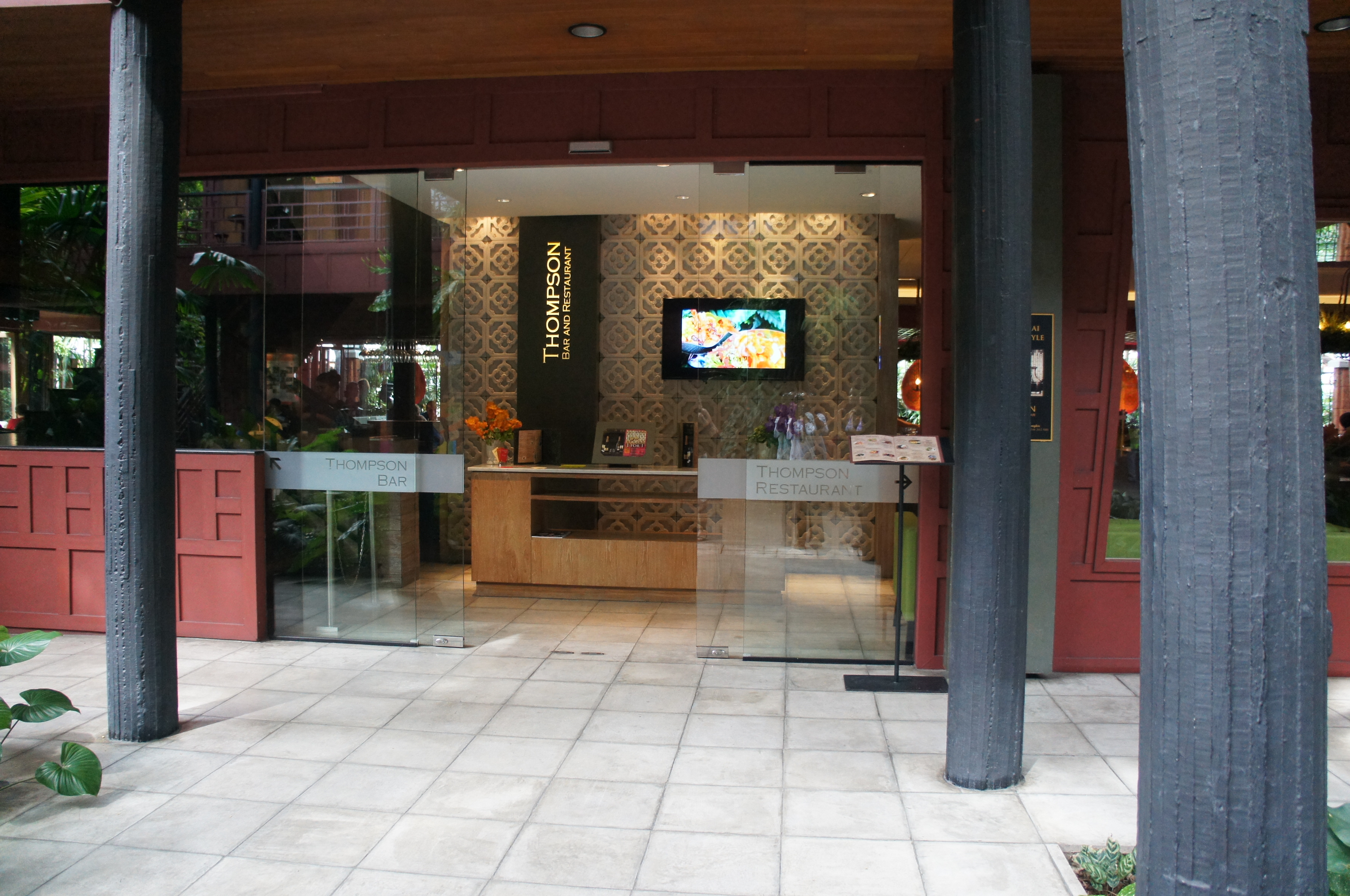
At the end of our tour we have lunch at the Thompson Bar and Restaurant on the premises, which is still a local hang out. The restaurant is chic and minimalist, bordered by a Koi pond. I have a tasty Pad See Ew and my second fruit smoothie since arriving in Thailand, a lychee lemongrass mixture. Fruit smoothies or shakes seem to be big here, coming in a variety of tropical fruit flavors like watermelon, coconut, mango and pineapple. These aren’t like our smoothies or shakes mixed with yogurt, milk or ice cream, these are blended bits of real fruit and deliciously refreshing on a hot Bangkok day.

Thompson Restaurant and Bar

Read on for part 2 of this day’s adventure: Water Taxis and Wat Pho.