Street Corner Gods and Th Sukhumvit

Traditional Thai and Foot Massage

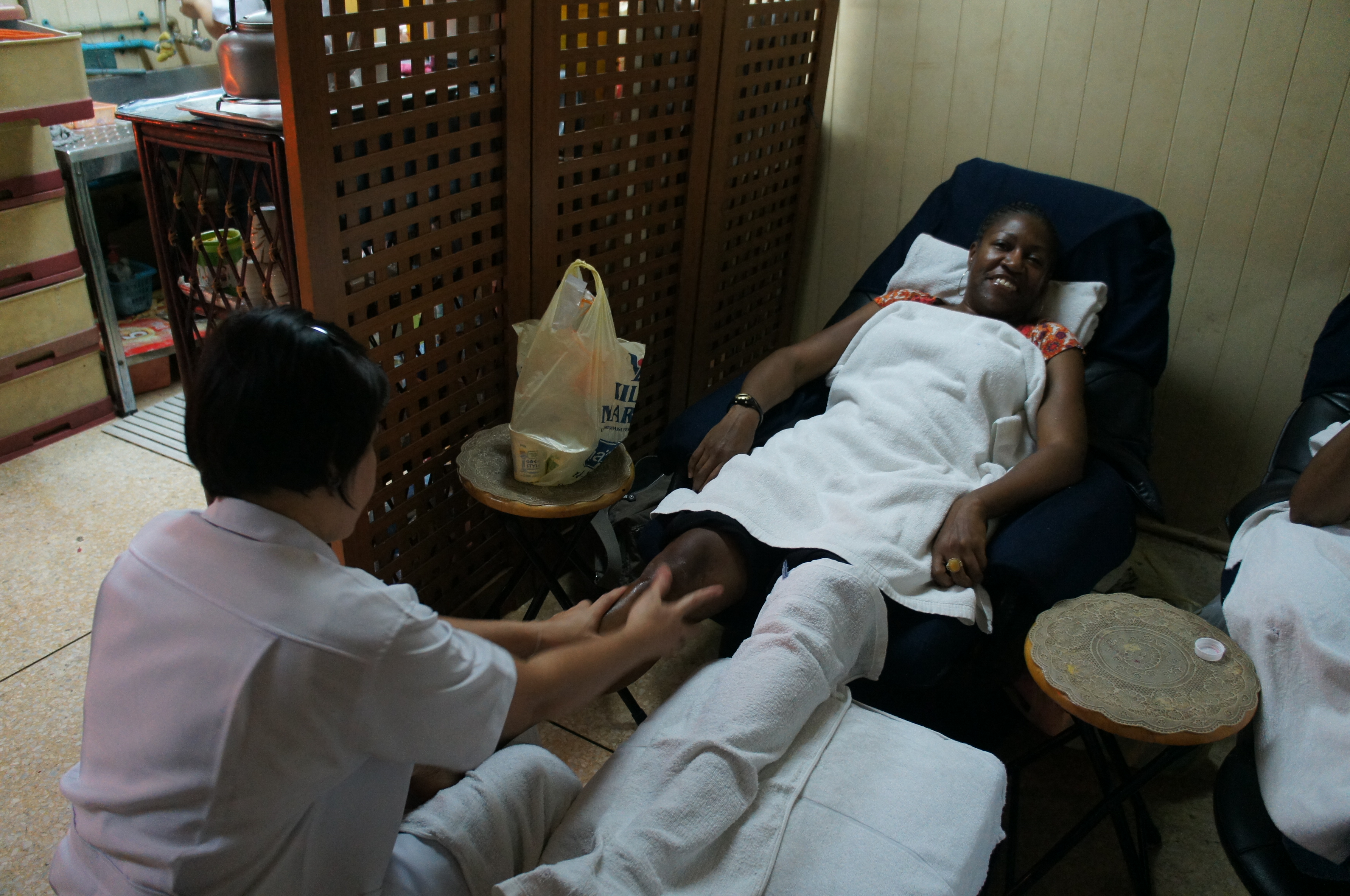
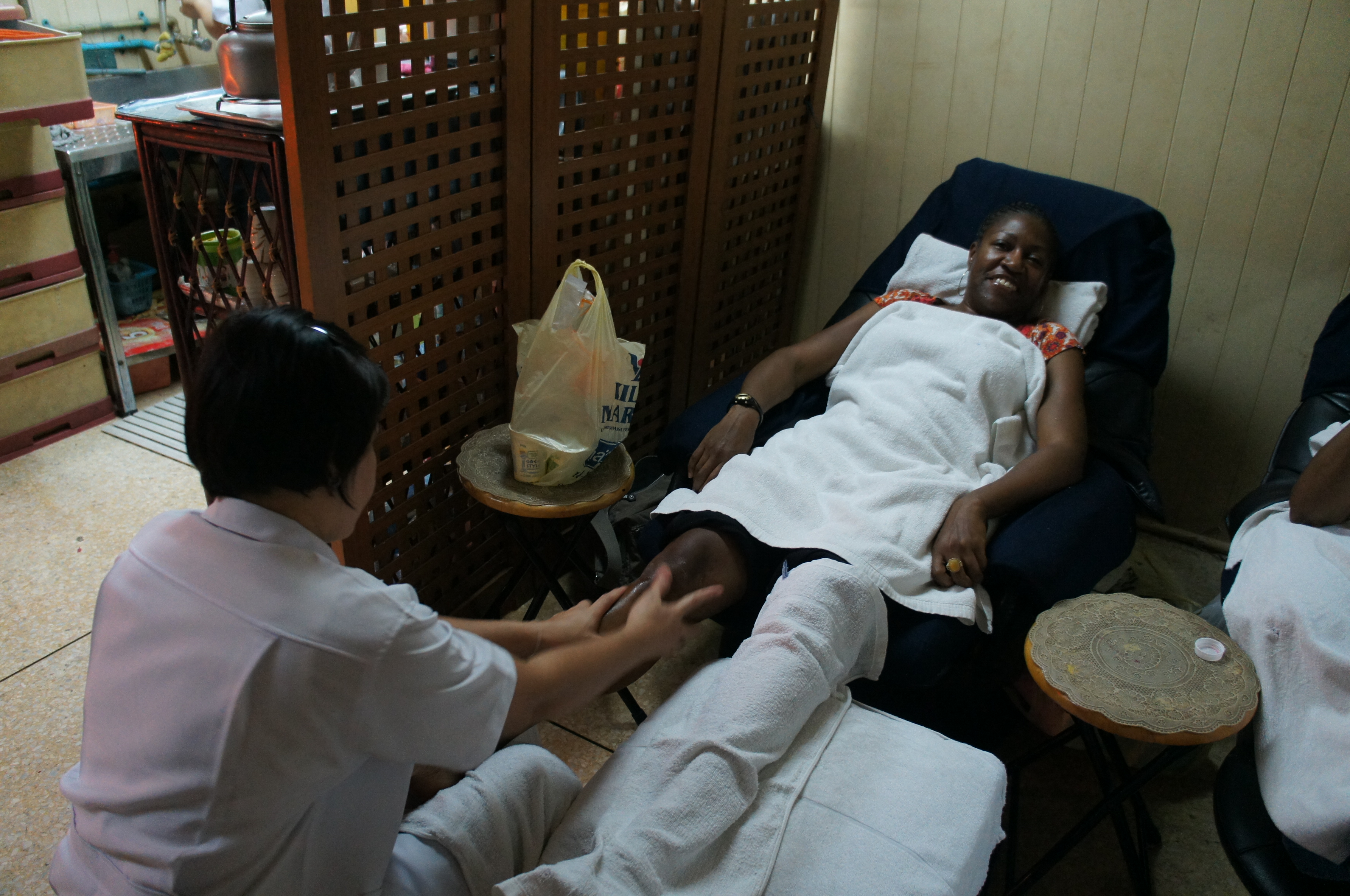
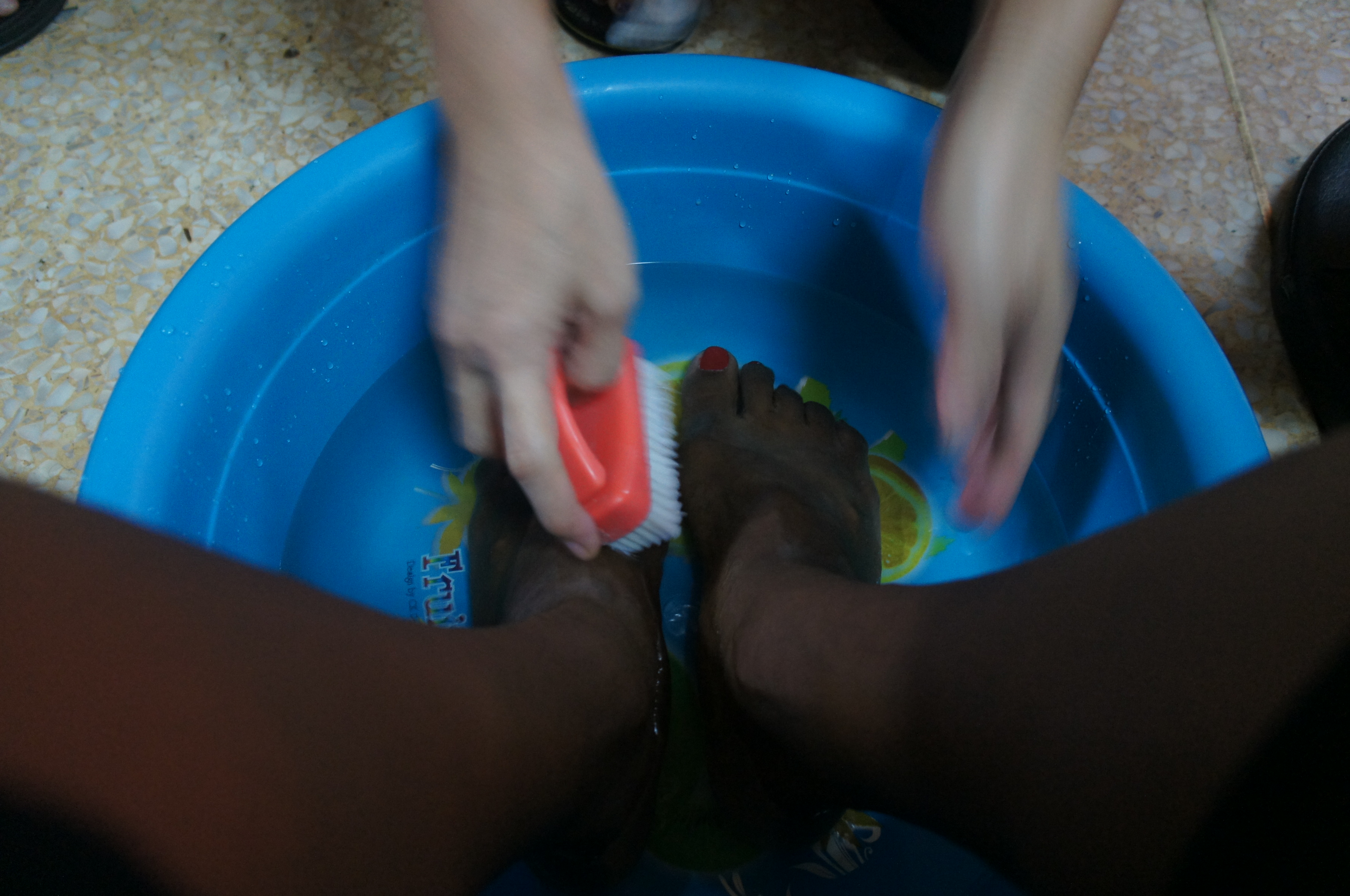
This is how I ended my first full day in Bangkok. I come to be at this Traditional Thai massage shop because of my high school chum, Lyle. She’s been living in Bangkok for 11 years with her husband Peter and their three boys, Nathan, Alex and Iain. After reading my blog earlier this year and reconnecting at our high school reunion, Lyle extended an invitation to visit and you know that I can’t turn down an invitation to travel. So here I am, pictured above, getting a foot massage, followed by an intense neck rub and arm and shoulder stretching.

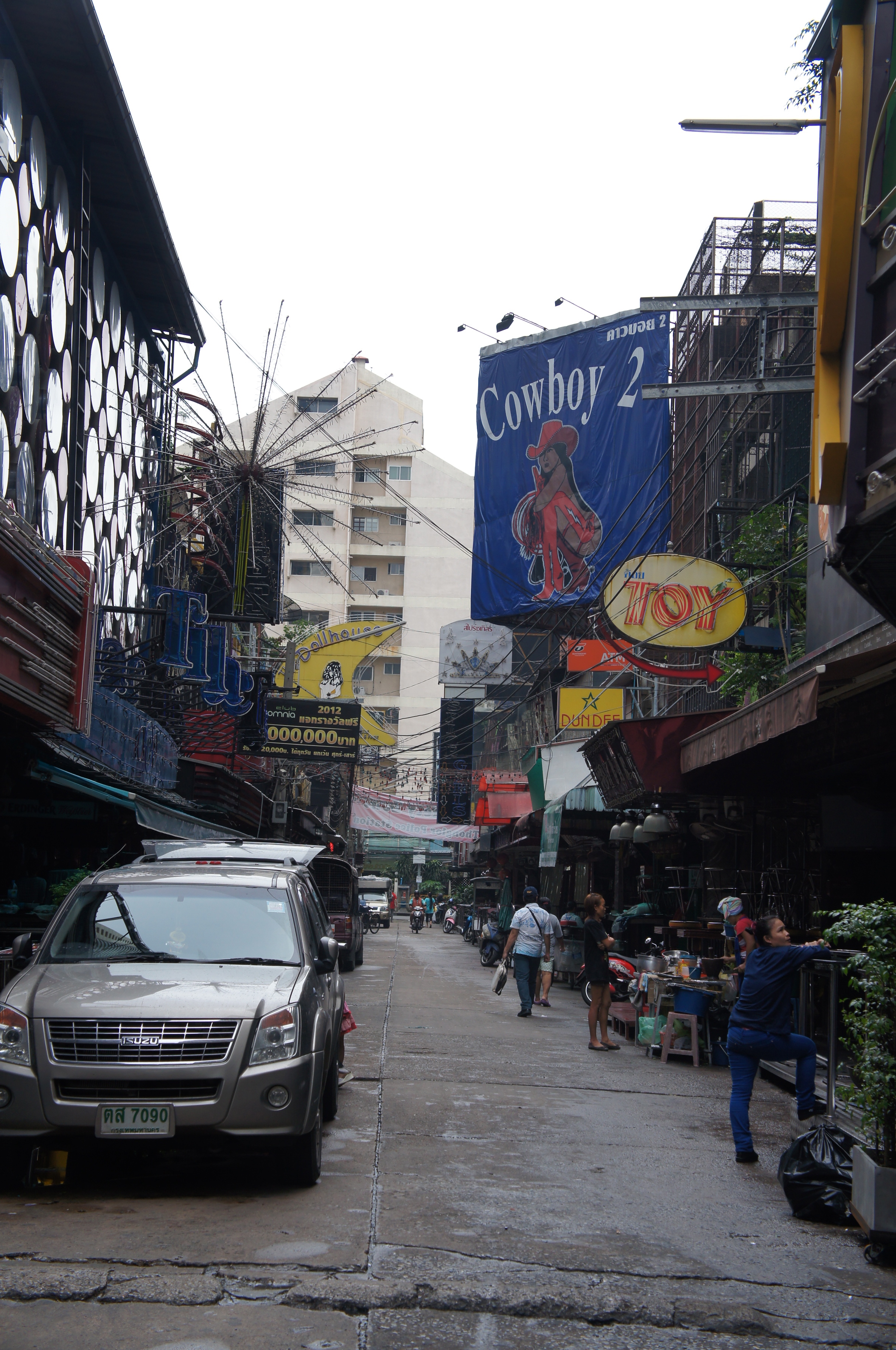
We spent the day exploring her neighborhood off one of Bangkok’s main thoroughfares, Th Sukhumvit, along with my friend Nancee. There’s a Traditional Thai massage shop on almost every corner mixed in with “salon and spas” offering oil massages better known as massages with happy endings. Lyle and I spotted one professorial gentleman and presumably happy customer rubbing the small of the back of a Thai massuese before strolling away from one such salon. Lyle says this is the norm in her neighborhood where the famed Cowboy Soi, a street lined with strip clubs and known well by sex vacationers to Thailand, is a couple of blocks down the street.

Cowboy Soi
Cowboy Soi by day

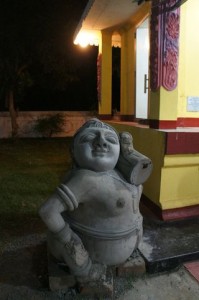
The massage spots, traditional or not, are not to be outnumbered by the Hindi gods and spirit houses littered with Buddhist offerings in front of every business along Sukhumvit. Some are quite elaborate and some are quite simple. Lyle explains the way Thai people never miss a beat as they acknowledge these spiritual hot spots with a wave of a hand over their head or a small prayerful bow, known as wai, then go about their day. We see this happen in the short-time that we stand before a multi-armed goddess encased in a gilded pagoda.

Street corner goddess

Beyond the buildings with gods and spirit houses are the street vendors. They’ve thought of everything they possibly can to sell from sunglasses and fake polo shirts to Cialis and dildos for the sex tourist who has left these essential items at home. Personally, I think that if you have to resort to purchasing Cialis on the street, you’ve reached a new low. But there is one place in Bangkok that makes it very clear that sex tourists are not welcome.

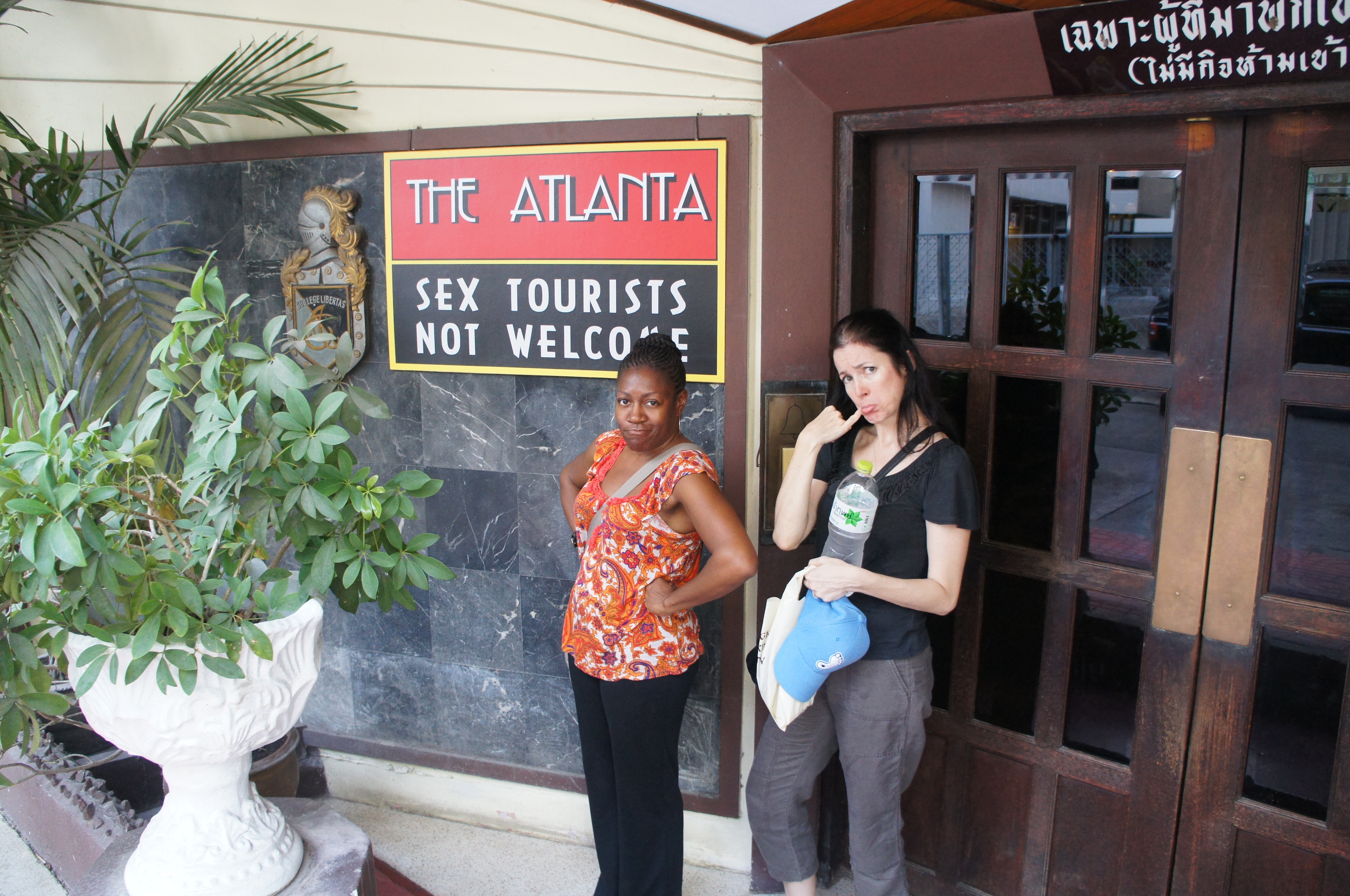
The Atlanta Hotel on Sukhumvit is a historic treasure in Bangkok and does not entertain the sex business in any way shape or form. Its policy is clearly stated outside its door, while its web site declares the establishment as a bastion of wholesomeness and culturally sensitive tourism, adding:

The Atlanta is against sex tourism.

Sex tourism is exploitative, socially damaging and culturally demeaning:
those who want to buy sex should do so in their own country.

Tourism is not about going on a rampage through other people’s country:  those who cannot go abroad without behaving badly should stay home.

SEX TOURISTS ARE NOT WELCOME

Lyle and I as sex tourists. (Yeah, right.)

Doesn’t get any clearer than that. The Atlanta is a quirky little place. It feels lost in another time and place and in a good way. Carved wooden daschunds greet you at the entrance of the art deco foyer and waitresses in the hotel restaurant wear name tags like in an 1950s diner. The pool, Thailand’s first hotel pool, is like a weird wonderland and tiny zoo, starring a family of terrapins and clutch of multicolored cats. But the best thing about the Atlanta is the food. It’s a little quirky too. Ever had a spicy fruit salad? Pad thai in an egg wrapper? Me, neither. It was good. The eggplant in Penang curry was also a hit on a menu covering breakfast, lunch and dinner with a wealth of vegetarian options to boot.

Spicy fruit salad and squid at The Atlanta

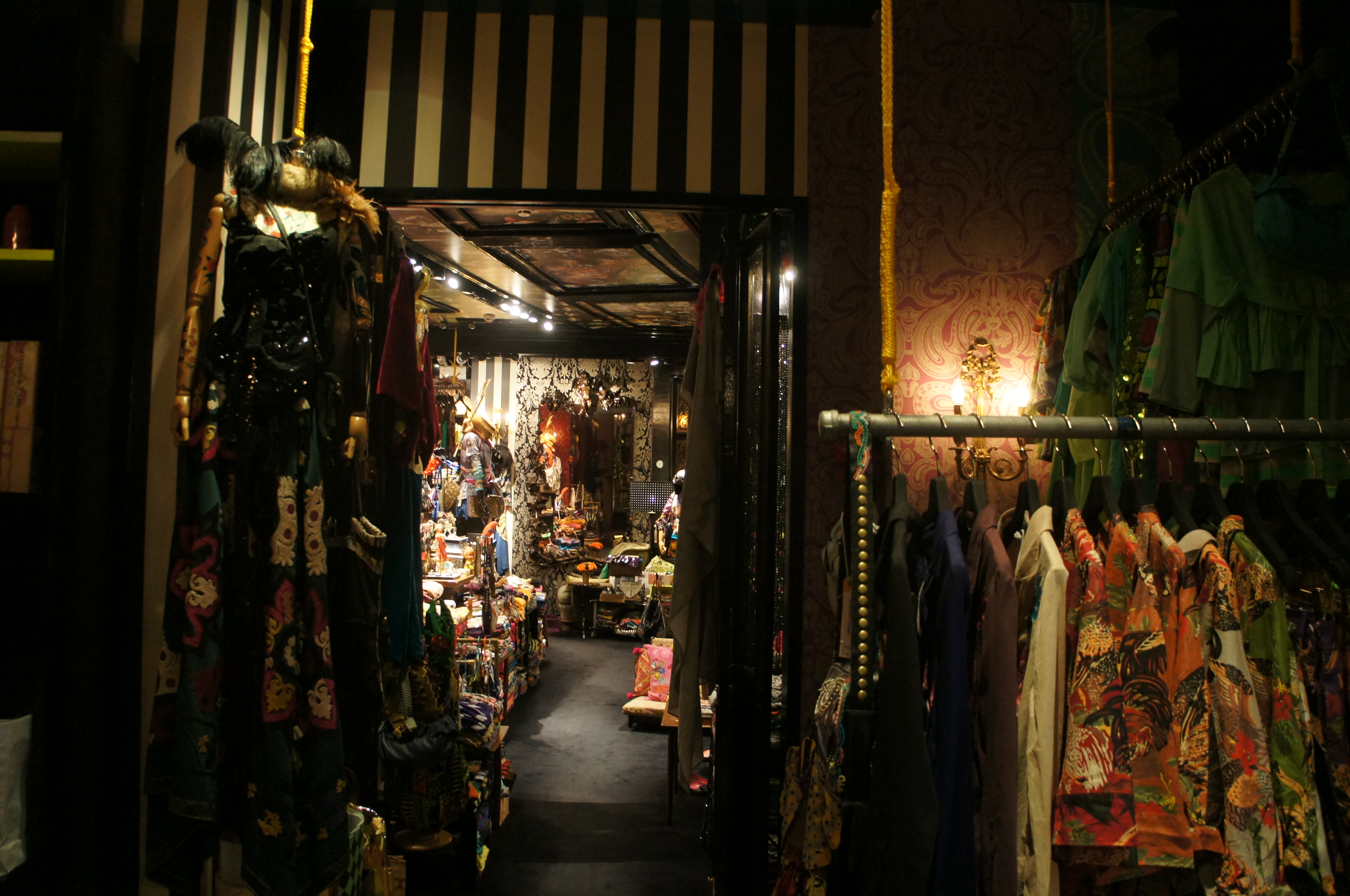
We wanted to sleep on the restaurants red vinyl covered booths after we ate, but we  continued our tour of Sukhumvit instead and find ourselves at the Emporium on the corner of Sukhumvit and Soi 24. It’s a massive mall in the tradition of Paris’ Galleries Lafayette with floors of stores you know like Guess and Zara along with a department store topped by a glorious gourmet grocery and food court. Then there are stores you may not know like the super cute It’s Happened to Be a Closet. OK the title of the store makes no sense, but it is a little slice of funky fashion fabulousness. Imagine if Anthropologie added pedicures in smooth leather chairs and served high-end food and wine. That’s this place. Hot, right? Lyle tells us that we have to go to the original store in a rowhouse in Siam Square. We take note and make a plan to visit it later during our trip.

It’s Happened to Be a Closet in the Emporium in Bangkok

Now, we are on a mission to end our day with a foot massage. But not before we snap photos of a transgendered man dancing in a dress on stilts at a pet adoption fair or the lovely park dedicated to Thailand’s queen. At Technique Massage on Soi 23 off Sukhumvit, which happens to be Lyle’s favorite escape, we settle into reclining blue chairs to have our tired feet rubbed.

The foot washing before the foot massage

Day One Mileage in the Mile High City

Editor’s Note: I interrupt my previous St. Martin musings with observations from Denver, where I am attending the Travel Bloggers Exchange Conference (TBEX). I will return to previous travel musings after this brief, yet exciting interruption.

There’s a low-hanging haze over the Rockies as I head toward Denver from the airport. I wonder if it’s from the forest fires near Fort Collins or just a normal morning haze. Even slightly obscured, this mountain range is pretty amazing.

The rest of the $55 taxi ride on 70 is pretty unremarkable. After passing some construction near the airport the landscape is fairly flat with a string of office buildings, hotels and box stores springing up along the highway. My first impression of Denver is that it is really, really clean. My taxi driver tells me that it is a nice city with fewer people than where I came from in Washington, D.C. He tells me that where I am staying at Hotel Teatro in the LoDo area, short for Lower Downtown, is really nice, too.

I agree. Hotel Teatro is quietly classy. The bell captain has already put my bag away for safe keeping by the time I arrive at the front desk where he announces my arrival. “Ms. Bennefield is here for check-in.” The quick, polite and friendly service has to be one of the reasons that the hotel made it onto Travel + Leisure’s Top 500 Hotels in the World list. I love how the theme of theater and the arts is subtly carried through the décor in black and white photos of Shakespearean and Elizabethan actors. There’s a huge ruffled Elizabethan costume framed on a wall downstairs near he hotels meeting rooms.

And, I am sure that the hotel’s constant top list rankings are the reason why the hotel is full and I can’t check into a room early. But I am happy to walk around and get familiar with Denver and Jim at the front desk pulls out a map to help me get oriented. He tells me that I’m steps away from shops and eateries and he’ll call when a room is available, so I start wandering.

You can wander in downtown Denver, but you can’t get lost. There are signs everywhere pointing you towards the must-see sights: 16th Street Mall, Larimar Square, Writer Square. If there is a main drag in Denver, it’s the 16th Street Mall, a pedestrian friendly strip of shops and restaurants that runs between the city’s sports attractions, Coors Field and the Pepsi Center, and its arts attractions in the Golden Triangle Museum district. It’s pretty well planned, if you ask me. There’s something for everyone within about 20 blocks.

On my stroll down 16th Street Mall, I spy a man playing a yellow piano and one tossing batons in the air. There’s also a heard of buffalo, it’s one of the many art installations on the street. In the center is the golden-steepled D&F Clock Tower, once a part of the Daniels and Fisher department store. With its four 16-foot high clocks, it was the tallest tower west of the Mississippi when it was built in 1910.


  I get some pretty good photos of the tower as I stand on the corner of Larimer. I find that I want to come back to Larimer Square at night to see what it looks like with it is strings of holiday lights aglow. I stop in Nest, a cute children’s clothing boutique, because I’m totally into kid’s clothes now that I have a nephew. I see a lot of unique things, including a onesie with a bowtie that I have to have. Posh is one of those high-end trinket boutiques designed to look like a stylish living room where you wish your living room smelled and looked as good with Jonathan Adler and Tocca candles, funky wine glass coasters and eclectic wall art.


Now, I’m hungry and decide to head back up 16th Street Mall to Curtis where I passed Sam’s No. 3, a diner with a big Food Network logo emblazoned on it’s window along with a bunch of other accolades. The self-marketing was effective and I had to see what all the hype was about. I pick a spot at one of two counters where I am given a carafe of water and an eight-page menu of eye-popping food choices covering breakfast, lunch and dinner like the Kitchen Sink Skillet with ham, bacon sausage and gyro and smothered with their proprietary kickin’ green chile sauce. The sauce is what got them on Food Network’s Diner, Drive-In’s and Dives, which featured its green chile burrito.

As I look around to see people eating from plates the size of platters piled to heights that could be considered the Rockies of food, I start to wonder if I might need to arrange for car service from the diner to my hotel three blocks away. While I’ve been staring at other people’s plates and staring at the menu, my waitress has stopped by twice to see if I’ve made a choice. Finally, I ask her what’s the best and most popular. She mentions the gyro and I go with it because this is a Greek-owned establishment and I haven’t had one in years. I just hope it isn’t the size of my head. Luckily, it isn’t. I happily manage the soft warm pita filled with thick juicy slices of lamb. It’s messy and that always makes a sandwich even better in my book.

After I am filled to the gills with gyro, I ask the waitress more about Sam’s No. 3, including why it’s called Sam’s No. 3. She explained that there used to be five diners owned by Sam across the city in the 1920s and No. 3 is one of two still remaining, now owned by his son and grandsons. Over her shoulder is a black and white photo of the original Sam’s No. 3, a narrow shop of counter space and stools with its cooks standing proudly in white paper hats. This is a lunch I could do again–friendly folks and fast service for $10.


 It’s a good thing my room is ready because I need a nap. I nestle in on my fluffy duvet and pillows for a power nap before heading back out to explore and joining fellow TBEX attendee, April, the Absolute Travel Addict for dinner. I venture farther down 16th Street Mall and stop in the Tattered Cover Book Store. The wooden floors creak at its entrance and I get a whiff of old books. I like it. I don’t know where to turn. I want to read the inside flap and back cover of every book I come across, but I don’t have that much time. I only make it to the first floor of the two-story new and used bookstore. I spy the cozy carpeted Children’s Book area and get lost in picture books and pop-ups stashed on wooden shelves for a half hour before I see a book that my mom has been wanting to get for my nephew called “Ten Little Fingers and Ten Little Toes.” Of course, I have to get it. On the way to the sales counter, I see that Tyra Banks has written a fiction book for teens called “Modelland” based on her life. I gotta get on my book writing project. I suspect there are lots of books that you’ve never seen or heard of here right along with the classics that you’ve always wanted in your library.

A few blocks away is Denver’s Museum of Contemporary Art, which I wanted to visit because it was designed by David Adjaye who is designing the African-American Museum for the Smithsonian in D.C. This was his first museum design, so I wonder if there will be similarities with his latest commission. The building’s dark glass reflects the city around it and the spinning bleeding heart just beyond the entrance is a harbinger of the uniqueness inside. The word hello is scrawled next to a huge sliding door that opens with your approach. I’m happy to learn that I get a $1 off the entrance fee of $10 just for walking to the museum. You get the same discount if you bike. The exhibit space over two floors is very simple. Stark white walls hold the exhibits that may shock, like Bruce Conner’s “Primal Scene of Punk Rock,” or provoke deeper thoughts, like “Guarded,” which explores America’s heightened fears and security since 9/11.  I was confused when I entered this exhibit where a security guard sits at a table with computer screens that flash items deemed “dangerous” by the TSA from guns and tasers to ski poles and snow globes. At first I thought the guard was a museum guard, but he comes with the exhibit.

The best feature of this museum is the rooftop, a funky tribute to the urban rooftop with a pigeon coop, an off kilter gardenscape and a trendy bar scene with the best view of downtown Denver. The bartender-in-residence is Jason Patz, a bearded fellow who looks like he would be the bartender at a speakeasy, which he happens to be. The place is calledWilliams & Graham. I ask him what cool and refreshing cocktail he’d suggest for me. First he suggests a shaken daiquiri, which sounds intriguing until he mentions the sensei green tea cocktail, a blend of green tea, vodka, simple syrup and lime juice. He chips the ice himself and scoops it into a shaker where he adds the other ingredients, gives it a shake and pours into a short glass with a thin wheel of lime for my consumption.  It’s just what I asked for, refreshing. It’s not cloyingly sweet and the vodka sneaks up on you, not with a sucker punch, but a tap on the shoulder that gets your attention.

Jason’s girlfriend is there with some friends and she’s his hype man. She tells everyone how he is one of a few bartenders competing in a daiquiri competition in New Orleans. Now, I wish I’d tried his shaken daiquiri, a version of which he’s entered into the competition. Jason’s friends are sipping on a martini with a big basil leaf for garnish. I want to try that. Guess I’ll have to check out his speakeasy the next time I’m in Denver.

I make my way back down 16th Street Mall to meet April and her friend Casey at ChoLon, an Asian fusion restaurant, for dinner. April has been at this travel blogging thing since 2010, while still holding down a full-time gig.  She reached out to me through the TBEX network and I’ve been excited to meet someone who looks like me who is doing what I’m attempting to do and share my passion for travel. I immediately start peppering her with questions about press trips (are they worth it?), sponsorships (should I get them?) and platforms (should I switch to WordPress?). April admits that earning a living at travel is hard, but she believes it can be done. She’s attending TBEX for the first time just like me, seeking insight and inspiration.

She’s bringing Casey along for the ride because he has an awesome local start-up that travelers of all stripes all over may be using one day. It’s ridesharing for folks going to the Denver airport, called Rideorama. Tired of inconveniencing family, friends and neighbors with rides to the airport? Tired of paying outrageous airport parking fees? Tired of waking up at ridiculous times so that you can catch the airport shuttle? If you live in the Denver or Boulder area then Rideorama is for you.

Over a large disc-shaped rice crisp, duck spring rolls, pork belly pot stickers (we ordered these twice) and crispy calamari (that April is allergic to, but Casey taunts her with), I get to know April and Casey who’ve been friends for either 3 or 4 years or 8 or 9 years depending on who you ask. Maybe it just seems like April has known Casey for 8 or 9 years. They are fun and funny and I look forward to spending more time with them during the conference.


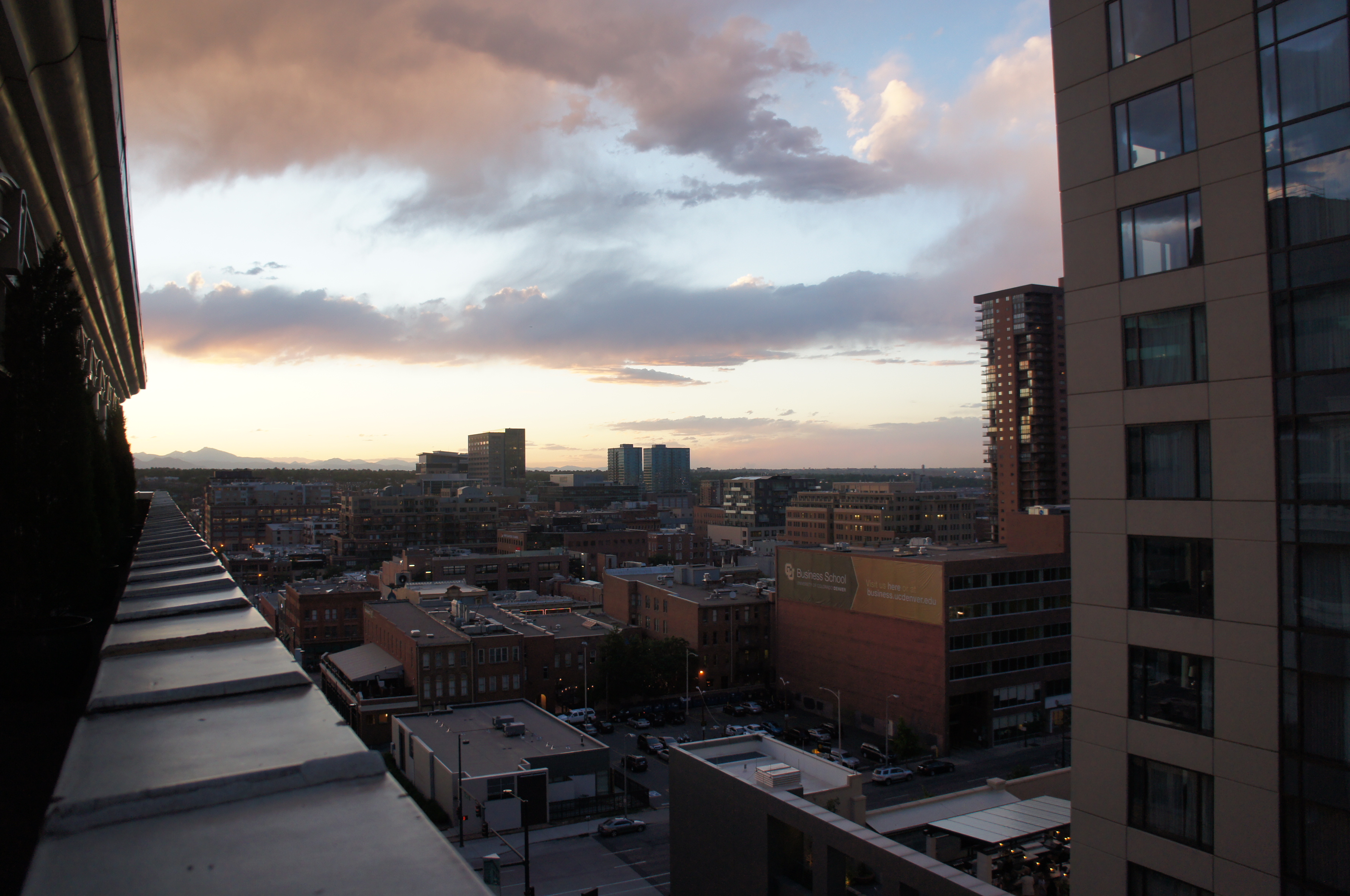
 Back in my room, I step out onto my narrow stone veranda and watch the sunset behind the clouds and listen to the distant cocktail conversation of rooftop bar guests at the Four Seasons across the street. I decide that I like Denver. I like it a lot.

Getting Oriented or Disoriented on Orient Beach, St. Martin

Editor’s Note: In March, I traveled to the Caribbean Island of St. Martin/Saint Maarten to help my friend Kenitra celebrate her birthday and I’m just getting around to posting about the experience. Join me as I travel back to sandy beaches, tropical drinks and nude bathers…


I saw my first nudist on Orient Beach during an early morning stroll. He was somewhere between orange and pink in color and he was wearing a red hat and dark shades. I wondered why he was so concerned about protecting the top of his head and not the one dangling about down below.

The sighting was a tad disturbing at 7:30 am during what I thought would be a fairly solitary stroll on the beach. I’d forgotten that our hotel was steps away from the nudist end of Orient Beach, which is on the French side of the island shared by the Dutch on the other. Olivier, our airport transfer driver, pointed out the beach yesterday upon our arrival. We didn’t see much nakedness then and the only other nude beach that I knew was one in Ocho Rios, Jamaica where the nude bathers there kept to themselves, choosing not to mingle with the clothed ones.

Soon, I saw a parade of sun worshippers who were as naked as the day they were born. Well, almost. One wore a fanny pack and I thought to myself, if you have to go someplace where you have to carry money, wouldn’t you just wear clothes? It also occurred to me that you don’t have to be clothed to be fashion challenged.

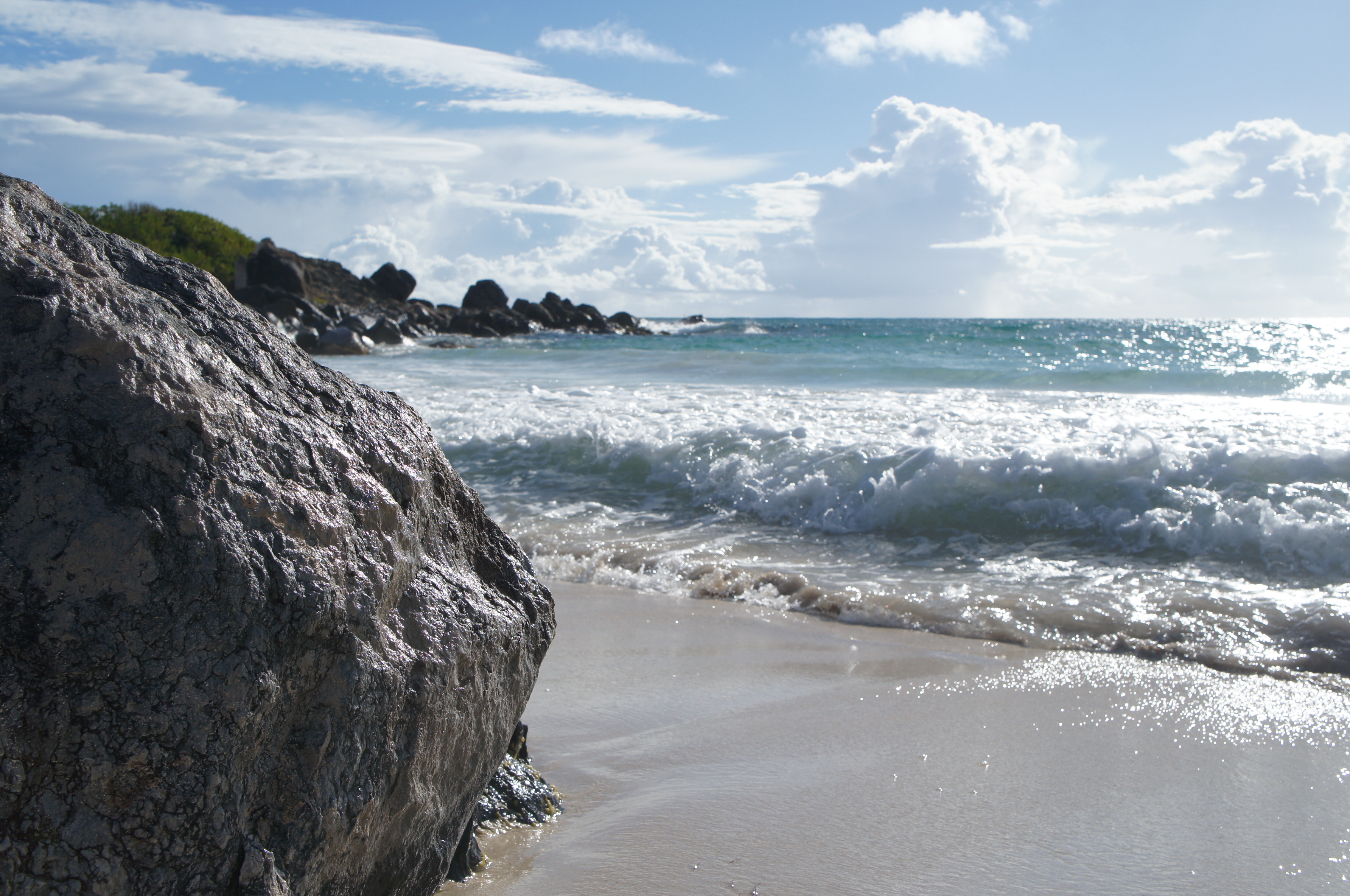
Orient Beach is one of the island’s most popular beaches, lined with bars tilting towards the water’s edge serving up any tropical drink you can think of along with the soundtrack for a lazy day in the sun. But this morning it is quiet and owned by respectful early risers jogging the length of the beach and back or practicing yoga sun salutations in the buff. The surf is too rough to enter, so I decide to simply sit on a perfectly situated mound of sand and stare out at the glistening turquoise water, averting my eyes with the approach of another nude bather.

I managed to get some nice G-rated pictures from my first morning on Orient Beach…

Next: Why eating French food with sand between your toes is pretty close to heaven…

Sri Lanka Post Script 9: An Ancient Rock, An Elephant Ride and A Fond Farewell to Sri Lanka

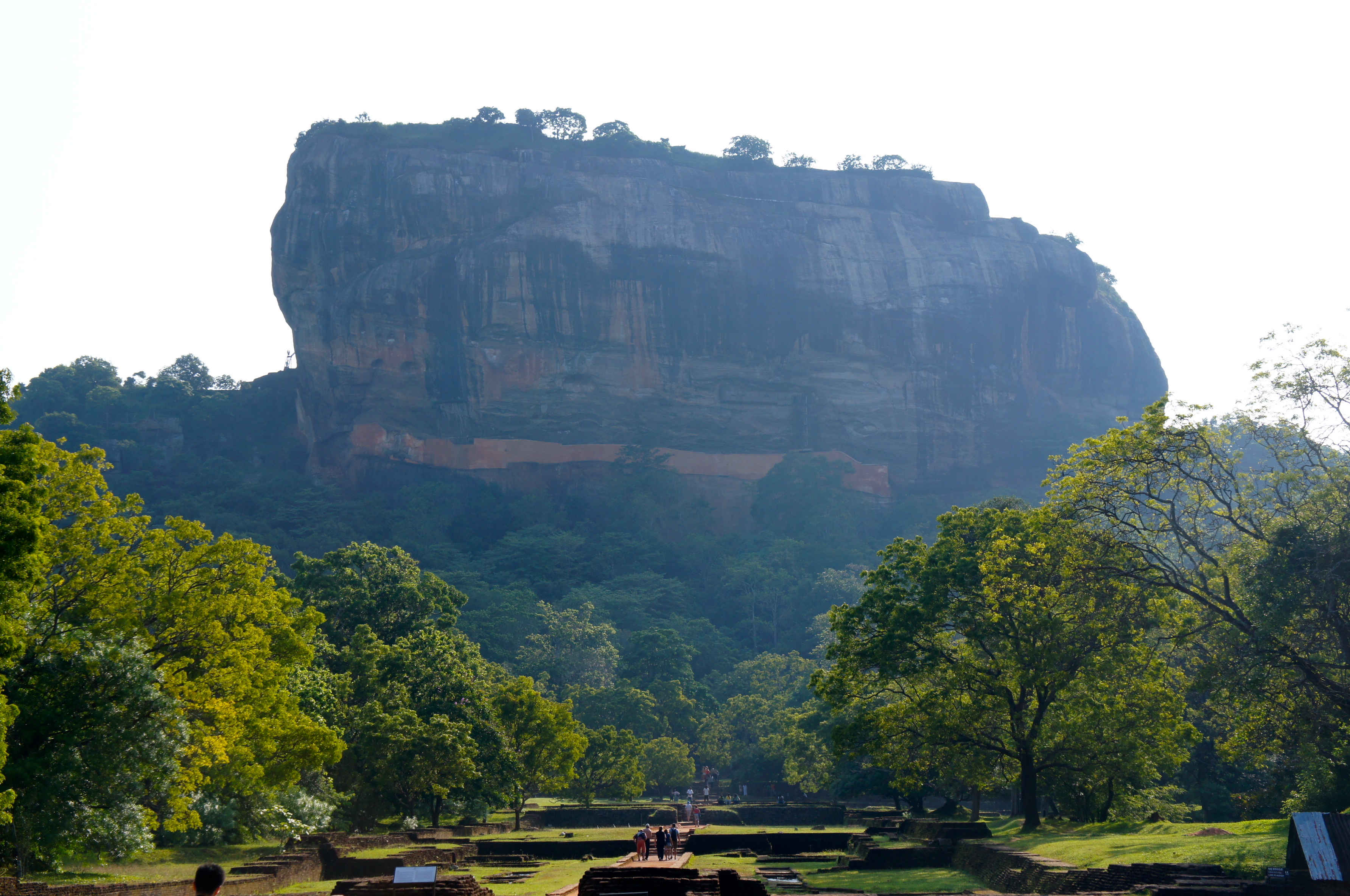
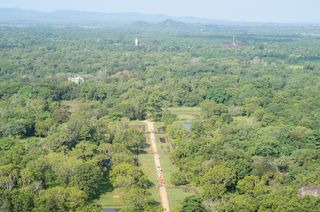
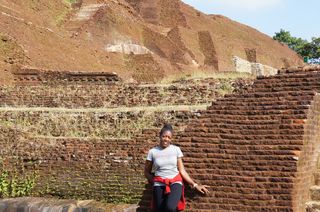
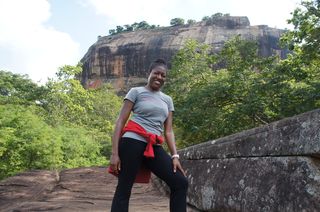
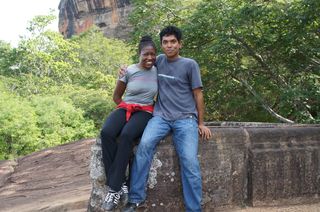
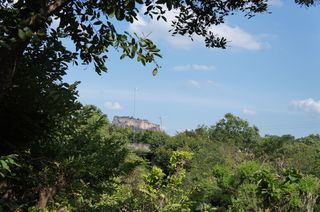
We are sitting at breakfast when Sid points out a large poster behind me. He says it is a picture of what Sigiriya, the kingdom on a rock, would have been like in ancient times. There appears to be a Sri Lankan king and queen in the foreground overlooking a bustling scene of people and elephants at work, and in the background a massive red rock with a grand palace on top. As the story goes, the king in the picture is King Kassapa, who rose to power by killing off his father and deposing his brother. King Kassapa then sets about building a fortress and kingdom unlike any other to keep out a vengeful brother and anyone else seeking to take the throne. When we arrive at Sigirya, I can see that the king chose his fortress well. It’s not likely that many folks would want to scale a 1,200-foot stony outcrop to reach its top. Actually, I take that back. There are busloads of tourists who’ve come to do just that. Sigiriya, a World Heritage site, is one of Sri Lanka’s most popular destinations and justifiably so. In the early morning sunlight, the rock looks like an inverted piece of the Grand Canyon with shades of oranges, reds and browns crawling up its face with bits of green on its crown. Geologists believe that the rock is the hardened magma plug of a long-extinct and eroded volcano. At its base are well-landscaped, stone-lined water gardens with pools that may have featured fountains back in Sigiriya’s heyday of the late 400s AD.

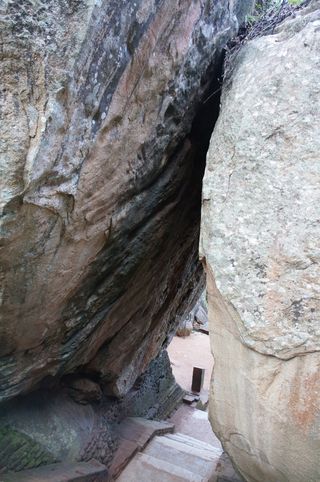
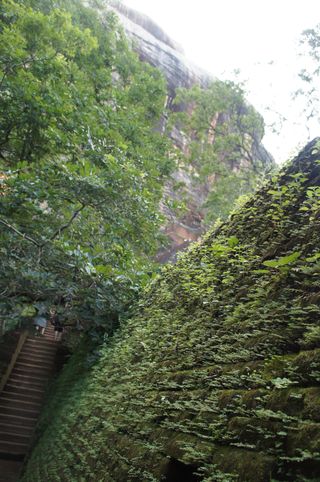
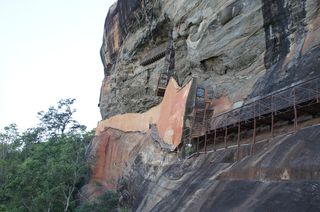
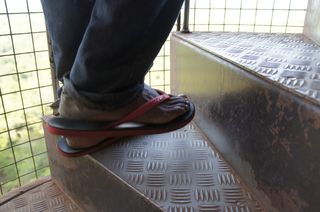
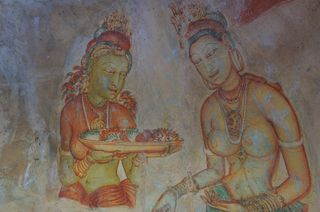
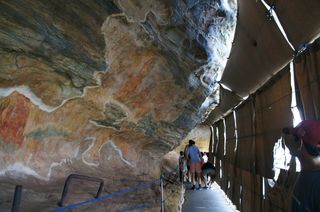
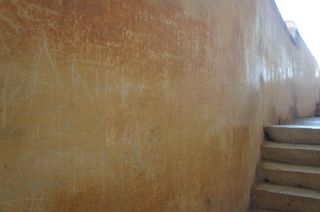
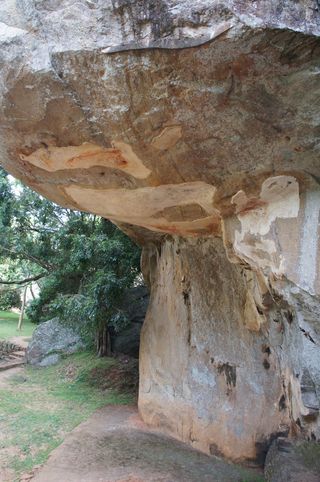
 Sid, Pradeep and I start our climb with a series of stone staircases that are at first short with landings bounded by massive boulders and brick walls, then grow steeper as we ascend to get closer to the rock. I’ve mentally prepared myself for an arduous climb since Sid has told me that it can be very windy on the rock and he mentioned a very narrow, rickety walkway known to sway with the wind. Pradeep said that when he visited in December with Uncle Emil’s daughter from France that she had to stop several times along the way to catch her breath. I climbed a volcano in Nicaragua once, but that was over 10 years ago and I start to wonder about what lies ahead. I am happy to see a pretty sturdy metal walkway constructed along the rock face, replacing the rickety, wooden one that definitely looks less than safe. A winding spiral staircase takes us higher and deposits us into a naturally carved concave in the rock where there are some faint and some well-preserved wall paintings of smiling, buxom and bejeweled ladies. As legend has it, King Kassapa was quite the ladies man with a harem of 100 concubines. These portraits are said to be depictions of them. They look happy serving each other plates of fruit and admiring flowers. Just beyond this ancient gallery is the mirror wall, which hugs the side of the rock and features 1,000-year-old graffiti. I can’t make any of it out on the shiny, yellowish wall, but I do see more modern etchings left by recent visitors.


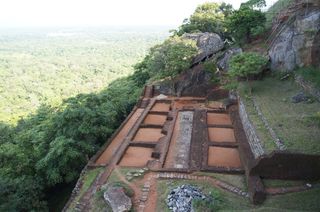
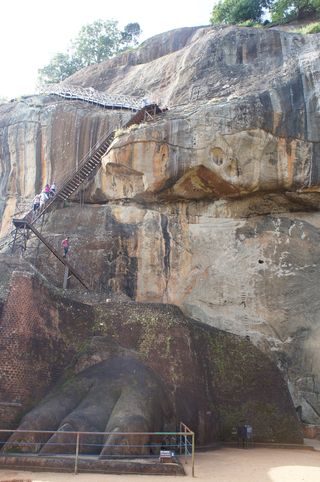
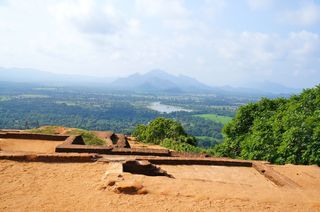
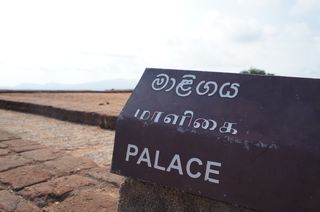
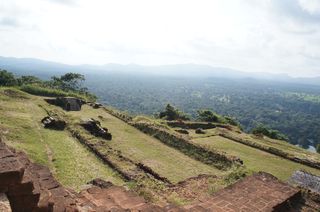
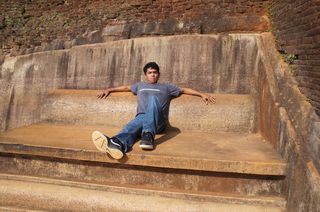
Our climb continues up more stone stairs and we reach a landing with a gorgeous view below and a glimpse of a standing Buddha in the distance, presumably blessing the rock. Immediately below us is another cool terrace garden that looks perfectly serene overlooking the green treetops. After another steep set of stairs we find ourselves on a larger landing marked by the giant stone paws of a lion. Sigiriya’s other name is Lion Rock and when the palace here was at its full glory, visitors had to reach the summit via a staircase leading between the lion’s paws and through its mouth. I wish I could have seen that. Instead, we see another metal staircase, steeper than any we’ve climbed so far. We trudge upward, taking slow steady steps and I start to feel the sweat popping off my brow, my breathing getting more and more labored. But I don’t stop for fear that it will be hard to start again. The stairs are barely wide enough for a stream of ascending tourists to pass the descending ones and everyone has a tight hand on the railings. After making it up an almost vertical set of steps, I want to have a Rocky moment when we get to the top and hop around with my arms over my head in victory, but I’m too tired. Not too tired to notice that it is beautiful here, though. We catch our breath as we walk along ruddy stone walls that may have been palace walls. You absolutely feel royal, looking across the lush Sri Lanka landscape. Signs mark the palace grounds and Kassapa’s throne. Where there aren’t terraces of stacked red bricks there are flat grassy plateaus and languid pools of water. After wandering and wondering how such a place could have been constructed, we start our descent. Sid thinks lots of people probably died while building the place and I am a reminded of the Great Wall in China where its deceased construction workers were buried in its walls. We suspect something similar must have happened here, or they just fell to a grassy grave. Not a happy thought as we make our way down a sheer rock face. Our descent is slowed by a small group of young women in tank tops and shorts, one of which appears to be terrified of heights. Her face is bright red and she is sweating and holding on to the metal railing for dear life while taking each step downward gingerly. She is as much afraid of holding up the people behind her as she is of climbing down, but we tell her that it is OK and to take her time, hoping to put her at ease. Once secure on a sturdy landing, the women stop to take a break and allow their friend to rest. We find out that they are student from the UK and Australia. I know this must have been a life-changing experience for at least one of them.


The rest of our descent is uneventful and Pradeep shows us other sights around the rock, taking us to a secluded place where we can take great pictures with Sigiriya rising in the background and small concave formations where Buddhist monks may have prayed. The other theory about Sigiriya is that it may not have been a fortress and palace at all, but rather, an ancient monastery. There’s also a combination of the two stories where after Kassapa’s death the palace later became a monastery. Either way, the place is a wonder.


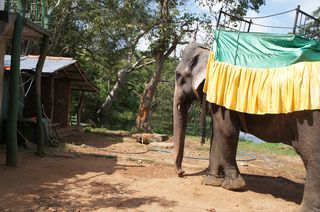
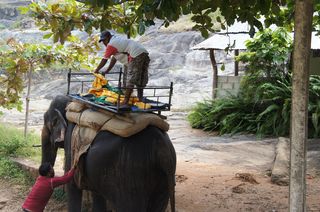
Back on terra firm and in our white van, Sid mentions that you can take elephant rides at the bottom of Sigiriya and he asks if I want to ride one. My answer, of course, is a resounding yes. I can’t imagine a better way to end my trip to Sri Lanka. So, we set off on a search for an elephant safari. We spot an elephant lumbering down a back road toward the rock with a few tourists perched atop its back in a canopy. Sid hopes that I can ride one bare back and so do I. The places near Sigirya are booked and we make our way further north on A6 towards Habarana. We see another elephant walking along the roadway carrying its tourist cargo and I think this isn’t the most scenic of settings for an elephant ride. Sid and Pradeep tell me that there are lots of wild elephants in the area who sometimes go on a rampage and take out anything in their path, including cars. Finally, we stop at the Chaaya Village Hotel in Habarana and speak to a man who says he can give me an elephant ride. We hop out immediately and make our way down a gravel path leading to a lake and several elephants dressed with a yellow and green skirted carrier. I’m chagrined to see chains around their necks and a little sad that I won’t get to ride an elephant barebacked. But I hope with all my heart that these lovely beasts are being treated well and board a waiting pachyderm along with a pair of German tourists.

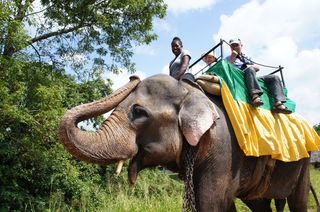
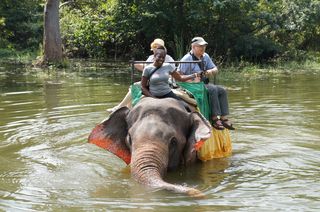
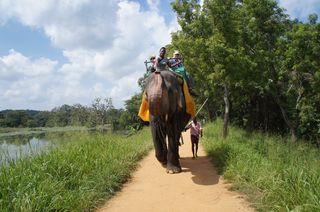
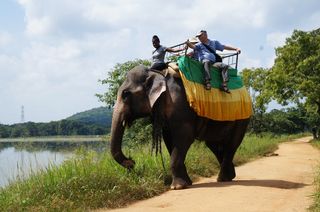
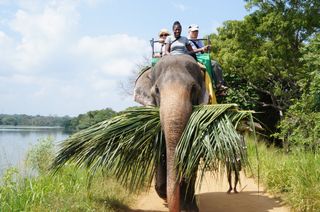
As we set out the guide asks if I want to sit around the elephants neck. Well, of course I do! It’s almost as good as riding bareback. Our mahout, or elephant guide and trainer, tells us that our elephant’s name is Rajan and that he’s 26-years old. I wouldn’t have guessed him to be a day over 10. I rub the large prickly groove in the top of his head in greeting. Then, we are given a bunch of bananas to feed Rajan as we start a very leisurely, loping stroll around the lake. As it turns out, Rajan is one hungry elephant. It’s not long before he flings his trunk back towards me, snorting, in search of a snack. I oblige, dropping a small banana into the waiting nose/appendage which goes to his mouth and comes immediately back again for more. Given the size of the banana, I imagine that this is like giving one peanut to a 300-pound man and expecting him to be satisfied. This exchange goes on for a bit before we realize that we are about to run out of bananas. I decide to rub his prickly head instead of granting him a banana each time he offers his trunk and this seems to work for a while, until he decides that he’s going to snack on his own. He proceeds to drift off the path to sample the grass and snatch a few leaves from a nearby tree. This is when I start to realize that my position around Rajan’s neck maybe a bit more precarious than I thought. When he raises his head or turns his head to the left or right, I think my hips might snap. Satisfied for the moment, we continue along the lake and I learn that I am enjoying my elephant ride with Franz and his wife from Hamburg. They’d also visited Sigirya earlier in the day and stayed at a resort in the middle of a rice field. They planned to end their trip to Sri Lanka on the beach. Then we realize that our path around the lake actually leads into the lake. Our mahout gives a shout and Rajan starts to descend into the lake for a dip, much to our delight. Rajan seems to enjoy it too. His ears flap back and his trunk waves back and forth in the water. He wades about halfway, rests for a moment so that we can all take in the moment and then returns slowly to the path rising out of the water. It seems that this brief bathing break has made Rajan hungry again and after we’ve run out of bananas he takes another small detour down an embankment for a grassy treat. The embankment feels so steep that I’m afraid that I might drop some 10 feet to the ground and roll into the lake. I grab onto the carrier to prevent such a scenario. Rajan’s mahout gives another shout and disappears down a path leaving us perched atop Rajan alone on the main path. We sense that Rajan wants to go, too, as he looks longingly after the mahout and we hope that he doesn’t make a run for it. We watch the mahout and another guide chop down several coconut palms and drag them back up the path. This turns out to be a treat for Rajan and he happily rolls the palms in his trunk and I think he may be moving a bit faster towards home so that he can enjoy his treat. When we are back and have disembarked, we pose for photos with Rajan and he offers his trunk for a pat. As I leave with Sid and Pradeep, I see that they’ve already freed Rajan of his carrier and he is standing on a hill with his pile of leaves, snapping them with his trunk, pushing them into his mouth with ears flapping. This makes me happy.

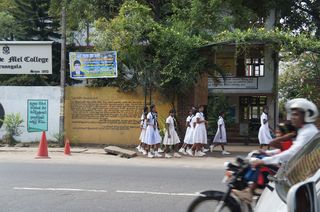
Once again we are on A6, this time heading south towards Negombo and our ultimate destination, the airport where I’ll head back to the states later in the evening. I know there is still much more to see and do in Sri Lanka, but I’ll have to be happy with my brief, but wonderful stay. I spend the next few hours watching the country pass by my car window and I see coconut trees on either side of the road, stretching as far as the eye can see. Pradeep says that we are in the Coconut Triangle, the heart of coconut tree plantations. Farther down the road, he stops to point out a cocoa tree with small reddish brown cocoa pods hanging from its limbs. I marvel at the variety of plant life in this place and remember that Pradeep and Sid had shown me a jackfruit tree the other day. I told them that it would be hard to starve in a place like this with so many fruits and vegetables available to eat and Sid added that Sri Lankans use everything on the coconut tree. It’s wood and palms for housing along with coconut water and meat for eating. To me, that’s a true sign of living in paradise. And, Pradeep points out that the plants in Sri Lanka are literally alive. We stop to look at a small delicate flower that reminds me of those white flowering weeds in the yards back home. When we point our fingers toward them, they lean away from us as if dropping off to sleep. And of course, we can’t leave Sri Lanka without a look at one more giant Buddha, a few miles back in Kurunegala, we hop out of the van to spy on a Buddha seated atop a rock known as Elephant rock. After trying to capture the Buddha on camera, Sid points out a group of school girls across the street who find me more interesting than the Buddha. He says they are talking about my hair. I turn to snap a photo of them and they giggle and hurry off down the street, embarrassed that I’ve caught them.

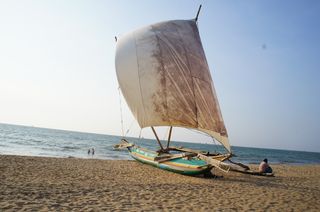
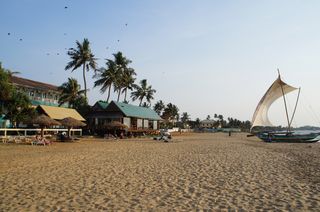
When we arrive in Negombo, it has more of an old world European feel than any of the other places we’ve visited so far. I suspect it is because of the small cathedral-style churches. Pradeep says that there is a large Christian population here, Roman Catholic in particular. I see Catholic saints taking the place of Buddha statutes in small roadside pavilions and suddenly we are back at the beach. We stop at the Hotel Sunset Beach, where we decide to spend my remaining hours in Sri Lanka. We make a dinner reservation, settle into our oceanside beach chairs and order a few drinks. We decide that we want to compare the beach bar drinks to those at the Coconut Bar. The pina colada here doesn’t come close. It’s cloyingly sweet. Pradeep makes a face as he tastes it, knowing his pina colada at the Coconut Bar is way better, secure in his bartending skills. As the sunsets, we watch a stream of wedding parties make their way to the beach for photos and Sid tells me more about wedding traditions in Sri Lanka. A wedding is a two-day event where on the first day the family gathers for the wedding ceremony and after the wedding night the bride wears red as a symbol of her newlywed status. The family gathers again for a big party to celebrate. We watch the newlyweds pose in front of a Sri Lankan fishing boat known as a oruva. At dinner, I hope for the same giant juicy prawns that I ate on my first night, only to be disappointed by small, typical sized shrimp. We talk about how over priced things can be at resorts and think about sweet and savory crab at the Coconut Bar. I say my final goodbyes to the Indian Ocean sitting in the sand, listening to its waves slap the shore. We take final sip of arrack and head to the airport. In a throng of departing tourists, I hug the best guides to Sri Lanka a girl could have and try to melt into the crowd, not looking forward to the 20 hours of travel ahead and desperately wishing I was back on the beach.

Sri Lanka Post Script 8: Kandy Shopping and Buddha Gazing

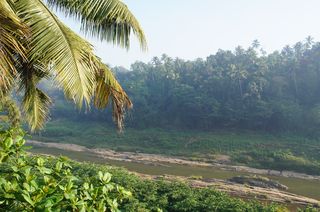
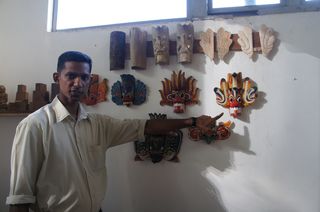
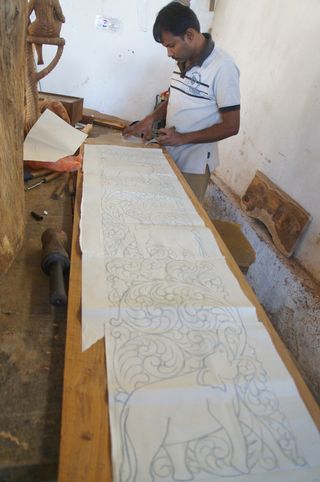
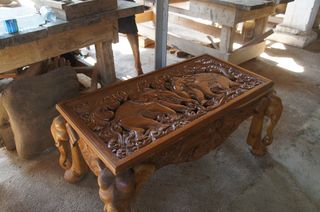
When you are traveling with guys, shopping doesn’t often come to mind and they aren’t quick with shopping suggestions. I knew that I wanted to get some tea while in Sri Lanka, but I wasn’t sure what else to bring back home. I got a few recommendations from new friends in Beruwela. Helga from Germany recommended silk in Kandy and I thought getting a couple of Sri Lankan masks would be cool, too. It turns out that Kandy is the perfect place to do a little shopping. After a parting look at  our stretch of the longest river in Sri Lanka, the lazy Mahaweli River just behind our guest house, along with a good family-style breakfast, we head for the city. Our first stop is the Rajanima Craft Workshop and Gallery, which turns out to be a treasure trove of Sri Lankan woodcarvings, masks and furniture. We are greeted by Dhamitha who immediately begins explaining the woodcarving and crafting process, starting with the 10 varieties of wood found in Sri Lanka from ebony and teak to coconut and mahogany. In the small workshop, men are sketching designs for carvings, measuring, cutting and smoothing their creations. It’s Dhamitha that explains the meaning of the Sri Lankan masks that I’ve been seeking. Each is like a talisman of sorts meant to ward off bad spirits or welcome good ones. I immediately decide upon a red and yellow mask representing friendship and power along with a peacock mask representing good luck. Masks like these were actually used by native Sinhalas in exorcisms or demon dances to rid people of sickness and disease in ancient days. We descend further into the workshop, which is kind of carved itself, but into the Kandy hillside, and we find ourselves surrounded by all manner of wooden elephants, masks, bowls and any other kind of crafty thing you can imagine. I end up adding a coconut bowl and a coffee table to my mask purchases. Rajanima is a full service craft shop that can ship anywhere in the world and in a couple of weeks time I should have a Sri Lankan crafted coffee table in my living room. I had to avert my eyes from even more pretty things in a back room of the shop, crammed full of carvings before leaving.

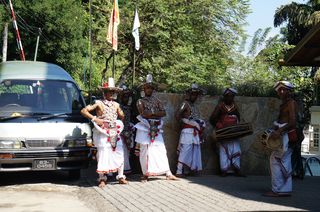
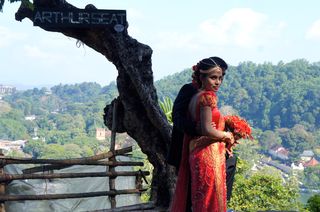
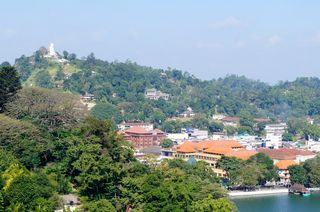
We continue up the narrow windy road alongside Kandy Lake passing a group of Kandyan Ves dancers and drummers outside a hotel. Sid tells me that they are probably part of a wedding celebration and waiting for the bride and groom. We stop at Arthur’s Seat, an overlook with stunning views of Kandy below. A pair of newlyweds have chosen the picturesque spot to take photos and tourists, including me have gotten in on the act. They welcomed the attention and seemed to be enjoying their special day. The view of Kandy really is stunning. The lake is a perfect blue-green and the yellow and red tile roofed buildings nestled among green trees tell a beautiful color story. You can’t miss yet another Buddha looking down on it all from his post at the Bahirawakanda Temple, a short distance away. As we make our way down the hill, we see more elaborately dressed Sri Lankans taking part in wedding celebrations. It’s a Thursday and I ask Sid if it matters what day people get married, thinking about how Americans usually schedule weddings on weekends. Sid says that in Sri Lanka, the day you get married is based on the horoscope. Couples select their wedding date based on lucky days and their zodiac signs. It looks like this Thursday was a good day for lots of couples to tie the knot.

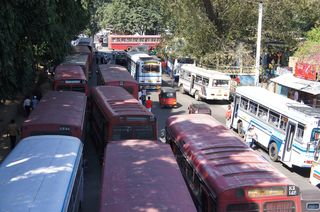
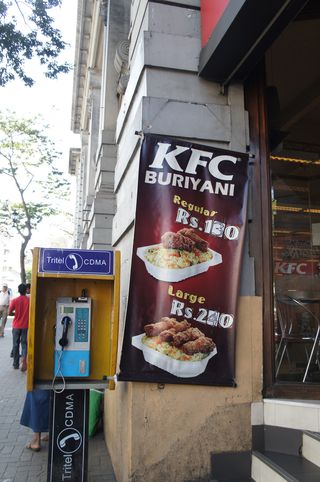
 I have more shopping to do, so we go in search of coffee, which I always have to get for my dad on each trip. He’s also made a special request for arrack, the coconut liquor of choice in Sri Lanka. Here is where Pradeep is in his element. You would think he’d spent all his life in Kandy the way he walks the streets here.  We’ve parked the van in a garage that seems to be at the epicenter of Kandy, packed with buses and tuk-tuks. We are on foot and Pradeep is moving quickly and self-assuredly, while Sid and I are trying to keep up with him in the bustling crowd. He leads us into an open courtyard to an open air market with vendors selling everything from touristy trinkets to teas and spices. He goes to a couple of vendors asking if they have coffee with no luck and is finally pointed to one vendor who hands us a packet of light-colored beans. I’m skeptical. “This is coffee?” The vendor says yes and explains that all you have to do is grind the beans and drink it. They don’t look like the deep, dark roasted beans that I’m used to seeing, but I take their word for it and get two packs along with some vanilla beans. I probably should have gotten some cinnamon and other spices, too. The cinnamon was a perfect red-orange and I can only imagine the taste. From here, we go for arrack, passing a KFC serving buriyani to go and winding our way around to an alley where we find the liquor store hidden under what looks like an old garage. The liquor and its sellers are protected behind a metal cage and Sid says it reminds him of some places in Chicago. I agree.

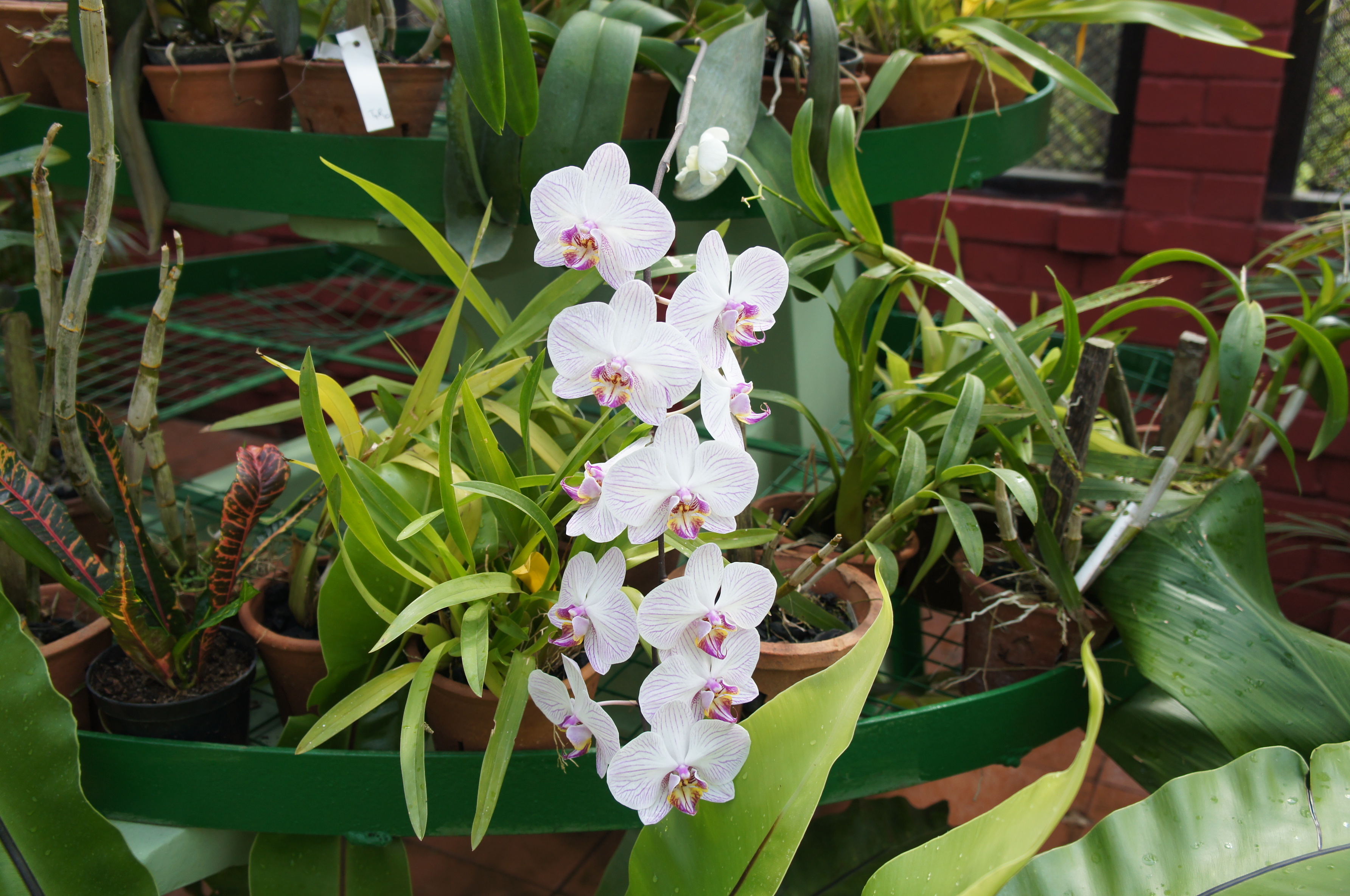
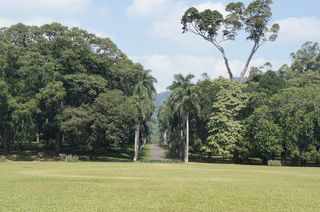
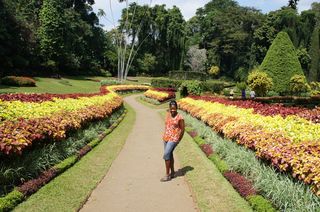
 With arrack checked off my shopping list, we head to the Royal Botanic Gardens in Peradeniya, just a few miles outside Kandy. Upon entering, Sid and I realize that there is no way we’ll be able to cover all 147 acres of this massive garden. We aren’t sure which way to turn so we wander for a while down a path with tall pointy trees bending away from the pathway in formation. There are families out for the day, roving bands of British and German tourists and couples holding hands or sitting under trees. It’s a place I would love to visit for a day, strolling its paths and sitting with a good book. I definitely see the influences of British gardens from my travels in England. The garden was established here by the Brits in 1821. We’ve carved out 30 minutes here, so we decide to be more purposeful in our visit, turning to the map. We decide upon the flower garden and the orchid house. On our way, we spot a pathway of regal royal palms that we’d love to go down, but the flowers are in the other direction. We start to think you may need more than one visit to see everything here. The flower garden features little beds of red, white and purple blooms, but I love the pathway of red, green and orange leafy coleus plants the most. Another wedding party likes it too, posing for photos. Just beyond the flower garden is the orchid house where I learn there are 188 varieties of orchids native to Sri Lanka. The house has a good representation of these with orchids that look like they are dripping from their stems and orchids in purples, pinks and oranges. We leave the gardens leaving the spice garden, cacti and bamboo collection behind.

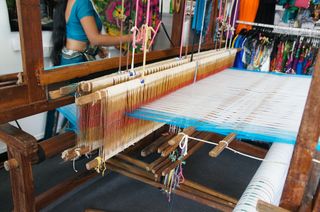
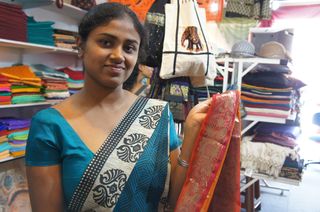
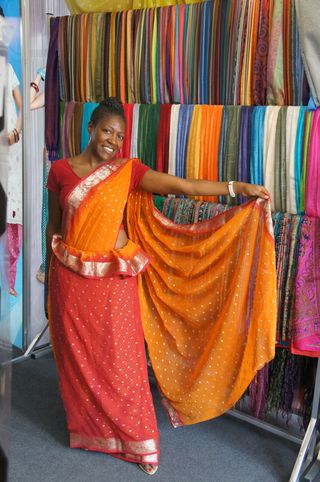
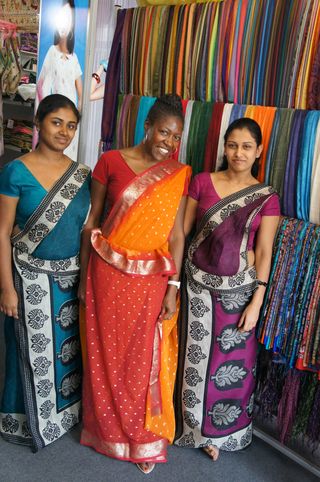
 I still haven’t picked up any silk, so we stop at Gaja Fashions on our way out of Kandy and its environs as we head to our next destinations, Dambulla and Sigiriya. At Gaja, a young woman shares the process of making silk garments starting from silk worm to weaving loom. I’ve decided to get a few silk scarfs and there are too many to choose. There are scarves with designs, some tightly woven, others loosely woven. The variety of colors is staggering. I’ve finally made my selections and I think I’m ready to purchase, when the young sales girl goes in for the kill. She asks if I’d like to try on a sari. Of course, I do. She takes me to a wall to pick out a fabric. The first I select, she says is too bulky. Finally, I pick one that is shades of orange, one of my favorite colors, with gold accents. She finds a matching half top. In the top and my shorts, she begins wrapping the fabric low around my hips and asks if I’d like a Sri Lankan style sari or an Indian style. I opt for Sri Lankan. She puts a stretchy fabric band around my waist, not unlike a rubber band and begins pulling the edges of the fabric up and through to make a small frill. She has already intricately folded the top part of the sari into pleats to hang over my shoulder. When she’s done, I feel transformed. Sid and Pradeep look at me with eyes wide and say, “You look so pretty! You look like a Sri Lankan!” The ladies in the shop seem impressed, too. We take pictures and the sales girl asks if I want to buy the sari. I contemplate it, but then the practical takes over. Where in the world am I going to wear a sari in DC? I missed my shot at wearing one while crashing a White House state dinner and someone has already done it, so I leave the sari behind.

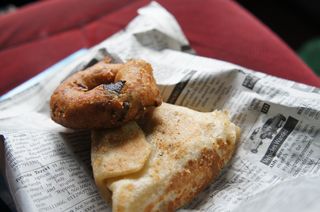
We are back on the A2 again heading farther north towards the ancient cities of Dambulla and Sigirya. We’ve got some snacks of roti for the road and Pradeep asks if I’ve had lychee before as he stops at a roadside stand. I haven’t, so we buy several red spiky orbs for me to taste. Sid demonstrates how to eat one by biting halfway through the prickly rind and popping the skin back to reveal a white fleshy center. He says there’s a pit inside the fruit that you don’t eat. As I take a bite, I am reminded of kiwi. It has the same texture, but may be a little sweeter. It’s delicious. Soon we are passing through the Knuckles mountain range, a UNESCO World Heritage Site named for its shape. Sri Lanka has at least 8 World Heritage sites and I’ll see four of them on this road trip. I’ve already seen Galle Fort, the Knuckle Mountains and we are on our way to the other two.

We pass up Dambulla to head straight to Sigiriya, about 30 minutes away, to go to our hotel and rest a bit. We’ve decided to visit the Rock Cave Temple at Dambulla this evening and climb the ancient rock at Sigirya in the morning before making the trip back to the coast and finally, the airport. The path to the Lion Rock Hotel reminds me of the ride through Yala National Park. It’s a bumpy ride down a dirt road. But when we arrive, the hotel is in the middle of a little green oasis, featuring cute gingerbread house bungalows. The owner of the place offers rooms off the balcony with a view of the massive rock we are to climb the next day. We are also given freshly squeezed lemonade with a bit of sugar. I enjoy our break, sipping the tangy refreshment and listening to a pair of birds chat in the trees over my head.

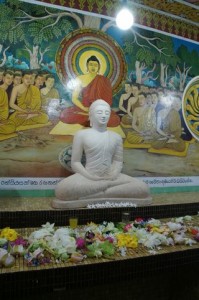
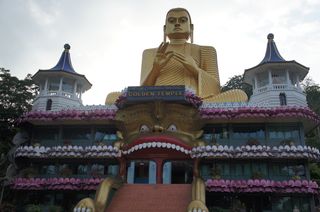
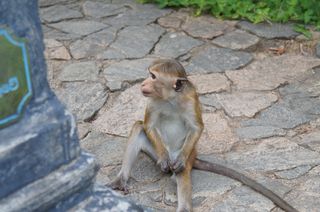
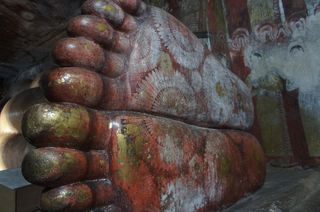
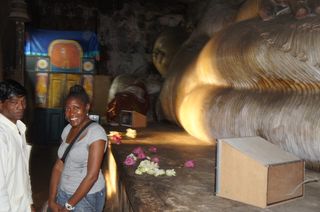
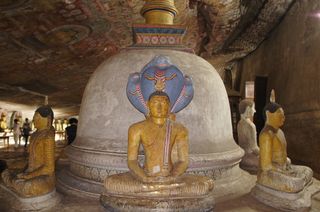
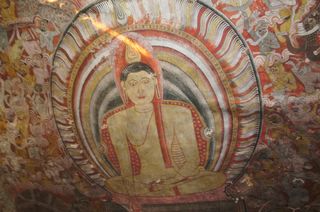
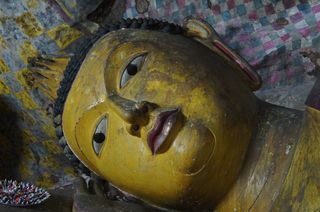
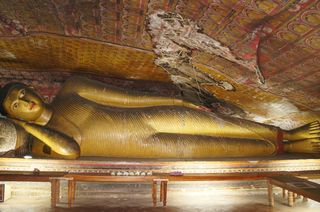
About an hour later, we are back in Dambulla and we’ve arrived at the Royal Rock and Golden Temples just before closing, which is probably good because this is one of the must-see destinations in Sri Lanka. It is understandable because there is a gargantuan golden Buddha, measuring 100-feet tall, staring down at us from the top of the Golden Temple. It’s hard to take your eyes off it. The Golden Temple houses the monastery for the monks who care for the Rock Temple, a collection of caves containing stone Buddha statues. We make our way up a series of steps carved into a sloping rock face. Halfway up, I look back to see the back of the golden Buddha and Dambulla below. We aren’t alone here. There are some tourists, vendors and guides who want to help lead you up to the caves. There is also a troop of monkeys grooming one another and oblivious to the camera-toting tourists around them. Sid says the monkeys can get aggressive, taking food and anything else that catches their fancy from passerby. We come to a small landing in the rock and a white hut marking the entry way to the temple. Sid and I leave our shoes outside the temple with Pradeep, who’s seen this place many times. There are white-columned facades at the entrances to each cave, tucked under the rock’s natural overhang. The temples are said to date back to the 1st century BC. An ancient king driven from his kingdom took refuge in the caves here and when restored to the throne had the Buddha statutes carved into the caves as a place of worship. When we enter the first cave, I am met with the face of a long Buddha in repose. It is dim inside, but I see the Buddha is not alone. There is a seated Buddha and a standing figure in the cave, too, with frescoes of other prayerful figures. I get a sense of the size of this Buddha simply by looking at its floral painted feet almost as tall as I. I’d later learn that this Buddha is 47 feet in length. Starring at the feet, I am suddenly approached by a man in all white asking where I’m from. I tell him that I am from the US and he smiles. He says, “Your president is black like you and me.” I say, “Yes.” He says he likes him very much and starts to tell me more about the cave and the temple. We realize that he’s a freelance tour guide hoping to score a tourist and I thank him, before moving on to the next cave. There are five in total, holding a whopping 150 Buddhas and paintings of other gods and goddesses. It is a visual feast for the eyes. The second cave is the largest with Buddha seated, standing and laying in a variety of poses, and frescos in reds, creams and yellows covering almost every inch of the walls. I am most impressed with the Buddha shielded by the hood of a King Cobra, and in another cave, the the serene, full-lipped yellow face of another Buddha in repose. I want to go home and read Siddhartha from my middle-school religion class again after all this Buddha gazing. I couldn’t snap enough pictures in this place. The dimness of the light, the amount of detail in each sculpture and painting and just the sheer wonder of how all this was accomplished in such an obscure and amazing setting made this a great stop and well worth the climb. The sun makes its decline as we make ours from the rock and head back to Sigirya. I can’t believe that I just have one more day.

Sri Lanka Post Script 7: Sampling Tea and Kandy

Sid looks back and asks if I’m OK. I nod even though I’m not really OK. I got too much sun on the safari yesterday, not thinking to bring my hat. I got too little sleep, and I think the buffalo curd from last night is curdling in my stomach. But I’m trying to power through the nausea. We are weaving our way higher and higher into the mountains toward tea country along the A2, which has turned into a relentless winding road. The second time he asks if I’m OK, I’m ready to barf, literally. My hand is over my mouth. Sid sees my distress and tells Pradeep to pull over. Seconds after the van door is open, I’m hurling onto a dirt mound on the side of the road.  Sometimes the travel gods don’t smile and decide to play a few tricks on you instead. Once rid of the contents of my stomach, I feel immensely better, but we go on a hunt for ginger beer to keep my stomach calm just in case. I start to realize that I may have a problem with traveling in high altitudes. I remember feeling similarly queasy on a bus ride through the Atlas Mountains in Morocco a few years ago.

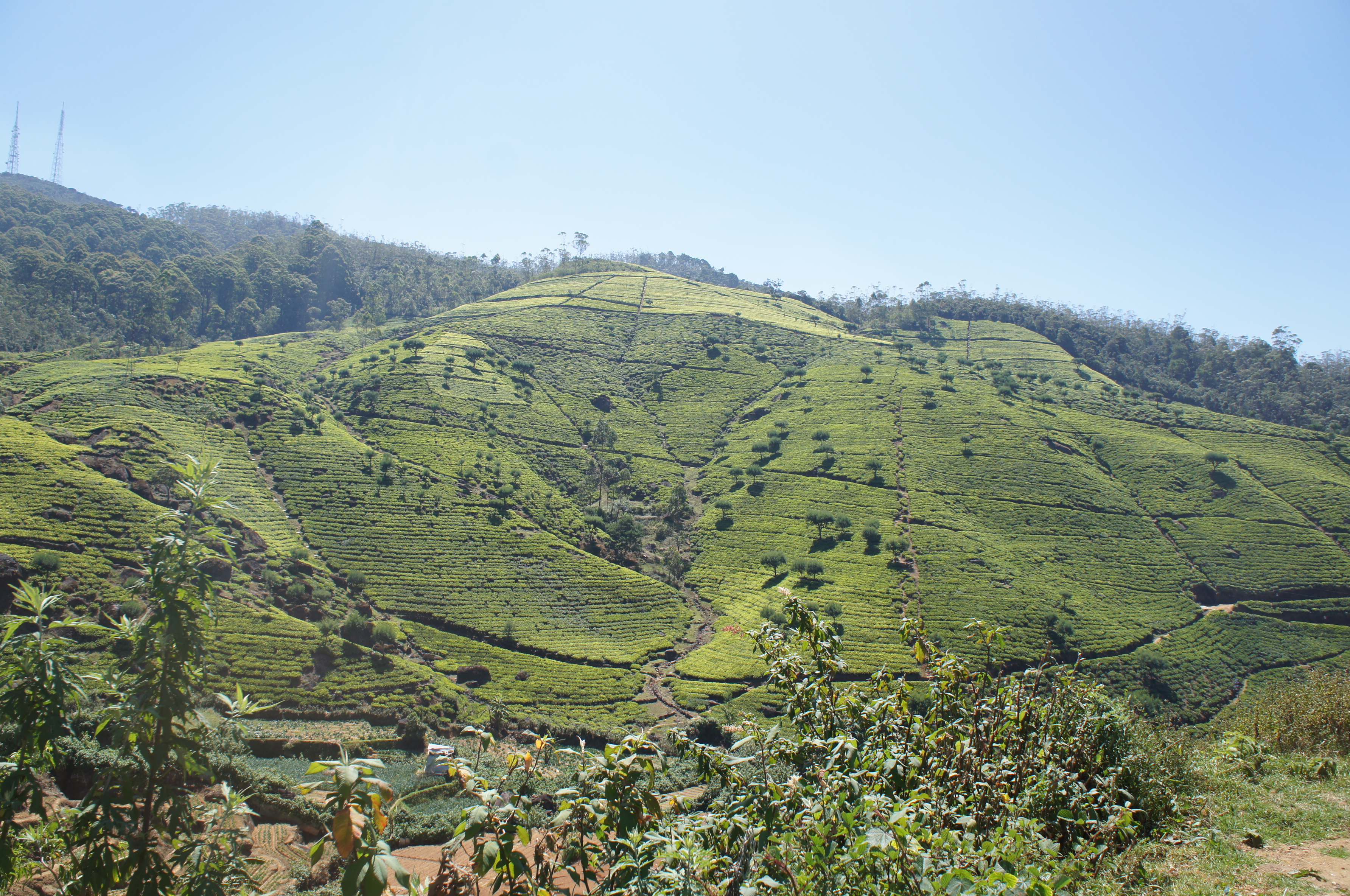
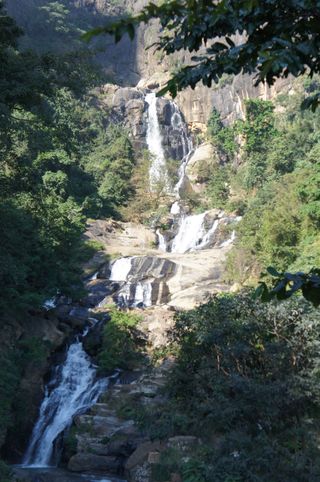
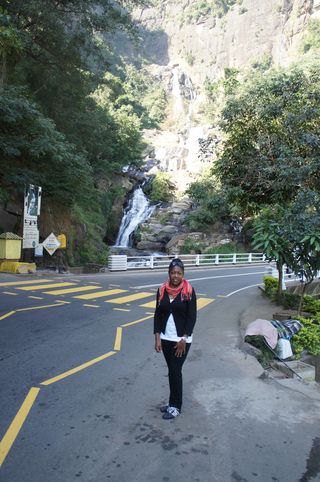
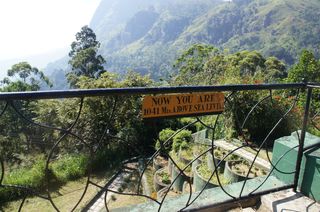
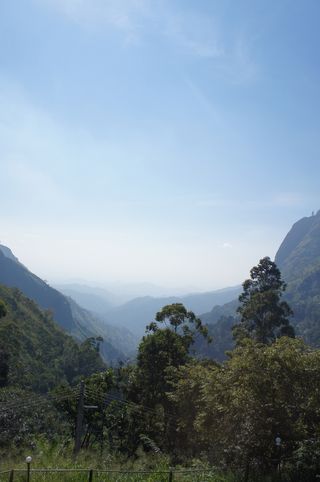
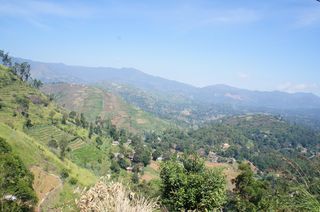
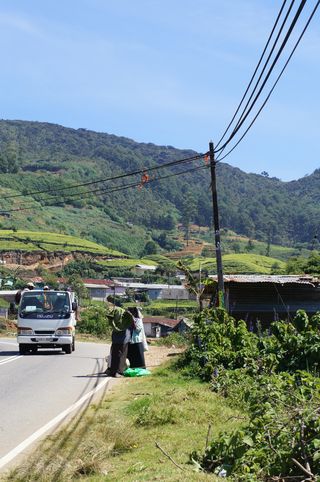
  All was well a few miles back, when were standing in front of the Rawana Ella waterfall, a picturesque flow of water that seems to spring from some secret place within the mountainside and rush under the road we are traveling. It’s the first place that I see monkeys scampering about. One has incurred the ire of one of the vendors along the road, having stolen something from his stand. As we head back to the van, we are followed by a couple of local men offering crystalized rocks as souvenirs. I tried to refuse them, but they placed the rocks firmly in my hands and we were obliged to give them a few rupees. Sid says they get the rocks from the falls to sell to tourists. We are in Ella, a stunning mountain village, and a drastic change in scenery from the southern beaches we drove along just yesterday. We continue our ascent through the verdant hills and make another stop at the Grand Ella Motel, which has the best vantage point for lush landscape viewing. A patchwork quilt of farms and tea plantations unfold below us and green peaks and valleys stretch as far as the eye can see. The motel itself is lovely with a landscaped terrace that takes advantage of its breath-taking location.

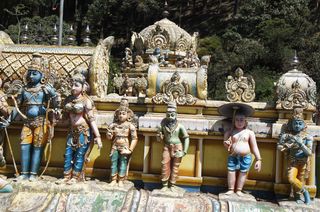
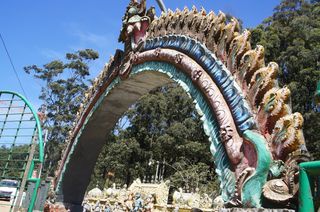
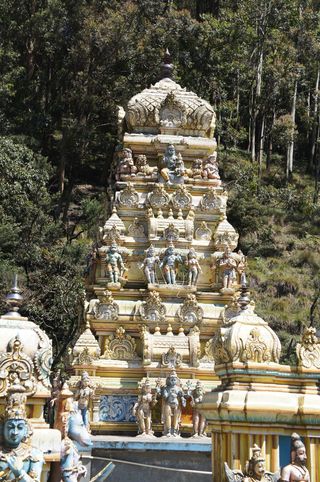
Back on the road, we are on our way to Nuwara Eliya, known as “Little England” and the “tea capital” of Sri Lanka. The Brits settled here in the 1800s and found that they could successfully grow their favorite fruits and vegetables as well as tea. One of the Brits was named Lipton and he made his fortune in Sri Lanka, known as Ceylon at the time, explaining why we still see the name Ceylon associated with tea, too. And, another bit of history reveals that the Brits brought the Tamils from southern India with them to Sri Lanka as laborers, which may have been the beginnings of the conflict farther north in Jaffna between the Tamils and Sinhalese. Before we make it to Nuwara Eliya, a series of small ornate structures appear along side the road. The Seetha Amman Temple looks out of place here, but it is a beautiful contrast to the deep green trees and hills just beyond it. As South Asian myth would have it, this Hindu temple marks the place where the evil demon king Ravana imprisoned Seetha, the wife of Lord Rama, in Sri Lanka. Lord Rama would bring a massive army to rescue his wife, defeating his rival and taking her back to India. The golds, reds, blues and greens of the painted temple are vibrant in the sun and its small posed statues seem to smile in the face of it.

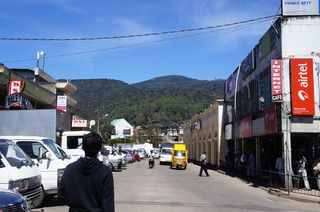
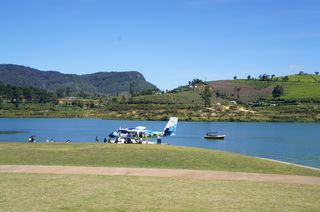
 We take a longer rest in Nuwara Eliya to stretch our legs and for me to continue recovering from any altitude sickness. The “tea capital” seems relatively small and quaint for a place that was a British center of agriculture. But there is commerce going on in this place neatly nestled in the mountains with a small market selling touristy trinkets and t-shirts. A short distance away, tourists can fly into Nuwara Eliya by a sea plane that lands on a river lined by homes and maybe guest houses with red, blue and orange tiled roofs.

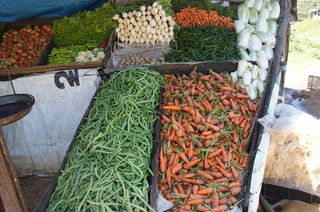
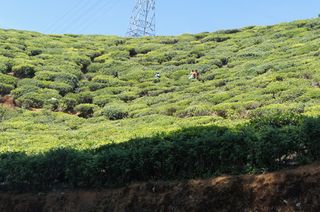
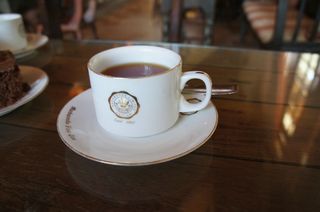
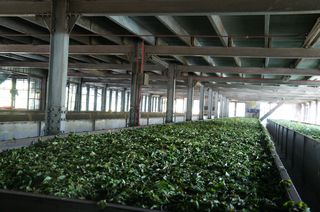
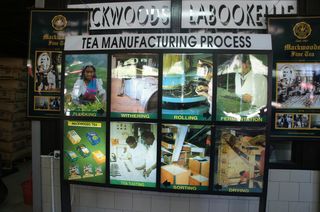
Now, it’s time to see how all the tea we’ve seen bursting from the hillside is cultivated and produced. I’ve had a cup of tea almost every morning that I’ve been in Sri Lanka and it is good with a bit of sugar or without, especially if you are a fan of strong black teas like English Breakfast. We are deep in tea country as we approach the Mackwoods Labookellie Tea Estate, passing terraced tea bushes as far as the eye can see and a few of the women who pick the best of the leaves from them for a living. Mackwoods is a tourist destination. When we pull up, we see groups of Germans and Brits departing with gift bags of tea and trinkets. Inside the restaurant and gift shop, I have a cup of the famous black tea with chocolate cake before a guided tour of the factory. Here are a few tea facts that I picked up: The factory employs 650 women who hand pick the top leaves from tea bushes on 15 tea estates. The women will go out to pick from bushes 50 times a year. (Sid and Pradeep tell me that many of these women don’t get paid very much, maybe $2 or $3 for a day’s work.) The very top and smallest leaves yield the finest and darkest tea, while lower leaves, or fannings, yield a lighter, milder tea. It takes 5 kilograms (11 pounds) of picked tea leaves to make one kilogram (2 pounds) of dried tea. Overall, it seems like a pretty tedious process with many steps from further sorting and withering, where leaves are turned by hand every 5 hours in a process that takes 14 hours in total, through rolling by machine, natural oxidation on tile floors, then drying and any plucking of remaining stems by machine. I leave Mackwoods like the British and German tourists who left before me– with boxes of pure Ceylon tea.


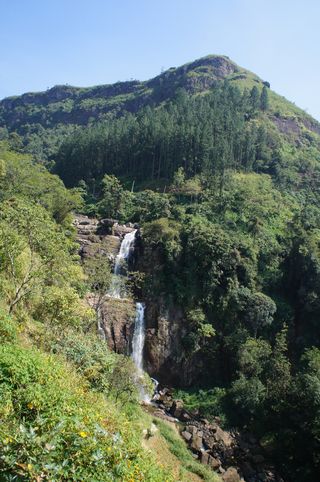
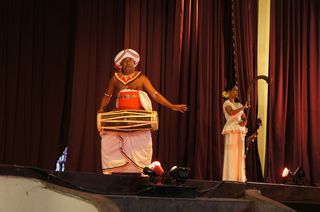
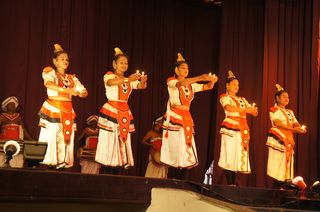
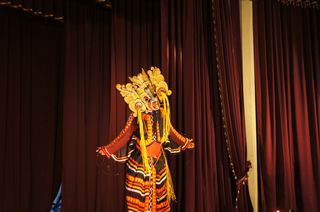
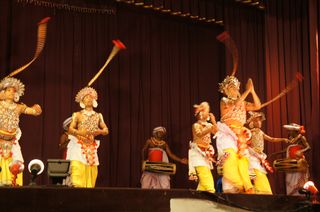
 Before heading to our final destination of the day, Kandy, we make a quick stop at another one of Sri Lanka’s waterfalls, Ramboda, which we view from inside the Ramboda Falls Hotel. Again, we try to pinpoint the source of the rushing waters down a rock face that seems higher than the one we saw at Rawana Ella. We are still driving north on A2 when we reach Kandy, the capital of the last Sinhalese kingdom before Sri Lanka fell under British rule in 1815. The people here seem to be proud of their royal and cultural roots, and after we’ve deposited our bags at the absolutely adorable Riverside Holiday Home there, Sid and I take in some of this traditional Sinhalese culture in a showcase of dances at the Kandyan Cultural Center Hall. The place is packed and it’s the first time that I’ve been with such a large number of tourists on my trip. More tourists stream into the modest hall and more chairs appear to accommodate them. Finally, the show starts with the blowing of a conch shell and men appear in white turban-like headdresses and sarongs, rhythmically beating drums and women with Dr. Seussian shaped horns sing a high-pitched tune. The show gets more elaborate with Pooja dancers wearing golden ear coverings as they pay homage to the gods, men in vests made of beads spin, twirl and somersault with an instrument similar to a tambourine, then a there’s a mask dance where a mythic bird kills a snake to drive away evil spirits. In the Ves dance, the dancers wear a traditional outfit made of 64 ornaments, including a long tassle that they flip and whirl from the top of a heavy headdress. For the finale, the audience starts to shift with groups of people sitting on stage and focusing their attention on wooden planks on the floor in between the stage and the audience. There’s another conch shell call and two bare-chested men emerge with fire torches that the proceed to rub across their bodies and lick with their tongues. The audience is rapt. The fire play ends with the men walking effortlessly over burning coals to seek blessing from one of the gods. Thoroughly entertained, I am reminded of a mix of cultures after watching the show, Chinese mask dancing, African drumming and Polynesian fire play.


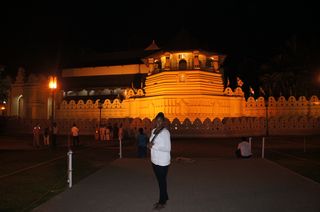
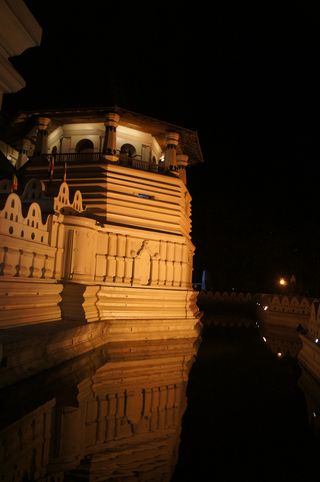
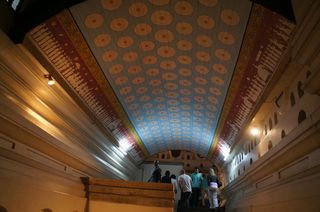
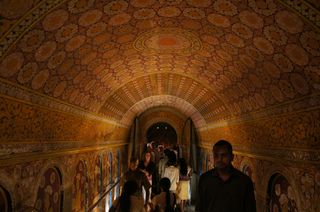
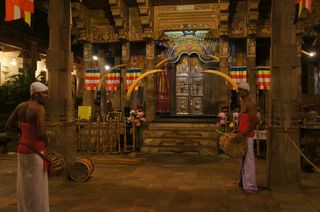
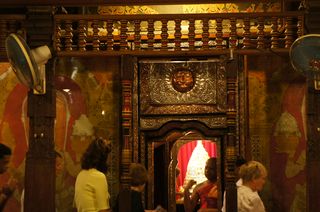
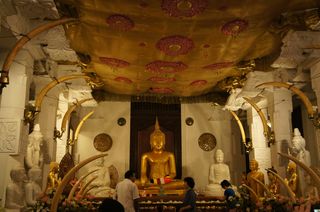
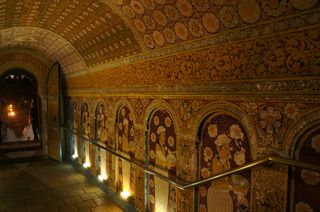
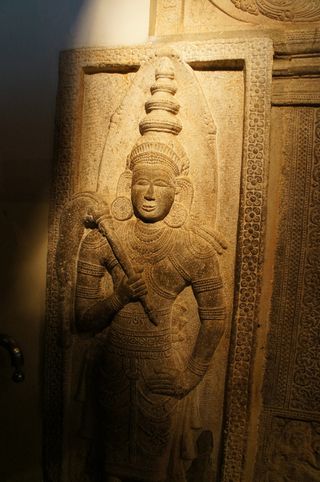
As the show ends we follow the flow of tourists along a shimmering Kandy Lake towards the city’s real draw–theTemple of the Sacred Tooth Relic, also known as the Sri Dalada Maligawa. The temple, a former palace complete with moat, houses the canine tooth of Buddha. As we approach, we go through a security check point where they don’t seem to check much, but is probably a precaution given that in 1998 Tamil Tigers drove a truck bomb up to the temple causing heavy damage that has since been repaired. The check may also be to make sure that we are dressed appropriately. All visitors are to wear clothes that cover the legs and shoulders  and remove their shoes before entering the temple. True Buddhist pilgrims to the temple wear all white. Sid tells me that a trip here is a very big deal for older Sri Lankans as it is an important place to visit once in your life, if you are Buddhist. The palace is aglow with golden lights and its roof gleams the most as it is actually made of gold donated by the Japanese. We, along with everyone else, are here for the 6:30 ritual that takes place every evening. Inside, the entry corridor the ceiling is painted with a procession of people and elephants and Sid says this is a depiction of the celebration held every 4 years when the tooth is taken out of the temple and featured in a parade of 500 elephants so that people who can’t go to the temple can see the tooth, too. Another painted corridor to the temple interior is stunning, a pattern of oranges, reds and yellows. The drumming inside is getting louder and we see two men beat the traditional Sri Lankan drum called the pancha thurya. Sid says the drumming must continue non-stop through the service. We continue to follow the crowd up stone stairs and into a line to see the tooth. Outside the line are worshippers in white with palms pressed together saying chants; some are quiet in the presence of the tooth. The line moves fairly quickly and before I know it, I am in front of a wooden window looking at a small gold-and-jewel encrusted cone or dagoba, the tooth hidden inside. I want to take a picture here, but monks in maroon robes keep the line moving so that everyone who has come can get a glimpse of the gold container, too. Just beyond the altar, you can take a photo from afar, making the tooth even more of a mystery. The story is that when Buddha died different parts of him were taken and made relics at temples around the world. His tooth was smuggled into Sri Lanka in the 4th century and moved round and hidden in conflicts over the years. The story of Buddha’s life, from manhood to Enlightenment, is told in a series of paintings in a long white marbled hall in the temple and a large seated Buddha surveys all who’ve come to the hall. I really wish I could be here with fewer people to take my time and see each Buddha statue and painted panel, but we follow the flow of people out and into the night, drums still beating. But something is gnawing at me and I ask Sid, “Is the tooth really in there?” He says resoundingly, “Yes, there really is a tooth in there.” I’m satisfied with his answer and know the people still inside feel just as strongly.

 Back at our quaint rest house, the Riverside Holiday Home, we watch a little TV and catch up on world news in the living room and it feels like we really are at home. Sid points out a shield and spears that are typical decoration in Sri Lankan homes. The daughter of the family-run establishment comes upstairs to tell us that dinner is ready and we go down to a delicious family-style dinner. The table is off the kitchen where you can see mother and daughter preparing tea and it makes it feel even more like home. We are joined by a French couple at dinner who arrived in Sri Lanka with no real plan. They picked up a driver at the airport and each day they decide where to go next. It sounds like a pretty adventurous way to travel to me and I look forward to more of my own adventures with Sid and Pradeep tomorrow.

Sri Lanka Post Script 6: From Bentota’s Sea Turtles to Yala’s Leopards

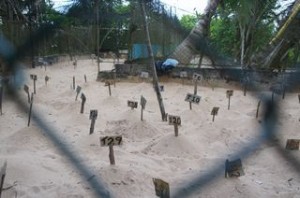
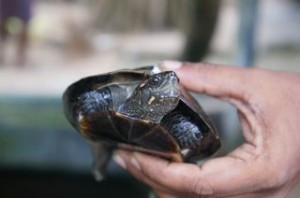
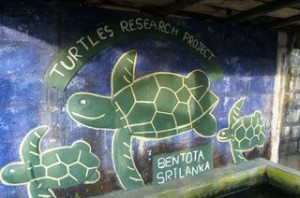
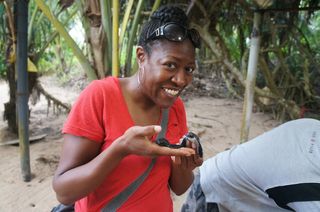
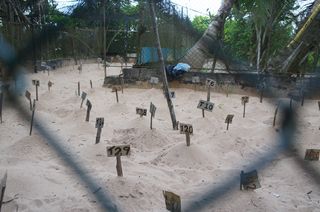
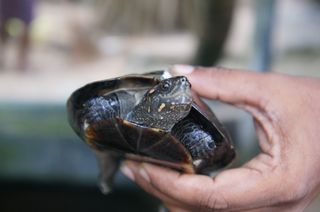
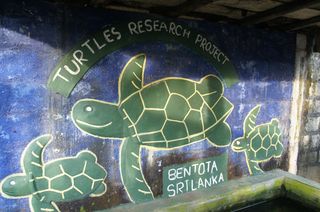
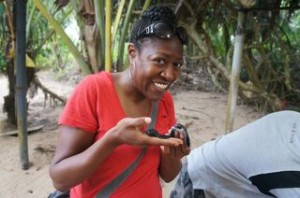
Baby sea turtles are slippery, squirmy and one of the cutest things I’ve ever had the pleasure of holding. Our guide at the Bentota Turtle Research Project simply hands them to me as he talks and I fall in love, instantly, stroking the smooth back of a green sea turtle hatchling and the bumpy one of a loggerhead. We’ve already seen the fenced-in nesting area at the small conservation facility where little mounds of sand containing sea turtle eggs are marked by type of turtle. When the babies hatch in about 2 months time, the staff and volunteers will help usher the hatchlings safely into the ocean. On their own, the endangered creatures, practically blind at birth could succumb to predators, or worse, poachers could steal the eggs before they even hatch for a culinary delicacy.
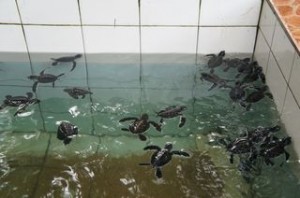
 

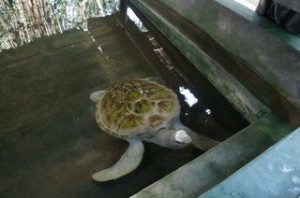
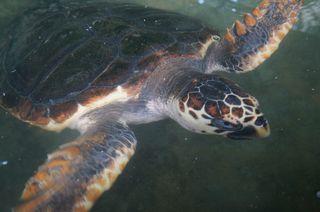
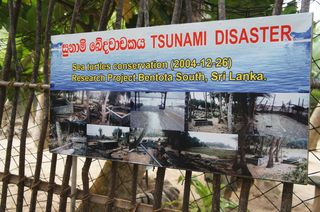
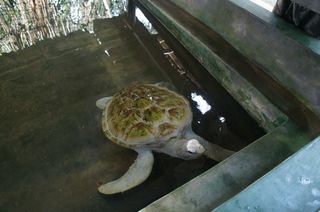
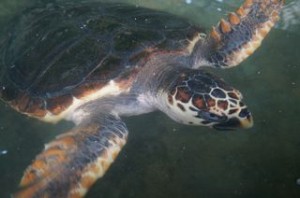
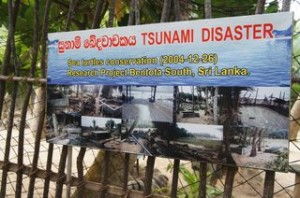
 I’m with Sid and Pradeep and this is the first stop on our four-day road trip along the southern coast of Sri Lanka, through its mountains and back west for my departure back to the US. Bentota is another beach town a few miles south of Beruwela and Moragalla and the Turtle Research Project is one of its most-mentioned attractions. When we arrive in the early morning, we are its only guests except for a cat that seems to like to curl itself around visitors feet. We visit with the residents of the project–sea turtles that have been hatched there from eggs purchased from fisherman who’ve found them, turtles that have been found, rescued and rehabilitated like one missing its two flipper-like legs. We are introduced to days-old babies and adolescent loggerhead, hawksbill and green turtles, all native to Sri Lanka’s southern shores and threatened by fishing, sale of their skin and shells, pollution and beach development. And one of the residents, extremely rare, closes out our tour–an albino green turtle, aptly named Michael Jackson. He’s beautiful. We also survey the damage that the hatchery suffered during the tsunami, seeing cracked cement tanks and bent trees. You can tell that recovery is slow here and I hope my small contribution in the form of about a $5 entrance fee and $8 sea turtle magnet help some.  I leave recalling my recent trip to Barbados where I swam a fingertips-length away from sea turtles there, sensing their gentleness.
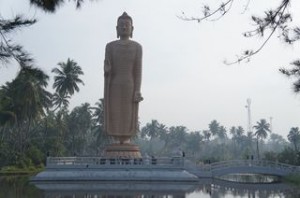
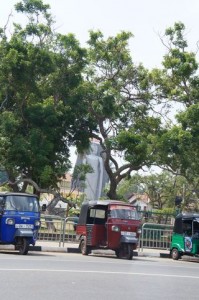
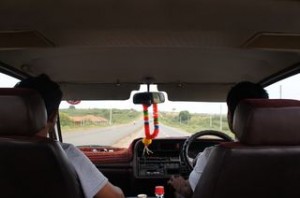
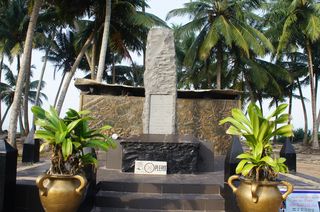
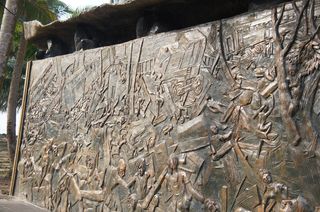
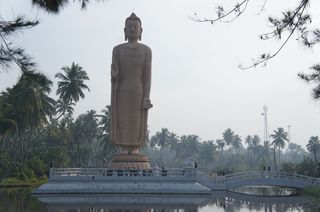
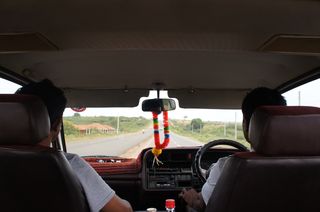
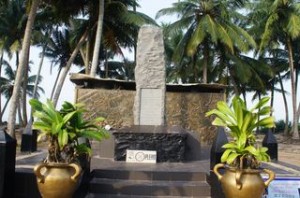
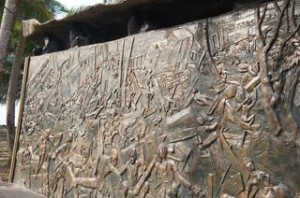
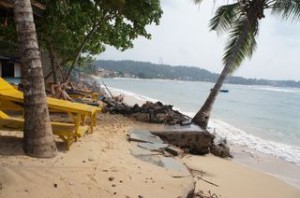
 The rest of our journey takes us farther south along route A2, which is a continuation of the same two-lane thoroughfare from Colombo to Beruwela with cars, bikes, tuk-tuks, buses and trucks zig-zagging in and out of on coming traffic. As we drive, Pradeep takes on his role as expert driver and guide, telling me that the beach between Bentota and Kosgoda is protected for sea turtles. Kosgoda is another place with several conservation projects and hatcheries. Just past Kosgoda we pull off the road long side a small obelisk and bronze relief. Pradeep says this is a memorial to 2004 tsunami victims. We are in Peraliya where some 1,500 people died on trains at the train station in town and I learn Pradeep’s own tsunami tale. He’d gone for a swim that morning when saw the massive waves. He took off running for in land, helping people up into coconut trees along the way. In total, over 30,000 people in Sri Lanka would die as a result of the natural disaster. The small memorial to them faces the roadway, seeming to turning its back on the ocean that betrayed the small town of Peraliya. The bronze relief behind the stone obelisk depicts the chaotic scene that day with toppled train cars, despairing and escaping victims, along with the dead. It is graphic in its retelling and compelling. Crumpled concrete structures dot the landscape around us, continuing the story, and just across the street is an amazing and glorious gift from the Japanese, another memorial in the shape of a massive standing Buddha, the Tsunami Honganji Vihara. The statue is said to be a replica of a Buddha that once stood in Afghanistan and was destroyed by the Taliban. The Buddha stands serene with one hand raised as if it is quieting the ocean it faces.
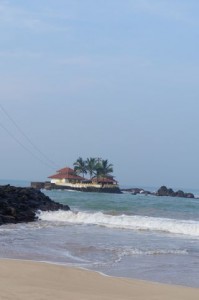
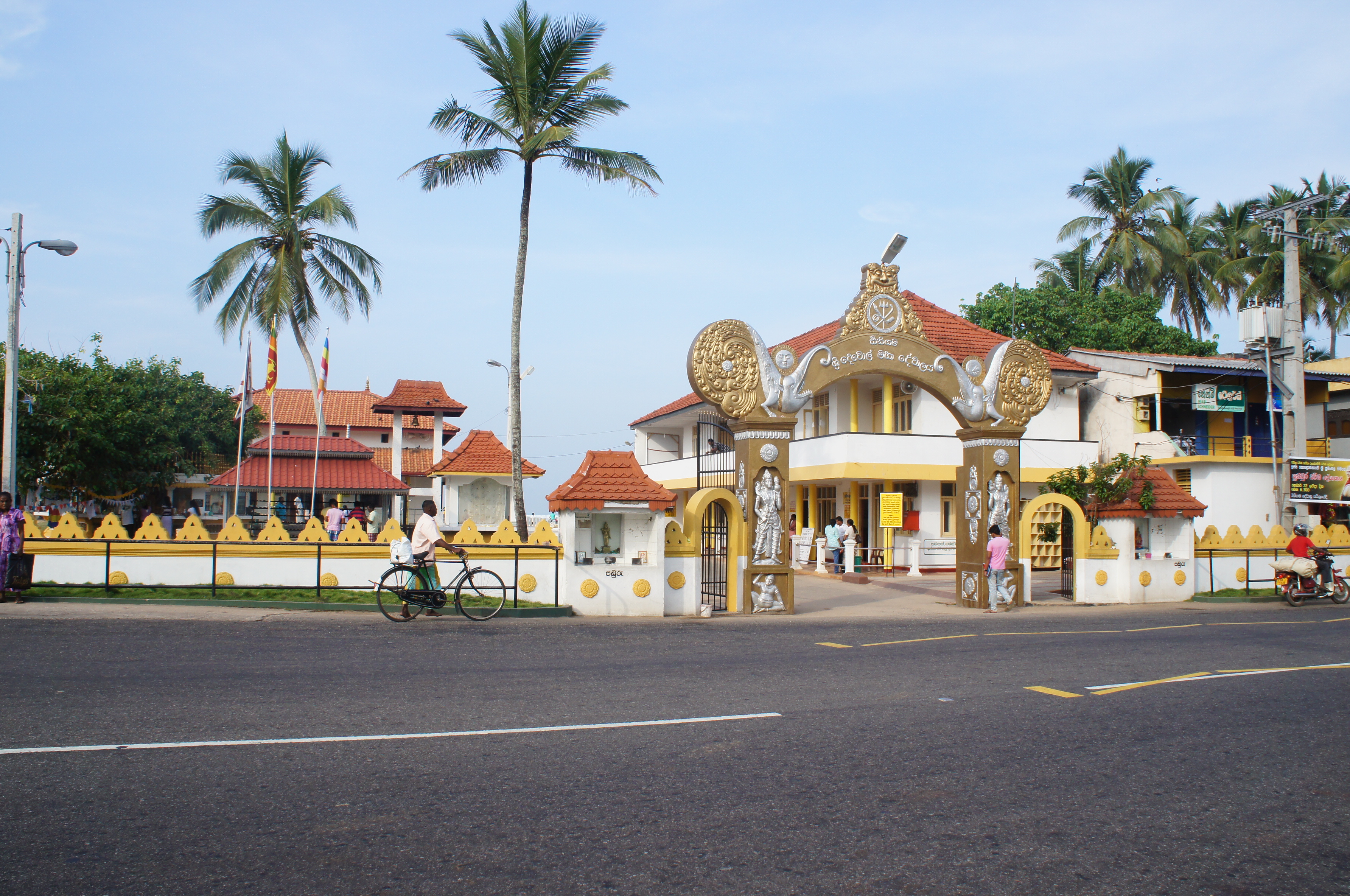
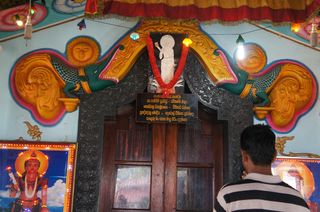
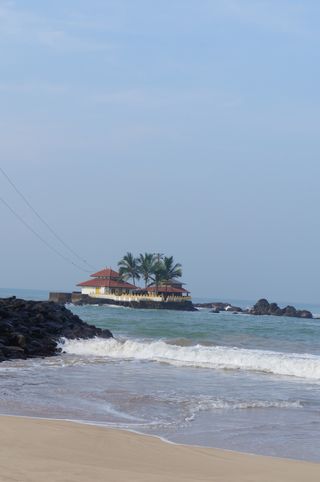
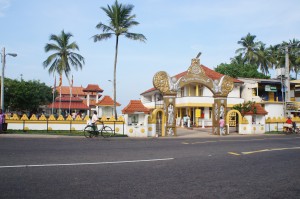
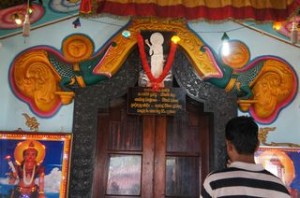
 We move on to see a spot that miraculously withstood the angry Indian Ocean that fateful day in 2004. Again, we’ve pulled off A2 where there is a golden gate marking the entrance of Seenigama Temple. Locals have come to offer their blessings to the god Vishnu at the small roadside temple where colorful images of the god are surrounded by twinkling lights and Sid and I enter and kneel briefly, too. But it is the temple sitting on a rocky outcrop in the middle of the ocean that is the miracle. It somehow remained intact despite its precarious location. Maybe it has something to do with the deity for which it is dedicated, “Devoldevi,” one that accepts wishes of punishment from worshipers seeking revenge on people who’ve done them wrong. It is also one that local fishermen respect greatly, believing that it keeps them out of harms way.
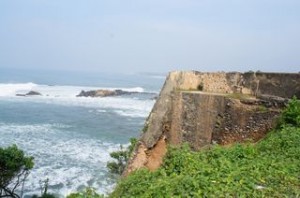
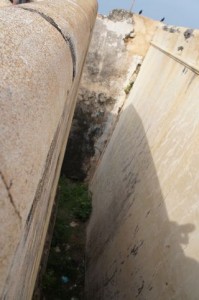
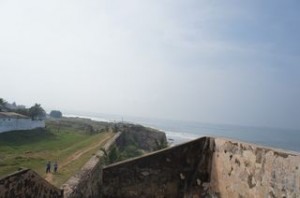
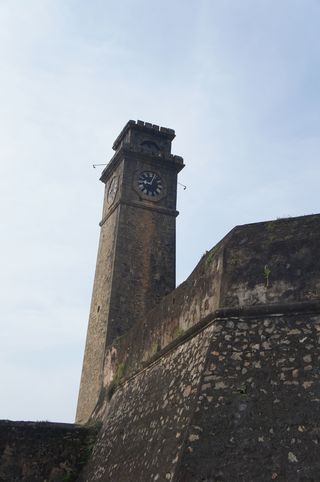
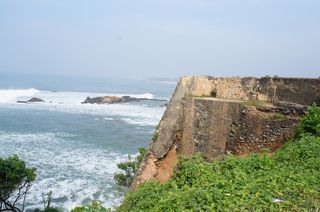
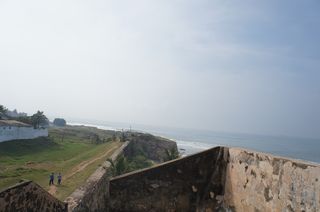
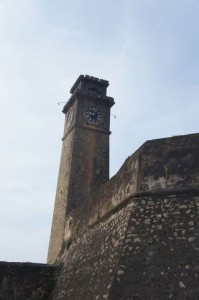
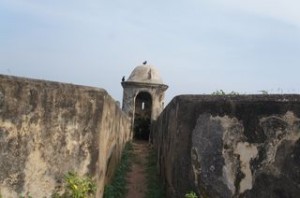
 Back in our white mini van, we pass though one of Sri Lanka’s well-known beach towns–Hikkaduwa, a surfers destination spot where Sid once played with his band at the Why Not Hotel. And then, we are our way to Galle, which looks pretty modern for an old colonial town founded by the Portuguese in the 1500s. It’s bus station is massive and brand new; the old one destroyed by the tsunami. It’s streets are crowded with traffic and there is a different, more urban energy to the place. Our specific destination here is the old Galle Fort, initially a small bastion created by the Portuguese and then significantly expanded by the Dutch who settled here in the 1600s to protect the valuable goods coming in and out of its port. We first walk through a small gate onto a flat grassy expanse surrounded by stone walls. A group of men are enjoying the open space, stretching on mats. When we look beyond the walls, we have a perfect view of the modern Galle from the old Galle, seeing the cricket stadium and busy bus station below. Gun towers along the wall are a reminder of the original purpose of the place. On the other side of a huge clock tower is a stunning view of the ocean and you can see just how impressive this fort must look if you are a boat approaching. It’s craggy walls seem to spring up from the rocks below. Sid and Pradeep are eager to point out the prison in the fort, a deep and narrow walled space, impossible for 17th century baddies to escape, unless you were Spiderman. The fort walls stretch for miles and when we leave, I see that it really is a small city unto itself and I can see why it is a UNESCO World Heritage site. Hotels and shops line the narrow streets within the fort walls for folks that want to sleep in or shop for a piece of history.
 

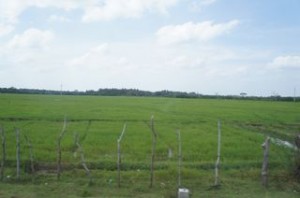
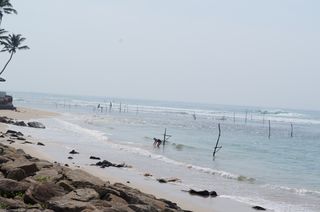
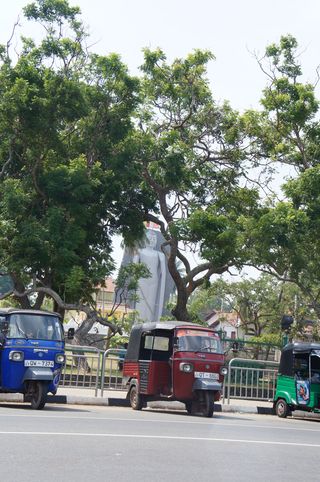
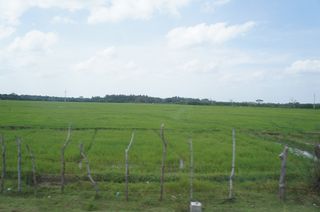
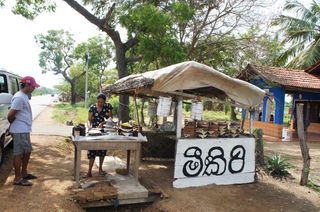
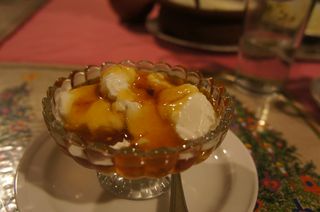
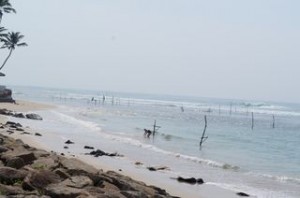
We are now headed to our ultimate destination, Yala National Park, where we’ll go on a safari. We are to meet our guide at 2 pm in Tissamaharama, a town just outside the park. In the meantime, we pass through more beach towns, Unawatuna, a hippie beach paradise where beach houses and cafes sit right at the waters edge and backpackers roam its sandy streets, and Weligama, where we see Sri Lankan fishing boats at rest on the beach and a small roadside fish market. Just past Weligama, we make another quick stop. This time we’ve stopped to see if we can see the stilt fishermen usually perched atop sticks with rods made of coconut trees stationed just off shore in the area, but the ocean is a bit rough today. Sid and I scramble over some rocks at the edge of the beach to see two lone fishermen in the distance, too far for a good photo. So, we hop back in the van and continue on through Matara, the hometown of Sri Lanka’s current president and site of another huge Buddha, just outside the city, then Dikwella, which means long beach in Sinhalese. At this point the drive turns more rural. The houses are set farther apart and Sid and Pradeep start to giggle at the names of the small towns we pass, Godauda, which sounds like “Gooda-Ooda” and Tangalle, which I don’t get until they explain that Tangalle also means “Titty” in Sinhalese. Then we are on open road passing rice and salt farms, when the road starts to looks brand new and Pradeep says we are in Hambantota where they are building a new port. Shortly thereafter, we make a stop at a roadside motel and diner of sorts to pick up lunch. There are a surprising number of diners in the place which seems to spring out of no where. We also need to take a bathroom break and I see toilets that I recognize from my travels in China, a hole in the floor surrounded by porcelain footholds. I have to remember how to artfully squat and I’m thankful that I’ve brought my Purel. Sid is excited about the spread at the place with fried lake fish and a vegetable dish that doesn’t translate into english, but he says is good and good for your eyes. Then a mile or so down the road, Pradeep says we have to stop for curd and honey, specifically buffalo curd and honey. He explains that there are many varieties of honey in Sri Lanka and they are all delicious. The honey is poured over the curd, and greek yogurt with honey comes to mind. He says that’s exactly what it’s like and now I’m looking forward to trying it. The woman at the stand outside her home wraps the curd neatly in newspaper with twine and gives us a bottle of honey for the road.
 

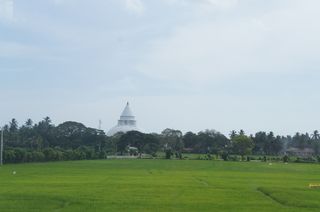
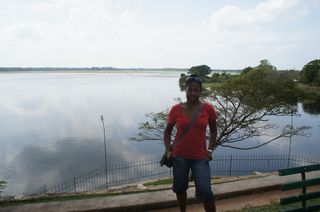
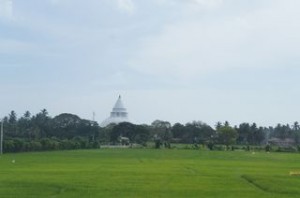
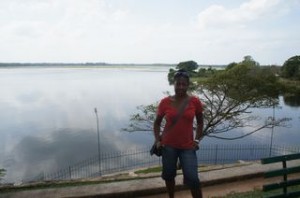
 Finally, we are in Tissamaharama, Tissa for short. The town is named for an ancient ruler who Sid and Pradeep say built the lovely man-made lake and stunning spherical temple (dagoba)in the center of town. We pick up our guide Susantha on the way to our hotel, the appropriately named Lake Wind Hotel, which backs Lake Tissamaharama. Floor to ceiling windows showcase the hotels prime placement and it is a perfect setting except that the hotel is under a small renovation. We break for a quick lunch and I do enjoy the untranslatable green veggie that looks like parsley. Then we are in Susantha’s giant jeep on our way to Yala. Pradeep says he’s gotten us the best guide and that Susantha has been doing these tours since a very young age. Susantha so far is a man of few words, dressed in polo shirt and sarong, focused on getting us to the park. When we arrive, we pay the entrance fee, $14 for me, $1.50 for Sid and Pradeep as Sri Lankan citizens, and walk around the small museum telling us of the park’s early history as a British game park in the 1800s when hundreds of elephants were slaughtered. In 1938, Yala became a national park and is now home to hundreds of species of birds, over 300 elephants and the largest concentration of leopards in the world, numbering 35 or so, which sadly, doesn’t seem like like a lot.
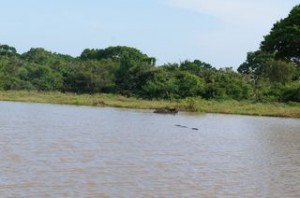
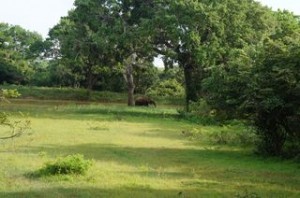
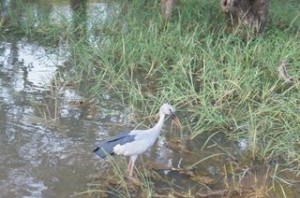
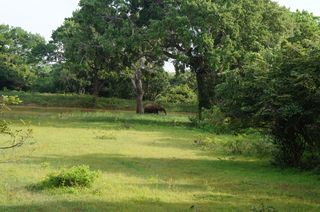
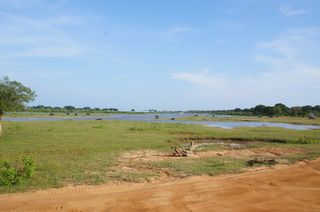
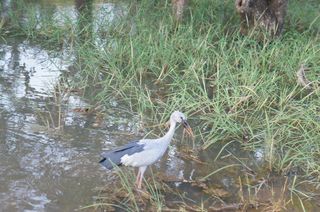
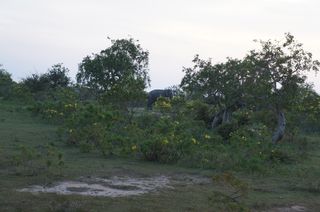
So, Yala is very bumpy. The roads are a dusty, pitted red, orange and between dodging massive potholes and mini lakes in the road we set about the business of spotting animals. Here, Susantha is in his element. He’s some how able to expertly navigate the terrible road conditions and stop to point out some hard-to-see critter. The first is a small green bird, barely noticeable to the naked eye against its leafy green backdrop. I believe this was an orange-breasted green pigeon. We have no trouble spotting the peacocks and peahens than seem to rule here. The other animals seem to be hiding on this day, possibly spooked by the high volume of jeeps full of leering tourists. Our hope was that arriving around dusk would be the best time for wildlife spotting as the animals come out when the sun sets to visit the park’s watering holes. The animals had other thoughts. We were lucky enough to spot a young elephant bathing in the distance and we hoped for an Animal Planet “Untamed and Uncut” moment when we saw a bathing water buffalo apparently being stalked by a crocodile. But the croc seemed to be taking its sweet time making its move. The talk of the park, though, was the leopard sighting. As we passed other guides, they shared the location of the big cat and we bounced our way in its direction only to find a traffic jam of jeeps trying to sneak a peek at the the same cat. This is where Susantha swings into action, finding some untraveled route and putting us right in front of the clearing where the leopard was lazing. He cut off another jeep in line so that we could get an even closer look and a photo. I was able to get one fairly good photo of the reclining cat, mainly of its spotted belly. Even with all the hullaballoo around, it couldn’t be bothered to raise a paw. The sunset at Yala was beautiful and we manage to glimpse more animals as we leave with a parting glance at an elephant near the park’s entrance.

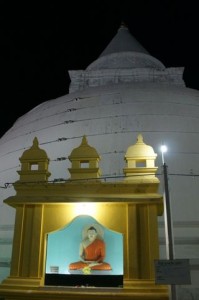
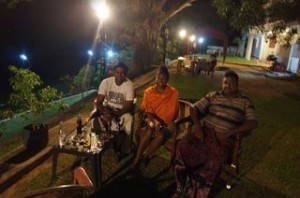
  We return to the hotel to shower off the red dust of Yala and rest for a bit before heading back out to visit the Tissamaharama Dagoba. The glowing 160-ft half sphere was said to once have housed one of Buddha’s teeth and his forehead bone, now there are a series of small Buddhas to receive blessings. We step out of our shoes and make the full circle around the dagoba as other have come to do, reciting their prayers. It is extremely peaceful here. Back at the hotel, it is peaceful as well. We are sitting by the lake having drinks with Susantha and trying to secure a hotel in Kandy for the next night and in Sigiriya the following night. We are kind of flying by the seat of our pants and decided staying in Kandy would be better than staying overnight in Nuwra Eliya as planned previously. But all the hotels in Kandy appear to be booked. Susantha and Pradeep are working their connections, mobile phones pressed to their ears. It turns out that Susantha maybe the Emil of Tissa. He knows everyone including Sid’s brother, Nihal and Uncle Emil himself. It seems that its a small world in Sri Lanka, too. And it’s Susantha who comes through with a friend’s guest house in Kandy. Over the course of my trip, I’ve learned that it’s good to be connected in Sri Lanka and traveling with Sri Lankans if you aren’t one.  You get the Sri Lankan price like $52 for a room at the Lake Wind Hotel, which may cost a tourist $100 or more.
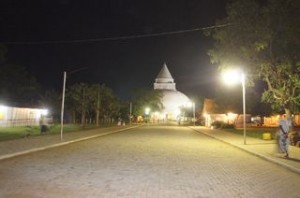
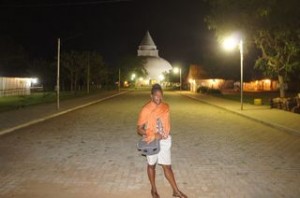
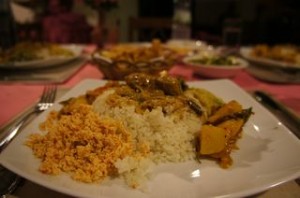
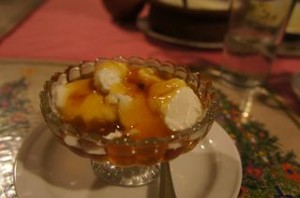
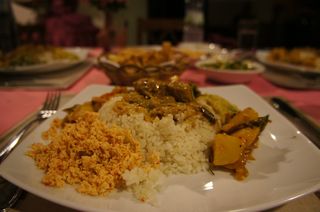
After a good meal of chicken curry, sambal and a pumpkin curry dish along with our dessert of curd and honey, which tasted a lot like a thick yogurt, I feel dizzy with all the day’s amazing sights and activities, probably my the longest day in Sri Lanka so far. I say my goodnights and leave Sid and Pradeep to watch a cricket match on the hotel lobby TV.