Sri Lanka Post Script 5: The Coconut Bar’s Cast of Characters

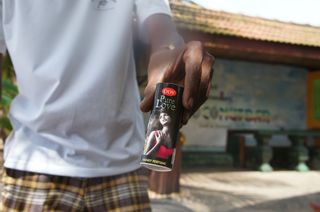
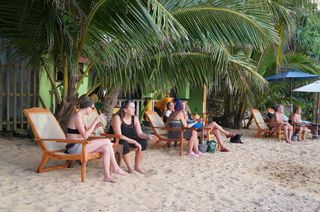
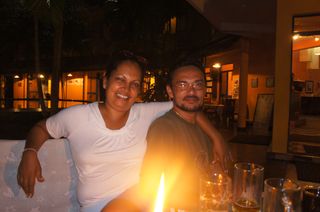
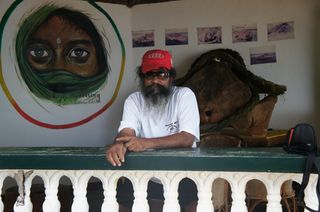
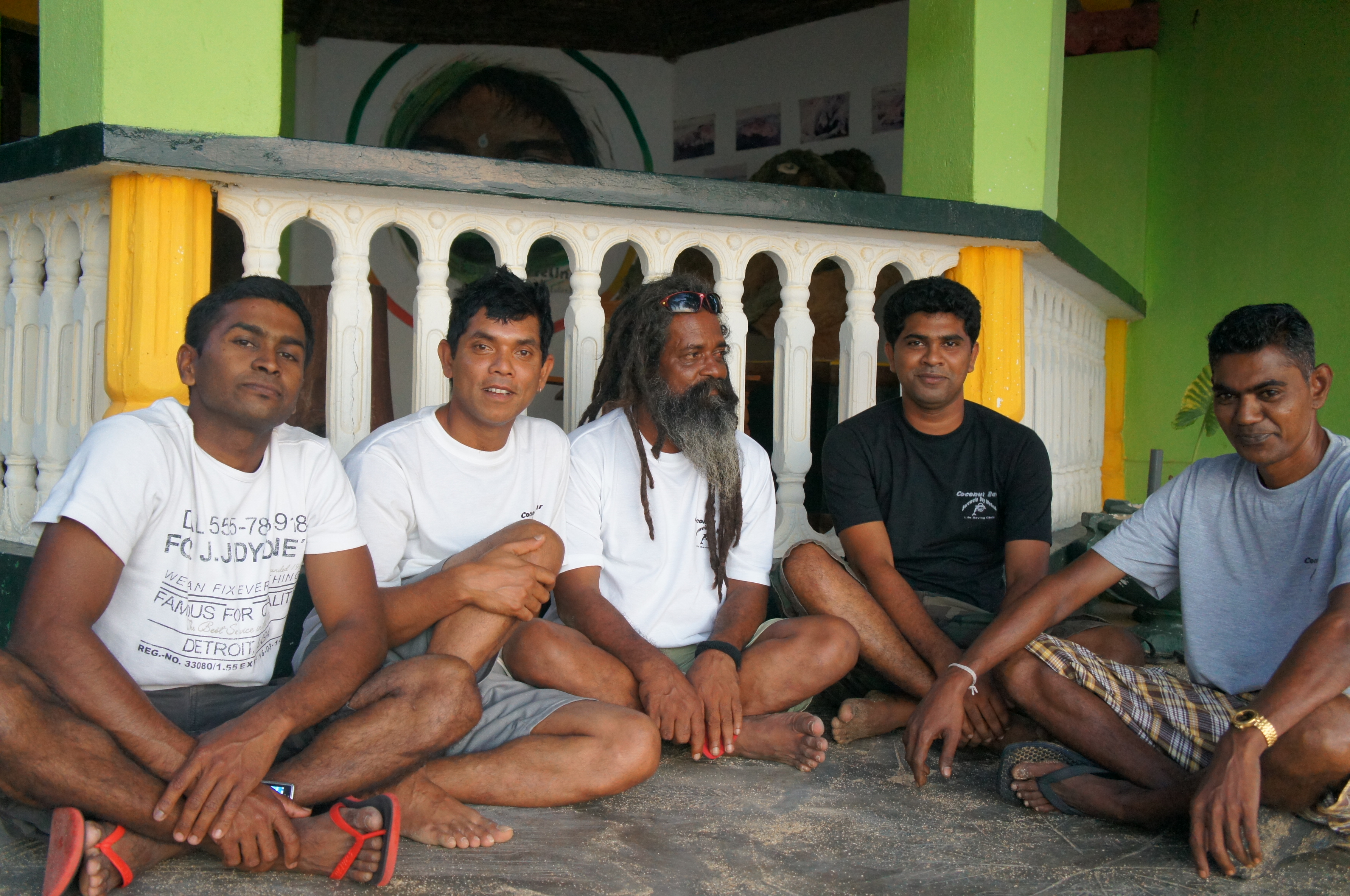
If the Coconut Bar was an American television show, it’d be “Cheers.” It is a place where people come to take a break from all their worries, a place to get away. Everyone may not know your name, but they recognize you and make you feel welcome. Of course, Uncle Emil is at the center of the happy vibes at the place. Regulars at the Coconut Bar greet him like an old friend as they pass or stop in for a drink. Uncle Emil entreats people walking along the beach to come into the bar, attractive women mostly. He’s a good host who wants happy guests. But it is the other men of the Coconut Bar that keep the place running like a well-oiled machine and have their own interesting stories to tell. They are all multi-talented. Sid’s cousins Mahesh and Pradeep are the mixmasters, creating the bar’s popular pina coladas, caipirhinas and coconut cocktails. They also double as chefs and fixers, finding the right people to fix a boat or a jet-ski or organizing sightseeing tours. One day, Mahesh has to call some guys to go rescue his boss, Uncle Emil, when the battery fails on the speed boat. Pradeep will be our tour guide on a four-day drive along Sri Lanka’s southern coast and through the mountains. He knows almost every inch of the country. I’d later learn that he’s a favorite among the ladies on Beruwela Beach, but he’s probably the farthest thing from a playboy you can get, a quiet and friendly soul. Nihal, tall and lanky, is the picture of efficiency. Before you can ask for something Nihal is there with a ready smile. He appears to speak flawless German with the German guests and he can put out and put away beach chairs and umbrellas in the blink of an eye. Nihal also has a bit of a comedic streak. A man pedaling fragrances stops at the bar one day and I am his initial target. He rubs a little vanilla oil on my hand, some jasmine. But I’m not in the market for a new fragrance. Nihal’s interest is peeked though and he comes over to sample some scents for his wife, he says. The man presents a scent called “Cobra” and Nihal jumps backwards waving his hands wildly, saying, “Noo,” as if the small bottle were a cobra itself. But when the man understands what Nihal may be seeking, he offers a scent called “Pure Love.” Nihal grabs it immediately, rubbing it on his wrist and smiling. The packaging looks a little erotic, like something you’d find in a sex shop and we have some thoughts about what he has in mind for his wife later. Then there is Ramsan, the most subdued of the bunch. He appears for work everyday in a uniform of sorts, wearing blue slacks, a blue stripped shirt and a shy smile. He manages Uncle Emil’s jewelry shop and helped me pick a silver and peridot ring for myself. On a quiet day at the bar, he tells me that he lives with his wife and children a short distance away from the bar and in the next breath says that he has no family. I’m puzzled for a moment and he tells me that he lost all his closest relatives in the tsunami. A few days ago, Uncle Emil told me the story of how all of Ramsan’s family had boarded a train to go to a wedding when the tsunami swept the train into the ocean. I tell Ramsan that I am sorry and that he has a new family now with his wife and children. He smiles and nods, but I can tell that this doesn’t close the wound. No words will. But Ramsan and the rest of the guys there have formed their own little family and they seem to enjoy working together everyday, trading jokes beachside.
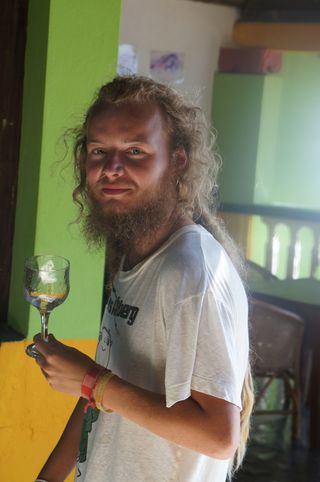
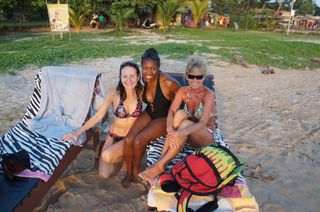
The rest of the Coconut Bar’s cast is the people who frequent it. A man selling roasted and spiced cashews on a bike stops by every day. Ladies selling sarongs stroll by with their colorful fabrics fluttering in the wind, followed by a group “beach boys”, looking to take tourists on boat rides and tours and act as general guides to the island. Some are to be trusted, others not so much.  One day a man appears with a small basket containing a snake. (See the video below.) A German family comes frequently with their baby that plays naked in the sand. There’s a young man from Sweden with locs as tangled as Uncle Emil’s and a ring through his nose. I met an Austrian woman named Lisa who has been vacationing in Sri Lanka for years and has come alone on this trip while her husband, an Austrian world champion archer trains for the Olympics. Then there is Victoria from the Ukraine, one of the women that Uncle Emil has personally invited to hang out at the bar. She’s a tall brunette in a two-piece who has trouble understanding Uncle Emil’s flirtatious banter, but forms a fast friendship with me, taking me down the beach to meet her friend Monica, a Brit who married a Sri Lankan and lives on the island 3-6 months out of the year. It turns out that Monica lives in Oxford during the rest of the year and we talk about our favorite pubs, The Perch and the Trout. Victoria is a hairdresser back in the Ukraine and has been coming to Sri Lanka to vacation for 6 years. She spends most of her time on the beach and she likes it here because its warm, understandably escaping frigid winters in the Ukraine. She says speaking English with me is easy and she wants to be sure to stay in touch.
The music at the Coconut bar contributes to the personality of the place as much as the people. There’s an R&B mix on repeat featuring Jennifer Hudson’s “Spotlight,” Usher’s “Here I Stand and the Pussycat Dolls’ “When I Grow Up.” Then there are the reggae tracks, Bob Marley’s “Get Up, Stand Up” and Peter Tosh’s “African.” The lyrics of that one are still in my head, “Don’t care where you come from, as long as you are a black man, you are an African. No mind your nationality, you have got the identity of an African.” Uncle Emil even produced his own reggae song performed by a local band that he blasts from time to time. It doesn’t have a name but its about fighting pollution of the beaches. The music is a bit part of the the attraction to the bar and makes one linger and order another drink.

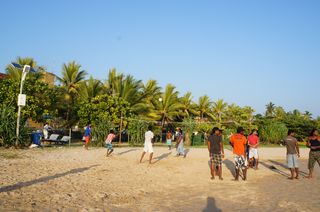
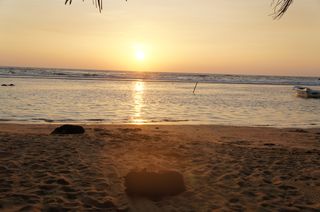
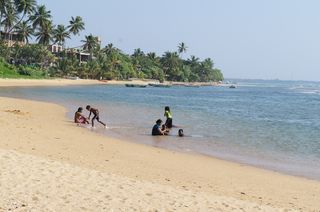
Before catching my last sunset at the Coconut Bar (Sid, Pradeep and I will take our road trip the next day), I walk along the beach taking parting shots. Guys play volleyball. There is a Sri Lankan family going for a late afternoon swim. Many Sri Lankans seem to like to visit the beach as the sun is setting and the women prefer to take dips fully clothed. I spot Bony chatting with locals under a coconut tree, sharing some arrack and roasted chicken. I am already trying to remember the smell in the air, the sound of the ocean and the warm feel of it enveloping my body.
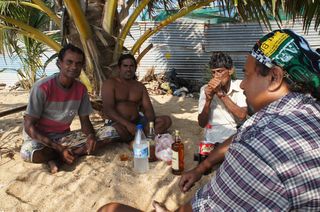
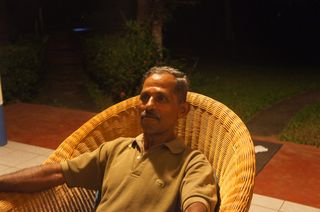
 When we return to Sid’s house to pack, his Uncle Sucil is waiting. He wants to have a farewell drink with me. He’s already got the arrack and cola waiting and he smiles as he tells me to sit. I can feel that he wants to tell me something important and he starts by telling me that he has heart and that I have heart and his heart is with me. Sid isn’t there to help translate, but it’s pretty clear that he’s trying to tell me that he likes me and it is really sweet. He then very clearly says, “I like black women. No like white women.” Then begins hiking up his shorts to show more of his leg. By this time Sid is back and says that his Uncle doesn’t like seeing European tourists who walk around half naked in the streets where children can see them. Apparently, he was impressed by my modest dress at the De Silva party the night before, sealing his respect. I feel proud to have nailed the Sri Lankan etiquette and left a good impression. Then Uncle Sucil rises, gives a soldiers salute and walks into the darkness.


Sri Lanka Post Script 3: Ain’t No Party Like a Sri Lankan Party

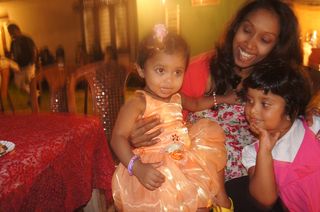
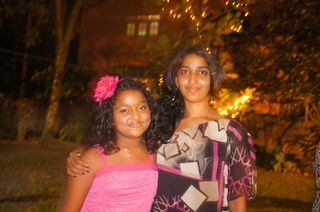
When Bobbi starts dancing she won’t stop. I’ve taken a little break when she’s grabbing my hand to pull me back up, saying “Wanna dance?” Bobbi is married to Sid’s brother Lanka and they have the cutest little girl named Kiara, who is decked out for tonight’s festivities in a fluffy mango-colored dress. The De Silvas are in full party mode. If they aren’t spinning around on the lawn, they’ve taken to the small tented stage in the yard to play an instrument or sing a Sri Lankan baila song in top voice. They are celebrating Sid’s cousin Samil’s transition to womanhood. A few days ago, he explained that wasn’t happy with the old tradition, even in its modern form. Way back when, families went door to door to announce when their daughters became women and threw a big party for the entire village. It was a way of letting potential suitors know that their daughters were ready for courtship and marriage. These days it’s really just an excuse to throw a big party and this one is just for family only. I think Sid is also uncomfortable knowing that his little cousin is growing up.

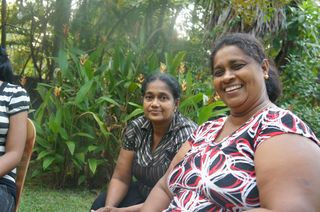
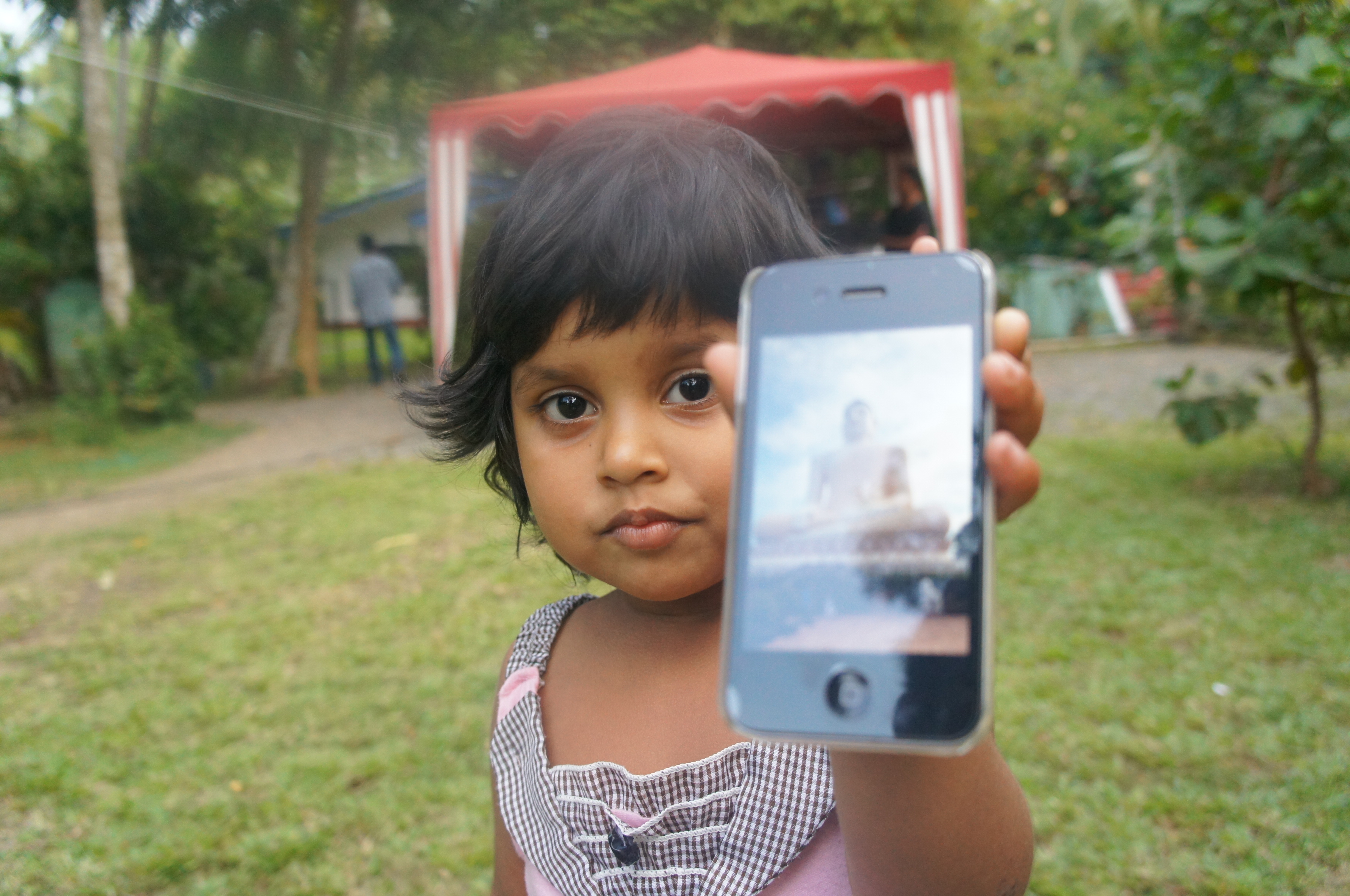
Earlier in the day, I watched the party preparations begin from the front porch of the guest house. Tables with umbrellas appeared, the tent rose and the caterer arrived to prepare a meal for 150 people. I spot Sid’s father on the roof of the main house at one point adding lights. I begin to suspect that this is going to be a big event. There’s a little down time once everything is all set and this is when I finally get to spend some time with the De Silva women. We sit in the yard and smile politely at one another for a while, when someone asks about my hair. That’s always a good conversation starter. They want to know if it is all my hair and I admit that it isn’t. I show them how my hair has been braided to meet extensions that form the bun at the top. They marvel and exclaim, “Pretty!” I chat a bit with Sid’s cousin Hashi, who is considering college in the US or the UK. She has to take one last grueling test before she completes her schooling and can apply. We talk about dancing and I promise to dance with her and her sisters Himashi and Tarushi at the party. But it’s my camera that really breaks the ice with Sid’s little niece, Adarra. She likes to have her photo taken and she likes taking photos, too. She looks at photos on my camera and shows me photos on her aunt Iresha’s iPhone. Then it’s time for everyone to get ready and change into their party clothes.

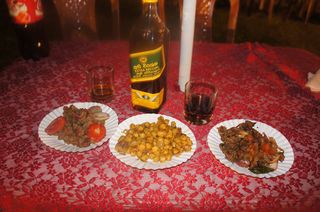
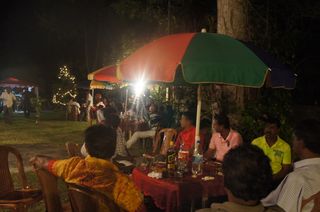
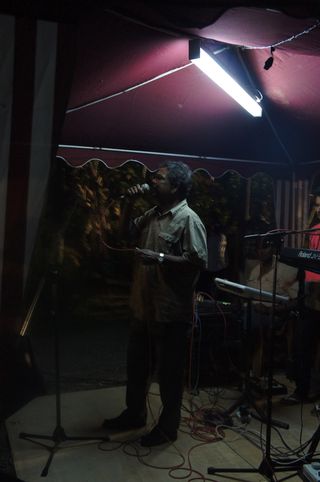
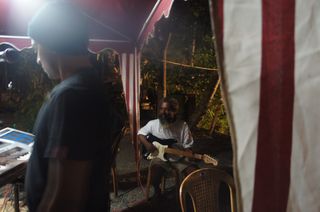
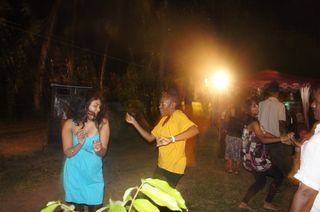
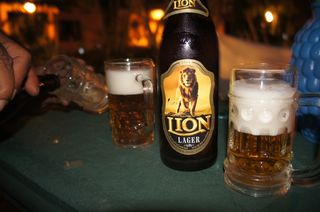
As night falls, a stream of guests start to arrive. The men and the women self-segregate with men taking to tables with bottles of arrack, the local coconut liquor that tastes like cognac, and women taking to chairs along side the house. Little appetizers of warm chickpeas, fish and chicken are served until the buffet opens. I’ve been chatting with another of Sid’s uncles and his German friend who’s been traveling to Sri Lanka for over 20 years. Then I meet another one of Sid’s childhood chums, Sanjeewa, who lives in Finland with his wife and daughter and works at a camping facility. He’s one of many far-flung Sri Lankans. Sid had a younger sister living in Australia. His brother once lived in Switzerland and he has cousins living France. Sanjeewa and Sid used to be in a popular Sri Lankan band together, singing baila and pop music covers in beach town hotels and clubs as teens. It’s the two of them that kick off the party with a little musical reunion and Sid’s sisters and cousins immediately jump to their feet. They sing a song about how they may not be in Sri Lanka, but their hearts will always be in Sri Lanka. His family loves it. The party kicks into high gear when bottles of Lion Lager and champagne are passed around among the dancers. The once segregated men and women are now dancing together, swirling around each other to drum and electric keyboard heavy songs. Baila seems to be a mix of African drumbeats and Portuguese folk tunes. I like it a lot and I manage to dance with many of Sid’s relatives, Iresha, Hashi, Bobbi and the guest of honor, Samil. I’m thrilled when they tell me that I dance nice. One of Sid’s cousins has incorporated some hip hop moves into his dancing and we end up doing something that looks like the snake together. I’d learn later that the Grammy-nominated hip-hop artist MIA is Sri Lankan and it all makes sense. It seems that every De Silva has some sort of talent. Sid’s father sings a sentimental Sri Lankan tune and Sid, Hashi and Iresha perform a traditional song together. (Check out the video clip at the bottom of this post.) Even Uncle Emil gets in on the act, playing a little guitar with the band. They seem to truly enjoy each other, singing and dancing without a care.

Sadly, the evening comes to an end with a fight. A couple of cousins who’ve had a bit too much to drink get a little rough with one another over who knows what. Sid breaks it up and kicks them out. He says Sri Lankan parties always end with a fight. Some would say that’s the sign of a good party. I think it happens no matter the nationality. I’ve seen my share of fights break out at parties with black folks and white folks and alcohol is usually the instigator. The musicians pack up and some go for their last plate of food before heading home for the evening. It’s definitely a party that I won’t soon forget.


Sri Lanka Post Script 2: Beruwela Fish Harbor, Aluthgama and Around

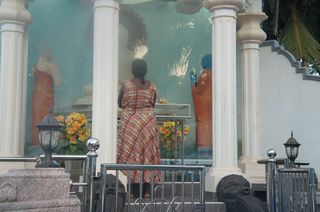
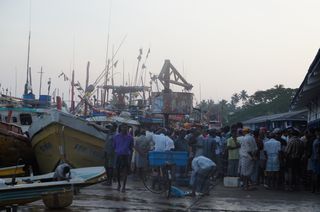
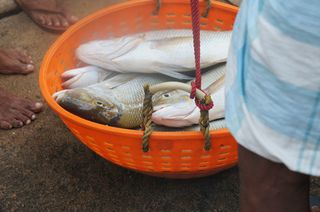
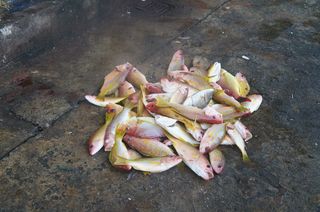
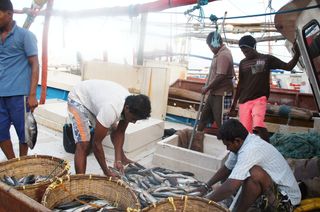
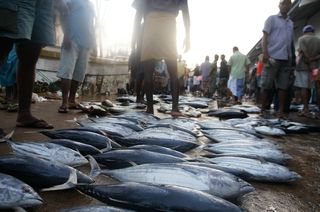
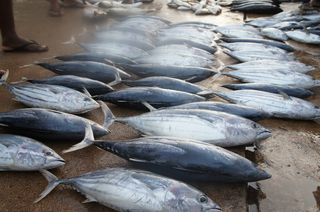
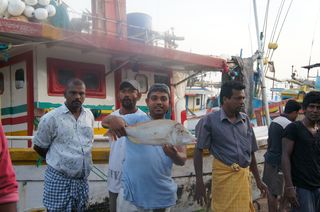
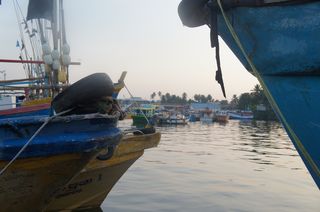
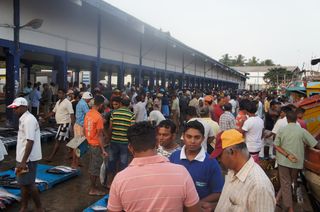
There’s a pounding at the door. It sounds distant and far away. I am sure that I’m dreaming and I continue to lay very still, eyes closed. Soon there is more knocking. This time closer. “Robin? Do you want to go to the fish harbor?” I open my eyes to see Sid’s head peeking through my door. Groggily, I muster an enthusiastic, “Sure!” The sun has barely risen in the sky and I find myself in the car with Sid and Uncle Emil on the way to Beruwela’s fish harbor. I never expected Uncle Emil to be up bright and early at 6 am on a Saturday morning, but here we are driving past tuk-tuks, motorbikes and buses that seem to have their own plans this morning. After passing a row of tuk-tuk drivers and a woman offering early morning blessings to a street-corner Buddha, we reach an entryway with police officers on either side where we are waived through. Sid says that there is a fee to get in to the market of about $20, but the fee is waived for us because Uncle Emil has a VIP sticker on his car. Beyond the entryway, the road is packed with tuk-tuks and motorbikes which seem to be the only things that can fit the narrow roadway. When we’ve parked and we are out, Sid says to stay close because it will be crowded. I’m expecting to smell that fishy smell that comes with many fish markets and harbors, but not here. Just loud voices of fishermen selling their super fresh catch, just in overnight from the Indian Ocean and even farther, according to Uncle Emil. I can’t name the fish laying at our feet, but I take pictures and the local fishermen are eager to show me what they’ve brought. Sid tells me that that they are all talking about my hair and I suddenly realize that I’m the only woman among the men; some in sarongs and all in bare feet. But it is OK. I smile. They smile back and pose with their fish. The fish is unceremoniously laid out on the ground for the picking by fish salesmen, who will load what they can into blue-lidded bins on the back of their motorbikes and make door-to-door deliveries, not unlike the milkmen of older days.

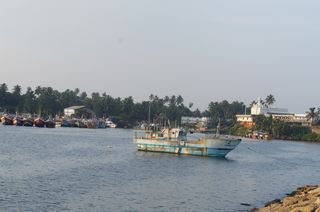
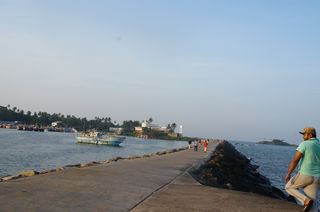
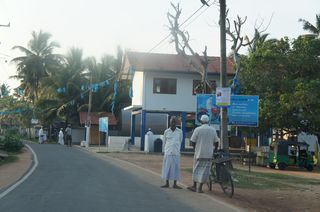
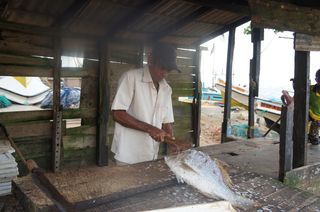
 Uncle Emil says he only gets sardines for his dogs at this place. He prefers even fresher fish from just around Beruwela and we drive a bit farther down the coast, first meandering down the harbor inlet where Sri Lankan men jog, walk with weights and do morning calisthenics in view of multicolored fishing boats at rest in the rising sun. As we continue our drive, I spot a woman in a Berka and I ask, if there are many Muslims here. Uncle Emil says yes and I start to see men with kufi hats on their heads and sarongs covering their legs. He also points out a mosque on a hill, which I’d later learn is, Kechimalai Mosque, one of the oldest mosques in Sri Lanka. This area was once where Moors and early Arab traders settled and their descendants are still here. We stop a short distance from the mosque where smaller boats are docked, like the canoes we saw on the river. Standing with some Muslim boys, I watch a fisherman expertly scale a large fish, while Uncle Emil selects the Coconut Bar’s catch of the day.

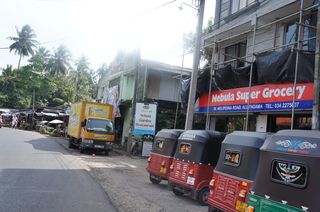
 Over the next day or so, I’d see a bit more of Beruwela beyond the beach, walking along the main busy thoroughfare in Aluthgama that crosses the train tracks that carry people north to Colombo and south the Galle and beyond. Crossing the street is daunting. I want to stop and look both ways as I’ve been taught here in the US, but Sid says to keep walking. Stop and you’ll get hit. We stop in the town grocery store to say hello to one of Sid’s high school friends who owns the store. He says that it is the only place around where you can get Western foods and sundries. I notice things like jars of mayonnaise and bug spray. His friend owns the Nebula Garden Restaurant next door, too. We stopped there my first evening in Sri Lanka hoping to have dinner, but we ended up at the Fresh Restaurant. I remember a lovely open space overlooking what I’d learn was the Black River. Just beyond the restaurant is Aluthgama’s open air market, which Sid says is packed wall-to-wall with vendors on Mondays. We see a few ladies presenting their vegetables and continue walking to see the local butcher at work.

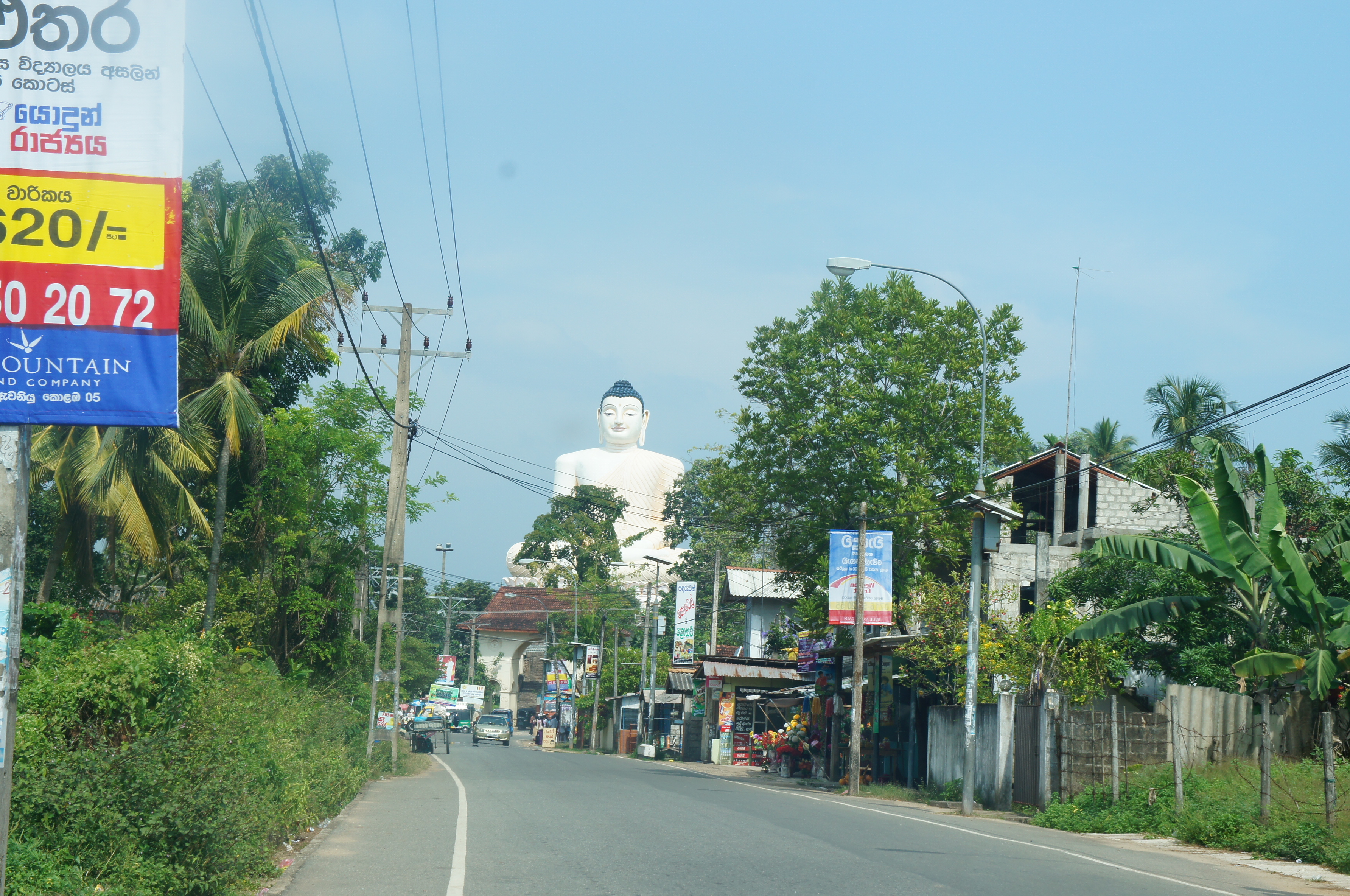
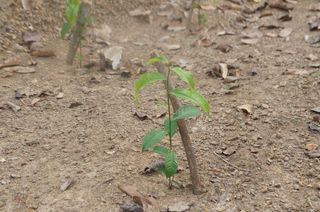
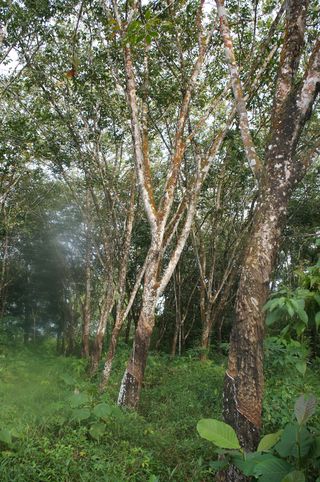
 Out on another drive with Uncle Emil, I think I am starting to recognize the main streets, but I am startled when I see a huge Buddha statue peeking out at us over treetops and buildings. Further research tells me that this is the Buddha at the Kande Vihare Temple, which sits at just over 160 feet, the tallest Buddha in Sri Lanka. Uncle Emil says that many came to the temple to escape the Tsunami. We continue driving out of the city, where I see my first rice field and Uncle Emil points out rubber trees that actually look bendy and rubbery to me. We crawl up a red dirt road to a red-tiled cement home with a plantation porch surrounding it. We’ve arrived at Uncle Emil’s country home, just purchased from his sister Chuti. He’s already at work making it his own, having planted some 300 tea bushes on the property. It’s quiet here and cool on the warmest day in Sri Lanka so far. For Uncle Emil, it is a respite from the beach and there’s not a tuk-tuk in sight.

Sri Lanka Post Script: Seeking Balance in Sri Lanka

Author’s Note: My trip to Sri Lanka was a worldwind of amazing experiences. Sadly, I couldn’t recount them in real time, so I’ll be sharing postscripts over the next week or so. There is so much to tell, from a rockin’ Da Silva party to Buddha spotting across the countryside, so stay with me, if you can. The following is a compilation of events having to do with the healing properties of Sri Lanka.

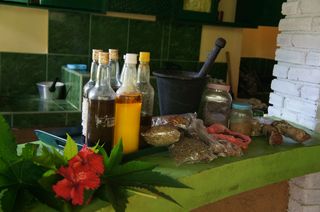
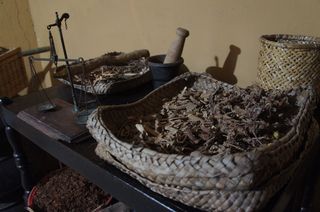
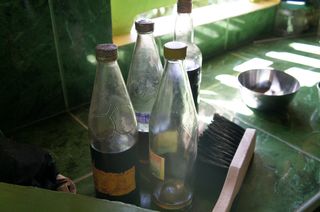
 When I walk into Uncle Emil’s private spa one day, Narangela is preparing something in a pestle. She’s combining those magical herbal leaves with garlic and coriander for my thermal massage later. Dr. Princy arrives with her collection of oil bottles along with an assortment of jars containing savory-smelling powders. She points out dried flowers and a root good for healing arthritis, again she doesn’t know the exact words for these things in English. When she starts with my facial mask, I can guess one ingredient, honey. It’s sticky and cool on my face. She says the mixture also includes herbal powder, which contains some 60 herbs and spices, including pepper, turmeric and ginger. The concoction is left on my face for several minutes along with cucumbers over the eyes–there’s another familiar ingredient from previous spa treatments. My facial is then followed by a foot soak with the same flat herbal leaves from my steam baths. I wiggle my toes in the hot water filled with flowers and seeds to soothe the hundreds of nerve endings in my feet, which in turn affect the health of my brain and the rest of my nervous system, I’m told. I have to say all feels right with my body, especially as I sip a delicious herbal tea. The next treatment goes straight to my head as I lay over a steaming pot of herbal leaves and I know garlic is one of the ingredients because I kind of want to taste what’s in the pot. The doctor tells me to inhale through my nose and mouth, again, for the health of my brain, along with the sinuses and ears. I should be one clear thinking person after all of this. Then it is time for the syncopated massage again, doctor and therapist applying liberal amounts of oil to my limbs and torso and working it in rhythmically. Instead of ending with the steam bath, the pair then pound my feet, legs, back and arms with warm, cloth packs of herbs, the same ones I saw Narangela preparing earlier. The process of patting and pounding up and down my body is called thermal massage and has a similar effect as the steam bath. It’s meant to draw bacteria out of the muscles. Dr. Princy says that the treatment has been effective in helping AIDS patients and she shares more about the principles of ayurveda, which is basically about achieving balance. Essentially, various parts of our bodies correspond with natural elements like earth, air and fire. For instance, Dr. Princy says, fire is associated with the stomach. If there is an imbalance there, she seeks the proper herbs and methods to treat that imbalance. The ultimate goal is to achieve a natural harmony throughout the body.

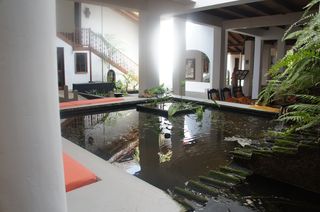
It seems a lot of people come to Sri Lanka seeking balance. Ayurveda is big here and it appears to be a selling point for hotels and guest houses all over the island. Uncle Emil says he sees a lot of people who are sick. He points out one German man in Speedos who’s been standing in the ocean for a good 15 minutes stark still, staring. There is another man who comes to the Coconut Bar everyday with a white kerchief covering his head. He says little. He finds a chair and waits for the sun to set. I see others walking up and down the beach with the same kerchiefs and wonder what that is about. I find out when I meet Helga at the Coconut Bar one day. She’s a German doctor of Chinese traditional medicine who vacations in Sri Lanka for ayurvedic treatments. She’s  also a guest at the Barberyn Resort next door and she raves about the experience, so much so that I ask her for a tour. She’s thrilled to oblige. When we met a few days ago, she and a fellow resort guest were watching the clock as they had to get back for their evening medicine at 6pm, timed with the setting of the sun. I was curious about all the rituals of the place. As we walk the immaculate grounds, Helga tells me about the daily treatments that sound very similar to the ones I’d been receiving at Uncle Emil’s. She explains that the resort’s doctors consult with guests to learn about specific problems and they add treatments and natural medicines accordingly. Helga is getting an additional treatment at 3 pm everyday to address pain in her legs. After all the toxins have been cleared from the body and it is time to achieve maximum balance, warm oil is poured on the forehead and over the head, then the head is covered with a cloth, or kerchief, to keep the oil in place over 3 days. Helga says you aren’t to leave the resort during these days and in this time she had very intense dreams and things around her became more vivid. And, they make the resort a place that you wouldn’t want to leave with babbling water features, open airy spaces and lounge chairs facing the beach in a walled garden. The rooms look spacious with mosquito netting draped romantically over bedposts. Helga tells me that she is nearing the end of her stay. She isn’t looking forward to leaving and is already thinking about when she can return.


Sid and Uncle Emil aren’t impressed with Barberyn, as I may have mentioned. They can’t understand how anyone could come to a country as beautiful as theirs and spend all their time indoors. Uncle Emil is convinced that the resort is polluting the area, complaining of stagnant water behind the place. I wonder if they are really ready for the tourism that is sure to come to their shores soon. I’d learn later that a popular hotel chain called Chaaya is building a luxury resort steps away from the Coconut Bar and is said to include some 300 rooms. I’m sure ayurvedic spa treatments will be included, too.

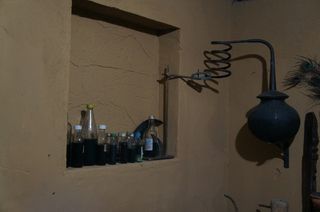
There is more than ayurveda being practiced in Sri Lanka. The country has its own licensed traditional medicine that is passed down from generation to generation. One of Sid’s childhood friends, Suranga, is a doctor of this traditional medicine as was his father and grandfather before him. It is hard to imagine that the reserved, lanky man with a puff of grey-streaked hair was a DJ with Sid in his teens. Now, people with grave illnesses who’ve tested the bounds of Western medicine come to him seeking a cure. We are on our way back to Sid’s guest house when I meet Dr. Suranga on the path between the Coconut Bar and Uncle Emil’s place. Night has fallen, so I can’t see him well but I sense his height and feel his presence. He definitely has presence. You can tell that he knows and understands things that many of us could never understand. The grounds of his private hospital look like an enchanted forest and his outdoor lounge is in the center of a tangle branches and low-growing king coconut trees. He tells us of a patient that came to be cured of AIDS, but when he examines the patient he find no signs of AIDS and tells him so. But the patient insists that he has the illness and it becomes Dr. Suranga’s job to cure the patient mentally through meditation. He says he helped cure a young patient of a rare liver ailment through a personalized mixture of Sri Lankan herbs and meditation. He’s received some referrals from Barberyn, but most have just found him through word of mouth. He likes it this way. It feels like the work of the universe and that he’s meant to help the people who find him. I leave Dr. Suranga’s enchanted hospital with Sid feeling somewhat enlightened, especially now knowing the Sri Lankan name of the flat leaf used in my ayurvedic treatments–eredu.


Speed Boating and Sri Lankan Brothers

For the last couple of days, Sid and Uncle Emil have been asking me if I want to go on a ride in the speed boat. I’d say, “Sure!” They’d swim out undock the boat and gas it up. Sid would ask, “Are you ready?” I’d say, “Yes. Let’s go.” Then Uncle Emil would suggest a test drive first. After giving the boat a few smokey starts and moving slowly back and forth along the reef, they’d realize there was a problem with the engine or a part needed replacing. Uncle Emil would make a call and it would take a day or so for the appropriate fixes to take place. Today, after a watching Sid and Uncle Emil successfully skim along the waves of the Indian Ocean, I finally get to go on that ride.

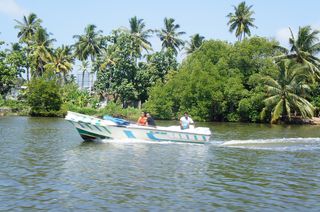
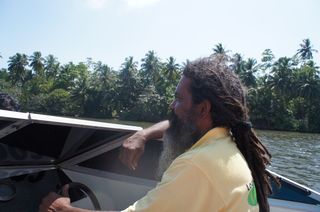
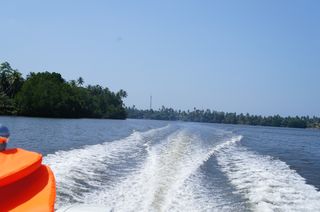
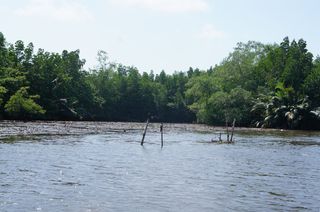
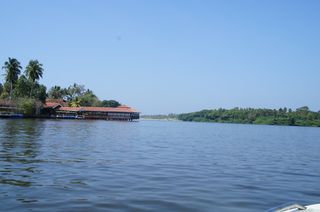
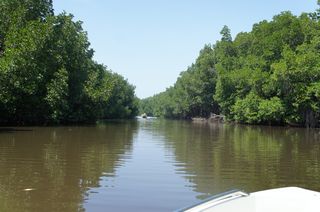
 Sid positions himself in the front of the boat and I take the seat next to Uncle Emil. Sid crouches in the front shouting directions to help Uncle Emil navigate past hidden rocks along the reef and then watches to help avoid rough waves pushing toward the boat. When a large wave approaches we have to circle back towards the shoreline and and try to beat the next big wave to make our way to calmer waters. It takes a couple of attempts and butt-bouncing bumps across choppy surf before we make it. Once we make it past a rocky outcrop that seems to form the opening between the reef, the beach and the sea, we are on the Black River. We cruise past other boats with tourists aboard and river-facing resorts touting their ayurvedic treatments. We make foamy trails through the flat dark water as leafy green trees seem to part before us. I imagine this place is like the Florida Everglades even though, I’ve never been. Sid and Uncle Emil talk of the crocodiles that inhabit the place and they point out the wooden tips of fishing traps with birds resting atop them, along with reeds jutting out of the water that Uncle Emil says is cork. We continue down the river, passing fishermen in small canoes and under a busy underpass carrying cars back and forth through Aluthgama, the sister town to Beruwela and Moragalla. We stop at a batik and leather goods shop on the river and wave at another one of Sid’s relatives who owns the place. As we go farther down the river, the trees start to drip and droop towards us and we have to duck entangling vines. The engine sputters and we pause to figure out the problem, floating in the quite mangroves. With more gas added and a few switches flipped we continue a bit farther and then start the return trip. Back out on the open river, Uncle Emil turns the wheel over to me and I’m thrilled. I’m tentative at first, gripping the wheel tightly and bearing straight ahead. There’s no pressing of the gas or breaking, just steering. Uncle Emil and Sid help me navigate the natural curves of the river. I start to enjoy weaving back and forth and the power of holding the wheel. I have to relinquish the wheel as we approach the place where the mouth of the river and the ocean meet, so that we can tackle the fast-crashing waves on our way back to the Coconut Bar. Sid is crouching again, looking like a horse jockey, shouting to watch out for the waves. It is much harder reentering the reef this time. The waves seem to be relentless, coming faster, rhythmically. We approach, then we are turned back by the foaming, pushy waves. The boat skips and makes hard bounces with each attempt to pass. We finally make it back safely to our lazy reef on about the fourth attempt.

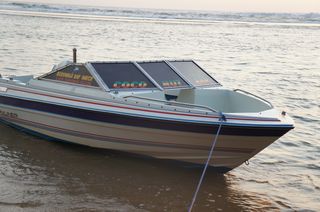
We leave the Coconut Bar boat to rest on the sand as we take to our cane chairs to share a drink and rest in the sun. Besides providing a little adventure, the boat is a part of another service that the Coconut Bar provides, lifesaving. The words Beruwela Bay Watch are tattooed on the side of the boat. No Pamela Andersons or David Hasselhoffs in this lifesaving club, only lifeguards that double as bartenders. Uncle Emil felt the service was necessary after watching one too many tourists get into trouble out on the ocean. He tells me that he wants to connect with other real bay watchers to let them know that there is a lifesaving team in Sri Lanka, too.

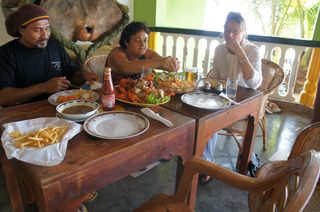
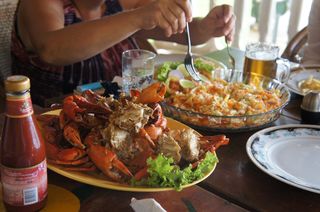
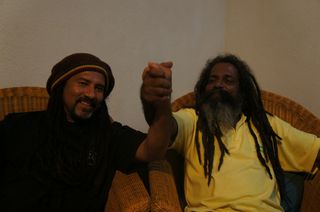
Uncle Emil gathers a few friends for lunch after our river journey. We are joined by his friend Susanna, a German woman who imports his gems and jewelry designs to Europe along with his best friend Bony and his wife who live in Switzerland. I learn that this is a big reunion for Bony and Emil who had a falling out sometime ago, over what, who knows. Bony says they are both very stubborn which kept them apart longer than it should have. You get the sense that these men have been through a lot together and they seem to fall back into an easy friendship with one another. Lunch is quite an international gathering, folks are moving easily from Sinhalese to German and English and we are having fresh crabs and prawns again. Bony has bought his own homegrown spirit for us to taste a mixture of banana, pineapple, mango and coconut wine and it’s got kick. It’s the color of dishwater and reminds me of the “jungle juice” that some guys in my freshman dorm made in a trash can. Having said that, I kind of like it. Bony tells me that he grew up together in nearby neighborhoods, one poor and one well off, but they were friends. Today, they both wear locs and prescribe to Rasta culture and tenets. They are real brothers. Bony asks if we can talk politics. He wants to know about President Obama. He told me that he felt that his election was good for brown people everywhere. He wondered why people in the US didn’t seem to be supporting him. I explain that there are a lot of people that want to defeat him in the next election. He hopes that Obama wins.

I end up spending more time with Bony, Uncle Emil, Sid, his cousin Mahesh, who also works at the Coconut Bar, and his Uncle Sucil. Sid and I wanted to have dinner with his sisters and nieces, but he let them know too late and then they felt they weren’t prepared to entertain. Sid says Sri Lankan women are very shy around strangers, so I hang with the guys. We are at Sid’s guest house, Uncle Emil has bought wine and food from Chuti and we add this to a few dishes that Iresha has prepared for us to make our dinner. It’s the first time that I dine Sri Lankan style, using my right hand to scoop and make small balls of food to pop in my mouth. Sid cranks the reggae, Bob Marley, Afro Blondie and others. I listen to them joke and tease one another in Sinhalese while Sid attempts to translate. I’m not sure that I’m getting the full translation, I’m sure the conversation is more laced with curses and other profanities that they’d like to keep from my ears. It’s cool being in the midst of their camaraderie, even though I don’t understand everything that they are saying. I am most intrigued by the stories of his Uncle Sucil. He’s ex-military and was on the front lines of fighting in Sri Lanka’s recent Civil War between the government and the Tamil Tigers. The Tamils, a minority group in the North of the country, wanted to cede from country and create their own country. Some have said that they are the originators of modern terrorism, employing suicide bombers and other surprise attacks. Sid himself just barely escaped an attack while he was a young student in Colombo. He was riding his bike when less than a mile ahead of him he saw a massive explosion. It turned out to be one of the worst suicide bombings during the war, killing over 300 people. He skidded from his bike and ran from the scene. It’s something he says he’ll never forget. But his uncle bears bullet scars from the country’s troubled past. As the story goes, he saw many members of his troop killed by Tamils and found himself sounded by Tamils along his remaining fellow soldiers. Sid’s uncle decides that he’s had enough and shoots his way out of the entrapment, getting shot himself in the process of escaping. The small man that I see sitting in from of me has the most immaculate manners that I’ve ever encountered in a person, saying excuse me directly to me when he leaves the table, and it is hard to imagine him fighting his way out of a northern Sri Lankan jungle. Uncle Emil says he fought his way out like he was Jean Claude Van Damme.

While Sri Lanka has survived a Civil War that ended in 2009, it still suffers from other small tragedies as we’d learn that evening. Sid’s cousin Mahesh received a call that one of his friends was horribly injured in a bus accident. Sid and I had already discussed how dangerous some of the buses can be. Drivers pack buses that don’t have doors and passengers hang outside in the line of reckless drivers. In this case, Mahesh’s friend was hit by a truck colliding with the bus. Mahesh was visibly shaken upon learning that his friend would loose his legs. The men come together to console Mahesh as best they can. Sid and Uncle Emil are angered that something like this can happen. It’s a sad way to end the day, but a reminder that Sri Lanka still has some growing to do.

Ayurveda and Aunt Chuti

A girl could get used to this Sri Lankan hospitality thing. Sid’s uncle Emil has arranged 6 ayurvedic massage sessions for me during my stay. Folks who know me know I love a good massage. I have a tradition of visiting a spa on New Year’s Day to start the year refreshed and relaxed, so this is exactly what the doctor has ordered. The ayurvedic and traditional Sri Lankan medicine doctor in specific.

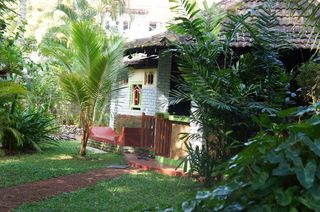
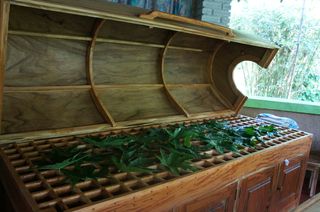
In Uncle Emil’s garden paradise sits a small tiled-roofed house that he’s dedicated to private spa treatments. There are two large wooden treatment tables that Sid says are from a special Sri Lankan wood and a wooden steam table. I watch as the doctor and her therapist carry large bottles filled with oils, dark brown and caramel in color. I hear all kinds of mixing and preparations taking place and it makes me anticipate this experience all the more. When I enter, the doctor, Princy and her assistant therapist, Narangela, are all smiles and dressed in traditional saris. They explain that I will have a head massage and face massage followed by a foot massage and a full body massage. I will end the treatment on a bed of herbal leaves on the steam table. When I ask about the ingredients instrumental in my massage, I get one response, herbal leaves. This is when I wish I had an interpreter in the spa with me. It seems that it’s hard to translate some of the herbs being used in my treatment from Sinhalese to English, but the doctor does a better job of explaining what the treatments do. The oils in combination with the steam bath will sweay away bacteria and toxins in the body and generally make me more healthy. I’m up for that.

 Narangela is tentative with my head massage at first. She isn’t sure how to navigate my hairstyle, but she gets into a good rhythm moving from head to neck and shoulders. The face massage includes a grainy scrub followed by something that feels like a waxy salve. The doctor handles my foot massage. As I’d learn later from Dr. Princy, the feet are very important in ayurvedic medicine. Pressing various points along the feet, toes, the fleshy parts and heel, influence the health of other parts of the body right up to the head. Both doctor and therapist go to work on me for the full body massage. I’ve never had two people give me a massage before, but I can see the benefits. It felt a bit like a symphony. The doctor was the conductor, she’d start the movement on one side, a vigorous stroke up and down left leg, the therapist followed until they were both in synch. This continued up to midriff, arms and back. When I am throughly dressed and drenched in herbal oils, it’s time for my steaming. Princy lifts the hood of the steam bed to reveal neatly arranged flat green leaves on a grid of wood and I feel the instant release of heat. She instructs me to lay on the leaves, leaving room for my head to jut out of my steamy enclosure. I imagine what a roast chicken must feel like. Then, she puts a towel between my neck and the opening of the steam bed and asks, “Is warm OK?” I nod, adjusting my legs inside to avoid extreme steaming. Princy and I chat for a bit and I learn that she has been a doctor of ayurvedic and traditional medicine for six years. She does treatments at the ayurvedic resort, Barberyn, next to the Coconut Bar, and works with private clients. She tells me that she worked with  Japanese ex-boxer who could no longer turn his head or walk without a cane and after several days of treatment she improved his range of motion. She said there are no side effects with all natural medicine and I feel  all of the holiday food fixins drip from my body and onto the hot stones below me. I look forward to several more days of this as I wave good-bye to my natural healers.

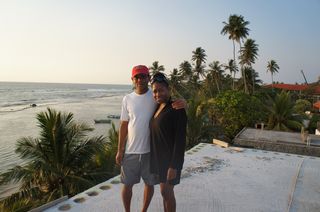
I return to the Coconut Bar for a post-spa refreshment, coconut water straight from the coconut, followed by a breakfast of Sri Lankan breads, including a crocodile bun sprinkled with brown sugar, strawberry jelly filled pastries and mini banana muffins. More Indian Ocean bathing and lounging ensues. A stream of Coconut Bar fans flow through the bar for a drink, meet friends or just say hello to the proprietor. I meet a German woman who splits her time between Germany and Sri Lanka, embarking upon a new career as an ayurvedic therapist. A trip to Sri Lanka years ago inspired her new profession and she studied at the Barberyn resort next door, known for its ayurvedic programs and institute. It sits on property that Sid and Emil’s grandfather used to own. I’ll continue that story in a bit. I also meet Sonya from Scandinavia and I tell her that I traveled in Denmark this summer. She grew up in Denmark, but lives in Sweden now. She’s made Sri Lanka her new winter vacation spot after she soured on winters in Spain. She said after the she’d been robbed three times by roving Russian gypsies, she’d had enough. I told her I’d seen them at work in Barcelona myself. After a pleasant conversation, I fondly remember the hospitality of my Scandinavian friend Aneliese this summer. As the sun begins to set the cane chairs at the Coconut Bar begin to fill. Uncle Emil boasts that his place is the best place to watch the sunset. His guys are busy getting a drink in every hand as Germans, Brits, Swiss, Scandanivians, Sri Lankans and an American settle in to watch the sun’s slow decline. Uncle Emil, Sid and I take a tour of the construction atop the bar which will become an extension of his guest house, featuring three floors of apartments with stunning views of the Sri Lankan sunset. Uncle Emil and Sid point out the sprawling Barberyn estate next door and tell me that their grandfather used to own the land and sold it for nothing, which they say was for about $1,000 years before Sid was born. They are angered that someone else owns the land they still see as theirs, but it seems to solidify Uncle Emil’s determination to make the Coconut Bar compound into a feel-good destination. He often says, “I just want to be happy and I want to make other people happy.” I want the same for him as we all stand on the top floor of his dream and look out at the ocean.

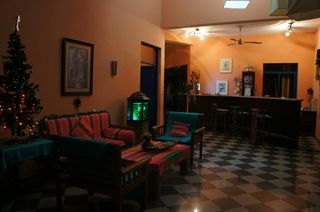
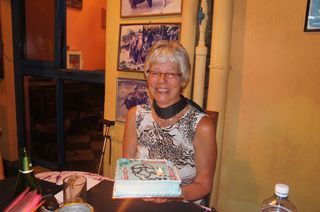
Earlier in the day, we told Uncle Emil that we wanted crab for dinner. They were caught just up the beach, delivered to us straight away and dropped into a boiling pot in the back. By the end of the day, they had been sufficiently cooked and it was decided that they would be taken to Uncle Emil’s sister Chuti for their final preparations. Stories of Sid’s Aunt Chuti border on legendary. She’s also a hotelier, owner of theBavarian Guest House with her husband Denis. Back in the day, she ran a discotheque at the guest house and Sid at the ripe age of 15 was the DJ. Apparently, Chuti has quite a temper, but I later learn that this is only if you cut up and act a fool. Not unlike a strong African-American aunt, and it seems Sid and his uncle have been on the wrong side of her temper more than once. When we arrive at the Bavarian Guest House there’s a nativity scene still ablaze at its entrance and a Christmas tree twinkles in its lobby. Uncle Emil takes me to meet his sister in the kitchen where she’s hard at work amidst cooking pots, preparing dinner for her paying guests. She greets me kindly, but seems to have a few choice words for her brother who has dropped in at the most inopportune time. We sit at a table in the hotel’s courtyard and have a Lion, a Sri Lankan beer, and I hear more stories of how Aunt Chuti can so nice and so mean at the same time. We notice that Sonya from Sweden happens to be staying at the hotel and she is celebrating her birthday. She told me on the beach earlier that she was celebrating her 71st. I go over to say hello and take a birthday photo for her. She seemed ecstatic and living life as a “pensioner” or retiree to the fullest.

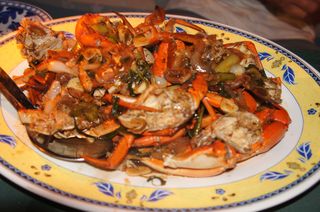
 Soonafter, Chuti delivers a feast of potato salad, mixed salad, chips and the most flavorful crab ever. She said that she essentially stir fried the boiled crab in soy sauce, leeks, garlic and ginger. The sauce was a perfect compliment to the sweet crab meat and we sit in silence for a bit, aside from the sound of cracking crab legs and the sucking of succulent meat from its shell. Finally, I was able to get Chuti’s side of the fabled tales about her. She explains that when Sid and Uncle Emil show up they’ve already had a bit to drink and can get rather loud, which is when she has to put them out. It turns out that Uncle Emil may be a poor influence on her husband, too. When the two of them went out one night they returned without the front bumper of the car. Everyone has their limits and tomfoolery is Aunt Chuti’s. She and I hit it off famously though and  she tells Sid to bring me back for a traditional Sinhalese breakfast. I can’t wait.

Blessed with Sri Lankan Hospitality

Boarding Sri Lanka Airlines feels like I’ve already landed in Sri Lanka. A flight attendant dressed in a traditional sari greats me with a bow and the words “aayu-bowan,” which I later learn means “be blessed”in Sinhalese, the national language. Each attendant wears a low bun, flawless make up and the most pleasant demeanor. I have the good fortune of sitting next to Vishaka on the 10-hour plane ride. She guesses that I’m American and that this is my first trip to Sri Lanka. She explains that she’s returning to her home country after visiting her eldest son in graduate school in Fargo, N.D., and she immediately offers up her home and a tour around Colombo. Vishaka is the perfect example of Sri Lankan friendliness and hospitality. I’m visiting Sri Lanka because my friend Sid, known as Sujith in his birth country, has been hospitable enough to invite me for a visit, put me up in his family’s guest house and take me on a tour of the island, about the size of West Virginia.

I met Sid almost exactly a year ago on New Year’s Eve at a party while standing in line waiting for the bathroom. I don’t remember exactly how the conversation went, but he told me that he was from Sri Lanka, he thought I was nice and wondered if we could hang out sometime. Since then, he’s been my unofficial ambassador to Sri Lanka, making the only Sri Lankan dish he knows how for me (biriyani), giving me a lesson in cricket at the only cricket field in D.C. near the Tidal Basin. I still don’t get the game, which isn’t at all like baseball by the way, but I appreciated the effort. Sri Lanka was host of last year’s cricket world championships, an extreme honor for the country’s national pastime. Sid also made sure that I got a taste of Sri Lanka when I traveled to London last year and I met his sister Iresha, who made me a delicious dahl.

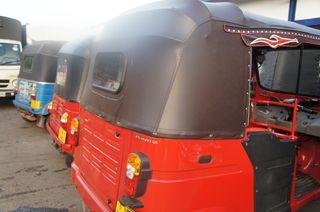
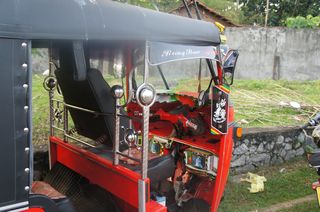
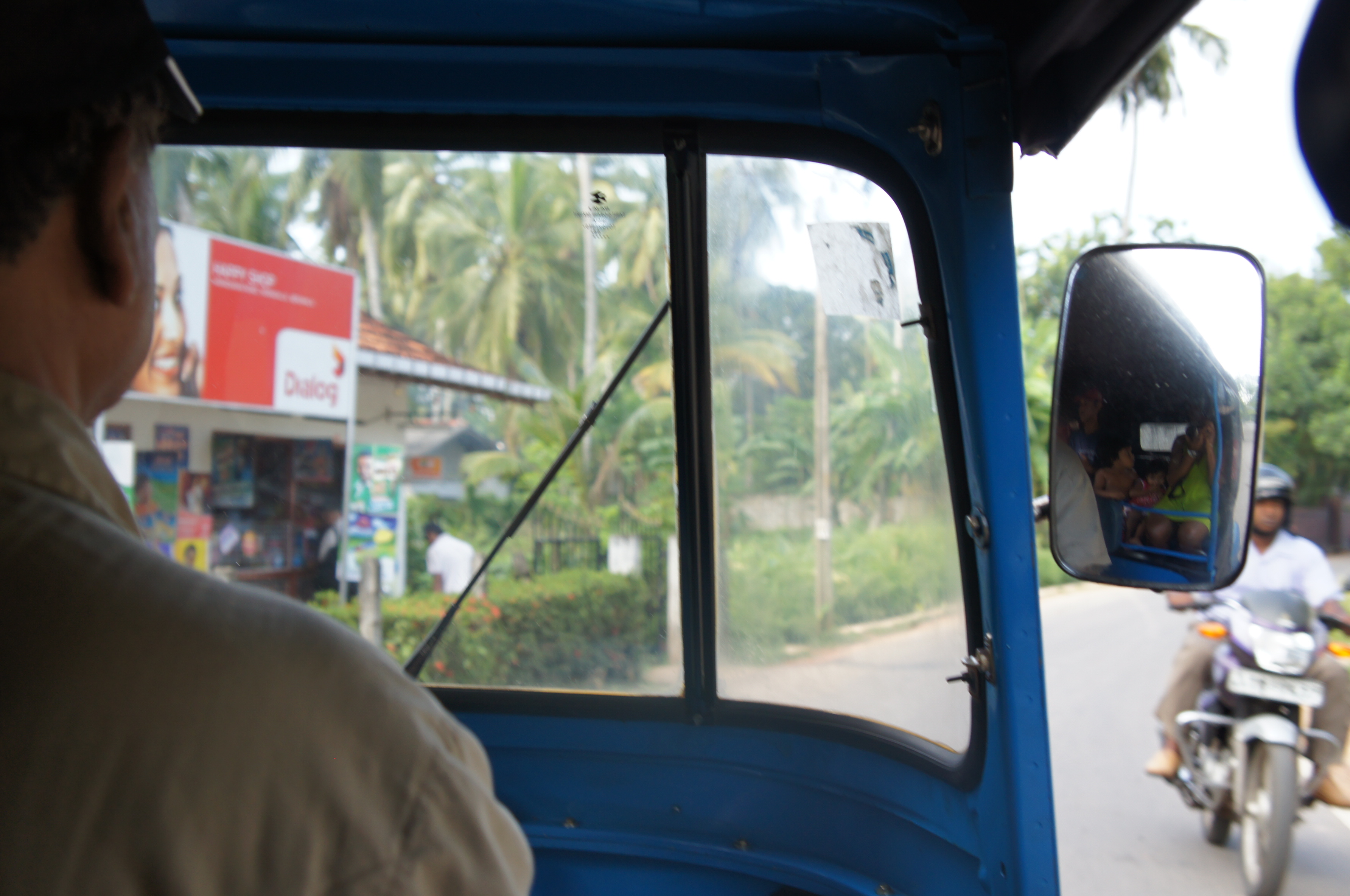
So, when my plane touched down in Sri Lanka’s capital, Colombo, I had some sense of the culture that I’d encounter and friendliness was a given. I ran into Vishaka again at baggage claim where she made sure that I was OK and reminded me to call her to visit while I was in the country. Then, I hopped into a white minibus with Sid and his cousin Pradip, who was driving.  Pradip is what you might call a defensive and maybe a slightly aggressive driver. But you kind of have to be here. The two-hour drive from Colombo to Moragalla was an exercise in dodging and darting to avoid buses, dump trucks and other large vehicles that insisted upon driving on the center line rather than choosing the left or right lane. Honking is necessary to express “get out of the way” or what the “heck are you doing?” A man on a small motorbike looked at us incredulously after we honked at him for hogging the road. Shortly thereafter we spotted a trio of cows meandering down the median of the busy thoroughfare. Sid said we weren’t even driving during rush hour.  Then there are the tuk-tuks, small three-wheeled, open vehicles that Sid said were like mosquitos. “They’re everywhere.” Some of them are pimped out with airbrushed photos inside or festive lights on the outside. We were driving so fast that I didn’t get a picture of one, but I’ll make it my mission when we go back to Colombo later in the week. The tuk-tuks were in full force on Galle Road along Colombo’s main open-air market, which was already bustling around 5:30 in the morning. Lights were a blaze in stalls selling cell phones and sim cards, while coconut vendors set up their carts on almost every corner. School children wore pristine white uniforms as they waited for buses to take them to school. The girls wore bright colored neck ties with their crisp white uniforms.

When I first spot the Indian Ocean, an early morning haze rests over it. We are still on Galle Road and people are walking and jogging alongside it like Chicago’s lakefront. An open-air train follows the ocean North or South with its conductors dripping from its doors and people jostling, arm to arm inside. I’ve been reading Paul Theroux’s Ghost Train to the Eastern Star, where he takes a train in Sri Lanka from Colombo to Galle. A ticket teller tells him that he doesn’t need a ticket to board the train, or a seat assignment, just push. I can tell that Theroux was right on with his description.  I ask Sid about low-lying shacks on the side of the road. He tells me that this is like Sri Lanka’s projects. The traffic starts to thin, the road narrows and the houses and yards get larger. Soon we are in the town of Morgalla where Sid’s family lives. I’m staying in the guest house just behind the family home, a cozy 5 bedroom bungalow with a raised pool, surrounded by mango and coconut trees. The time difference between Sri Lanka and the US is insane. By now it is about 8 am Tuesday in Sri Lanka, but late evening Monday in the US. I consider taking a nap, but we decide it’s best to nap on the beach and we head to Sid’s uncle’s beach bar, guest house and gem shop.

Much of Moragalla seems to be home to the da Silvas–aunts, uncles, cousins or just people that you call cousin. It definitely has a Southern small town feel. As we take the 10 minute walk to his uncle’s place, Sid greats all manner of first and second cousins along with some people that have known him since childhood, but that he struggles to remember. He points out the homes of aunts, uncles and even his brother-in-laws family home. Everyone seems to live within a 10 block radius of one another. We pass some modest low-lying homes with tile roofs and other colorful two-story homes with gated entryways. Almost all homes have expansive yards. Sid says most of the people here are well-off because they are in the hospitality business as much of his family is.

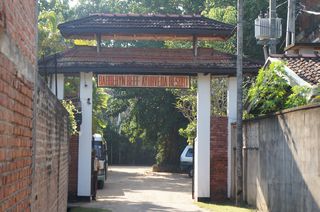
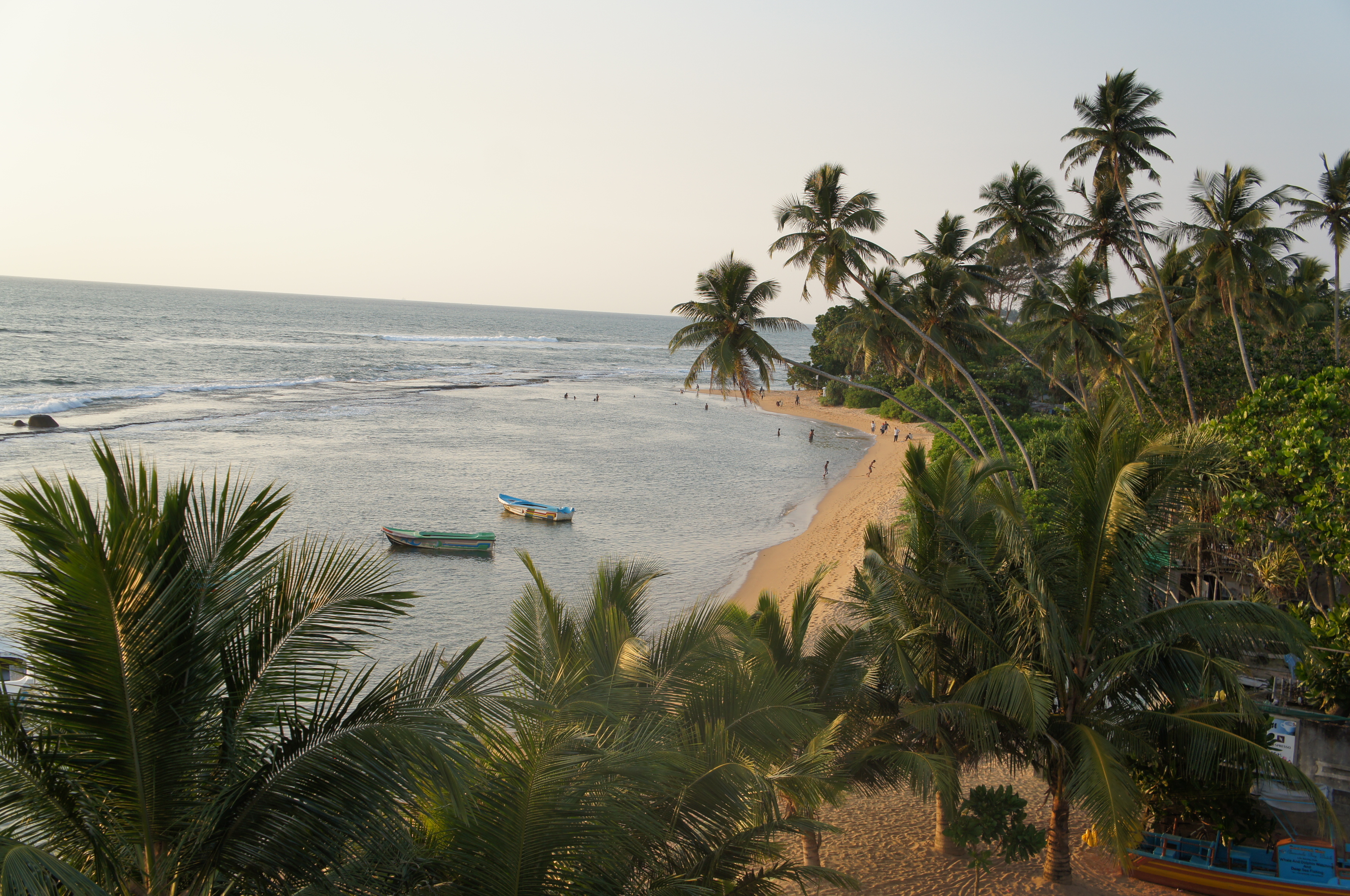
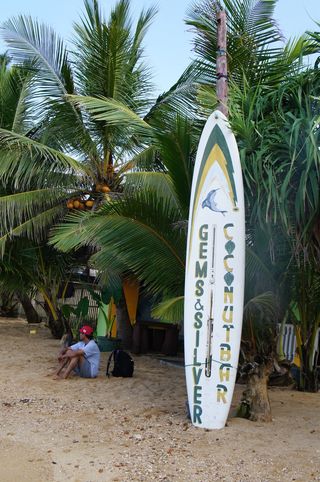
Sid’s Uncle Emil has created a small paradise for himself. As we enter the grounds of his home and guest house, we are surrounded by lush tropical foliage broken by gravel pathways. His home is painted in festive pastels and surrounded by a veranda, we pass through a building under construction and Sid explains that it will be the hotel of yet another uncle, then we are on the beach. His Uncle Emil’s bar, known as theCoconut Bar, is situated on a lovely patch of sand facing the Indian Ocean. His uncle isn’t there when we arrive, so we take a stroll down the beach for a bit, along an even stretch of calm water. The rougher waves of the ocean crash over a reef, creating a natural pool along the beach with water that feels like a warm bath. On our walk we’ve been joined by a couple of Uncle Emil’s dogs, the leader being Beru. He’s a brown and black fuzzy mix of something and has a tail with a curl on the end. He almost marches confidently a head of us, stopping when we stop and looking back to be sure we are still following his lead. Sid points out small rocky outcrops peaking out from the ocean. Some are small islands to be visited. Small hotels and guest houses line the beach, some are under construction or in some level of repair. This stretch of Sri Lanka was hit fairly hard by the 2004 tsunami, particularly the Coconut Bar as I’d later learn.


When we return from our walk, Uncle Emil still hasn’t returned so Sid leaves me on the beach for a bit to go find him. As I sit, a number of Sri Lankans pass by and look at me curiously. They all smile and nod, but I am sure my cornrowed hair is something they rarely see and they aren’t sure what to make of me. Finally, a trio of guys walk by and one calls out, “Good morning.” I greet him in return. “Where are you from?” I reply. “Oh, you look Jamaican,” he says. And, then asked as if I’d dropped out of the sky, “What are you doing here?” I explained that I was visiting my friend Sujith and asked if he knew him. He nodded and the trio continued on its way. I’ve noticed the curious looks since I boarded the plane for Sri Lanka. Fellow passengers stole looks as I made my way to the bathroom. On the ride to Morgalla, a group of students stared outright. I waved and they smiled. It’s a friendly curiosity. Sid explained that Sri Lankans don’t see many African-Americans or Americans in general. They are used to the Brits, Germans, Dutch and now Russians who vacation there regularly.

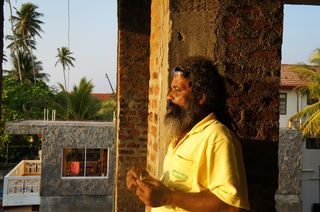
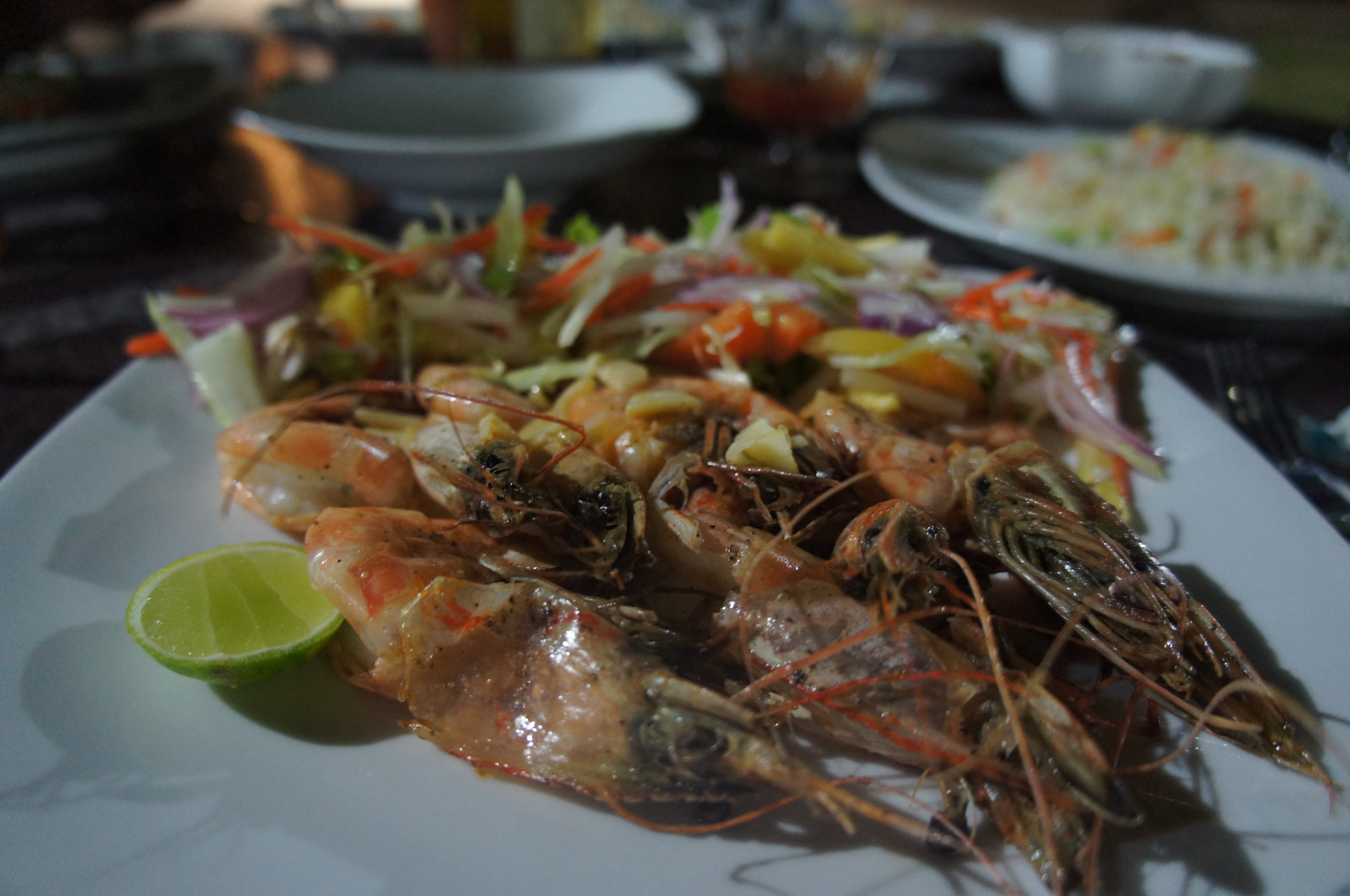
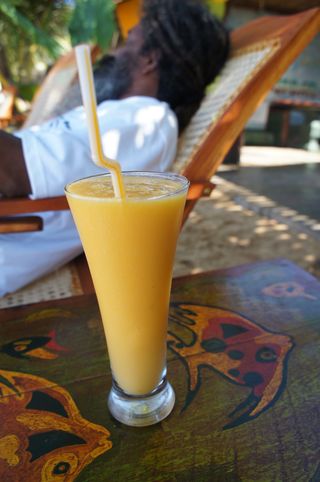
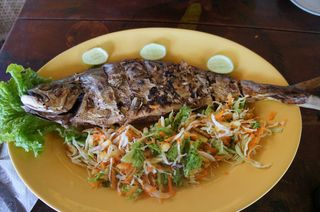
When I finally meet Uncle Emil, I can understand why the trio of guys may have thought I was from Jamaica. Uncle Emil sports locs and a long beard peppered with grey. The Coconut Bar has hints of a Jamaican decor with yellow, red and green accents. Uncle Emil has an easy smile and greets me with a hug. I can see why he’s Sid’s favorite uncle. We eventually settle into cane chairs with drinks. I have a fresh mango juice. I’d already had coconut water straight from the coconut earlier. It seems the current Coconut Bar is a shadow of its former self, suffering a direct hit from the 2004 tsunami. Sid’s uncle explains how on that day he was sitting in a cane chair just as we are now when he saw the ocean recede and a massive wave approach. He said it happened in an instant. He was engulfed and tossed about as if ina washing machine and left to live atop the coconut tree next to his decimated bar. His bar, guest house and diving school suffered a million dollars in damages. He left the experience determined to rebuild and rebuild bigger. Uncle Emil is something of a renaissance man. His main business is as a gem exporter and jewelry designer. He also has a young tea plantation. And, then there’s the hospitality thing. He proceeds to offer up drinks and food. I have a pina colada with fresh coconut milk, I have a whole grilled golden mackerel for lunch with a delicious mixed salad containing sweet bits of pineapple and later a fruit salad of mango and banana. All of the ingredients recently plucked from the sea or a tree.

After a full day of napping, bathing in the ocean and eating. There is more eating to be done. We head back to Sid’s home where I greet a bevy of aunts, sisters and nieces. They parade through the door of the home and onto the porch shyly, and I kiss each on each cheek. Iresha, Sid’s sister who I visited in London is one of them. I try chatting with one of Sid’s nieces studying English in school and she shyly talks about her recent trip to Australia before darting back into the house.

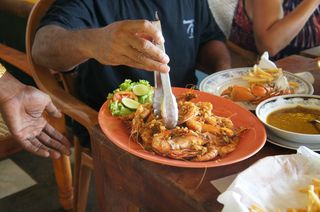
Uncle Emil picks us up for dinner and we head to another family outpost, the Fresh Restaurant, where we meet more of Sid’s cousins, a pair of brothers. The eatery is a part of a hotel and sits on expansive piece of beach. It is is the epitome of beach casual with plastic chairs and rounds and strings and we sit where we like. Uncle Emil orders a bottle of white wine, and fresh french fries, or chips as they call them here, are delivered to the table. Sid, his uncle and cousins start the story telling and joking in Sinhalese, with classic Sinhalese tunes playing in the background. The songs sound like salsa at times, then Bollywood and even tinges of reggae.  Maybe the salsa sounds come from the country’s Portugese heritage, Bollywood from the proximity to India and reggae, just because Sri Lankans love reggae. After a couple of drinks one of Sid’s cousins breaks into song and we polish of plates of prawns the size of my hand and tasty fried rice made with basamati and vegetables. More wine is poured and I’m pretty sure that I’m going to like this place.

Barbados Postscript 2: The Culinary Capital of the Caribbean Shines

Barbados Beach

When we step into the Azul Restaurant at the Sea Breeze Hotel in Christ Church, we are met with the most stunning view of the Caribbean we’ve seen yet. It almost distracts us from the reason that we are here–to see Marcus Samuelsson work some magic in the kitchen. We’ve seen him win “Top Chef Masters” and go knife to knife with the best on the “Iron Chef” and here he is in the flesh, preparing ingredients, lifting pot lids and consulting with his sous chef before his cooking demo begins. He’s purposeful, but laid-back in his white t-shirt emblazoned with the logo of his hot Harlem restaurant, Red Rooster, with red high-top Chuck Taylor’s. We anxiously await good food and any pearls of wisdom about good food. Samuelsson doesn’t disappoint.

Barbados BeachBarbados Festival

Barbados FoodHe starts by toasting the bun for a simple fish sandwich with a bit of butter in a pan. He says it is little things like this than can make a dish special and that taking care can be one of the most important ingredients in a dish. Taking care becomes a theme in his demo. Taking care to choose the best quality meats. Taking care not to waste food. (He drops the statistic that if people in developing countries stopped throwing out 5 percent of what they eat it could stop world hunger.) Taking care to make vegetables more palatable to our children. It occurs to me that maybe Marcus Samuelsson is something more than a chef. He’s like an evangelist for eating healthfully without sacrificing taste and he’s not too preachy about it. I think I can manage toasting a bun for a fish sandwich, but the crispy fried capers he’s adding may be a bit out of my league. Gai managed to score a seat in the front row and get the first bite of the fish sandwich. She looks like she’s in heaven.

My side of the room gets lucky with his second dish, lemon ginger chicken with basamati rice. The skin on the chicken is golden brown and crispy, and the first bite is bursting with tanginess. It is positively yummy. As we taste, he talks about using the remaining chicken carcass for soup or chicken stock to use for future meals. If I made chicken this good I don’t imagine there would be much of a carcass left to re-purpose, but I get his point. Now, Samuelsson seems anxious to get out from behind the island he’s been cooking behind. He wants to answer our questions about cooking. Gai wants to know why restaurant recipes she tries at home don’t taste the same. Samuelson suggests good pots and pans. A cast-iron skillet is a must and using the right amount of heat when cooking. Someone asks about the healthiest oil for frying. He suggests grape seed oil. Another asks the best the way to tell is your meat is really organic. He says you can’t, really. But you should develop a relationship with your butcher and find out where he’s sourcing his meat. Someone else asks where he likes to eat in Barbados and he says Oistins, entreating others to go and enjoy the local food and culture. I find myself liking the guy, especially watching him take care with his fans, signing books and posing for photos.
Barbados Chicken Barbados Signings

Barbados Entertainment Barbados hug

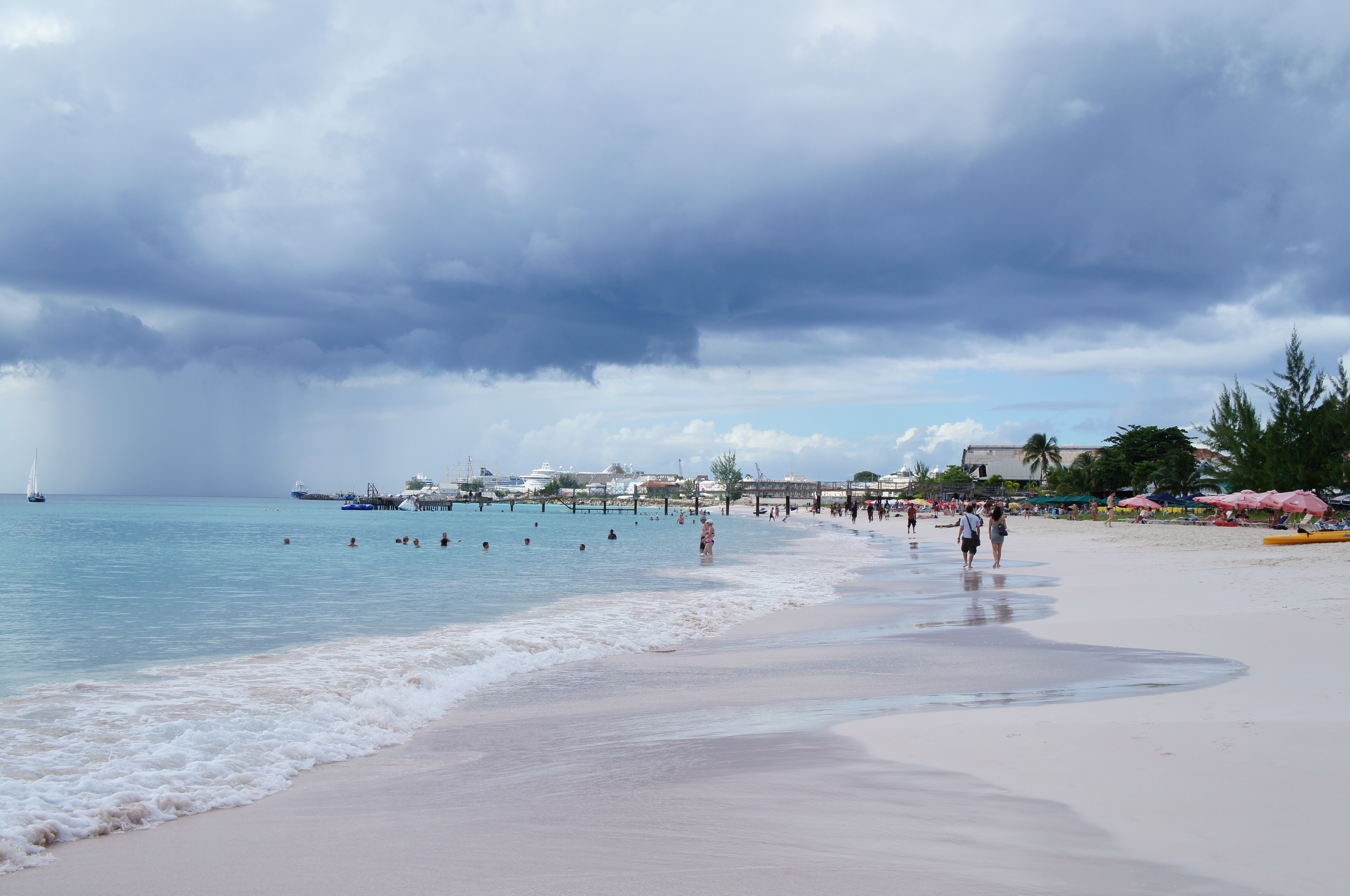
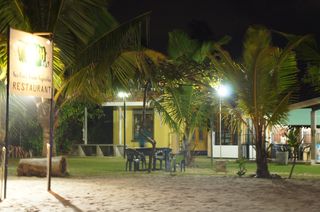
After our brush with a celeb chef, we decide to stay on the south coast of the island and visit The Boatyard, a popular beach bar and club, particularly with the cruise set. In fact, we find ourselves in line behind a cruise group on a day pass. They get instructions and their required wristbands to enter from their cruise trip leader. It costs $10 US or $20 Bajan to hang out at The Boatyard. The cost goes toward food and drinks. Not a bad deal. We are forced to hang at the bar for a bit because a torrential downpour followed our arrival. The decor is old Caribbean shipwreck and perfect for a place that serves strong rum drinks called the Sharky. Before long the sun is back at full strength and we commandeer a few beach chairs, but the pale blue water is irresistible. Fellow traveler Walter from Silver Spring and I decide to head straight for it, followed by Miss Joyce from Philadelphia. The sand was smooth and rock-free, unlike our west coast beach at Tamarind. The water was cool at first, but transformed into a soothing bath and we contentedly bobbed up and down in lapping waves, watching younger beach-goers run down a pier and fling themselves from a swinging rope into the ocean. Walter says if he gets a few more drinks in him, he’d do it, but we decide to go for a walk on the beach instead. All manner of boats pepper the seascape from dingies to yachts and glass-bottomed boats to cruise ships. We spy a group of people in the ocean, maybe 15 or so, who seem to be in a formation, heads peeking above the water. It looks like they are in the midst of some kind of odd ritual and we are for some reason reminded of the movie “Cocoon” when retirees think they’ve discovered the fountain of youth in a pool, but it’s really just the alien pods init. We hope their water gathering is just a happy coincidence.
Barbados Beach Barbados Boatyard

The clouds return and we head back toward our resort, driving through Bridgetown, the capital of Barbados on the way. This is where everyone is. It’s Saturday and locals have packed the streets, shopping and running errands or just getting ready for parties that evening. The barber shop is packed with men getting their heads cut. A man pushes a cart overflowing with coconuts up a hill. Two men with locs wrapped around their heads in tall beehives are engaged in an intense debate in front of one store. The store next door has a card table filled with perfumes, lotions and hair oils out front. I want to hop out of the van and mix and mingle a little and a few of us want to come back to do just that. Our van driver turns out to be a font of information taking us through US Attorney General Eric Holder’s neighborhood. Few of us knew he was of Bajan descent. We even pass a building with his name on it. Our driver points out a cheery yellow building that turns out to be a housing project and we all say we wouldn’t mind living there. He takes us down Peterkin Road, where blacks weren’t allowed to walk once. Their white employers would drive down to the end road to pick up their black employees and take them to the homes where they worked. And finally, as we approach our hotel, he shares that Tamarind was where Harry Belafonte filmed the controversial film “Island in the Sun,” one of the first films depicting an interracial romance. I found this particularly interesting having just watched the Harry Belafonte documentary on HBO. I love learning cool bits of trivia like this while traveling.

Barbados Tamarind

 We have a few hours before we head to our next festival event, so a few of us decide to head to The Roti Den, just down the street from the hotel. We saw the little painted yellow house when we first arrived and a few other folks traveling with us had already sampled the roti, giving them good reviews. The Roti Den can hold about 5 people max. I know this because the 5 of us were elbow to elbow in the place. As we start to place orders with the young woman in a hair bonnet behind the counter we learn that they are out of chicken, which is what I wanted. I settle on beef and potato and others order chicken with the bone in. We watch her lay out each tortilla-like wrap, add a savory filling and fold it in on itself. Another woman brings out what looks like a bowl of flour and when we look up balls of dough with a ground yellow meal in their centers are lined up in a neat row, the beginnings of the roti wraps. When I get back to my room, I am anxious to try my roti. I’ve never had it before and I figure this is the place to have it. As I sit on my veranda, I peel back its foil wrapping and take a bite. The potatoes are good, well-seasoned but not spicy. The beef is another story. It was tough, chewy and sinewy. I would hear from other folks that went on the roti run that the bone in chicken was really boney and my mind turns to the roosters that we passed on the side of the road on the way to The Roti Den. This was the first culinary miss in Barbados.

Barbados Cooking The Roti Den

But our experience at the festival’s Ambrosia event later that evening erased any memories of chewy beef or scrawny chicken legs. The Lion Castle Polo Estate sits atop a hill overlooking St. Thomas Parrish’s twinkling lights below and the estate is awash in purples, blues and greens, the colors of the festival. It’s almost magical. We aren’t sure which way to turn when we enter the hall. There are wine tastings in the center of the room and food stations featuring Bajan and celebrity chefs line the room. We scatter in a food frenzy looking for what we want to taste first. I start with a flavorful and colorful tuna tartare, dotted with beads of red, green and orange-hued fish roe and garnished with a crisp plantain chip. My second bite was more like a meal with a healthy piece of lamb chop accompanied by a cheesy potato side. I connect with Gai and Lorna and we hit the stations of all the chefs we’ve been watching and wondering about. Paul Yellin is a celebrated Bajan chef known as the Rhum Chef and for putting up the best plates in Barbados. He’s caught the attention of food critics off the island, too. He catered President’s pre-inaugural dinner at Union Station in DC, so we look forward to his dish. He serves us a delicious piece of pork belly over his take on the Bajan national dish cou cou, a mixture of cornmeal water and okra. His seems to have yucca or plantain in it as well. It is a scrumptious mix. We aren’t as impressed with Marcus Samuelsson’s offering at this event. It seems to be his take on pork and beans, featuring a thick piece of spicy pork bacon on top of red beans with a coleslaw on the side. The bacon was a bit too spicy for my tastes. I wish he’d made more of that lemon ginger chicken we had earlier. Then we make our way toMing Tsai‘s table. The former Food Network chef and owner of Boston’s Blue Ginger restaurant is in rare form. You could see why he had his own show. He’s got jokes for everyone. We learn when we reach him that he’s really got to go, as in use the facilities. He’s pretty open about it. Asking staff what he’s got to do to get a bathroom break and threatening to go outside the event’s tent. He’s being funny, but the poor guy is serious. He manages to serve us our ahi tuna, seared before our eyes with some sort of hot savory liquid and topped with crunchy, sesame rice. It was fabulous and he appreciates our praise.

Ambrosia Ambrosia2

Tuna TarTare Lamb Chop

Ming Tsai Traveler, Me, Chef Paul Yellin

This event seals Barbados’ title as the “Culinary Capital of the Caribbean,” per Food & Wine magazine, with Bajan chefs representing along with world-reknowned ones. At this point, I’ve probably consumed 7 or 8 plates of food and I feel gluttonous. So, I cut myself off from food and get a rum and coke from the Mount Gay Rum area, instead. Mount Gay is the oldest rum in the world, founded in 1703 and it’s got a smooth taste, so smooth I can barely taste it. I start to wander around and really take in the scene. That’s when I spot Tom Colicchio from “Top Chef.” He’s deep in conversation with someone so I linger close-by waiting for a break in conversation before I make my move for a photo. I’m not sure what reaction I’ll get because he comes off as kind of surly on “Top Chef” at times. But a broad genuine smile broke out across his face when I told him I was a fan of the show and asked to take a picture. I’m sure he’d been told this very thing hundreds of times, but he showed no sign of annoyance. Further celebrity spying is rewarded when we run into Marcus Samuelsson’s model wife, Gate Haile, who is striking at 6-feet-tall. She’s with Damaris, our dancing model friend from Friday night, and when I ask for a photo they strike the perfect pose on cue, like they were born to give face. Maybe they were.

Strike a Pose

Ambrosia4

 So, a few of us hadn’t quite succumbed to a food-induced coma yet, and we decide to keep the evening going with a trip to the Bajan party spot, St. Lawrence Gap in Christ Church. Every city has a place like St. Lawrence Gap. It is the place where locals come to unwind listen to good music and have a drink and where tourists come to let their hair down. In DC, it might be 18th Street in Adams Morgan. Several bars and clubs line a section of the street and we decide to visit the Reggae Lounge first. It’s a funky spot.

The long green bar features a painting of a Medusa-haired woman and there are colorful chalk drawings along its walls, one exclaims “Irie.” We take a look at the drink specials on a chalkboard and wonder about a wine called Jagra, so we ask for a taste. It tasted like Robitussin. There’s no other way to put it. I opt for another rum and coke and feel compelled to take a picture of the Jagra bottle which boasts that its contents were made with “authentic horny goat weed.” I’m glad that I decided to stick with a rum and coke. The Bajans outnumber the tourists here and we hear more hip-hop than we hear reggae. A few of us make our way to the dance floor where a big video screen hangs. When Lil’ Wayne appears, the crowd goes nuts. There’s a guy that we are certain wants to be Lil’ Wayne with tight jeans sagging and locs flying. Once again, I am reminded of how universal music is and it makes me smile.

The Bajan-to-tourist ratio is flipped at McBride’s, the club next door, and the music is solidly ’80s pop. There is much better people watching here. We are particularly intrigued by a man in a pin-stripped zoot suit complete with fedora and chain hanging from his waste. He could have been one of the regular dancers on “Soul Train” back in the day with the way he commanded the dance floor. There was some spinning, and some poppin’ and lockin’, especially since they were playing “There’s No Stoppin’ Us” from the movie “Breakin’ 2: Electric Boogaloo.” The DJ really went back for that one. Then, there was a woman who felt so weighed down by her purse that she decided to wear it around her neck instead of on her shoulder, or maybe she’d imbibed a bit too much. We watched in disbelief as she attempted to pull a uniformed police officer onto the dance floor. When that didn’t work, she thought she’d try to make him smile by physically putting her fingers at the corners of his mouth and forcing a grin. We were sure we were about to witness an arrest, but the officer kept his cool and the woman with the purse around her neck gave up and started dancing with the zoot-suited man. It’s close to 3 a.m.; we’ve gotten an eyeful and we’ve had very long day, so back to sweet Tamarind we head.

Barbados Late Night  Barbados Dancing

Barbados Designs

 Jagra

Purse is behind her hair Reggae Lounge