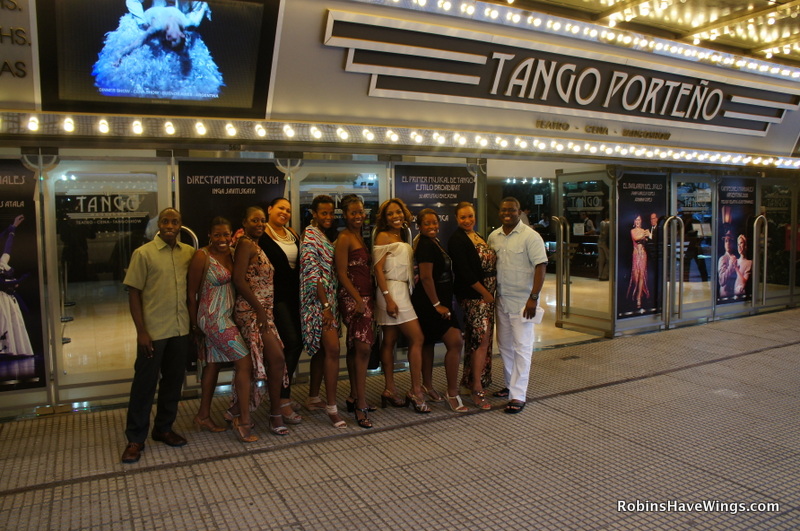
Our First Tango and Last Days in Argentina

It’s the morning after our tango class and show at Tango Porteño in Buenos Aires. Gia dubs Alan and I Mr. and Ms. Tango, sharing how well we danced together with Luis, who is at our hotel to escort us to the airport for our return trip to the U.S. Luis gives a naughty gaucho laugh upon hearing this, because as everyone knows, tango is a very passionate dance and his Argentinian mind leads immediately to naughty thoughts. The tango has definitely awakened something in Alan who is making it his mission to take more tango classes when he returns to the states and I have to say I’m pretty excited, too. I’ve always been a fan of dance, taking ballet and tap as a kid, African dance in college and traveling to Cuba to learn salsa and Afro-Cuban dance. And, anyone who knows me knows that I’ll get on a dance floor in a minute, so this tango thing is right up my alley and apparently Alan’s too, so we turn out to be excellent partners.
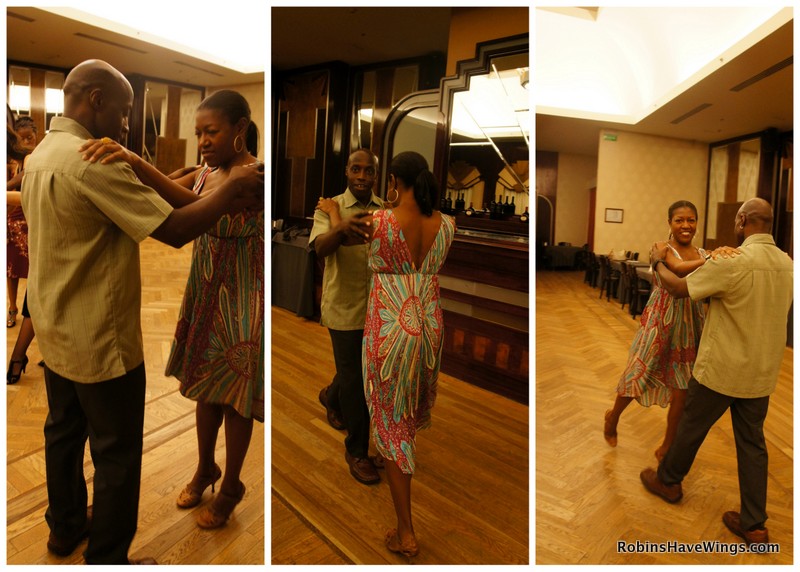
It takes 10 to tango
Mr and Ms. Tango work the dance floor

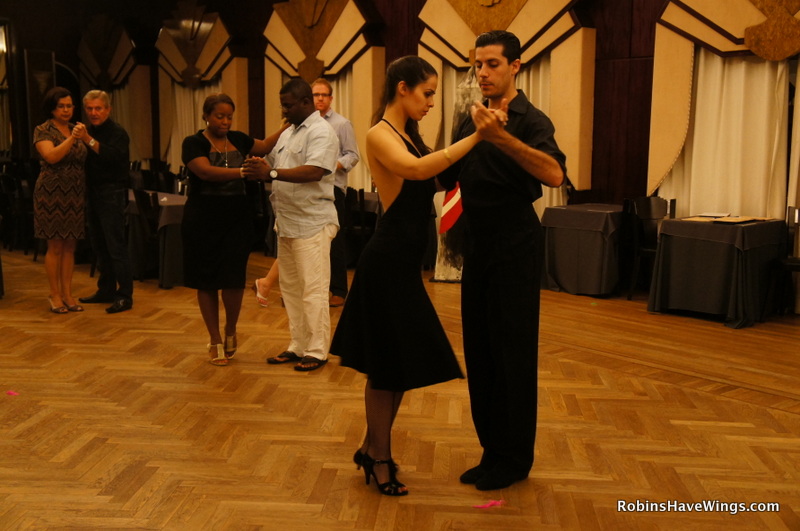
First, we all start by learning how to walk tango style by sliding our feet forward and then backward. We pair up to practice how this back and forth works in the dance. Finally, we move on to a more complicated box step which involves stepping backwards, to the right, then backwards again with the woman extending her right leg backward dramatically, and then to the left where the woman does a sweeping leg swirl to the right and then the left before the couple moves back and to the left again. When we see our instructors do it, it looks effortless. They glide like they’ve got butter on their shoes. Alan and I look at each other incredulously, not sure we can do it. But we embrace the challenge and after a few fits and starts, we get it and we smile approvingly at each other when we do. We even get a few words of approval from our slender instructor, Juan. We aren’t exactly gliding, but we get it and we can follow the music and we are having a blast. Our travel friends are having a blast, too. Some take turns dancing with the instructors and with each other, giggling wildly with each misstep or well-placed move. We are so glad that we were able to have this experience after it was first thwarted by the flash flooding a few days ago.
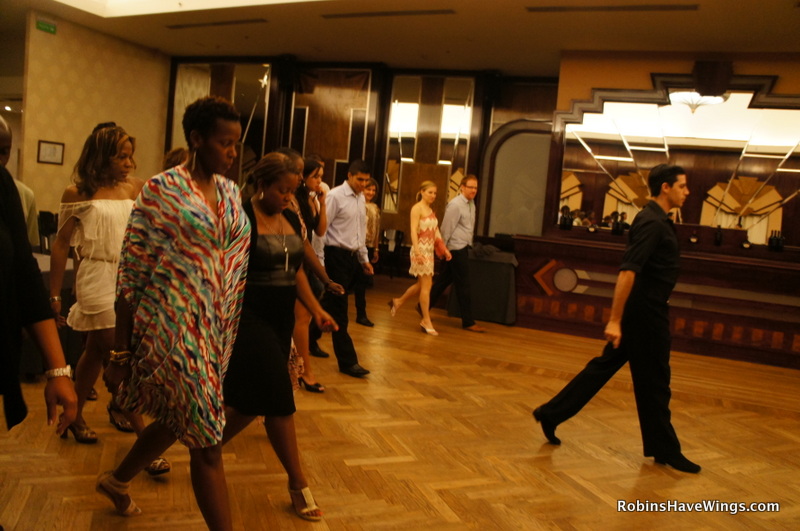
Practicing our tango walk
Gai and Floyd learn from the tango experts

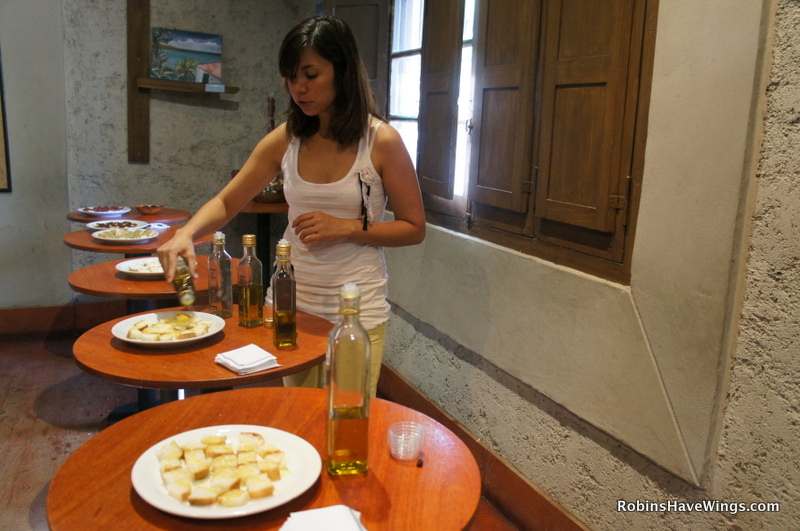
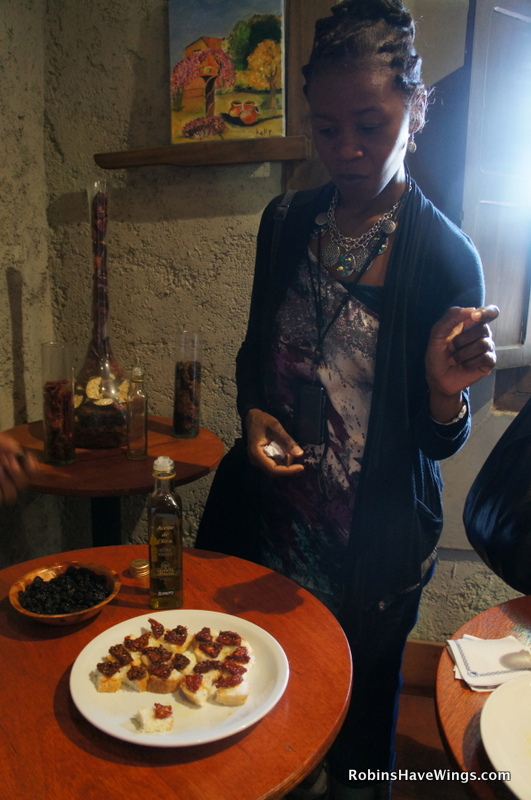
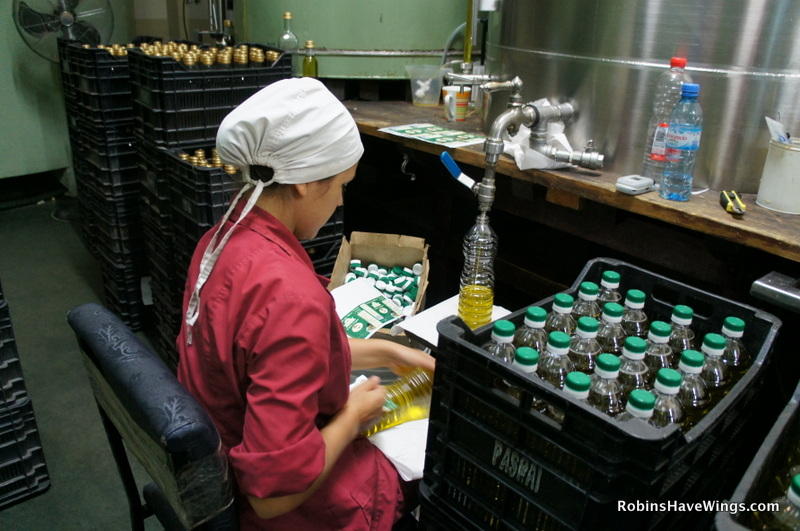
Just one day ago we were still in Mendoza tasting wine and something new, olive oil. At the Pasarai olive oil factory in Maipú, a small vineyard town outside Mendoza. It’s at this factory and olive vineyard owned by a family of Yugoslavian heritage where we learn exactly how extra virgin olive oil is made. Our guide describes the process of stacking up to 17 plates of olive oil paste (hand-washed olives crushed with pits and all), then pressing the plates together once to extract its oil. Other processes take the paste after its been pressed and find other ways to extract more oil, but the resulting product is not extra virgin olive oil. We also get to see the oil hand bottled and labeled. But the best part is the tasting. Our guide pours several flavors of Pasrai’s olive oil over bread, plain bread, bread with olive paste and bread with sun-dried tomatoes. The fan favorite appears to be the rosemary-flavored olive oil drizzled over the bread with sun-dried tomatoes, leading to a purchasing frenzy at the counter. We also learned a bit about olive oil as a beauty product packed with antioxidants and we are immediately sold on Pasrai’s pure olive oil body oil after rubbing it onto chapped hands.
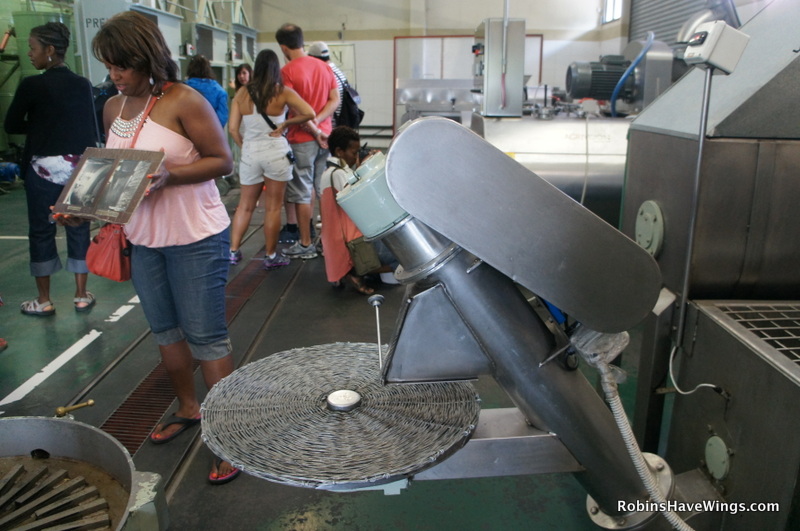
Gai holds a picture of the olive oil press process in front of the olive oil paste plates
A woman hand labels olive oil
The olive oil tasting begins
Carmen grabs a bite

Pasarai’s small courtyard of flowers inspires a frenzy of photography for Carmen, Presleith and Kenitra and it’s here we spy a group of young girls in pink with white sashes across them. We wonder if they are pageant girls. Back on the bus, Leticia tells us that the girls are competing to become Maipú’s harvest queen. Local vineyards select young women to represent them at Mendoza’s annual harvest celebration, a tradition started years ago for fun to honor the prettiest vineyard pickers. Today, the winner becomes an ambassador for tourism in Mendoza. If we could pick an American ambassador to Argentinian wine, it would be Kayla, our guide at the Familia Zuccardi winery in Maipú. It’s always cool to meet fellow Americans while traveling and we’ve bumped into quite a few in Mendoza. There was a family from Boston at the airport, a mother and daughter from Oregon at Plaza Indepencia and a couple from New York staying with us at Finca Andalgisa. We are all just passing through, tasting wine and taking in the sights. But it was especially cool to meet Kayla, an intern at Familia Zuccardi. She came to Argentina by way of Chicago specifically to work here. She heard of the winery’s reputation and its wine-making innovations and knew she had to find a way to get here. We all admire her gutsiness and her sense of adventure. She’s pursuing her dream of becoming a sommelier head on. She hopes to open a small, unpretentious wine lounge in Chicago someday and after being on a tour of Zuccardi with her, I’d be happy to be one of her first customers.
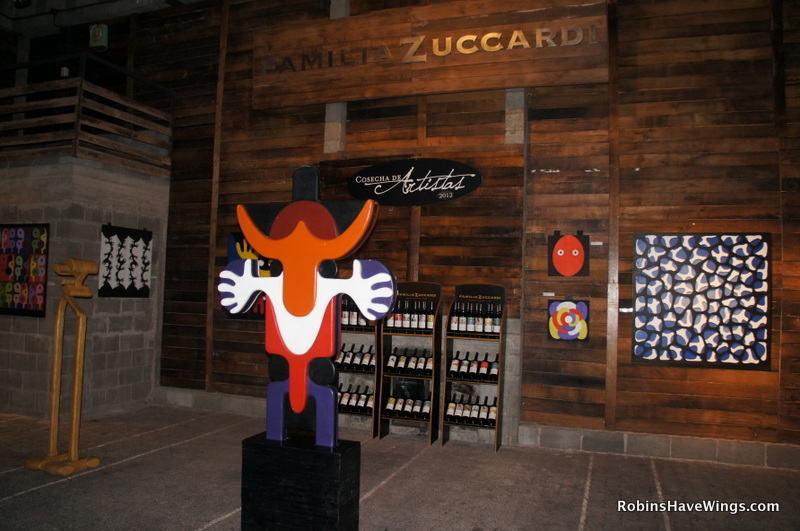
Familia Zuccardi

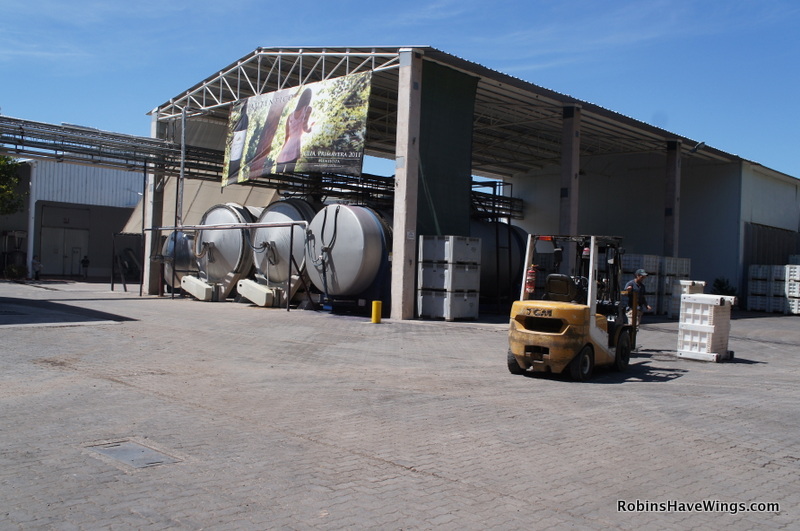
First off, the main Zuccardi wine tasting room is just plain funky. It catches our eye as soon as we enter the winery. Bold rounded figures and colors are displayed in paintings on the wall and as sculptures around the room. I’d later learn that this is an installation from an annual event that the winery hosts called the Harvest of Artists or “Cosecha de Artistas,” where artists are invited to participate in their harvests and be inspired to create art based on the experience. This artist apparently saw yellow and red bird-like figures and round-eyed people with fingers spread wide. We love it and a photo-taking frenzy ensues. Kayla is able to capture our attention and talk about wine, explaining the unique history of this place started by an Argentinian of Italian ancestry who came to the region to improve its irrigation system. To prove that his new system of irrigation worked, he created a winery and fell in love with wine and the process of making wine. The family-run Zuccardi winery is especially known for its experimental blends. Beyond the artsy wine-tasting rooms and shop, there’s a massive wine industrial complex operating in hyper drive out back. Small fork-lifts drive by, trucks back in and out to pick up precious wine cargo and huge machines churn, doing what we don’t know.
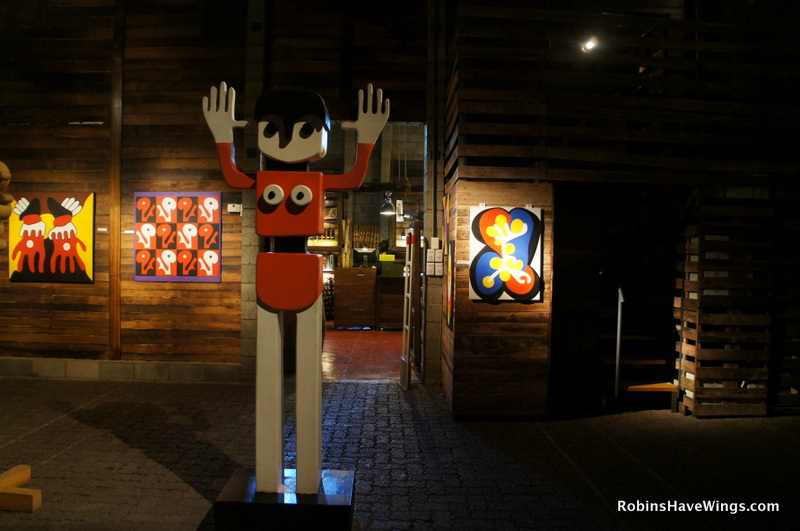
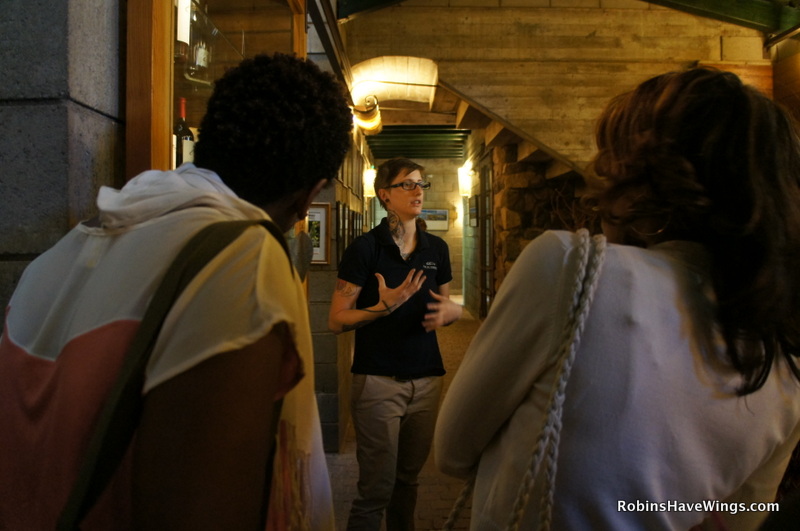
Harvest of the Artists exhibit at Familia Zuccardi
Kayla discussing Zuccardi wine brands
Wine-making uncovered at Familia Zuccardi

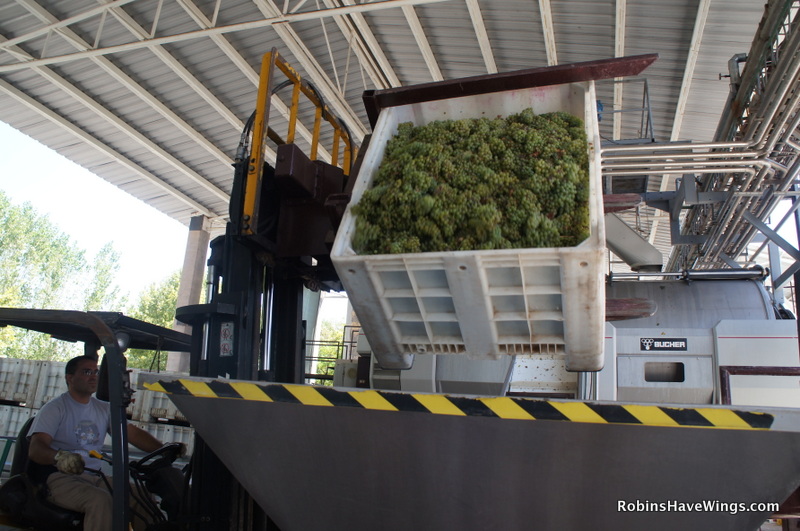
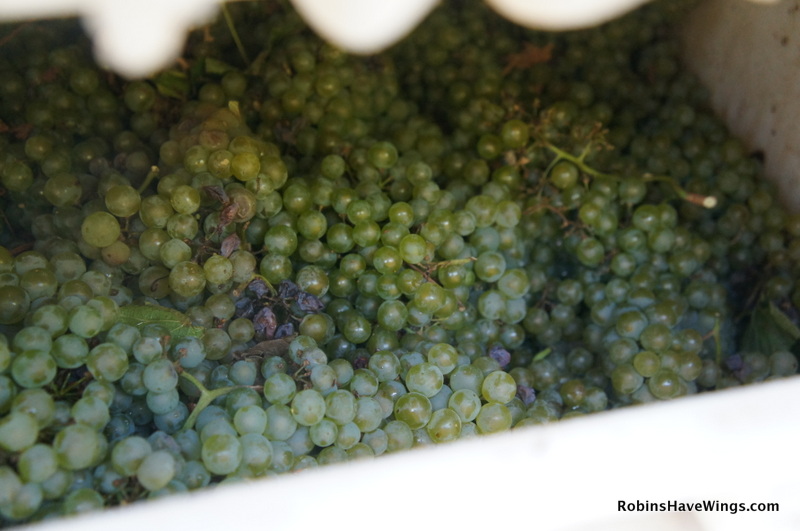
It’s a stark contrast to the wine tour at Bodega Saletein the other day, where the fermentation rooms were like works of art themselves, pristine and unmoved. Here, Kayla takes us into small warehouses where hoses snake from its steel vats of Pinot Grigos and Chardonnays. She let us taste the Chardonnay grapes, not from vines, but from plastic crates, where they sat awaiting the next part of their journey to become wine. In the Zuccardi’s french oak barrel room, Kayla expertly explains the process of toasting the interior of a barrel to impact taste and we see a barrel that had been freshly emptied. There is definitely wine-making being done here. When Kayla asked me how I liked the tour of Saletein, I told her that the setting in full view of the Andes couldn’t be beat, but here, it was like the covers were being ripped off the wine-making process and that was pretty cool, too. In fact as we left one fermentation space to head to another, we saw those Chardonnay grapes being dumped by forklift into a huge de-stemming machine where they moved up a conveyor belt to be plucked. Super cool for those old school Discovery Channel buffs who love shows like “How It’s Made.”
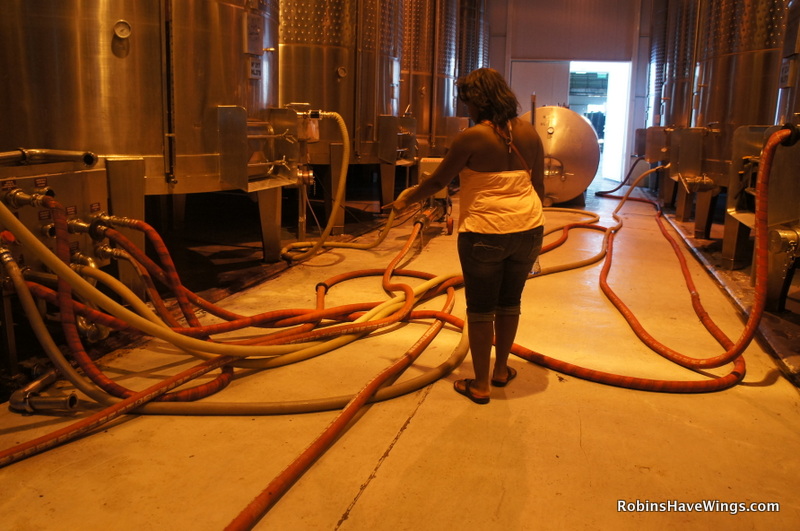
Gai tracks snaking hoses of wine
Chardonnay grapes before de-stemming
It’s about to start raining grapes

Back inside for our wine tasting, the group seems to gravitate to Zuccardi’s sweeter wines especially their Santa Julia Tardio and the Zuccardi Series A Torrontes, a blend of Criolla and Muscat grapes popular in South America. The tasting ends with the Malamado, Zuccardi’s version of a port wine, but since it’s not made in Portugal, it’s called a fortified wine. This one has got kick. It’s smooth with a slow burn. It reminds me of Cognac and Gia thinks this would be good with a good cigar. Sensing this may be our last chance to shop for gifts before returning to Buenos Aires the next day, some go on a spending spree in Zuccardi’s gift shop, including Floyd who after collecting perfume, t-shirts, caps and wine, can’t resist $5 two-packs of sparkling wine, going back several times for this bargain item. Don’t let anyone tell you that men don’t shop.
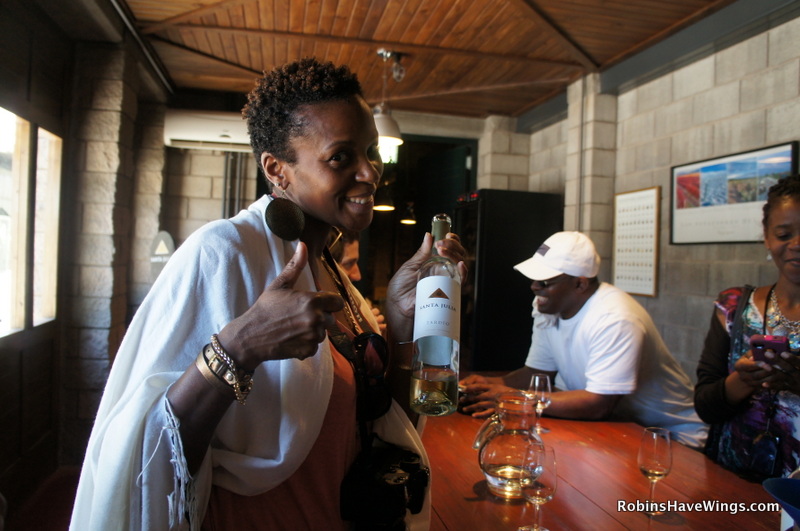
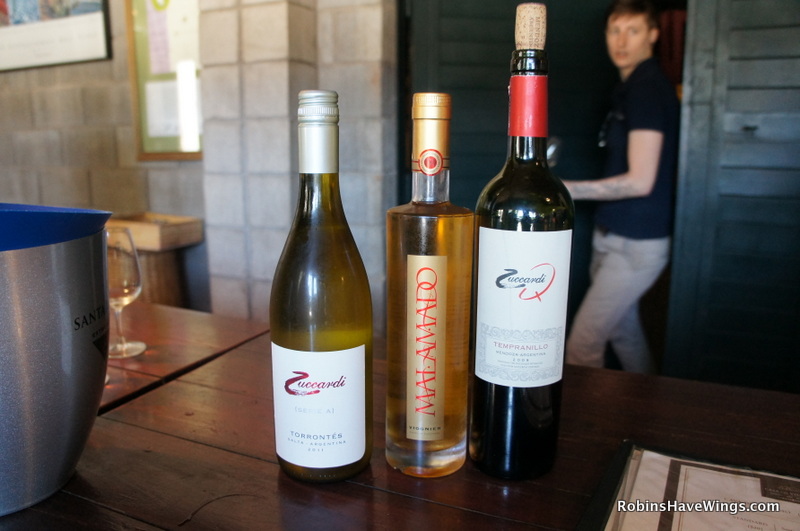
Sheneekra likes Tardio
Zuccardi’s premium wines for tasting

Knowing that this is our last chance to have a great meal in Mendoza, several of us head to Nadia O.F. for dinner later. It’s considered the best restaurant in the area. When Robyn and I mentioned that we were going to Nadia’s to a couple from Israel staying at our hotel, they raved, saying it was one of the best meals they’ve ever had. Leticia mentioned it as one of the best, too, noting its 6 courses. We are excited to have a real foodie experience. When we arrive, we have the place to ourselves. It looks befitting of a foodie experience with our dining space bathed in a warm red glow.
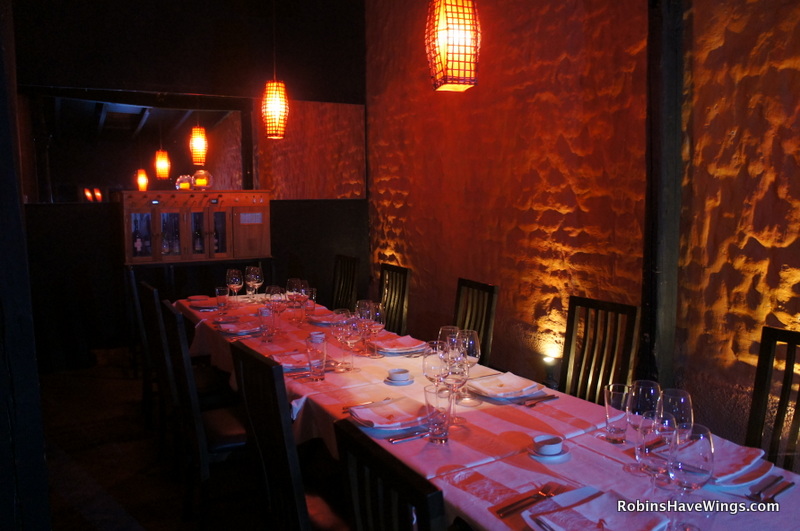
Our table at Nadia’s

We have only have the option to choose our starter and entree, but everything else is decided by the chef, including the 2 appetizers, a watermelon and fig salad with herbs, blue cheese and syrup dressing and the sweet potato with green aioli and eggplant ashes. Both of which were wildly creative and deliciously complex. But the star of the meal was my “Gazpacho” jelly with cold almond soup. It arrives in a Jello consistency with flowers as a garnish and the almond soup drizzled on top. It’s almost too pretty to eat and it definitely doesn’t look like gazpacho, but one bite brings all the cool tomato, onion and cilanto flavors to mind. It’s completely baffling and delicious. Sadly, my rib-eye, known as bife de lomo in Argentina, can’t even hold a candle. But desert makes up for it,  a refreshing and creamy orange mouse followed by pears soaked in Argentina’s Torrontes wine and seasoned with black pepper. If I’d chosen the ossobuco like the other Robyn, the meal might have been pretty close to perfect.
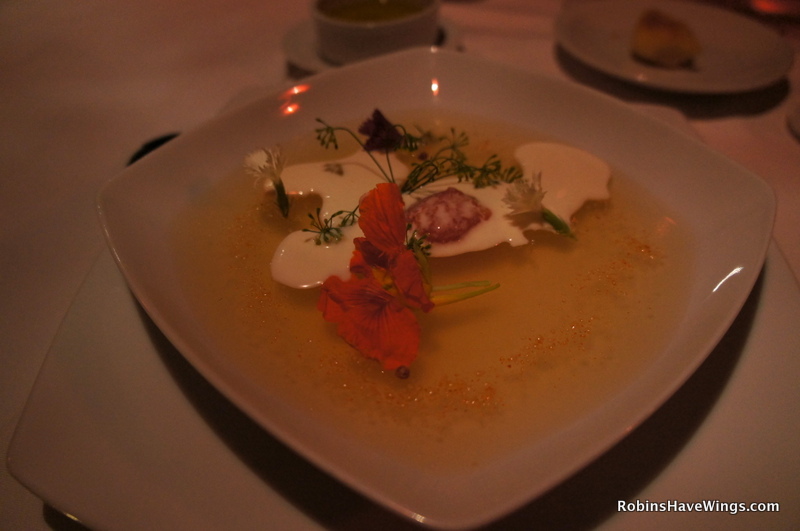
Gazpacho flavored Jello

Back in Buenos Aires, folks continue the mad last-minute shopping  dash with just a few hours to spare before our tango show on our last night in Argentina. It occurs to me that I haven’t seen Alan buy one single thing during this entire trip. Maybe the photos and the experience are gift enough for him. The tango certainly is. As we sit down to dinner at Tango Porteño, he makes a point of going to Gai to thank her for arranging the tango class and expressing how much he enjoyed it. In the darkened art deco theater, we see how tango is really done with dances that harken back to its heyday in 1940s Argentina with a live orchestra. At times, the dances are productions with the full cast of dancers telling a story of the times on the busy grand Avenida 9 de Julio or at the sultry Dragon Rojo bar. At other times, a pair of dancers display the tango’s inherent eroticism with open-shirted men lifting lingerie-clad women in the air or holding them tightly in passionate embraces. And then there was the traditional tango that we all know with fast-flicking legs that look like they could do damage to a partner’s calves and thighs. We are glad we didn’t try those moves in class. We leave Tango Porteño to see lights ablaze on today’s Avenida 9 de Julio. It looks like Buenos Aires’ version of New York’s Time Square.
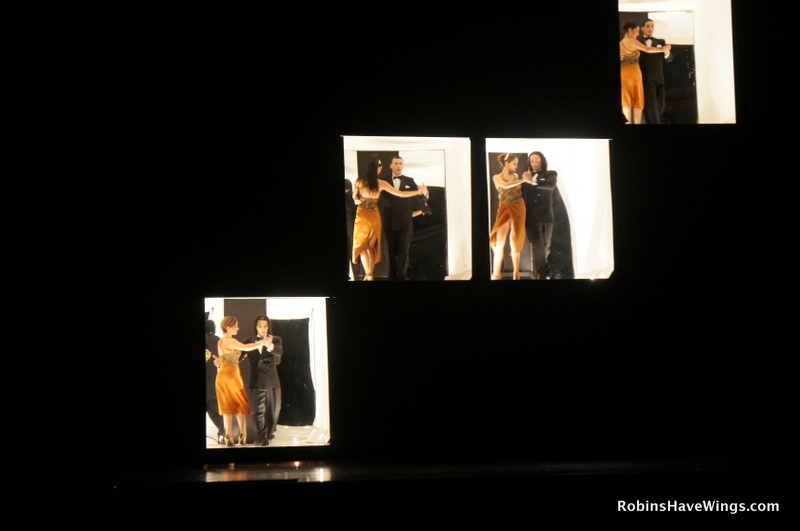
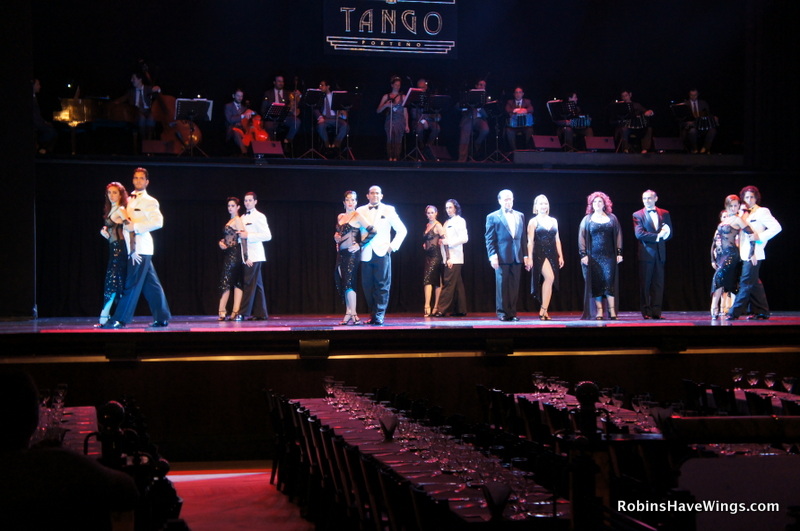
This was one of our favorite performances from the show. Kinda of looked liked Tango Hollywood Squares
Applause for the stars of Tango Porteño

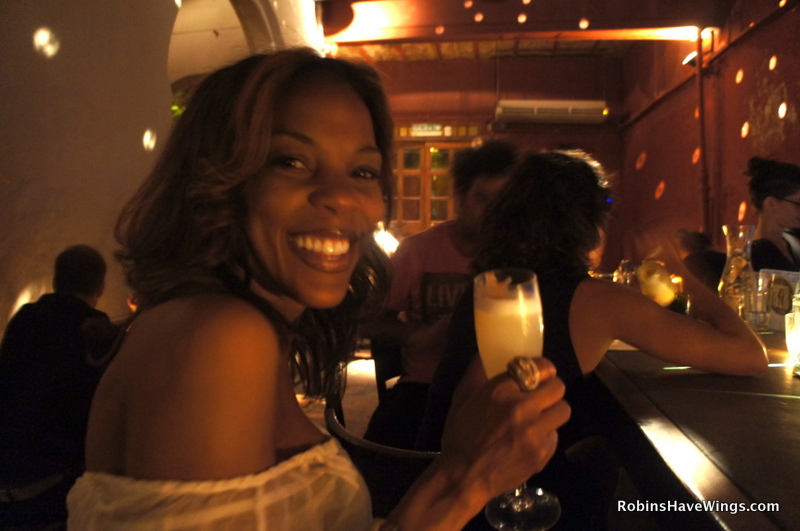
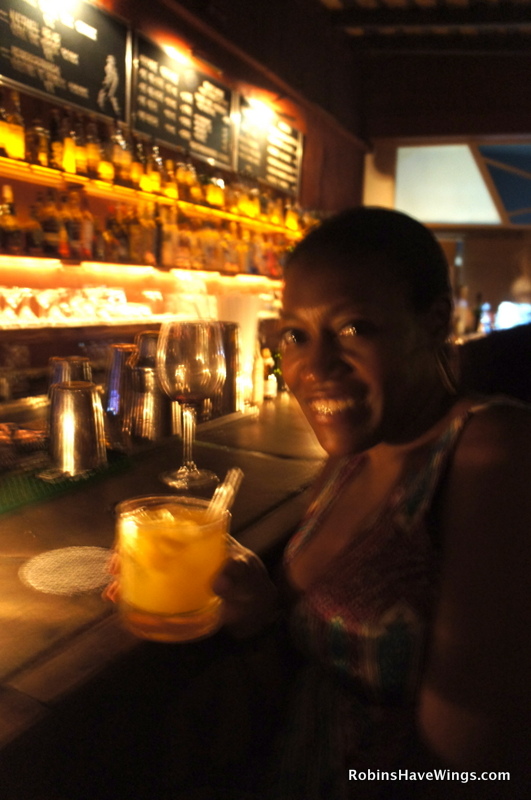
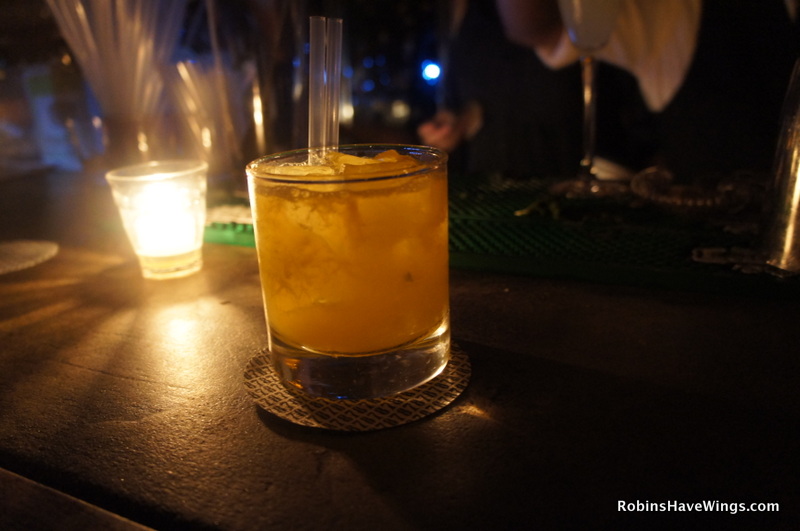
Gai takes this opportunity to thank all of us for joining her STG Tour. She says she really enjoyed traveling us and the feeling is mutual. She hopes that we’ll join her on her other group trips. I’m sure she’ll see most of us again. Alan is a veteran and has already been on 5 trips. This is Presleith’s first, and she is definitely planning to travel to China in October with STG Tours. The bright lights of Avenida 9 de Julio twinkle behind us and they are enough of a farewell to Argentina for most of our group, but Kenitra and I decide to end the night with a night cap. The hotel night manager at our trendy hotel, Esplendor, in Palermo Hollywood, suggests a spot simply called 878. We hop in a cab to give it a shot. We come to a place that we are sure most tourists don’t know about. The wooden double doors even look like they hold a secret. Inside is a dimly-lit bar and lounge playing moody eclectic American music like an early Madonna song and what sounds like indie Argentinian music. Our bartender is Mario. He doesn’t speak much English, but I ask him about the “Lola,” a drink advertised on its menu over the bar. I make out that it’s like a caipirinha but with a rum called pamero instead of cachacha. It’s got mango, lime and ginger in it, too. Kenitra opts for the Pisco Sour, which Mario says is best, if you don’t like sweet drinks. We like the vibe and the drinks are good. We toast Argentina farewell.
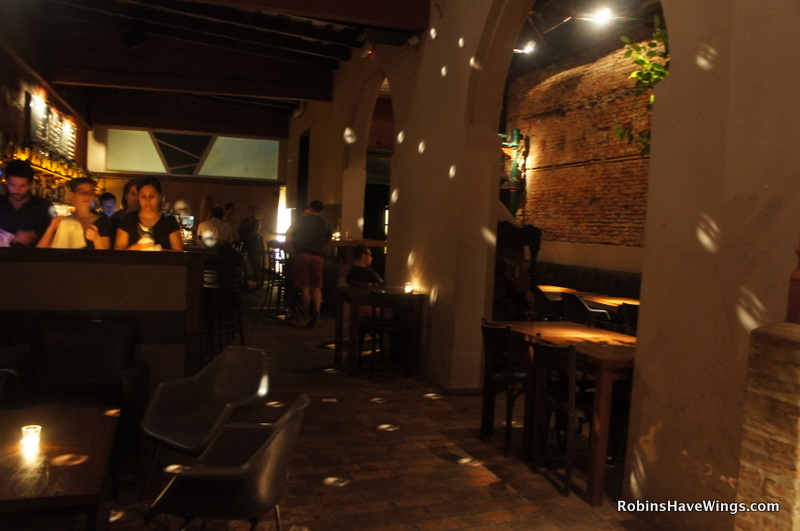
Inside 878
The Lola at 878
Kenitra toasts Argentina
Yo, tambien. Adios Argentina. Me gusta mucho!

Coming Soon: I asked my new Argentina travel buddies to send me their favorite photos from the trip, so I’ll be sharing their highlights and favorite travel memories here, too.

*Disclosure: STGTours provided me with housing during this Argentina tour.
A Funny Thing Happened on the Way to the Tango Show

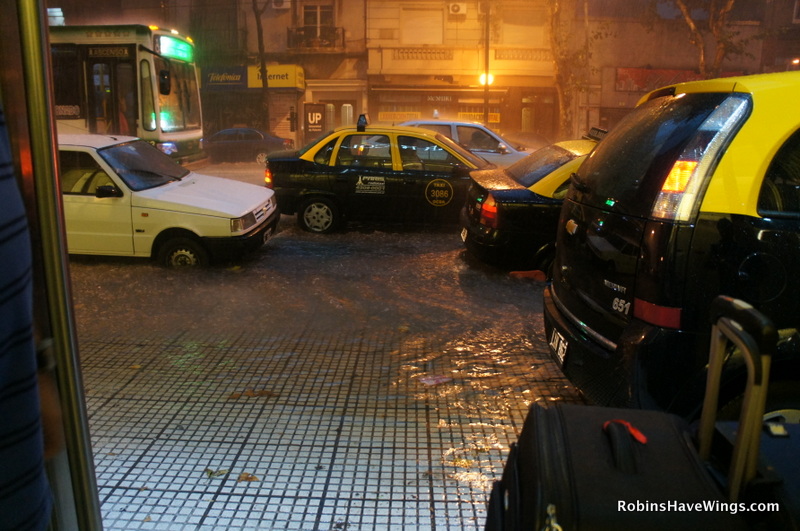
Actually, funny probably isn’t the right word, freak might be better. Our trip was rudely interrupted the other night by a freak flash flood that created a fast-moving surge of water down the street in front of our hotel, just as we were planning to leave for a tango lesson and show.
Water rising outside the Dazzler Towers Recoletta

The surge didn’t stop at the street, it forced its way into our hotel lobby sending guests scurrying in every direction. This video pretty much captures the scene.

What strikes me in this video is that folks are surprisingly calm and I have to say the members of our traveling party were pretty calm, too. Dressed in our tango show finest, we went to check that our belongings hadn’t been drenched in our rooms, using the stairs since we heard what we thought was water rushing down the elevator shaft. Seeing that all was well at the moment, we regrouped and Gai told us that she was going to work on getting us out of the hotel as soon as possible. We’d reschedule the tango show for another time. She sent us upstairs to pack while she worked on our exit strategy. We had already planned to leave the Dazzler Tower Recoleta ahead of schedule because of a day-and-half-long power outage. So, we packed in almost total darkness leaving our doors open to get light from the hallways which were still well lit.

The process of getting 10 people out of one hotel into another on short notice during a unpredictable weather event at the start of carnival season in Buenos Aires on a Sunday night is more than a notion. Gai who happened to be the calmest of all of us reminded us that there is always what she calls an “X factor” in travel, the thing that you never thought would happen until it does. If you are a seasoned traveler like many of us on this tour, you know that you kind of have to go with the flow, in this case literally. She also said this is another good reason to have trip insurance. I bought some for the first time on my trip to Thailand through WorldNomads.com and I’m glad that I had the presence of mind to get some for this trip, too. You can bet I won’t travel without it from this point forward.

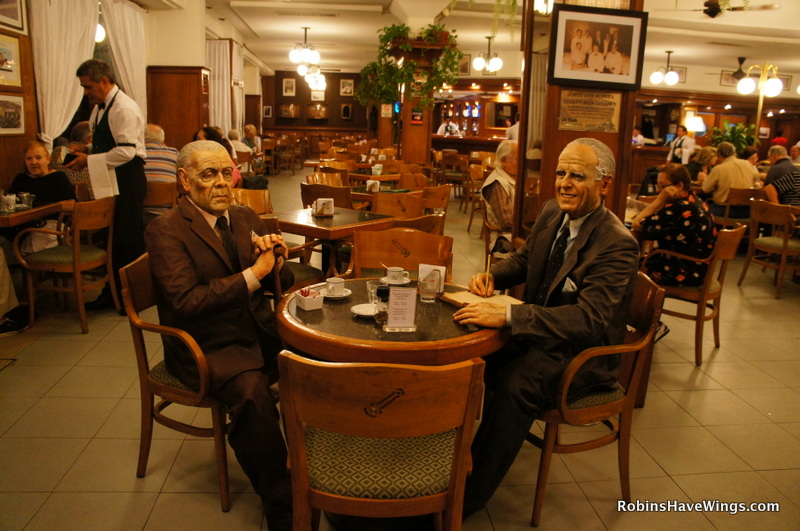
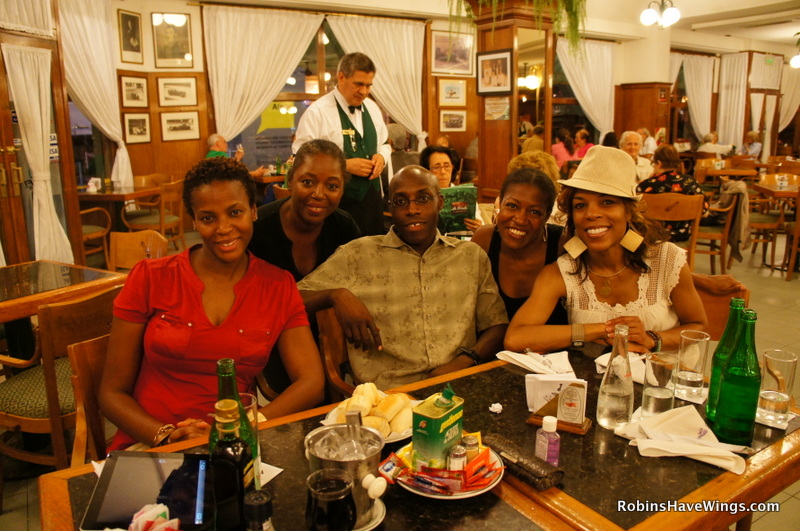
Seeing as there wasn’t much use in sitting around in a soggy hotel during the rebooking process, Gai sent us off to dinner. We chose a place that Lonely Planet calls an institution in the Recoletta neighborhood, La Biela. Sitting directly behind the Cemetario de Recoletta, La Biela definitely looks like a neighborhood institution, the place generations and generations of Buenos Aires residents have been going to for good food and familiar faces. No one in the place looked to be under 65 for starters and a waiter in a green vest with a towel hanging over his right forearm greets us immediately. An older woman seated by the window catches my eye and asks in Spanish if we are Colombian. That’s a new one for us. We’ve been mistaken for Brazilians during our trip so far. I tell her where we are from and ask what’s up with the statues of two men seated at a table nearby. They are famed Argentinian writers and friends Jorge Louis Borges and Adolfo Bioy Cesares, who dined here along with other important and upper class Argentinians known as portenas. My new friend offers to take a photo and tells me that she is very pleased to me meet. I like this place already. It turns out to be a great place to take our mind off our unfortunate travel circumstances and enjoy some good food.

Borges and Cesares always dine at La Biela
La Biela makes us feel like locals

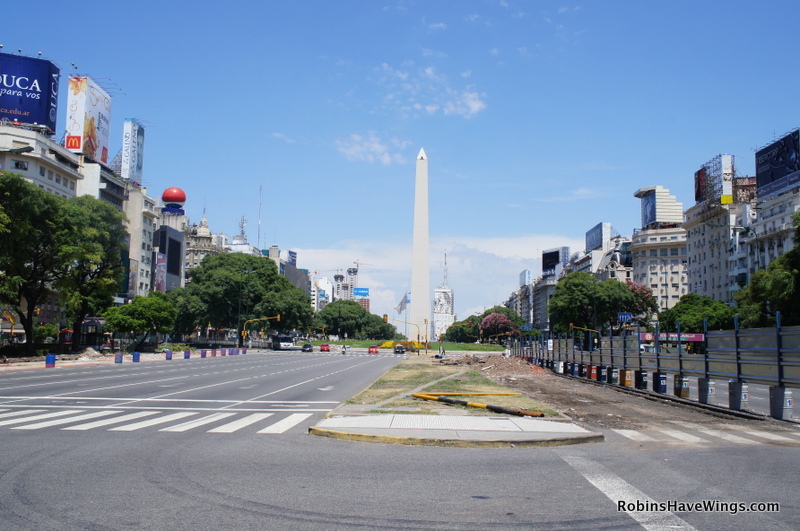
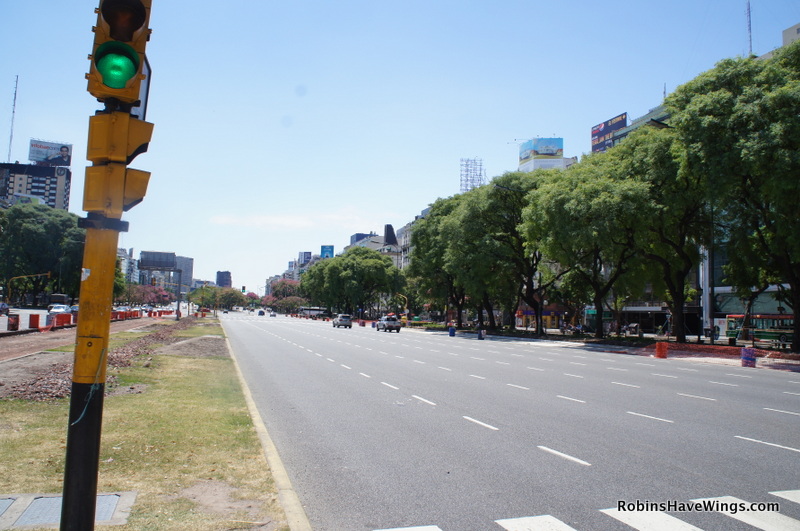
Before our travels were so rudely interrupted, the group split up to explore the city on our own. Kenitra, Sheneekra and I decide to leisurely walk to San Telmo’s well-known Sunday market from our hotel. At first the journey is pretty unremarkable as we pass through what looks like the Buenos Aires business district. All the shops are closed and there is almost no foot traffic. But I’m excited with we reach Avenido 9 de Julio, the widest avenue in the world, commemorating Argentina’s independence from Span with 9 lanes of traffic. You don’t realize house massive the street is until you are standing on its center median watching traffic whiz by on either side of you. If you are a pedestrian who likes to dart across the street to beat the traffic, you’d be toast here. If you don’t have the slightest clue where your are going when you are driving, you may want to avoid the street, too. We saw a taxi turn too soon almost running into oncoming traffic. He realized his error, quickly self-corrected and took off in the right direction. (By the way, we’d later learn from our guide, Luis, that this grand thoroughfare was completely submerged by the flash flood, too.)

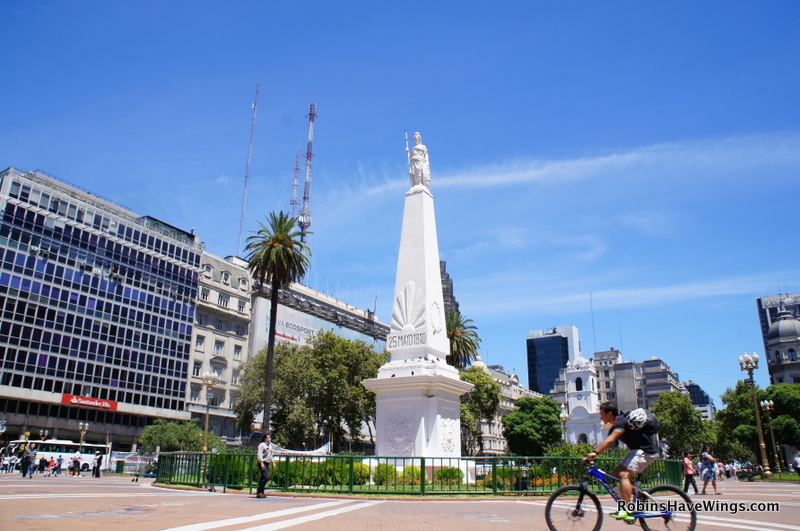
That obelisk on the widest avenue in the world looks mighty familiar
Don’t try crossing without waiting for the walk sign here

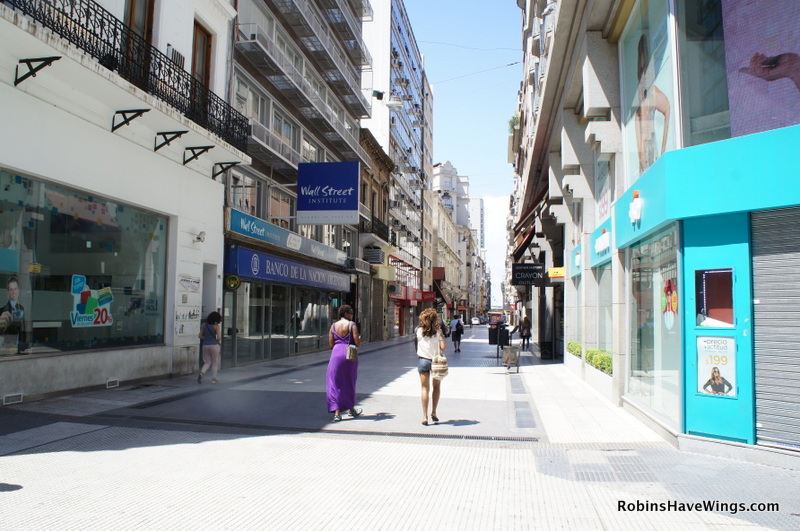
Off 9 de Julio, we wandered upon Lavalle Street a narrow pedestrian-friendly shopping street. It’s heard to describe. I’d call it oddly interesting. The shops were a miss mash of cheap clothing stores, record stores, restaurants and movie theaters. It was clear that this is where the locals come on a Sunday afternoon. There was also a huge bingo hall that looked like it belonged in old Vegas. But the street itself was interesting to us because it seemed to offer good photo ops with is narrow-tunnel like appearance sandwiched between tall buildings.

Sheneekra and Kenitra explore along Lavalle

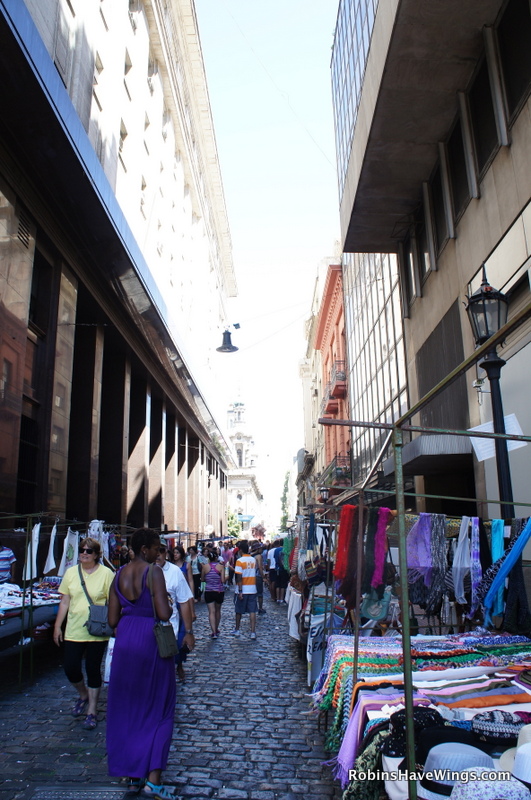
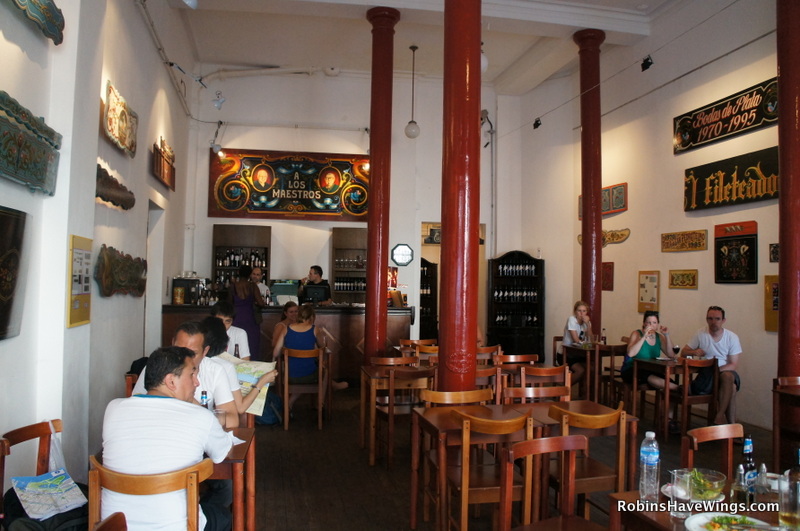
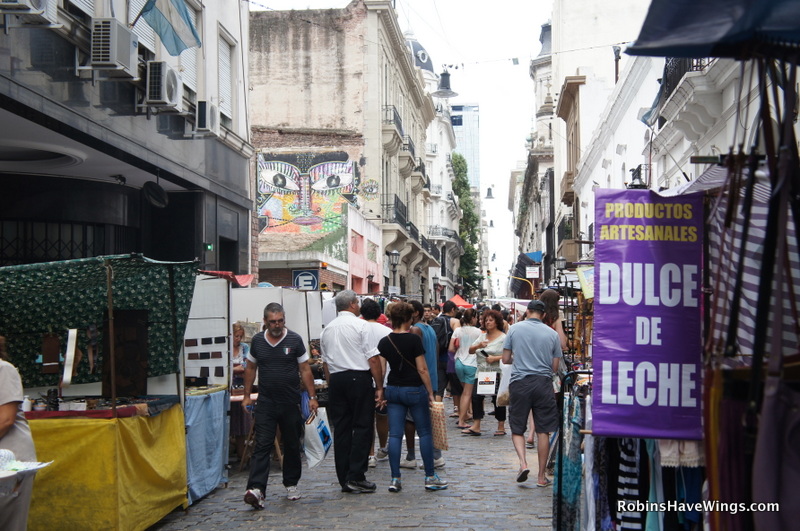
We hit another stretch of uninteresting road on Leandro N. Alem until we make it to Casa Rosada, where Argentina’s president, Cristina Fernandez de Kirchner, conducts all her business. By this time we’ve been walking for a couple of hours, we are hot, thirsty and not sure how far we have left to go to get to the market. We imagine it’s more blocks that we want to walk until we ask a police officer where Defensa is, thinking we’ll need to catch a cab from there. As we walk a short block down Defensa we realize, to our relief, that we are the start of the market. It’s sidewalk is almost invisible, taken over by vendors and artisans of all sorts selling Argentinian crafts from jewelry and leather work to art and antiques. But before we can dive in we have to eat. I spot a really cute restaurant just across from the Convento de San Francisco called Museo de Filete. It’s got a modern yet traditional feel and it is here that I decide to try milanesa, a popular Argentinian dish, very similar to chicken-fried steak where the meat is pounded out and fried. It’s pretty good and I ask for my new favorite condiment, chimichurri to go with it.

The San Telmo market
Museo de Filete is a convenient and tasty stop in San Telmo
San Telmo is the place to be on a Sunday afternoon in Buenos Aires

During the rest of our shopping adventures in San Telmo we’d learn several important helpful Buenos Aires travel tips:

1. You can use American dollars in Buenos Aires at some places, but especially at the market where the dollar is worth more than the peso and vendors can exchange dollars for the peso on the black market at a 6 percent rate. If you bring dollars you can get the same exchange rate if you need pesos and know the right people.

2. If you plan to use pesos, make sure they are crisp bills with no marks or tears. Kenitra tried on a couple of occasions to pay for souvenirs with dollars and vendors wouldn’t accept her torn bills. The vendors can’t easily trade marked bills on the black market. Even when she did pay with a pristine bill the vendor ran a couple of stalls down from her stall to have some guy check to make sure it wasn’t counterfeit.

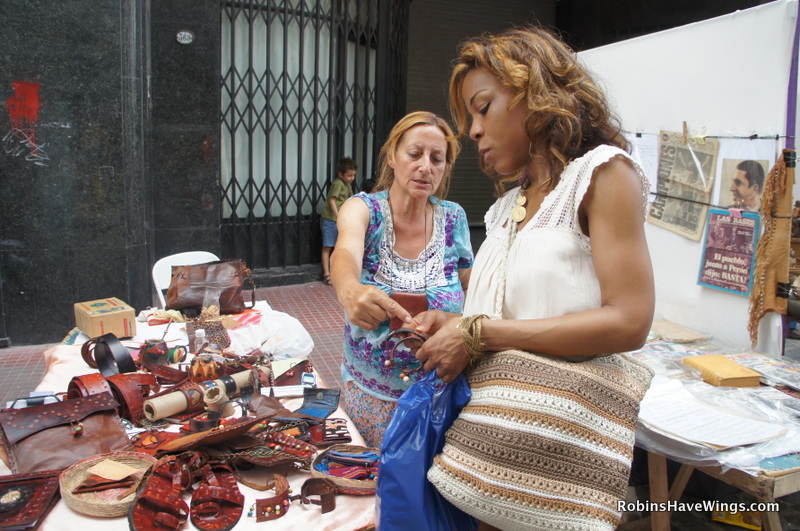
This vendor checked to make sure Kenitra’s American dollars weren’t counterfeit

3. Possibly the most important tip of all is to wear your purse across your shoulder and in front of you at all times because San Telmo is notorious for pick pockets as the locals will happily tell you. Presleith was accosted by two men who she thought were out to get her bag. But they were only very eager  to tell her the proper way to wear her purse. As Kenitra brought a pair of earrings, the vendor practically scolded her for wearing her bag loosely on her shoulder.

So, to recap, what important travel lessons have you learned in today’s blog post? Tell me in the comments and add your own.

Up next: Malbec and marvelous  Mendoza…

Home on the Estancia Where the Gauchos Play

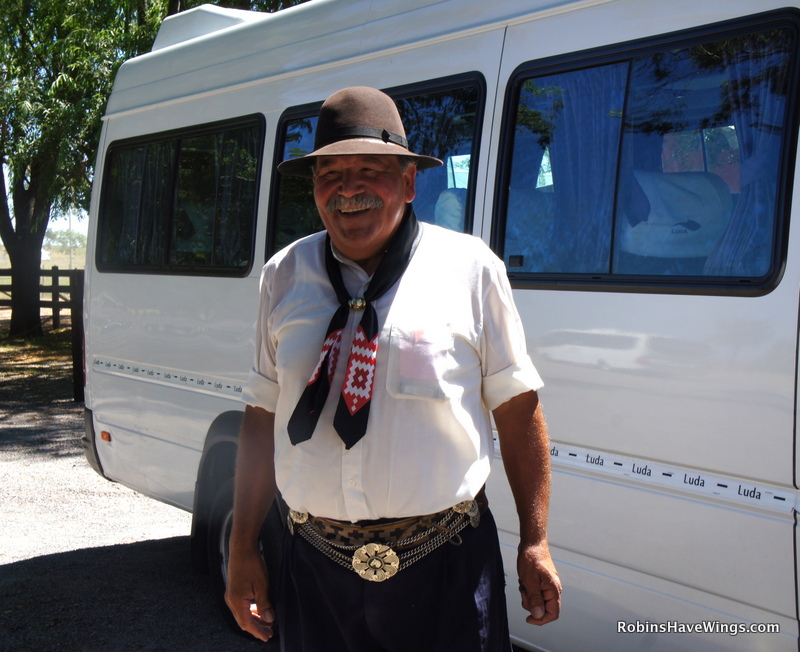
Our guide Luis warned us about Cerillo on the way to Estancia Santa Susana, a farm with Argentinian cowboys called gauchos just outside Buenos Aires. He said Cerillo was a naughty gaucho who loves kissing girls. We weren’t paying much attention and I wasn’t even thinking about this warning when Cerillo caught me alone and walked up to me with open arms, his ruddy, mustachioed face smiling. I thought, “Aww he wants a hug!” He kissed my left cheek, then my right and then, he went straight for the lips. Naughty gaucho. I later learned that he was very affectionate with Presleith on the dance floor after the farm’s traditional Argentinian barbecue and I saw him ride away with Kenitra on the back of his horse after the farm’s gaucho performance disappearing behind the barn. She later reveals that he asked her for a kiss.

Cerillo the naughty gaucho

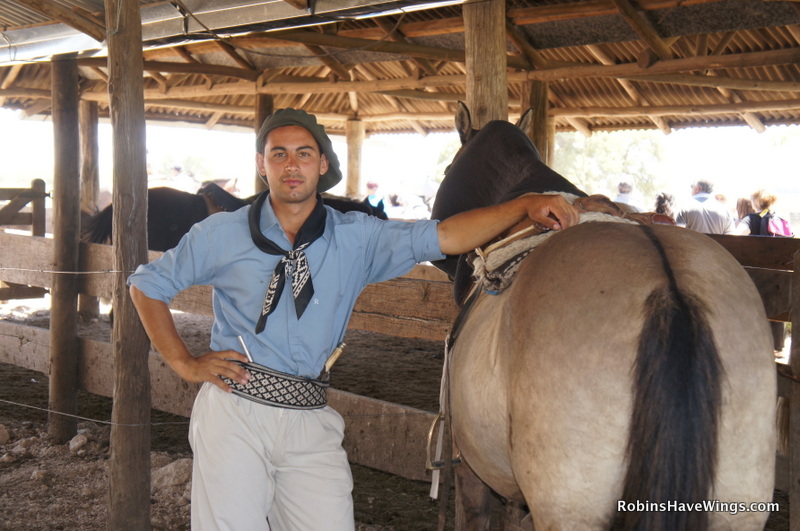
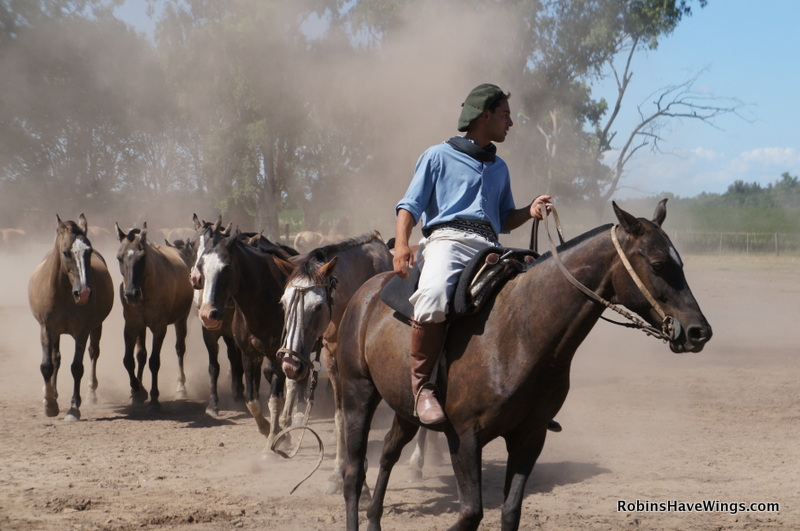
We can’t say we weren’t warned. Gauchos, Argentina’s cowboys who roam its Pampas herding cattle atop well-trained horses, are naughty. They are the descendants of Spanish soldiers and Indian women who found it hard to fit in either culture, turning to a nomadic lifestyle. Gauchos are also cute. One gaucho named Luca had all the ladies swooning and there were women from almost every nation in the world visiting the farm from Australia and China to Bolivia and Japan. This photo pretty much says it all.

Luca, Estancia Santa Susana fan favorite

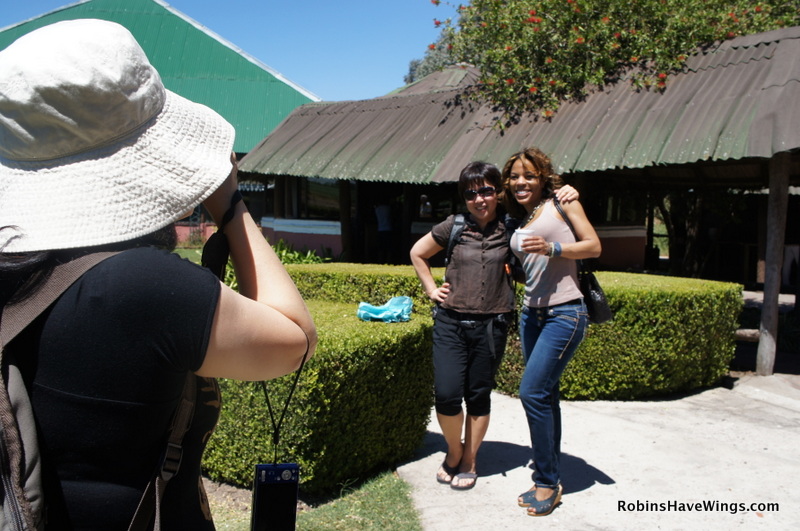
Our group of 10 got its share of attention, too. When we arrived at the estancia another tour bus had just disembarked and we were suddenly greeted by a line of international paparazzi. I don’t know where these tourist were from, but it was clear that they don’t see a lot of black people where they live and felt compelled to add us to their vacation photos. I expect it in Asian countries, but for some reason, I wasn’t expecting it here. One Japanese woman asked to take a photo with Kenitra and she obliges. Afterward the woman tells Kenitra that she looks like a Barbie doll. She’s not quite sure what to say to that and I think it’s amusing.

Kenitra and a Japanese fan

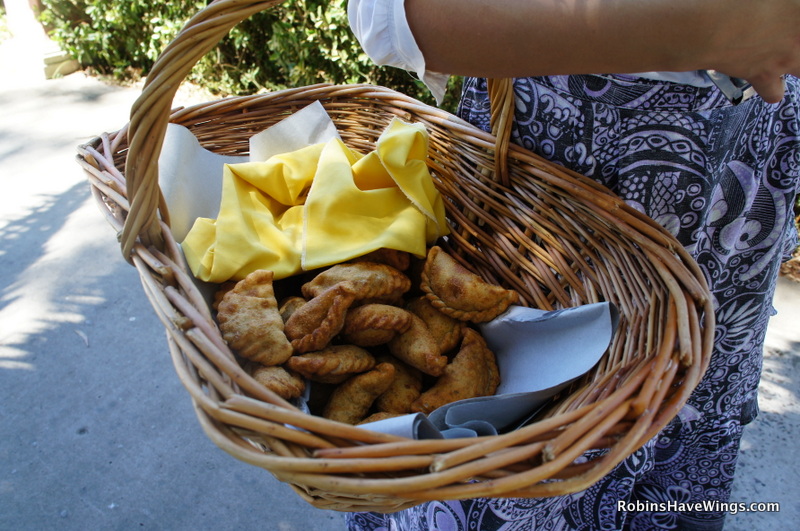
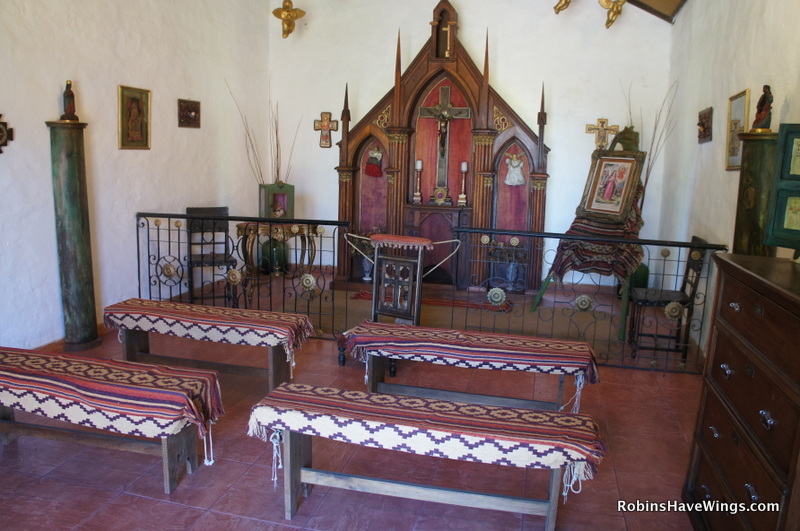
Once we get past our fans, the farm’s staff greet us with a real treat. The juiciest empanadas we’ve had on our trip so far. Luis explained that a good woman makes her empanadas as juicy as possible to attract the gaucho of her choice. I’m no gaucho, but these empanadas certainly have my attention with its flavorful minced meat, olive and egg center dripping from its pastry pocket after one bite. After a couple of these, we turn our attention to the 5,000 acre ranch stretched out before us. The main house has been turned into a museum of life on an estancia. We are mostly attracted to the tiny chapel with is benches decorated with native South American blankets and its simple wooden alter featuring handmade angels. This could be a chapel in the American South West or Mexico. One corner of the room is dedicated to estancia weddings with a yellowing wedding dress and old wedding photos.

Juicy empanadas in a basket
Estancia chapel

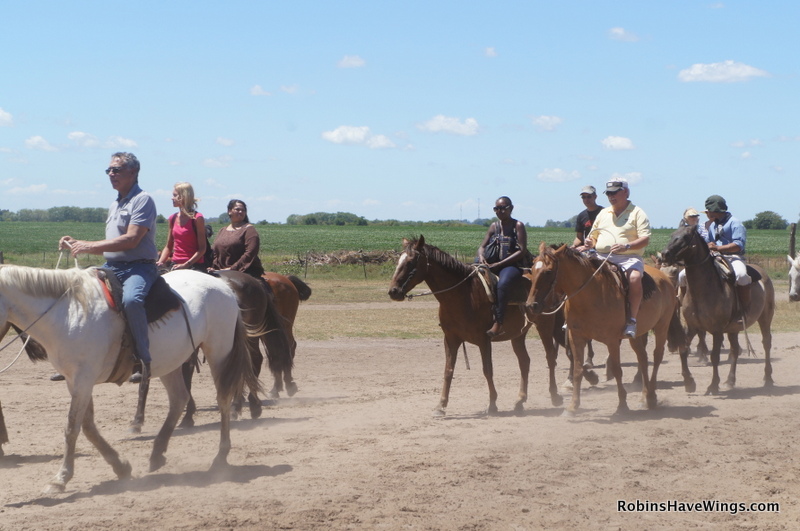
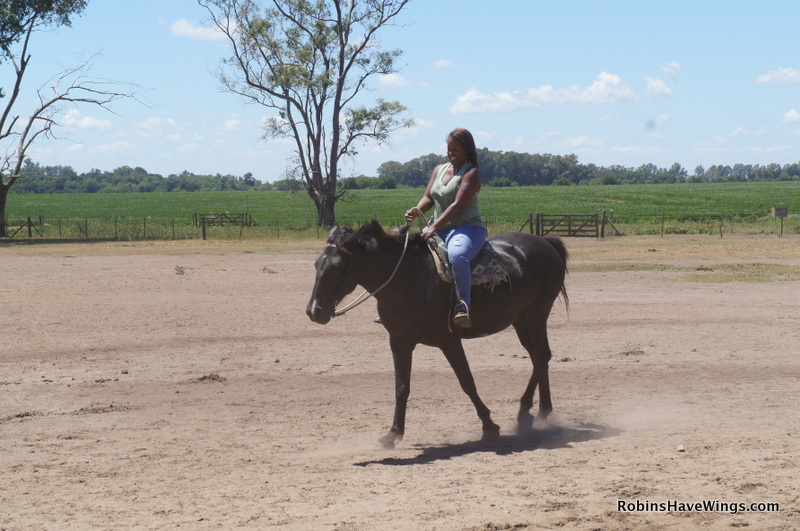
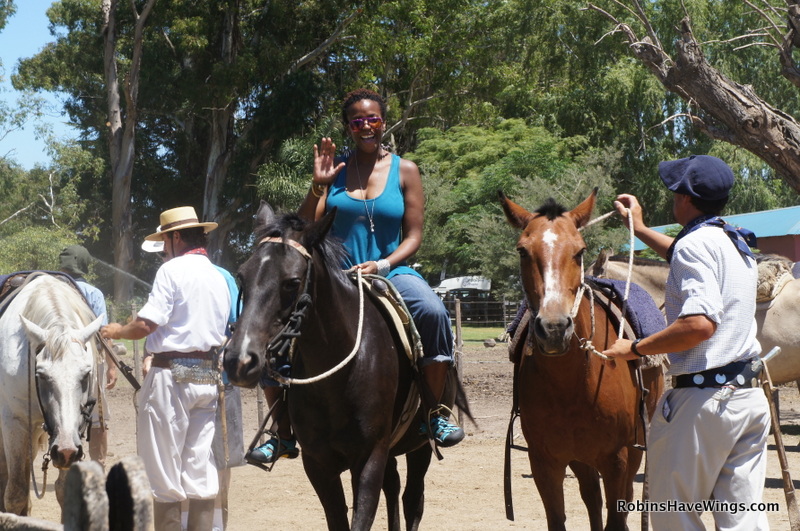
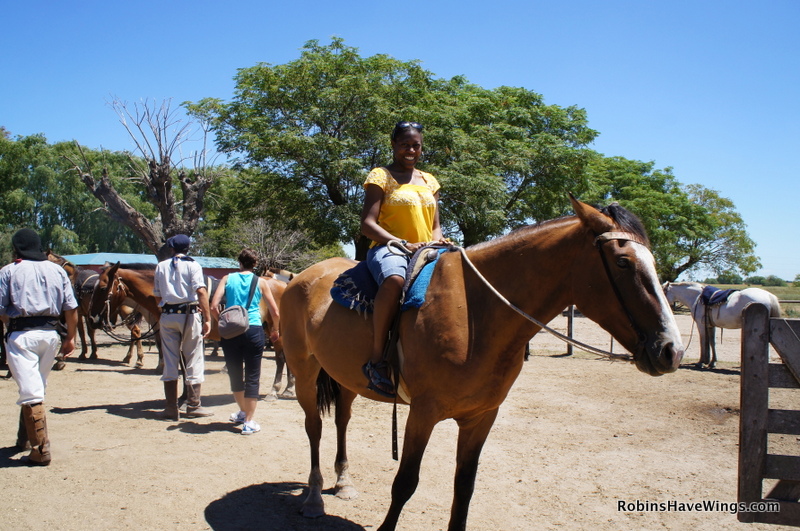
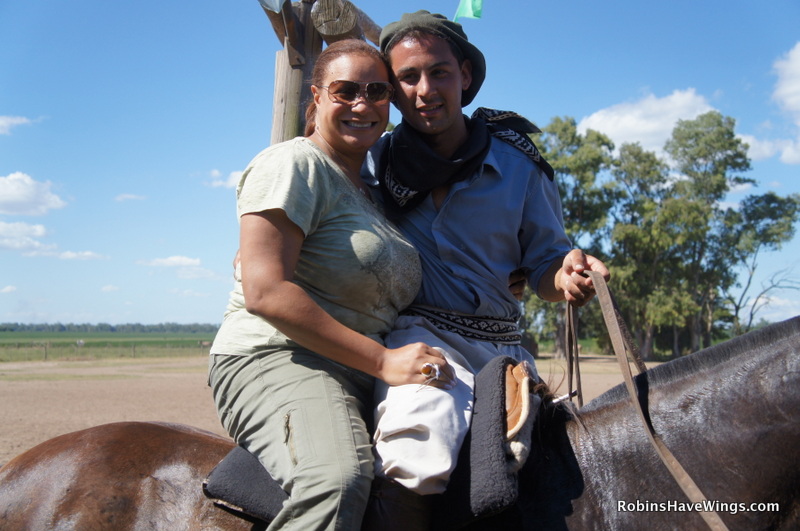
But the stable is where all the action really is. The gauchos are leading horse rides across the estancia on a dusty trail and most of decide to give it a try. Few of us have been on a horse before, but travel has a way of bringing out a sense of adventure and I think its magnified in a group. It’s kind of like peer pressure, but in a good way. When you see others stretching their boundaries you want to do it, too. Take Presleith. She’d never been on a horse and she was pretty terrified when hopped up on her horse and it started to trot off. She screamed, “How do I make it stop?” But she didn’t panic, in fact she seemed to really enjoy the rush. When she came back from her ride she was grinning widely and she said she was scared, but she loved it. I love that. One by one each of us got up on the, literal and proverbial, horse and took a ride, except for the other Robyn on this trip. Robyn attempted to get up on the horse, but got discouraged. We tried to lure her out for a second try, but she declined. Kenitra, Sheneekra and I went out together and each of us seemed to have reluctant horses. Sheneekra helped hers along with positive affirmations, mostly so that her horse wouldn’t drop her. Kenitra’s lolly gagged behind the other horses along with mine, except my horse was slow and had an attitude. He nudged Sheneekra’s horse out of the way before we started on our ride. Later, he decided to drift away from the horse formation, cutting across the field toward the front of the line. But the biggest sign that my horse had a bad attitude was that he kicked an Australian man that I’d been chatting with on the ride. The Australian was riding behind me, which apparently my horse did not like, so he kicked him. I was horrified. The Aussie, not terribly hurt, said, “We can’t talk anymore if your horse is going to kick me.” I said, “Please don’t hold my horse against me!”

Gia and Presleith on horsback
Gai on horseback
Sheneekra on horseback
How do I look?

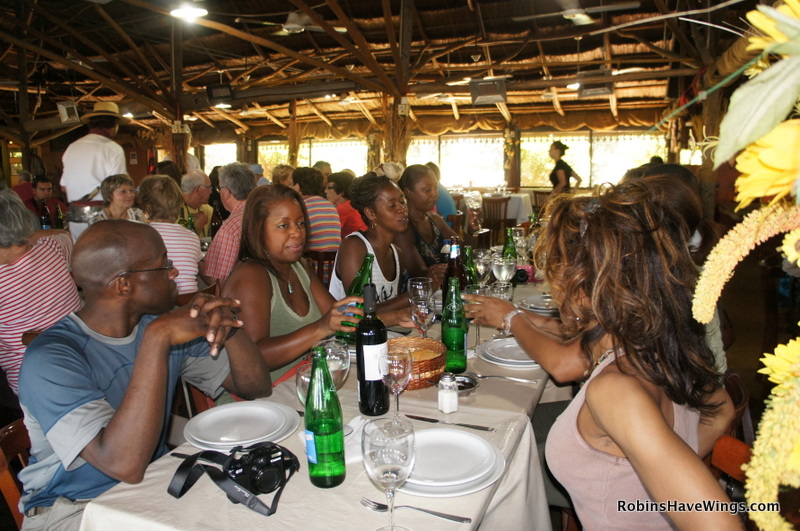
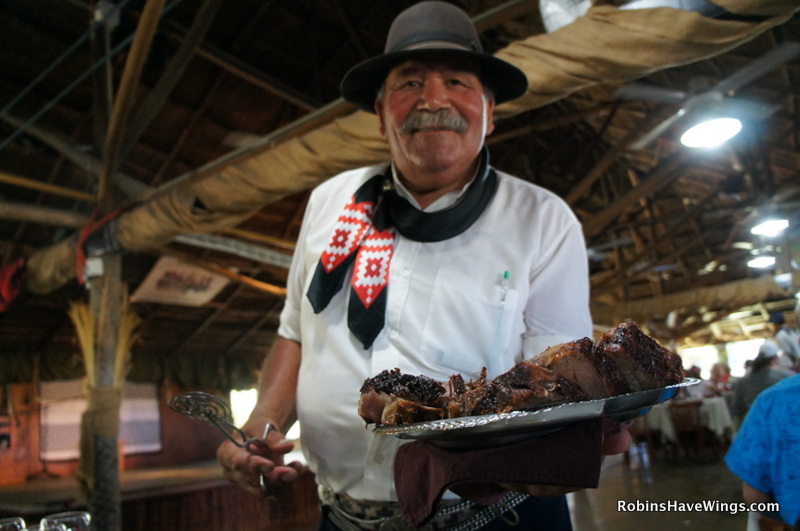
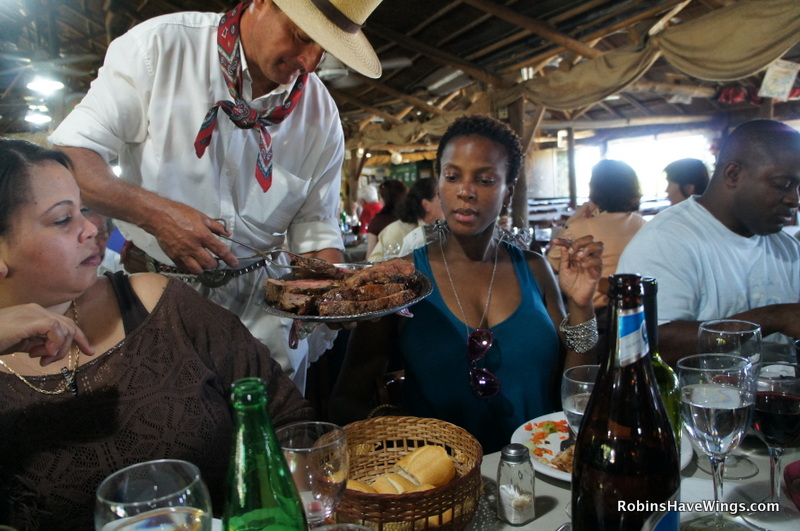
When the horse-riding is done the dinner bell is rung and we all come inside to eat the barbecued meat and sausage that we’ve been smelling all day. The very gauchos that led us on rides became our servers, delivering huge cuts of beef, chicken and sausage. But we probably most enjoyed the chimichurri, a South American condiment made of olive oil, vinegar and spices for eating with bread and topping your steak. We even put it on our salad. It was quite delicious. We got adventurous again when they brought out the black sausage, popular in this region and similar to the Brit’s black pudding, which is essentially cooked blood and other filler. Our knives reveal a mushy center inside its sausage casing and we aren’t sure what to make of the taste on its own, but decide that it’s much better on bread.

Estancia-style dining
Cerillo serving up a platter full of meat
Choosing the best piece

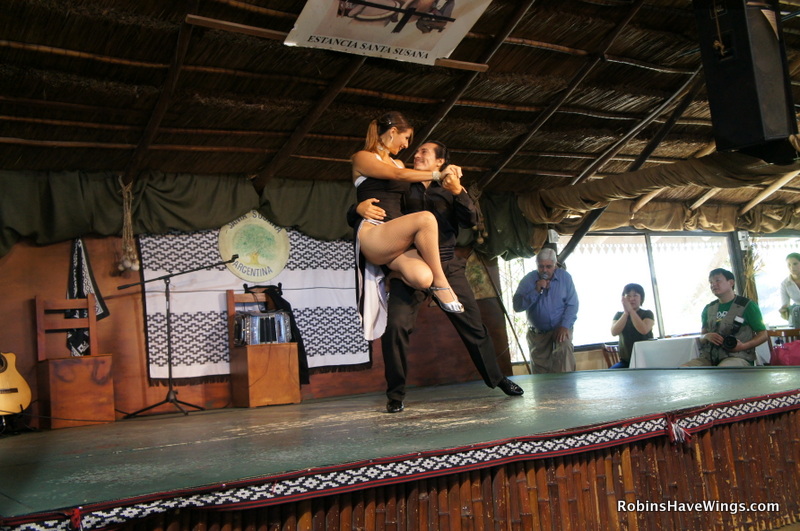
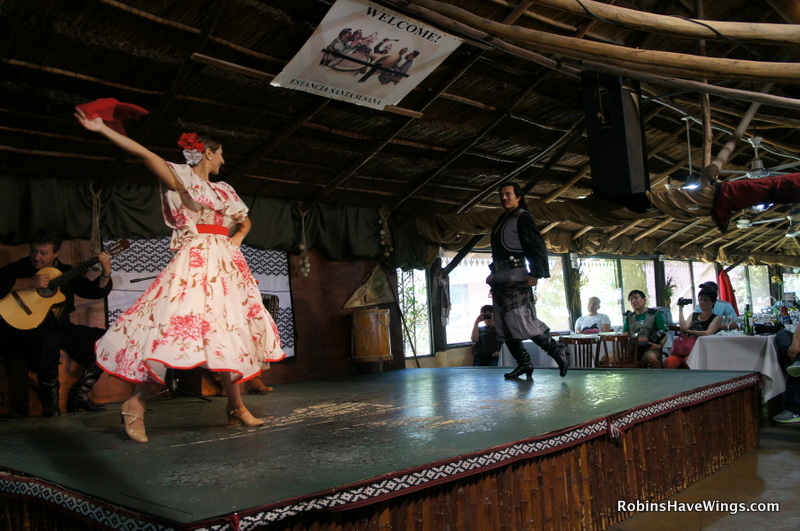
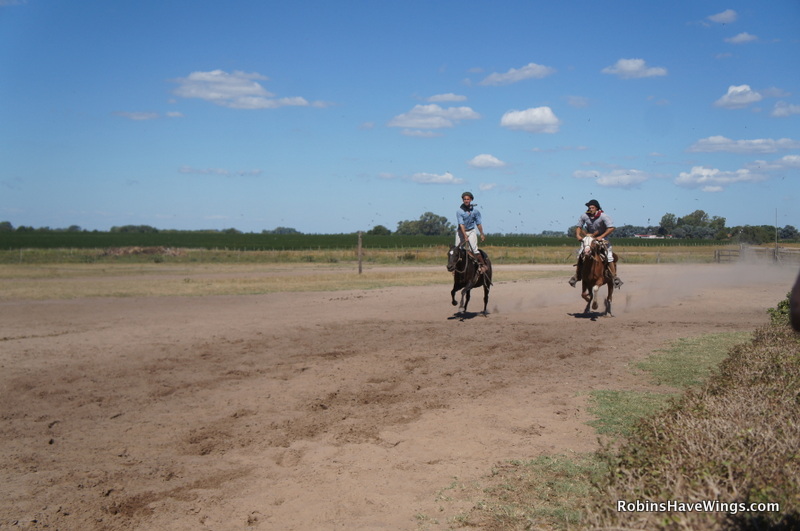
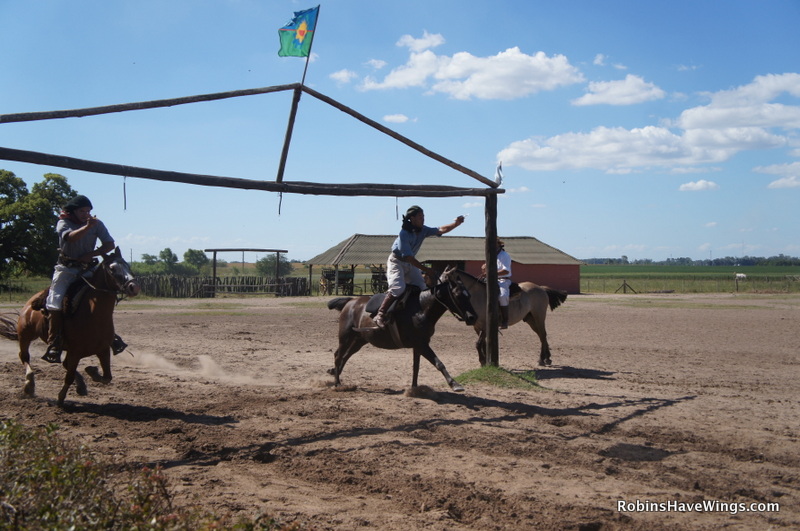
After we eat, we enjoy listening to old estancia songs and watching a great tango show, but what really gets us on our feet is the gaucho show outside. They demonstrate a tradition where the gauchos put a small metal rod through a small ring hanging from wooden posts while racing on horseback. If the gaucho gets the ring on his rod, he must then give the ring to a woman of his choosing. Bringing new meaning to Beyonce’s phrase, “If you liked it, then you should have put a ring on it.” Here’s where Luca and Cerillo come in again. Of course everyone holds their fingers out for Luca, who happens to get the ring every time, by the way. Kenitra gets a ring. I get a ring. Gai gets a ring. Robyn gets a ring. After all the jousting and horse play, the gauchos pick ladies to ride with them and Cerillo makes a beeline for Kenitra leading to the barn kidnapping noted above. But the best ending of our day comes when Robyn wants to get a photo with Luca on the back of his horse. Still a little shaken from her attempt to ride earlier, she thinks she’ll get on, take a picture and get off, but Floyd has other plans and signals for Luca to take off. The look of shock on Robyn’s face is priceless. She comes back giddy and probably a little proud of herself.

Tango at Estancia Santa Susana
More tango
Luca leads
Racing to the rings
Capturing the ring
Robyn finally gets that ride, and with Luca to boot
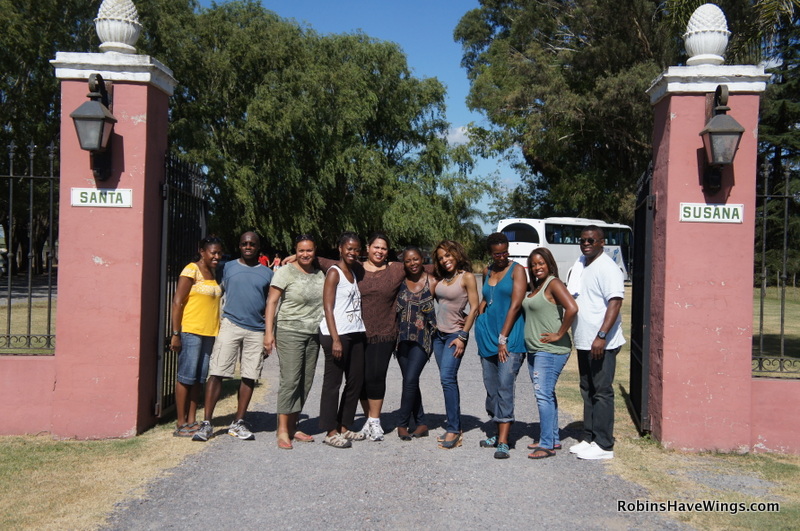
STG at Estancia Santa Susana

It was a fun day on the estancia, we all agree. We board our bus back to Buenos Aires taking the route known as the Pan American Highway, the world’s longest road stretching as far south as Patagonia in South America to Alaska in North America. Once back in the city we see how Argentinians spend a Saturday afternoon. They attend flee markets and outdoor concerts or simply sit in the park beneath yellow umbrellas.

Later that night….

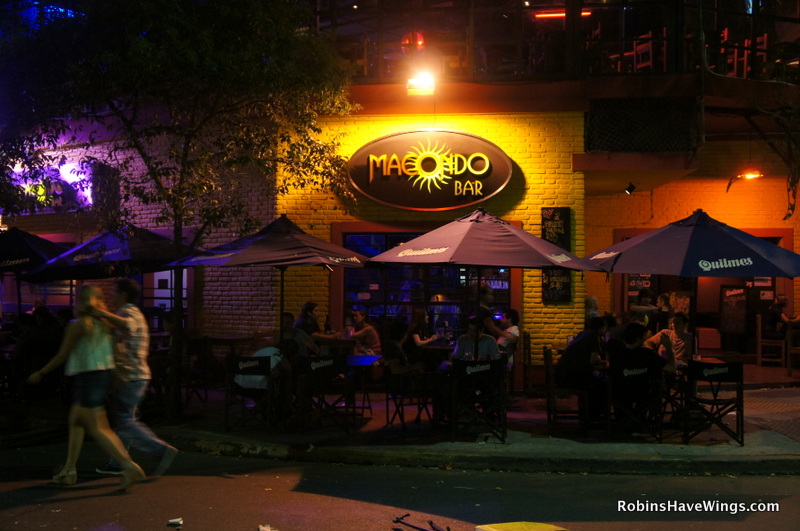
A few of us decide to venture out to explore Argentina’s night life. We decide to go to a Colombian dance performance that Luis recommended at an arts building in La Boca. There were six of us and we split up into two cabs, Carmen, Presleith and Alan in one and Sheneekra, Kenitra and I in another. When Sheenekra, Kenitra and I reach the destination, under a dark underpass next to a dilapidated old port, we’re thinking we are definitely in the wrong place. The taxi driver asks a security guard if he knows about an event at the building and I make out that the place is closed. Some how I manage to pull some Spanish vocabulary from my freshman year of college from the recesses of my brain and tell him that our guide told us about a special performance in the building. He goes to ask another guard behind the clearly closed building gate and he doesn’t seem to know about any event. We don’t see Carmen, Presleith or Alan, so we assume they learned the same information. We then direct our taxi driver to the Palermo Soho area, which we’ve been told is a popular area with the trendy Argentinian crowd. Along the way, while stopped at a traffic light we spot a dredlocked black man inside a store and there are others like him inside. As we pass, we see that it’s a barbershop, just like one you might see in any black neighborhood in the states. Ironically, the barber shop was on a street named Estados Unidos. Translation: United States. When we reach Palermo Soho we think this is more like it. Restaurants with bars and dance floors surround a plaza named for Julio Cortezar, many blasting American music and serving American food like pizza, hamburgers and hot dogs. We opt for a spot serving sausages and meat on wooden tablets along with vegetarian options and empanadas, of course. We review the days events over tasty food and drinks on a warm Argentinian evening.

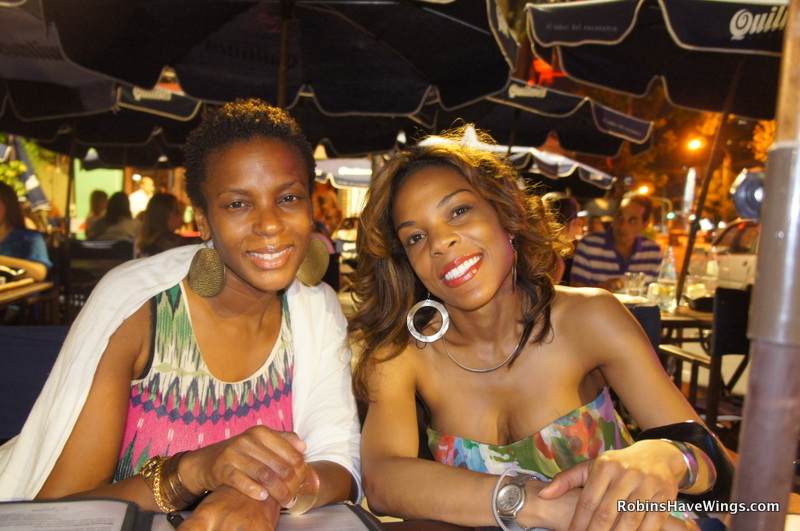
Sheneekra and Kenitra in Palermo Soho
Late night dining
Cruising in Palermo Soho

Argentina’s Legends Past and Present

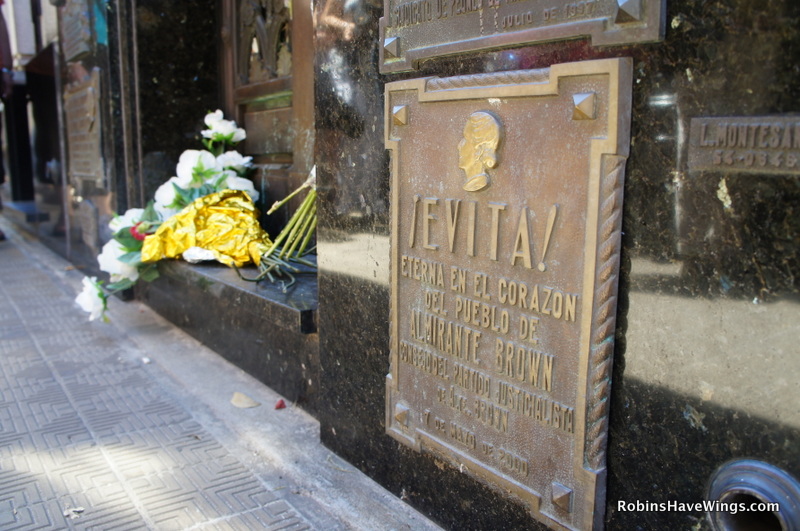
Our hotel, Dazzler Tower Recoleta in Buenos Aires, is a block away from a cemetery. Not just any cemetery. It’s the cemetery where Eva Duarte de Peron, aka Evita “Don’t Cry for Me Argentina” Peron, rests in peace. Well, she probably isn’t resting in peace because there are streams of tourists snapping photos of her tomb, including me and the 9 other tourists that I’m traveling with. But how could you not? She is Argentina. As I think about it, she’d probably be used to all the attention since she was known for drawing a crowd in life.

Evita’s final resting place

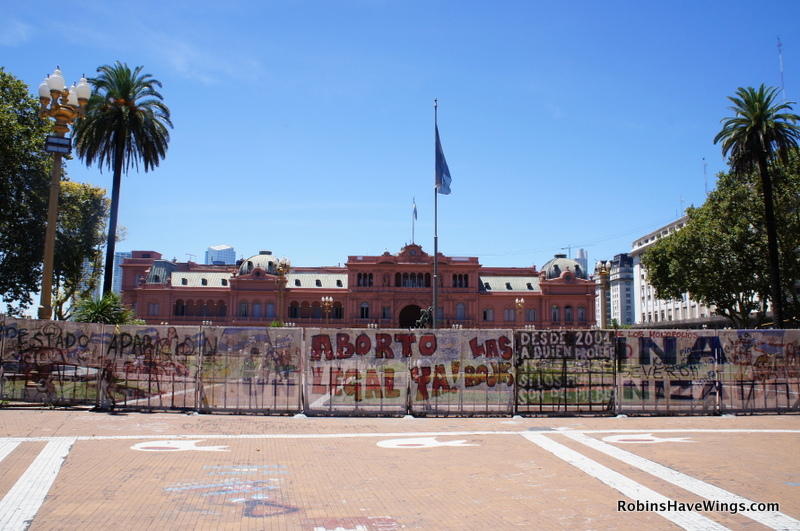
Shortly, after paying tribute to Argentina’s celebrated first lady at Cemetario de la Recoleta, we find ourselves standing in front of the palatial, pink-hued building where Peron delivered a musical-inspiring speech to down-trodden throngs in Plaza de Mayo. The building known as the “Pink House” or “Casa Rosada” is where the current president works and the plaza is still a place for those with something to say to voice their opinions whether through actual demonstrations or painted signs of demonstrations. It definitely feels like their version of the White House’s Lafayette Square in Washington, DC.

Casa Rosada
Plaza de Mayo

I come to to contemplate Evita and Argentina’s civil liberties today, because I’m on another group trip with Spanning the Globe Tours led by the eponymous explorer Gai Spann. Gai was the travel brain behind my big birthday trip to Barcelona a few years back and I’ve since traveled with her to Jamaica, Napa and Barbados. She seems to have a knack for organizing trips to places that I want to go, coupled with the uncanny ability to bring together like-minded travelers. For instance as I walked with fellow travelers Kenitra and Gia through Cemetario de la Recoleta, we agree that we could spend an afternoon snapping photos in this mysteriously beautiful place. Before we even make it to the cemetery, while making our way through customs, Presleith and I discuss our love of ancient historical places. She talks of Greece and I of Angkor Wat. She’s on a mission to see all the UNESCO heritage sites. Alan describes what Gai does as more like building a travel network. We all seem to have a natural curiosity about the world in common, which makes traveling in a group like this pretty easy.

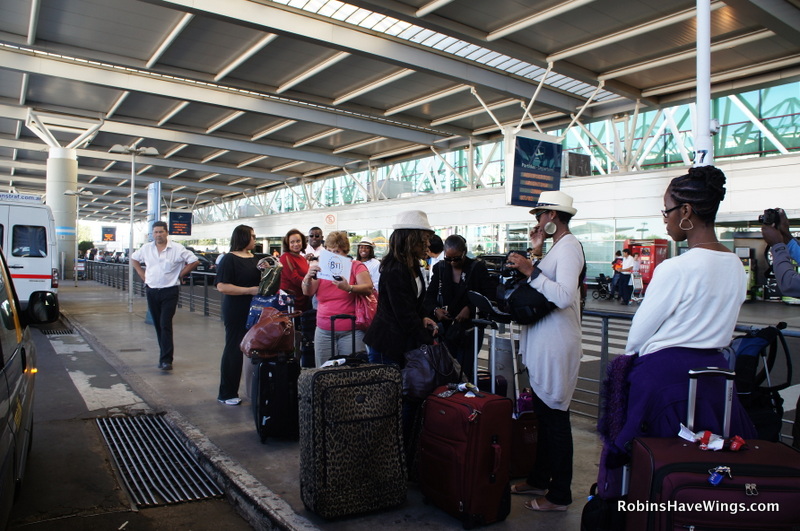
Gai’s travel network has arrived.

It also doesn’t hurt when you’ve got a colorful local guide like Luis Mendias leading the way. He’s kind of the perfect example of Argentina’s European beginnings. He’s of Italian heritage, grew up in England and has lived much of his life in Argentina. The country itself while originally settled by the Spanish saw an influx of Italian and other European immigrants in its early history. He says Argentinians speak Spanish with an Italian accent and a British state of mind. Luis has no problem poking fun of himself and his rotund figure, noting that he’s been mistaken for John Goodman and that his wife finds tango with him a bit challenging because of his tummy. He’s definitely not lacking the passion required for tango. We are delighted by his heart-felt delivery of a tango song on our mini-bus. He’s good. Not just at singing, but touring. You can tell he enjoys telling the stories of Buenos Aires, past and present, like the classic Rodin-esque sculptures holding court over Buenos Aires’ parks now populated by sunbathers and dog walkers.

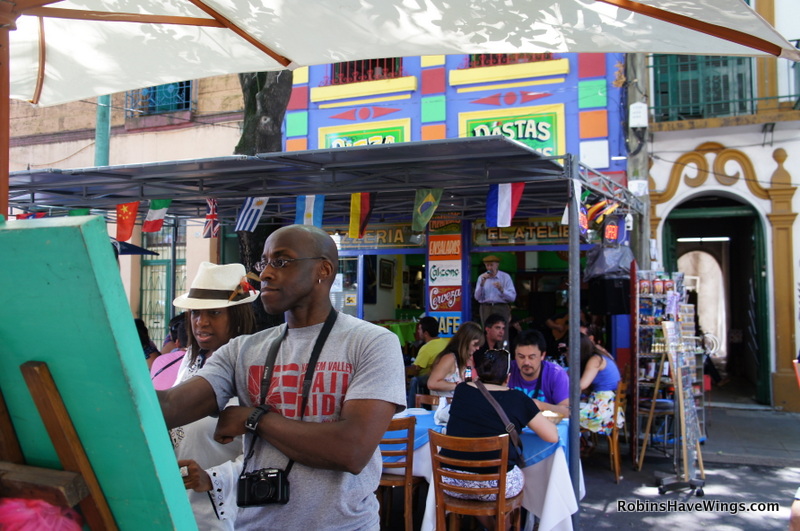
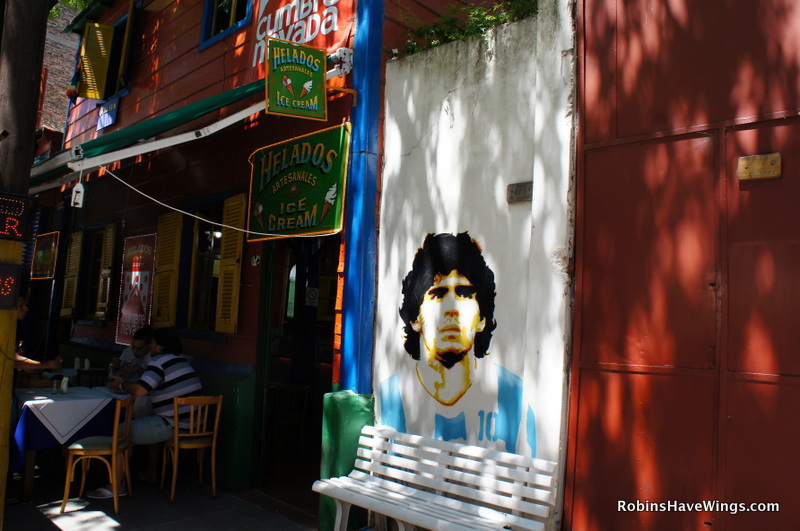
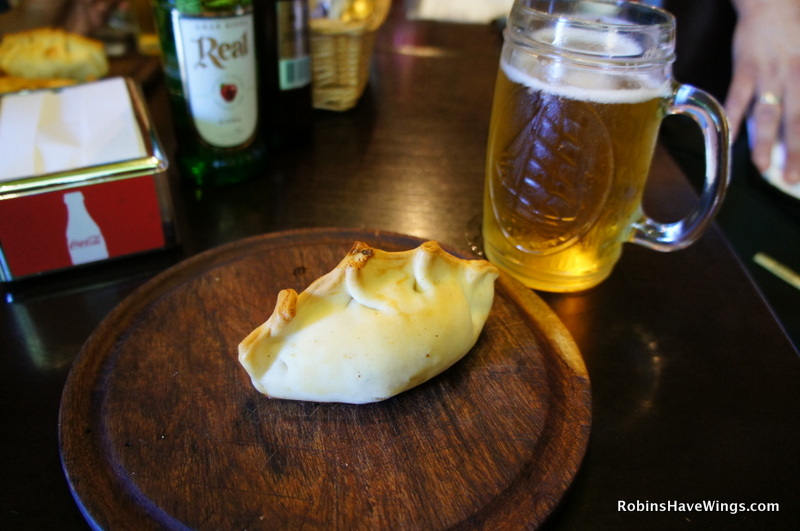
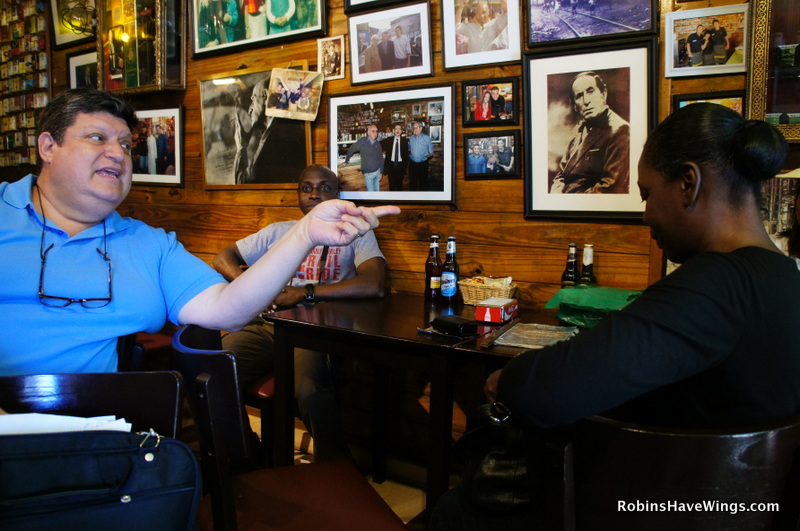
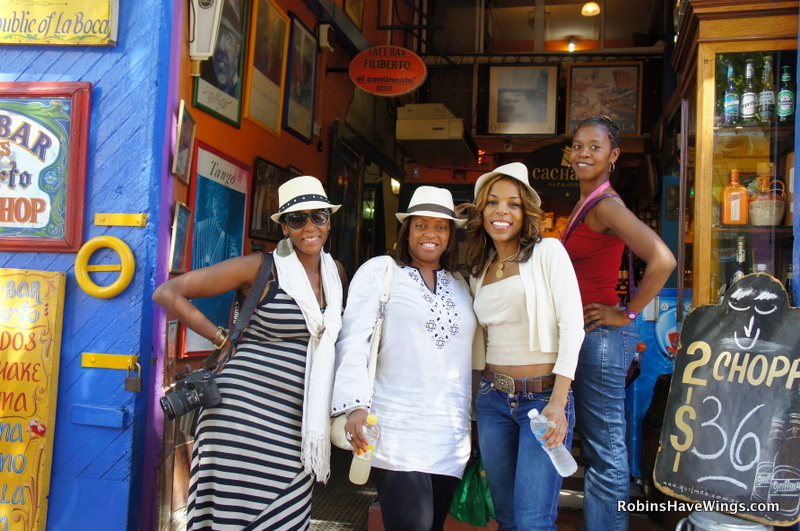
He seems to get more animated when he takes us to La Boca, the barrio where early Spanish and Italian immigrants settled, painting their homes in one color and then another when they ran out of paint, giving the place its vibrant look to match its new vibrant artsy cafe culture. The place brings us to life too, especially since we haven’t stopped since our 8 hour flight from Miami to Buenos Aires. Luis takes us to Filiberto a spot that Bill Clinton visited without Monica, he quips. And sure enough, there is a photo of Bill on the wall next to photos of famous Argentinians. We actually spot a famous Argentinian in the flesh, football royalty Maradona. He’s greeting fans in the middle of La Boca’s main drag the Caminito and charging them for photos. Floyd, a fellow traveler, turns into a 15-year-old soccer fan right before our eyes, darting away to meet an idol. It’s actually pretty cool to see, along with the tango performers and street art. What’s cool to the tastebuds at 2pm on a warm 80-degree day is a Quilmes beer straight from the tap with chicken and beef empanadas at Filbertos.

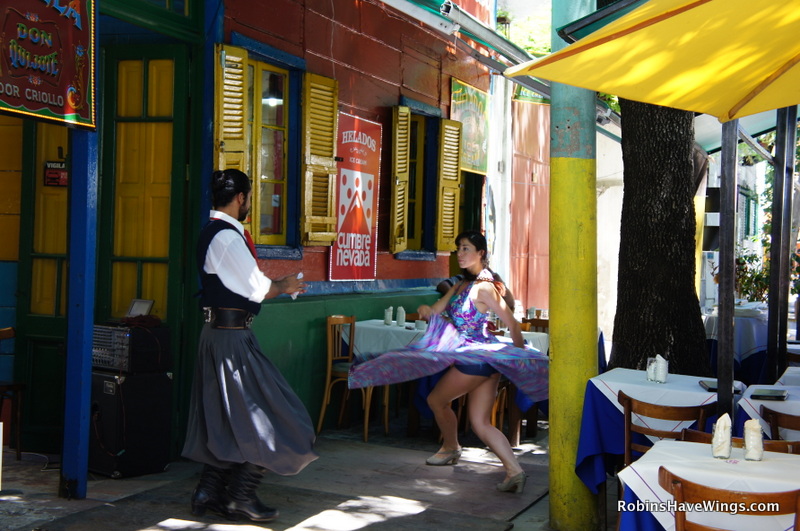
Tango in La Boca
Gai and Alan checking out the art in La Boca
Maradona wall art. Didn’t get a good shot of the real one, but this version is nice.
Empanada and cerveza.
Luis sharing a bit about Argentina’s past and present
Sheneekra, Gai, Kenitra and Carmen at Filberto’s

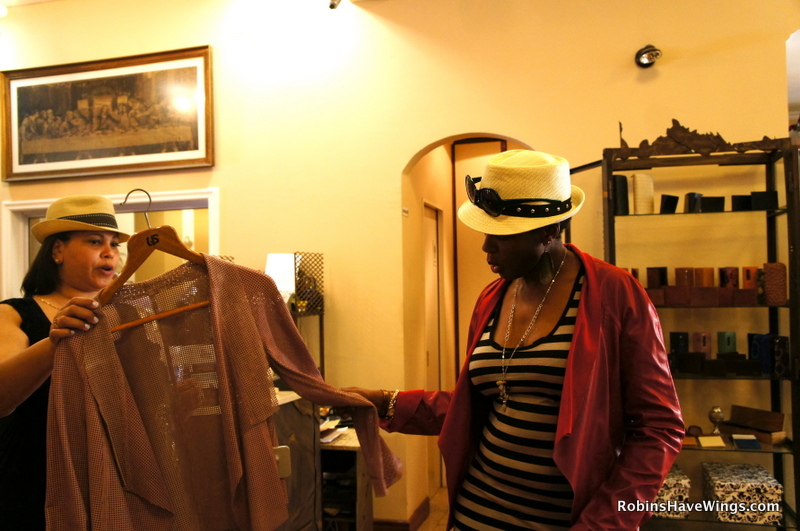
The afternoon snack takes its toll on a few of us at our last stop of the day, Uru, a leather boutique that does custom leather tailoring. We leave the leather shoppers and slowly stroll back to where we started at our modern home away from home, the Dazzler Tower Recoleta.

Gia and Sheneekra Leather shopping
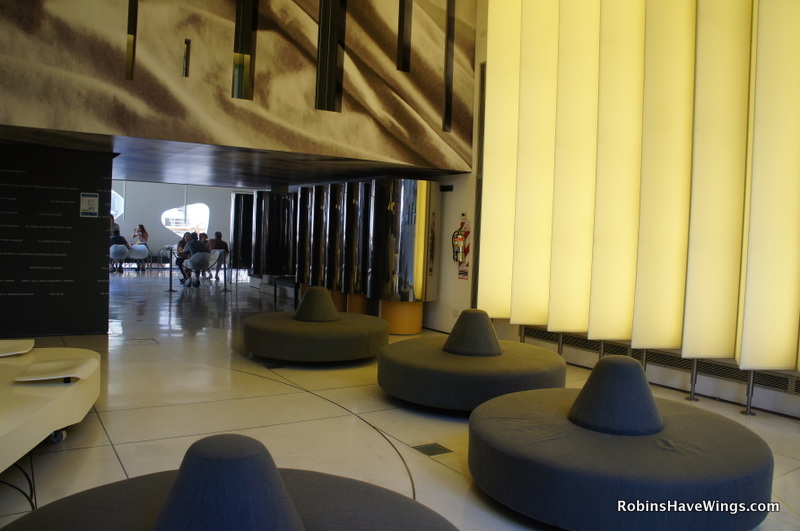
Lobby of the Dazzler, our home away from home

Have you been to any of the places I visited in Buenos Aires, today? What did you think? We have another free day in Buenos Aires this Sunday. How should we spend it?