Leaving Denmark: Falster Festival and Danish Crown Jewels

As we drive through Nykobing, Annelise points out the street where her sister Pip lives and notes a street that used to be filled with shops when she was growing up. A trip to her hometown to run an errand turned into a trip down memory lane. Every corner seems to hold a bit of her past. The bank where she once worked is on the corner of the town square where we stop to listen to a live beer and have a drink. It happens to be the start of an annual summer festival in Nykobing. Stores are selling their wares on the street boasting sales. Food vendors sell crepes and candied roasted almonds. We pass a few buildings that her other sister owns and Annelise remembers the walking thoroughfare as a main street bustling with cars. On the same street, two guys in medieval garb swat at each other with fake swords as part of the day’s festivities. As we head back to the car, we walk past the church where Annelise was married next to the old nunery that has turned into an office park. Annelise says sometimes people don’t think twice about the history surrounding them. Back in Marielyst, we share our last meal together of some of the plumpest and juiciest pork chops ever and then head out for ice cream in hand-rolled waffle cones, a favored Danish dessert. I am ending my stay in Denmark almost as it started with waffles and ice cream. This time I get a picture.


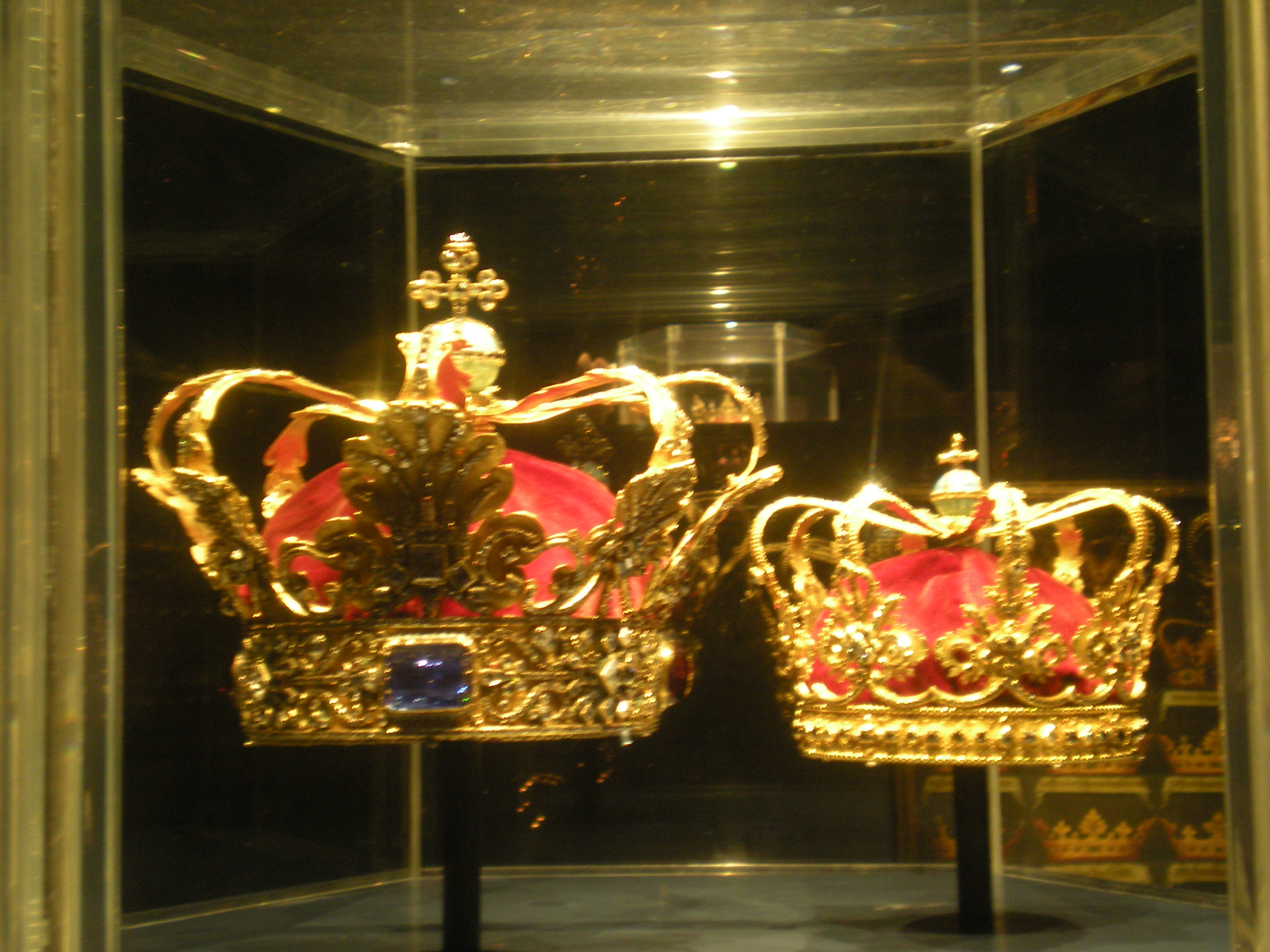
Back in Copenhagen, I stand in front of a painting that could have been a landscape of Marielyst in the 19th century, naked children frolicking in the beach surf. But it is set in Skagen, another city in Denmark known for its watches, and painted by PS Kroyer, one of Denmark’s famous painters. I make it toHirschsprung Museum 15 minutes before closing. It is one of Annelise’s favorites, so I promise to make a visit. It was worth it. The staff is kind enough to let me quickly peruse the collection and I find that I really like the beachscapes, particularly one of a couple strolling arm in arm along on the beach with their dog. It is also by Kroyer. Another painting by Harold Slott-Moller of three women in long summery dresses, standing one in front of the other in a lovely garden catches my eye. The paintings are reminiscent of the Impressionists at times, but are more realistic, featuring Danes going about their daily lives at the time, farming, raising children, enjoying life. Not to different from what they do today. A bell rings and it is closing time, so I go back to Oster Volgade to check out Rosenborg Slot, Copenhagen’s Renaissance Palace that I’d been meaning to visit before heading to Falster. Rosenborg is surrounded by a park where Danes like to spend their weekends. I wish we had something similar in the states where we could just hang out on the grounds of a palace. Rosenborg is home of Denmark’s crown jewels, so I head straight there first and I am greeted by the gold and diamond encrusted state sword. Museum docent tells me that I am taking my picture from the wrong side, but it is pretty impressive from both sides. In the next space is the coronation crown. The same docent tells me that there hasn’t been a coronation ceremony in Denmark since 1840, so the crown sits here on public display. It is also gold and diamond encrusted with the addition of rubies and pearls. It is easy to forget that Denmark has royals, because it appears to be an understated fact of life. But coming here, you realize they are just as grand as Britain’s royal family with all the accompanying crowns, jewels and swords to prove it. The palace itself is something to behold. It has the grandest great room that I think I’ve seen so far in my palace visits. The room appears to span the entire length of the palace and at either end are stunning thrones. At one end are two gold and silver thrones for the king and queen during coronations and the other red velvet and gold-trimmed throne was meant for the king to receive an audience. The red, black and white tiled floors seem to make the room even longer and the Danish royal crest beams down from the ceiling. I am certain this was the site of a great many official parties and grand events. All of the rooms in the palace are preserved as they would have been used in the 1600s. And amber chandelier hangs in one, Royal Copenhagen china is present throughout as well as elaborate tapestries.


 Once again, I hear the bell that says it is closing time and I go in search of dinner. I wanted to stop at Aamanns, a nouveau smorrebrod place that a friend recommended, but it was closed for the summer. I am near the Norreport Metro and I decide to head to Nansengade a street where young hipsters hang out at bars and cafes. It turns out to be what I had been expecting in Norrebro, but never found. My last meal in Denmark is a Thai-inspired dish called the Bangkok at Kalaset. It is a basement cafe that is surprisingly bright and cheery and the Bangkok was just what I needed, comforting with a little kick from whole coriander seeds. I finish reading “The Girl with the Dragon Tattoo” while there and then venture farther down the street to have coffee of tea at another trendy cafe called Bankerat. This place has worked hard to be eclectic with reindeer antlers and other wild animal carcasses snarling at you from its walls. Molds of bare-chested and bare-bottomed women are interspersed. This would be an ideal man cave. I order an earl grey and soak in the ambiance, trying not to think of my impending departure and the end of a month of adventure, culture, fun with friends, wings spread wide.


Coziness and a Pot-Lover’s Heaven in Christianhavn

There is a word called “hygge” in Danish, which sounds alot like the word “hug” and translates to cozy. I found it in a place called Cafe Wilder and it was the perfect refuge from the rain-soaked streets of Copenhagen. The bartender greeted me warmly and I took a seat at the bar. It is definitely the corner cafe and reminded me of one I might find in Paris. There’s a table with a young couple and child, two friends catching up and a couple of larger gatherings. I can tell they feel cozy, too. I order a brown ale and steak and fries, then pull out my Nook. When a table becomes available, the bartender offers to seat me and it has a nice view for people watching. When my steak arrives, it is perfectly cooked and the potato coins are crispy. Sometimes, when you travel, you wonder if you lived in a place, where you’d hang out. Cafe Wilder would definitely be a place that I would frequent.


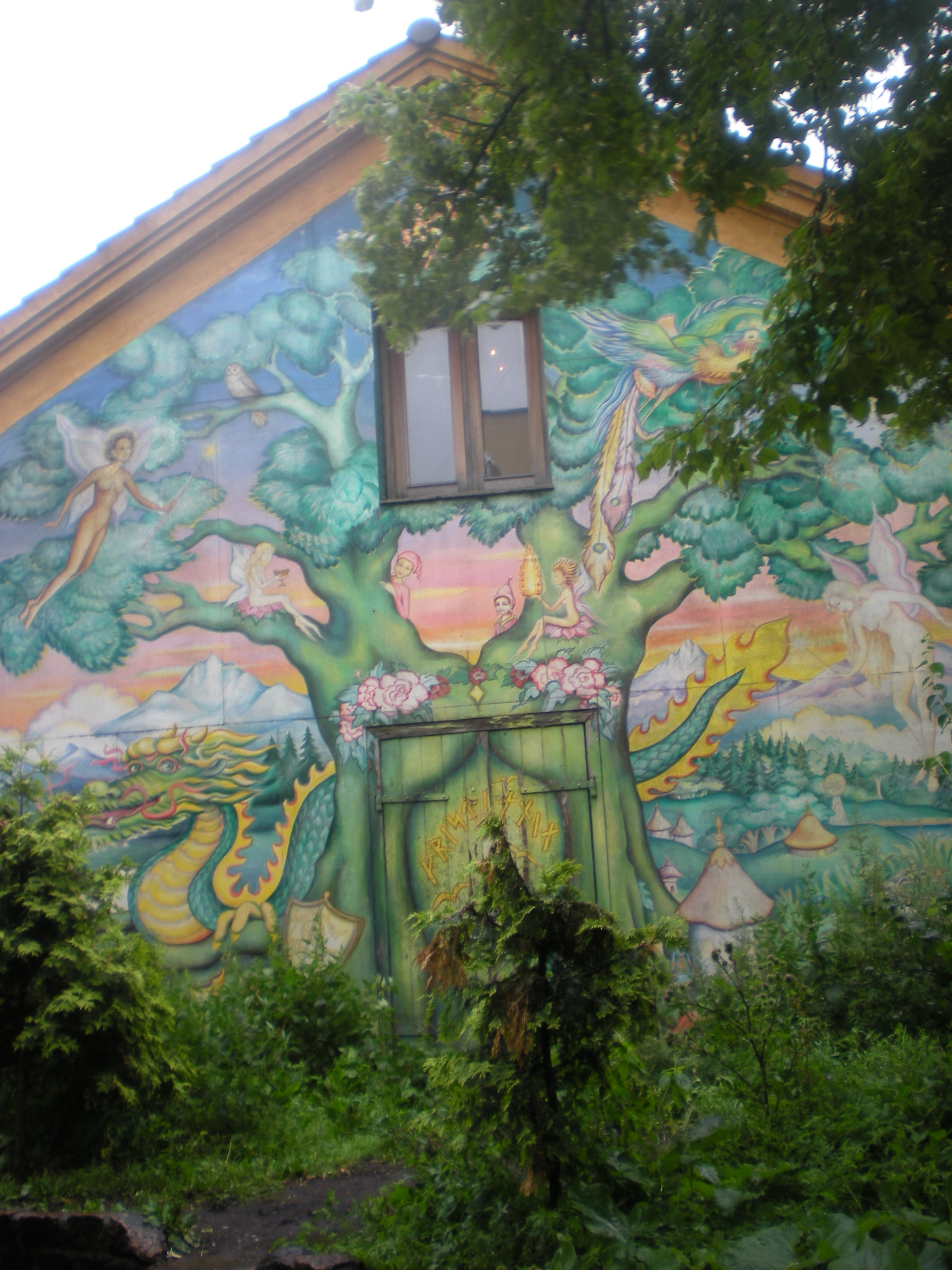
I could have spent all day there, especially since it was still spitting rain, but the place was starting to fill with others seeking refuge and I still needed to see Christiana, a “free state” within Copenhagen. In the 70s, squatters, then hippies took over a military camp in Copenhagen and declared it a state separate from Denmark, creating an alternative, tolerant, ecologically-conscious, self-governing society with its own schools, housing and businesses. But drug culture started to prevail in the little Utopia.There is even a “Pusher Street.” Hard drugs are outlawed, but the sale of marijuana appears to be brisk. I smell it as soon as I step through the brick archway on the corner of Prinsessegade and Badsmansstraede. A building to my left is covered, door-to-floor in graffiti. I can’t decide if it adds to the charm of the place or if it is an eyesore. A feminine metal figure stands tall in a junk garden, her skirt billows with metal tin sheets and bike wheels. A totem pole entryway says that I am now entering “ell.” Not sure if this is the Danish spelling of Hell and start to wonder if I should turn back. But I see other curious tourists mixed in with folks who seem to have come to enjoy the day in Christiana despite the rain. I come to a colorful street of commerce with “No Photography” signs everywhere, which makes me really want to take a picture. The pot is particularly pungent here. I see an older white woman with locks in the window of a trailer selling sweets and immediately wonder if she’s selling hash brownies. I keep moving because I hear music, kind of a hip-hop reggae mix, and I find myself in Nemoland. It’s an open space with a stage and picnic tables. I sit to listen for bit. I think the artist is called Son of Sun and he must be preparing for a concert as he and the band stop and start several times, but I like what I hear. At this point, I start to notice that folks have joints the size of cigars. One guy just lets loose and starts spinning in front of the stage, joint in mouth. I venture inside the nearby bar, also called Nemoland to find the toilet and inside I see the words of a bathroom wall scribe, “Don’t drink and drive. Just smoke and fly.” Think that about sums it up.


 I also saw a bit of the alternative art scene in Christianhavn atOvergaden before lunch at Cafe Wilder. I am not sure what to make of what I saw. One exhibit included a video of a man doing rope tricks. See my pics of more alternativeness on display.


Shopping in the Rain by Day; Dancing with Danes by Night


I couldn’t believe my ears. The DJ was playing Chuck Brown’s “Block Party.” Do Danes have block parties and barbecues? Would they be playing the Godfather of Go Go at such gatherings? First a Grammy nod, now Chuck has gone global. I have hit Danish nightlife pay dirt at the Copenhagen Jazzhouse. I wasn’t sure what to expect when I entered. There were a few tourists listening to a jazz mixologist upstairs. It was a tad odd to see a guy in Ray Bans with headphones spinning jazz tunes. Guess there wasn’t a band available. But the bass was bumping downstairs in what looked like Copenhagen’s version of the Cotton Club. Small tables with white table clothes and candles look over the dance floor and a stage boasts the “Jazzhouse” in soft blue lights. Trumpeter Terence Blanchard played there during Copenhagen’s Jazz Festival earlier this month. But now the DJ was playing Chuck and I was starting to wind up, especially when he played “Double Dutch Bus” followed by “Jungle Boogie.” It’s clear that Danish youth have been fed a healthy helping of soul and I am very appreciative, as are my fellow dancers. It appears to be girls night out and a gaggle of women have taken over the dance floor flailing their arms, hair, entire bodies, this way and that.

Now, when I told people that I was going to Denmark, particularly my single women friends, they were certain that I’d see all sorts of attractive, tall blond Danish men. Sadly, this hasn’t been the case. I’ve mainly seen middle-aged, married Danish men with 2.5 kids on vacation. I even had occassion to dance with a couple at the Jazzhouse. These guys, extremely happy to be out without the wives, made great dance partners. One was tall and gangly and the other short and curly-haired. Both were very polite and quite complimentary. I jumped and bounced to the classic 80s song “Our House” by some UK band with one and started enthusiastically dancing to Michael Jackson’s “Smooth Criminal” with the other until we realized that it was the super extended remix version. Then I spotted one–a cute Dane–except he didn’t look the way most would expect. He was dark haired, not particularly tall, and smartly dressed. If I am not mistaken, he was smiling and making eyes at me. How fun! Then they play our song,”I Wanna Dance With Somebody” by Whitney Houston. No, I am not making this up. He comes over and grabs my hand to dance. He speaks very little English and I can’t catch his name over the music, but it doesn’t matter because he’s cute; and he’s spinning me and he’s singing to me. He’s extremely tone-deaf, but I think that’s cute, too. (See what a cute Dane, in my opinion, looks like, below.) We were only meant to have the one dance. He seemed to be double dating with a friend or brother. Their blond dates didn’t appear to be into dancing, so they left. I, however, kept dancing with married Danish men until about 2 am, when I decided to call it a night. I met Rami and Peter on the walk back, two silly teens, who asked what I would prefer: Have a kangaroo in my house or live in a kangaroo’s pouch. I chose the kangaroo pouch, because I didn’t want a kangaroo to destroy my house and mistakenly kill and eviscerate me with its powerful hind feet and claws. They didn’t expect my very complete answer. I didn’t share the source of my extensive and very random animal knowledge. Sometimes having worked at Animal Planet comes in handy.

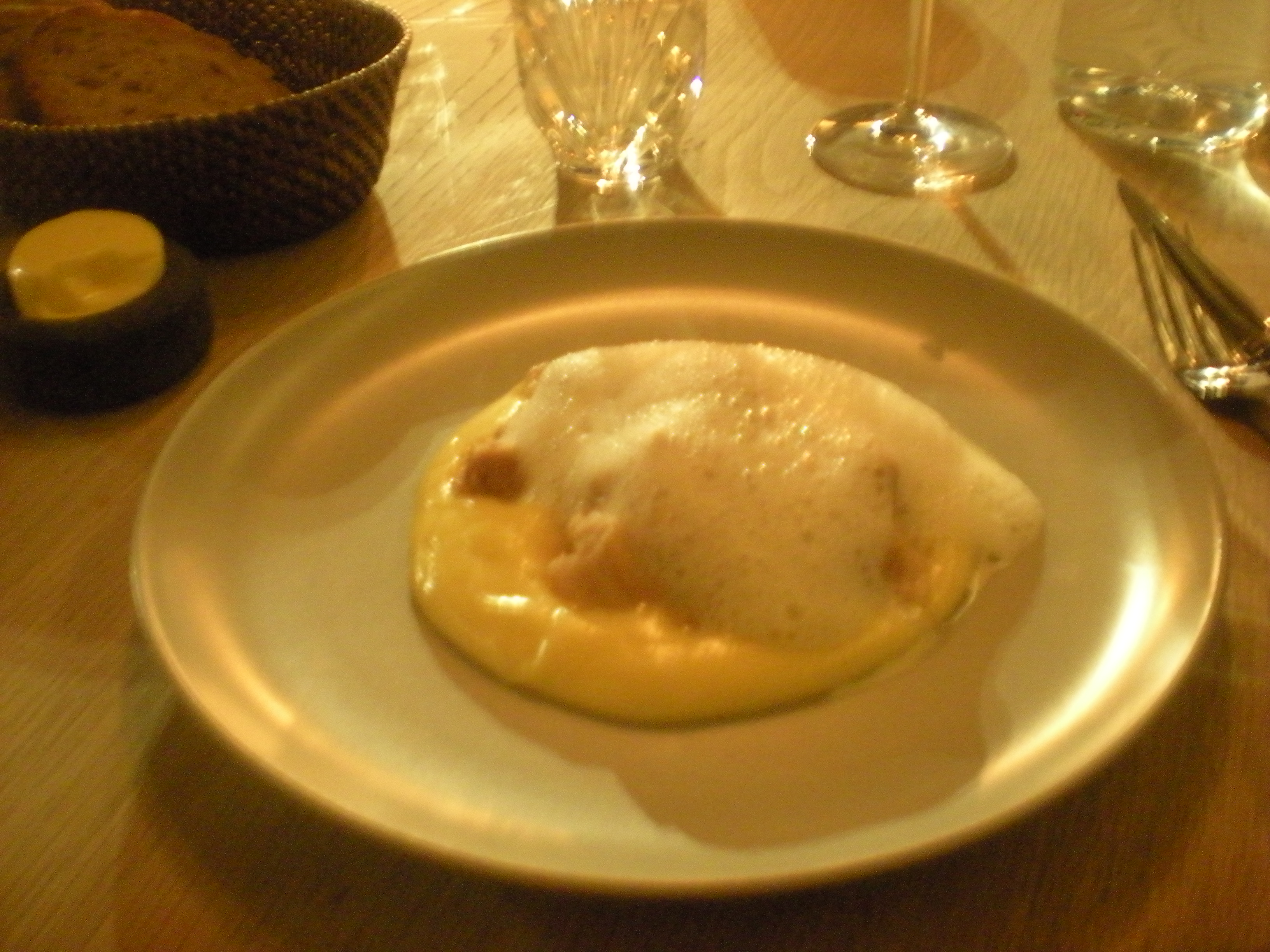
 Before dancing with Danes, I dined with the hip and trendy variety at Geist, a spot I noticed on my first night in Copenhagen, a few blocks from my hotel. It turns out this is the new hot spot in Copenhagen with a celebrity chef named Bo Bech running the moody, well decorated place. The staff was super attentive, taking my coat and umbrella and seating me at a communal table with two couples.They were so into each other that they barely knew I was there, which was fine. I was ready to be focused on my food. Geist serves the Danish version of tapas and the waitress says that two is usually enough for most people, so I order a turnip, ginger and shrimp dish and a suckling pig, mashed potatoes and salted butter dish. The suckling pig turned out to be the dish of the night. The mashed potatoes were the consistency of a custard, the pork was juicy and slightly fatty with a salted butter foam on top. What makes pork better? Butter. It was ridiculous. I went light for dessert, which was strawberries in a thickened balsamic vinaigrette with slices of frozen whipped cream on top. With coffee or tea they bring out white cotton candy, which they call candy floss, to end the meal. It was top notch all the way. This one wasn’t in the guide book.


But I did take Lonely Planet’s advice and hit Copenhagen’s main shopping areas–Stroget, Straedt and Latin Quarter –during the day as the sky spit rain and openly cried rivers off and on. There were the places you see everywhere like the H&M, Top Shop, Tommy Hilfiger, Louis Vuitton, etc. But further exploration lead to cute jewelry shops and home stores selling colorful Danish designed soap dishes, pillows and the like. When I could take down my umbrella, I took a few photos. Check them out.


Don’t Bike Ride While Drunk and Sometimes the Guidebook is Wrong

On my way back to my hotel from an uneventful evening in Copenhagen, I saw a woman going too fast on her bike fall head first in the street. Her friends came to her rescue in a fit of laughter, while she stood up and slurred a few words in Danish. It’s easy to catch slurring in any language. One thing is for sure, the Danes like to drink and they like to bike. Together it could be a dangerous combination as they don’t wear helmets. On my way to a restaurant/bar/dj spot in Norrebro, I saw a biker misjudge a street barricade, doing a clotheline in the process with bike going one way, him another. I wanted to help, but I wasn’t sure what I could do. Luckily, a pair of guys from the place I was going rushed over to help. He was shaken, but appeared to be OK.

 I walked about 30 minutes from the tourist haven of Nyhavn to the grittier, more lived-in neighborhood of Norrebro to check out Bodega, a place that Lonely Planet called “one of the hottest spots in one of the hottest neighborhoods.” There are two people inside other than the  staff and a few people having drinks outside when I arrive around 9:15. A blonde with an assymetric bob wearing a cut-off “I Love New York” t-shirt tells me that the kitchen is closed and there’s no DJ and they will probably close at midnight because it’ll just be her working. I guess I should have come up with a plan B when the woman at the front desk of my hotel said she hadn’t heard of the place. I decide to make the best of it and order a Bodega at Bodega, which is a bourbon with ginger ale and mint, which actually is a mint julep. Oh, well. It is tasty and I take in my environs. It has the makings of a hot spot with colorful banquets lining the bar area and multicolored pillows. A disco ball hangs from a corner and there is actually a DJ booth, just no DJ spinning R&B and funk grroves as promised. I do hear some mellow R&B that sounds like it could be from the B side of some neo-soul artist album–something that you’ve never heard but sounds vaguely familiar. A bit later one of the guys working in the bar switches the music to the slighty more upbeat Kings of Leon song, “Use Somebody,” and I head off to another nearby spot where I am able to score chocolate cake and a coffee.

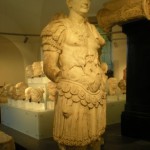
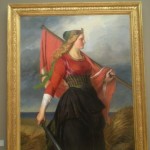
 Not the evening, I envisioned, but I had a day packed with more cultural activity. The Ny Carlsberg Glyptotek has a pretty impressive post-Impression collection and I’m a nut for the Impressionists. My favorite is Paul Gaughin and the museum had a comprehensive display of the development of his works and style from the 1880s to the 1890s. His paint dappled canvases of French women and landscapes evolves into the bolder, more colorfully stroked canvases of Tahitian women and mythical places. I was surprised to learn that Gaughin worked in cermamics and elaborate wood carvings as well. I was so enamored that I even bought a little book about him at the gift shop. While in the Etruscan and ancient art collection, I was thrilled to connect my wonderment at the Trajan Columns at the Victoria and Albert Museum in London with the statue of Emperor Trajan himself here. (I am a total nerd, I know, but what are the chances?)  I was also happy to have meandered through an amazing  sculpture collection including Jean-Baptiste Carpeaux, who I’d never heard of, to the great August Rodin. Carl Jacobsen, the beer barron and founder of the museum was apparently close friends with the sculptor and had access to many of his original works. I spent time among the works of Danish artists as well and stopped to snap a photo of Mother Denmark.

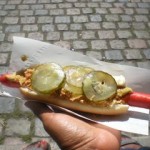
I took a break to have a hot dog at Andersen’s Bakery next to Tivoli and across from the Central Train Station.  Copenhagen is actually known for it’s hot dogs and I can say without a doubt that this hot dog is the best hot dog, I have had, EVER. It was called the Great Danois and was filled with the meatiest and most flavorful pork sausage along with ketchup, a dijon mustard with kick, a pickle-infused remoulade and topped with crispy bits of deep-fried onion and pickled cucumber. All of this was in the softest, fresh-baked bun. It was tough to eat, its contents oozing out of the bun and onto my fingers, but I made it work. It put the street vendor version I had earlier in the week to shame, and it wasn’t bad either.

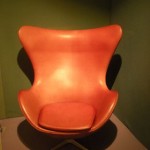
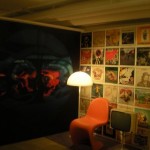
Rejuvenated by pork-product, I move on to the near-by Dansk Design Center. If you didn’t know, Denmark is pretty much the center of the design universe. After World War II, the country began filling the needs that consumers across the world never thought they had with Legos, tabletop telephones, stackable bowls, tea sets and even chairs. Danes realized that we needed swivel office chairs and desktop file holders to be more efficient at work. At times the permanent exhibit looked like an old 1970s family room complete with leather egg chair and the first Bang & Olufsen television set, and at others an Ikea meets Crate and Barrel store. It was definitely fun to see Denmark’s inventive spirit on display.


Denmark’s Peat Boggy Past and Picturesque Present

If you want anything preserved for over millions of years for posterity, drop it into a Danish peat bog. It’s the original time capsule. I come to this conclusion in Copenhagen’s National Museum, Nationalmuseet in Danish, as I encounter one well-preserved prehistoric corpse after another. The Bronze Age dwellers were buried in hollowed-out oak trees and recovered almost completely intact minus skin and some hair wearing wool clothing, bronze belts, swords and hair combs. The museum comprehensively chronicles Danish prehistory from Cro-magnon man and Ice Age reindeer hunters to the Bronze Age and the rise of the Vikings. More than bodies have been pulled from the peat bogs, stone, bronze, gold and amber tools and jewelry were recovered too. Possible offerings to the sun god and other prehistoric gods. I thought the Viking piece of the exhibit was a little thin. The most impressive piece in display was one of the first wood-paneled boats recovered. There was special care taken not to portray the Vikings as wild rapists and pillagers, but as people engaged in exploration and commerce.

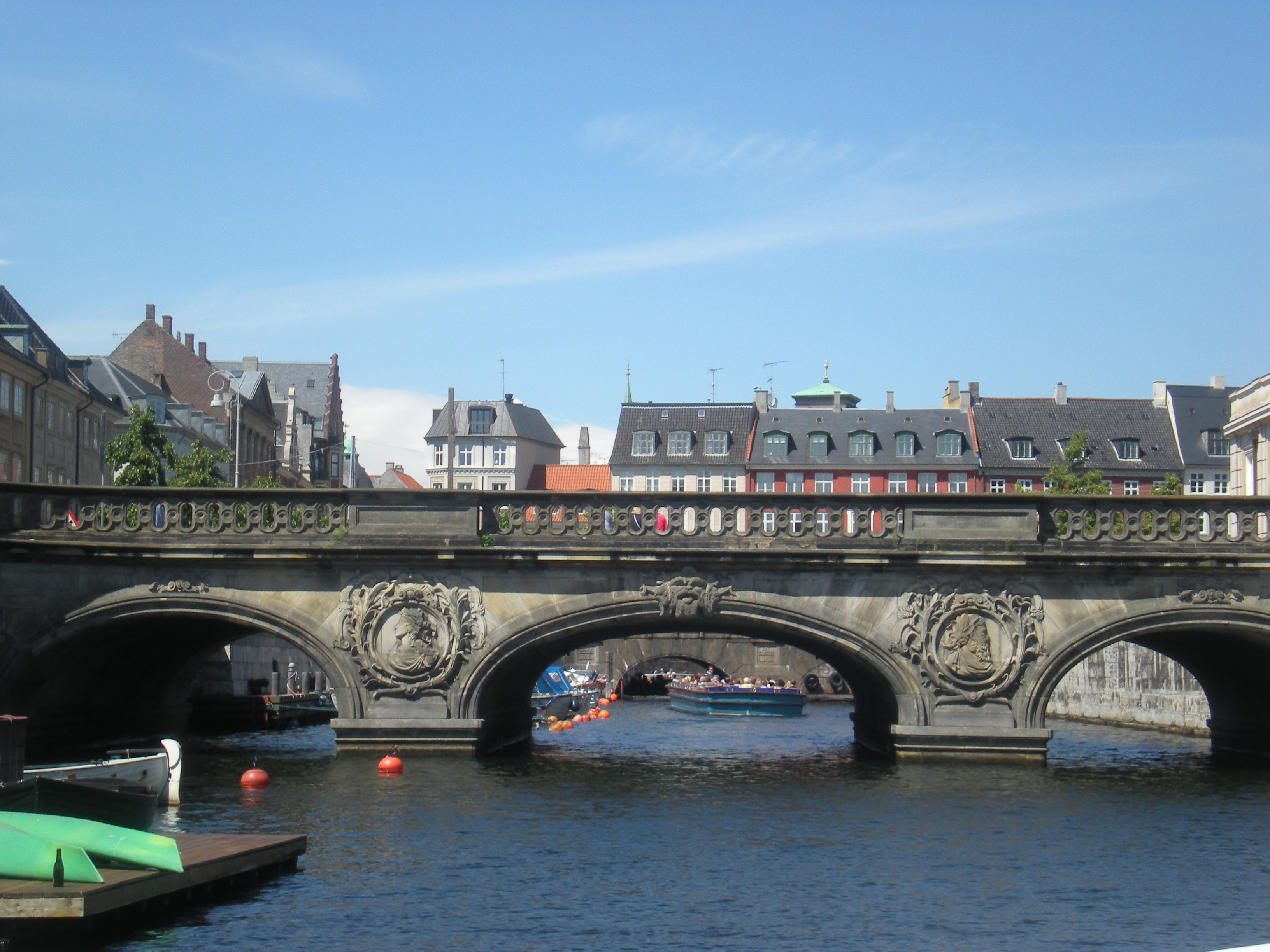
 Denmark’s past peeks out from behind its new more modern facades as I see on a gorgeous canal tour. At first, I wasn’t sure about enduring the crushing tourist crowds to take the tour, but I couldn’t think of a better way to get an overview of Copenhagen than by boat. It was perfect, especially on a cloudless day that felt like 80 degrees. We left Nyhavn Canal cruising into the harbor to see Copenhagen’s new opera house and through Christianhavn Canal, created by Christian IV who was inspired by the commercial canals of Amsterdam. Now the harbor is filled with houseboats from the lifestyles of the rich and famous, not quite as ostentatious as yachts that I saw a couple of years ago in Marbella, Spain, but not far off. Deeper along the canals and under a few tight bridges we pass Denmark’s Parliament building, which also houses its Supreme Court. Making our way through the city in a loop, we also pass the home of the current Danish royals, Amelienborg Slot, aka palace. Sadly, Queen Margarethe II is away for summer vacation. Another must see from the harbor is the statue of the Little Mermaid, the protagonist of the fairytale written by Hans Christian Andersen. She looks nothing like the Disney version and in fact is a model of the artist’s wife. Later on the tour we see one of the homes that Anderson lived in along Nyhaven Canal.


 Taking in Copenhagen by water whet my appetite for more and I decide to take a boat to the National Museum where I fill up on all my Danish history as mentioned above. From there, I walk over to the playground of the Danes, Tivoli Gardens, the world’s second oldest amusement park. Second only to another park just outside Copenhagen. Tivoli is a feast for the eyes. I don’t think I’ve taken this many photos my entire trip. There are roller coasters and any manner of whirly-gigs, gardens, fountains, a pirate ship, with bits of old Danish architecture popping into view here and there. Before I subjected myself to this sensory overload, I had a delicious traditional danish meal of smorrebrod, known as open-faced sandwiches, at Grofteninside Tivoli. The restaurant was just as fanciful as the park with multicolored lights strung about and red and white checkered table clothes. I order a Carlesburg, the native brew, along with a fried fish fillet smorrebrod, smoked eel and scrambled egg and a hot pork smorrebrod. My waitress tells me that the portions are big and that I may have overdone it. When the plates arrive, I know she is right. The fried fish was tasty on top of a slice of carraway bread and a flavorful remoulade. I am practically full when I try the eel which tasted just like smoked salmon. At this point, I tell the waitress to nix the pork, since there is no way I can fit another thing in my stomach, until she tempts me with raspberry pie. So, you see I HAD to walk around all of Tivoli, through carnival-esque and Chinese and Morroccan-themed spaces, twice just to work off my Danish dinner. I may have been a bit mesmerized. I couldn’t bring myself to leave, so I have a nightcap at Nimb, a hotel, restaurant and bar that looked like the Taj Mahal. In a lounge lit by candles and two gorgeous chandeliers, I step back into the past and sipped a Seelbach cocktail of champagne and brandy in an gray suede chaise.


Denmark First Impression: Simplicity is a Virtue

My hotel room at the Scandic Front in Copenhagen is small by American standards, but probably just right by European ones. I have a twin-sized bed with a sleek ebony-colored head and sideboard. The desk is about a foot away from the bed in the same dark wood and there is an equally sleek black chair next to the floor-to-ceiling windows overlooking the street. The walls are painted a mauve color and the carpet is a complimentary plum. It is very minimalist and perfect for someone who doesn’t plan to spend much time in her hotel room. The best feature is the warmed stone floor in the bathroom.

I’ve arrived in Copenhagen around dinner time, so food is on my mind. The other great thing about my hotel is that it couldn’t be more centrally located. It is a block from Nyhavn the famous little canal filled with boats and lined with colorful townhouses. Hans Christian Anderson lives in several of the homes here. Instead of heading there for dinner, I decide to go in the other direction towards the harbor and dine at theRoyal Danish Playhouse at it’s restaurant Ofelia. The playhouse is simple and spare, letting the view from its floor-to-ceiling glass windows do the talking. Ofelia’s takes up a corner of the theater’s main floor along with some outdoor seating. From my seat, I can see tourists and Danes out for an evening stroll along the pier and any kind of boat you can imagine, canal boats, sail boats, motor boats, even jet skis. The only color in Ofelia is from the red woven stacking chairs, which Denmark is apparently known for.


I ask my waitress for help with the Danish menu and decide to order a pasta dish with cod. It turns out to be an excellent choice. It looks as simple as the place where I am dining–two square-shaped pieces of cod sit atop a bed of egg noodles in a light cream sauce–but it tastes way more complex. The sauce is herbaceous, seasoned with basil and leeks along with the surprising sweet and sour flavor of pickled tomatoes. The dish was small but also surprisingly filling. Along with a glass of pinot blanc, this was a great culinary introduction to the city.

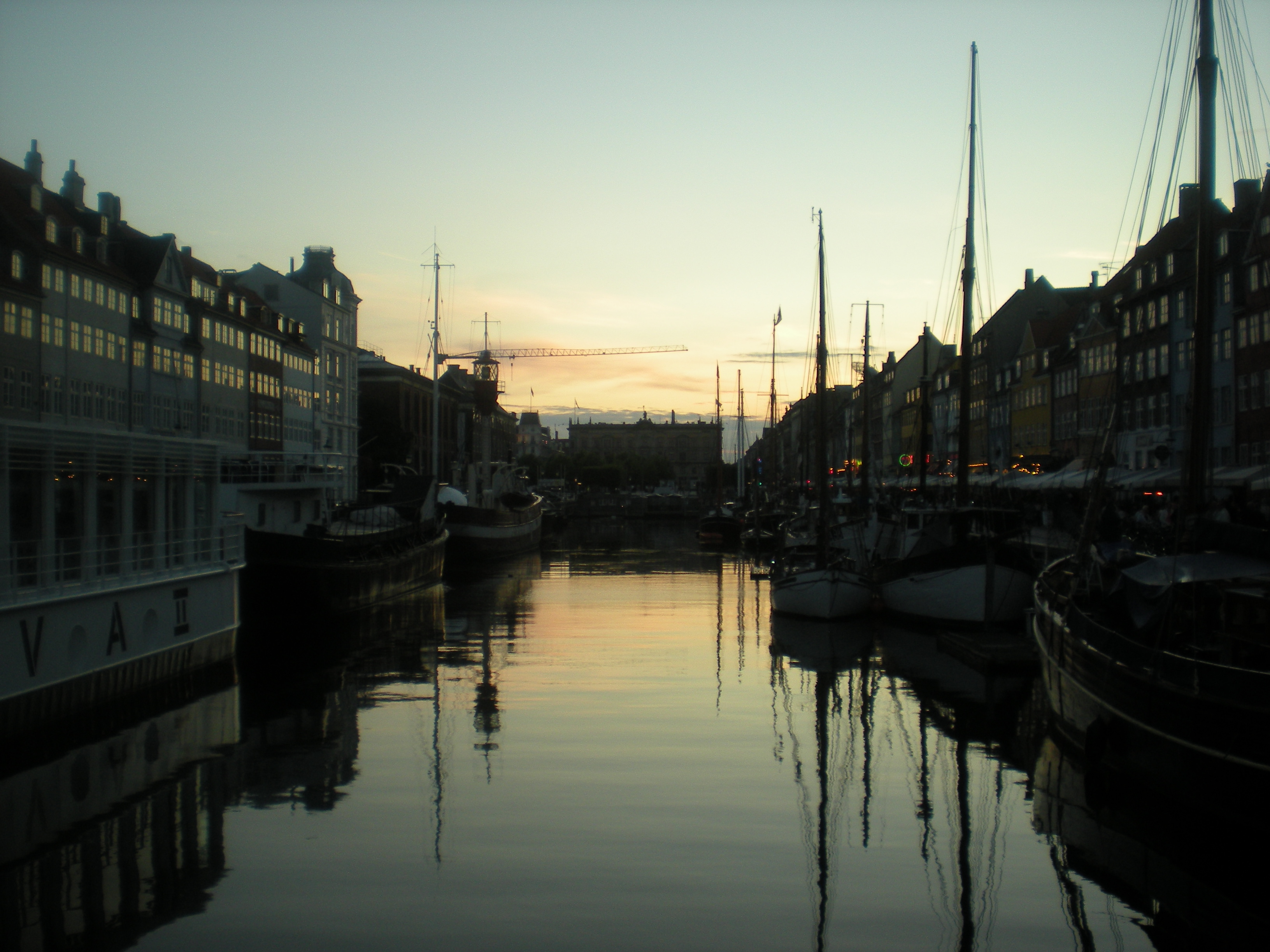
 After dinner, I stroll along Nyhavn and snap photos of the yellow, pink, rust and orange buildings in the fading sunlight. I notice that a lot of the people dining along the strip appear to be Danish. I would have imagined the place to be teaming with tourists and maybe it is during the day. I get beyond Nyhaven and enter a small square with park benches, and painted elephants on display like the pandas in DC or the bulls in New York. Beyond the park is a narrow street for high-end shopping. I have no idea where I am or have any sense of the significance of the streets, I am just wandering to orient myself to the neighborhood. I spot a cool looking restaurant called Geist that I’ll try to check out during my stay. I turn back towards the hotel, taking the same route back and I pick up a sweet smell in the air and spot people holding sugar cones with ice cream. I can’t resist. I haven’t had dessert, so I stop at a place that must translate to the Waffle Shop in English because they are churning out waffles and hand rolling them to be filled to the ice cream of your choice. I decide to have a Belgian waffle with soft serve ice cream on top. I may regret this later, but I am living in the moment. It’s very unfortunate that this place is a block from my hotel. Among the other perks of my new living space is that it has a lot of lounge space with fun colorful chairs, a foosball table and a chalk wall as its guest list. There isn’t much room to leave a mark, but I find there is just enough room to leave my new mantra.