Leaving Denmark: Falster Festival and Danish Crown Jewels

As we drive through Nykobing, Annelise points out the street where her sister Pip lives and notes a street that used to be filled with shops when she was growing up. A trip to her hometown to run an errand turned into a trip down memory lane. Every corner seems to hold a bit of her past. The bank where she once worked is on the corner of the town square where we stop to listen to a live beer and have a drink. It happens to be the start of an annual summer festival in Nykobing. Stores are selling their wares on the street boasting sales. Food vendors sell crepes and candied roasted almonds. We pass a few buildings that her other sister owns and Annelise remembers the walking thoroughfare as a main street bustling with cars. On the same street, two guys in medieval garb swat at each other with fake swords as part of the day’s festivities. As we head back to the car, we walk past the church where Annelise was married next to the old nunery that has turned into an office park. Annelise says sometimes people don’t think twice about the history surrounding them. Back in Marielyst, we share our last meal together of some of the plumpest and juiciest pork chops ever and then head out for ice cream in hand-rolled waffle cones, a favored Danish dessert. I am ending my stay in Denmark almost as it started with waffles and ice cream. This time I get a picture.


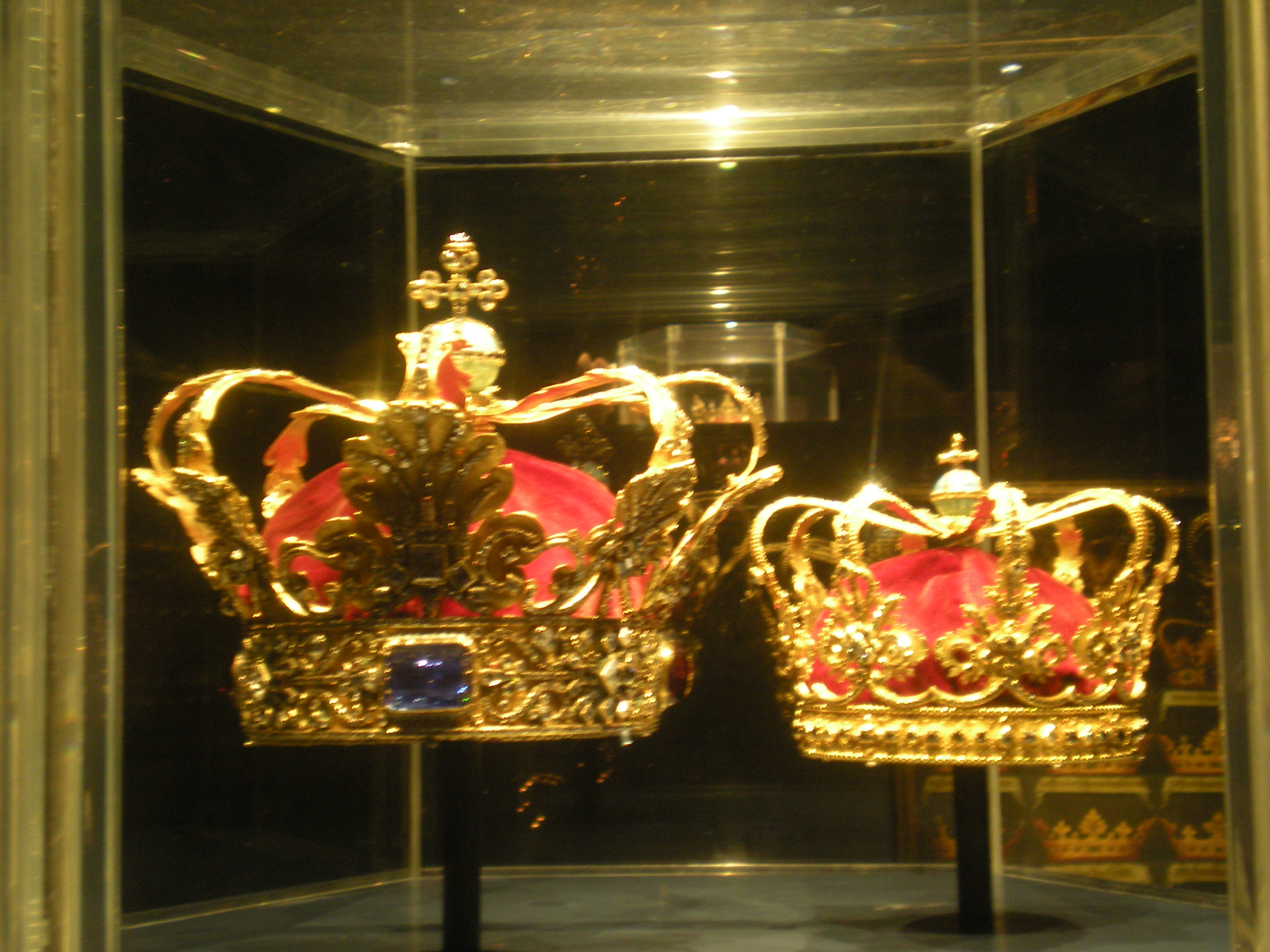
Back in Copenhagen, I stand in front of a painting that could have been a landscape of Marielyst in the 19th century, naked children frolicking in the beach surf. But it is set in Skagen, another city in Denmark known for its watches, and painted by PS Kroyer, one of Denmark’s famous painters. I make it toHirschsprung Museum 15 minutes before closing. It is one of Annelise’s favorites, so I promise to make a visit. It was worth it. The staff is kind enough to let me quickly peruse the collection and I find that I really like the beachscapes, particularly one of a couple strolling arm in arm along on the beach with their dog. It is also by Kroyer. Another painting by Harold Slott-Moller of three women in long summery dresses, standing one in front of the other in a lovely garden catches my eye. The paintings are reminiscent of the Impressionists at times, but are more realistic, featuring Danes going about their daily lives at the time, farming, raising children, enjoying life. Not to different from what they do today. A bell rings and it is closing time, so I go back to Oster Volgade to check out Rosenborg Slot, Copenhagen’s Renaissance Palace that I’d been meaning to visit before heading to Falster. Rosenborg is surrounded by a park where Danes like to spend their weekends. I wish we had something similar in the states where we could just hang out on the grounds of a palace. Rosenborg is home of Denmark’s crown jewels, so I head straight there first and I am greeted by the gold and diamond encrusted state sword. Museum docent tells me that I am taking my picture from the wrong side, but it is pretty impressive from both sides. In the next space is the coronation crown. The same docent tells me that there hasn’t been a coronation ceremony in Denmark since 1840, so the crown sits here on public display. It is also gold and diamond encrusted with the addition of rubies and pearls. It is easy to forget that Denmark has royals, because it appears to be an understated fact of life. But coming here, you realize they are just as grand as Britain’s royal family with all the accompanying crowns, jewels and swords to prove it. The palace itself is something to behold. It has the grandest great room that I think I’ve seen so far in my palace visits. The room appears to span the entire length of the palace and at either end are stunning thrones. At one end are two gold and silver thrones for the king and queen during coronations and the other red velvet and gold-trimmed throne was meant for the king to receive an audience. The red, black and white tiled floors seem to make the room even longer and the Danish royal crest beams down from the ceiling. I am certain this was the site of a great many official parties and grand events. All of the rooms in the palace are preserved as they would have been used in the 1600s. And amber chandelier hangs in one, Royal Copenhagen china is present throughout as well as elaborate tapestries.


 Once again, I hear the bell that says it is closing time and I go in search of dinner. I wanted to stop at Aamanns, a nouveau smorrebrod place that a friend recommended, but it was closed for the summer. I am near the Norreport Metro and I decide to head to Nansengade a street where young hipsters hang out at bars and cafes. It turns out to be what I had been expecting in Norrebro, but never found. My last meal in Denmark is a Thai-inspired dish called the Bangkok at Kalaset. It is a basement cafe that is surprisingly bright and cheery and the Bangkok was just what I needed, comforting with a little kick from whole coriander seeds. I finish reading “The Girl with the Dragon Tattoo” while there and then venture farther down the street to have coffee of tea at another trendy cafe called Bankerat. This place has worked hard to be eclectic with reindeer antlers and other wild animal carcasses snarling at you from its walls. Molds of bare-chested and bare-bottomed women are interspersed. This would be an ideal man cave. I order an earl grey and soak in the ambiance, trying not to think of my impending departure and the end of a month of adventure, culture, fun with friends, wings spread wide.


Tennis, Wind Mills, Zumba and Outstanding Nordic Dining

Annelise and Pip beat Jutte and I pretty soundly in the first set. It’s an overcast, chilly day on the red clay courts in Nykobing. I get to witness Annelise’s mean serve and well-timed slices from the other side of the net, while Pip showcases a pretty powerful forehand. The ladies call the score and share other pleasantries in Danish, but it is easy to translate because we all understand and love the game of tennis. Jutte and I make a comeback in the second set. She drops a few well-placed lobs in the back court and I hit a few strong backhands. Aaron has come along to watch a little friendly competition and turns into an excellent ball boy. I was thrilled to get in some tennis. Later, Annelise and I admit to one another that we are pretty addicted to the sport, but we already knew that about one another.

After tennis, Annelise takes us to see an old wind mill that we spotted from afar on one of our excursions. It’s the Stouby Mill built in 1750, once used to grind grain for poorer farmers who couldn’t afford to grind their own grain. Turns out the mill owner was as powerful as  wealthier farmers. Today, you can climb into the mill to see its wooden inner workings and visit other shops nearby. We stop into a store featuring glass-blown bowls and art and watch one of the craftspeople make a colorful glass-blown fish.


 There is an open-air market in Marielyst today also, so Aaron and I decide to check it out. There are vendors selling knitted gifts and jewelery and quite a few are selling dog treats and toys. Someone from the local crocodile zoo has brought an albino snake for vacationers to oggle and pet. We sample fresh honey, sweet and light, and chat with a local bee farmer who explains that the honey was collected that day. We circled the small market with fresh fish and vegetable as well within minutes and decided to sit and have a beer. Annelise’s brother, Niller, stops by to chat and offers to buy us a beer. Niller lives in Marielyst year-round and tells us of his plans to visit the states in September. Aaron and I are struck by his resemblance to his older sister. Niller leaves us to head home and we start to hear salsa music play. I recognize one tune from a Zumba class that I’d taken recently, so we get up to investigate. Sure enough, about 30 Danes are gyrating in the middle of Marielyst’s main street to a latin beat. There is a Zumba instructor on a stage leading the crowd in hip thrusts and pumps and quite a few are keeping up as if they’ve done this many times before. We notice that there are a few guys keeping up too, particularly one blond whose hips know how to find the beat. It was quite entertaining to watch, but not for long because we’ve got dinner plans.


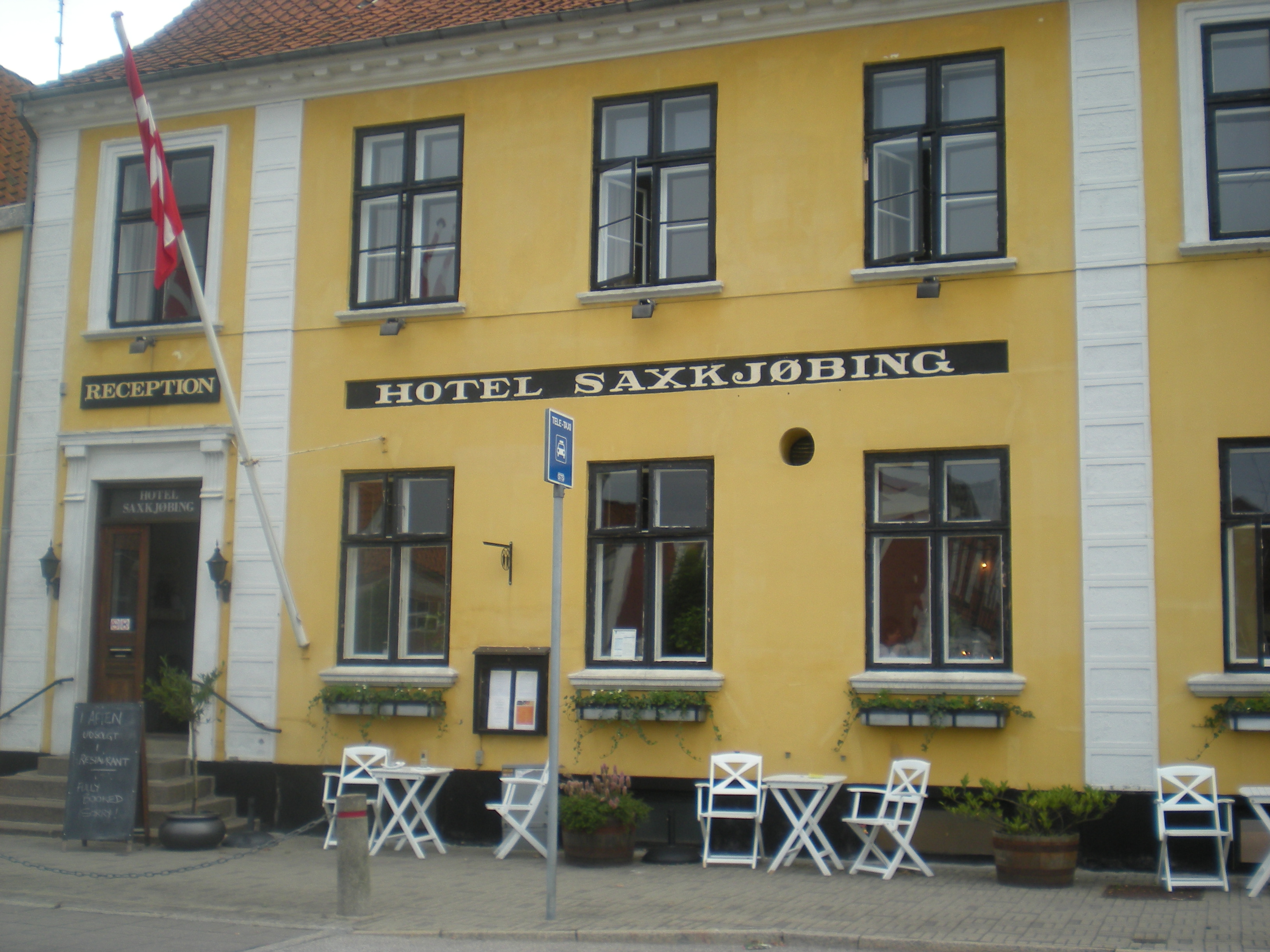
When we enter the Saxkjobing Hotel on Lolland, we can see why it is always booked. We count about 14 tables in the small, simple dining area with tree limbs haning from its ceiling. The size isn’t the only reason that the restaurant is so popular. It is affiliated with the best restaurant in the world as rated by Michelin, Noma, in Copenhagen. Noma is known for its organic, Nordic-sourced cuisine and Saxkjobing Hotel and Restaurant is following in its footsteps. Annelise tells us that we have to do the five-course menu and the wine menu with each course. We start with a simple shrimp salad and a Riesling and move on to a fresh filet of fish in a brown butter sauce with the same berries I had in my Koldskaal dessert at the Orangeriet in Copenhagen along with a Sauvignon Blanc. From there, we build to beautifully prepared lamb chops with a Malbec, followed by a cheese plate and dessert. It was fabulous. The three of talk about how much we love food and share memories of our favorite restaurants. Soon, we head home and I go to bed slightly tipsy and totally contented.


Sisters are the Same Everywhere and the Smallest Museum Ever

We are at a crossroads. We can go left or right. Annelise turns to her younger sister for advice. Pip says, “Oh, I don’t know. How about we go left?” Annelise asks if she’s sure and Pip says yes, somewhat confidently, but we find ourselves in the same position a few moments later after reaching another dead-end road. This time Pip says with some resignation, “I would prefer to go right, but I guess we have to go left,” upon spotting the dead-end end sign to the right. Pip has come along with us today to be our guide for the day and we’ve gotten turned around several times, heading down paved roads in one direction and narrow gravel ones in another. Annelise and Pip good-naturedly debate and tease each other over each change of direction and it reminds me of my sister and some of our family driving trips. All along the way Annelise and Pip assured us that we were never lost, we just didn’t know exactly where we were at the time. Annelise explains that it is particularly hard to find things around Falster because during the German occupation, Danes failed to mark some roads and purposely mismarked others to keep Germans from finding their farms. It turned out to be quite effective, because it is still hard to figure out where you are going today.

We eventually happen upon our destination in the coastal area of Halskov where there are more ancient Danish grave sites. A sign tells us that Hans Christian Anderson, father of fairy tales, once traveled to the area. There’s also a museum to explain the area’s origins. It has the be the smallest museum that I’ve ever seen. The tiny white building houses one room that the three of us can barely turn around in, featuring a wall illustration of life on the coast of Falster 5500 years ago and a recreation of a rocky burial site with a mannequin villager sticking out head first. Before the Vikings, early Danes were farming, hunting reindeer and memorializing their lost loved ones with stone structures. We happen to look up and see a Danish troll looking down at us. It looked like a cross between a monkey and a lemur. Annelise suggests that it is some Danish superstition, possibly meant to look over and protect the place. We set out through the surrounding woods to see more stone markers, passing wood carvings that look like Native American totems, unsure if an ancient Dane left them for us to find or if a modern Dane has an ambitious carving habit. Soon we see more boulder groupings amongst large felled trees that seem to have fallen under their own weight or been struck by lightening. When we tire of exploring we head back towards the car, sidestepping large black slugs nestled on the leafy ground.


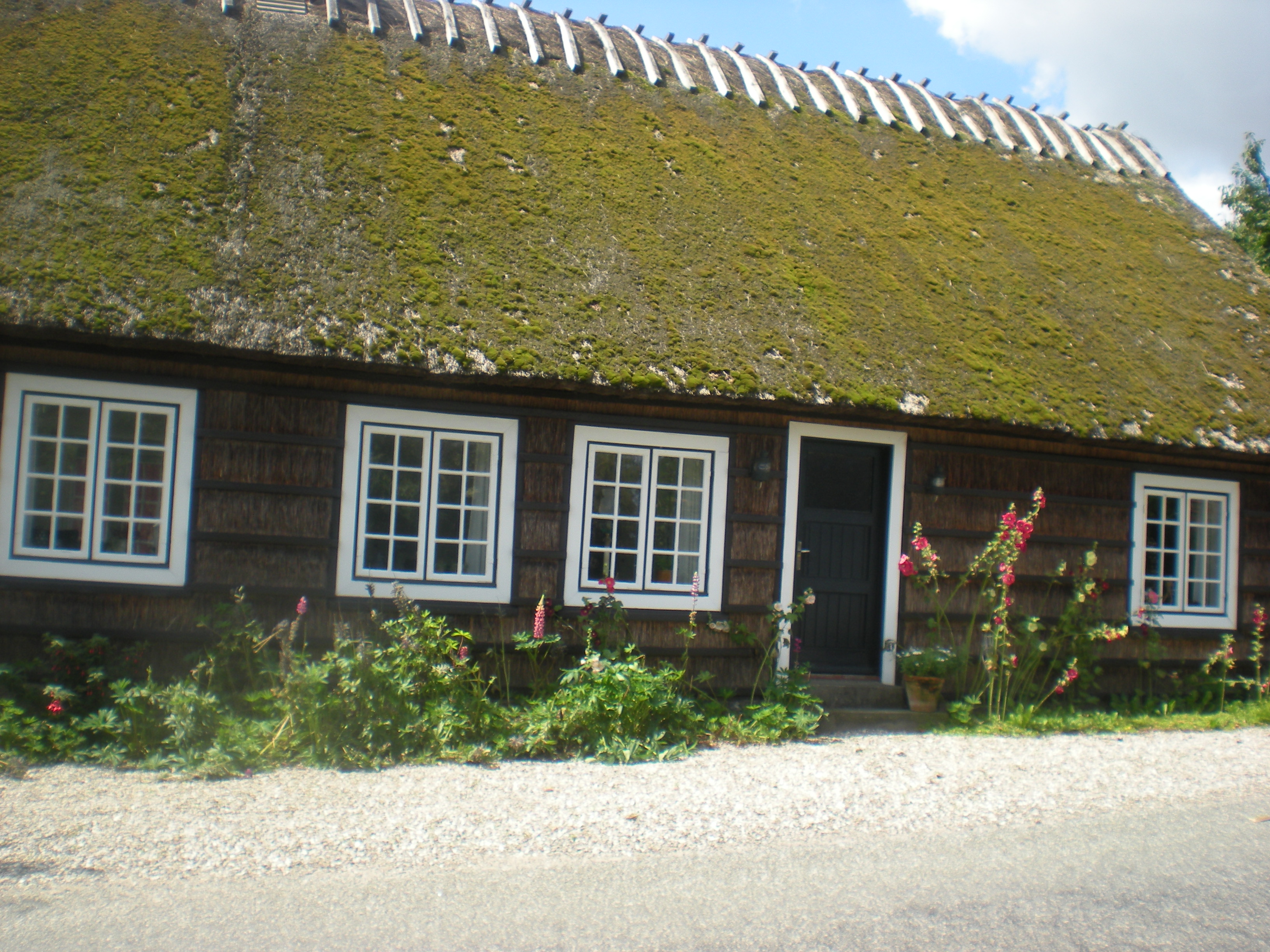
 Back in the car, Pip pulls out and pops her not-so handy map, smiles and says, “I’m ready!” We all laugh, ready to get lost on the way to our next site, which turns out to be Pomlenakke, a small fishing village farther up the coast. Pip has packed lunch for us and we stop and set up on a group of rocks near a small field of wild flowers, just between the shore and the town of reed houses dating back to the 1500s. We have egg salad and liver pate sandwiches, wine and cheese and crackers. After lunch we drive for a closer view of the houses where the reeds were used to provide insulation and to prevent wind and rain damage. It appears to have worked for thousands of years as the houses seem to be really well preserved and as quaint as if they were just built. We keep going in what seems like zigzag fashion up the coast and inland to come to the town of Maglebraende, where Pip wants to show us a church with a Madonna and Christ painting. Sadly, the church which is supposed to be open all summer is closed, because the manager is away on vacation. But we get to see an example of a typical Danish church yard with headstones that tell its occupants occupations like gardener or seamstress. From here, Annelise takes over and decides to take us to another church more inland in the town of Tingsted. We see the impressive salmon-colored structure well before we arrive. It sits atop a hill as most Danish churches do. We are in luck and the church is open. It is lovely and it reminds me quite a bit of the cathedral in Roskilde, particularly the ornate pulpit. Annelise explains that for many years, the intricate paintings that we see on the church’s ceilings had been whitewashed and hidden during the Reformation, when Danes turned away from Catholicism in favor of Lutheranism. We look at the walls that are still white and wonder what could still be hidden. Annelise also points out a model of a ship hanging from the ceiling, typical in many Danish churches. As we leave, Pip tells us that the anteroom of the church is actually known as the weapon room where people were to leave their swords before entering the church.


We decide it is time to head back to Marielyst and we thank Pip for lunch and a lovely day. In fact, the weather has been perfect and Aaron and I decide to head to the beach. As we get to the top of the dune, we look down the beach and see many more people than we’d seen a couple of days before. Beach-goers are sprawled out in the sand, taking advantage of the sun while they can, during a particularly cloudy and rainy summer. Little kids hop about naked in the sand and others splash in the water’s edge. Aaron picks a spot and we feel totally comfortable in shorts and t-shirts, and at times a little cool as we see our beach companions in bikinis and swim trunks unfazed by occasional cool breezes. We marvel at the people in the water after toe-testing the cold Baltic surf, which also happened to be teaming with jellyfish. We were content to sit on the beach and talk, and talk, and talk. Soon we looked up and the beach was totally deserted. We weren’t sure how much time had passed, but guessed that we should head back. Annelise was a little worried that we’d gotten lost and as usual, she welcomed us with another fabulous dinner. This time an original creation, a pasta of peas, chicken and tomatoes. And, once again, we head off to bed contented and tummies full.

Ancient Burial Grounds and Interesting Shopping Discoveries

We started driving down an unmarked wooded path where the trees appeared to be closing in on us. Annelise asks if we are getting scared. I say “No” and encourage her to keep going. Finally, she stops at a place where the road seems too narrow to pass and we get out. There are stacks of chopped wood, a sign that someone has been clearing a path for us and other future visitors to this place. It is very quiet. We don’t even hear a bird cry or flap it its wings, only our own footsteps along a muddy path. There is no one living here currently, but we soon see evidence that someone lived here a very long time ago, maybe over 5,000 years ago, we’d later learn. To our right, we approach a mound of precisely arranged boulders with a pathway between them. Annelise suggests that it could be the grave of a village leader. We pick up sharp pieces of flint scattered around the site and understand why this was a good material for making axes and other sharp tools. The people who used them may have been Denmark’s earliest settlers who came to hunt reindeer–the same ones so well-preserved at the National Museum in Copenhagen.

 Annelise says there is more to see as we move deeper into the woods. In the next clearing we see a circle of large rocks, maybe 4-feet-tall each, with several in its center and one stacked on top, reminiscent of Stonehenge. We venture farther to see a massive mound covered in grass and wild flowers with a small doorway, another burial site, across from a number of large boulders seemingly strewn about, possibly a mass grave. We’d been following a string of trees marked by yellow spots and we saw more ahead. Annelise excitedly asks if we should go further and we say why not? Traipsing through more mud and past tall grass and weeds, we continue to follow the dots in search of more ancient archeological finds. But the rains from earlier in the week make our path impassable and we have to be satisfied with the day’s archeological investigation.


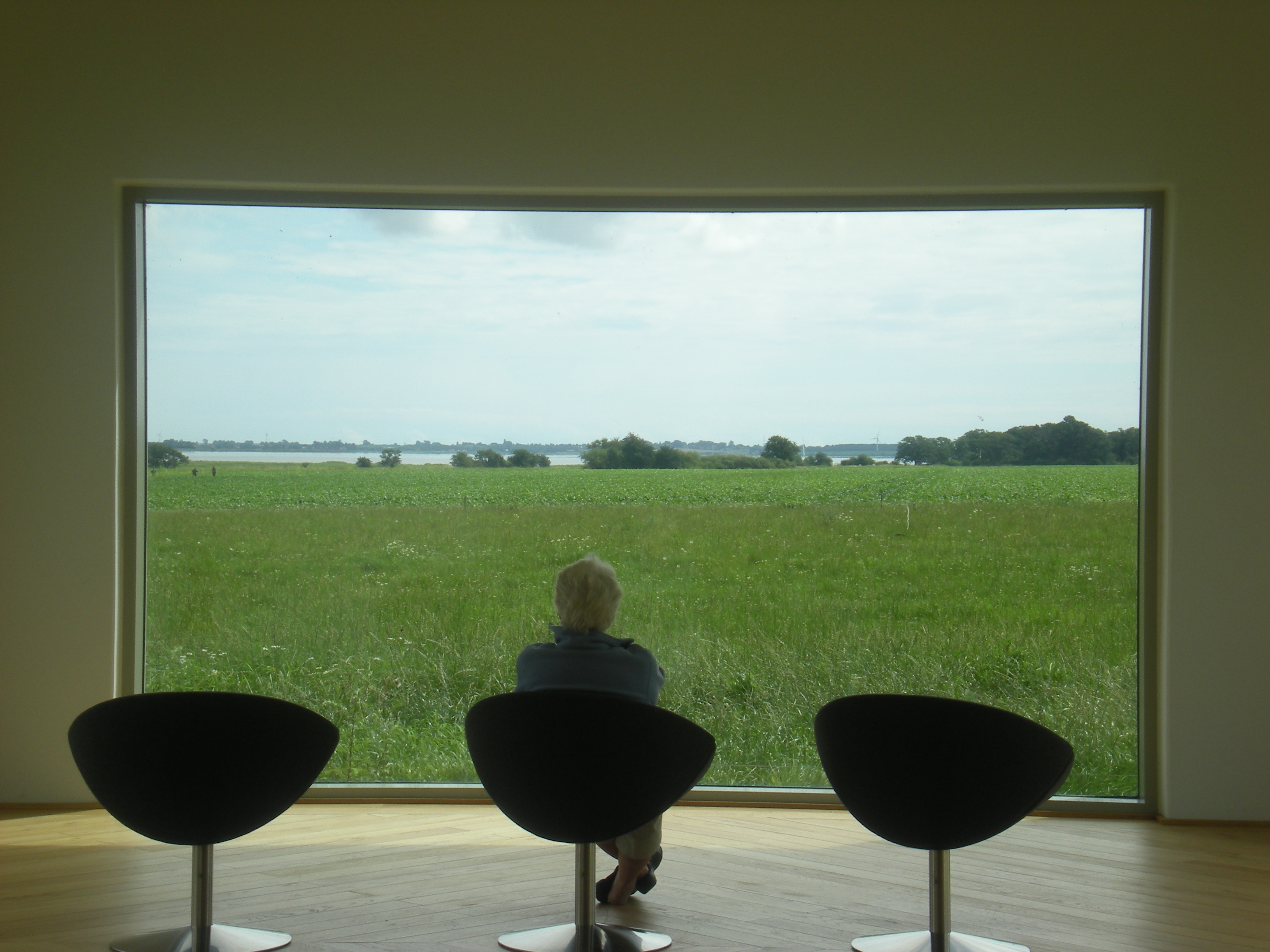
We have driven to Falster’s sister island of Lolland just to see where Denmark’s past is still buried. But we’ve also seen one of the island’s newest sites the Fuglsang Modern Museum. Only a few years old, the beautiful airy exhibition space features works from Danish artists, particularly the Cobra (Copenhagen, Brussels, Amsterdam) collective of artists inspired my Picasso and other modern and cubist artists of their day. Aaron, Annelise and I walked around and picked our favorites of the pieces on display. We seemed to have similar tastes with the most vibrant paintings winning our favor. The most impressive feature of the building though was the very simple picture window and the back of the building that looked out onto Lolland farmland.


Lolland, Falster and the rest of Denmark, for that matter, is pretty flat. We get a real sense of this on our drive past wheat, rye and sugar beet fields, dotted with windmill farms. Each appears to be a staple for Denmark, with wheat and rye bread as a major part of the Danish diet and sugar beets to be processed into sugar and the windmills generating green energy. Along the way, Annelise shares more stories of Lolland’s past, telling us the story of farmers who rebelled against a tax-raising nobleman. The official brokered a deal with the fed-up farmers and said they only had to give him 12 white cows in exchange for lower taxes. The problem was they only had 11. But they did have a white cow with one brown ear which they painted white. The farmers are now seen as local heroes and there is a carved stone honoring their unusual rebellion.

 The fishing town of Nysted on the coast of Lolland was quite quaint with the area’s signature red-tiled roofs and colorfully painted homes. We stop here for a quick lunch at the seaside restaurant Rogeriet with sailboats and Baltic-swimming swans and its backdrop. Aaron and I order traditionally Danish dishes of herring and salmon on warm toast with Jacobsen Brown Ales while Annelise goes more American with a massive club sandwich. Sometimes Annelise prefers more American things over Danish ones, but she is very proud of her heritage and has been happy to share it with us, telling us about growing up on Falster with three other siblings during World War II. She was in her 20s when she left her banking job in Nykobing to move to the United States where she knew only one person in Washington, DC. Since that courageous leap of faith, she calls it ignorance, she has built a lovely life in America with three children and four grandchildren that get to visit her home country every summer. I think it is the perfect example of the American dream.


After a full afternoon exploring Lolland, we head back to Falster and Marielyst, where Aaron and I decide to walk to see more of the beach town. He was in search of touristy trinkets to take back to his colleagues at work and we stopped into several stores along the way. One seemed particularly promising, Ting & Kram, literally translated as Things and Junk. It was true to its name and was crammed with anything you may have forgotten while on vacation or anything you needed to fulfill any sort of junk craving. We saw everything but touristy junk, things like  grill brushes, crayons, tea, duck tape, girl’s barrettes, book bags and then Aaron stood still in his tracks and asked if I saw what he saw. I look across the store to where he is looking and I see a few feather boas hanging against the wall. Odd, but not so odd in this place. I scan a bit further and spot the vibrating dildos, next to lacy underthings and upon closer investigation, whips and butt plugs. Truly a one-stop shopping kind of place. We wondered if many Danes came on vacation and realized they’d forgotten their dildo at home. Needless to say, we found it extremely humorous and continued to crack jokes about hardcore sex toys conveniently located next to household products and children’s toys as we shopped. Marielyst also appears to be a gambling town with a place called Little Vegas boasting several slot machines and we saw several in other convenience stores along the way.


Real Hygge Found on Falster Island

I used the word “hygge” to describe a restaurant in Copenhagen yesterday, but I found real, honest-to-goodness Danish coziness in the home of my friend Annelise on Falster Island. Annelise and I were doubles tennis partners this spring and when I told her that I would be traveling in Europe for a bit this summer, she suggested that I visit her at her summer home in Denmark. I am not sure that she thought I would take her up on the offer, but I am really glad that I did. I brought along my friend Aaron Jones, a friend and former Discovery colleague, who is glad I did, too. Annelise’s home is filled with Danish charm under a thatched roof, featuring a slightly wooded yard with a small tennis court and hot tub. The light-filled sun room catches my attention and I know that this will be the perfect place to end my month of travel.

Annelise greeted Aaron and I at the Nykobing train station with the biggest, most genuine smile and a hug. I have to say, it was great to see familiar faces after a week of going it alone in Copenhagen. Aaron and I caught up the entire two-hour train ride between Copenhagen and Nykobing. He’d spent the last few days partying with a colleague in Sweden who also happened to be royalty. And, according to Aaron, they were treated as such when they visited several bars in Stockholm where they were allowed to pour their own drinks. He’d even run into Ice Cube and his crew who were on their way back to the states after doing a tour in Sweden. Probably better than me hearing Chuck Brown in a Copenhagen nightclub. But the best discovery of our travels so far has to be the fact that Aaron and I grew up miles from each other–he in Clinton, Maryland and me in Brandywine–and even attended the same elementary school (Crestview) for a bit. To find this out on a train in Denmark was just plain trippy, to say the least.

Sufficiently bonded by common Prince George’s County and D.C. experiences, we meet the smiling Annelise who drives us through the small city of Nykobing and past a sign declaring Marielyst as the best beach of Denmark in 2011. Annelise’s house is in Marielyst, a small beach town marked with shops and restaurants catering to temporary residents that visit 6-8 weeks out of the year. There are bumper cars, go karts, a pavilion for live concerts and an ice cream shop, of course.

After a lovely lunch of soup, we go for a walk on the beach, steps from Annelise’s backyard with her canine companion Jay-Bee. If Annelise’s house is the epitome of hygge, her dog is the ambassador of hygge. The shaggy golden labradoodle practically knocked us over with enthusiasm when we arrived, round, brown eyes shining through curly bangs and tongue wagging. I come to think of him as the slightly hyper, but lovable dog, Dug, from the animated movie “Up.” Despite being a bit overcast, the beach is lovely and incredibly peaceful. Aaron says he can feel his blood pressure drop 10 points. Annelise says there are a lot of people on the beach. Seeing about 10 or 15 people, Aaron wonders what’s the largest number of people she’s seen there and she says about 50. We’d take that over any day at a crowded Virginia or Ocean City Beach. We stand still for a bit and watch a sailboat traverse the Baltic before our eyes. Then we get our footing on the soft sand, strolling, chatting and looking for cool rocks along the way.


With jazz and blues greats Ray Charles and Ella Fitzgerald as the soundtrack for the evening, the three of us convene in the sun room first, discussing politics, Denmark culture, family and everything in between. I soon realize that combined, we may be the most adventerous and well-traveled people on Earth as Aaron and Annalise compare skydiving experiences and we trade other travel notes and highlights. We move to the dining room for a delicious home-cooked meal of the best seasoned and juiciest chicken breast Aaron and I have tasted in a while, along with cucumbers in vinegar, salad and potatoes. Annelise has to explain dessert which appears as a group of chocolate-covered lumps of spongy cake. She received the recipe from an au pair friend and it called for 1 and a quarter liter of eggs, which we all found baffling. Turns out this translates to 4 or 5 eggs depending on size. Annalise did a great job of adapting the Danish instructions and dessert was a hit.

Finally, we retire to the TV room and giggle at bad Danish and British television. When there are no shows airing on one Danish network, it airs images of Danes in animal suits sleeping, like a dreaming doggy and and fidgety chicken in a huge nest. Truly bizarre, we were transfixed for a while. Annelise retired and Aaron and I couldn’t sleep until we saw the end of the antics of real Brits cooking for each other and rating each other’s cooking to win a 10,000-pound prize. One Brit admits that she doesn’t like chocolate unless it has been spread all over her and licked off. Those randy Brits. After a good laugh or two, Aaron and I say goodnight and retire to the coziness of our rooms and beds covered in the fluffiest of duvets.

Coziness and a Pot-Lover’s Heaven in Christianhavn

There is a word called “hygge” in Danish, which sounds alot like the word “hug” and translates to cozy. I found it in a place called Cafe Wilder and it was the perfect refuge from the rain-soaked streets of Copenhagen. The bartender greeted me warmly and I took a seat at the bar. It is definitely the corner cafe and reminded me of one I might find in Paris. There’s a table with a young couple and child, two friends catching up and a couple of larger gatherings. I can tell they feel cozy, too. I order a brown ale and steak and fries, then pull out my Nook. When a table becomes available, the bartender offers to seat me and it has a nice view for people watching. When my steak arrives, it is perfectly cooked and the potato coins are crispy. Sometimes, when you travel, you wonder if you lived in a place, where you’d hang out. Cafe Wilder would definitely be a place that I would frequent.


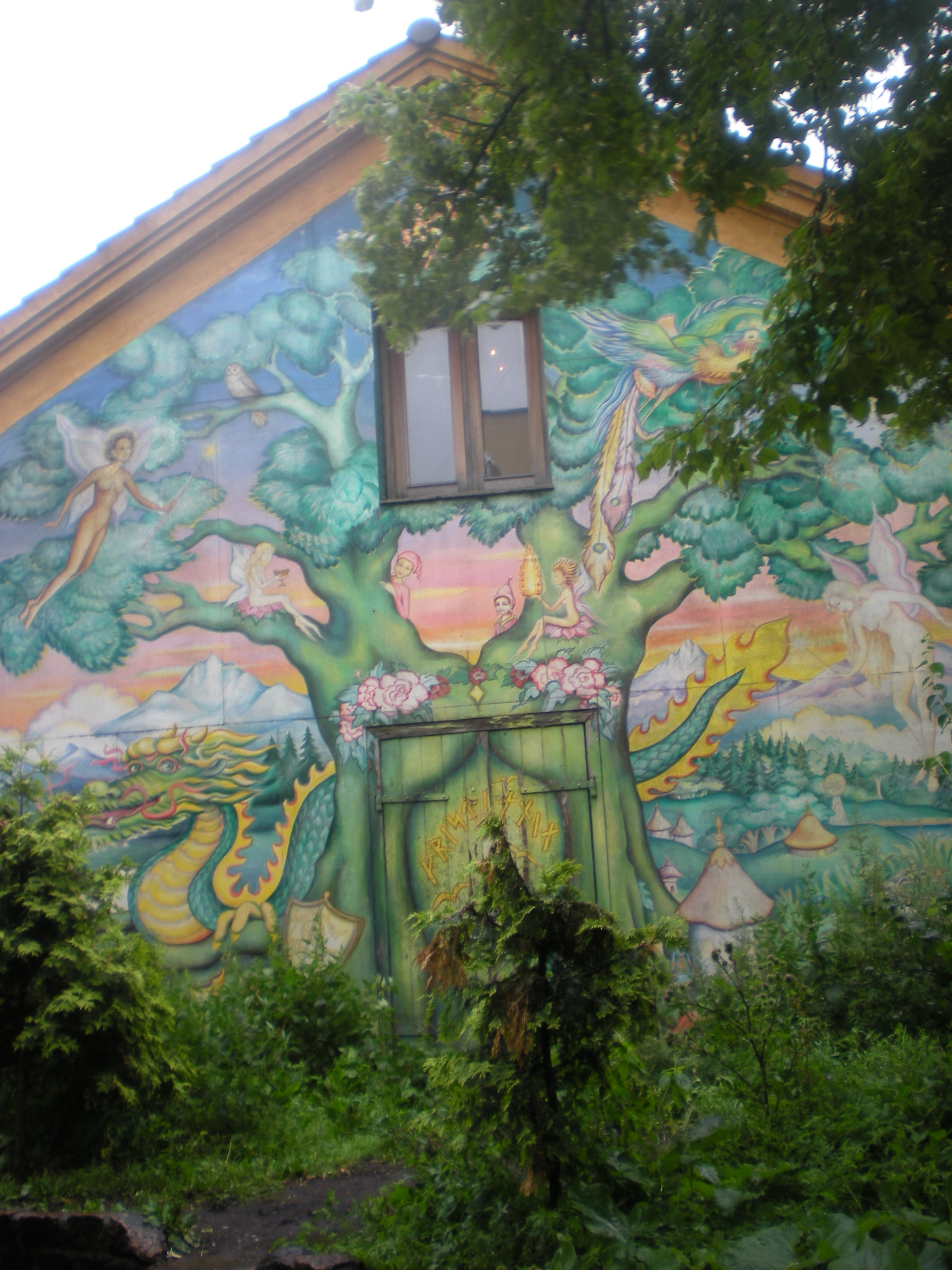
I could have spent all day there, especially since it was still spitting rain, but the place was starting to fill with others seeking refuge and I still needed to see Christiana, a “free state” within Copenhagen. In the 70s, squatters, then hippies took over a military camp in Copenhagen and declared it a state separate from Denmark, creating an alternative, tolerant, ecologically-conscious, self-governing society with its own schools, housing and businesses. But drug culture started to prevail in the little Utopia.There is even a “Pusher Street.” Hard drugs are outlawed, but the sale of marijuana appears to be brisk. I smell it as soon as I step through the brick archway on the corner of Prinsessegade and Badsmansstraede. A building to my left is covered, door-to-floor in graffiti. I can’t decide if it adds to the charm of the place or if it is an eyesore. A feminine metal figure stands tall in a junk garden, her skirt billows with metal tin sheets and bike wheels. A totem pole entryway says that I am now entering “ell.” Not sure if this is the Danish spelling of Hell and start to wonder if I should turn back. But I see other curious tourists mixed in with folks who seem to have come to enjoy the day in Christiana despite the rain. I come to a colorful street of commerce with “No Photography” signs everywhere, which makes me really want to take a picture. The pot is particularly pungent here. I see an older white woman with locks in the window of a trailer selling sweets and immediately wonder if she’s selling hash brownies. I keep moving because I hear music, kind of a hip-hop reggae mix, and I find myself in Nemoland. It’s an open space with a stage and picnic tables. I sit to listen for bit. I think the artist is called Son of Sun and he must be preparing for a concert as he and the band stop and start several times, but I like what I hear. At this point, I start to notice that folks have joints the size of cigars. One guy just lets loose and starts spinning in front of the stage, joint in mouth. I venture inside the nearby bar, also called Nemoland to find the toilet and inside I see the words of a bathroom wall scribe, “Don’t drink and drive. Just smoke and fly.” Think that about sums it up.



 I also saw a bit of the alternative art scene in Christianhavn atOvergaden before lunch at Cafe Wilder. I am not sure what to make of what I saw. One exhibit included a video of a man doing rope tricks. See my pics of more alternativeness on display.


Shopping in the Rain by Day; Dancing with Danes by Night


I couldn’t believe my ears. The DJ was playing Chuck Brown’s “Block Party.” Do Danes have block parties and barbecues? Would they be playing the Godfather of Go Go at such gatherings? First a Grammy nod, now Chuck has gone global. I have hit Danish nightlife pay dirt at the Copenhagen Jazzhouse. I wasn’t sure what to expect when I entered. There were a few tourists listening to a jazz mixologist upstairs. It was a tad odd to see a guy in Ray Bans with headphones spinning jazz tunes. Guess there wasn’t a band available. But the bass was bumping downstairs in what looked like Copenhagen’s version of the Cotton Club. Small tables with white table clothes and candles look over the dance floor and a stage boasts the “Jazzhouse” in soft blue lights. Trumpeter Terence Blanchard played there during Copenhagen’s Jazz Festival earlier this month. But now the DJ was playing Chuck and I was starting to wind up, especially when he played “Double Dutch Bus” followed by “Jungle Boogie.” It’s clear that Danish youth have been fed a healthy helping of soul and I am very appreciative, as are my fellow dancers. It appears to be girls night out and a gaggle of women have taken over the dance floor flailing their arms, hair, entire bodies, this way and that.

Now, when I told people that I was going to Denmark, particularly my single women friends, they were certain that I’d see all sorts of attractive, tall blond Danish men. Sadly, this hasn’t been the case. I’ve mainly seen middle-aged, married Danish men with 2.5 kids on vacation. I even had occassion to dance with a couple at the Jazzhouse. These guys, extremely happy to be out without the wives, made great dance partners. One was tall and gangly and the other short and curly-haired. Both were very polite and quite complimentary. I jumped and bounced to the classic 80s song “Our House” by some UK band with one and started enthusiastically dancing to Michael Jackson’s “Smooth Criminal” with the other until we realized that it was the super extended remix version. Then I spotted one–a cute Dane–except he didn’t look the way most would expect. He was dark haired, not particularly tall, and smartly dressed. If I am not mistaken, he was smiling and making eyes at me. How fun! Then they play our song,”I Wanna Dance With Somebody” by Whitney Houston. No, I am not making this up. He comes over and grabs my hand to dance. He speaks very little English and I can’t catch his name over the music, but it doesn’t matter because he’s cute; and he’s spinning me and he’s singing to me. He’s extremely tone-deaf, but I think that’s cute, too. (See what a cute Dane, in my opinion, looks like, below.) We were only meant to have the one dance. He seemed to be double dating with a friend or brother. Their blond dates didn’t appear to be into dancing, so they left. I, however, kept dancing with married Danish men until about 2 am, when I decided to call it a night. I met Rami and Peter on the walk back, two silly teens, who asked what I would prefer: Have a kangaroo in my house or live in a kangaroo’s pouch. I chose the kangaroo pouch, because I didn’t want a kangaroo to destroy my house and mistakenly kill and eviscerate me with its powerful hind feet and claws. They didn’t expect my very complete answer. I didn’t share the source of my extensive and very random animal knowledge. Sometimes having worked at Animal Planet comes in handy.

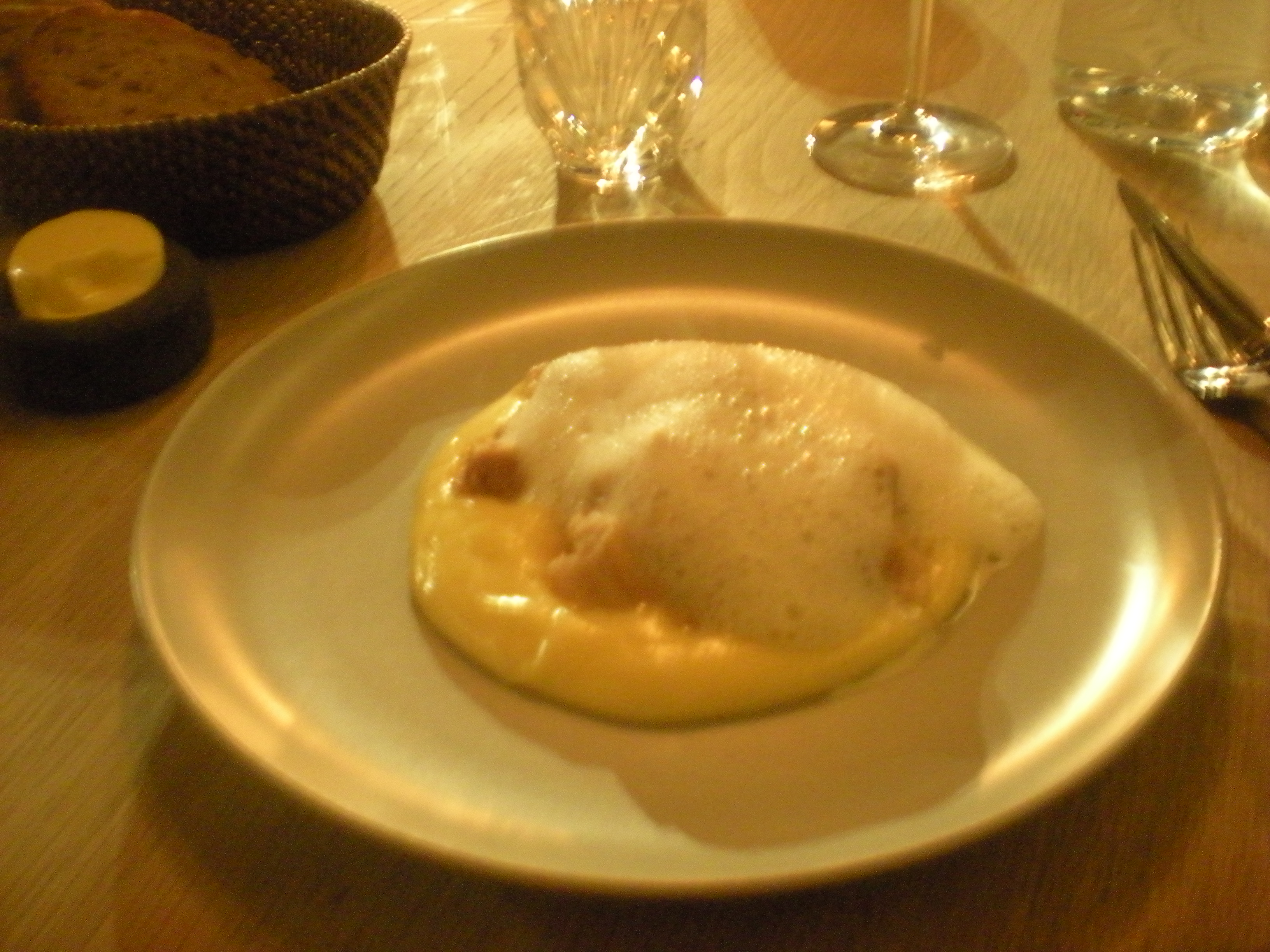
 Before dancing with Danes, I dined with the hip and trendy variety at Geist, a spot I noticed on my first night in Copenhagen, a few blocks from my hotel. It turns out this is the new hot spot in Copenhagen with a celebrity chef named Bo Bech running the moody, well decorated place. The staff was super attentive, taking my coat and umbrella and seating me at a communal table with two couples.They were so into each other that they barely knew I was there, which was fine. I was ready to be focused on my food. Geist serves the Danish version of tapas and the waitress says that two is usually enough for most people, so I order a turnip, ginger and shrimp dish and a suckling pig, mashed potatoes and salted butter dish. The suckling pig turned out to be the dish of the night. The mashed potatoes were the consistency of a custard, the pork was juicy and slightly fatty with a salted butter foam on top. What makes pork better? Butter. It was ridiculous. I went light for dessert, which was strawberries in a thickened balsamic vinaigrette with slices of frozen whipped cream on top. With coffee or tea they bring out white cotton candy, which they call candy floss, to end the meal. It was top notch all the way. This one wasn’t in the guide book.


But I did take Lonely Planet’s advice and hit Copenhagen’s main shopping areas–Stroget, Straedt and Latin Quarter –during the day as the sky spit rain and openly cried rivers off and on. There were the places you see everywhere like the H&M, Top Shop, Tommy Hilfiger, Louis Vuitton, etc. But further exploration lead to cute jewelry shops and home stores selling colorful Danish designed soap dishes, pillows and the like. When I could take down my umbrella, I took a few photos. Check them out.


Don’t Bike Ride While Drunk and Sometimes the Guidebook is Wrong

On my way back to my hotel from an uneventful evening in Copenhagen, I saw a woman going too fast on her bike fall head first in the street. Her friends came to her rescue in a fit of laughter, while she stood up and slurred a few words in Danish. It’s easy to catch slurring in any language. One thing is for sure, the Danes like to drink and they like to bike. Together it could be a dangerous combination as they don’t wear helmets. On my way to a restaurant/bar/dj spot in Norrebro, I saw a biker misjudge a street barricade, doing a clotheline in the process with bike going one way, him another. I wanted to help, but I wasn’t sure what I could do. Luckily, a pair of guys from the place I was going rushed over to help. He was shaken, but appeared to be OK.

 I walked about 30 minutes from the tourist haven of Nyhavn to the grittier, more lived-in neighborhood of Norrebro to check out Bodega, a place that Lonely Planet called “one of the hottest spots in one of the hottest neighborhoods.” There are two people inside other than the  staff and a few people having drinks outside when I arrive around 9:15. A blonde with an assymetric bob wearing a cut-off “I Love New York” t-shirt tells me that the kitchen is closed and there’s no DJ and they will probably close at midnight because it’ll just be her working. I guess I should have come up with a plan B when the woman at the front desk of my hotel said she hadn’t heard of the place. I decide to make the best of it and order a Bodega at Bodega, which is a bourbon with ginger ale and mint, which actually is a mint julep. Oh, well. It is tasty and I take in my environs. It has the makings of a hot spot with colorful banquets lining the bar area and multicolored pillows. A disco ball hangs from a corner and there is actually a DJ booth, just no DJ spinning R&B and funk grroves as promised. I do hear some mellow R&B that sounds like it could be from the B side of some neo-soul artist album–something that you’ve never heard but sounds vaguely familiar. A bit later one of the guys working in the bar switches the music to the slighty more upbeat Kings of Leon song, “Use Somebody,” and I head off to another nearby spot where I am able to score chocolate cake and a coffee.

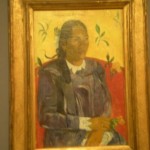
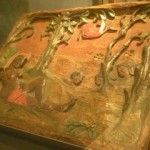
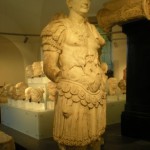
 Not the evening, I envisioned, but I had a day packed with more cultural activity. The Ny Carlsberg Glyptotek has a pretty impressive post-Impression collection and I’m a nut for the Impressionists. My favorite is Paul Gaughin and the museum had a comprehensive display of the development of his works and style from the 1880s to the 1890s. His paint dappled canvases of French women and landscapes evolves into the bolder, more colorfully stroked canvases of Tahitian women and mythical places. I was surprised to learn that Gaughin worked in cermamics and elaborate wood carvings as well. I was so enamored that I even bought a little book about him at the gift shop. While in the Etruscan and ancient art collection, I was thrilled to connect my wonderment at the Trajan Columns at the Victoria and Albert Museum in London with the statue of Emperor Trajan himself here. (I am a total nerd, I know, but what are the chances?)  I was also happy to have meandered through an amazing  sculpture collection including Jean-Baptiste Carpeaux, who I’d never heard of, to the great August Rodin. Carl Jacobsen, the beer barron and founder of the museum was apparently close friends with the sculptor and had access to many of his original works. I spent time among the works of Danish artists as well and stopped to snap a photo of Mother Denmark.

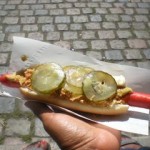
I took a break to have a hot dog at Andersen’s Bakery next to Tivoli and across from the Central Train Station.  Copenhagen is actually known for it’s hot dogs and I can say without a doubt that this hot dog is the best hot dog, I have had, EVER. It was called the Great Danois and was filled with the meatiest and most flavorful pork sausage along with ketchup, a dijon mustard with kick, a pickle-infused remoulade and topped with crispy bits of deep-fried onion and pickled cucumber. All of this was in the softest, fresh-baked bun. It was tough to eat, its contents oozing out of the bun and onto my fingers, but I made it work. It put the street vendor version I had earlier in the week to shame, and it wasn’t bad either.

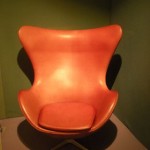
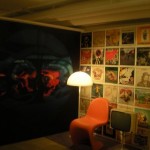
Rejuvenated by pork-product, I move on to the near-by Dansk Design Center. If you didn’t know, Denmark is pretty much the center of the design universe. After World War II, the country began filling the needs that consumers across the world never thought they had with Legos, tabletop telephones, stackable bowls, tea sets and even chairs. Danes realized that we needed swivel office chairs and desktop file holders to be more efficient at work. At times the permanent exhibit looked like an old 1970s family room complete with leather egg chair and the first Bang & Olufsen television set, and at others an Ikea meets Crate and Barrel store. It was definitely fun to see Denmark’s inventive spirit on display.