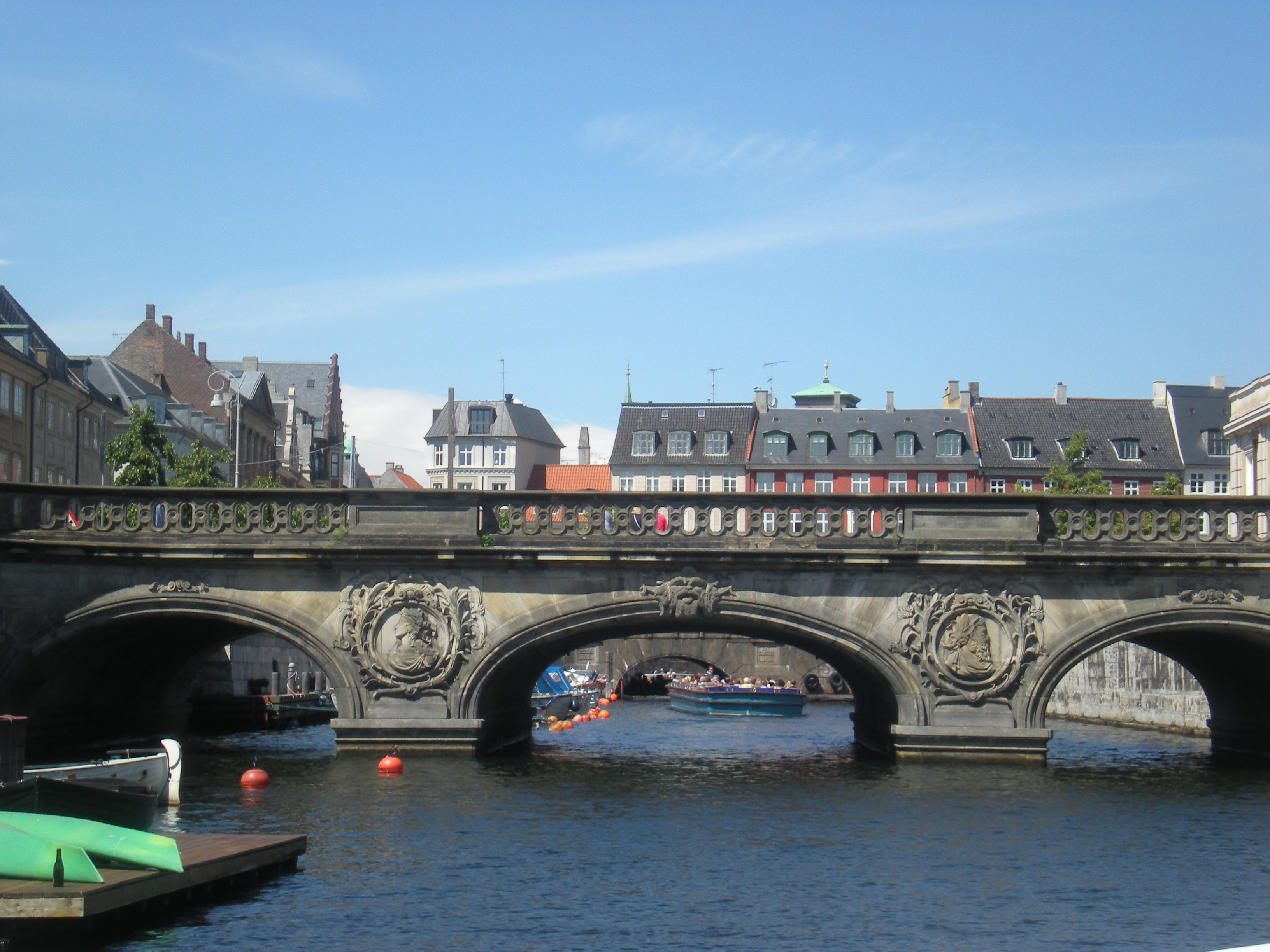
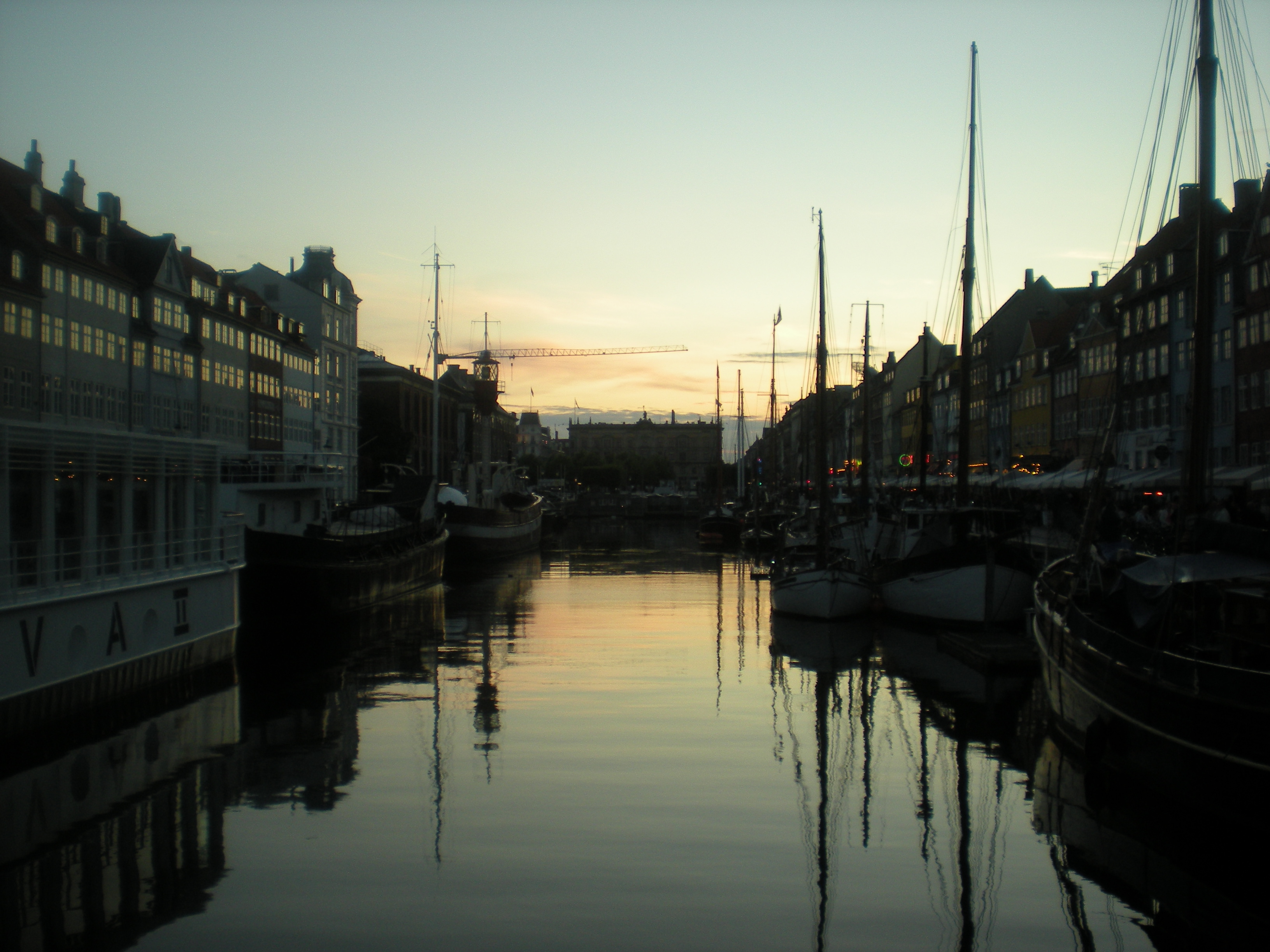
An 86-year-old woman tried to convert me to Scientology yesterday. I was sitting on the 29 bus on the way to Copenhagen’s Central Train Station when she boarded, locked eyes with me and made a beeline for the seat next to me, as if someone else might beat her there.The bus was practically empty. Violette–I find out her name later–has red hair and wears turquoise eyeliner. Her lips are painted pink and her pale skin is smooth for someone her age. We started in light conversation about Copenhagen. She asked if I was visiting, where I was from and what I did for a living. I told her that I was a journalist and she asked if I wrote the truth.I told her that good journalists try to cover every side of a story. She asks if I’ve heard of Scientology and she tells me that she has been a scientologist for 30 years. She tells me that Scientologists don’t believe that journalists tell the truth. Violette asks where my parents are from and I explain that they are American, too. I think she was expecting me to say that they were African. She says her church works with a lot of Africans and in African countries. At this point, I detect a slight accent from Violette and I ask where she is from. She tells me that she is French and that she came to Denmark for her “higher studies.” Violette runs out of time to convert me as we reach our destination. We kiss each other on the cheek as we depart and I wonder if she’ll find a better candidate for Scientology conversion.
 So far during my stay in Denmark, I’ve seen a lot of blond-haired Danes. I am coming to realize that they’ve come to Copenhagen for summer vacation. At the Central Train Station, I see a more diverse crowd with Asians, Africans and Arabs mixed in with fair-haired Scandinavians. The train is quiet and spacious for a commuter train and I arrive in Roskilde in minutes. It was once the capital of Denmark, but it looks like a tiny burg in comparison to Copenhagen. In fact, the main thoroughfare leading to its tourist sites is almost devoid of people. The people that are there even move about quietly. There is a modest crowd rummaging about a small open air market, but that is about all the local activity. My first stop here is the Roskilde Cathedral which looks very different from the massive gothic cathedrals, I’ve been seeing in England. This cathedral dating back to the Middle Ages appears to be be fairly modest on the outside and made of simple red brick. But a look inside reveals a magnificent hodgepodge of architectural styles artfully cobbled together over hundreds of years. I am torn between photographing the golden door behind me with faces pushing through or the golden altar piece down the nave in front of me. The door, known as the King’s Door because only the royals may enter through it, wins out. The faces protruding from either side are the faces of bowing disciples and the door is actually polished brass. One of the most recent additions to the church in 2010, it replaces an old oak door and provides the perfect balance to the gleam of the alter piece. Behind the altar lies the gold and marble tomb of Queen Margrethe I, in fact all past royals, numbering 22 and starting with Harold Bluetooth, are buried through out the cathedral and its grounds. Bluetooth, the first king of Denmark, unified Danish and Norwegian kingdoms, and gave a Scandinavian company the idea for a name for its new wireless connectivity device.


Two chapels in the cathedral capture my attention as well because they couldn’t be more different. In the chapel of Christian IV his statue looks over his own sarcophagus along with those of the rest of his family and floor-to-ceiling paintings tell the story of his greatness. Just next door is the newest chapel, St. Andrew’s, featuring a golden mosaic and a modern interpretation of Christ’s suffering.


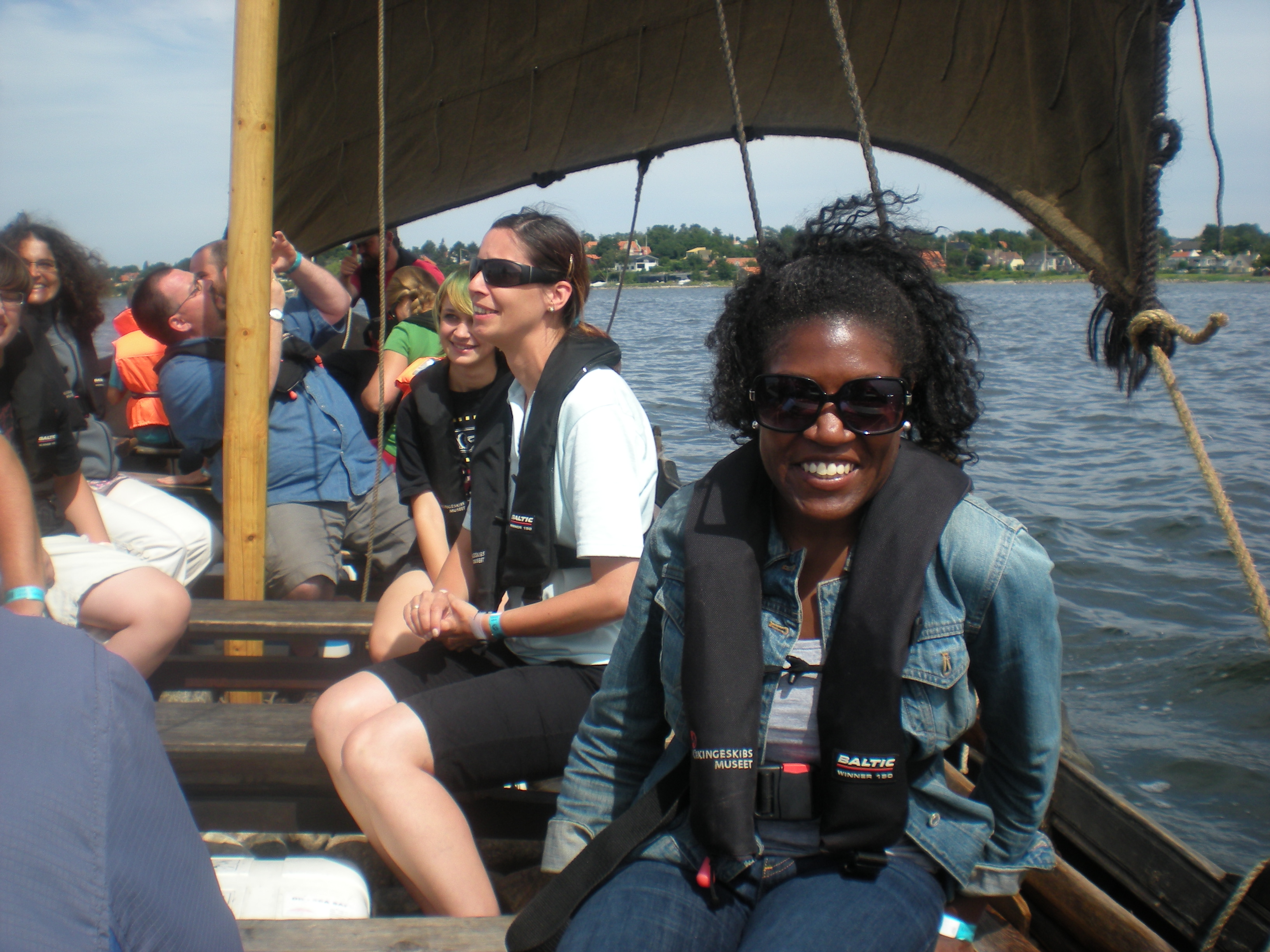
I am pleased to have visited such a grand space, but the main reason that I have come to Roskilde is for the Viking Ship Museum and this is thanks to my middle school medieval history teacher, Ruth Ann Williamson. Because of her, the most popular question of the 7th grade at National Cathedral School for Girls was: Are you going to make a ship or write a saga? These were the choices for our final project of the class. The overwhelming majority of the class decided to make a Viking ship and I could never understand why. If your boat failed to float in a tub of water, you were threatened with failure. Seemed to be too much risk involved, so I choose to write a saga about the great exploits of a Viking named Svar Svargaarson, or something like that. If my classmates had visited the Viking Ship Museum, they would have written a saga too, because building a Viking ship is pretty darned hard, nothing short of an engineering feat. It is also pretty hard to row or sail a Viking ship, which I find out first hand in the waters of Roskilde’s fjord. Our rag tag crew of Danes, Germans and one American set sail aboard the Oselven, a 12-oar replica of a Nordic boat similar to what the Vikings would have used in their voyages. Before we leave the fjord our sailing instructor gives us the basics on rowing technique and vocabulary like learning our port from our starboard sides. We think we’ve got it, until we start rowing, which we soon realize requires your full body along some rhythm, coordination and all your listening skills. A German teen, called “Green hair” by the instructor, was having a particularly hard time with the rhythm and coordination part, her oar going in wrong direction and slapping the oar of the rower in front of her instead of the water. Finally, our instructor had had enough and after about 15 minutes many of us had had enough, too. We’d barely gotten away from the museum’s dock. She instructed us to pull our oars in so that we could sail and one of the vacationing crew members promptly lost his oar in the water. We had to do an emergency rowing maneuver to get the oar back. Oar rescued, we could hoist our sail made of wool and covered in pig’s fat and tar for water resistance, just like in the good old Viking days. It was a lovely day to be sailing on a calm fjord.


 Back on land and with a little Viking ship sailing experience under my belt, I head to the Viking Ship Hall, home of five real Viking ships deliberately sunk at the mouth of the Roskilde Fjord in the 11th century to protect the capital from an attack, then recovered by archaeologists in the 1960s. What’s left of the ships are displayed in minimalist fashion to be walked around an imagined. The boats vary in size and purpose, the largest, about a 100-foot warship. The museum’s shipbuilders set about recreating this 60-oared ship recently and charted a course from Roskilde to Dublin and back in 2008. It all worked out and the replica is back at the museum for everyone to enjoy.


 Proud of my day’s accomplishment, I think I should treat myself to a nice meal. Orangereit turns out to be the perfect place. About a 15-minute walk from my hotel, the restaurant backs Kongens Have, Copenhagen’s oldest park. I decide to sit outside and let the waiter select his favorite dishes and wines from the menu. I know the service will be awesome as he offers me a glass of champagne before we even get to the business of ordering. First, I have hake with horseradish foam, wild watercress and beet root as a starter, followed by my main dish of sole with seasonal vegetables. Both of which were very pleasing to the palate, particularly the wild watercress. Who knew? It tasted like they picked it fresh. I was bit apprehensive about dessert. My waiter said that it was indescribable, but that it was one of his favorites. Since I was leaving things up to him, I decided to go along for the culinary ride. It’s called Koldskaal, which literally translates to cold ball in English. Basically, the small orange berries on a Rowan tree (I looked this up after tasting) are made into an ice cream. A scoop of this is in the center of the bowl along with the actual berries and small sweet crunchy biscuits, then a small jar of buttermilk is poured over the top to make a sweet cold soup. The berries themselves are tart and citrusy, but once those are eaten the soup tastes more like a cold vanilla custard. I can understand my waiter’s difficulty in describing such a complex dish. I am glad I decided to take the risk.


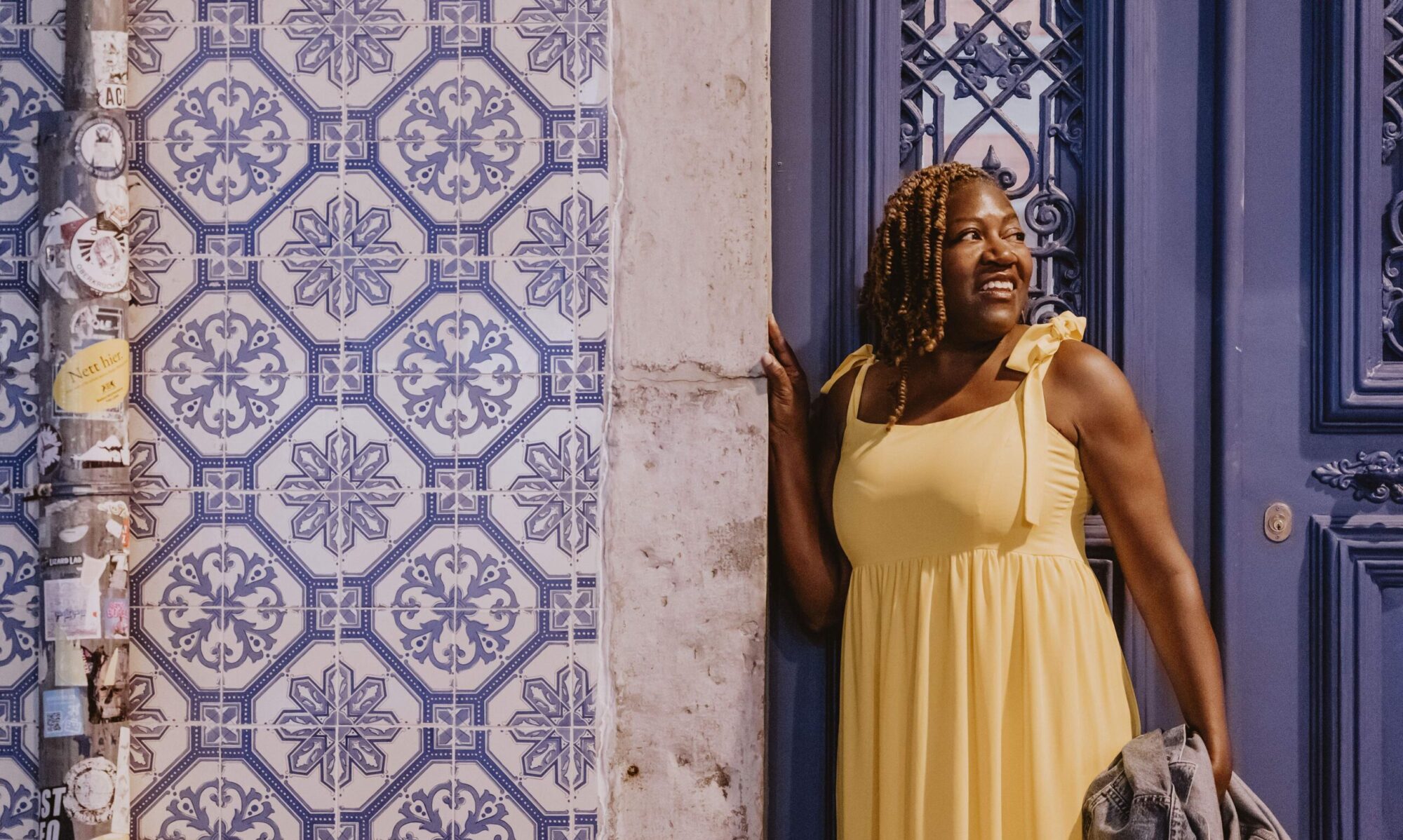
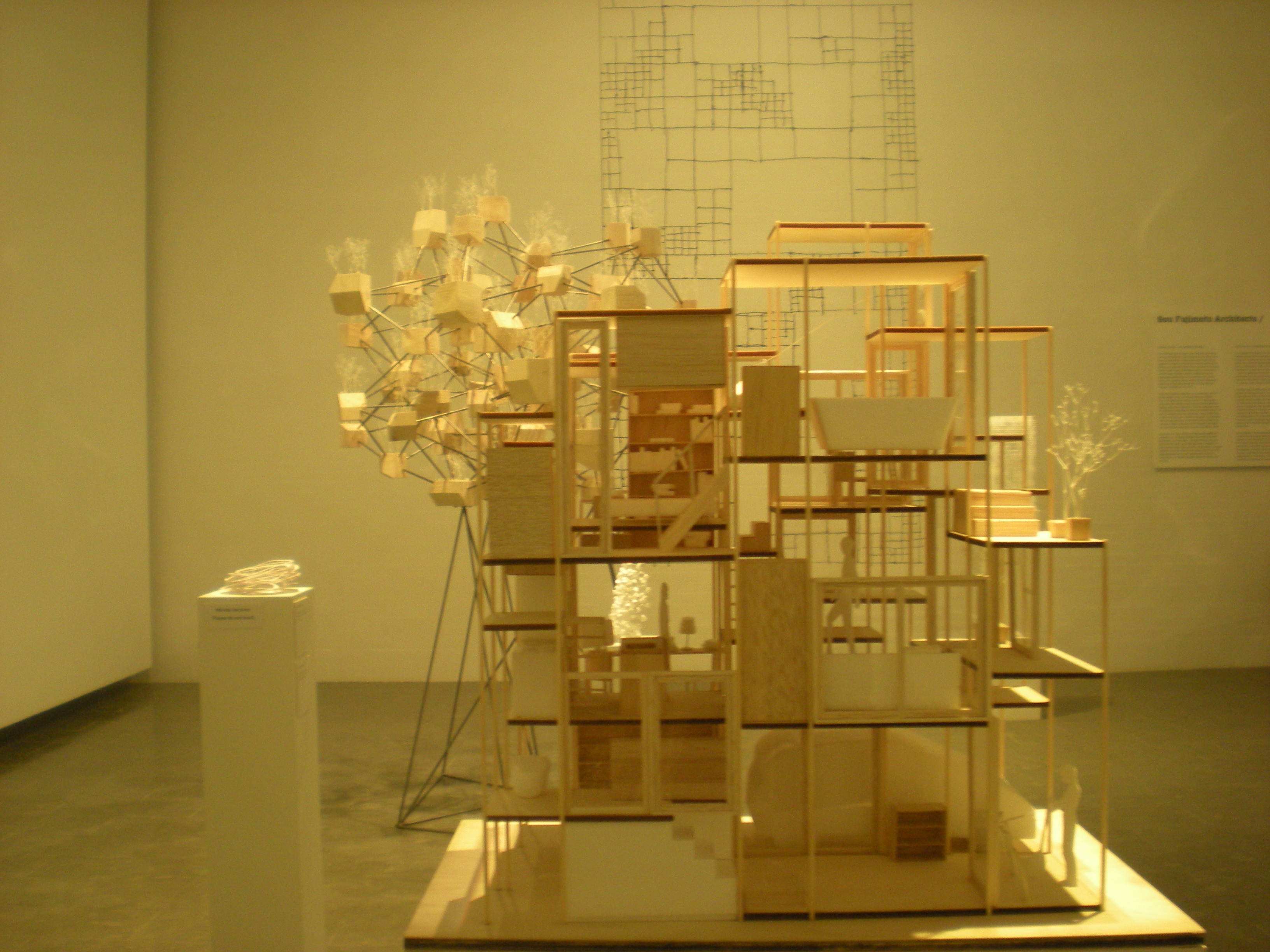
 There’s a giant thumb in the middle of the cafe at the Louisiana Museum of Modern Art. It’s standing upright as if to hitch a ride to some unknown place. Abstract animals with large square heads lurk in the garden and a curvy nude, in a Picasso kind of way, reclines at the edge of the sea. The Louisiana mixes whimsy with some seriously thought-provoking exhibitions. The current exhibition of its main collection is focused on landscapes. A circle of rocks in the middle of one room denotes a rocky landscape. A bright oil painting of the Grand Canyon is a great interpretation of the place. Roy Lichtenstein, the American whose works always have a comic book feel, presents figures in a landscape with his same large scale comic figures and a few hints of green. Another piece by a Danish and Jewish artist named Tal R, features an abstract landscape in Israel of painted and drawn tanks moving up and down pastel yellow hills.