Bloody Macbeth in the Bard’s Birthplace

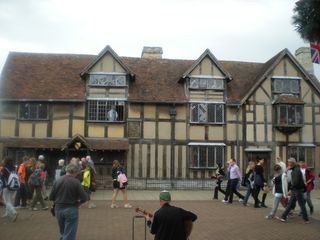
When Macbeth shows up on stage he’s covered in blood from the battlefield. Later he’s covered in the assassinated King Duncan’s blood and smearing it on his wife, Lady Macbeth. Then, he orders henchmen to spill his buddy Banquo’s blood, who in turn returns from the grave to spill Macbeth’s blood, which spurts gruesomely from his throat, a metaphorical foretelling of what’s to come. That’s all in the first half of the Royal Shakespeare Company’s production of “Macbeth” at Stratford-Upon-Avon, Shakespeare’s hometown. I am sitting next to Frances and Mark who live about three hours away, but once lived outside of DC in Annandale and Rosslyn when Mark worked for the IMF. We marvel at the theater packed with students, tourists and locals, presumably all fans of the Bard. We also love the fact that the prescient witches are interpreted as ghost children. I can only take in the first half of the play because I’ve mistimed my stay in Stratford. All the sites close at 5 pm and if I stay for the play, I won’t have much time to check out Shakespeare’s birthplace and family homes.

I’ve made the pilgrammage to Stratford because I happen to be a fan of Shakespeare. I took a semester-long seminar in college with about five others and we contemplated his comedies and tragedies in my professor’s living room. My favorites were the comedies like “Midsummer’s Night Dream”, “Measure for Measure” and “As You Like It.” But I have to say that “Romeo and Juliet”, “The Merchant of Venice” and “Othello” are right up there too. One of the best productions of Othello that I ever saw was at the Folger Shakespeare Theater starring Avery Brooks, The Hawk from Spencer for Hire, and Andre Braugher from Homicide in the roles of Othello and Iago. They were grippingly awesome in their roles.

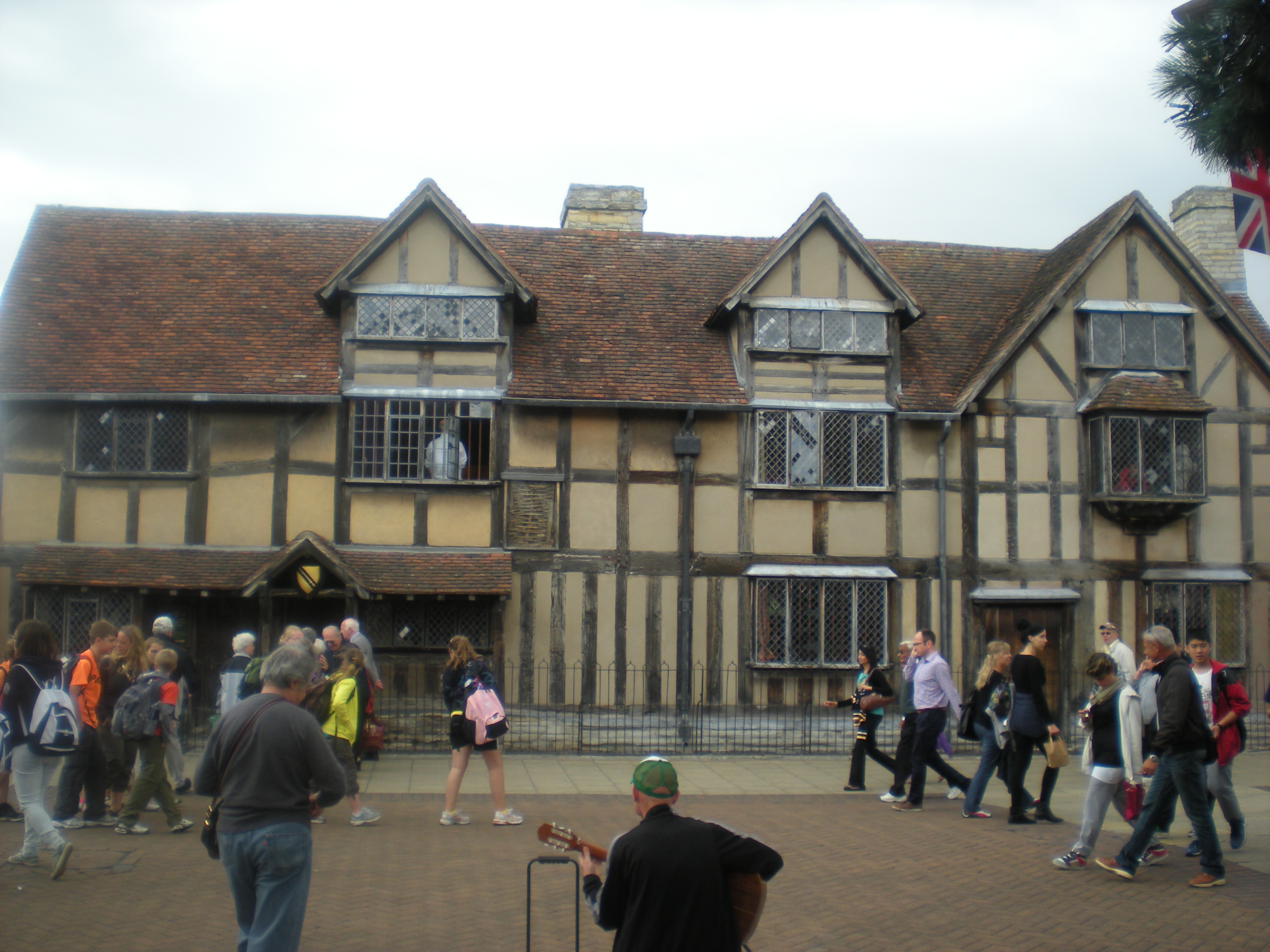
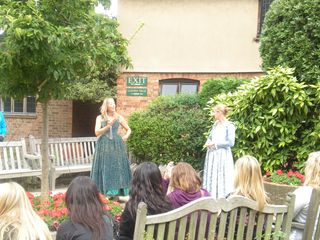
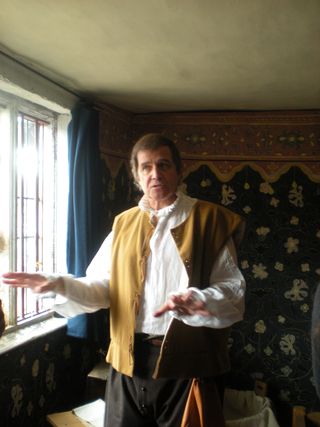
Shakespeare’s birthplace is a cross-section of Disney meets Jamestown or Williamsburg. Visitors are led through an exhibit featuring short films about Shakespeare’s life and the impact of his plays. There’s a signet ring that he may have worn and the first published book of all his plays. They keep showing clips from that awful “Romeo and Juliet” movie with Claire Danes and Leopardo DiCaprio. My favorite was always this1968 version. It was pretty over acted, but I thought it was oozing with passion and pretty darned great. I loved the music too. But back to Shakespeare’s birthplace. After the exhibit you are led into a tiny two-level Tudor where guides dressed in the period share more details of Shakespeare’s life–he was the third of 10 children and his father was a glovemaker–and life during Elizabethan times in Stratford. Out in the garden are actors reciting the best of Shakespeare’s plays in costume and they invite others to join. One brave soul fearlessly recites Macbeth off the top of his head. And, of course, the whole experience ends in the gift shop as most Disney rides do. But I still enjoyed it all.

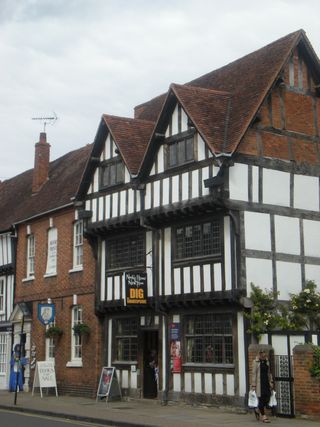
I went on to the Nash house, the home that Shakespeare bought for his two daughters and wife. His daughter Judith was a twin. Her brother Hamlet died young, which could explain his use of twins in his plays and the title his longest play. There is an archelogical project going on at the Nash house where they are excavating old Elizabethan artifacts.

Before it is time to catch the last bus and train back toward Oxford, about an hour away, I decide to dine at the Vinter Wine Bar on Sheep Street. It’s one of those dark wood paneled places where they present the specials on a chalkboard, which I like. I decide on an 11-pound set menu of curried butternut squash soup and lamb provencal with saffron mash, paired with an Italian red. I made my bus in plenty of time, which turned out to be the local bus through the Cotswolds featuring stunning views of its rolling hills.


Leaving England: Llama Talk and a Fete

Helen’s neighbor Susan is ebullient. She bursts forth with conversation like a shaken carbonated water. The Brits call it fizzy water, except Susan is not British, she is Canadian. We’ve joined her and her family for dinner to celebrate her niece Megan’s master’s degree in archeology from Oxford. Susan pops in on topics from American politics (She’s afraid of a possible President Sarah Palin) to her wacky in-laws, who actually happened to be dining with us. Cousins on her husband’s side of the family are llama whisperers of sorts and train 8 llamas and an alpaca, which have been taught to jump through hoops and do other odd tricks. Sadly, the llamas have stage fright, so no taking them on the road.

I am back in Oxford and Ugo has come along to see another part of England. After a few hours of navigating the streets of Oxford crawling with tourists and doing a bit of shopping, we enjoy an entertaining evening with Susan and family. Her brother-in-law’s name is Robert, but the family calls him Robin for short. We dine on the delicious pub food at Helen’s neighborhood pub, the Anchor, and wish Megan well on the next stage of her life. Susan is still bubbling with conversation and invites us back to her house to see what an original Victorian home looks like. She is proud that her home maintains its original footprint in stark contrast to Helen’s landlord’s home, which caused a stir in the neighborhood with the addition of a pvc pipe and plastic porch construction or monstrosity, if you ask Susan. She is somewhat of a neighborhood historian and tells us that Hayfield Road was where Oxford’s poor lived. Susan’s home has two of the original fireplaces that would have been in each room of the house and the french doors in her living room overlook a narrow 18-foot yard where families would have kept their pigs and chickens. Susan’s yard boasts two bushy trees bending with apples and other flora. We chat late into the evening about books, being a working woman in the 1960’s and having the freedom to choose your career path in 2011.

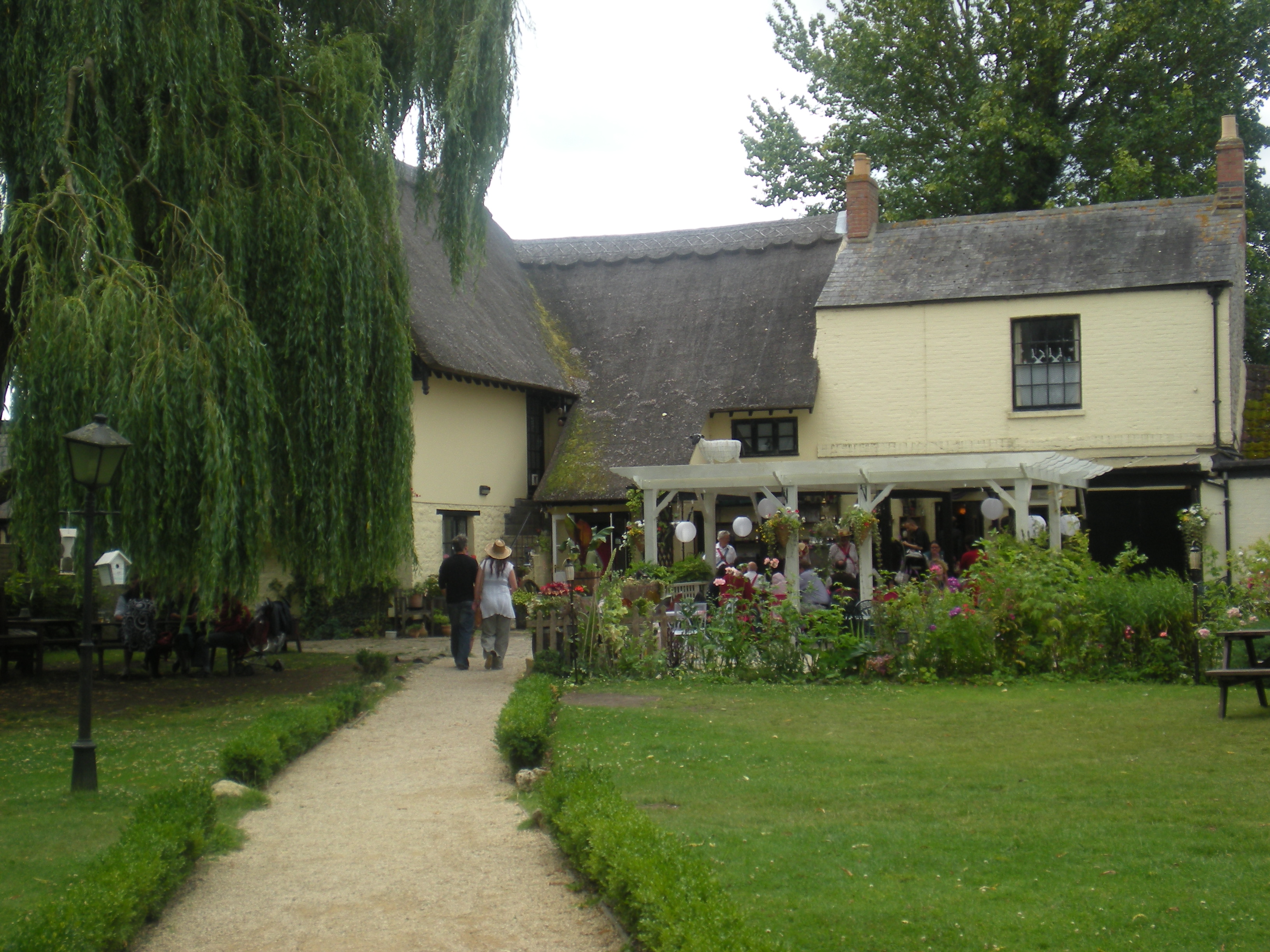
The next morning Ugo heads back London and Helen and I embark upon another pub walk, this time to  to The Perch. It is a mere 25-minute walk through Port Meadow in comparison to the hour-long trek to The Trout the week prior. Port Meadow is still scenic. This time we see more fishermen and horses than cows along the way. But what is really beautiful is the pathway to The Perch, lined with trees and vined greenery. It seems that we could be walking in an enchanted forest and The Perch magically appears before us, a rustic hutch surrounded by picnic tables. It looks to be the perfect place for Lewis Carroll to perform his first reading of “Through the Looking Glass” per local lore. Inside, The Perch is still rustic but quite sophisticated as we are greeted by a well-dressed, pony-tailed maitre’d. Helen and I decide on the Lazy Sunday Lunch, because, well, it’s a lazy Sunday. She has a deconstructed nicoise salad as her starter and I have the gazpacho, which is smoothly pureed and refreshing. We both opted for the pork roast as our main course and could barely finish the savory meat and perfectly roasted vegetables, which were the true stars of the meal.

After capping the meal with espresso and coffee Helen spots an Oxford colleague and fellow Swarthmore grad named Tia who specializes in Chinese political science. We go out to the garden and meet her husband Tom also a Swarthmorean. They are having beers with a few other Oxford academics, a typical Sunday activity. We move on to check out the Binsey Fete. We saw signs for it along our walk and decided not to miss this bit of local culture. The Brits have eschewed the French pronunciation of fete for something that sounds like fate or fait. We aren’t sure why. The Binsey Fete was akin to something like a country fair meets a neighborhood block party in an open field. There were moon bounces which they call bouncy houses, tractor rides, bales of hay for climbing and you could guess the prized chicken. Each chicken was inventively named making it hard to choose. Kate and Naomi were named for the models, a mohawked chick was named for Sid Vicious and an aging but impressive chicken was named for Methuselah. But the thing that gave this party its truly British feel were the Morris dancers. They were young and old, tall and stout, male and female and each had a spring in their step. Bells attached to their calves jangled as they waved white kerchiefs in the air. Helen didn’t quite know the origins of this quirky tradition, but according to Wikipedia, if you count it as a reliable source, Morris dance may have originated in Spain as a dance celebrating the defeat of the Moors. Moorish may have evolved to Morris and is now a traditional British dance performed on holidays like May Day and the day after Christmas. Whatever its origins, it is proof that Brits can be sprightly and spry at times, particularly when silver mugs full of beer are involved. I think it’s the perfect way to end my time in England, seeing and experiencing something so authentically British. I wonder what surprises Denmark holds. I look forward to finding out.

Henry VIII’s Candy Land and Dancing With the Brits

We first spot the garden of Hampton Court from the window of one of its grand staterooms. It beckons us. We’ve already passed through Henry VIII’s Great Hall lined with fading floor-to-ceiling tapestries, site of great dinners where plenty of wine was poured and the gossip of the day flowed. With six wives, there would have been plenty of gossip. The pride of the palace were its privies, aka toilets, in each guest apartment and conveniently located throughout. An internal toilet meant the height of luxury in those days. Portraits tell the tale of Henry’s many marriages in the quest for a male heir, while a stunning chapel with gilded ceilings and a balcony for the royals to kneel on plush red pillows reveals Henry’s devoutness despite his break with Rome.  We visit the kitchen, which really is more like several houses–one room dedicated to pies, another to bread and yet another devoted to the roasting of meat. Much of the palace appeared to be dark and at other times light shown through in the most unexpected places.

 It is too gorgeous outside to be closed in with ancient relics, so we answer the garden’s call. We stand for a moment to take it all in –the trees are the most whimsical shape, like gum drop trees, and the bushes are shaped like Hershey’s Kisses. With the colorful patches of flowers, it looks like we’ve stepped into Candy Land.  It would be the perfect place for a garden party. The grass is so soft and lush under foot that you want to drop to your knees and lie down for a while. Some folks have succumbed to the urge and lay prone staring up at billowy white clouds. The setting inspires a photo shoot and Ugo and I snap shots of one another under trees, next to multicolored flowerbeds and near classical sculptures. When we think we have enough shots worthy of Vogue or Harper’s Bazaar, we walk into town for tea and cake.


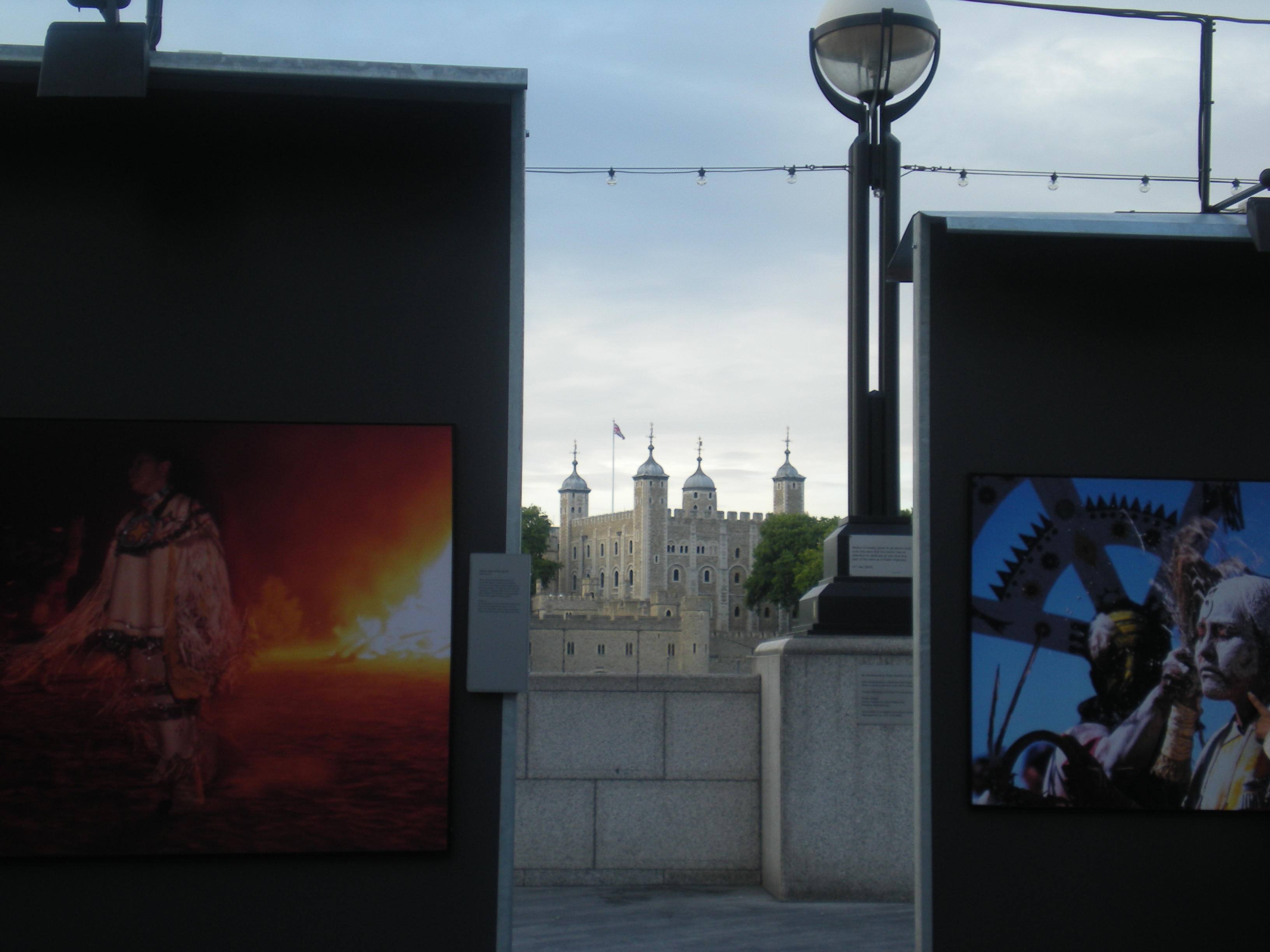
After a quintessential British day in the country, we return to the city to the London Bridge area. Standing on London Bridge, you think you could be standing on any random urban bridge in the States. Only the very modern sign on the bridge tells you that you are standing on the famed bridge from the schoolyard song.  Beyond the London Bridge is the Tower Bridge, looking more like a postcard for the city. I want to check out the Burough Market, which is nearby, but we’ve just missed it and see merchants packing up their wares and cleaning their stalls. I can only image what it would have been like with bustling crowds. So, we circle back to the London Bridge to walk along the Queen’s Walk, a scenic promenade along the South Bank of the Thames that stretches between the Lambeth Bridge and the Tower Bridge. There’s lots of activity along the walk on a Friday evening as Brits gather at pubs facing the Thames. Couples stroll hand in hand and tourists pose for pics in front of the Tower Bridge. As we walk, the crowd starts to thicken and we start to hear music playing. It sounds like a Michael Jackson song, so I am immediately drawn towards the bumping bass. But Ugo calls out and asks if I’m seeing what’s around me. We are standing in the middle of a photography exhibit.  The photos depict life rituals from around the world—weddings, funerals, births, even circumcision. A woman in Palau breast feeds her newborn baby in one photo; in another a man in Ethiopia leaps naked over bulls to prove that he is a worthy husband to his soon-to-be bride; and in yet another a Turkish family looks on as their young, festively-dressed, son bravely withstands a circumcision. It’s provocative and truly illustrates its point, which is that we are more alike than different.

 I can tell this fact is true as we turn our attention to the pool of dancing Brits just beyond the exhibit. They’ve been captivated by the music we heard earlier too. It’s a free open air concert at the Scoop at MoreLondon, a sunken concrete concert space in front of London’s City Hall. It reminds me of how DC’s hip crowd fills each corner of the Hirshorn’s Sculpture Garden for its Friday night concert series. At the Scoop some have brought their own libations, coolers packed with wine bottles. An older white gentleman in a fedora and shiny gray suit moves effortlessly to the beat, while not far off a rhythmless black Brit bounces off beat. A couple down below show-off their near perfect salsa moves to the pop tunes. It is a diverse crowd blowing off steam after a long week. The band goes through Michael Jackson’s song book hitting much of the “Off the Wall” and “Thriller” albums, before moving on to popular Duffy and Rhianna songs. Finally, the lead singer encourages the crowd to get to know each other like a preacher encouraging his parishioners to give praise and hug and greet each other during a church service. I introduce myself to a black British woman sitting in front of us. Her name is Anne-Marie. She asks about my accent and I tell her I’m from America and she tells us that there are concerts at the scoop during lunch and in the evenings. The band we are listening to are a popular group called the All-Stars. We talk about music a bit. They mention music that I don’t know and I tell them that they should check out Raphael Saadiq at Camden Town on Sunday. The band swings in to a popular British song that we don’t know, but it calls for audience participation with the refrain, “It’s all about the music.” It certainly is as Ugo and I join our musically entranced brethren in dance.

After we’ve enjoyed the musical stylings of the All-Stars, we continue down the Queen’s Walk to Shad Thames, a narrow cobblestone street with its buildings connected by iron bridges and walkways. This is how the warehouse district looked in Victorian times where workers moved cargo like teas, spices and other commodities from boats and from warehouse to warehouse over the iron bridges inland to their destinations. It’s a wonderful place to take a photo, especially in the fading London light. From there we head to Bermondsey Street, which Ugo says is known for its good, off the beaten track restaurants. Except that when we get there, almost every place is packed. We walk up and down the street exploring the menus and we stop at Village East with a menu with a great range of dishes with chicken, fish, pork and beef, but sadly, they are no longer accepting diners in the restaurant and we are forced to sit in the bar area to have a burger. The hostess has however assured us that the burgers are good, even though I’ve heard on several occasions that Brits don’t know how to do a good burger. We take her word for it and give it a try. It turns out she was right. It was a perfect rare on focacia with watercress and a creamy white cheddar cheese. The fries, or chips as they call them, were pretty good too. Another great end to a great day in LondonTown.


Birthplace of BritPop and Rudyard Kipling’s Cave

Lonely Planet describes the Engineer as one of London’s first gastropubs. It is in North London and not far from where I am now, in Kilburn, so I decide to go for a late lunch. Ugo has gone to work and left me in her gorgeous, renovated flat. When I made it to her place this morning, she was entertaining a pair of guys who had just delivered a rug sample. They stood around it debating the size it should be cut and where it would be positioned. This was no ordinary rug. It was definitely a floor covering and eye-catching one at that. I could see why Ugo would want it as the centerpiece of her living area which was already stunning, featuring a beautiful bay window, honey hardwood floors and an original stained glass window. The rug, a cream, caramel and chocolate patterned piece, already looked at home. This is kind of Ugo’s thing. Her side gig is working as an interior designer (Check out Ugo’s work here: http://arinzehinteriors.com) and she says she’s setting up her place in London as her calling card. I wish I’d seen her place in DC.

Once the delivery men have been given their proper instructions, Ugo heads off to work and we make plans to meet later for dinner. But now I need lunch, so I visit one of London’s transportation sites and get directions by tube and by bus. I found myself in Camden Town in no time. The only problem was finding Gloucester Avenue where the pub was supposed to be located. No one I asked had heard of it or knew where it was. The walking map wasn’t the clearest, when I looked it up, but I thought it would be easy to ask around when I got close. So, I just wander around for a bit, past a couple a vintage stores, past a salon where a stylist was braiding another woman’s hair, past apartments that looked like public housing, Chinese restaurants, falafel shops. Gloucester Avenue unfound, I finally give in or maybe it’s my stomach telling me to give in. I go back to where I started near the Chalk Farm tube station and look at the menu at a bar and restaurant called Made in Camden. It’s next to what appears to be a concert hall that is hosting an iTunes festival with artists like Adele, Moby, Coldplay, Bruno Mars and Raphael Saadiq. It’s a nice place, but it looks like it’s even better later in the evening, especially filled with concert-goers. I pick up a leaflet about the event next door and read that I am practically dining in the birthplace of the British Punk Rock and Pop scene, the Roundhouse. Bands like the Ramones, the Clash and Patti Smith played here. The 90’s group Soul II Soul is from here and most recently the talented and tragic Amy Winehouse. So, I feel like I am where I supposed to be and settle in. An eclectic mix of music plays as I dine on a tasty leek soup, an Asian chicken tapa with gingered grapes with a side salad and sip a cider. It’s the perfect place to people watch. I see a group of teens gather for the evening’s concert and the sidewalk becomes a catwalk of London fashion.

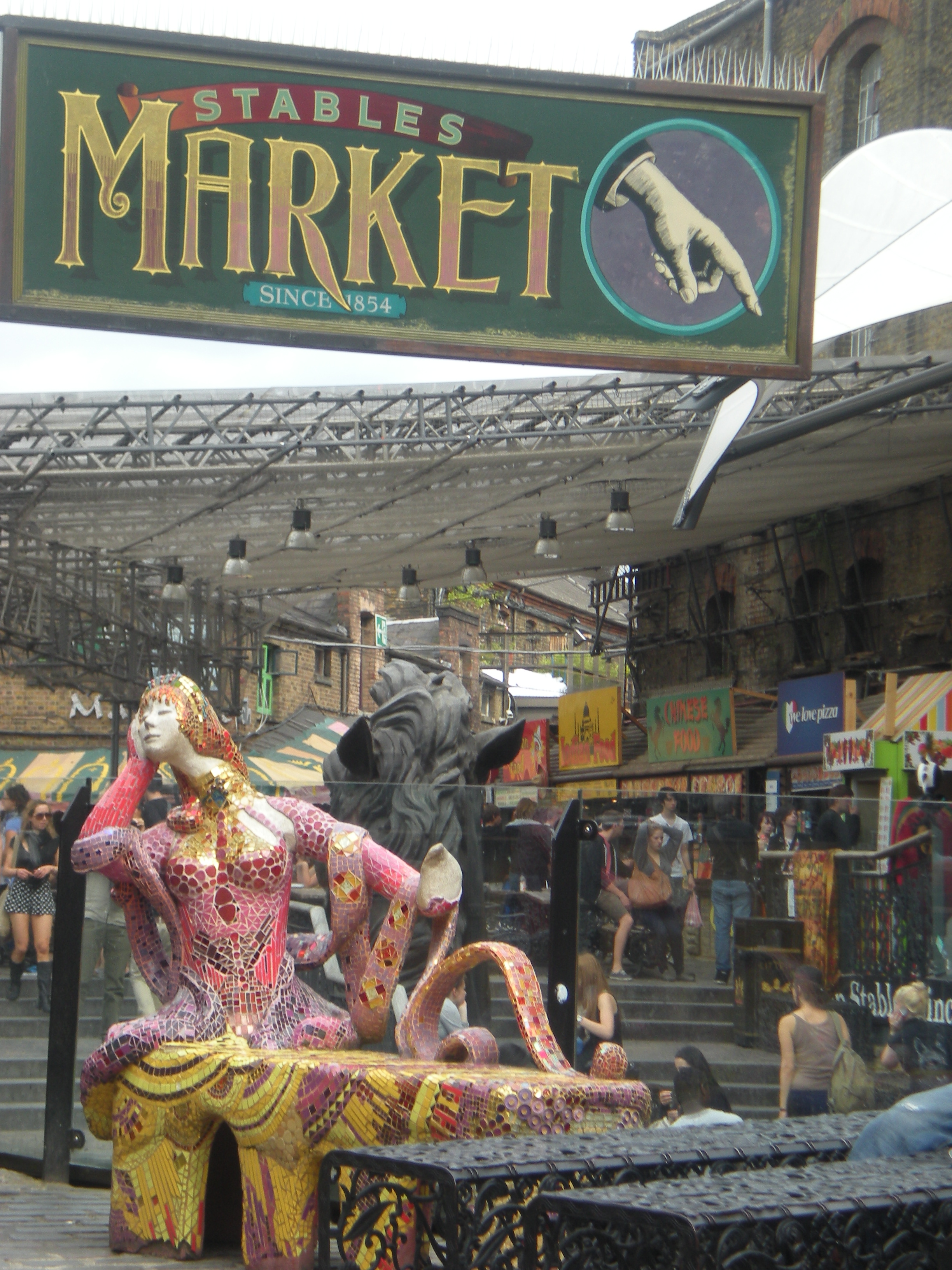
The must have items if you are a teenage girl or a woman in your 20s are black tights worn under cutoff blue jean shorts or a miniskirt. These are likely to be paired with a tank top, cardigan and scarf or a cropped jacket. The tights may also be substituted for leggings so that you can wear sandals or open-toed shoes. I see the more fanciful and fearless side of London fashion down at the Camden Stables Market, a maze of vintage, punk, art and jewelry stores a few blocks away from the Roundhouse. There’s a guy with at least 20 face piercings and folks with hair dyed neon pink and green, all mixing in with the fashion forward and fashion challenged. The best find of the day for me is an accessories shop called Taloola owned by a lovely South African and Namibian woman named Rachel. She’s been in the market for a couple of years selling beautiful bead necklaces and jewelry from Kenya, South Africa and Namibia as well as leather bags and wallets from Morocco. She sources the items she sells directly from the people who make them in those countries including women’s cooperatives. Rachel is delightful, dressed in a blue patterned maxi dress and a matching blue wrap. She almost seems too elegant for the market. Her daughters are her models and show off her jewelry on placards in her shop. She tells me how she hated London at first when her husband first brought her to the city from South Africa, but her daughters fell in love with the place. We talked about traveling in Africa and I told her that I wanted to replace a necklace that I got in Senegal that broke recently. She helped me try on a few pieces and I ended up walking away with two necklaces and a new friend, hugging as we parted.

After more wandering through the market, it’s time to meet Ugo. We’d decided to meet at Covent Gardens, known as the place of the original flower market from “My Fair Lady.” Now, it is filled with street performers, tourists and Londoners on their way to the pubs. Ugo tells me of her path to London as we walk. She is in finance by trade and took a job as CFO of an architecture and design firm in London so that she could be closer to her creative passion for interior design. She seems to be happy with her move so far settling into the African community and finding the local tennis club. In Leicester Square, we are surrounded by London’s theater and arts scene, passing by marquees trumpeting “Much Ado About Nothing” and “The Lion King,” as well as high-heeled women and dress-suited men outside art gallery events. I mention Gordon’s Wine Bar, a spot recommended by another friend that once lived in London. In the process of navigating our way there, we see that the National Portrait Gallery is open for late hours and we step in to hear a DJ spinning funky tunes. We have to stop in the Tudor room to see portraits of Henry VIII and the doomed Anne Boleyn. A portrait of a stately-looking African man catches our attention amidst the sea of portraits of white men in powdered wigs. His name is Ayuba Suleiman Diallo and his portrait is Britain’s first of a slave turned freed man.

 Happy to have stumbled upon such a cool event, we move on to have a quick sushi dinner and then head to Gordon’s Wine Bar, which is down a narrow street lined with pubs and restaurants leading to the Charring Cross tube station. Its garden is packed with ruddy-faced Brits and we step inside the bar dating back to the 1800s, London’s oldest wine bar and once a Rudyard Kipling haunt. A wood paneled bar area proceeds a cave-like space, where even I have to duck a bit to enter. Tapered candles are its only light and people huddle together in intimate conversation. Ugo and I toast a lovely day with our glasses of wine.


More Art History and a Shopping Mecca

There is a 100-foot column split in two on display in theVictoria and Albert Museum in South Kensington. Naina and I can’t imagine how it got there. It takes the breath of any visitor who enters the cast gallery. Except this isn’t a cast it is the real thing. A Roman column dating back to 113 AD recounting the story of the Emperor Trajan’s victory in a great war in intricate carvings winding their way up from its base. The battle looked fierce and the victory sweet based on the carvings. Across the balcony is a replica of Michelango’s David and we are struck by it’s height, we can almost see into his eyes and we are at least a story up. It takes us a moment to leave this room after marveling over replicas of entire cathedral fronts that have made their way into the massive room. Intricate ironwork in the form of gates, railing, benches, locks, keys and fireplaces capture our attention as well and we morn the loss of such artistic trades. Everyone today seems to want the same thing pre-made. We navigate our way through the enormous halls, art in and of themselves, to the theater and performance exhibit, which features a breakfast dress worn by Dame Edna, the mangled guitar of Pete Townsend from the Who and the Punch and Judy puppets. That gives you a sense of how ecclectic this exhibit is. Naina has to leave to pick up her sister, but I go on to see an Elton John costume, Adam Ant’s Prince Charming outfit and one of Mick Jagger’s unitards. I am equally thrilled to see costumes worn by Laurence Olivier and Richard Burton. I also learn a bit about the first black man to play Othello and make the part famous in England, Ira Aldridge. He was African-American and a stand in for the white actor who suddenly fell ill.

From theater and performance, I move on to the jewelry exhibit that showcases beautiful and not so pretty pieces that date back to early Egyptian times through present day. The baubles are organized by date and what was happening culturally at the time as well as by purpose. Jewelry has been worn throughout time by men and women to bring fertility, protect children, ward off evil spirits or show religious fervor and devotion, as well as just to show off. An amazing emerald and diamond encrusted, crown, necklace and earring set worn by a Duchess is across the room from Art Deco rings that a flapper may have worn in the 1920s. If you are woman who loves her trinkets, it’s worth the trip. Finally, I stop for lunch and I decide not to go far and visit the museum cafe. What a treat. The dining rooms are works of art. I am having a slice of quiche and salad in a room depicting the seasons and months in stained glass and blue and white tile. It is gorgeous. I linger longer with a pot of tea and scones.

I want to stay longer at the museum because there is so much to see, but Harrod’s is nearby and I want to hit the famed department store before it closes. I’ve never seen so many women in berkas or hijab in one place in my life. Some women were dressed completely in black from head to toe with just eyes showing, others had more fanciful head wraps that shimmered or twisted in unique ways. They were mobbing the handbag counters, Louis, Chanel, Marc Jacobs, you name it they were there. The Harrod’s in London may very well be the shopping mecca of the Muslim woman’s world. I make may way to the Egyptian escalator and it is unexpectedly garish in a place that you might associate with staid style. But there it is, full of tourists and shoppers making their way between five floors of luxury and designer clothes, furniture, china, etc. I have to stop at the shoe floor where I spot one of the black-blanketed women trying on a pair of red suede platform pumps matching the color of her painted nails. I guess if you can only wear black and remain covered head to toe, you have got to find other ways to make a fashion statement and a pair of red suede pumps are definitely saying something. I wander around on the designer dress floor through Balenciaga and the British designers like Rag and Bone and Karen Millen. The salespeople looked bored out of their minds. They are dressed in black too and wear kind of hollow looks as they ask if they can help you. They all look similar as if they stepped out of Vogue. In fact, I imagine that working at the Harrod’s maybe a lot like a scene from “The Devil Wears Prada.”

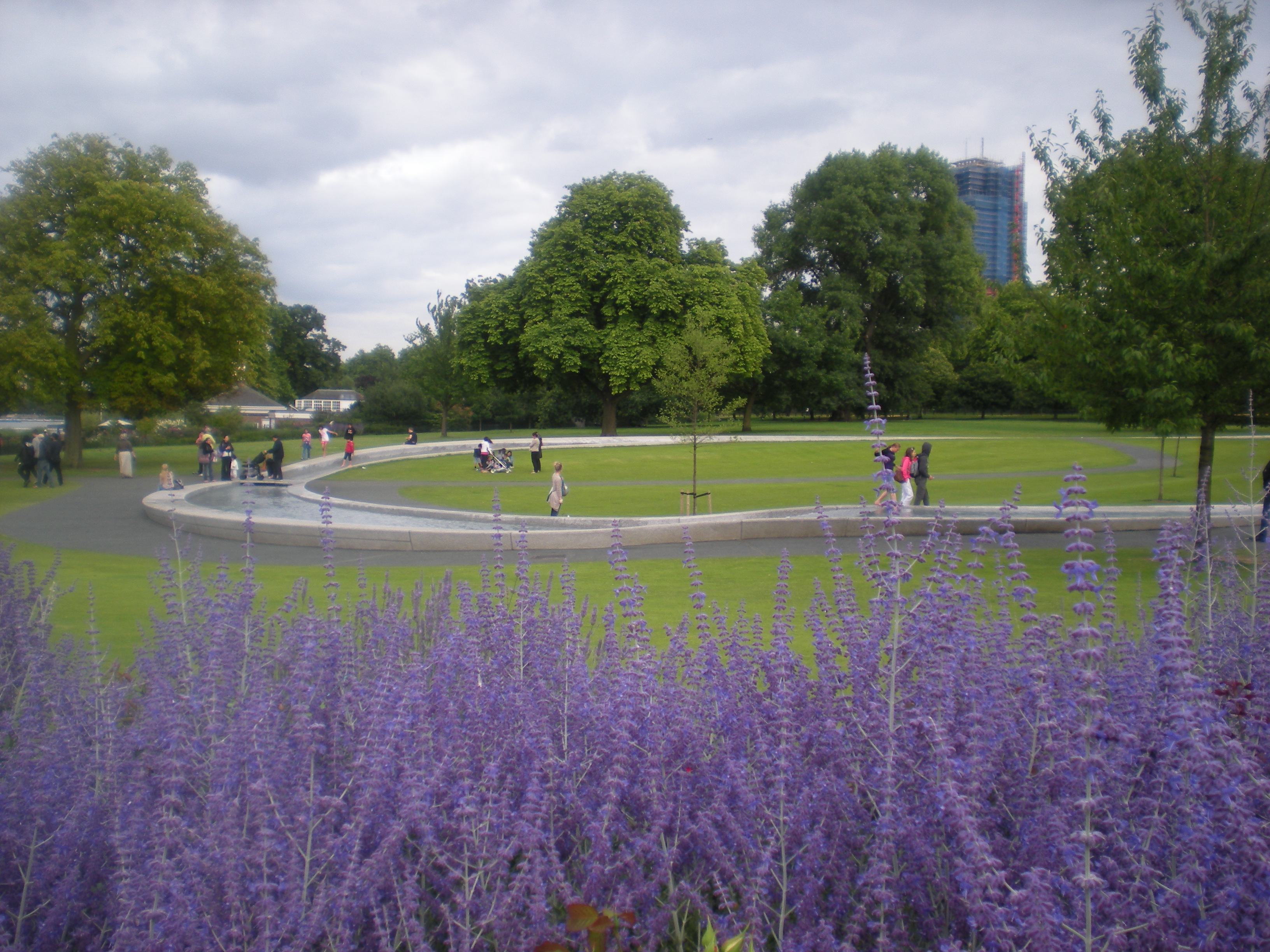
After my luxury shopping encounter, I decide to head back towards the museum to Kengsington Park to see the Prince Albert and Princess Diana Memorials. Making my way down Brompton Road, I spot more Arab folk taking in afternoon hookahs rather than afternoon tea. The Prince Albert Memorial is stunning. You can tell that Queen Victoria’s hubby was well loved and respected as you look skyward at the gold-spired gazebo with a golden Albert in the center. Diana’s memorial is more understated. Maybe she would have wanted it that way. It is described as a memorial fountain, but it is more like a babbling brook and kids have rolled up their pants legs to traverse the concrete loop of running water.

It’s my last night at Naina’s so I head back to Wimbeldon to enjoy a quiet dinner with her, Josh and her newly-arrived sister from California, Sonja. Naina and Josh have made a nice cozy place for themselves despite the challenges of having to hang dry their clothes versus drying them in a dryer, dealing with poor customer service or longing for ziplock bags, band-aids that stick and other things you never thought you’d miss back in the States. But I think any place where you where you connect with good people over food and wine for good conversation can feel homey and their place feels that way. Another London ex-pat perspective to come from my friend Ugo.


Beefeaters Do Show Tunes and Brushes with Fame and Infamy

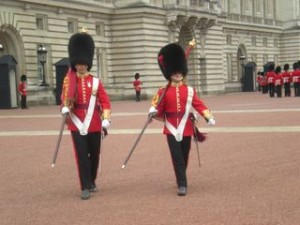
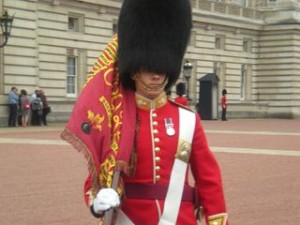
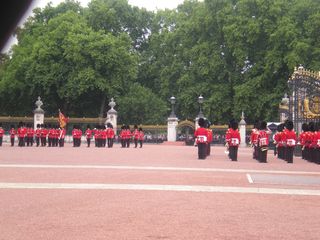
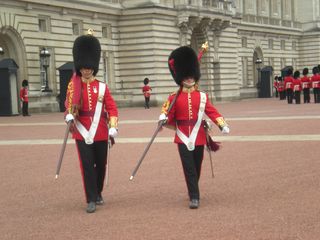
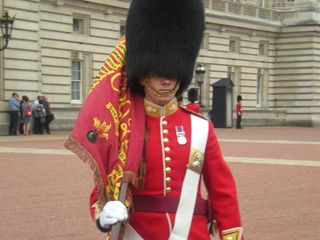
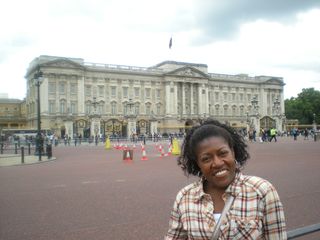
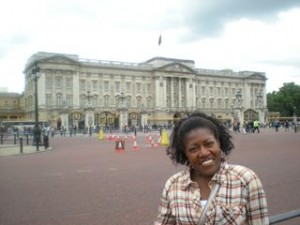
We aren’t sure if we are watching a marching band at the Macy’s Day Parade or the changing of the guard at Buckingham Palace when we hear the James Bond theme music, followed by “Goldfinger” and “Puttin’ on the Ritz.” But we are definitely in front of Buckingham Palace watching the guys in the big bearskin hats and red uniforms march in tune. They don’t do the dips and formations like a good high school marching band, they just peel off from the rest of their regiment in twos, sometimes groups of six and march past or right up to the gate. Some of the guards carry heavy flags. One guy looked too small for his heavy hat, which was slightly askew. Other guards carry massive riffles with the deadliest looking bayonets on the end that I’ve ever seen.

Yesterday, Naina told me that these guards are called Beefeaters because back in leaner times, they were fed beef and the best cuts of meat because they had the duty of protecting royalty. Folks with less were resentful and called the soldiers “beefeaters,” meant to be a derrogatory term. Times have changed, especially once they appeared on a gin bottle.
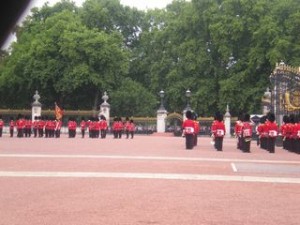
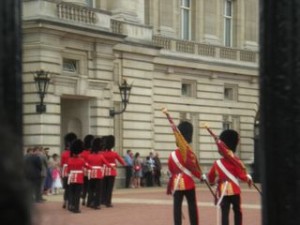
When we first arrive at the palace gates there are throngs of tourists and we have to crane our necks to get a peek at what’s going on. It’s like a gathering of the United Nations. We hear Spanish, Italian, Japanese, English, maybe even some Farsi. Little kids sit on their father’s shoulders and narrate the scene unfolding just beyond the gates. “They are coming this way! They went over there!” It’s a little chaotic, but kind of fun.

We are standing behind a family from Portland, Oregon. The wife is from Silver Spring, Maryland. We learn that this is about a half-hour long ceremony. I was thinking that it would be over in about 10 minutes. We guess at what the guards are doing, unsure if we’ve seen the change over in guards or not. There’s alot of passing of guards and because they all look pretty much the same, it’s hard to tell if new guards have come out and taken their place or not. And, there appears to be a lot happening that may or may not be related to the actual ceremony.

At one point, a horse drawn carriage arrives and passes through the gates. We wonder who is inside. We think something important is happening today because we saw a lot of Brits dressed up, ladies in hats or wearing those now famous fascinators. Some men were in suits and even in tuxedos and tails. Maybe it WAS the Queen. A short time later we see a less swanky vehicle pass through the gates, something that looks like a green smart car. Was all this a part of the ceremony? We even think we may be on the site of a crime scene as a woman behind us whispers that the police found a man hanged nearby. As I said, there was alot happening. Eventually, some of our fellow curious tourists start to lose patience and the crowd starts to thin. We are able to get right up to the gates for a better view of more passing guards and marching band tunes. Finally, it appears to be over. Guards process out of the palace gates and start a parade towards St. James Park. We decide not to follow the parade or the crowds and turn in the other direction in search of lunch. We stop at a cute cafe not far away for sandwiches and return to the palace for more pomp and circumstance.

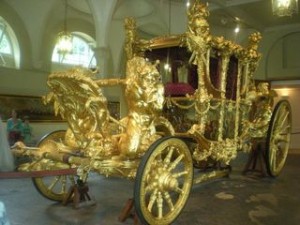
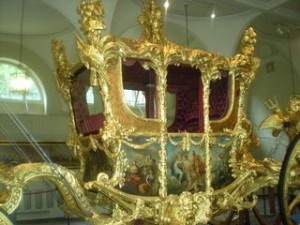
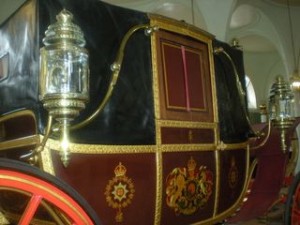
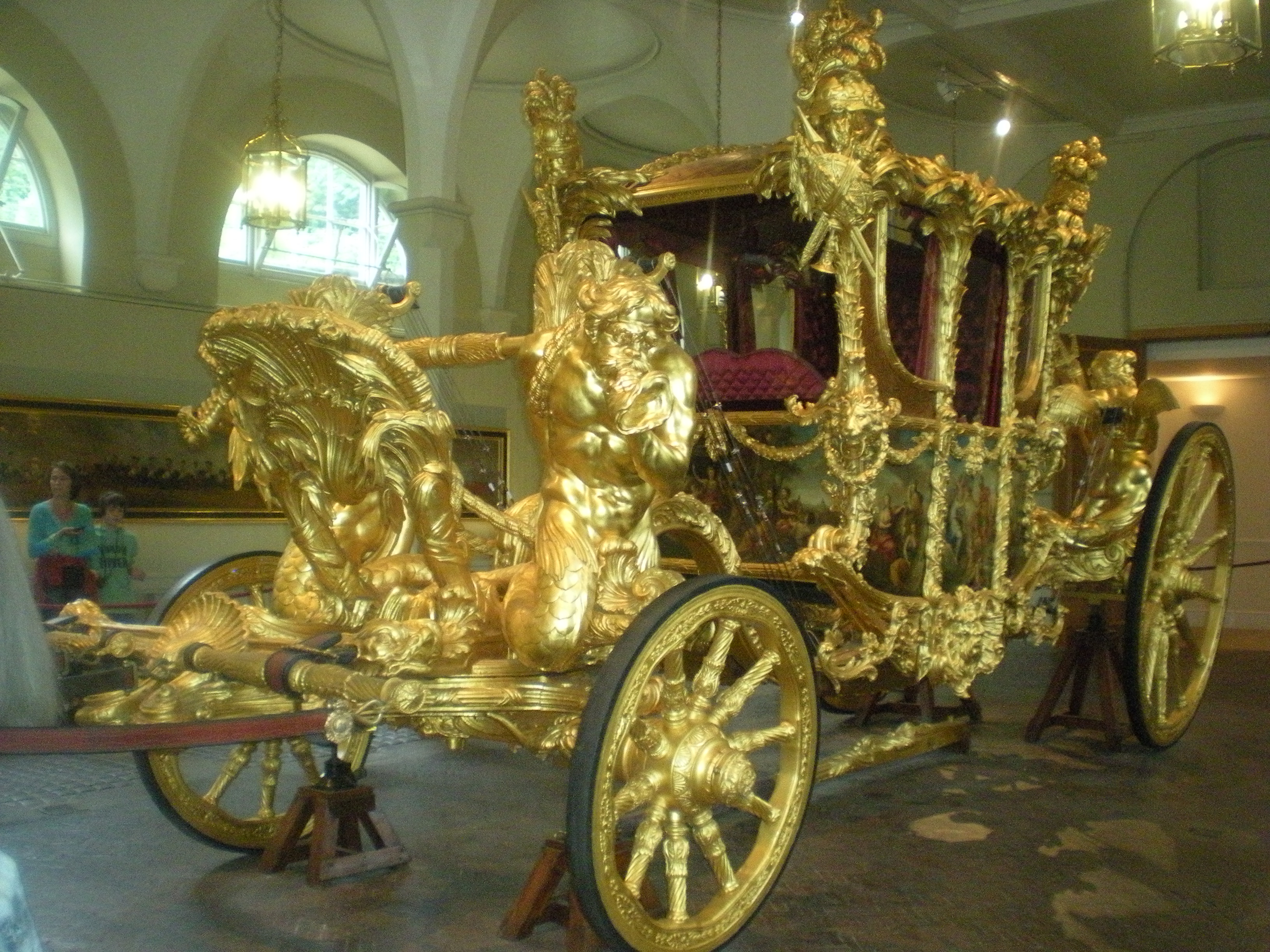
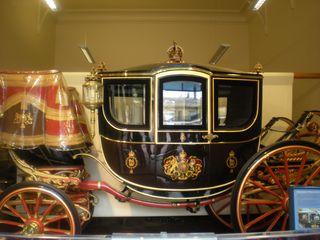
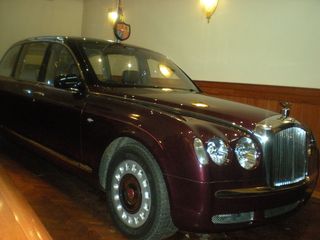
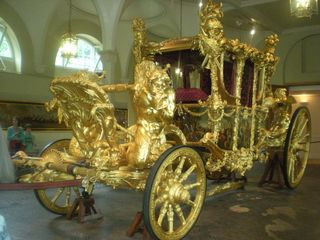
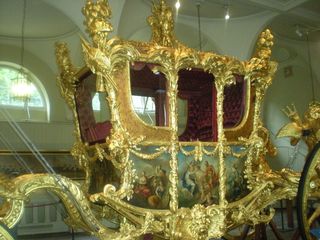
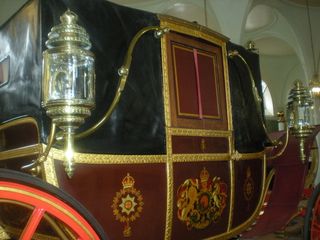
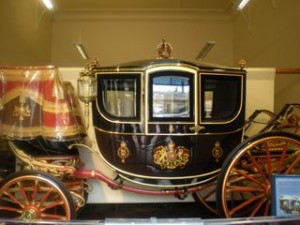
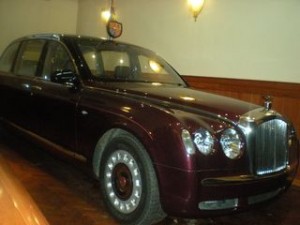
There is plenty of pomp and circumstance at the Royal Mews, the working stables of the palace. The horses snack on hay as we pass through to see the carriages, which are definitely something out of a fairytale, each used for different occassions. One is for the Queen to ride in to open Parliament and another just carries her lighted crown for all her British subjects to view. Then there is the royal Bentley which was built for her to stand up in. Naina and I guess that the Queen must be 4’2, because it doesn’t look like an average-sized person, let alone a petite 5-foot person like me, could stand up in the vehicle. The most ostentatious thing we have the pleasure of laying our eyes on is the Golden State Coach, which weighs 4 tons and can only go about 10 miles per hour with six horses pulling it. It is baroque with a capital B. I like to think of it as the royal pimp mobile. It is only used for the most special of occassions like coronations, most recently for the Queen’s Golden Jubilee celebration. Only the pictures can do it justice. The tour ends with the carriage that carried William and Kate to Buckingham Palace after their nuptials at Westminster Abbey in April.
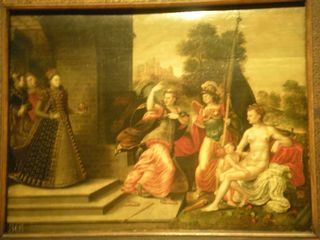
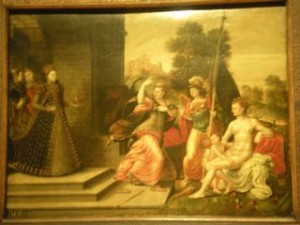
 A few steps from the Mews is the Royal Gallery, which houses a rotating exhibit of art and decorative items aquired by the royals over the years. The current exhibit features items based on greek myths and mythology. There were paintings, jewelry and furniture showcasing Cupid, Diana and Apollo throughout. My favorite was a painting, possibly painted by a suitor of Queen Elizabeth I. She is painted into the greek myth “The Judgement of Paris.” She appears to be in the role of Paris, judging the beauty of Athena, Aphrodite and Venus. But the Queen holds the prize, suggesting that she is more beautiful than these goddesses. The next room holds the fanciful collection of King George IV, who apparently had a passion for decorating and just acquiring the most exotic items of questionable taste that he could find. Naina visited an entire palace of his over-the-top collection just outside London recently.
 

Feeling a bit of museum fatigue, we decide to break for tea and stroll through St. James Park, which is home to a bevy of unusual-looking waterfowl like the coot, a small shiny black bird with a white beak and face plate. I tell Naina that Mike Tyson would love the place with all the pigeon varieties strutting past. (He has a thing for pigeons, if you didn’t know.)

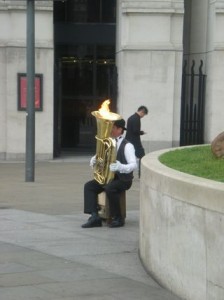
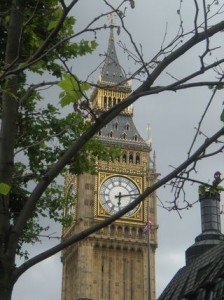
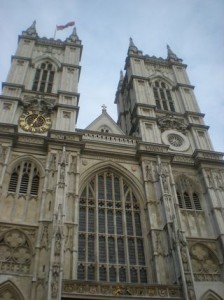
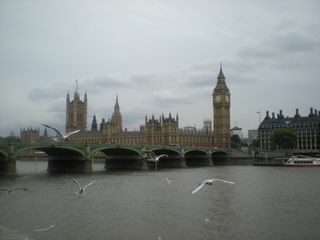
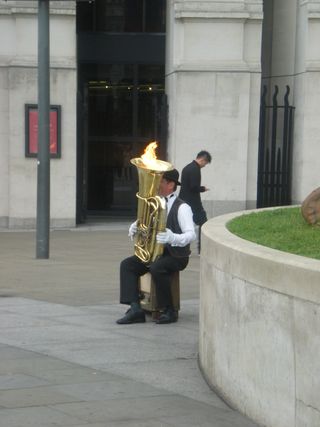
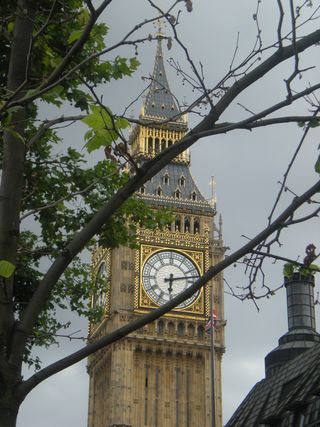
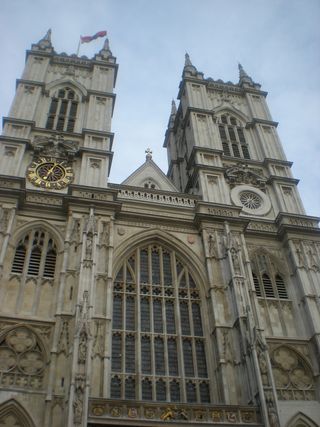
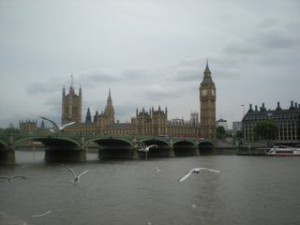
The St. James Inn is a lovely place for tea, except that they’ve run out of scones. We make do with finger sandwiches and tasty little cakes. Then it is off to the top London sites. Trafalgar Square is first and it is characteristically mobbed with tourists and Londoners just hanging out between the fountains, on the stairs and in any other open space that we can find. There is a man playing a fire-breathing tuba, headless people holding umbrellas and other odd street performers. From there we make our way over to Westminster Abbey, passing Big Ben and the Parliament on the way. There is a massive line to get into Parliament and we can’t figure out why. A policemen tells us that it has something to do with the newspaper phone tapping scandal. There’s also a small demonstration against the Libya bombings just across the street in a space similar to Lafayette Park in DC. We make it to the Abbey which is quite impressive from the outside, but not more so that Notre Dame in Paris in my opinion. We see the entrance where a commoner named Kate stepped out of a carriage to marry a prince.

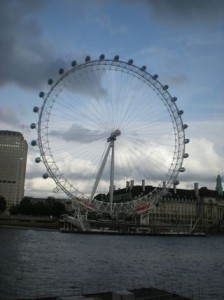
We’ve crammed a lot into one day, but it is rush hour and rather than fight our way through the crowds on the tube, we walk along Thames and the South Bank Centre past the Eye, the massive ferris wheel and what one of the writers from Lonely Planet says reminds them of the Eye of Mordor from the Lord of the Rings.

Along the South Bank there is a skate park and I see a group of teens practicing dance moves, maybe they hope to be Britain’s next Back Street Boys. Naina and I end our day in a warm, bustling Italian restaurant famished after about 8 hours of walking, but satisfied with the days events. When we get home, we catch up on London’s news and learn that we hadn’t been invited to the Queen’s annual garden party at Buckingham Palace. We are sure they wouldn’t have noticed us among it’s 8,000 guests. We also learn that a man really did hang himself from a tree just across the street from Buckingham Palace. A police officer covered his body with a tarp during the changing of the guard. And, police testified before Parliament as they investigated the newspaper tapping scandal that shut down the News of the World paper last week. All the people we saw at Parliament were press and spectators. It seems that more than Naina and I had a very busy day.
 

Wimbeldon Dream Realized and A Sri Lankan Feast

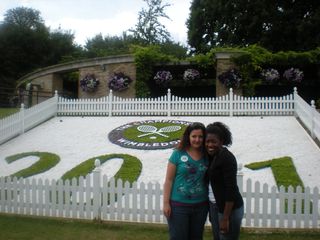
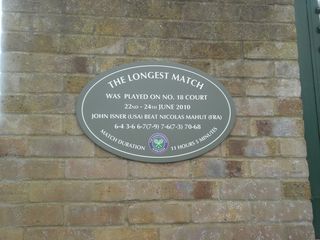
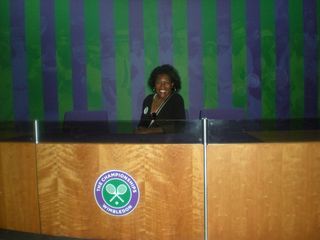
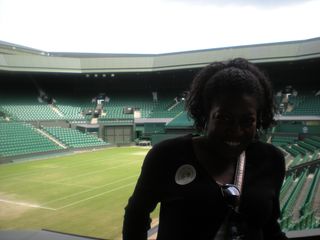
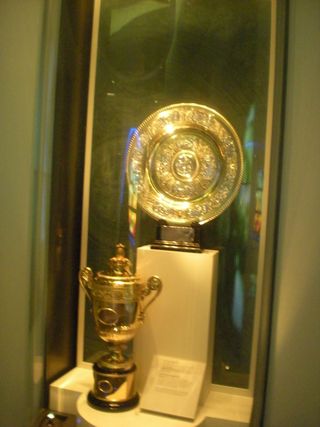
I didn’t quite want to reach down and grab a handful of grass and eat it, but I was definitely thrilled to be touring the grounds of the All England Tennis and Lawn Club. Finally, I’d made it to Wimbeldon and I didn’t even have to lift a racket! I am sure eating the grass would have been prohibited, given that we couldn’t even touch it on our tour. Besides, this seems to be reserved for people who actually win Wimbeldon, beating Rafa Nadal in the process, like Novak Djokovic. I am with my friend and former Discovery colleague, Naina Mistry, who now lives a short bus ride away near downtown Wimbeldon and had the distinct pleasure of actually attending some of the matches a few weeks ago. I am green with envy when she talks of having Pimms and strawberries and cream on Henman Hill and scoring Center Court tickets to see Andy Murray play in the early rounds. I resolve to return as a spectator as we stroll through the museum before our tour. I find out why this is THE place to win a grand slam in tennis because it is the birthplace of tennis as we know it. The winner of the very first match at Wimbeldon, on space loaned at the existing cricket club, said that he didn’t think the sport had much of a future. We later learn than over 38,000 people attend Wimbeldon each year. It’s a pretty nice museum and we wish we’d allowed ourselves more time to see all the exhibits as we blow by a tennis fashion display, featuring lace ruffled and shiny blue tennis panties worn by past women’s players. I can’t miss the chance to get a shot of the gold and silver plate and trophy. The tour is chock full of tennis buff tidbits and behind-the-scenes peeks at Wimbeldon, like where the pros check in for their matches and winners collect their prize money of 1.1 million pounds. Even the first-round losers collect 1,000 pounds for their troubles. I pose for a photo in the place where the press interview players after each match. If only I’d started playing tennis at age 5. I could see my name listed with all the other tennis greats on a wall where members and players pass. We actually do see members of the club playing tennis. They look to be 80 or older, hair as white as their tennis togs. Their balls fly outside the court lines more frequently than they would like, I am sure. The only way you can become a member is if you have won Wimbeldon or if you’ve got a lot of money and connections and can play a bit of tennis. The tour ends appropriately at Center Court. It’s actually kind of cozy. I imagine sitting on the edge of my seat as I watch Rafa and Roger play for four hours straight or agonize over which Williams sister to root for in the finals. A lot of great tennis has been played here and I hope some of it rubs off on me. In the gift shop, I buy a Wimbeldon visor and t-shirt for inspiration.

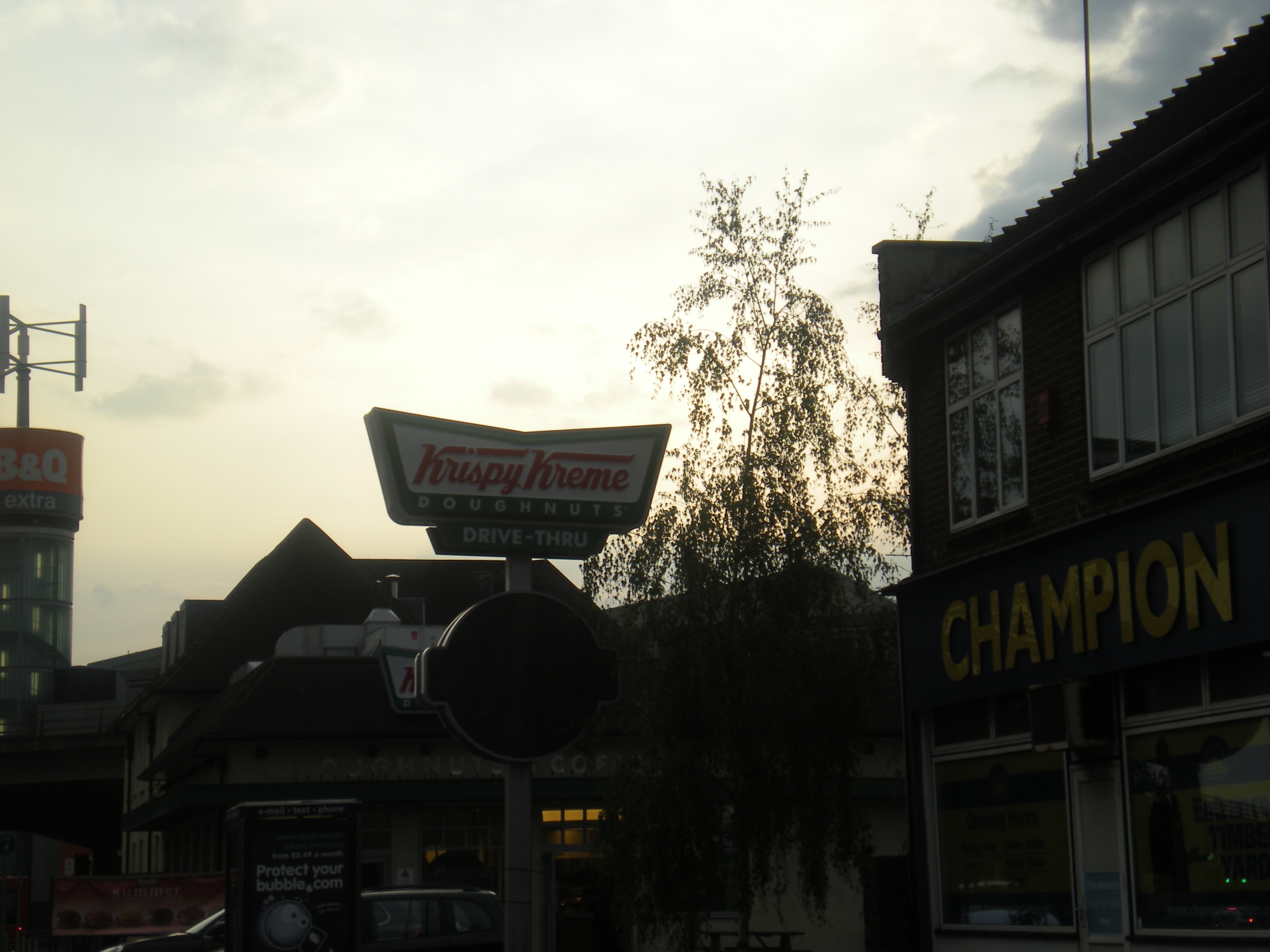
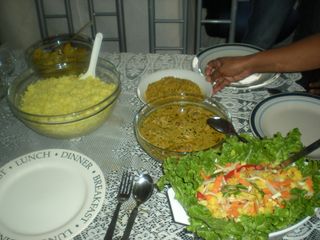
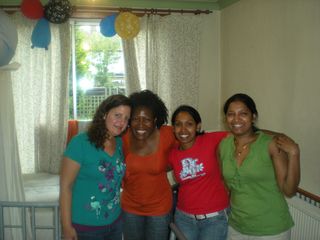
After our tour, we have to rush back to Naina’s to meet her husband Josh and make a dinner date with my friend Sid’s sister in a town about 20 minutes away. Naina’s neighborhood is quite cute like most of the British neighborhoods I’ve seen so far. Each house seems to have a colorful door with colored glass cutouts, but no door knobs. Colorful tiled walkways lead up to these doors preceded by immaculate small gardens. Naina’s neighborhood seems to be ethnically diverse too. I’ve seen South Asians and people of African descent. Naina says there is a large ex-pat community here too with people hailing from Germany, Australia and America. One of Naina’s friends calls Wimebldon Nappie Town because of all the babies. I count about six strollers, called push carts or buggies, as we make our walk back. Josh walks in moments after we arrive. I’ve never met Josh before and he welcomes me warmly with a handshake and proceeds to pick large-winged ants, or may be they are gnats, out of my hair. We passed through swarms of them on our walk back and Josh witnessed several people freaking out at the bus stop in what appeared to be a mini plague. I am grateful for his help. Insects in the hair definitely are not cool. Once we appear to be bug-free, we head to New Malden for a Sri Lankan dinner prepared by my friend Sid’s sister Iresha. I’ve only just met Iresha a few weeks ago via Skype at Sid’s place. I met Sid at a New Year’s Eve party waiting in line for the bathroom and we became fast friends. He insisted that I meet his sister while in London and it was a lovely idea. Iresha greets us with a kiss on each cheek when we arrive at her home and the smell of curry emanates from the kitchen. We meet a few of Iresha’s house mates, also from Sri Lanka, and chat over tea before dinner. When Iresha laughs, she has the same laugh as Sid, genuine and contagious. Naina shares a bit about her travels to Sri Lanka as a child and Iresha knows a bit about the places she’s visited. Soon dinner is on the table. There is chicken curry, potatoes, dahl, basamati rice and a salad of pineapple, bean sprouts, cabbage, carrots and peppers. You recognize good home cooking no matter the nationality and we were about to have some good home cooking. There were only three places set at the table and we asked if they were eating with us and they said no, this was all for us. We couldn’t believe it and insisted they dine with us, but they would hear none of it and said this was their culture. So, we dug in, piling on rice, then curry, followed by potatoes, dahl and salad. It was all so good. Just the right spice. But the dahl was phenomenal. Unlike any dahl we’d ever tasted. The coriander burst in your mouth with perfectly cooked lentils. Iresha practically cheered when we got second helpings and Josh wiped out the last of the dahl. Josh, by the way, appeared to be in food rapture. He moaned happily with each bite. He said he was a fan of South Indian cuisine, but had never had Sri Lankan before. I am certain that he is a fan of Sri Lankan food now, too. We linger a bit longer before we say our good-byes. On our way back to the bus, we encounter the sweet greasy smell of Krispy Kreme doughnuts. A surprising sight in a south London neighborhood. Its sign says drive-in, which appears to mean drive in, park and sit at a picnic table to have a doughnut. Naina remarks that it is probably good that we have stuffed ourselves with food, otherwise we’d be lured in by the intoxicating smell. The bus arrives just in time.

Place Where the Cows Cross the River

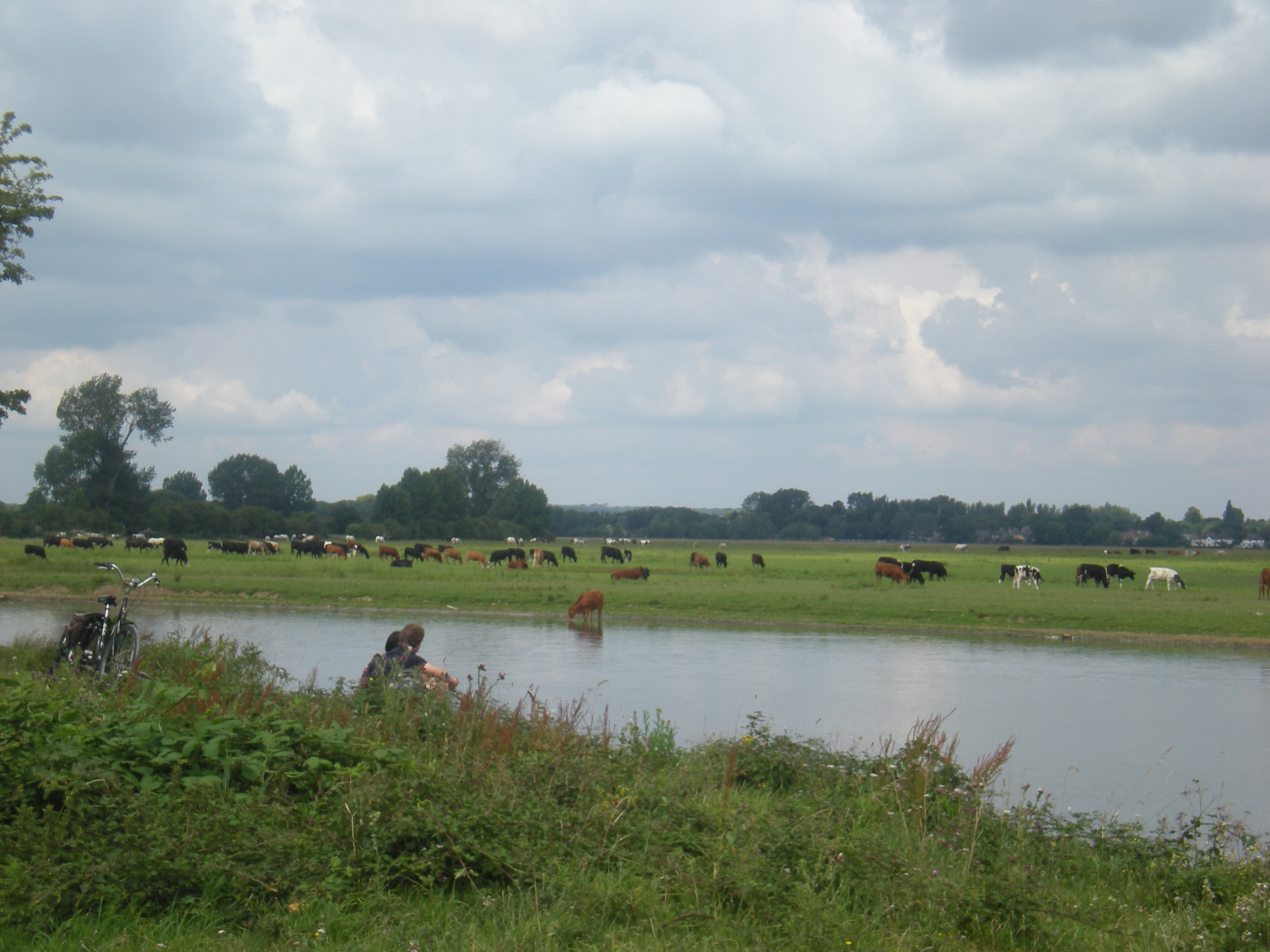
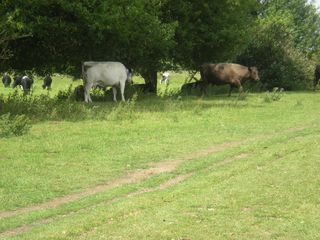
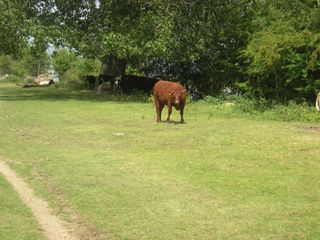
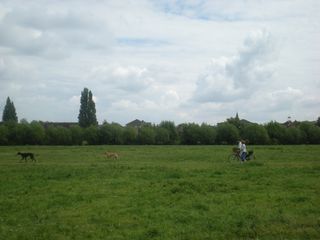
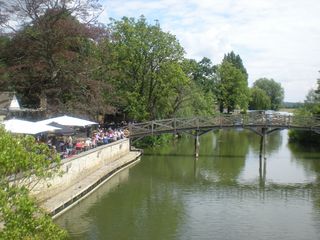
We are in the process of walking through a herd of cows when Helen mentions Oxford’s etymological origins. Oxford means literally ox fjord or ox passage way. It makes sense in the current situation. She also says the cows won’t bother us if we don’t bother them. I just take a photo or two or three. I’ve never walked through a herd of cows before and it’s pretty smelly as you might imagine. We are again doing something very British and taking a walk through Oxford’s Port Meadow on our way to a proper British lunch at The Trout. We’ve already passed another cow gathering on the other side of the Thames, two women who seemed to be fine with being surrounded by a gaggle of geese and a man with a piece of grass in his mouth like an old Huck Finn. It is the most beautiful day of my stay in England by far and I’m overdressed. You just never know how to prepare for the weather, so you over prepare. I’m wearing a scarf, black long-sleeved shirt and and a thin black jacket during what appears to be a heat wave. I wore a scarf and a jean jacket yesterday and kept my umbrella half open to ward off intermittent rain showers.

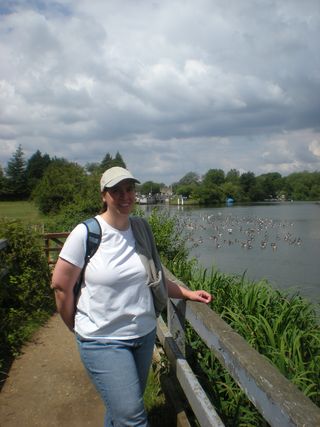
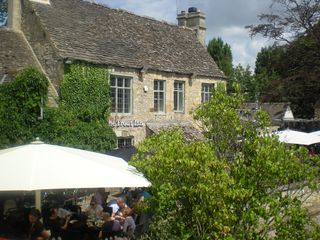
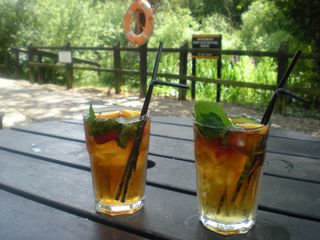
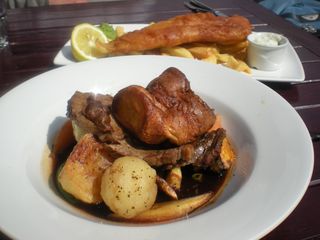
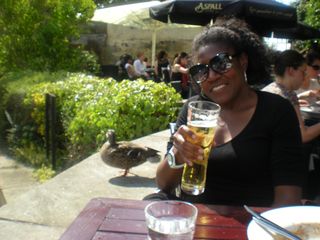
 After successfully walking through a herd of cows without incident, we continue along the Thames as Brits breeze by on bikes and paddle past in canoes on a gorgeous Sunday. When we reach The Trout, it’s an oasis of umbrellas with mellow happy Brits under them. I look forward to joining them. We start with a refreshing Pimms on the patio overlooking the Thames. This time I get a picture of the fruit-filled beverage. Helen and I just take in the lovely day and when we get to our table we order traditional British dishes, fish and chips for Helen and beef rib roast with Yorkshire pudding, also known as pub roast, for me. There is a lively group of women sitting behind us. Their conversation ranges from eHarmony to a date with a DJ who was cute but as short as a midget. I am reminded of an episode of “Sex in the City.” As we wait for our dishes, a very bold duck visits the diners from time to time, eyeing each patron and table for tasty scraps. He even lingers at our table for a bit in a staring contest. Luckily, we’d finished our appetizer of bread, olives and vinegar and oil. When our main meal comes, it looks amazing. Helen’s fish is perfectly battered and golden brown. A fluffy puff pastry, which is also known as pudding, sits atop juicy slices of beef, covering roasted parsnips, carrots, cauliflower and broccoli with golden potatoes that taste like they’ve been roasted in apple juice. Gold star for The Trout.