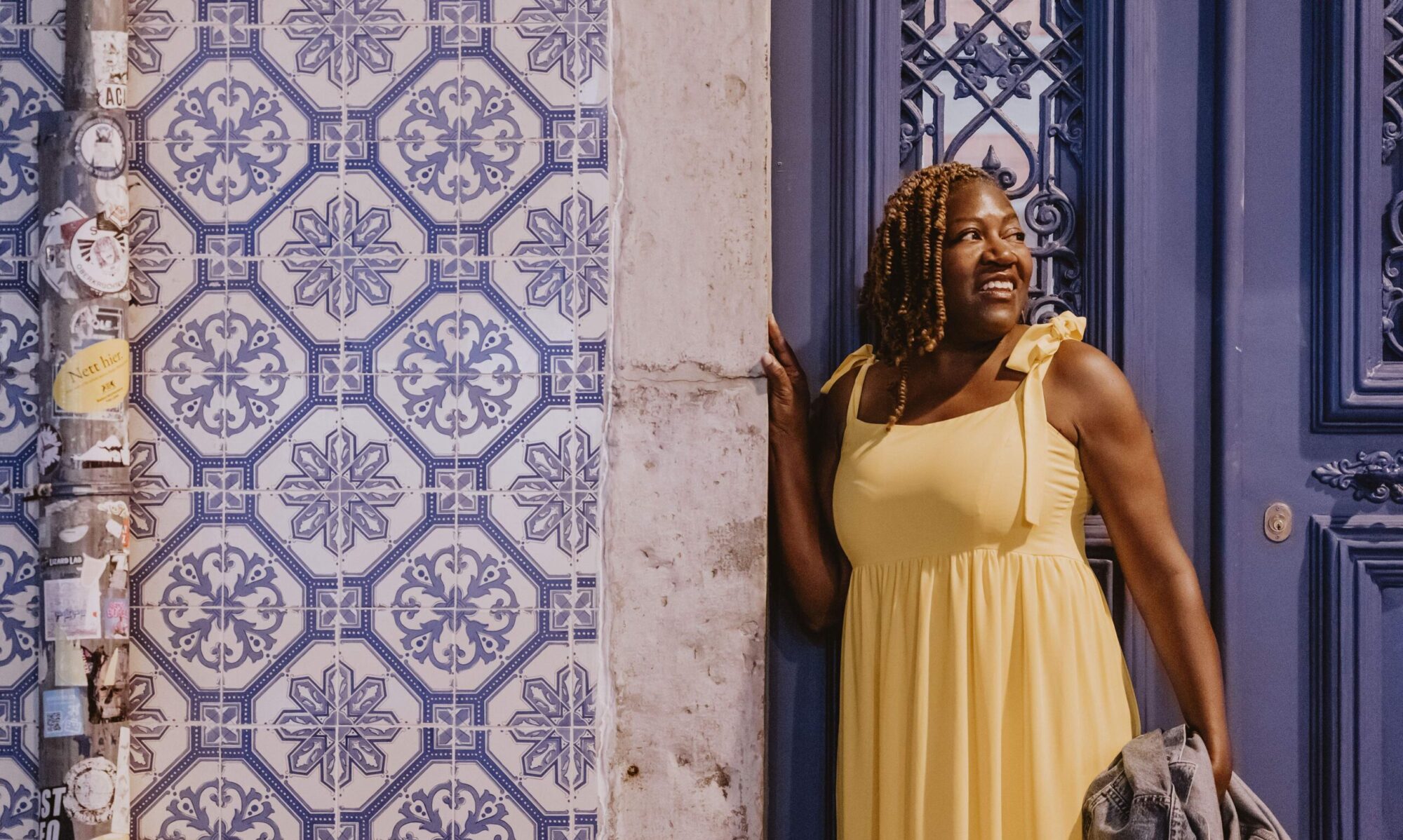
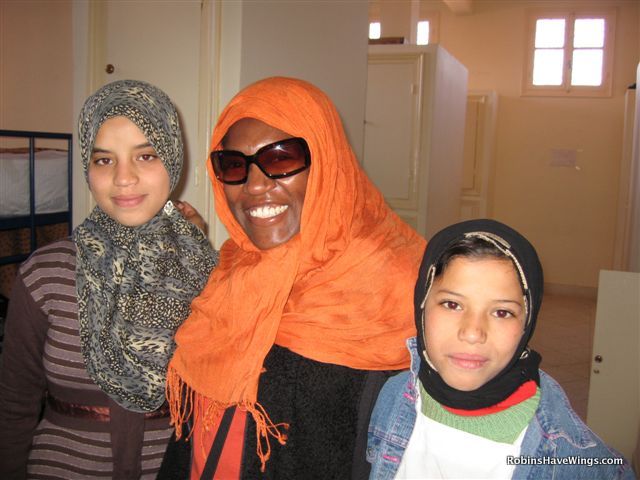
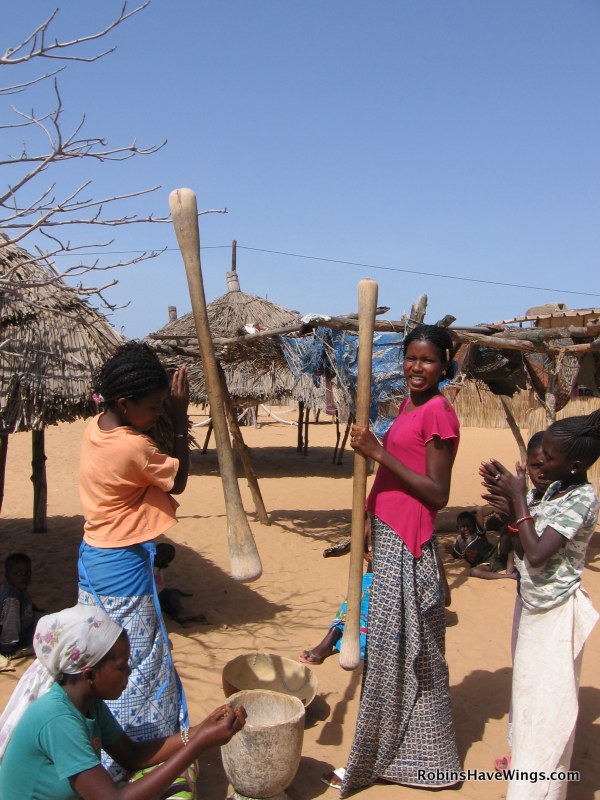
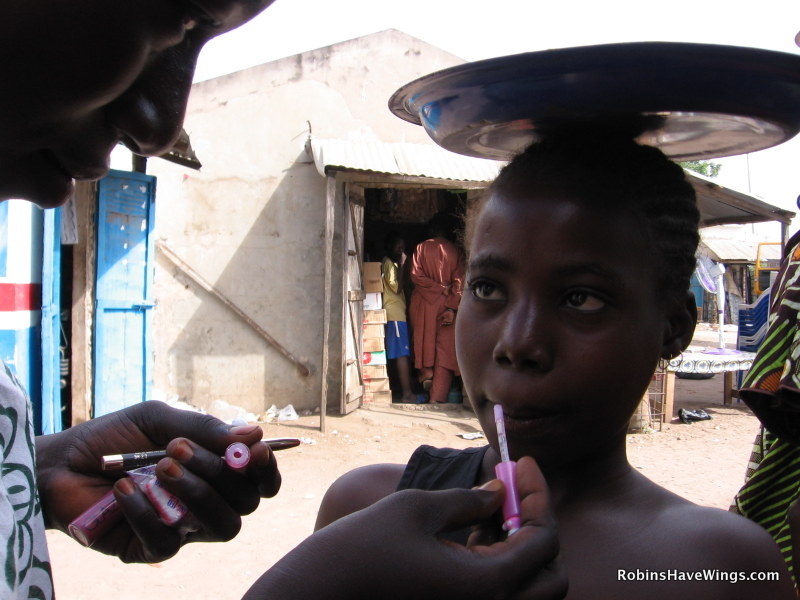
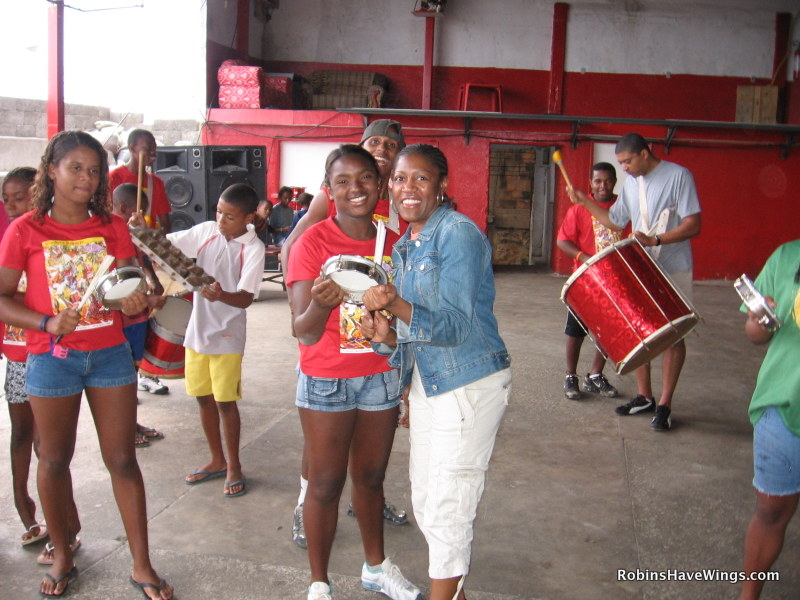
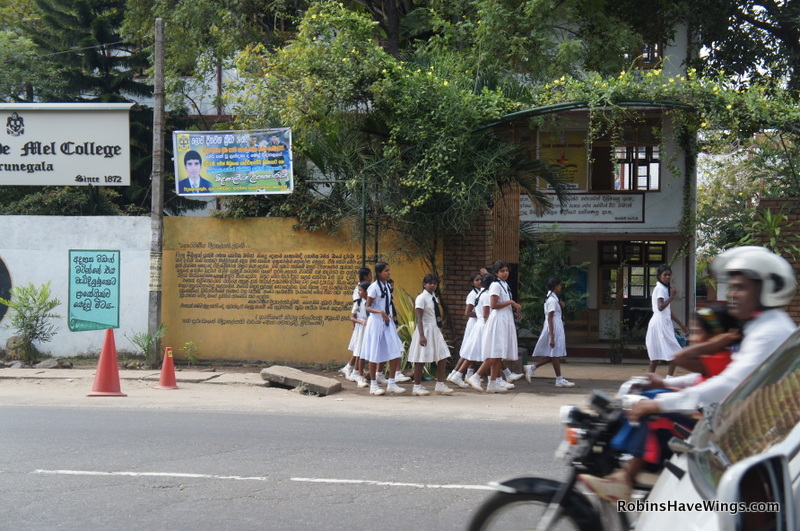
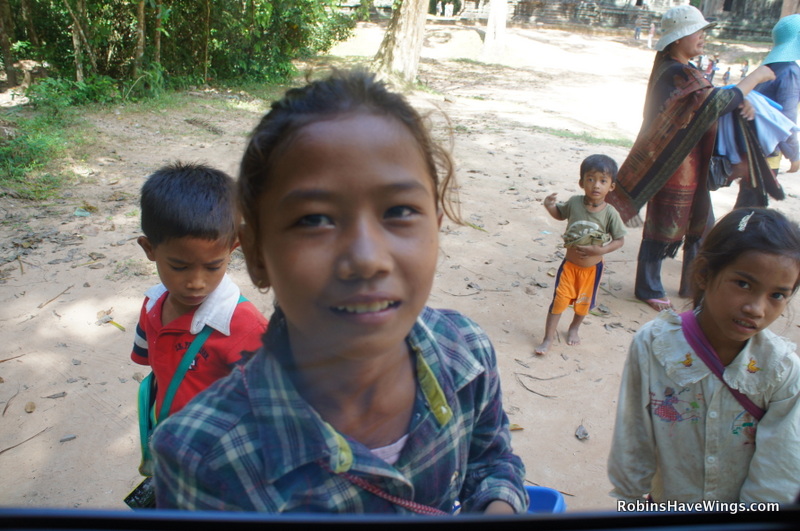
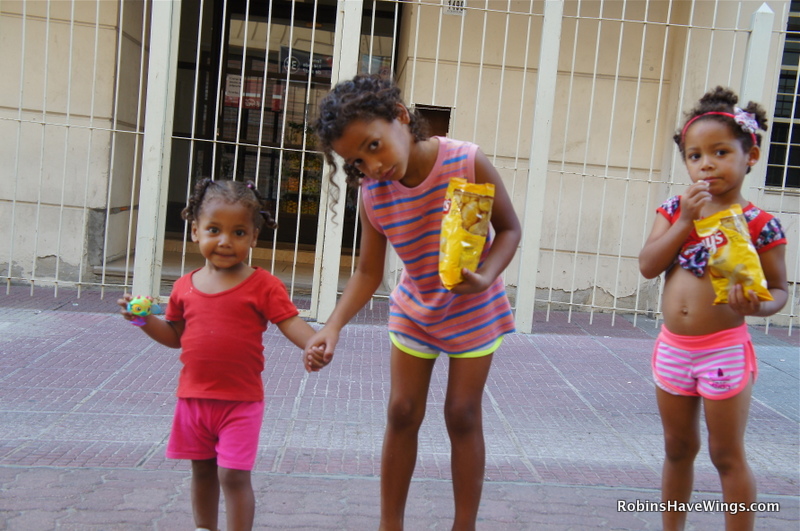
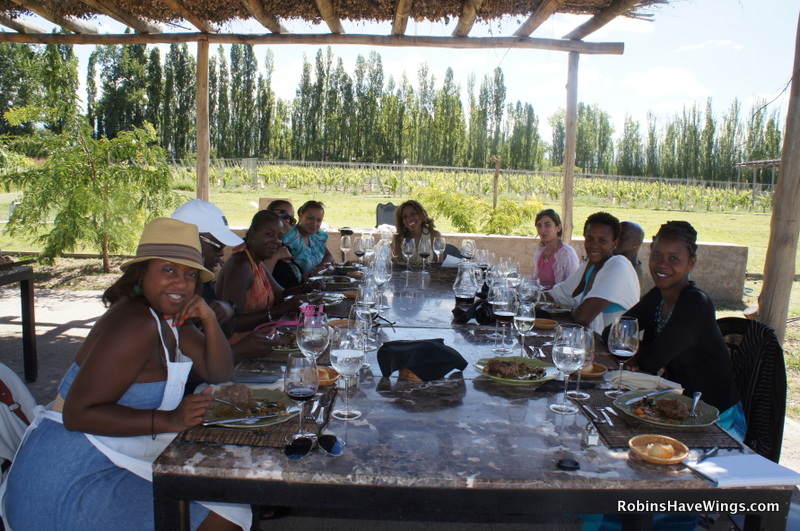
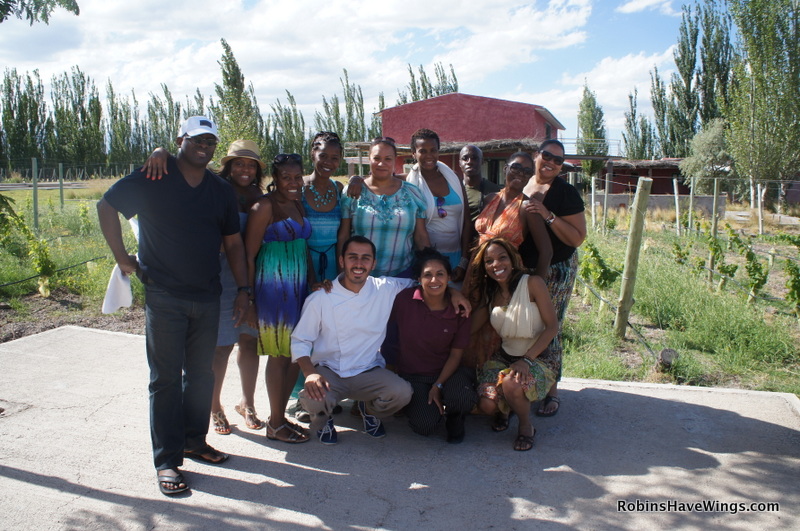
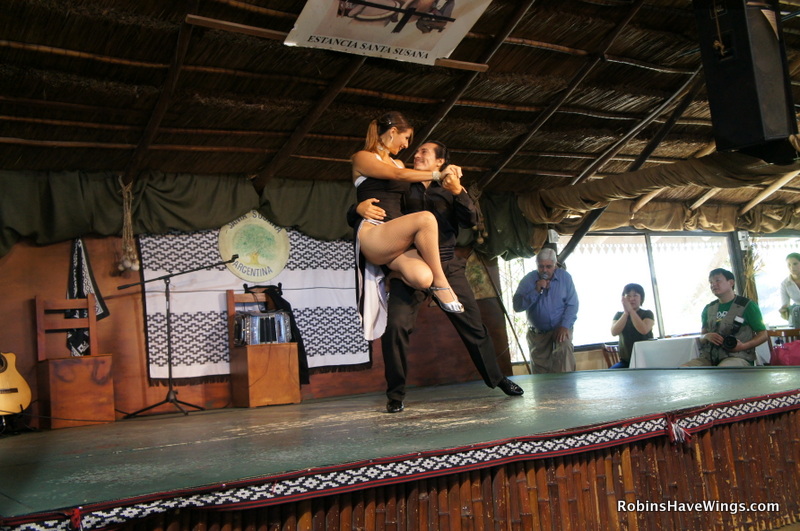
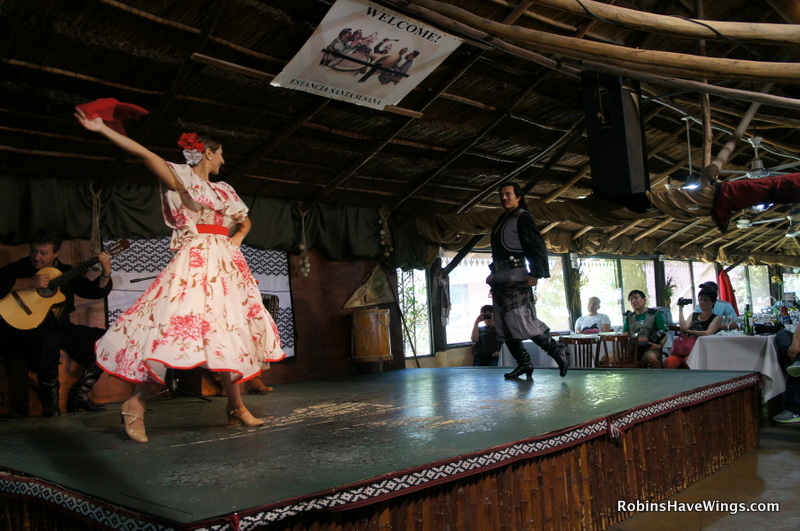
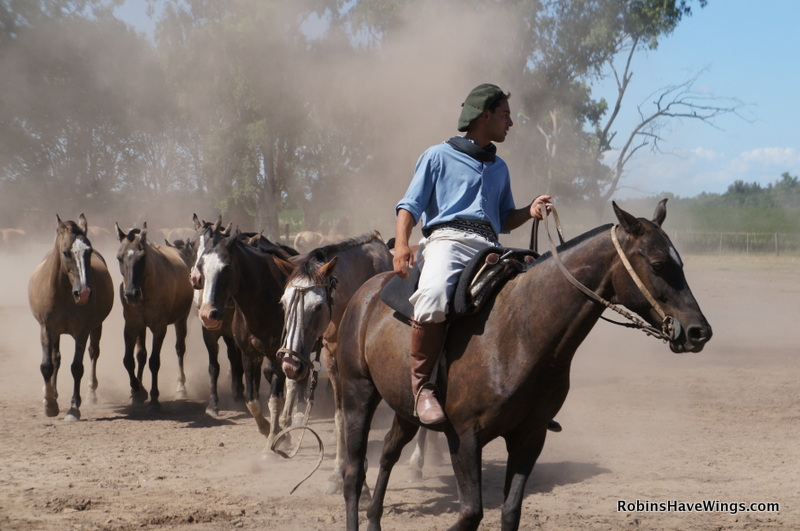
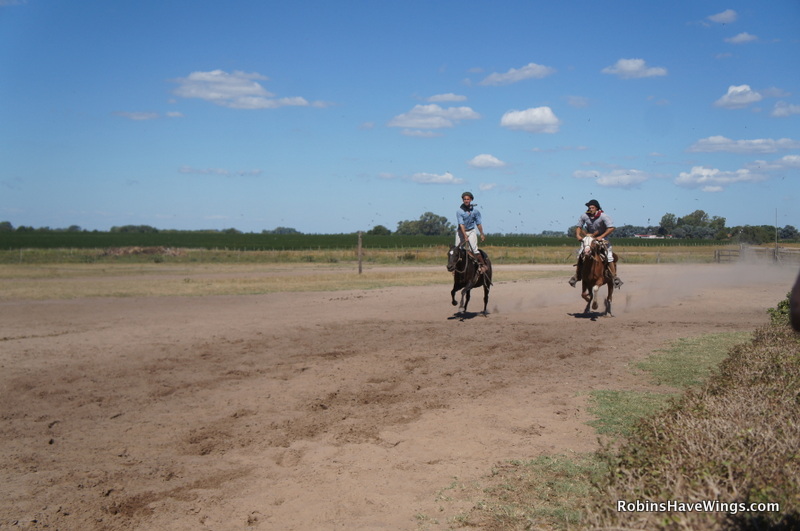
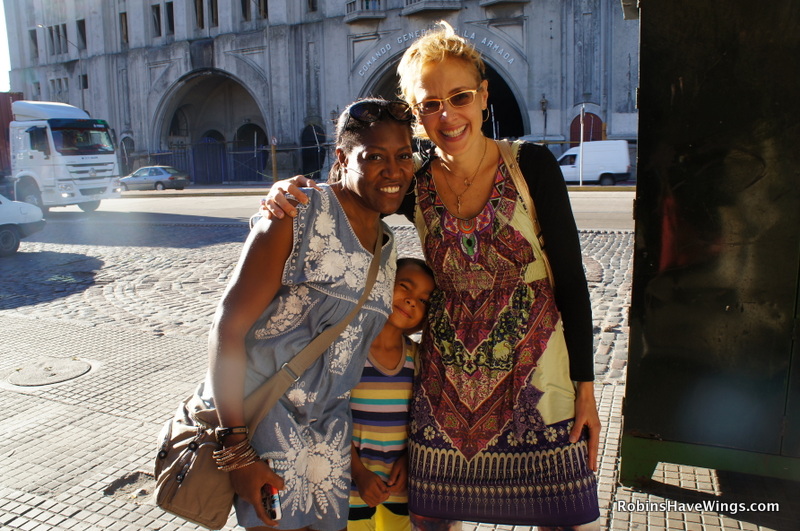
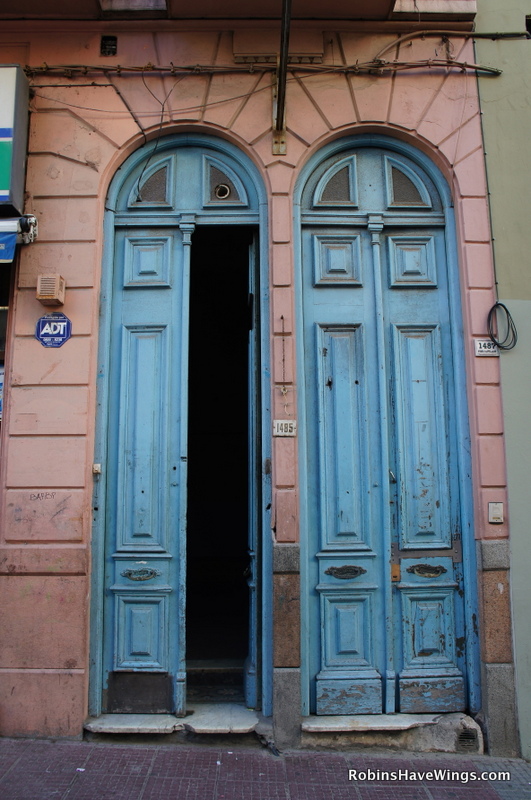
There are some pretty sad statistics out there about the disparities between the lives of boys and girls; women and men. The World Bank reports that, in developing countries, an estimated 3.9 million women die unnecessarily each year. Many are never born because of preference given to boy children in some societies. So, it’s particularly inspiring to see the women around the world that do make it, and survive against incredible odds. As Beyoncé sang, “Who runs the world? Girls.” Here’s my tribute to the girls of the world in photos:
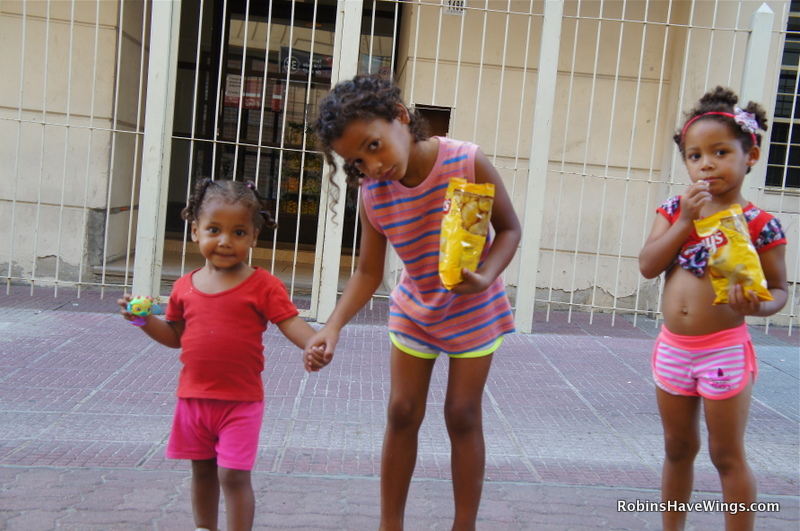
Girls in a Fulani village in Senegal in 2006. They were making a game of mashing millet. The Fulani are a nomadic, herding tribe spread out across West Africa. Typically, Fulani men have more than one wife.Who doesn’t like lip gloss? I packed lip gloss and candy to give to kids on my trip to Senegal and Gambia in 2006 and these girls loved it. I think I’m going to do this on more of my trips.I visited Cantagalo, a favela, or, as they prefer, a communidad, in Rio. We were watching a young street band, or bloco, perform when I got a pic with this girl. (See that boy photobombing us?)While traveling in Morocco in 2007, we visited an all girls school where the students taught me how to style my Hijab.When I was in Sri Lanka last year, I loved seeing groups of girls walk to school in their uniforms with braids swinging.The fiercest sales girls you’ll ever meet are in Cambodia at Angkor Wat. This girl laid it on thick. She told me that I looked like Michelle Obama and that she liked my hair. I bought a bunch of bangles from her.I was strolling down a street in Montevideo, Uruguay when these girls, having a snack, started to curiously follow. They were shy at first, but then they posed for me.
So, let’s hear it for the girls around the world and the girls that want to travel the world this International Women’s Day. Speaking of girls that want to travel the world, check out The Passport Party Project, one blogger’s mission to arm young girls with passports and empower them with a sense of wander. If you know a girl that wants to travel, get her started here. It just might change the world.
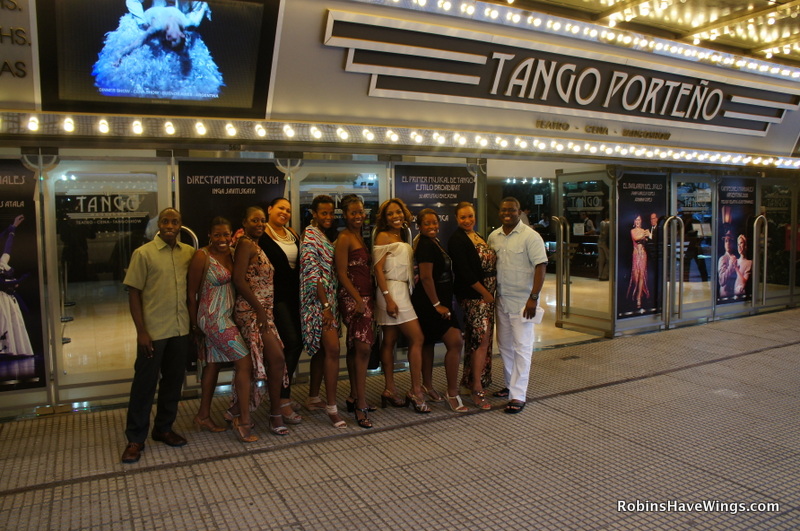
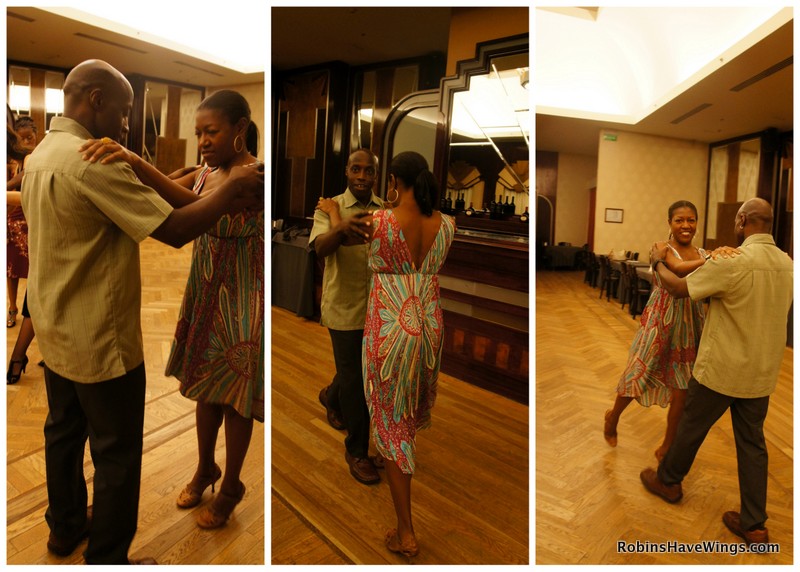
It’s the morning after our tango class and show at Tango Porteño in Buenos Aires. Gia dubs Alan and I Mr. and Ms. Tango, sharing how well we danced together with Luis, who is at our hotel to escort us to the airport for our return trip to the U.S. Luis gives a naughty gaucho laugh upon hearing this, because as everyone knows, tango is a very passionate dance and his Argentinian mind leads immediately to naughty thoughts. The tango has definitely awakened something in Alan who is making it his mission to take more tango classes when he returns to the states and I have to say I’m pretty excited, too. I’ve always been a fan of dance, taking ballet and tap as a kid, African dance in college and traveling to Cuba to learn salsa and Afro-Cuban dance. And, anyone who knows me knows that I’ll get on a dance floor in a minute, so this tango thing is right up my alley and apparently Alan’s too, so we turn out to be excellent partners.
It takes 10 to tangoMr and Ms. Tango work the dance floor
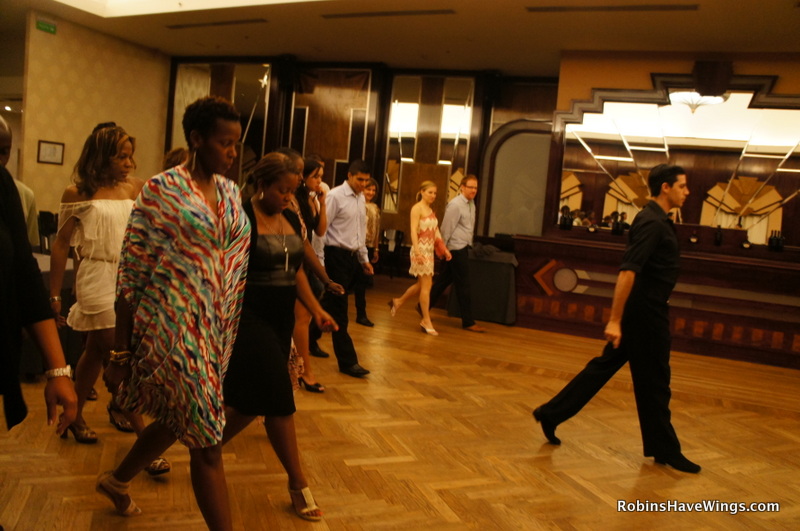
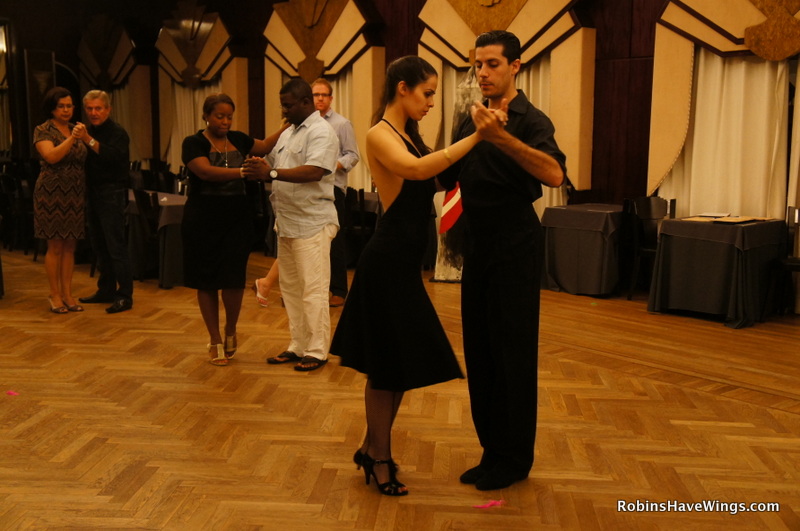
First, we all start by learning how to walk tango style by sliding our feet forward and then backward. We pair up to practice how this back and forth works in the dance. Finally, we move on to a more complicated box step which involves stepping backwards, to the right, then backwards again with the woman extending her right leg backward dramatically, and then to the left where the woman does a sweeping leg swirl to the right and then the left before the couple moves back and to the left again. When we see our instructors do it, it looks effortless. They glide like they’ve got butter on their shoes. Alan and I look at each other incredulously, not sure we can do it. But we embrace the challenge and after a few fits and starts, we get it and we smile approvingly at each other when we do. We even get a few words of approval from our slender instructor, Juan. We aren’t exactly gliding, but we get it and we can follow the music and we are having a blast. Our travel friends are having a blast, too. Some take turns dancing with the instructors and with each other, giggling wildly with each misstep or well-placed move. We are so glad that we were able to have this experience after it was first thwarted by the flash flooding a few days ago.
Practicing our tango walkGai and Floyd learn from the tango experts
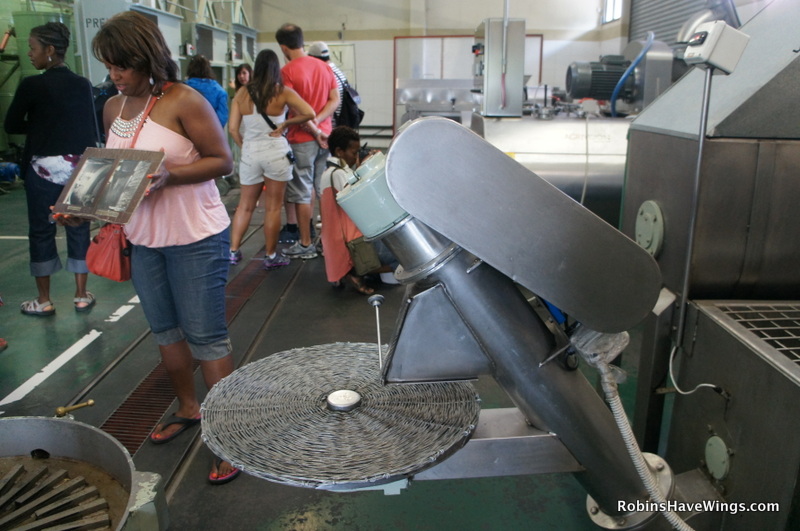
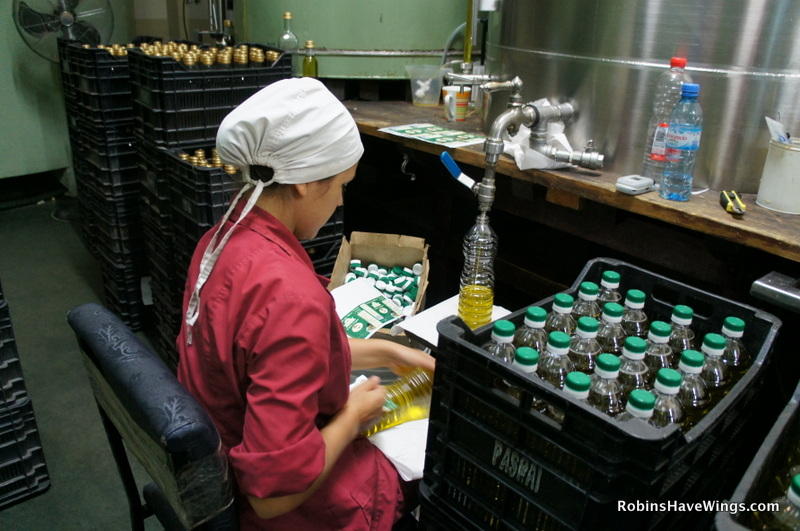
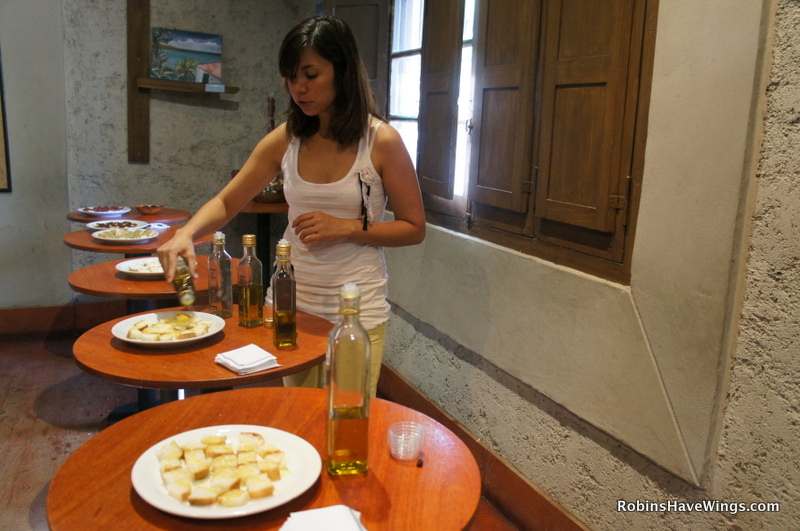
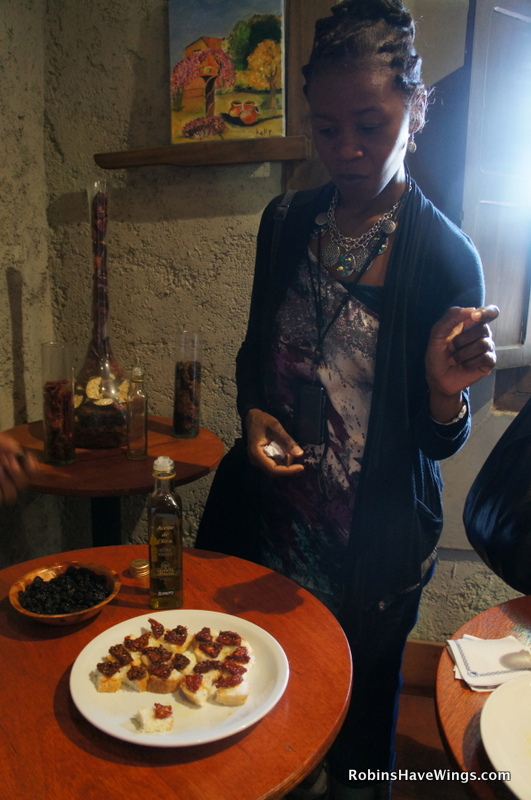
Just one day ago we were still in Mendoza tasting wine and something new, olive oil. At the Pasarai olive oil factory in Maipú, a small vineyard town outside Mendoza. It’s at this factory and olive vineyard owned by a family of Yugoslavian heritage where we learn exactly how extra virgin olive oil is made. Our guide describes the process of stacking up to 17 plates of olive oil paste (hand-washed olives crushed with pits and all), then pressing the plates together once to extract its oil. Other processes take the paste after its been pressed and find other ways to extract more oil, but the resulting product is not extra virgin olive oil. We also get to see the oil hand bottled and labeled. But the best part is the tasting. Our guide pours several flavors of Pasrai’s olive oil over bread, plain bread, bread with olive paste and bread with sun-dried tomatoes. The fan favorite appears to be the rosemary-flavored olive oil drizzled over the bread with sun-dried tomatoes, leading to a purchasing frenzy at the counter. We also learned a bit about olive oil as a beauty product packed with antioxidants and we are immediately sold on Pasrai’s pure olive oil body oil after rubbing it onto chapped hands.
Gai holds a picture of the olive oil press process in front of the olive oil paste platesA woman hand labels olive oilThe olive oil tasting beginsCarmen grabs a bite
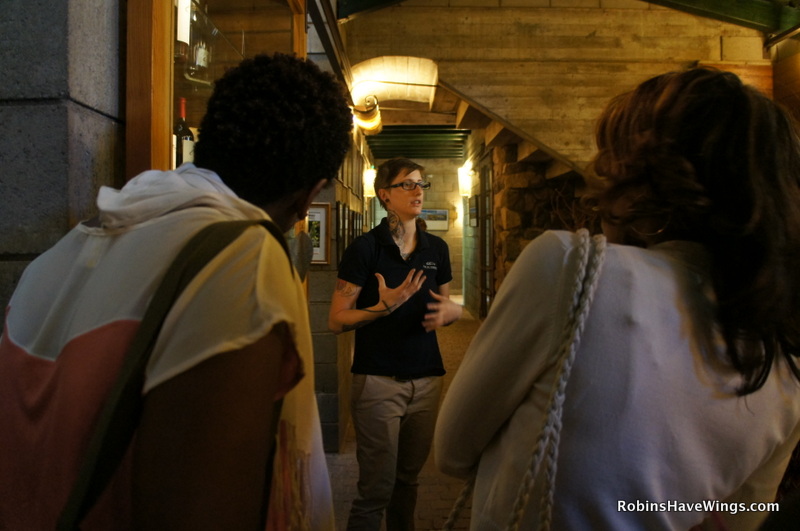
Pasarai’s small courtyard of flowers inspires a frenzy of photography for Carmen, Presleith and Kenitra and it’s here we spy a group of young girls in pink with white sashes across them. We wonder if they are pageant girls. Back on the bus, Leticia tells us that the girls are competing to become Maipú’s harvest queen. Local vineyards select young women to represent them at Mendoza’s annual harvest celebration, a tradition started years ago for fun to honor the prettiest vineyard pickers. Today, the winner becomes an ambassador for tourism in Mendoza. If we could pick an American ambassador to Argentinian wine, it would be Kayla, our guide at the Familia Zuccardi winery in Maipú. It’s always cool to meet fellow Americans while traveling and we’ve bumped into quite a few in Mendoza. There was a family from Boston at the airport, a mother and daughter from Oregon at Plaza Indepencia and a couple from New York staying with us at Finca Andalgisa. We are all just passing through, tasting wine and taking in the sights. But it was especially cool to meet Kayla, an intern at Familia Zuccardi. She came to Argentina by way of Chicago specifically to work here. She heard of the winery’s reputation and its wine-making innovations and knew she had to find a way to get here. We all admire her gutsiness and her sense of adventure. She’s pursuing her dream of becoming a sommelier head on. She hopes to open a small, unpretentious wine lounge in Chicago someday and after being on a tour of Zuccardi with her, I’d be happy to be one of her first customers.
Familia Zuccardi
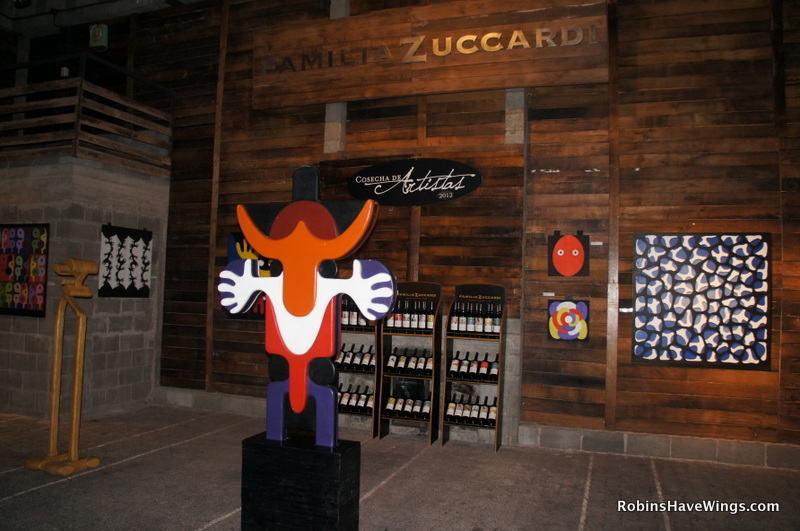
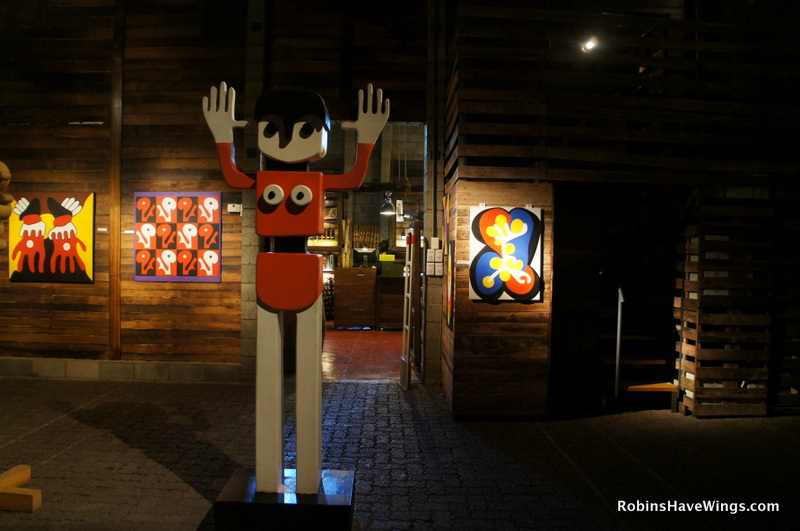
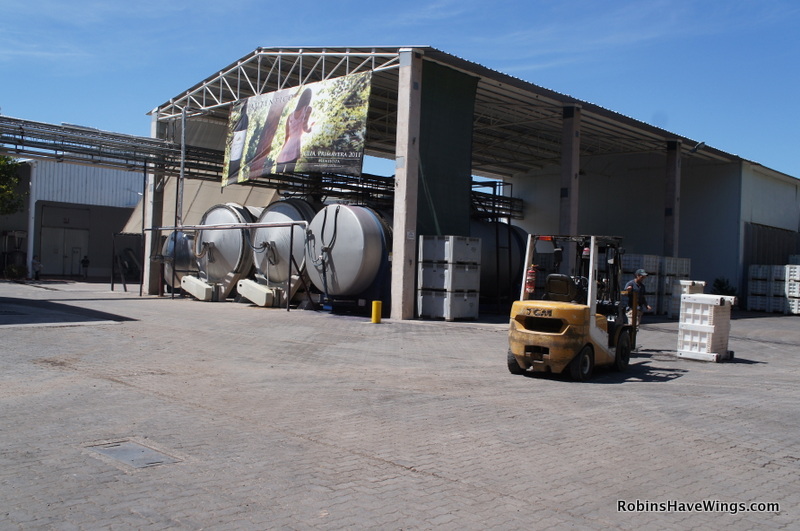
First off, the main Zuccardi wine tasting room is just plain funky. It catches our eye as soon as we enter the winery. Bold rounded figures and colors are displayed in paintings on the wall and as sculptures around the room. I’d later learn that this is an installation from an annual event that the winery hosts called the Harvest of Artists or “Cosecha de Artistas,” where artists are invited to participate in their harvests and be inspired to create art based on the experience. This artist apparently saw yellow and red bird-like figures and round-eyed people with fingers spread wide. We love it and a photo-taking frenzy ensues. Kayla is able to capture our attention and talk about wine, explaining the unique history of this place started by an Argentinian of Italian ancestry who came to the region to improve its irrigation system. To prove that his new system of irrigation worked, he created a winery and fell in love with wine and the process of making wine. The family-run Zuccardi winery is especially known for its experimental blends. Beyond the artsy wine-tasting rooms and shop, there’s a massive wine industrial complex operating in hyper drive out back. Small fork-lifts drive by, trucks back in and out to pick up precious wine cargo and huge machines churn, doing what we don’t know.
Harvest of the Artists exhibit at Familia ZuccardiKayla discussing Zuccardi wine brandsWine-making uncovered at Familia Zuccardi
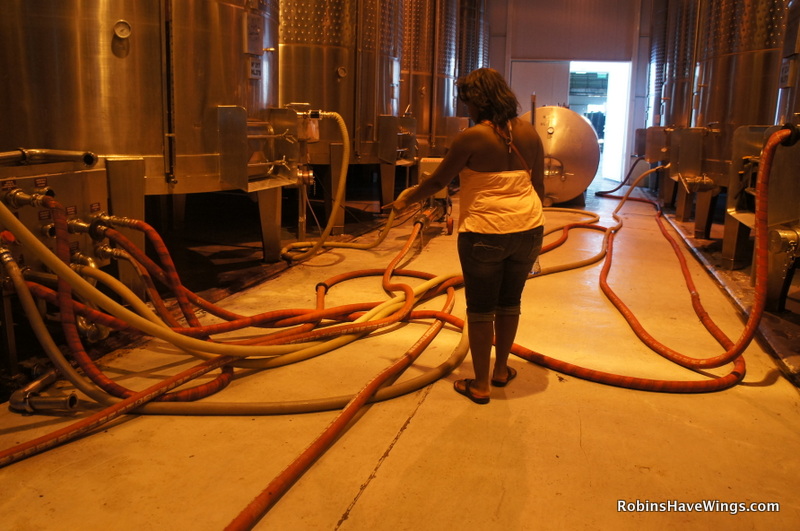
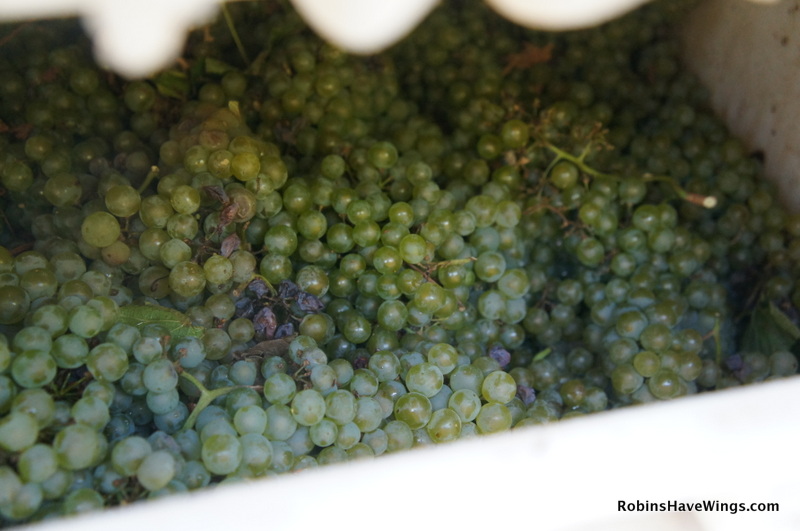
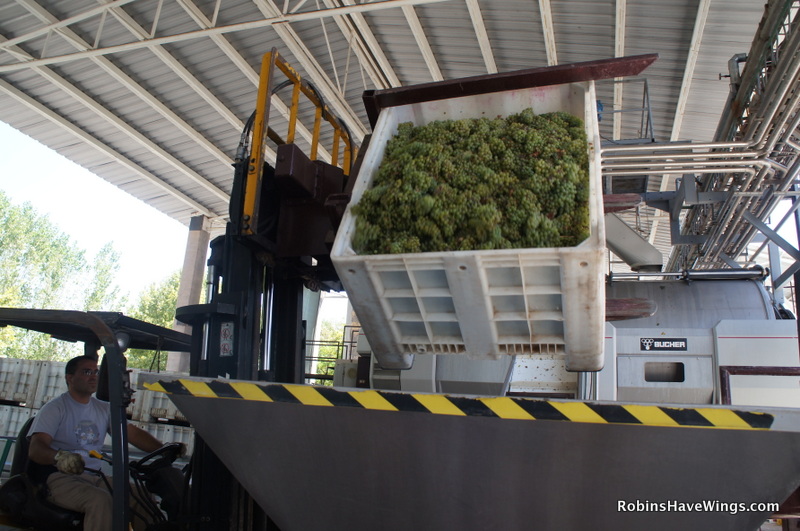
It’s a stark contrast to the wine tour at Bodega Saletein the other day, where the fermentation rooms were like works of art themselves, pristine and unmoved. Here, Kayla takes us into small warehouses where hoses snake from its steel vats of Pinot Grigos and Chardonnays. She let us taste the Chardonnay grapes, not from vines, but from plastic crates, where they sat awaiting the next part of their journey to become wine. In the Zuccardi’s french oak barrel room, Kayla expertly explains the process of toasting the interior of a barrel to impact taste and we see a barrel that had been freshly emptied. There is definitely wine-making being done here. When Kayla asked me how I liked the tour of Saletein, I told her that the setting in full view of the Andes couldn’t be beat, but here, it was like the covers were being ripped off the wine-making process and that was pretty cool, too. In fact as we left one fermentation space to head to another, we saw those Chardonnay grapes being dumped by forklift into a huge de-stemming machine where they moved up a conveyor belt to be plucked. Super cool for those old school Discovery Channel buffs who love shows like “How It’s Made.”
Gai tracks snaking hoses of wineChardonnay grapes before de-stemmingIt’s about to start raining grapes
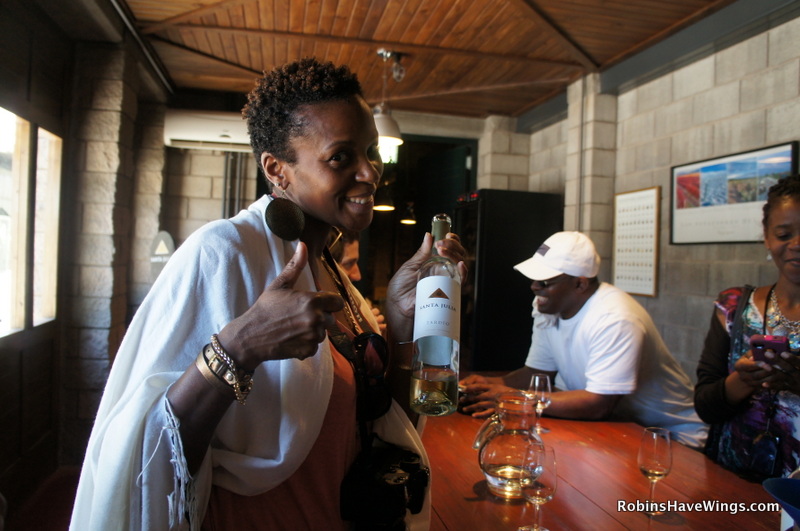
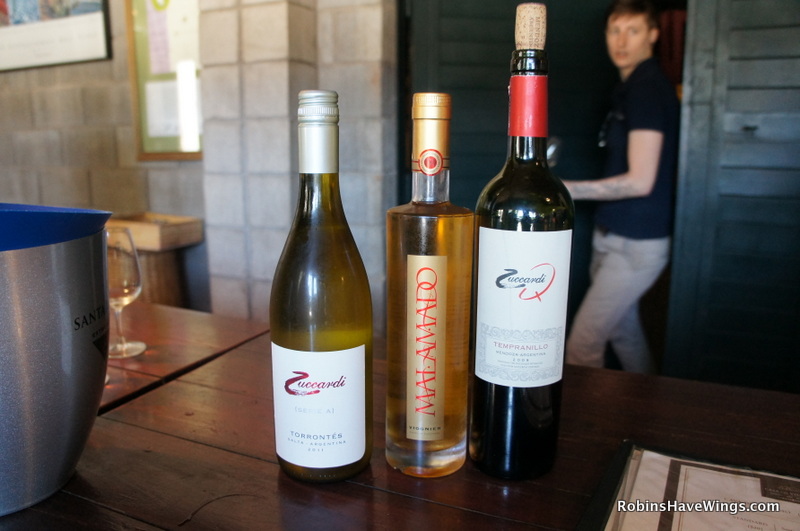
Back inside for our wine tasting, the group seems to gravitate to Zuccardi’s sweeter wines especially their Santa Julia Tardio and the Zuccardi Series A Torrontes, a blend of Criolla and Muscat grapes popular in South America. The tasting ends with the Malamado, Zuccardi’s version of a port wine, but since it’s not made in Portugal, it’s called a fortified wine. This one has got kick. It’s smooth with a slow burn. It reminds me of Cognac and Gia thinks this would be good with a good cigar. Sensing this may be our last chance to shop for gifts before returning to Buenos Aires the next day, some go on a spending spree in Zuccardi’s gift shop, including Floyd who after collecting perfume, t-shirts, caps and wine, can’t resist $5 two-packs of sparkling wine, going back several times for this bargain item. Don’t let anyone tell you that men don’t shop.
Sheneekra likes TardioZuccardi’s premium wines for tasting
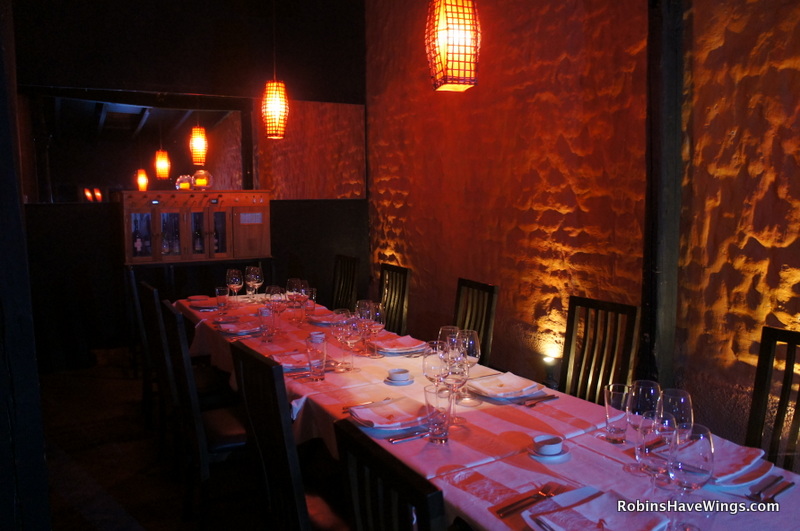
Knowing that this is our last chance to have a great meal in Mendoza, several of us head to Nadia O.F. for dinner later. It’s considered the best restaurant in the area. When Robyn and I mentioned that we were going to Nadia’s to a couple from Israel staying at our hotel, they raved, saying it was one of the best meals they’ve ever had. Leticia mentioned it as one of the best, too, noting its 6 courses. We are excited to have a real foodie experience. When we arrive, we have the place to ourselves. It looks befitting of a foodie experience with our dining space bathed in a warm red glow.
Our table at Nadia’s
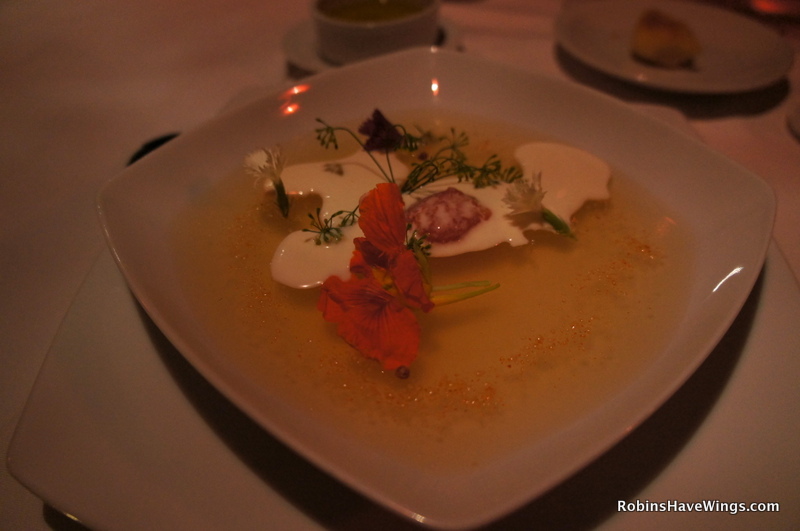
We have only have the option to choose our starter and entree, but everything else is decided by the chef, including the 2 appetizers, a watermelon and fig salad with herbs, blue cheese and syrup dressing and the sweet potato with green aioli and eggplant ashes. Both of which were wildly creative and deliciously complex. But the star of the meal was my “Gazpacho” jelly with cold almond soup. It arrives in a Jello consistency with flowers as a garnish and the almond soup drizzled on top. It’s almost too pretty to eat and it definitely doesn’t look like gazpacho, but one bite brings all the cool tomato, onion and cilanto flavors to mind. It’s completely baffling and delicious. Sadly, my rib-eye, known as bife de lomo in Argentina, can’t even hold a candle. But desert makes up for it, a refreshing and creamy orange mouse followed by pears soaked in Argentina’s Torrontes wine and seasoned with black pepper. If I’d chosen the ossobuco like the other Robyn, the meal might have been pretty close to perfect.
Gazpacho flavored Jello
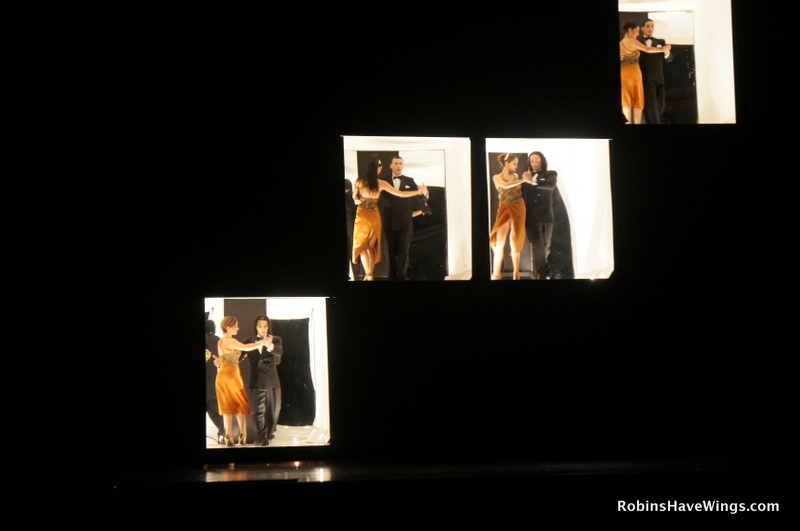
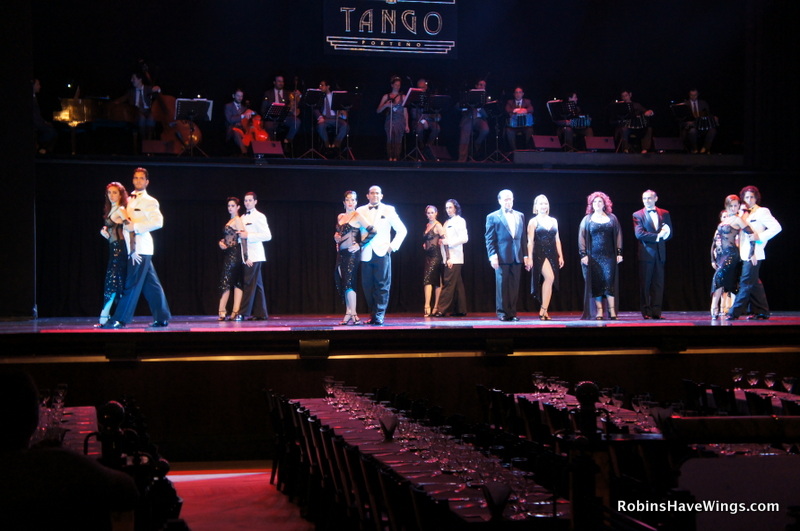
Back in Buenos Aires, folks continue the mad last-minute shopping dash with just a few hours to spare before our tango show on our last night in Argentina. It occurs to me that I haven’t seen Alan buy one single thing during this entire trip. Maybe the photos and the experience are gift enough for him. The tango certainly is. As we sit down to dinner at Tango Porteño, he makes a point of going to Gai to thank her for arranging the tango class and expressing how much he enjoyed it. In the darkened art deco theater, we see how tango is really done with dances that harken back to its heyday in 1940s Argentina with a live orchestra. At times, the dances are productions with the full cast of dancers telling a story of the times on the busy grand Avenida 9 de Julio or at the sultry Dragon Rojo bar. At other times, a pair of dancers display the tango’s inherent eroticism with open-shirted men lifting lingerie-clad women in the air or holding them tightly in passionate embraces. And then there was the traditional tango that we all know with fast-flicking legs that look like they could do damage to a partner’s calves and thighs. We are glad we didn’t try those moves in class. We leave Tango Porteño to see lights ablaze on today’s Avenida 9 de Julio. It looks like Buenos Aires’ version of New York’s Time Square.
This was one of our favorite performances from the show. Kinda of looked liked Tango Hollywood SquaresApplause for the stars of Tango Porteño
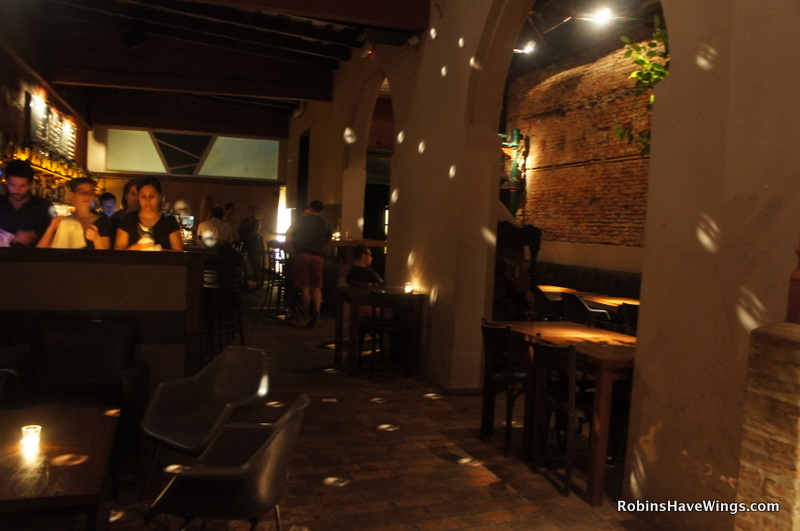
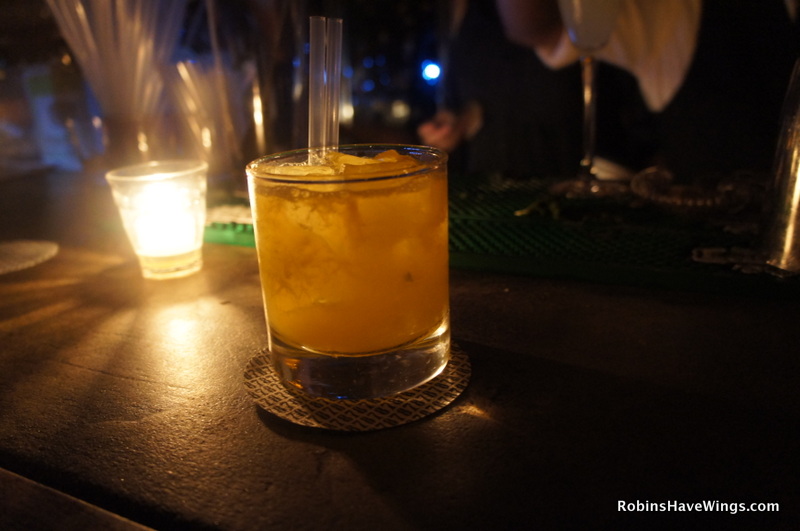
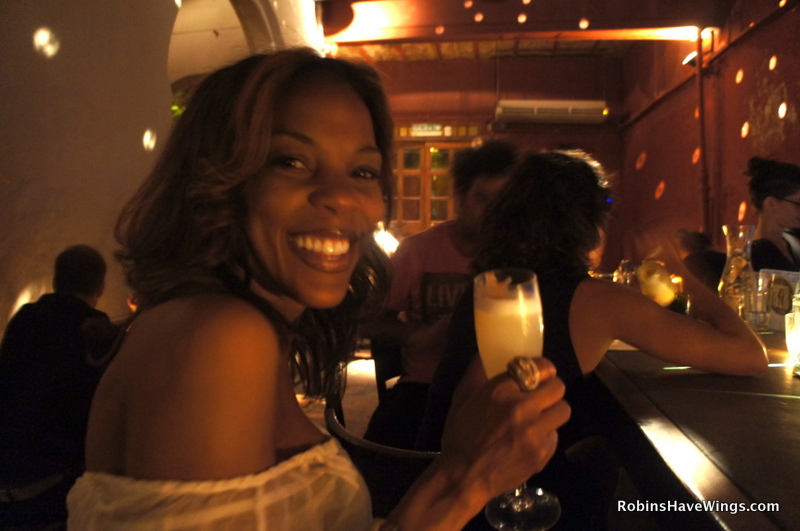
Gai takes this opportunity to thank all of us for joining her STG Tour. She says she really enjoyed traveling us and the feeling is mutual. She hopes that we’ll join her on her other group trips. I’m sure she’ll see most of us again. Alan is a veteran and has already been on 5 trips. This is Presleith’s first, and she is definitely planning to travel to China in October with STG Tours. The bright lights of Avenida 9 de Julio twinkle behind us and they are enough of a farewell to Argentina for most of our group, but Kenitra and I decide to end the night with a night cap. The hotel night manager at our trendy hotel, Esplendor, in Palermo Hollywood, suggests a spot simply called 878. We hop in a cab to give it a shot. We come to a place that we are sure most tourists don’t know about. The wooden double doors even look like they hold a secret. Inside is a dimly-lit bar and lounge playing moody eclectic American music like an early Madonna song and what sounds like indie Argentinian music. Our bartender is Mario. He doesn’t speak much English, but I ask him about the “Lola,” a drink advertised on its menu over the bar. I make out that it’s like a caipirinha but with a rum called pamero instead of cachacha. It’s got mango, lime and ginger in it, too. Kenitra opts for the Pisco Sour, which Mario says is best, if you don’t like sweet drinks. We like the vibe and the drinks are good. We toast Argentina farewell.
Inside 878The Lola at 878Kenitra toasts ArgentinaYo, tambien. Adios Argentina. Me gusta mucho!
Coming Soon: I asked my new Argentina travel buddies to send me their favorite photos from the trip, so I’ll be sharing their highlights and favorite travel memories here, too.
*Disclosure: STGTours provided me with housing during this Argentina tour.
When we land in Mendoza all memory of flash flooding and a leaky hotel is erased instantly with one glance at the Andes Mountain range. The mystical mountains greet us outside the Mendoza airport and seem to carry a quiet and calming presence. It’s like we are getting a fresh start with the fresh mountain air. Our guide, Leticia, introduces Mendoza to us as the land of sun and wine and we are ready for both. She also explains that what we’ve just seen are the pre-Andes. I can’t wait to see what the full mountain range looks like. On the way into Mendoza city, we get a bit more background on this naturally dry and mountainous desert region where it only rains a few times a year and is somehow amazingly fertile at the same time. Mendoza is not only known for its wines, Malbec, in particular, but also olives, apples, pears, plums and apricots, all because of an irrigation system built by its indigenous inhabitants and built upon by its more recent European residents who added dams to redirect water to dry areas as needed.
Meeting Leticia in Mendoza
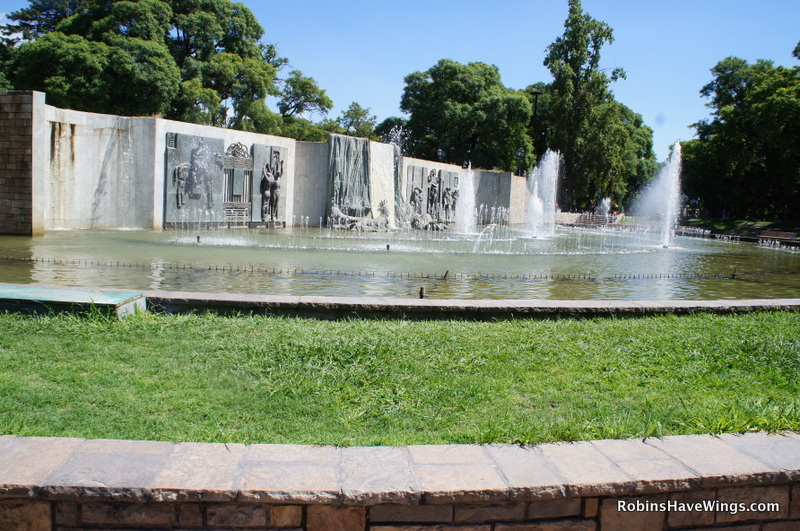
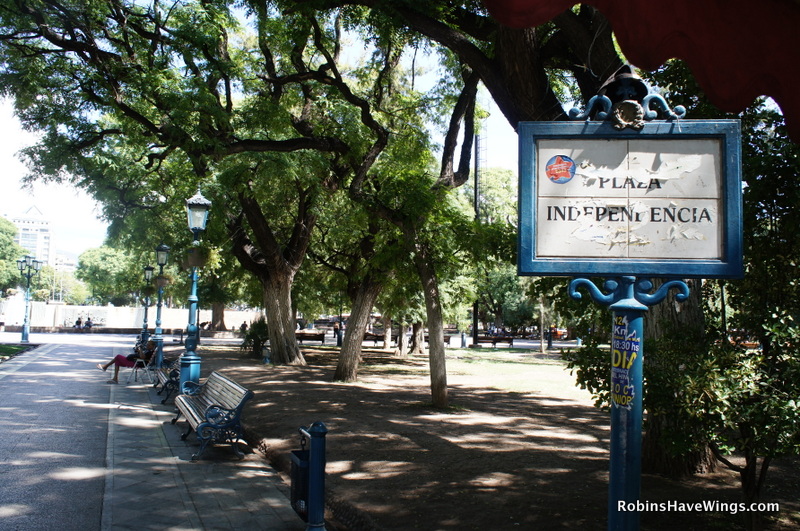
We see the system of narrow cobbled ditches as we wander around Mendoza City, which is the antithesis of Buenos Aires. You want to go slow here. Strolling is definitely in order in Independence Plaza, its main square which is surrounded by park benches and centered by a beautiful bursting fountain. We find a few vendors here on a Monday afternoon and wonder what this place would be like on a weekend. Gai and Carmen are drawn to belts made by one mate drinking vendor. Mate is Argentina’s green tea, made popular by the gauchos. Kenitra and I study handcrafted jewelry with local stones by a local woman. Beyond the square is a wide promenade of shops and restaurants. Kenitra and I take Chile street to see if we can start our wine tasting immediately, but when we reach the lovely shop simply called The Winery which looks more like an art gallery with wines and wine accessories artfully displayed in rooms under chandeliers, we learn that they aren’t doing tastings at the moment. By this time we’re hungry, but we don’t have much time and bemoan the fact that there doesn’t appear to be quick street food in Argentina. I guess it is because of its European roots in Spain where you take your time with food whether eating or serving it. We duck into a neighborhood bakery hoping to snag a quick empanada and end up standing around in the hot narrow shop for about 30 minutes or more along with a few local patrons who seemed like they wanted their food fast, too. But I guess that was fast by Argentinian standards. It was a good empanada. Juicy as it should be.
Mendoza FountainPlaza Indepencia in Ciudad de Mendoza
If just getting a glimpse of the Andes was enough to make us forget the unfortunate flooding in Buenos Aires, Finca Adalgisa makes it seem as if it never happened. Walking through the gates of the property feels like we’ve awoken from a bad dream and everything is right with the world, especially one where you live in an 80-year-old vineyard with a gorgeous pool surrounded by lush grounds. We are greeted warmly by the hotel manager, Theresa, who gathers us for a tour of our new home explaining its history as the winery of the Furlotti family, run to this day by its grand-daughter Gabby. The library features sepia photos of its familial founders along with worn leather seats and books for the taking to read there or in a hammock outside your room. We perk up when we learn that there is a happy hour every evening at 6 pm where there are free tastings of Adalgisa wine in their wine bar and lounge. We decide to pass the time until happy hour lounging by the pool nestled amongst rows and rows of grape vines.
Finca AndalgisaFinca OrientationMy favorite room at Finca AndalgisaView of the vineyards
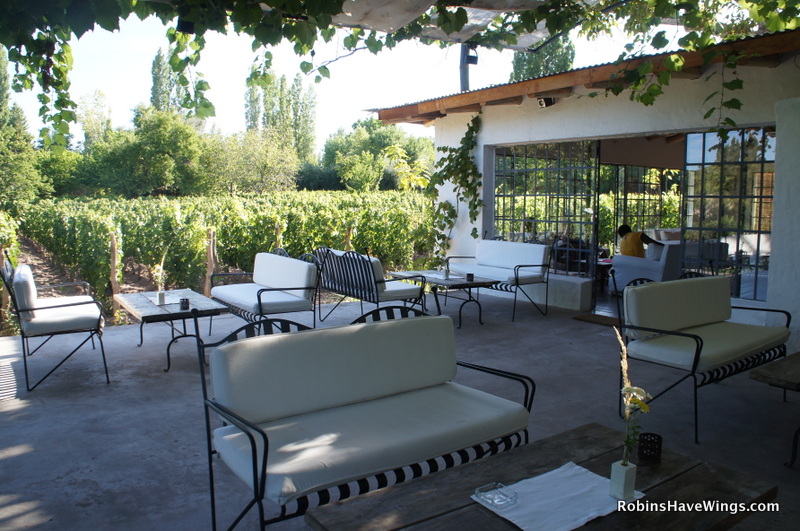
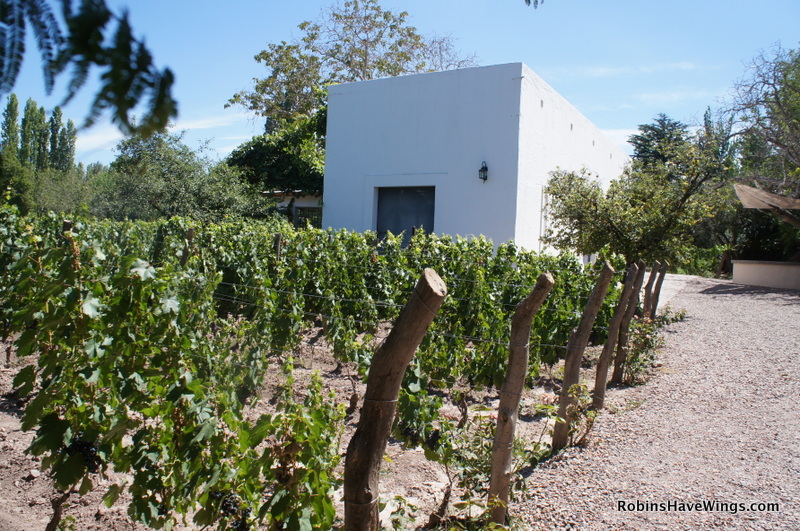
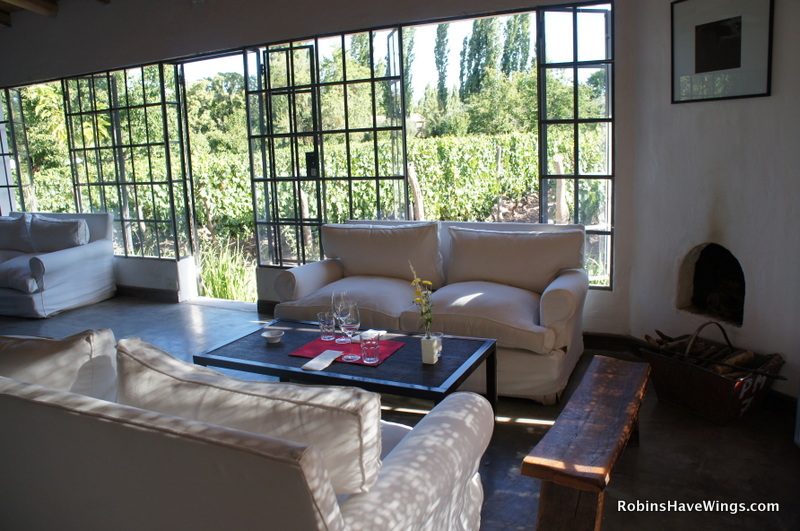
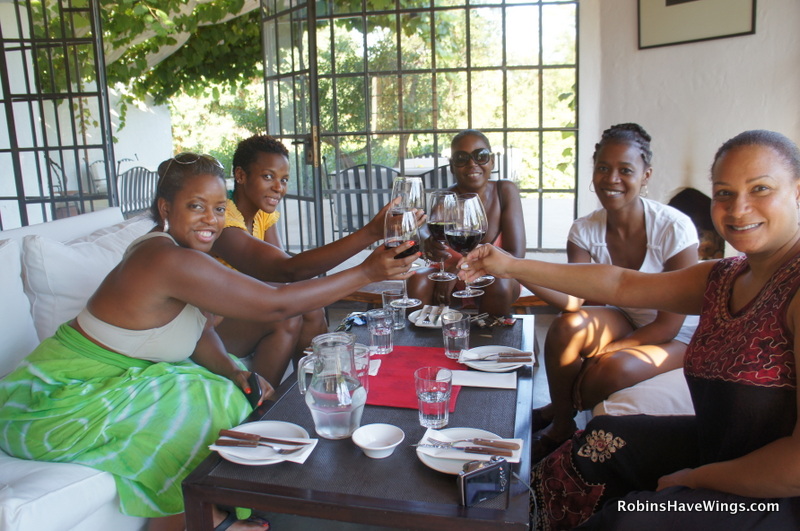
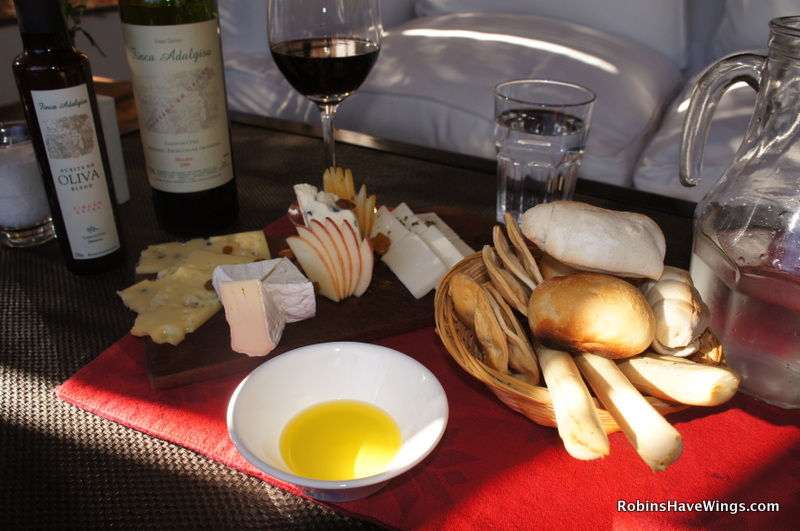
It’s the ultimate in relaxation and we think it can’t get any better until we actually go to the happy hour, which looks to be in a simple white stone building from the outside, but the interior looks like we’ve stepped into the pages of Architectural Digest. A tree grows from the center of the room through the ceiling and plush white couches surround it with a 180 degree of the vineyards beyond. It’s stunning and cozy at the same time. The patio offers an unobstructed view of the sun setting over the vineyards and then the wine arrives. We are drinking a 2008 Malbec from our new home and it’s delicious as are the olives, cheeses and breads served. With the arrival of the wine comes a new level of relaxation and our group bond deepens. At first it’s just the ladies and we drift into conversation about relationships, not just with men but with each other. We learn more about each others histories and uncover our common interests beyond travel. When the the men join we are all laughing, recounting great moments so far on the trip as if we had always been the best of friends. Gai says this is her favorite part of her trips. She knows the bond will happen at some point and for us it was over wine in the middle of a Mendoza vineyard.
Our happy hour settingMore of our happy hour settingA toast before the happy hour bondingThe Finca Andalgisa spread
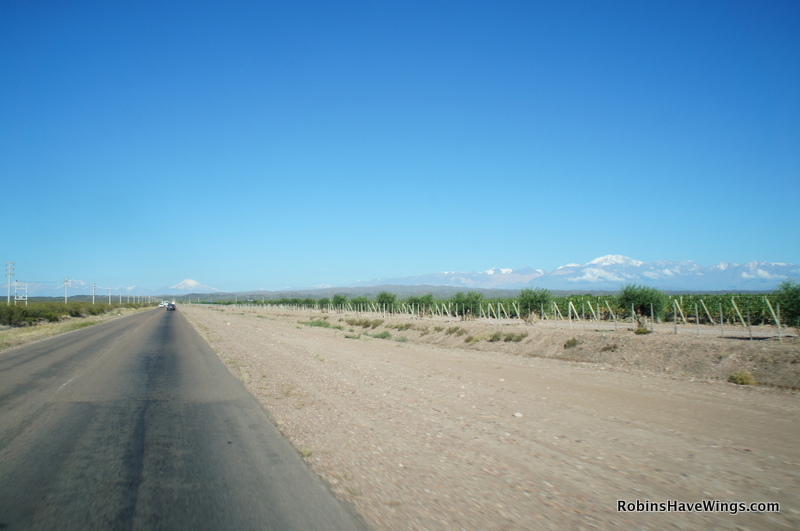
The wine continues to flow and the bonds continue to deepen the next day as we head out for our wine tasting tour an hour outside Mendoza proper in Tupungato which also shares the name of a long dormant volcano in the Andes. In fact, it is the third highest mountain in the Andes. Speaking of which, the Andes are following us on our drive or maybe we are following them. They first appear on the right and Leticia tells us that we’ve left the pre-Andes behind. Then they rise before us on the way into the Uco Valley known for Argentina’s finest wines, grown at about 900 meters above sea level, the highest altitudes in country. At times the mountain range is bright and sparkly and at others distant, under a heavy haze. Either way we can’t take our eyes off the approaching peaks and valleys, one of which is Aconcagua, the tallest mountain in the Americas. We struggle to capture them through the window of our van with our cameras zoomed as tightly as they will go.
The Andes on the road to Tupungato
We ride over the parched Mendoza River, sucked dry of all its water, which has been rerouted to the city for drinking water, bathing and watering its crops. We also pass Route 7 which was to take us to the Chilean border the next day but an avalanche blocked part of the road leaving a long queue of cargo trucks to wait for the only road into Chile to open. We’ll have to make another plan.
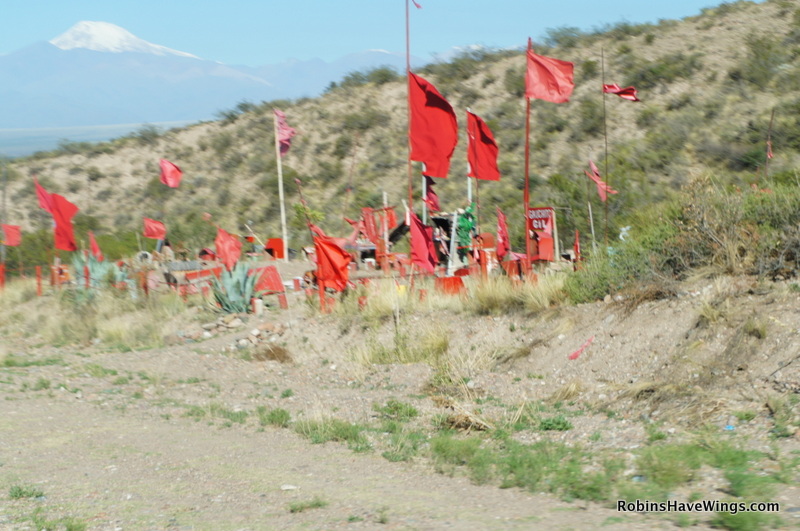
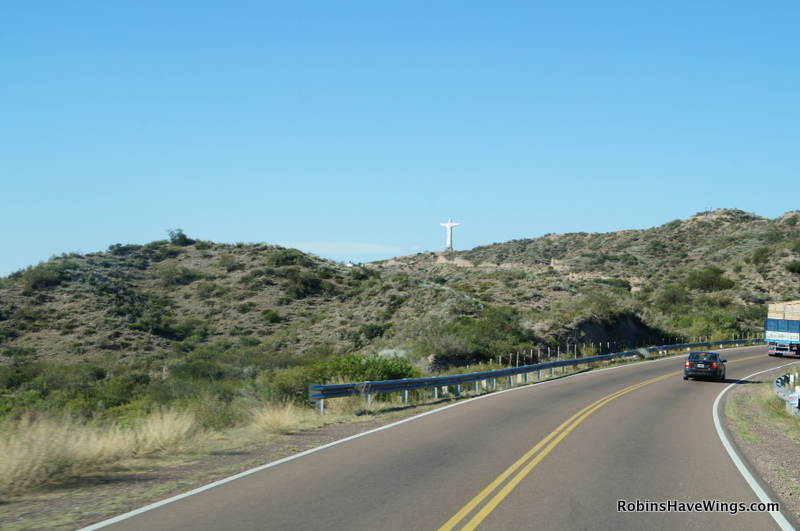
The terrain continues to get more rocky, blanketed in a low-lying brush. Leticia tells us that not much else can grow in a place this dry. Every few miles, a patch of red flags stand at attention in the low dry grass or a small alter surrounded by water bottles appears. Gia is the first to notice them and ask about their meaning. The red flags are planted for Argentina’s Robin Hood, a man named Gauchito Gil, Leticia explains. He dressed in red and stole cattle from rich ranchers, sharing his booty with the poor. He was eventually caught, but he told his executioner that if he were buried, the man’s son, who was gravely ill would survive. The executioner buried Gauchito and the man’s son miraculously recovered. From then on people have sought good luck and blessings from Gauchito, especially truck drivers hoping for a safe journey. The other roadside saint is Difunta Correa, a mother who wandered the desert looking for her husband forced to fight in the civil war. Sadly, she died of thirst before she could find him and her child survived by suckling at her breast. So, today people leave bottles of water for the fallen woman. After passing these unofficial monuments, we spot a real one on a hill, Argentina’s Christ the Redeemer in the same arms-outstretched pose as the one in Brazil. This one looks towards the Andes and maintains peace between Argentina and Chile.
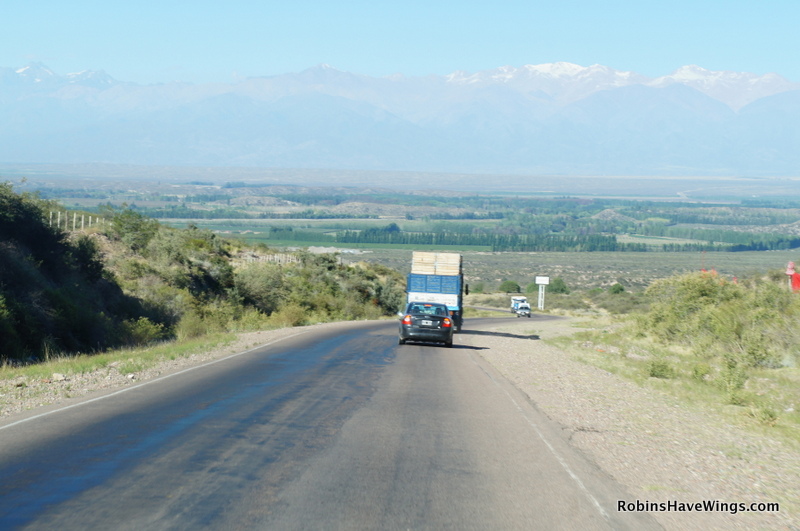
A roadside shrine asks for blessings from Gauchito GilChrist the Redeemer faces the AndesThe Uco Valley straight ahead
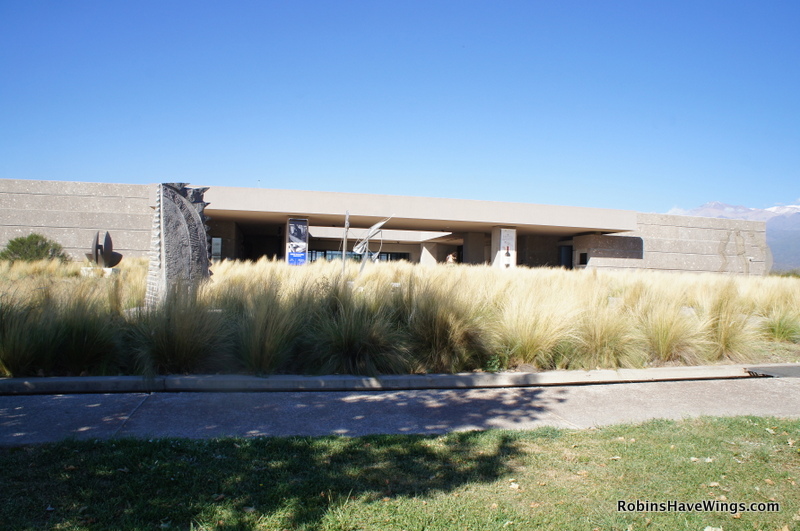
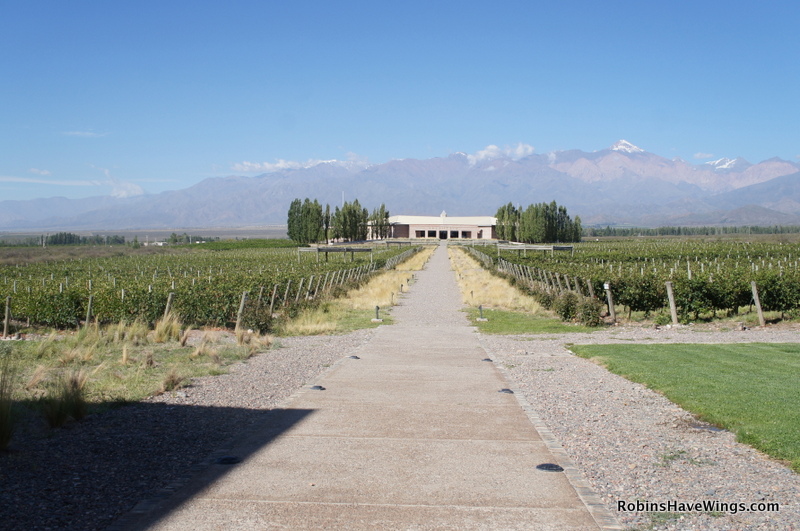
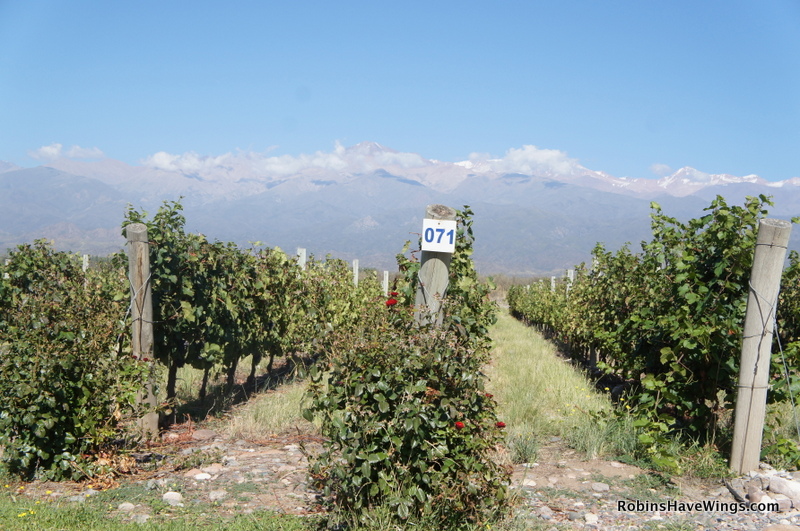
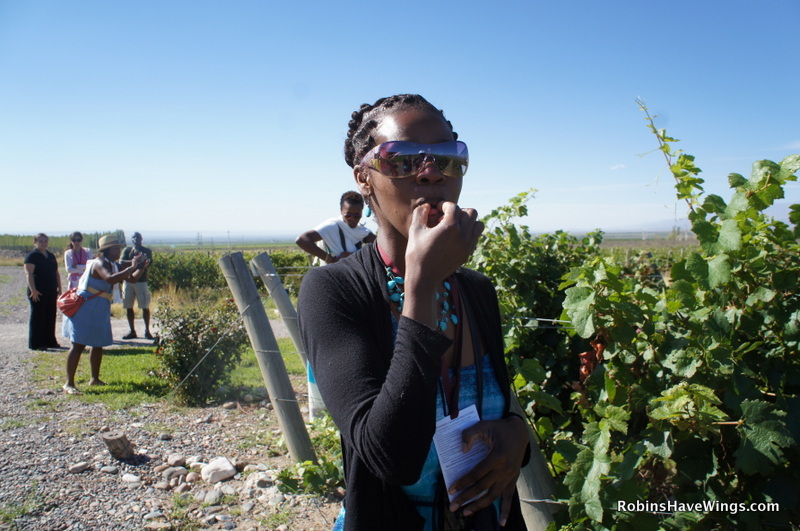
Just past the Christ statue, the Uco Valley unfolds before us like a verdant throw rug. It’s truly an oasis after the rough stretch of land we’ve just seen. It isn’t long before we pull up in front of Bodega Saletein. Could this really be a winery? It looks like a modern art museum rivaling MOMA with sculptures posed in the shadow of the Andes. Alan says they look close enough to touch. We are all wowed by the surroundings. Everyone has words like amazing, stunning and gorgeous to describe what they are seeing, but these words really don’t do it justice. This really is one of those times where you just have to be there. Rows and rows of vines seem to mark a series of straight paths to the mountains. Our vineyard tour guide takes us right up to the vines and asks us to pick a grape and taste one. We are stunned. Gia incredulously says, “You want us to pick them?” The guide is steadfast, so we head to the vines on the right to taste the Pinot Noir grapes. They are small, sweet and tart with a crunchy seed. Then she tells us to taste the grapes at the left. These have tougher skin and seem more bitter. Those grapes make Merlot. A few of us have been to wineries before and we were always told never to touch the grapes. But here at Saletein, our guide tells us that these grapes are grown just for the tasting.
Bodega SaleteinCould wine tasting take place in a better place? If you’ve got enough money, you could stay in one of the 4 luxurious suites on the property.The vineyards for tastingCarmen tastes a Pinot Noir grape
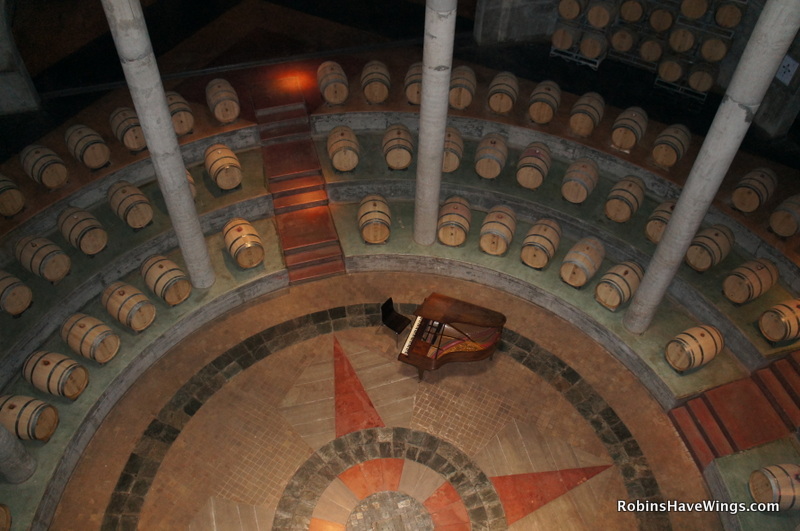
That’s not the only thing that impresses us at one of Argentina’s 10 largest wineries with possibly the best backdrop in the world. Deep in the recesses of this almost monumental building are steel vats in the most pristine of settings fermenting what we hope to be delicious wines. Our guide leads us to a circular railing in the center of this fermentation room and directs us to look down. French oak barrel upon French oak barrel sit respectfully in a circular theater surrounding a solitary grand piano as if waiting for a concert to begin. The room actually doubles as a cellar for its Primus wines, the winery’s most select label, as well as a concert hall, used for classical music concerts and tango performances once or twice a year. Depending on who you ask, the vibration from the music may actually add to these wines’ flavor, our guide explains. Once in the room, Gai, Carmen and Presleith decide to serenade the oak casks with “America the Beautiful” to test the room’s enveloping acoustics and spread some of our group flavor into the listening barrels.
Saletein’s fermenting room doubles as a concert hall
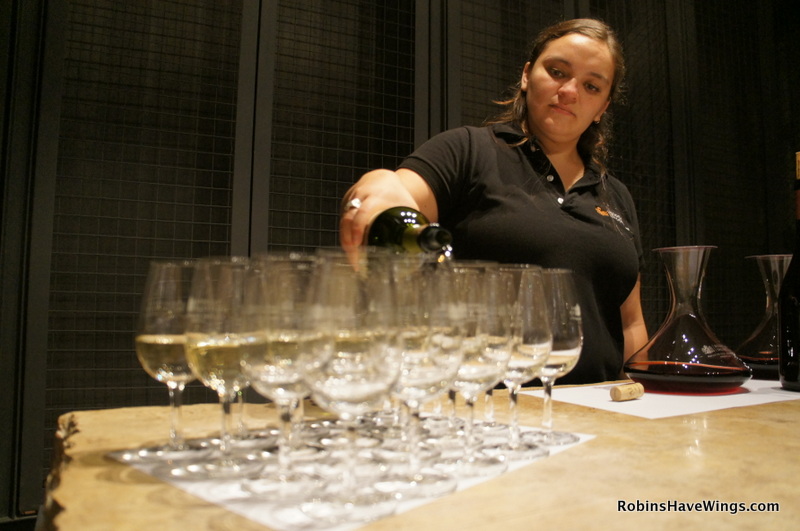
There were so many breathtaking details of this winery, including an eye-catching metal winding staircase and a tasting room built around a massive solid stone table. But it’s the wines that we’ve come here to taste and they don’t disappoint either. We start with a 2012 Sauvignon Blanc, a light, citrusy white liked by all, even Carmen who doesn’t drink at all. We end with another popular wine, the 2007 Malbec. It was a tad dry for my taste. I’m a fan of fruit-forward Zinfandels. But I get a bottle for my father who loves dryer reds and the rest of my travel compatriots proceed to almost clean out the winery’s shop before we head to our next destination.
A healthy pour of Saletein’s Sauvignon Blanc
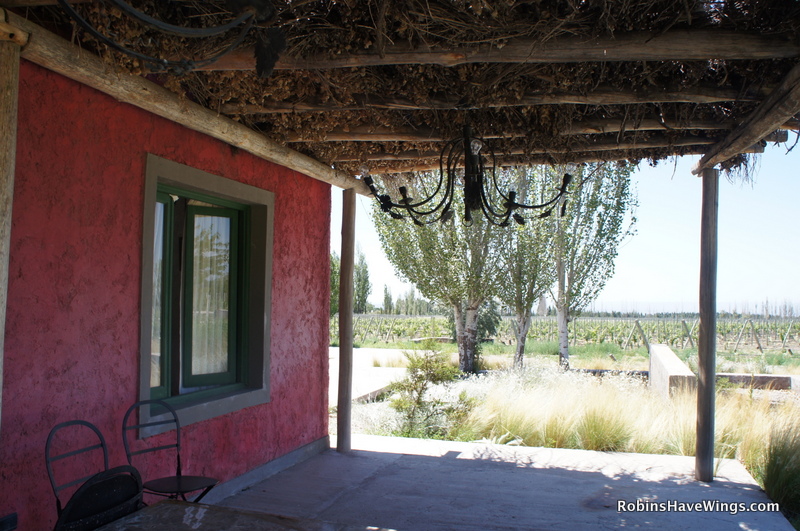
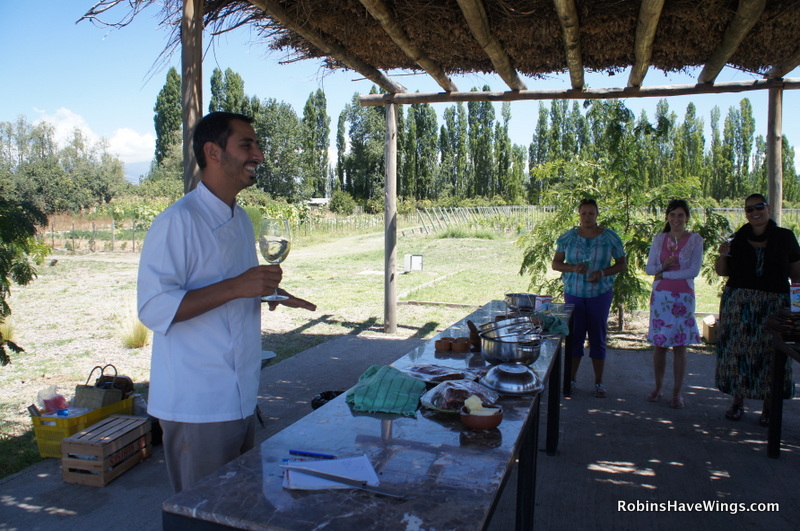
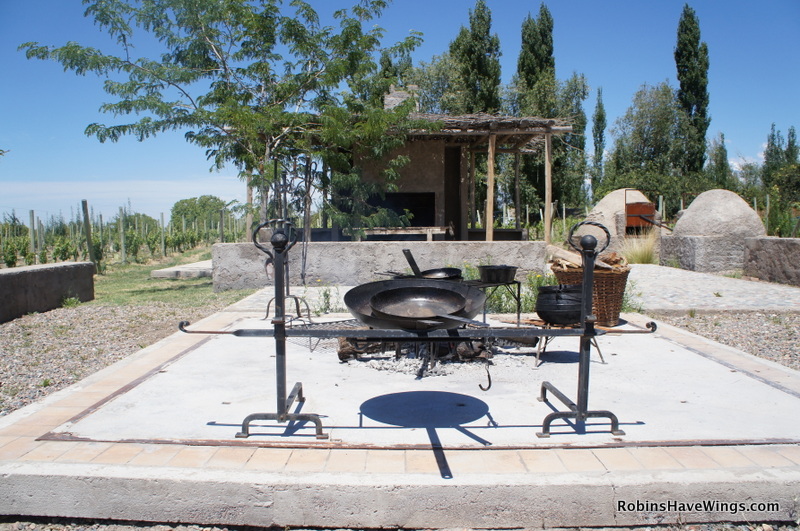
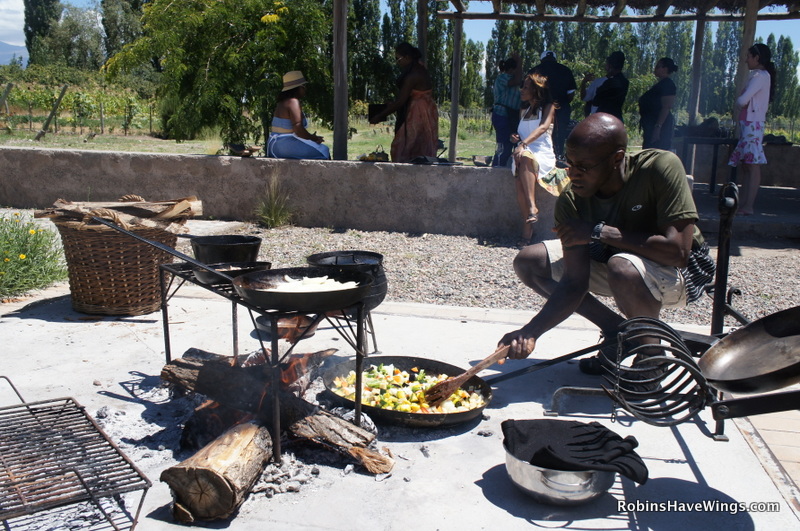
Somewhere down a very long and very, very bumpy gravel road, we find ourselves in a small mountain village called Gualtallary, named for a native chef that once ruled there. We turn into a small dirt driveway beyond a green wall to see a modest, salmon-colored stucco home with green trim. It seems to be the only house for miles on a well-farmed piece of land backed by a row of slim poplar trees and the Andes mountains. This is where we will be learning to cook just as the people who live here and the people who came before them. We immediately meet Michaela who has a quick and easy smile and runs La Tupiña Bistro, the family home turned restaurant of chef Lucas Bustos, who greets us as well. He’s in his chef’s coat just as a chef trained in French cuisine would be, but I notice that he is also wearing bombachas and alpargatas, the pants and shoes of a gaucho. A clue to his Argentinian background and formal training and a clue to the kind of cooking we’ll be doing. After having a glass of wine and meeting the staff under a shaded wooden canopy, we start to realize that we really will be getting our hands dirty. Gai says, “Oh, we aren’t play cooking, we’re really going to be cooking!” Some who have done other cooking classes may have imagined a class where you may chop a few things or toss some ingredients into a bowl while the chef does the real cooking, but that’s not what happens here. Lucas explains that every ingredient we will be using is local and grown on the farm and that we will be cooking like the locals do, everyday, with a wood fire on an open pit of hot coals.
La Tupiña BistroChef Lucas BustosThe wood-burning open pit
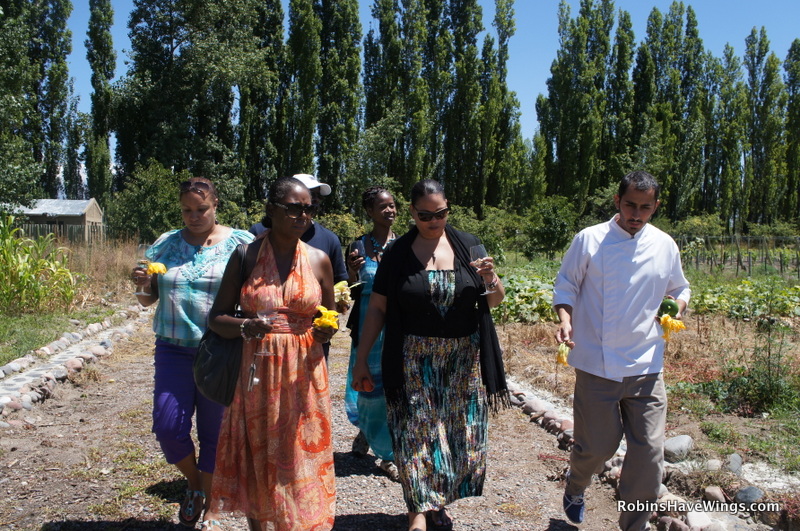
Everyone has kind of an excited “let’s do this” attitude and can’t wait to get to work. Lucas divides us into teams, some of us will work along side him and some will work alongside Michaela. We are all working on the tapas that we will have before the meal. I’m on Lucas’ team and he takes us out onto the farm to select the produce for the meal. He explains the process of keeping the soil shared by the Altus vineyard fertile; how to tell if a piece of corn is ready for picking and introduces us to squash blossoms. You can tell he is at home here in these fields, but he’s also at home feeding world leaders like Hillary Clinton. We learn that Lucas spent some time in Washington and cooked for the Clinton’s and an organization that former President Bill Clinton chaired before Hillary became Secretary of State. He raves about the Inn at Little Washington in the Washington area, which I have yet to visit and ask him if he’s been to Volt, one of my favorite restaurants. He hasn’t but says he’ll check it out the next time he’s in D.C.
Freshly picked squash blossoms
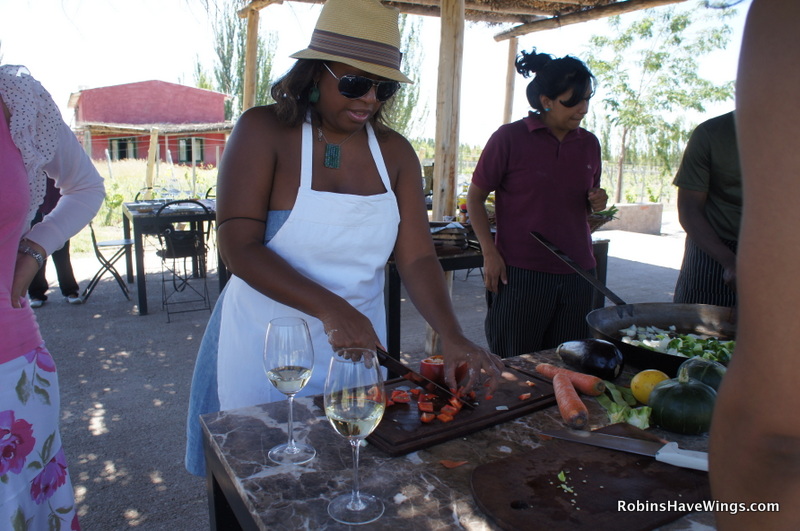
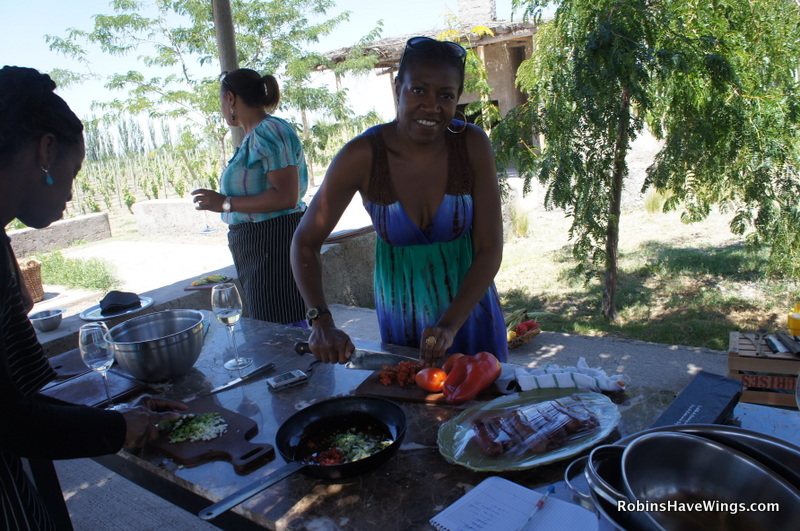
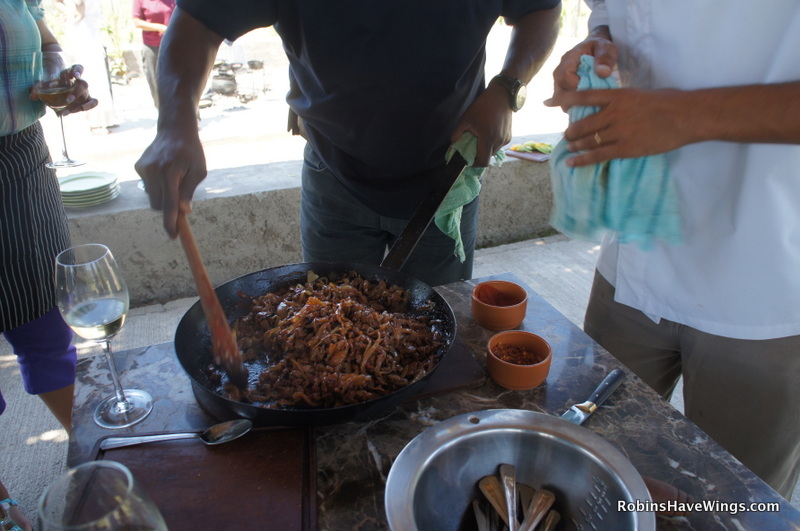
Armed with our produce, yellow and white corn, tomatoes, pumpkin and squash blossoms we return to our rustic cooking area, where Team Michaela is chopping more vegetables (carrots, zucchini, squash, peppers and onions) and putting them into a large cast iron skillet that will be placed on the fire to cook simply with salt and olive oil. Floyd chops the onions and minces meat for our empanada filling. Carmen and I chop red peppers, green onions and tomatoes for a salsa. Gia and I stuff squash blossoms with a local cheese to be dredged in a batter made with egg, flour, salt and oregano. We join Lucas near the fire and we watch him coat the blossoms and put them in a skillet of hot oil to cook until golden brown. During this process we learn more about Lucas, who tells us that after he finished training and cooking all over the world, he came back to Argentina to open a French restaurant in Buenos Aires. But he soon learned that no one was interested in French cuisine. Not the Argentinians and not the tourists who want to eat Argentinian cuisine when they arrive. So, he came to the Mendoza region where he is from to reconnect with Argentinian cooking.
Gai chopping vegCarmen and I chop veg
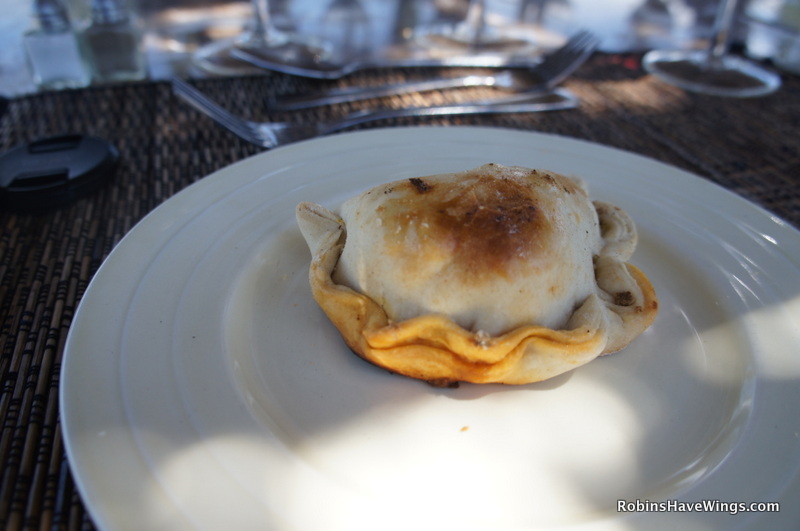
We are glad he did because those squash blossoms were delicious as was an egg scramble placed neatly back into its cracked shell for serving. Then there was the chorizo served on a flavorful twisted bread made by Team Michaela, topped with the salsa made by Team Lucas. Gai, Gia and I swoon over the taste. Gia has already declared her love for Lucas, even though he is married. And, then there were the empanadas, which Lucas shows us how to eat by folding a napkin around the bottom to keep the juicy contents from spilling out onto your clothes. Team Lucas, or rather Floyd stirred and stirred the meat, onion and lard filling until dry and Team Michaela used the mixture to stuff round flour dough shapes to make the tasty treats. The lard melts all the ingredients together while cooking to make the empanadas juicy. It’s cool to know the secret to the original hot pockets, but we are mostly proud of what we made and how good it tastes.
Floyd stirs the empanada fillingOur empanada
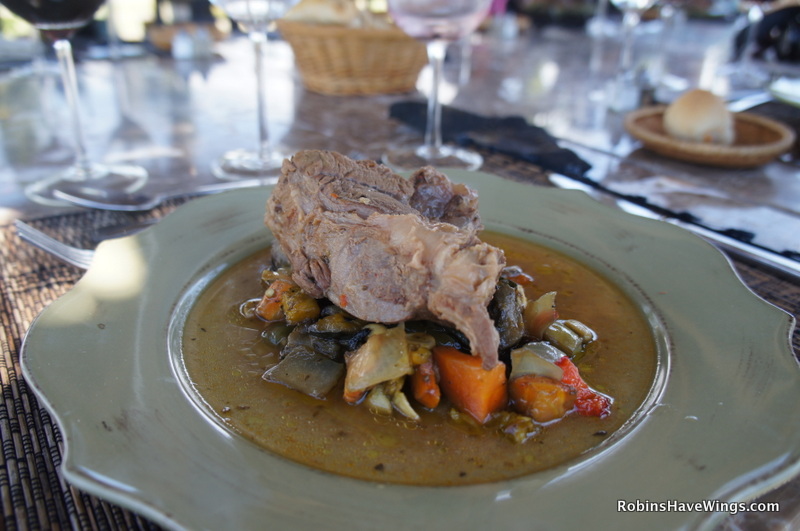
We don’t stop at the empanadas there is a full meal coming, including a hefty piece of beef known as “vacio.” It translates as empty, but it is definitely not that. It falls apart like stewed beef even though I’ve seen Lucas simply salt the cut of meat and lay it on a grill over a bed of coals to slow cook for about an hour. Carmen says that Lucas explained that this cut of meat can be found around the cow’s abdomen. Where ever it came from it was good and sitting on a bed of sautéed vegetables stirred and stirred by Alan who seemed not to mind the heat emanating from the nearby coals. Finally, there is desert, a small cup of a creamy dulce de leche, a kind of caramel-tasting confection loved by Argentinians, mixed with almonds, along with a slice of baked pear, piece of cheese and queen’s jelly. A queen is a fruit from the region that looks like an apple on the tree, but is inedible and must be cooked, typically into a jelly or spread.
Alan stirs the vegVascio on veg
We’ve eaten and enjoyed the wines from the Altus vineyard until our stomachs say uncle. To say that we are content is an understatement. It’s been a perfect day minus the flies that were determined to dine with us. We try to express how much we’ve enjoyed the experience with words like “phenomenal” and “incredible,” again and again. Presleith says this is the best meal she’s had on the trip so far and that it reminds her of grandmother’s cooking in the Bahamas. Robyn toasts Gai for organizing such a fabulous day. But again, it’s one of those experiences that you have to have for yourself. It turns out that cooking together forms a bond, too. Not just amongst our group but with Lucas, Michaela and the wonderful people we met at La Tupiña Bistro. We won’t soon forget them or the meal that we shared.
Contented travelersOur friends at La Tupiña en Gualtallary
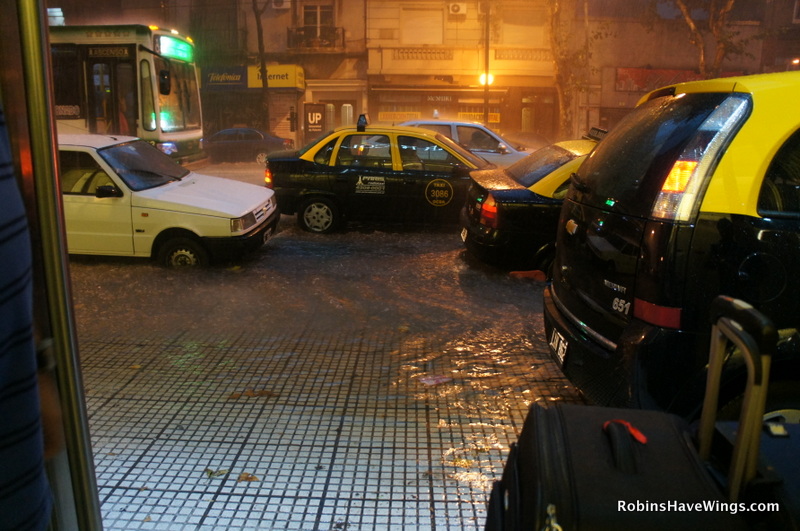
Actually, funny probably isn’t the right word, freak might be better. Our trip was rudely interrupted the other night by a freak flash flood that created a fast-moving surge of water down the street in front of our hotel, just as we were planning to leave for a tango lesson and show.
Water rising outside the Dazzler Towers Recoletta
The surge didn’t stop at the street, it forced its way into our hotel lobby sending guests scurrying in every direction. This video pretty much captures the scene.
What strikes me in this video is that folks are surprisingly calm and I have to say the members of our traveling party were pretty calm, too. Dressed in our tango show finest, we went to check that our belongings hadn’t been drenched in our rooms, using the stairs since we heard what we thought was water rushing down the elevator shaft. Seeing that all was well at the moment, we regrouped and Gai told us that she was going to work on getting us out of the hotel as soon as possible. We’d reschedule the tango show for another time. She sent us upstairs to pack while she worked on our exit strategy. We had already planned to leave the Dazzler Tower Recoleta ahead of schedule because of a day-and-half-long power outage. So, we packed in almost total darkness leaving our doors open to get light from the hallways which were still well lit.
The process of getting 10 people out of one hotel into another on short notice during a unpredictable weather event at the start of carnival season in Buenos Aires on a Sunday night is more than a notion. Gai who happened to be the calmest of all of us reminded us that there is always what she calls an “X factor” in travel, the thing that you never thought would happen until it does. If you are a seasoned traveler like many of us on this tour, you know that you kind of have to go with the flow, in this case literally. She also said this is another good reason to have trip insurance. I bought some for the first time on my trip to Thailand through WorldNomads.com and I’m glad that I had the presence of mind to get some for this trip, too. You can bet I won’t travel without it from this point forward.
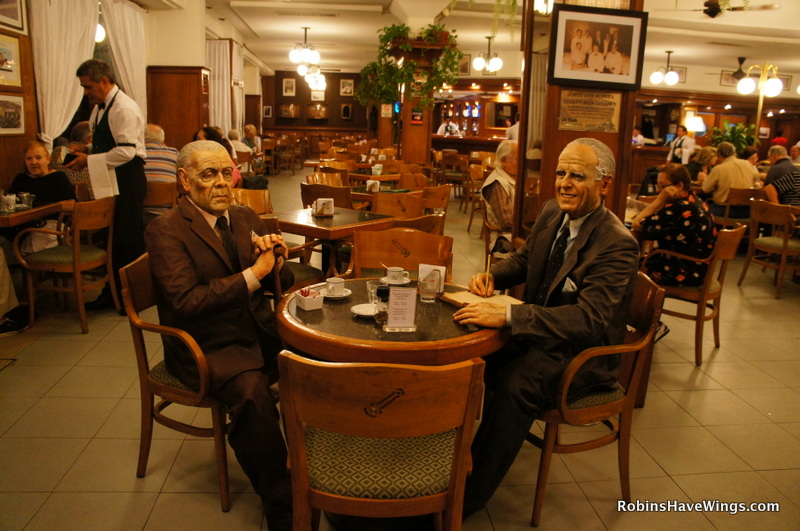
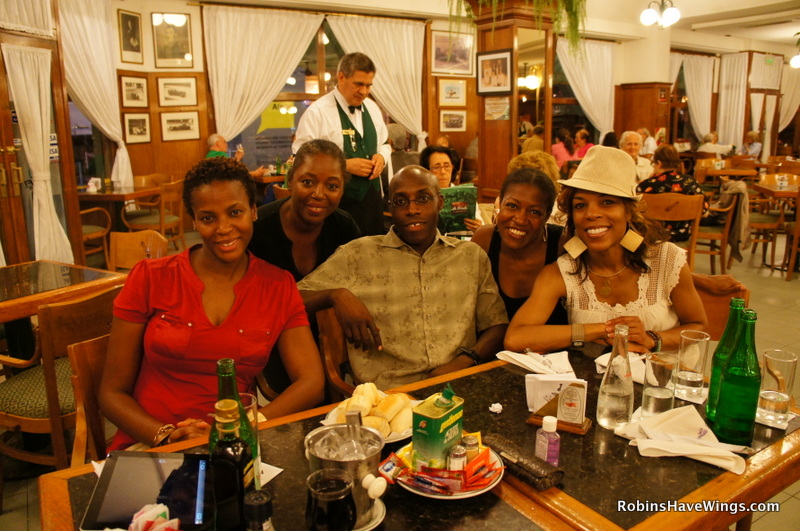
Seeing as there wasn’t much use in sitting around in a soggy hotel during the rebooking process, Gai sent us off to dinner. We chose a place that Lonely Planet calls an institution in the Recoletta neighborhood, La Biela. Sitting directly behind the Cemetario de Recoletta, La Biela definitely looks like a neighborhood institution, the place generations and generations of Buenos Aires residents have been going to for good food and familiar faces. No one in the place looked to be under 65 for starters and a waiter in a green vest with a towel hanging over his right forearm greets us immediately. An older woman seated by the window catches my eye and asks in Spanish if we are Colombian. That’s a new one for us. We’ve been mistaken for Brazilians during our trip so far. I tell her where we are from and ask what’s up with the statues of two men seated at a table nearby. They are famed Argentinian writers and friends Jorge Louis Borges and Adolfo Bioy Cesares, who dined here along with other important and upper class Argentinians known as portenas. My new friend offers to take a photo and tells me that she is very pleased to me meet. I like this place already. It turns out to be a great place to take our mind off our unfortunate travel circumstances and enjoy some good food.
Borges and Cesares always dine at La BielaLa Biela makes us feel like locals
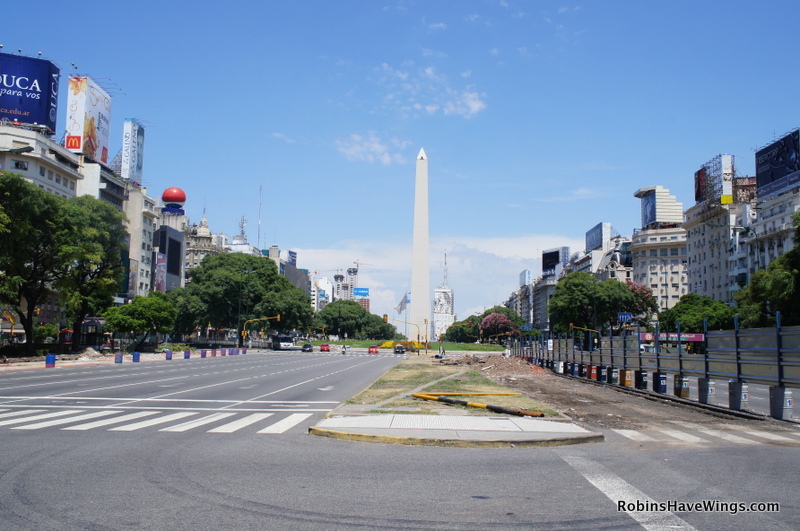
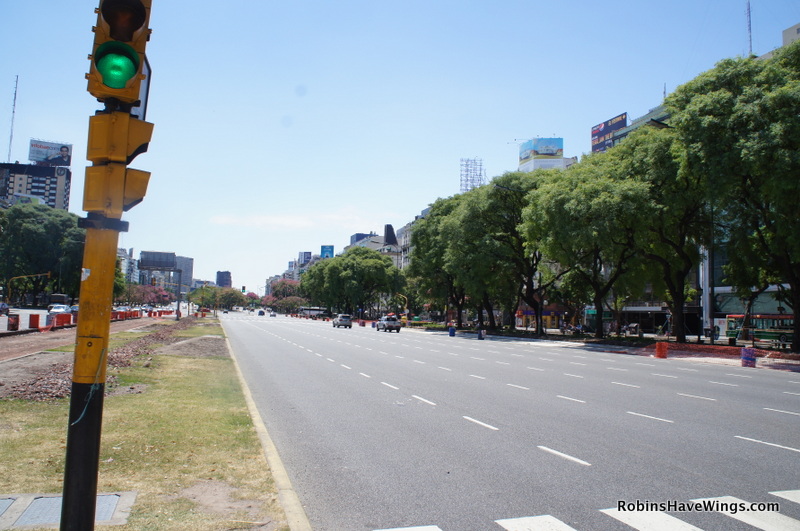
Before our travels were so rudely interrupted, the group split up to explore the city on our own. Kenitra, Sheneekra and I decide to leisurely walk to San Telmo’s well-known Sunday market from our hotel. At first the journey is pretty unremarkable as we pass through what looks like the Buenos Aires business district. All the shops are closed and there is almost no foot traffic. But I’m excited with we reach Avenido 9 de Julio, the widest avenue in the world, commemorating Argentina’s independence from Span with 9 lanes of traffic. You don’t realize house massive the street is until you are standing on its center median watching traffic whiz by on either side of you. If you are a pedestrian who likes to dart across the street to beat the traffic, you’d be toast here. If you don’t have the slightest clue where your are going when you are driving, you may want to avoid the street, too. We saw a taxi turn too soon almost running into oncoming traffic. He realized his error, quickly self-corrected and took off in the right direction. (By the way, we’d later learn from our guide, Luis, that this grand thoroughfare was completely submerged by the flash flood, too.)
That obelisk on the widest avenue in the world looks mighty familiarDon’t try crossing without waiting for the walk sign here
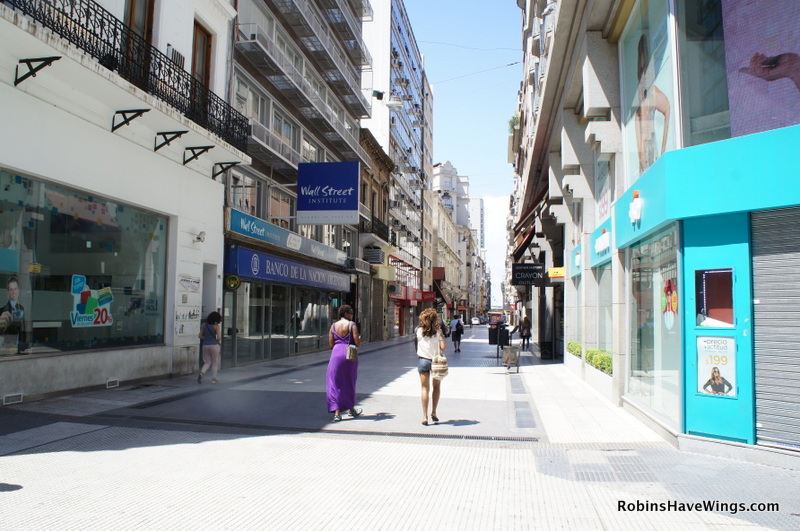
Off 9 de Julio, we wandered upon Lavalle Street a narrow pedestrian-friendly shopping street. It’s heard to describe. I’d call it oddly interesting. The shops were a miss mash of cheap clothing stores, record stores, restaurants and movie theaters. It was clear that this is where the locals come on a Sunday afternoon. There was also a huge bingo hall that looked like it belonged in old Vegas. But the street itself was interesting to us because it seemed to offer good photo ops with is narrow-tunnel like appearance sandwiched between tall buildings.
Sheneekra and Kenitra explore along Lavalle
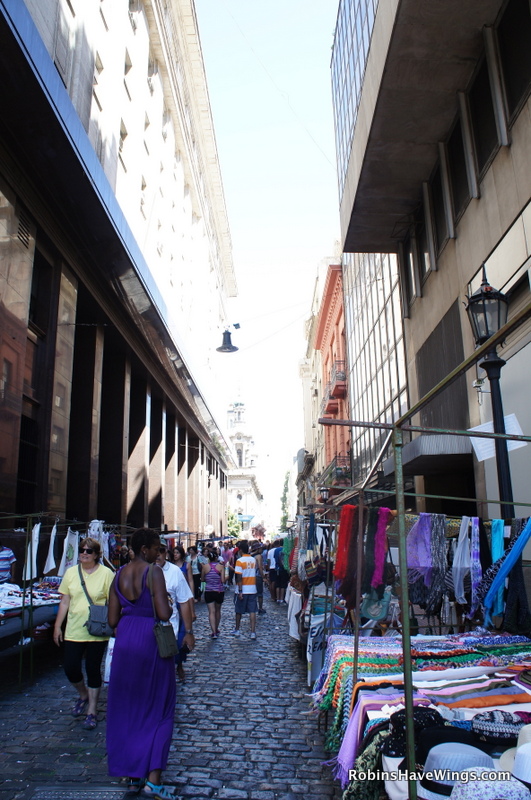
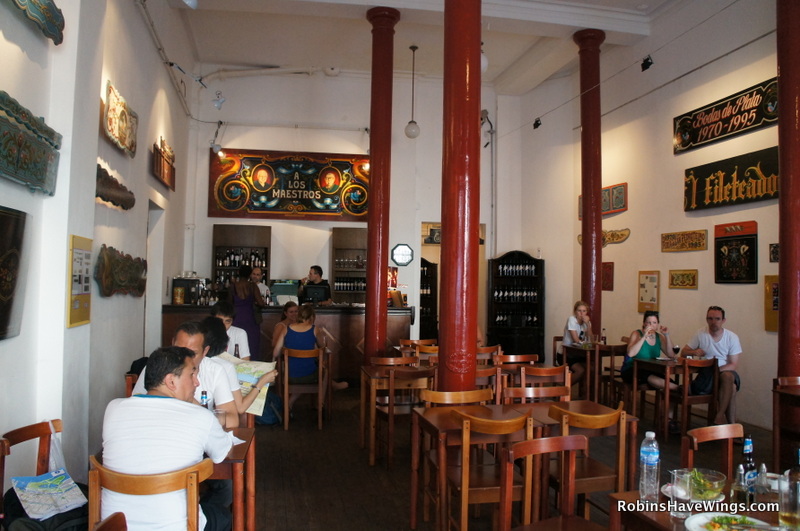
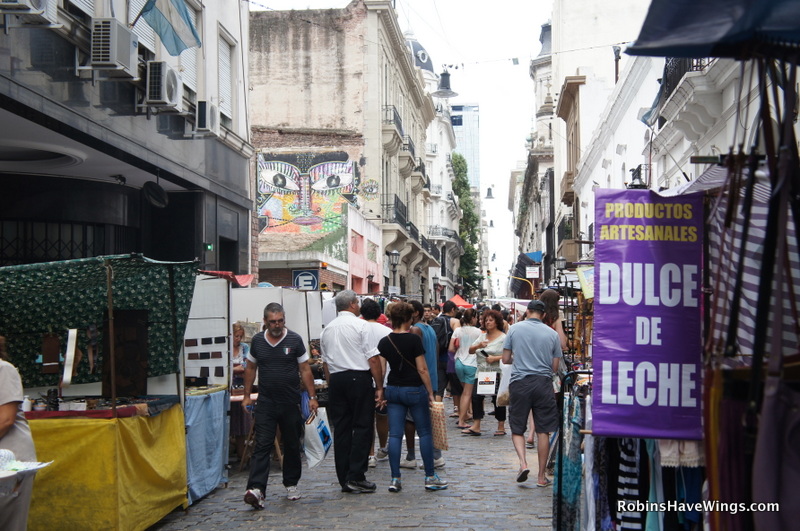
We hit another stretch of uninteresting road on Leandro N. Alem until we make it to Casa Rosada, where Argentina’s president, Cristina Fernandez de Kirchner, conducts all her business. By this time we’ve been walking for a couple of hours, we are hot, thirsty and not sure how far we have left to go to get to the market. We imagine it’s more blocks that we want to walk until we ask a police officer where Defensa is, thinking we’ll need to catch a cab from there. As we walk a short block down Defensa we realize, to our relief, that we are the start of the market. It’s sidewalk is almost invisible, taken over by vendors and artisans of all sorts selling Argentinian crafts from jewelry and leather work to art and antiques. But before we can dive in we have to eat. I spot a really cute restaurant just across from the Convento de San Francisco called Museo de Filete. It’s got a modern yet traditional feel and it is here that I decide to try milanesa, a popular Argentinian dish, very similar to chicken-fried steak where the meat is pounded out and fried. It’s pretty good and I ask for my new favorite condiment, chimichurri to go with it.
The San Telmo marketMuseo de Filete is a convenient and tasty stop in San TelmoSan Telmo is the place to be on a Sunday afternoon in Buenos Aires
During the rest of our shopping adventures in San Telmo we’d learn several important helpful Buenos Aires travel tips:
1. You can use American dollars in Buenos Aires at some places, but especially at the market where the dollar is worth more than the peso and vendors can exchange dollars for the peso on the black market at a 6 percent rate. If you bring dollars you can get the same exchange rate if you need pesos and know the right people.
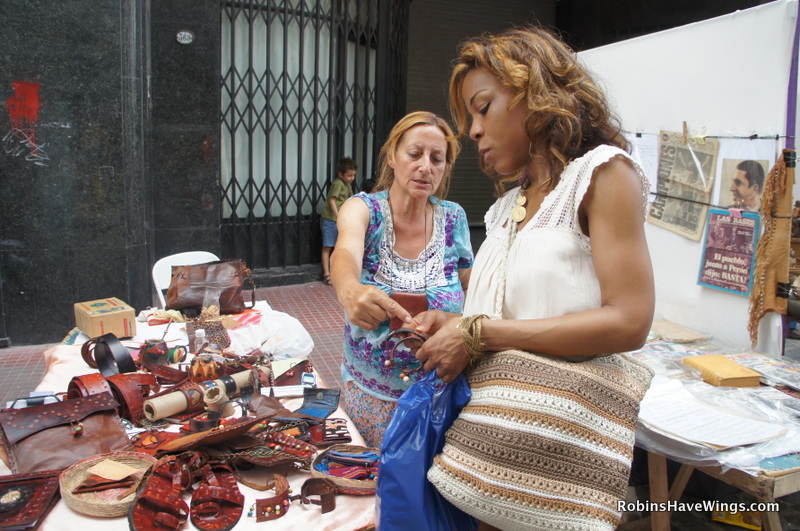
2. If you plan to use pesos, make sure they are crisp bills with no marks or tears. Kenitra tried on a couple of occasions to pay for souvenirs with dollars and vendors wouldn’t accept her torn bills. The vendors can’t easily trade marked bills on the black market. Even when she did pay with a pristine bill the vendor ran a couple of stalls down from her stall to have some guy check to make sure it wasn’t counterfeit.
This vendor checked to make sure Kenitra’s American dollars weren’t counterfeit
3. Possibly the most important tip of all is to wear your purse across your shoulder and in front of you at all times because San Telmo is notorious for pick pockets as the locals will happily tell you. Presleith was accosted by two men who she thought were out to get her bag. But they were only very eager to tell her the proper way to wear her purse. As Kenitra brought a pair of earrings, the vendor practically scolded her for wearing her bag loosely on her shoulder.
So, to recap, what important travel lessons have you learned in today’s blog post? Tell me in the comments and add your own.
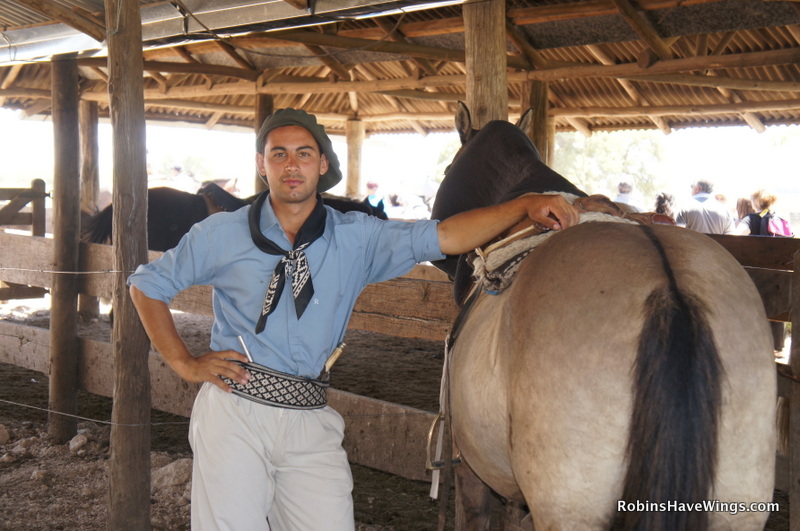
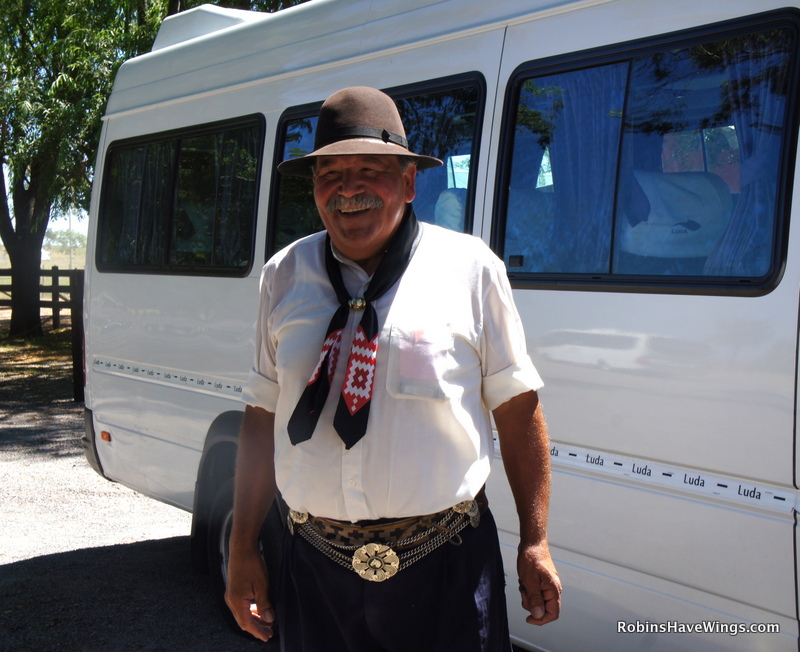
Our guide Luis warned us about Cerillo on the way to Estancia Santa Susana, a farm with Argentinian cowboys called gauchos just outside Buenos Aires. He said Cerillo was a naughty gaucho who loves kissing girls. We weren’t paying much attention and I wasn’t even thinking about this warning when Cerillo caught me alone and walked up to me with open arms, his ruddy, mustachioed face smiling. I thought, “Aww he wants a hug!” He kissed my left cheek, then my right and then, he went straight for the lips. Naughty gaucho. I later learned that he was very affectionate with Presleith on the dance floor after the farm’s traditional Argentinian barbecue and I saw him ride away with Kenitra on the back of his horse after the farm’s gaucho performance disappearing behind the barn. She later reveals that he asked her for a kiss.
Cerillo the naughty gaucho
We can’t say we weren’t warned. Gauchos, Argentina’s cowboys who roam its Pampas herding cattle atop well-trained horses, are naughty. They are the descendants of Spanish soldiers and Indian women who found it hard to fit in either culture, turning to a nomadic lifestyle. Gauchos are also cute. One gaucho named Luca had all the ladies swooning and there were women from almost every nation in the world visiting the farm from Australia and China to Bolivia and Japan. This photo pretty much says it all.
Luca, Estancia Santa Susana fan favorite
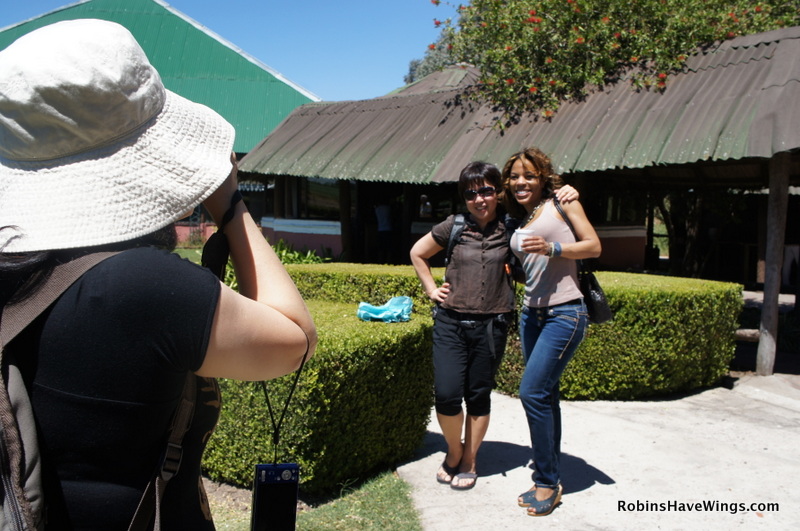
Our group of 10 got its share of attention, too. When we arrived at the estancia another tour bus had just disembarked and we were suddenly greeted by a line of international paparazzi. I don’t know where these tourist were from, but it was clear that they don’t see a lot of black people where they live and felt compelled to add us to their vacation photos. I expect it in Asian countries, but for some reason, I wasn’t expecting it here. One Japanese woman asked to take a photo with Kenitra and she obliges. Afterward the woman tells Kenitra that she looks like a Barbie doll. She’s not quite sure what to say to that and I think it’s amusing.
Kenitra and a Japanese fan
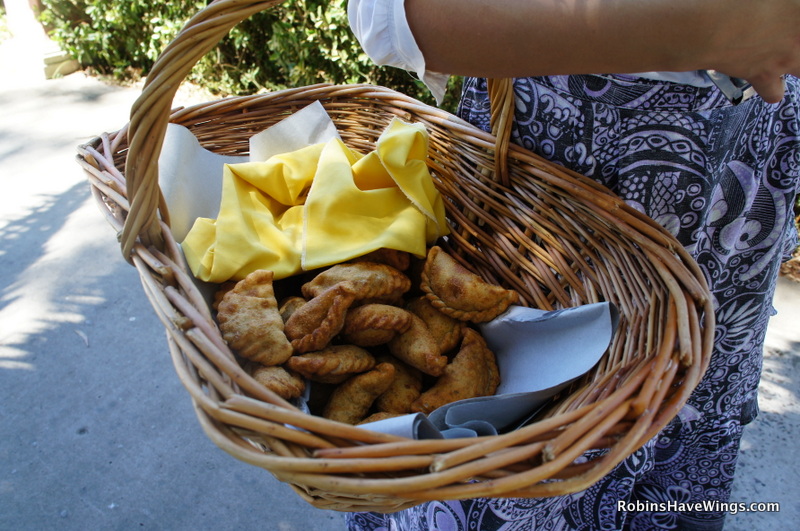
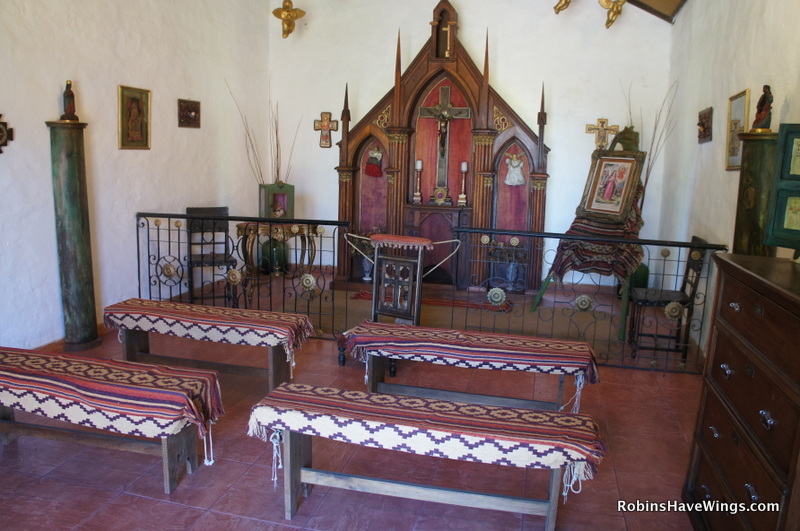
Once we get past our fans, the farm’s staff greet us with a real treat. The juiciest empanadas we’ve had on our trip so far. Luis explained that a good woman makes her empanadas as juicy as possible to attract the gaucho of her choice. I’m no gaucho, but these empanadas certainly have my attention with its flavorful minced meat, olive and egg center dripping from its pastry pocket after one bite. After a couple of these, we turn our attention to the 5,000 acre ranch stretched out before us. The main house has been turned into a museum of life on an estancia. We are mostly attracted to the tiny chapel with is benches decorated with native South American blankets and its simple wooden alter featuring handmade angels. This could be a chapel in the American South West or Mexico. One corner of the room is dedicated to estancia weddings with a yellowing wedding dress and old wedding photos.
Juicy empanadas in a basketEstancia chapel
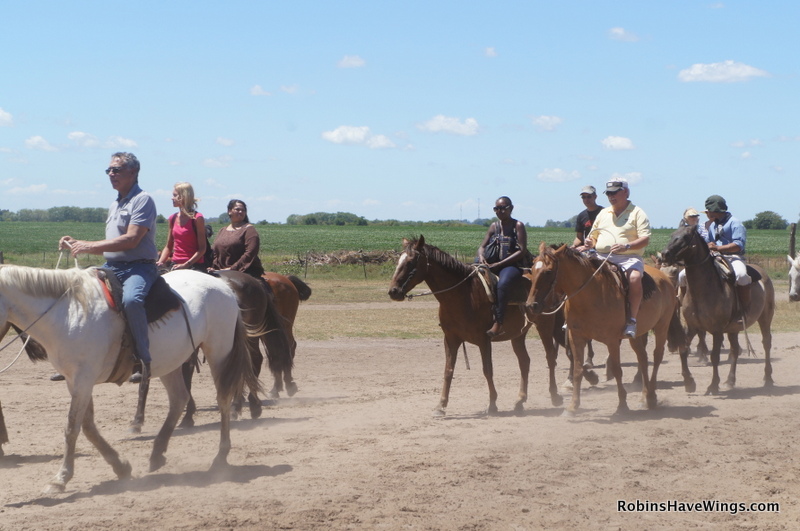
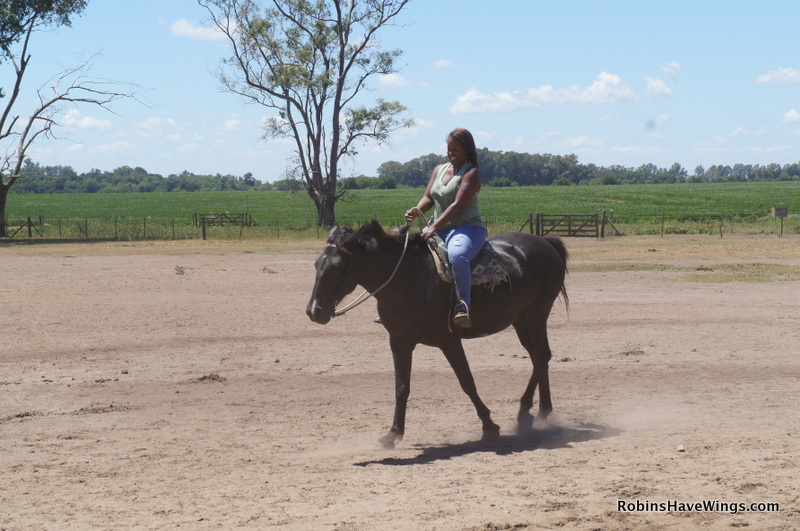
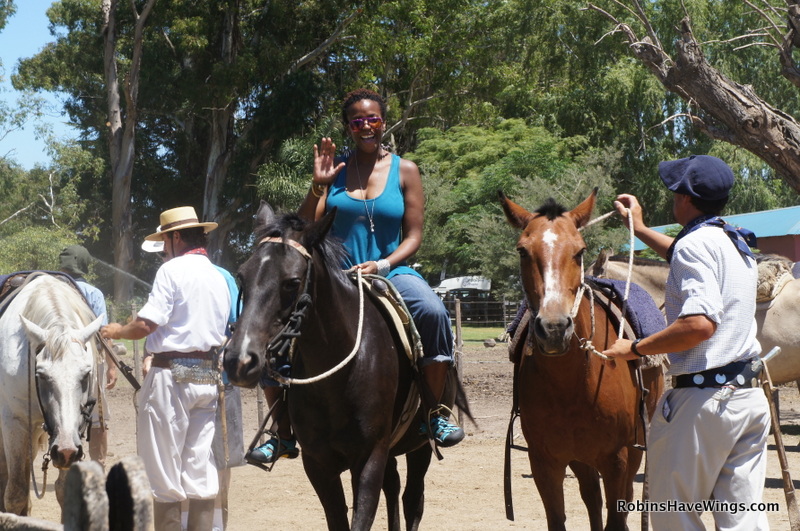
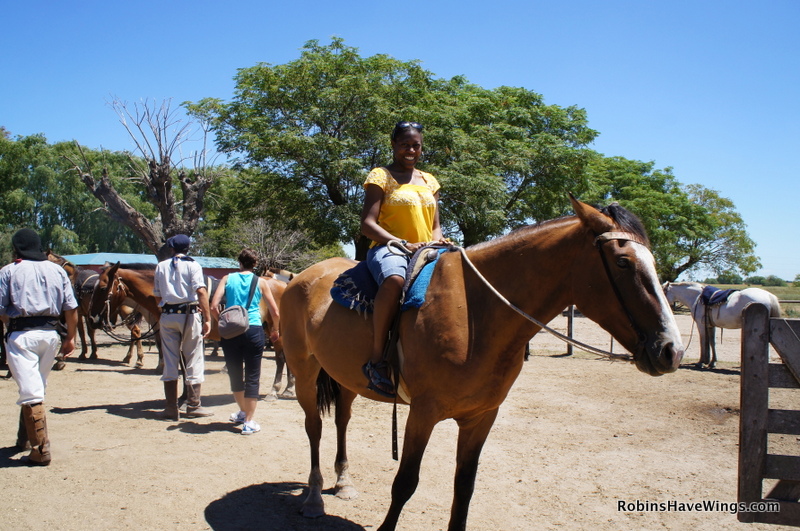
But the stable is where all the action really is. The gauchos are leading horse rides across the estancia on a dusty trail and most of decide to give it a try. Few of us have been on a horse before, but travel has a way of bringing out a sense of adventure and I think its magnified in a group. It’s kind of like peer pressure, but in a good way. When you see others stretching their boundaries you want to do it, too. Take Presleith. She’d never been on a horse and she was pretty terrified when hopped up on her horse and it started to trot off. She screamed, “How do I make it stop?” But she didn’t panic, in fact she seemed to really enjoy the rush. When she came back from her ride she was grinning widely and she said she was scared, but she loved it. I love that. One by one each of us got up on the, literal and proverbial, horse and took a ride, except for the other Robyn on this trip. Robyn attempted to get up on the horse, but got discouraged. We tried to lure her out for a second try, but she declined. Kenitra, Sheneekra and I went out together and each of us seemed to have reluctant horses. Sheneekra helped hers along with positive affirmations, mostly so that her horse wouldn’t drop her. Kenitra’s lolly gagged behind the other horses along with mine, except my horse was slow and had an attitude. He nudged Sheneekra’s horse out of the way before we started on our ride. Later, he decided to drift away from the horse formation, cutting across the field toward the front of the line. But the biggest sign that my horse had a bad attitude was that he kicked an Australian man that I’d been chatting with on the ride. The Australian was riding behind me, which apparently my horse did not like, so he kicked him. I was horrified. The Aussie, not terribly hurt, said, “We can’t talk anymore if your horse is going to kick me.” I said, “Please don’t hold my horse against me!”
Gia and Presleith on horsbackGai on horsebackSheneekra on horsebackHow do I look?
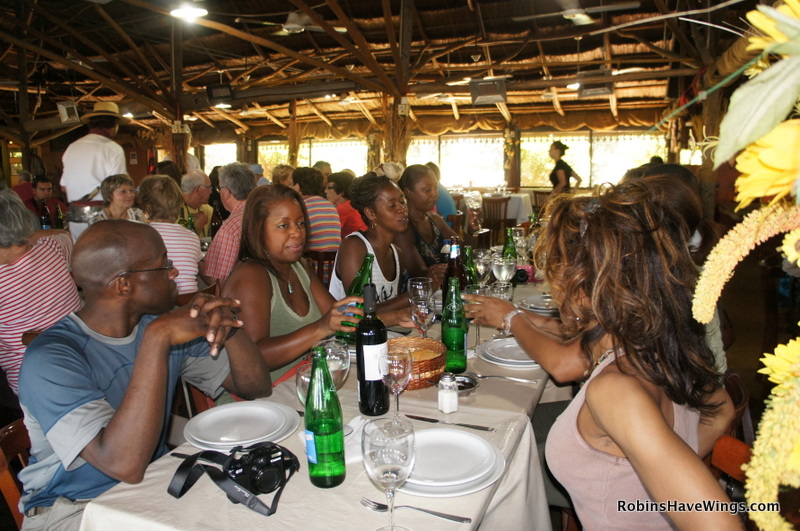
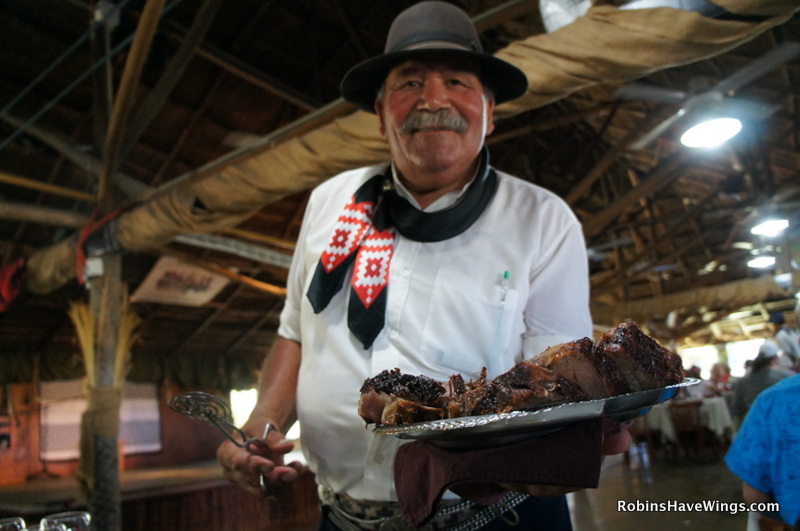
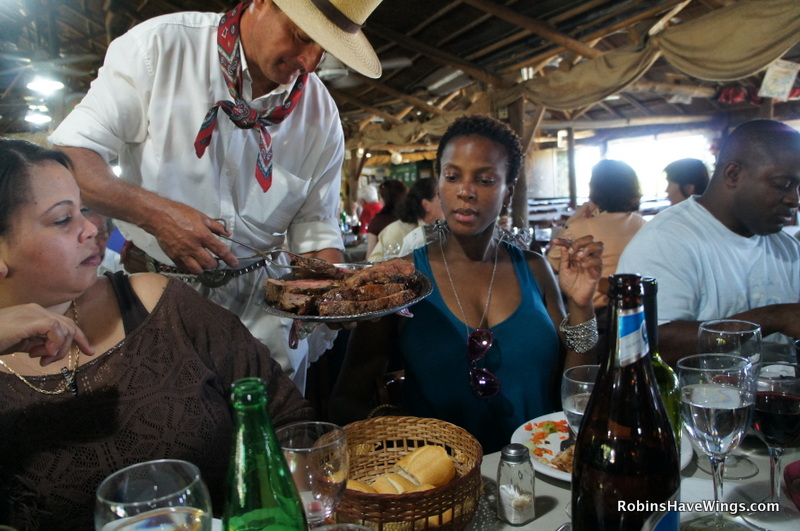
When the horse-riding is done the dinner bell is rung and we all come inside to eat the barbecued meat and sausage that we’ve been smelling all day. The very gauchos that led us on rides became our servers, delivering huge cuts of beef, chicken and sausage. But we probably most enjoyed the chimichurri, a South American condiment made of olive oil, vinegar and spices for eating with bread and topping your steak. We even put it on our salad. It was quite delicious. We got adventurous again when they brought out the black sausage, popular in this region and similar to the Brit’s black pudding, which is essentially cooked blood and other filler. Our knives reveal a mushy center inside its sausage casing and we aren’t sure what to make of the taste on its own, but decide that it’s much better on bread.
Estancia-style diningCerillo serving up a platter full of meatChoosing the best piece
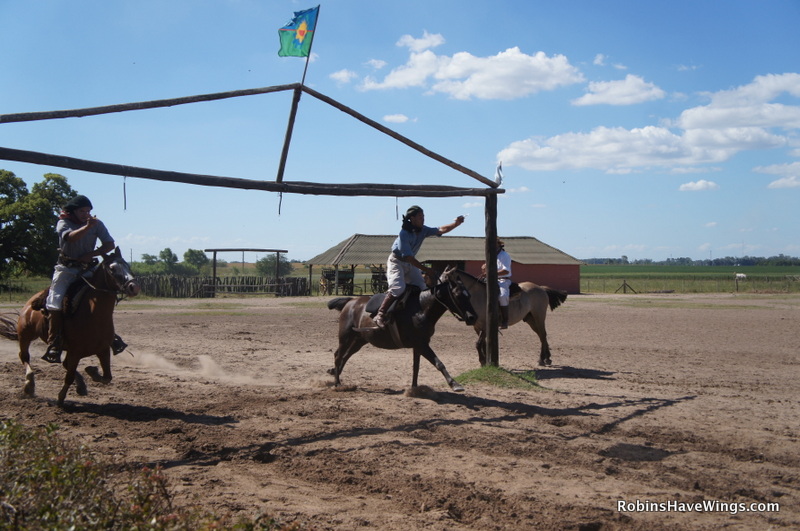
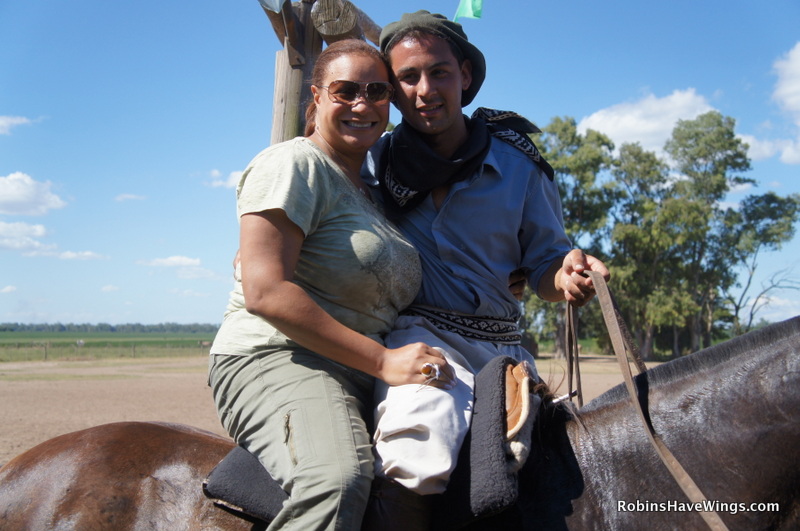
After we eat, we enjoy listening to old estancia songs and watching a great tango show, but what really gets us on our feet is the gaucho show outside. They demonstrate a tradition where the gauchos put a small metal rod through a small ring hanging from wooden posts while racing on horseback. If the gaucho gets the ring on his rod, he must then give the ring to a woman of his choosing. Bringing new meaning to Beyonce’s phrase, “If you liked it, then you should have put a ring on it.” Here’s where Luca and Cerillo come in again. Of course everyone holds their fingers out for Luca, who happens to get the ring every time, by the way. Kenitra gets a ring. I get a ring. Gai gets a ring. Robyn gets a ring. After all the jousting and horse play, the gauchos pick ladies to ride with them and Cerillo makes a beeline for Kenitra leading to the barn kidnapping noted above. But the best ending of our day comes when Robyn wants to get a photo with Luca on the back of his horse. Still a little shaken from her attempt to ride earlier, she thinks she’ll get on, take a picture and get off, but Floyd has other plans and signals for Luca to take off. The look of shock on Robyn’s face is priceless. She comes back giddy and probably a little proud of herself.
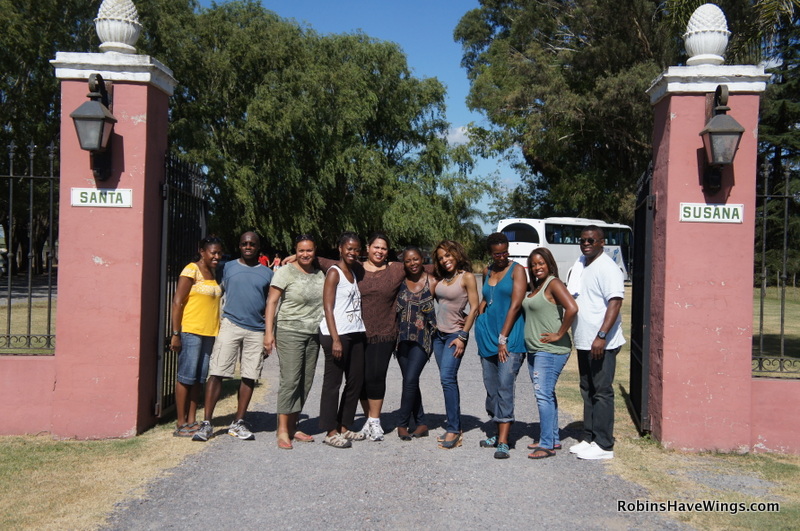
Tango at Estancia Santa SusanaMore tangoLuca leadsRacing to the ringsCapturing the ringRobyn finally gets that ride, and with Luca to bootSTG at Estancia Santa Susana
It was a fun day on the estancia, we all agree. We board our bus back to Buenos Aires taking the route known as the Pan American Highway, the world’s longest road stretching as far south as Patagonia in South America to Alaska in North America. Once back in the city we see how Argentinians spend a Saturday afternoon. They attend flee markets and outdoor concerts or simply sit in the park beneath yellow umbrellas.
Later that night….
A few of us decide to venture out to explore Argentina’s night life. We decide to go to a Colombian dance performance that Luis recommended at an arts building in La Boca. There were six of us and we split up into two cabs, Carmen, Presleith and Alan in one and Sheneekra, Kenitra and I in another. When Sheenekra, Kenitra and I reach the destination, under a dark underpass next to a dilapidated old port, we’re thinking we are definitely in the wrong place. The taxi driver asks a security guard if he knows about an event at the building and I make out that the place is closed. Some how I manage to pull some Spanish vocabulary from my freshman year of college from the recesses of my brain and tell him that our guide told us about a special performance in the building. He goes to ask another guard behind the clearly closed building gate and he doesn’t seem to know about any event. We don’t see Carmen, Presleith or Alan, so we assume they learned the same information. We then direct our taxi driver to the Palermo Soho area, which we’ve been told is a popular area with the trendy Argentinian crowd. Along the way, while stopped at a traffic light we spot a dredlocked black man inside a store and there are others like him inside. As we pass, we see that it’s a barbershop, just like one you might see in any black neighborhood in the states. Ironically, the barber shop was on a street named Estados Unidos. Translation: United States. When we reach Palermo Soho we think this is more like it. Restaurants with bars and dance floors surround a plaza named for Julio Cortezar, many blasting American music and serving American food like pizza, hamburgers and hot dogs. We opt for a spot serving sausages and meat on wooden tablets along with vegetarian options and empanadas, of course. We review the days events over tasty food and drinks on a warm Argentinian evening.
Sheneekra and Kenitra in Palermo SohoLate night diningCruising in Palermo Soho
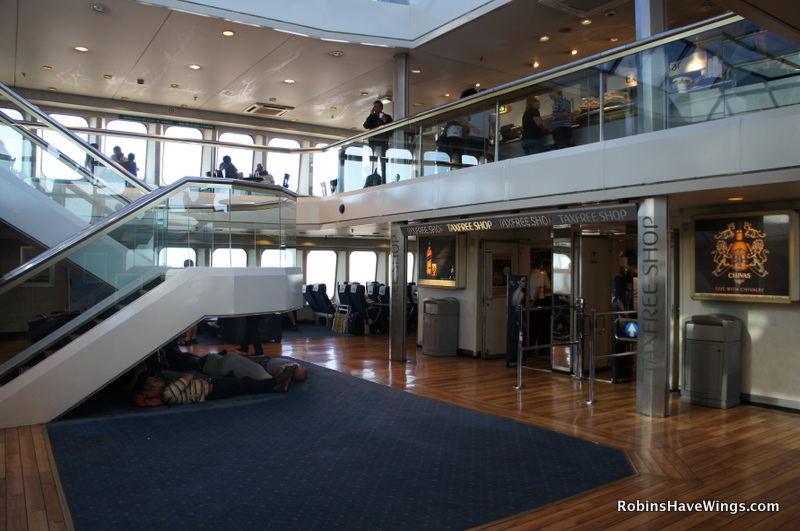
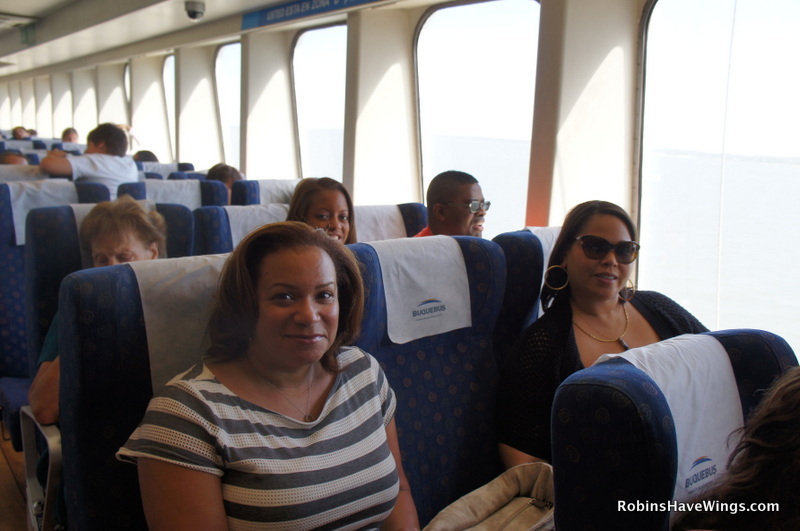
Montevideo, the capital of Uruguay, is lovely. Walking in Ciudad Vieja feels familiar with hints of Havana and the French Quarter wafting out from its windows festooned in wrought iron. But getting to the little gem of a city is a bit of a chore quite frankly, especially by ferry. The ferry ride itself is only 3 hours. I’ve taken longer journeys for a side trip, but the one hour, or more, slog to get through customs made this journey more tiresome than expected. As we shift from foot to foot in line, Gai says “aduana” or customs in Spanish has become a bad word. We stood in a similar line upon entry to Argentina just a day ago. But once we make it through, we are impressed by our mode of transportation. The ferry oddly called Buquebus is probably the nicest commuter ferry we’ve all been aboard. We all had thoughts of the Martha’s Vineyard ferry. But this is more like Acela’s Amtrak train on water and better. It’s got two decks with comfy spacious seats, cafeteria-style food areas serving fresh sandwiches and croissants, and the kicker, two floors of duty-free shopping. Taking a peek in you’d think people took the ferry just to shop for perfume. Gai and Floyd actually went in and reported that these were serious shoppers who weren’t afraid to use a sharp elbow to two to get to their tax-free trinkets.
Inside the Boquebus ferry to MontevideoMontevideo bound
We use our time aboard to nap, stare out at the wide Rio de la Plata and get to know each other. I learn that Alan actually hails from South America, Guyana, specifically, even though he grew up in New York. We end up taking about his native home a bit from the Jonestown tragedy to Guyana’s Caribbean culture and future in forestry. It’s nice to get a little culture from a fellow traveler before we disembark for more in Uruguay. Esteban, our guide, is waiting there for us. He’s got a grandfatherly air about him and he explains that many of the people flowing from our Buquebus and the giant cruise ships around us are Argentinians or Brazilians who have come to Uruguay to vacation at its popular beaches like Punta del Este, known as the St. Tropez of Uruguay. But it’s clear that what excites Estaban the most is history. It’s lucky that he works in a place like Montevideo, a former Spanish fortress, which is oozing with it. The Spaniards chose Montevideo as a spot to protect their agricultural and economic interests in Uruguay from the encroaching Portuguese. But Uruguay shares a similar heritage to its Argentinian neighbor with European immigrants like the Italians and French influencing its architecture and food.
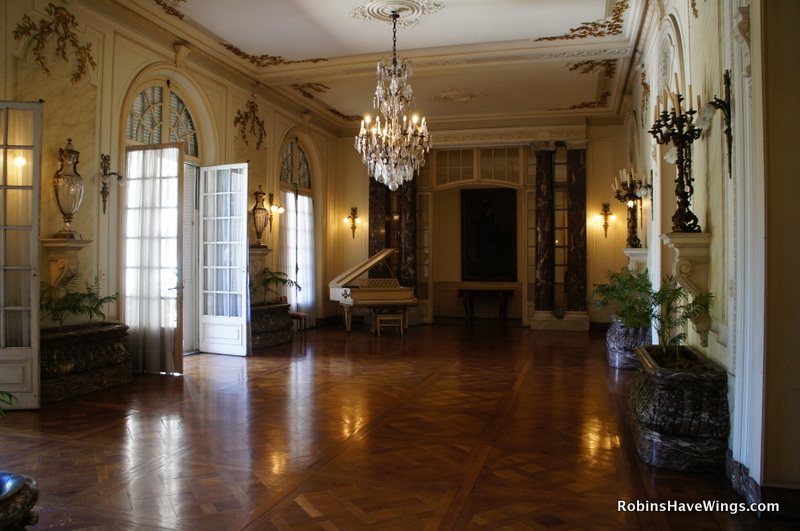
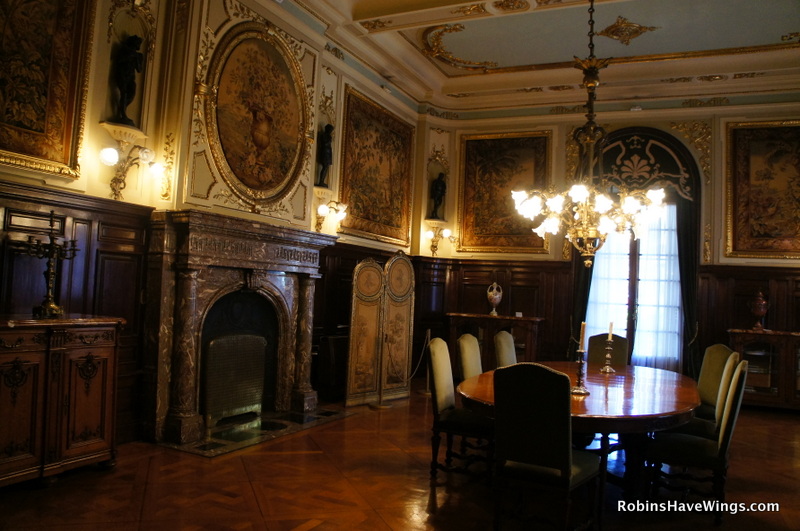
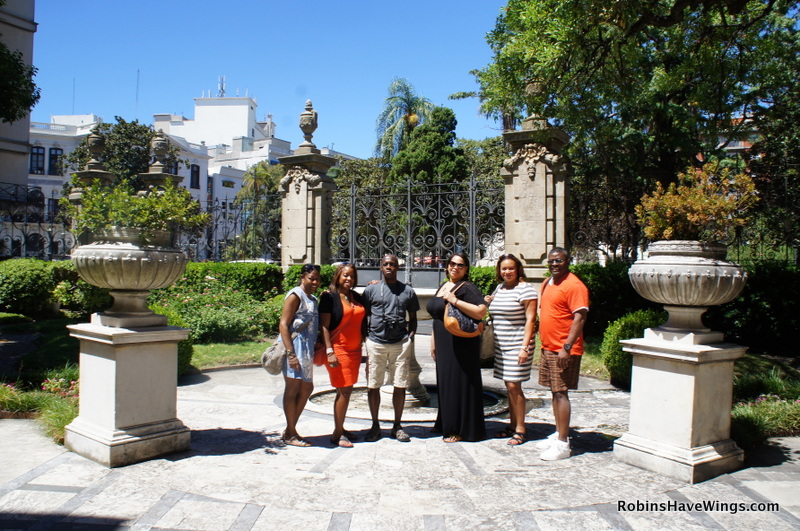
Our first stop at the Museo des Artes Decorativas demonstrates this blend of cultures and the colonial grandeur that once reigned in Montevideo. It’s an architectural stunner for sure. Just stepping into its airy entry foretells the gorgeous detail inside. The former home of sibling industrialists also happens to be the place where John Paul II brokered a treaty between feuding Argentina and Chile. It was also Uruguay’s first theater. You can imagine it standing in a breathtaking ballroom, complete with crystal chandelier and guilder piano. Gai and I immediately think Versailles in a much smaller, less overdone kind of way. The influence of the building’s French architects is unmistakable. Restored furnishings liter some of the rooms, while other lay bare, exhibiting the art of more modern Uruguayans.
Museo des Artes DecorativasThe room where John Paul II brokered a treaty between Argentina and ChileOn our terrace
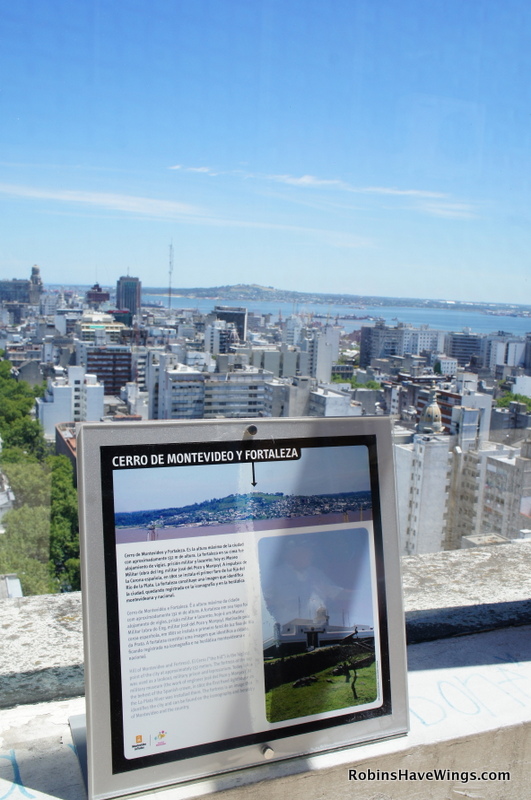
We get a look at present-day Montevideo from the most unlikely of places, in my opinion, the city’s municipal building. After rickety ride to the 22nd floor of Montevideo’s city hall, we are rewarded with a 360 view of city below. Every important site unfolds before us an Esteban tries to tell us about them all. It’s here that we learn how Montevideo got its name. Historians say that when the Spaniards came to scout this place they spotted a hill that would make a good place to settle. “Monte” means hill in Spanish. This also happened to be the 6th hill they spotted and 6 in Roman numerals is VI. The hill happens to run east and west or “de este y oeste” in Spanish, which shortens to “deo” to complete Montevideo. Another story suggests that Portuguese explorers also spotted this place and shouted “I see a hill! I see a hill,” which when spoken in Portuguese sounds a lot like Montevideo.
Montevideo’s City HallCity View from City Hall
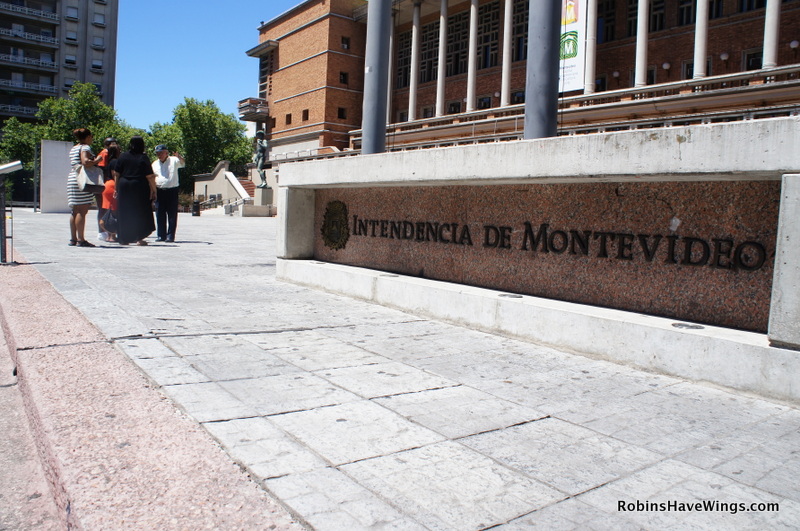
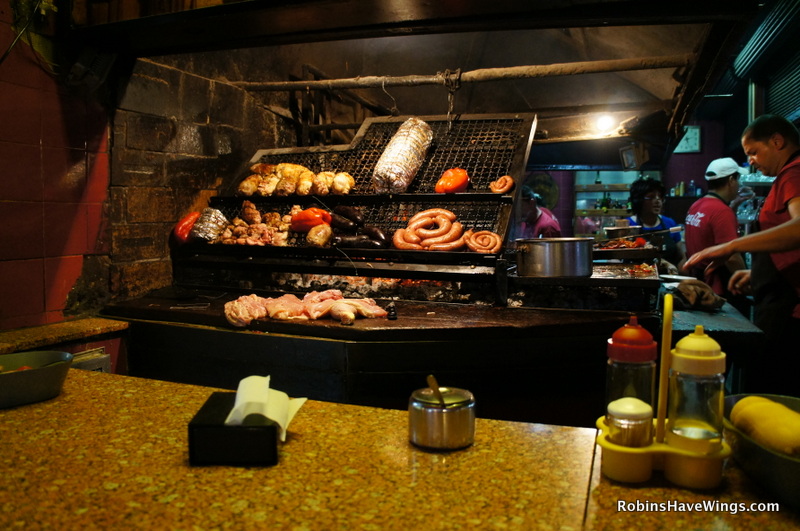
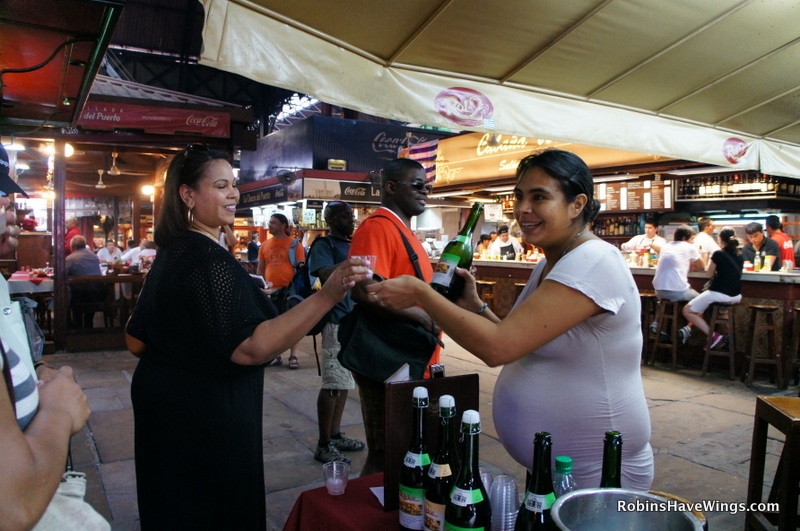
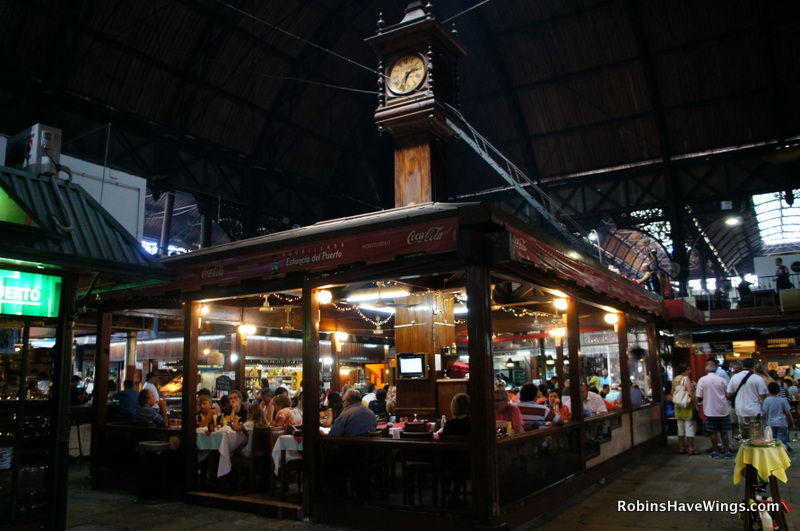
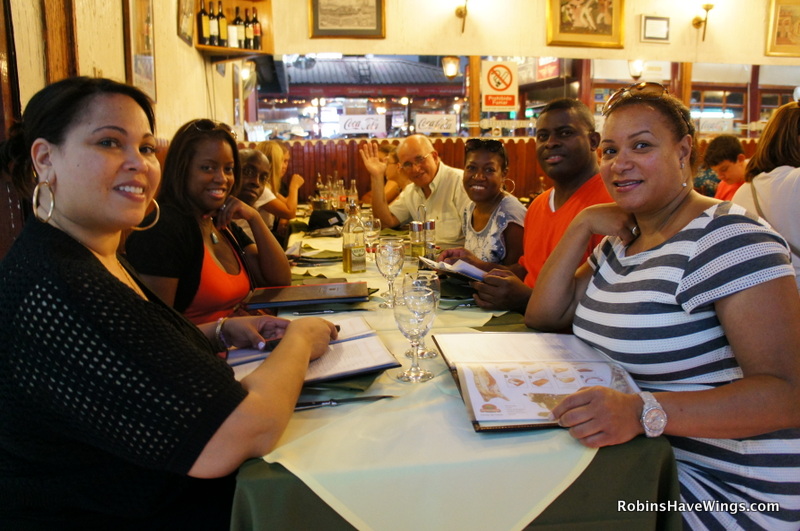
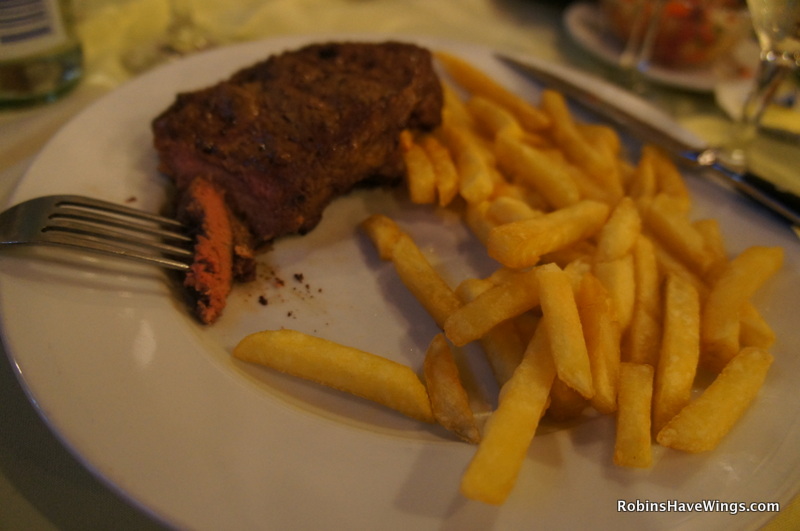
We’d end up seeing much of what we saw from our governmental perch on the ground later in the day, but only after we gorge ourselves with meat at Mercardo del Puerto, Montevideo’s old port marketplace that has been transformed into a foodie destination. We ogle roasting meats from every part of the cow, Uruguay’s claim to fame. There are sweaty plump sausages and plates with steaks hanging over the side. What does a meat-lovers heaven look like? Mercado del Puerto. Before we select one of the parillas or steak restaurants to eat, we sample Uruguay’s drink of choice, “medio y medio,” or half and half. We’re not talking half milk and half cream folks; we’re talking half white wine and half sparkling wine, and it is good. Refreshing and sweet, but not cloyingly so. A bottle appears on our table at Cabana Veronica where we choose to eat. Many of us order the petite filet which looks unremarkable on the plate, but packs a succulent punch on the tastebuds. It’s perfectly cooked at a juicy medium.
Roasting meat at Mercardo del PuertoTasting Medio y MedioParrillasAt Cabana Veronica before the meat arrivesPetite filet
Along with a good meal, I get some good conversation with Estaban and Ronnie, a Brazilian at the table next to ours. Ronnie mistakes our group for Brazilians at first and is intrigued to learn that we are Americans. In my limited Spanish, I tell him that I have visited Bahia in Brazil and he tells me that he is from Rio Grande do Sol and that he is a gaucho, South America’s cowboy. How fortuitous. We plan to visit Argentinian cowboys the next day. Ronnie smiles and says through Esteban that there is a fraternity between Argentina’s gauchos and Brazil’s. But soon our conversations turns back to why he thought our group was Brazilian, our brown skin similar to the people of Brazil’s Bahia. We some how are able to discuss the complexities of slavery in Brazil, Uruguay and the US across two languages. Ronnie says discrimination doesn’t exist in Brazil for black people as it seems to still linger in the US. But Estaban says there is still some in Brazil, where his son lived, and Uruguay, who’s people of African descent are more visible than in Argentina. In fact, Uruguay celebrates Carnival throughout the month of February with a parade of its African descendants dancing, drumming and singing Candomble songs. There is even a museum dedicated to the history of Carnival in Uruguay. The other day, we learned from Luis, our Argentinian guide, that slavery never took root in Argentina because slavery was abolished long before it was in the US and the industry was not supported by sugar cane, cotton or tobacco, but cattle.
Argentinian and Brazilian brothers, Esteban and Ronnie
This kind of history is always interesting while traveling. You are always looking for similarities and differences. Some people want to see themselves in the places they go. So, we naturally take notice when we see a similarly-hued person and wonder about their story and how they came to be in this place. We see them in the old town having a drink with friends, working construction or playing soccer in the streets. It makes a foreign place feel a little less foreign in a way. And, nothing makes a place feel less foreign than meeting an old friend. My high school classmate Sarah, who some may remember from my travels in Montreal has traded the cold French Canadian winters for a warm South American summer in Montevideo. She’s carving out a new life teaching English to middle schoolers; something I never saw one of the cool kids from high school doing. But life and the places we go have a way of changing us, as we discuss. She and I steal an hour together in the Mercado, catching up while keeping an eye on her gorgeous boy, Duke, balancing on fountain ledges and inspecting rocks near beautifully-carved buildings. She says the people here are just as warm as the climate and laid back. I see her fitting here. She’s got that bohemian vibe like the artisans on Sarandi street and its wall art, leading to Constitutional Square, a gathering place for those laid-back locals, who seem to find any place suitable to relax. We see them sunning on La Rambla, Montevideo’s main thoroughfare hugging the Rio de la Plata where it meets the Atlantic Ocean. We see them laying out in parks and other random open spaces, too. I can see why she chose this place. We get in as much time as we can before she drives me back to meet my fellow travelers and wait, and wait some more, before boarding the Boquebus back to Buenos Aires.
Sarah, Duke and Me
We know for sure that Esteban showed us everything he could fit into a 5 hour tour of his city. If I could go back, I’d go for more than a day to spend more time wandering the old city on my own, eating more meat, catching a spontaneous Candomble performance and drinking more medio y medio! Here’s more of what we saw during our brief visit:
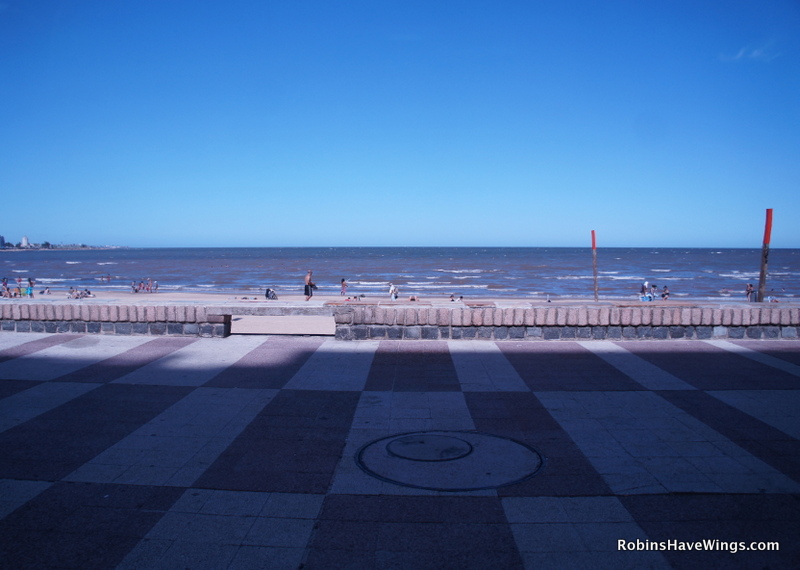
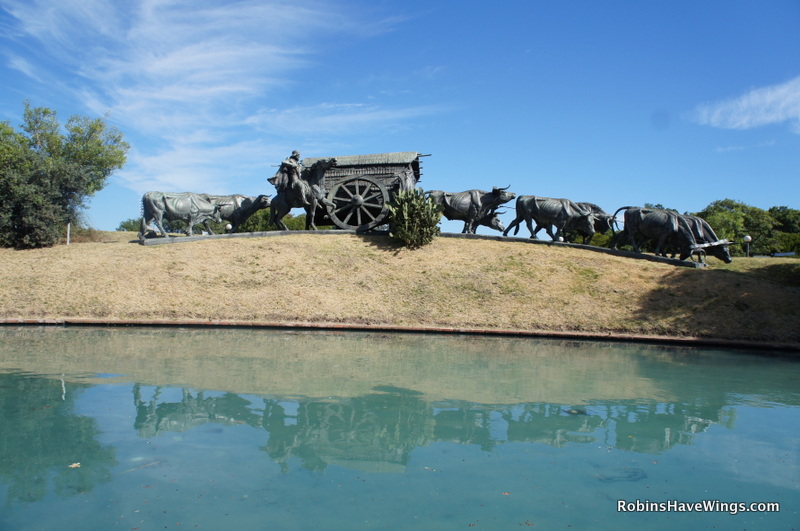
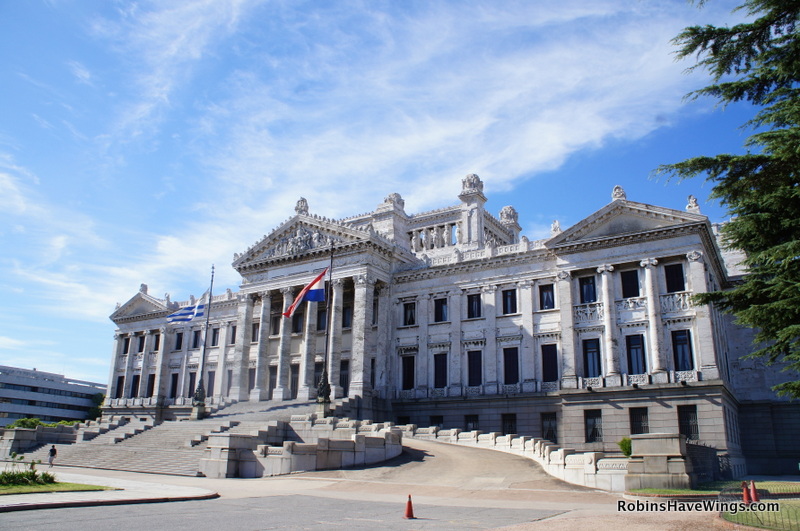
Uruguayans at play on a beach just off La RamblaLa Carreta or “ox cart” by famed Uruguayan sculptor Jose Belloni pays homage to Montevideo’s early ox-cart drivers and beef industry beginningsThis is Uruguay’s equivalent of the Capitol in Washington, DC. In fact, Uruguay modeled its government after ours, down to the underground tunnels running to nearby legislative officesSalvador do Bahia, Old Havana or Ciudad Vieja in Montevideo?I befriended this trio having an afternoon snack in Ciudad ViejaHow cool are we in Ciudad Vieja?
I’m still chronicling my adventures in Thailand and Cambodia, but I wanted to take a moment to reflect on all my travels in 2012. It was a big travel year for me and I clocked more miles than ever, globetrotting from Sri Lanka to Thailand with Hawaii in between. Here are the highlights:
12. Speed Boating in Sri Lanka
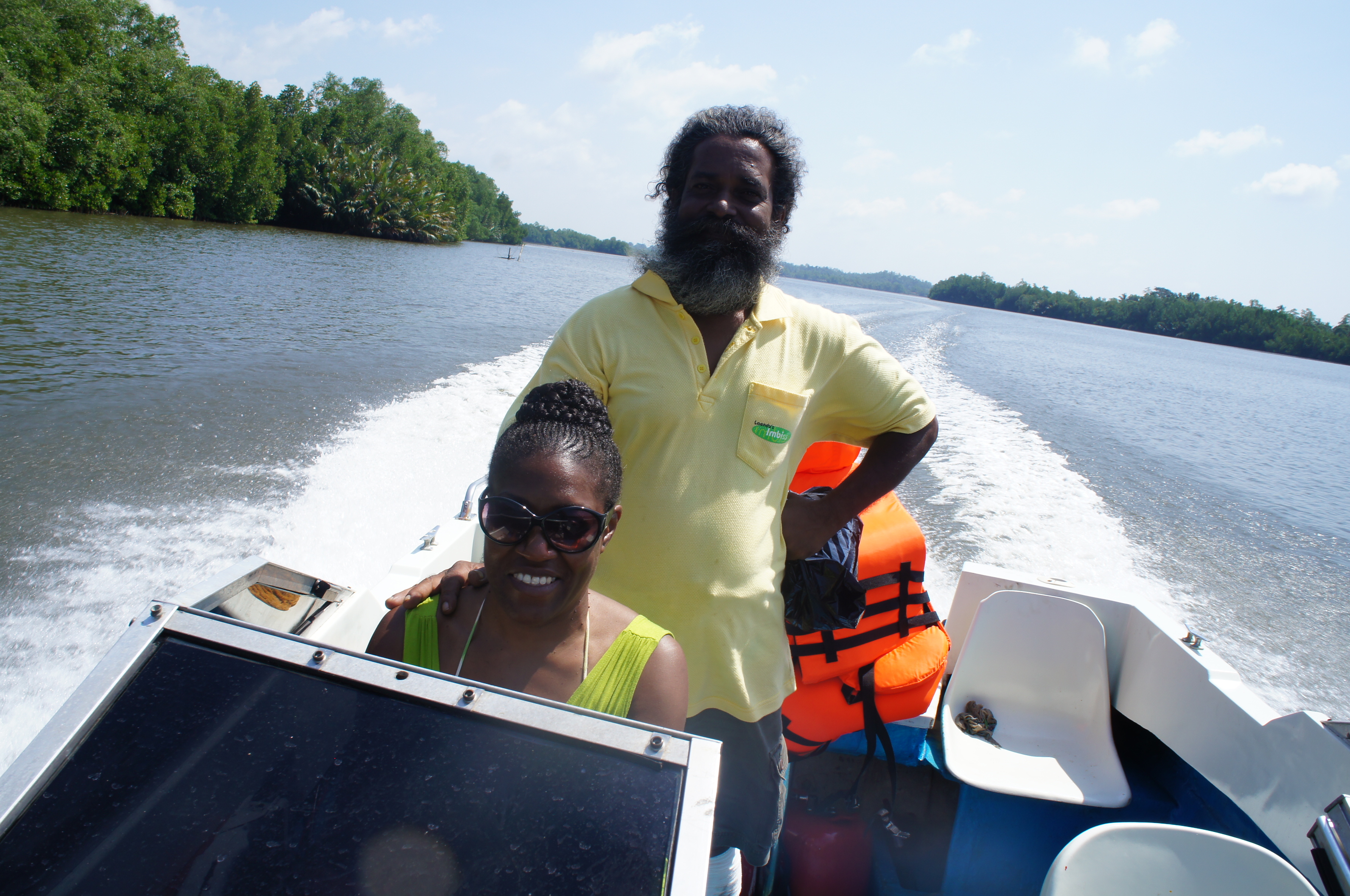
My first trip of 2012 was to Sri Lanka as a guest of my friend Sid. In his hometown on Beruwela in Southern Sri Lanka, I met his Uncle Emil who treated me like royalty, letting me drive his speed boat on the Black River and feeding me sweet coconuts and crab at his laid-back Coconut Bar.
11. Buddha-Spotting in Sri Lanka
This little country is packed with Big Buddhas. One of the most impressive towers at 100 feet over the ancient Dambullah caves which boasts 150 stone Buddha statues dating back to the first century B.C. Check out more of my Sri Lanka road trip pics at TravelChannel.com. I’ve got an Amazing Sights in Sri Lanka slide show there, too.
10. Celebrating in St. Martin/Sint Maarten
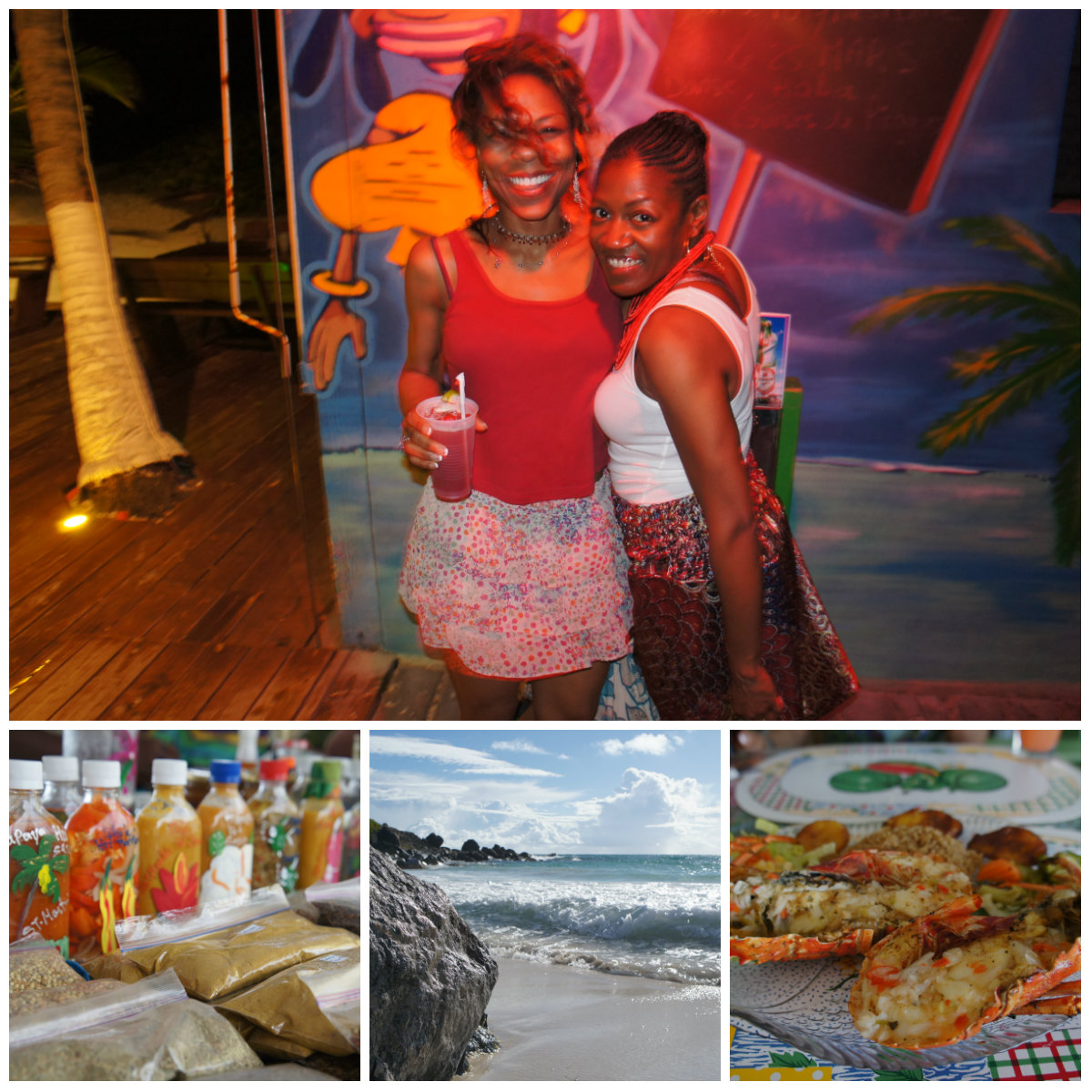
My friend Kenitra asked me to help celebrate her birthday on the exotic former French and Dutch occupied island of Saint Martin/Sint Maarten. We stayed on the French side of the island, steps away from Orient Beach, a haven for nude bathers, with some of the tastiest French food just outside our back door. We jammed with the locals at Boo Boo Jam, shopped for local spirits at the market in Marigot and had the best lobster at a lo-lo (local eatery) in Grand Case called Scooby’s. It was our time doing what the locals do that was the best.
9. Boston Marathon
I got a chance to go to the world’s oldest marathon this year with my friend Inez, who moved to Boston recently. She’d heard the best place to see the race was in Newton near Boston College and Heartbreak Hill. The marathon has a parade like feel with crowds lining the route to cheer for runners rather than floats. Although some runners were dressed as festively as a parade float. There were a couple of runners dressed as hamburgers, lots in tutus and one Elmo. The spectators were pretty creative with their signs, too. My favorites were “Why do all the cute ones run away?” and “Run like you stole something.”
8. Denver’s Black American West Museum
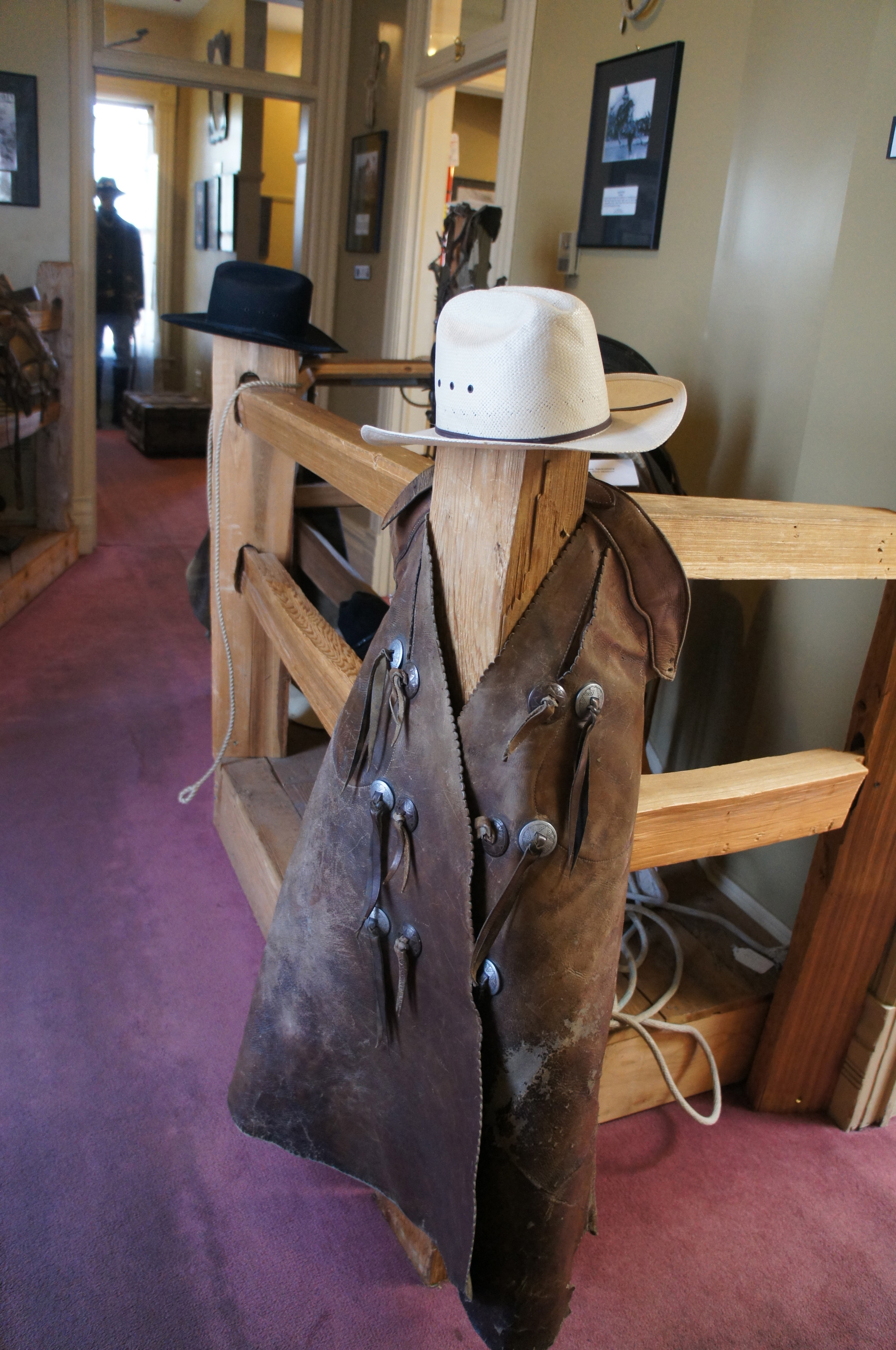
I sought out this little museum in a wooden house when I went to Denver for the Travel Blogger Exchange Conference (TBEX) in June. It’s tucked away in the Five Points neighborhood, once known as the Harlem of the West. When I arrived, Nik Ridley, the museum’s caretaker had dispatched a group of school children to roam through the house on their own saying, “I’m tired of you listening to me. Go look for yourselves.” There’s a lot to see in such a small space like the uniforms of Buffalo Soldiers and the artifacts of black cowboys and the African Americans who ventured west to find their fortune. Did you know that a black cowboy and rodeo rider invented hoolihanding, the move where a rider leaps from his horse onto the back of a steer and wrestles it to the ground by the horns? Me neither. Learned that at the Black American West Museum.
7. Winning an iPhone at TBEX
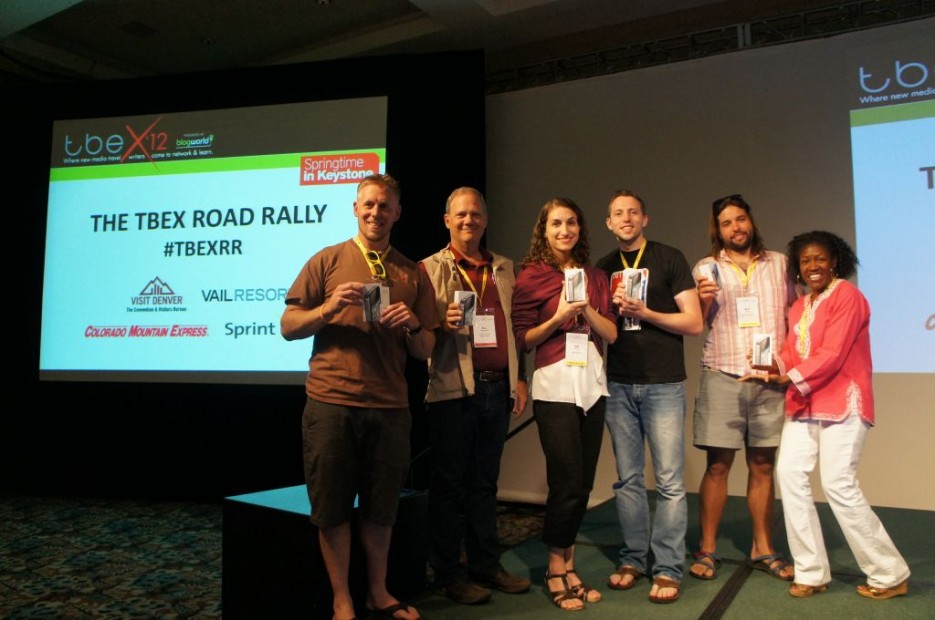
So, the absolute highlight of my trip to Denver was winning an iPhone after participating in the TBEX Road Rally from Denver to the Keystone Mountain Resort, site of the conference. Think Amazing Race in the Rockies. I was a member of Team Yellow, along with 5 other travel bloggers. We turned out to be a creative bunch, churning out the best pics, video and tweets of all the teams on the race, winning iPhones for our efforts. Even better than winning an iPhone, I made lots of new travel blogging friends. Check out the video to see when I was yellow.
6. Hanging at Vaughan’s with Kermit Ruffin in New Orleans
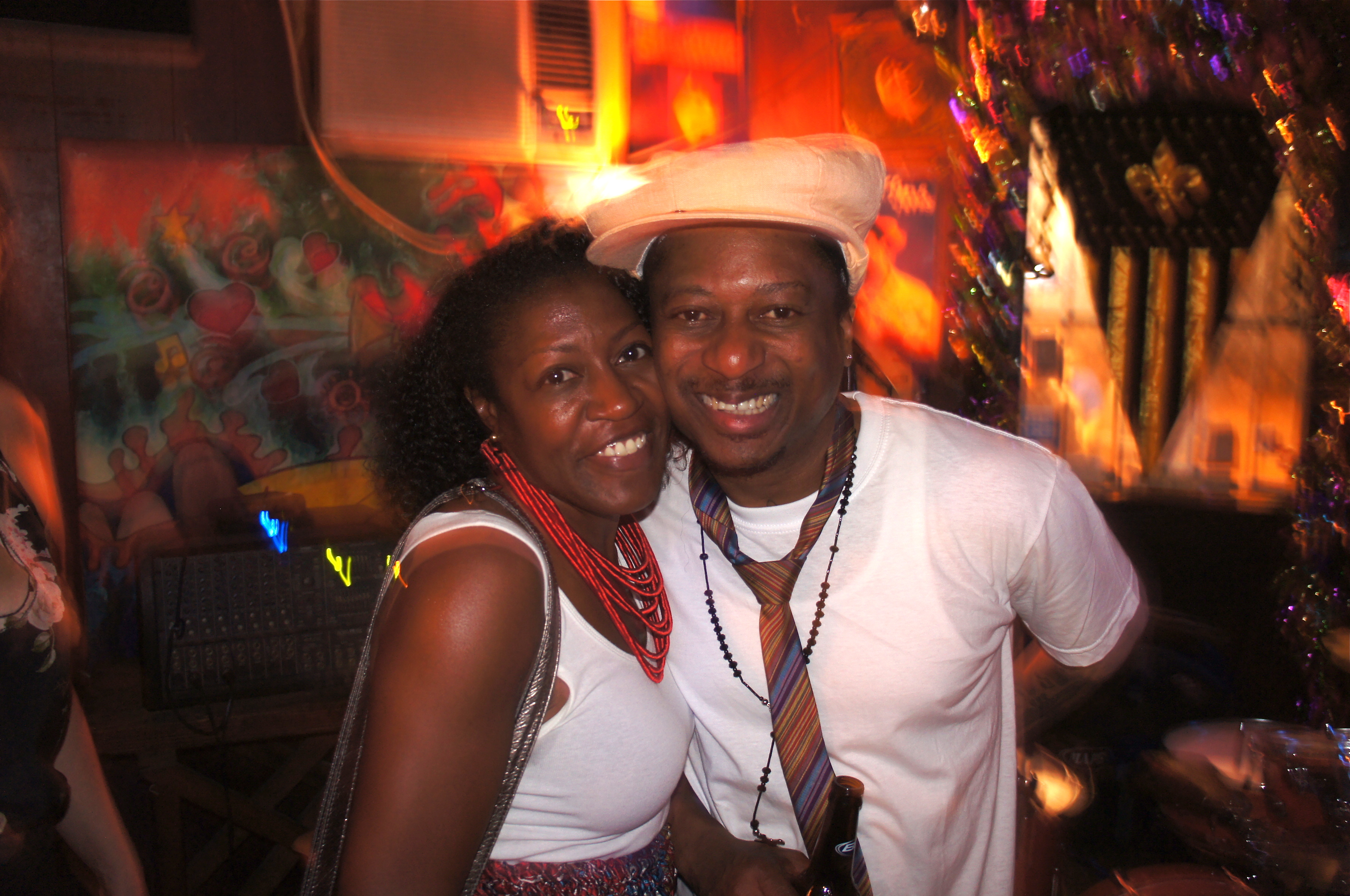
Thursday night is the night to go to Vaughn’s in New Orlean’s Faubourg Marigny/Bywater neighborhood. That’s when local music hero Kermit Ruffins plays. He’s the founder of the popular Rebirth Brass Band and he’s featured on HBO’s Treme. His high-octane, jazz-tinged pop tunes get the crowd jumping and his red beans and rice in the back go perfectly with rum punch. Ruffins won points with me when he played the Godfather of Go-Go, Chuck Brown, during one of his set breaks. It was great way to kick off the Essence Music Festival, which is what bought me to New Orleans. I covered the annual celebration of Black women for TVONE.TV. Check out my coverage.
5. Strolling Through Savannah
Not long after leaving New Orleans, I headed south again to Savannah for my cousin Kali’s wedding. After a belly-busting brunch at J. Christopher’s on Liberty, my folks and I wandered into Chippewa Square where Georgia’s founder Oglethorpe still stands tall and you can sit on the same bench as Forest Gump to contemplate life as a box o chocolates.
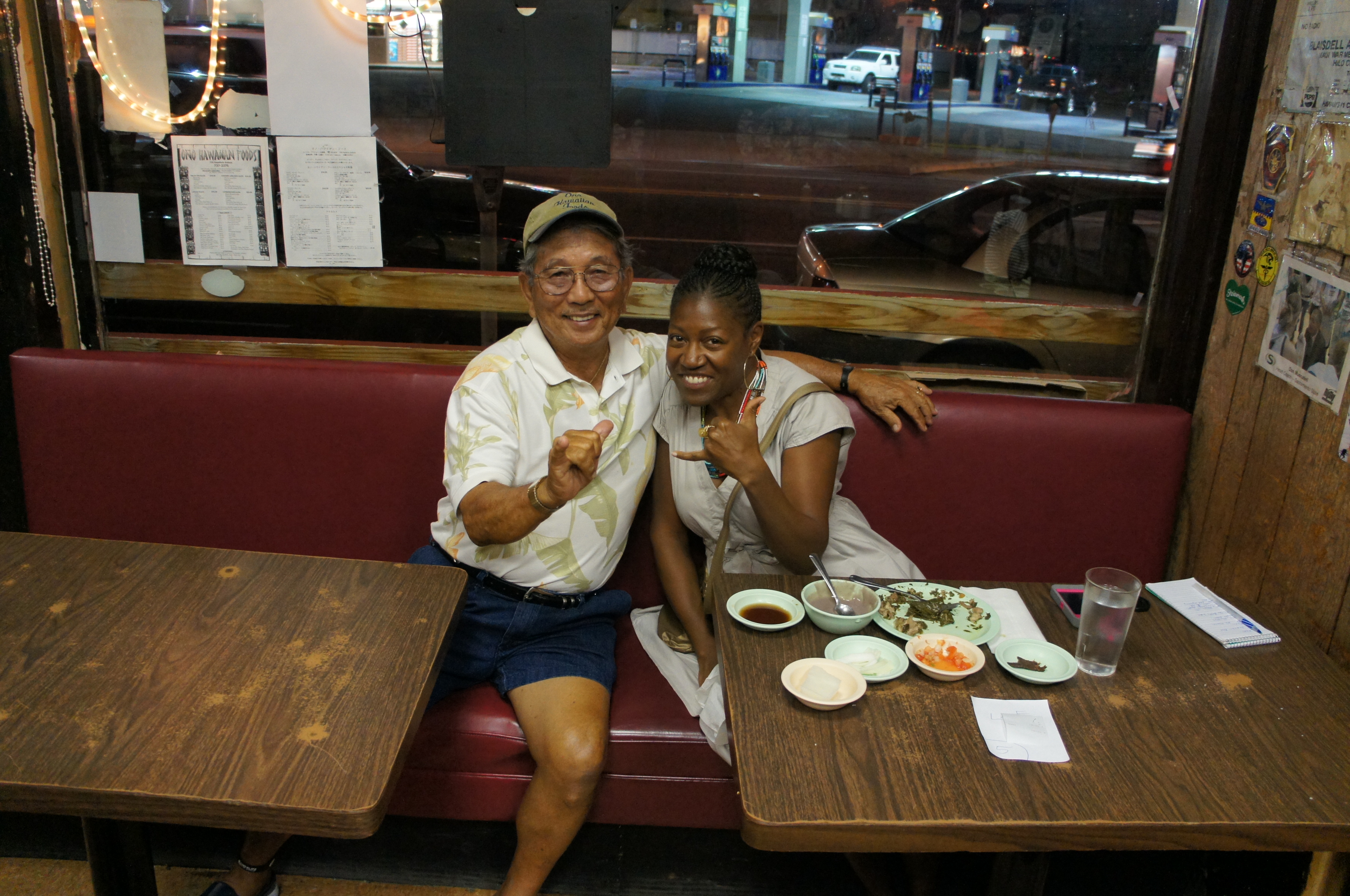
4. Ono Hawaiian Food
The best part of travel for me is meeting cool people. Toyo, the manager at Ono Hawaiian Food on Kapahulu Ave. in Honolulu, is one cool dude. His mother opened the traditional Hawaiian food favorite over 50 years ago and he does his best to make you feel at home. I was told by a local to visit the restaurant, but I had no idea what to order. I went with the laulau lunch plate, a hunk of pork wrapped in taro leaves. If you’re a southerner, think ham hocks in collard greens. Mmm good. Toyo took time to explain the health benefits and preparation of each dish and offered his number to me, showing concern for a woman traveling solo. Like I said, cool people.
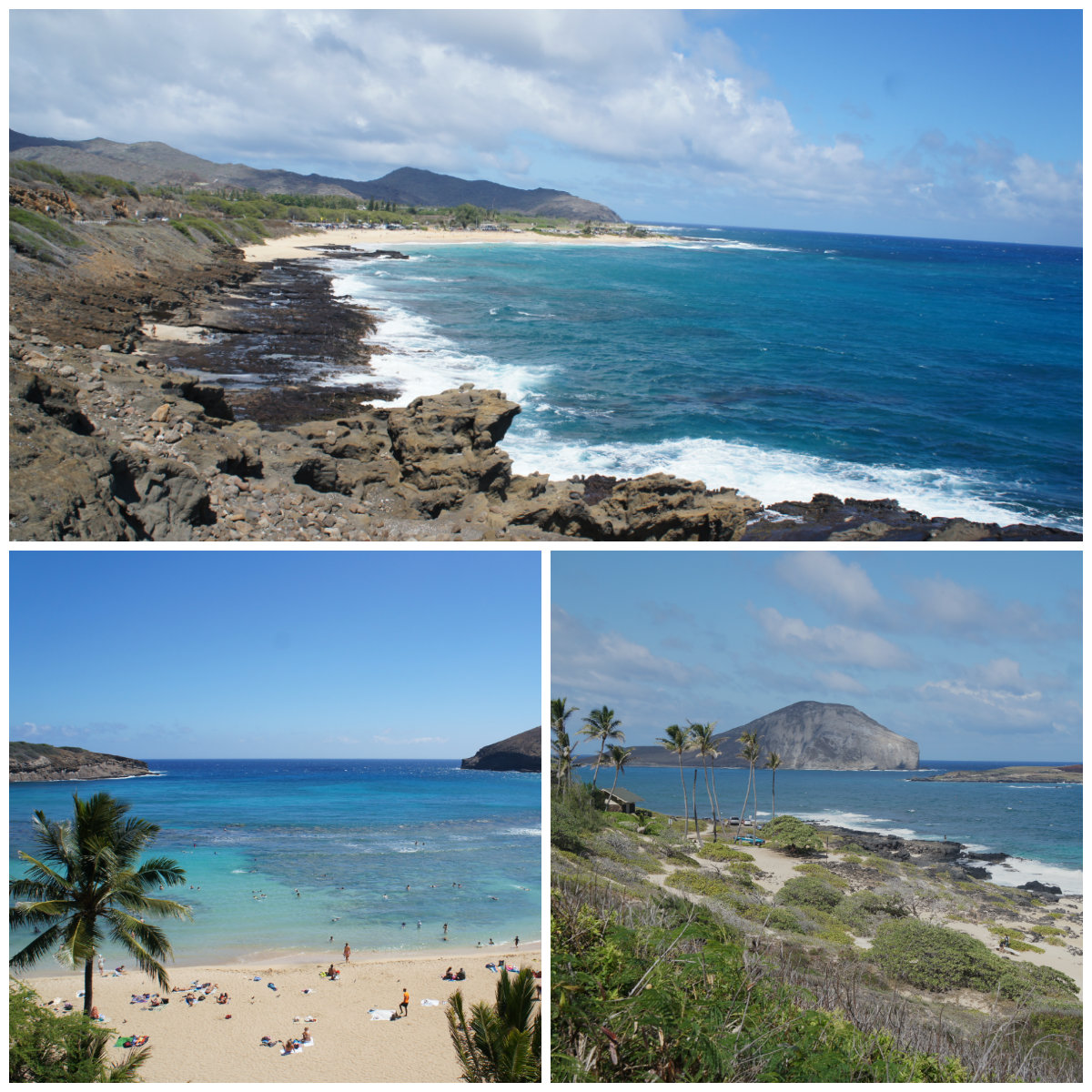
3. Hawaii Road Trippin’
When I asked locals what to do on Oahu, almost everyone said to rent a car and drive to the North Shore. I took their advice and I’m glad I did. I never made it to the North Shore, but I saw where President Obama body surfed as a kid (Sandy Beach) and snorkeled in Hanauma Bay. I also had my first shave ice: ice cream topped with powdery ice and exotic flavors like lychee and passionfruit.
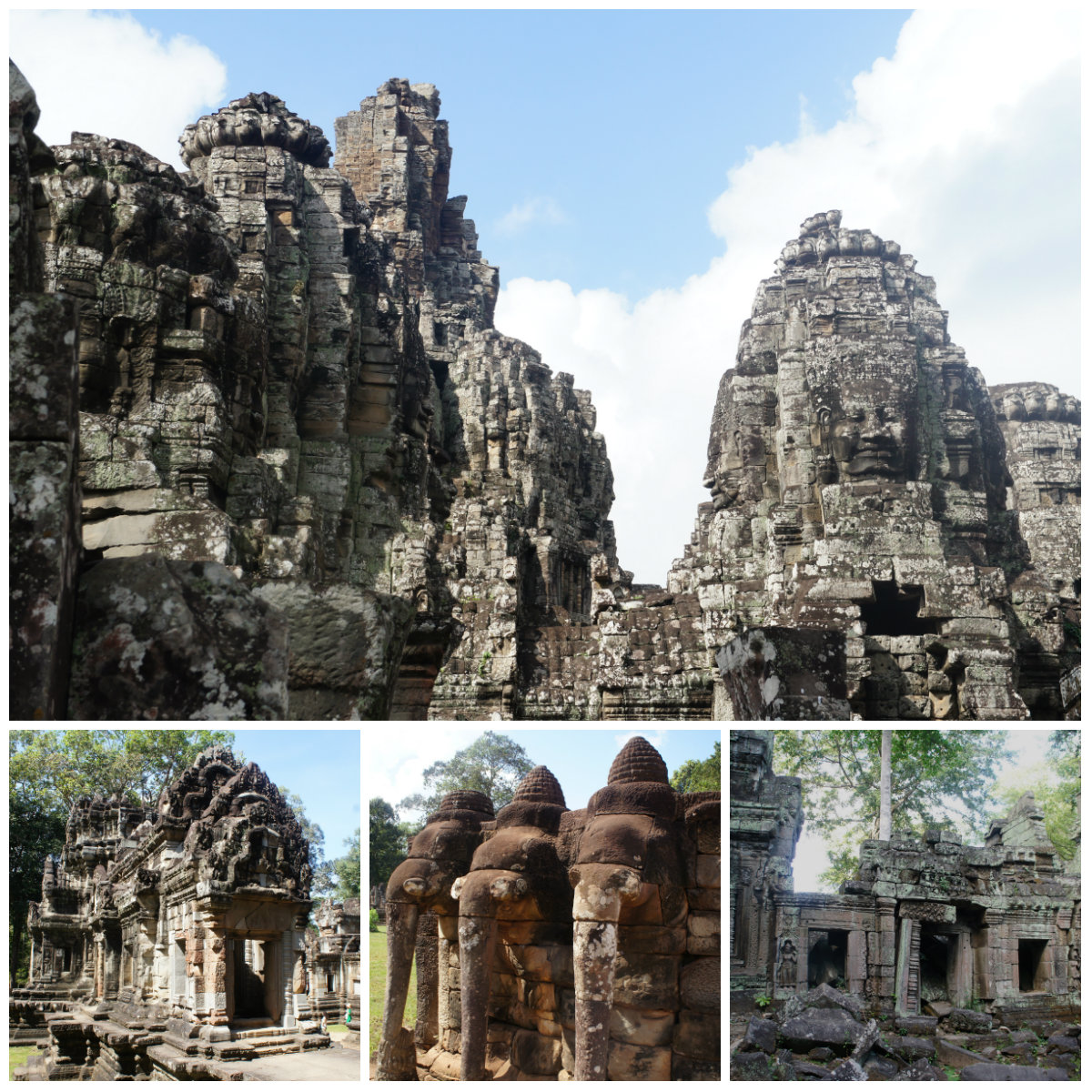
2. Angkor Wat
I love old places and so far Angkor Wat is the most amazing old place I’ve been. It rivals the Great Wall of China, in my opinion. I’m always awed by the engineering feats of those that came centuries before us. The temples of Angkor Wat are simply mind-blowing. My favorite was Bayon, engineered around the Thai belief in the lucky number 9. There were supposed to be 54 towers with each featuring 4 massive stone faces for a total of 216. Check this out: 5+4=9 and 2+1+6=9. Like I said, amazing. More to come on this spot.
1. Krabi Bay
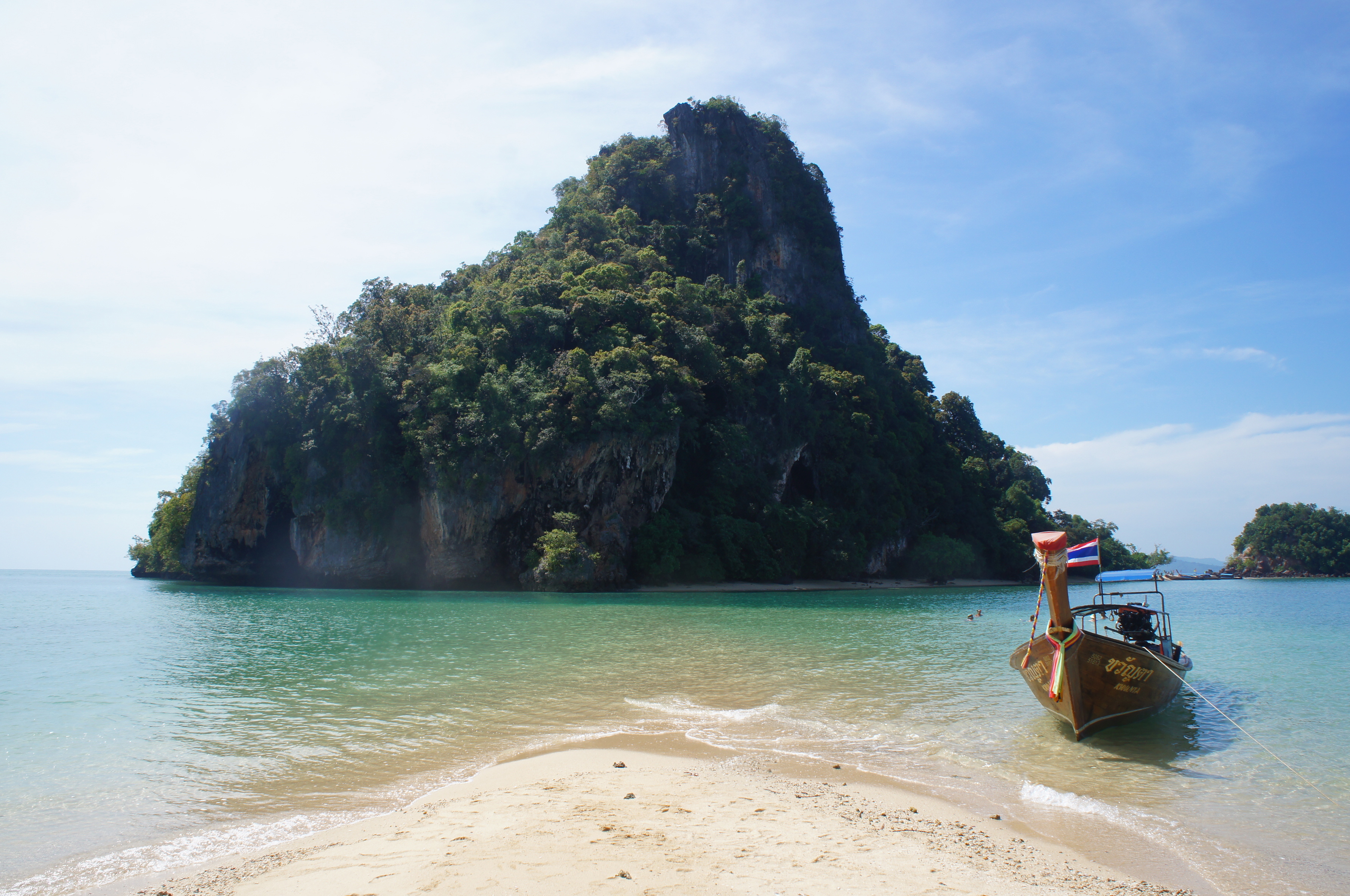
Krabi Bay in southern Thailand wins the top spot on my list because of its sheer beauty. I have never been anywhere more naturally breathtaking. Here, oddly-shaped limestone islands rise mysteriously from the crystalline aquamarine water of the Andaman Sea. These islands harbor secret stretches of sand where it is possible to pretend to be positively stranded. Krabi happens to be the last place that I visited and it is still indelibly burned into my travel memory. More to come on this destination, too.
Not a bad year. We’ll see what 2013 brings. First up: Argentina!
Author’s Note: I’ve been lax in posting from Thailand because there has been so much to see and do! So here are two posts from one day of adventures!
The third member of our traveling party arrived on Monday morning, albeit a tad later than expected. We expected Karen in on Sunday, but she miscalculated her arrival, failing to factor in a 7 hour layover in Frankfurt. But, now, all the players in this great Thailand-Cambodia adventure are in place: Karen, the Brooklynite who’s lived in London traveled to Peru, Tanzania, Madagascar and other far flung places and Nancee, my DC writing buddy, who’s studied in Spain and tripped about in the Caribbean. I know these ladies through a mutual friend who couldn’t make the trip. (We’re thinking about you, Kim). I mentioned that I was planning to go to Thailand and they all said they wanted to go, too. So, here we are.
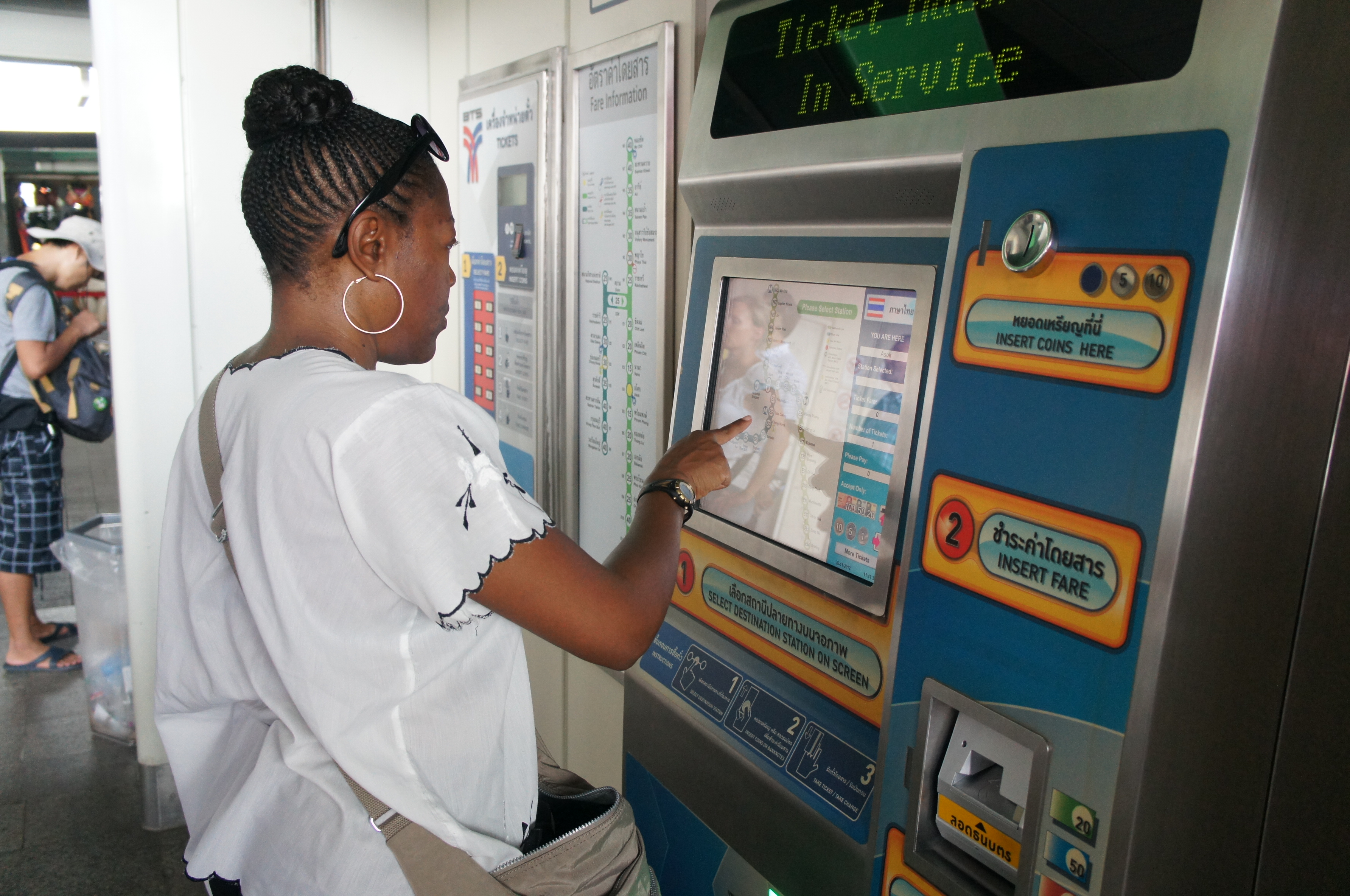
Buying a Sky Train ticket
On our first day together we decide to visit a couple of Bangkok’s major sites–The Jim Thompson House and Wat Pho. But not before taking on Bangkok’s Sky Train. At the Asok station near Lyle’s apartment, we weave through a steady and disorienting stream of Thais going about their Monday afternoon business, attempting to figure out one of their main modes of public transportation. And we actually take to it quite well. The ticket machines are brightly-colored and feature the system map along with each destination and the cost to get there from your current location. It’s pretty much idiot proof. Select the fare to your destination (in this case 40 baht or a bit over $1 to reach National Stadium), put in your money and the machine spits out a pretty blue ticket. The only thing is the machines don’t take bills, so you have to go to a booth to get change from a teller. At first we thought we could buy tickets from the uniformed teller in the station and were confused when we only got change back after asking for a ticket. The trains are absolutely immaculate, but they quickly become jammed with passengers depending on the stop. At our Siam transfer point we had to make a mad dash to get on a car that wasn’t overly packed with passengers. If this were NYC or even DC, there would be some unpleasant jostling for space or someone’s arm getting caught in he door. But not here; everyone manages to get on in a very polite and orderly fashion. The passengers are a mix of Thai society from well-dressed ladies with the latest designer handbags to the university students who must wear a uniform of white blouse and belted black skirt, a pairing that is actually quite cute. Lyle’s nanny Ngea was wearing the same outfit earlier today. She explained that younger students much wear longer skirts and older students have their choice between longer and shorter skirts. Ngea is studying eco-tourism and has been preparing for a big economics exam. I wonder what degrees the students on the train are pursuing.
Bangkok’s Sky Train
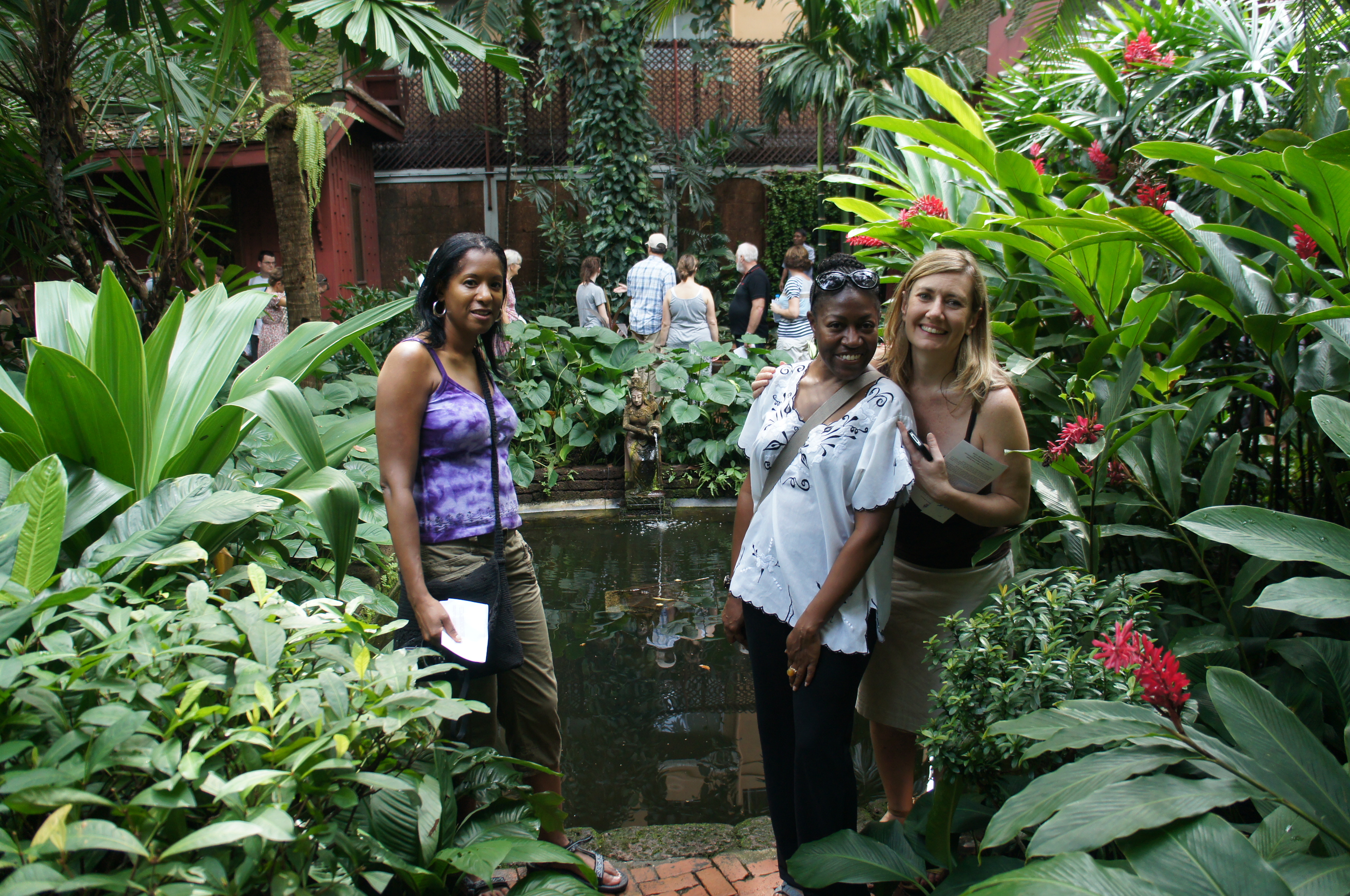
Before we know it we are at our stop and follow the flow of Thais from the Sky Train onto the busy street below. The Jim Thompson House feels like an oasis in the chaos that is Bangkok. It feels particularly serene after our adventure on the Sky Train. In the courtyard of the The Jim Thompson House (admission 100 baht, $3.25), there is a Thai man spooling a thin tread of silk from and steaming bath of silk worm cocoons. The man appears to be a representation of Jim Thompson’s passion for silk. Thompson, an American, was an officer in the Army’s Office of Strategic Services, a precursor to the CIA, when he lived in Bangkok in the 1940s. He fell for the place as many Americans do. Lyle’s husband, Peter, told me that Thailand has the most American expats after China. Thompson eventually left the Army to become an entrepreneur in Thailand’s silk trade and his home became the center of Thailand’s expat scene, a lovely complex of 6 traditional Thai homes in one.
The Jim Thompson HouseNancee, water-pouring god, me and Karen
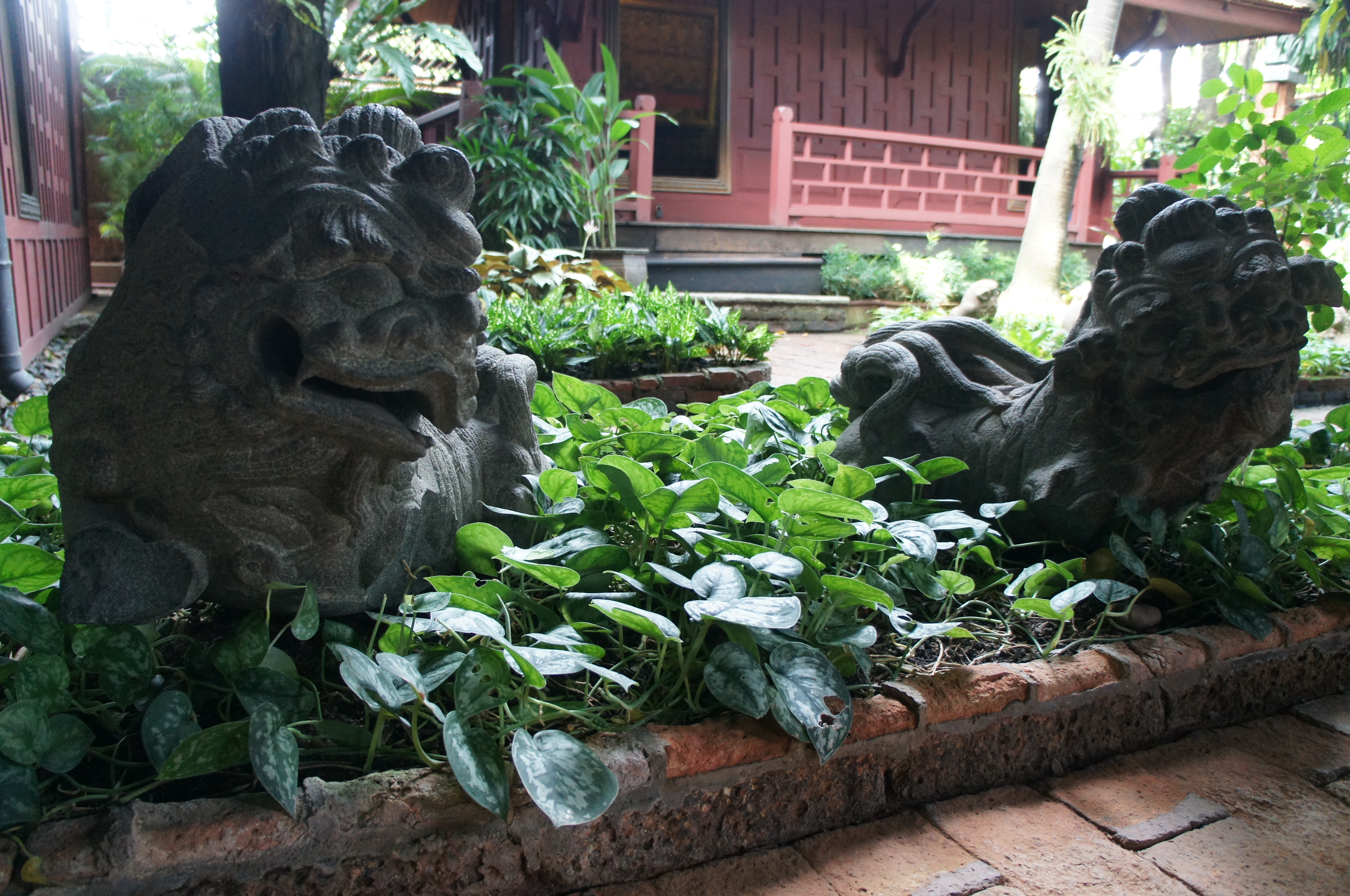
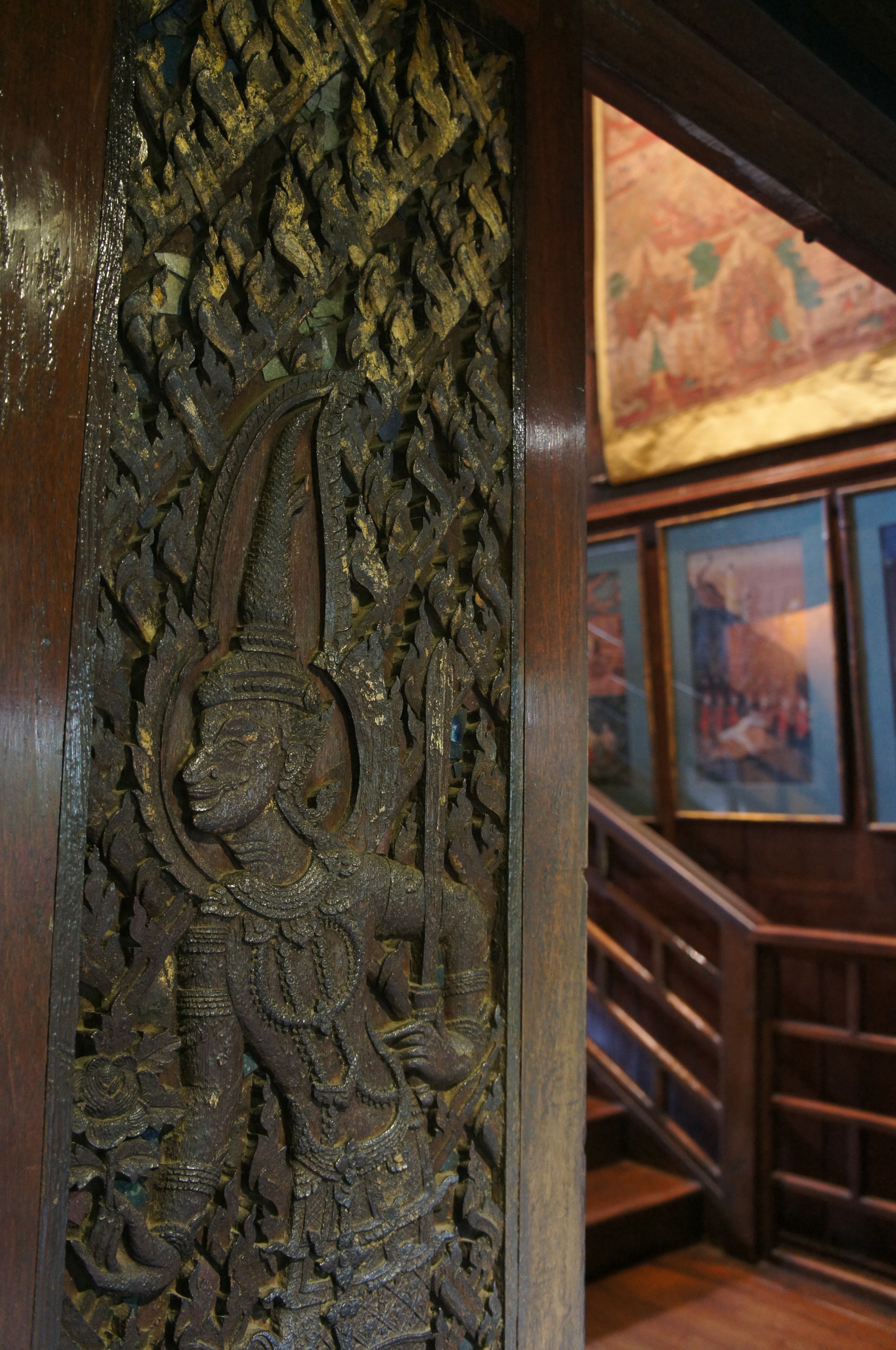
We explore Thompson’s urban tropical jungle, featuring water-pouring gods and other mythical creatures lurking in leafy green foliage, as we wait for our guided tour of the place. We already can tell that Thompson must have had an incredible green thumb and an impeccable sense taste for Thai art and design. Our guide explains that he added some western touches from the Italian marble in the western-style foyer of his home to the addition of a ceiling, where most Thai homes had none. Nancee, Karen and I love the furnishings throughout the house from the mahjong, turned dining table in the dining room to the lamps made from ancient drums. We spot plenty of pieces we’d want in our homes. Our guide tells us that Thompson disappeared mysteriously from a vacation with friends in Malaysia in 1967. To this day, no one knows what happened to him. Some people believe that a wild tiger ate him while he was on a trek alone. Karen asked the guide who got Thompson’s estate. She says that it was his nephew. So, we devise our own theory: The nephew offed his uncle for this amazing house. But the more likely scenario is that he was hit by a truck and the driver hid his remains.
Glimpse of interior of Jim Thompson House
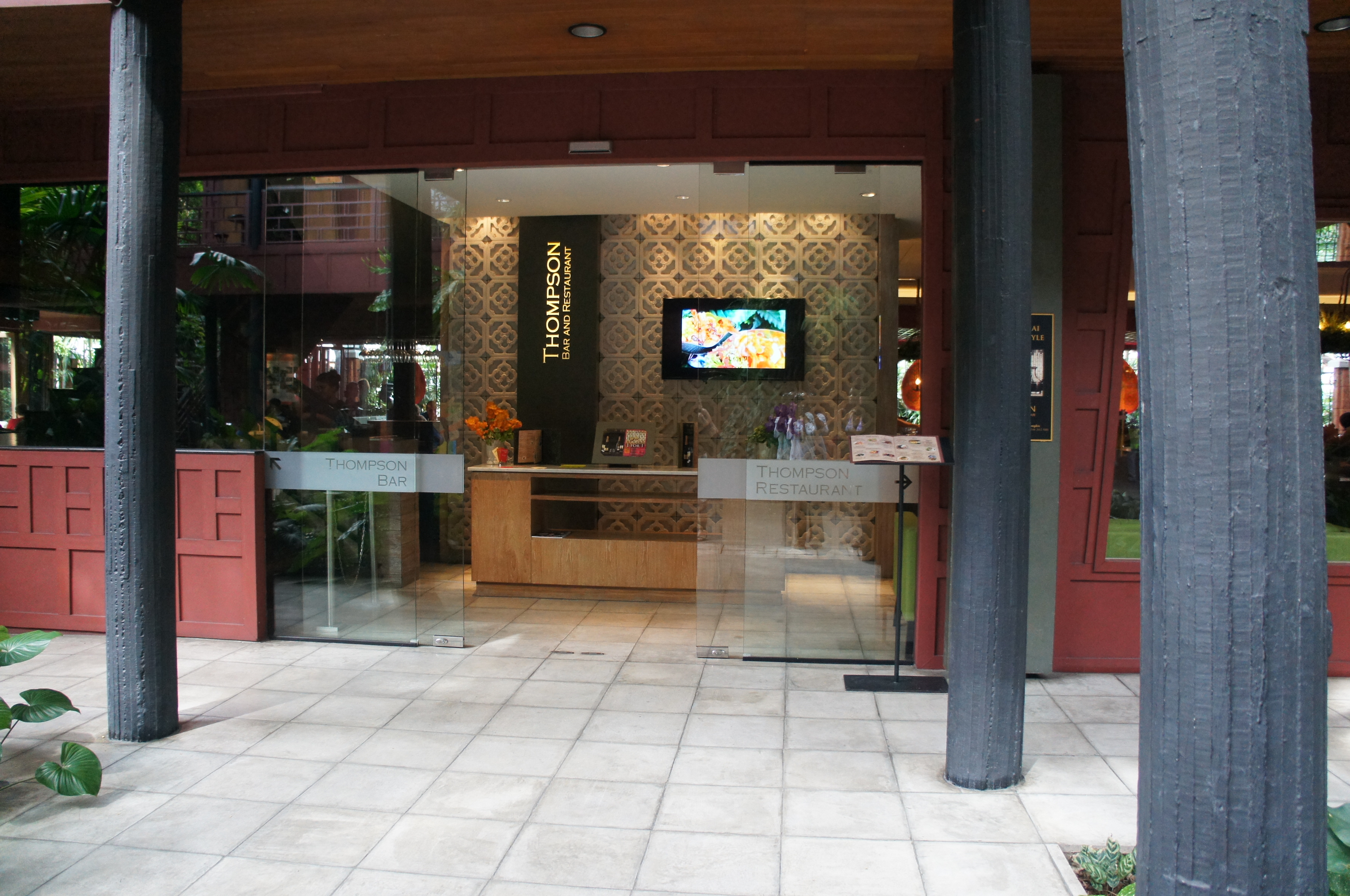
At the end of our tour we have lunch at the Thompson Bar and Restaurant on the premises, which is still a local hang out. The restaurant is chic and minimalist, bordered by a Koi pond. I have a tasty Pad See Ew and my second fruit smoothie since arriving in Thailand, a lychee lemongrass mixture. Fruit smoothies or shakes seem to be big here, coming in a variety of tropical fruit flavors like watermelon, coconut, mango and pineapple. These aren’t like our smoothies or shakes mixed with yogurt, milk or ice cream, these are blended bits of real fruit and deliciously refreshing on a hot Bangkok day.